REVIEW · CRETE
Knossos Palace Private Walking Tour
Book on Viator →Operated by Cherry travel · Bookable on Viator
Knossos makes the Bronze Age feel close at hand. A private walk with an English-speaking guide takes you past the Main Court, Royal Apartments, and Throne Room, while stories help turn scattered stones and reconstructed walls into a picture of Minoan life.
I like the private format, since your group gets the guide’s full attention, and I like the family appeal. Thalia, also spelled Talia in one account, kept two teenagers interested and held children’s attention with storytelling. An early evening start can also mean fewer people around the site.
The main drawback is cost. The $319.39 fee covers your group of up to 15, but Knossos admission is extra, and the supplied ticket details list both €20 and €30 per person, so you should confirm the current amount before booking.
In This Review
- Key points at a glance
- Why a private walk changes Knossos
- Entering Knossos through the South Propylaea
- The Main Court and the shape of Minoan power
- Royal Apartments and the Queen’s Megaron
- The Throne Room and reconstructed Knossos
- Storerooms, pottery, and the practical side of a palace
- The Bull-Leaping Fresco and the power of an image
- The guide’s style and the family factor
- Timing, crowds, and the two-hour limit
- What the $319.39 group price really means
- Who should book this Knossos visit
- Should you book the private Knossos tour?
- FAQ
- How long does the Knossos private walking tour last?
- Is admission to Knossos included?
- How much is the Knossos entrance ticket?
- How many people can join the private tour?
- Is the tour offered in English?
- What is the cancellation policy?
Key points at a glance
- A private two-hour visit: Only your group takes part, with space for up to 15 people.
- Thalia brings the site to life: Her storytelling appeals to adults, teenagers, and children.
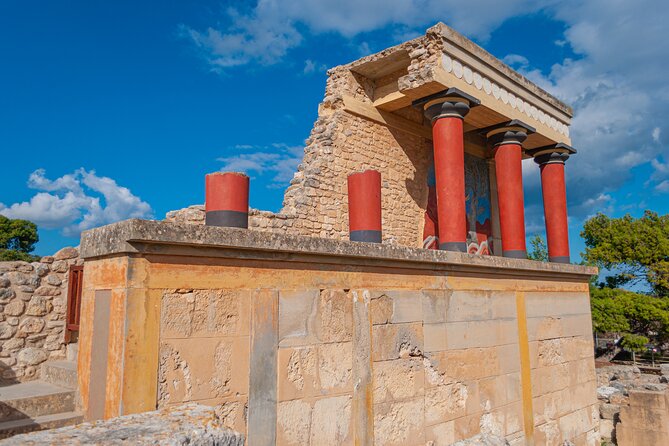
- The tour covers Knossos highlights: See the South Propylaea, Main Court, Royal Apartments, Throne Room, Storerooms, and a replica Bull-Leaping Fresco.
- Admission is not included: Budget separately for the entrance ticket and possible headphones.
- English-language guiding: The experience is offered in English with a licensed professional guide.
- A useful quiet-time tip: An early evening visit has been praised for lighter crowds.
Why a private walk changes Knossos
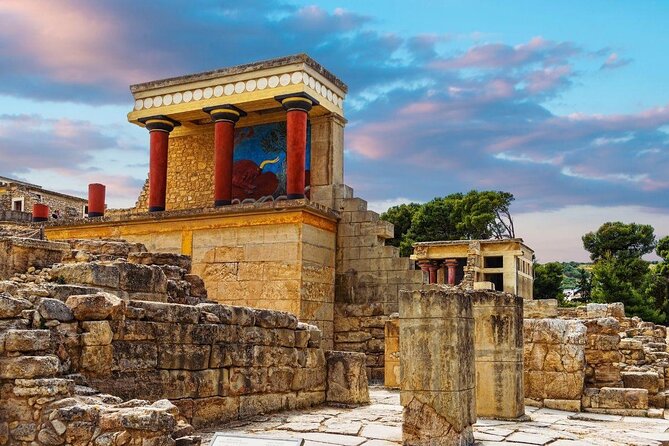
Knossos is not a simple ruin where you can glance around and move on. It is a large archaeological site with courtyards, rooms, passageways, storerooms, and reconstructed sections. Without context, it can be hard to understand what you are seeing.
A private guide gives the visit a clear thread. Instead of reading every sign or guessing which wall mattered, you can ask questions as you go. That matters at Knossos, where the remains alone do not always explain how the palace worked or why a certain room was important.
The group limit is generous at 15 people, but the private setup means those people are your own family or companions. If your party is smaller, you still get a more personal experience than a large shared tour. You can also ask the guide to adjust the pace, within the fixed two-hour visit, for children or older members of your group.
I would especially value this format for a family. Thalia’s lively storytelling has kept teenagers involved, and she has also been described as good with children. That is no small point at an archaeological site, where young visitors can lose interest quickly if the explanation becomes a list of dates and names.
You can also read our reviews of more walking tours in Crete

Entering Knossos through the South Propylaea
The tour begins at the Knossos Archaeological Site, at the meeting point listed as 75X6+79, Knossos 714 09, Greece. The walk includes the South Propylaea, one of the key entrances to the palace complex.
Your guide can use this first section to set the scene for the visit. The South Propylaea is not just a place to pass through. It helps you understand how movement into the palace was controlled and how the complex was arranged around important spaces.
I like beginning with an entrance because it gives the rest of the visit a sense of direction. You are not simply looking at disconnected rooms. You are following the route into a major Minoan center and seeing how the architecture guided people from one area to another.
The meeting details are simple, but you should pay attention to the exact location. The listed starting point is at Knossos itself, and the activity ends back there. Transportation to the site is not included in the tour details, so you need to arrange your own way to the meeting point.
The Main Court and the shape of Minoan power
The Main Court is one of the most important places on the walk. Large central courts helped organize the palace complex, and this space gives you a better sense of the scale of Knossos than a single room can.
I find courts useful because they let you step back from details. After looking at walls, frescoes, and rooms, you can see how the palace was built around a broad central area. Your guide can connect the court to the rooms and passageways around it, making the site easier to read.
Knossos is famous partly because it challenges the idea that Bronze Age societies were simple or isolated. The remains point to planning, storage, decorated interiors, and specialized rooms. A good guide helps you notice these signs of an organized culture without turning the visit into a lecture.
The tour lasts about two hours, which gives you enough time for the major sections listed here. It is not a full-day archaeological study, and you should not expect to inspect every corner of the site. The strength is focus: you see the places most likely to make the palace understandable.
Royal Apartments and the Queen’s Megaron
The Royal Apartments offer some of the most evocative spaces at Knossos. The Queen’s Megaron is a named highlight, and it gives the tour a more human scale after the broad Main Court.
Rooms such as these help you imagine how the palace was used. Rather than seeing Knossos only as a ceremonial center, you begin to consider private quarters, daily activity, and the way different parts of the complex served different purposes.
The Queen’s Megaron is also a useful place to ask questions. How were the rooms arranged? What clues suggest their function? Which details are original, and which belong to later reconstruction? The guide’s role is important here because the remains can invite more questions than they answer.
I would not expect every modern label attached to a room to be beyond debate. Archaeological interpretation changes, and reconstructed areas need to be viewed with care. That is one reason a licensed guide is helpful. You can hear the accepted explanation while also getting a clearer sense of what is known and what is inferred.
The Throne Room and reconstructed Knossos
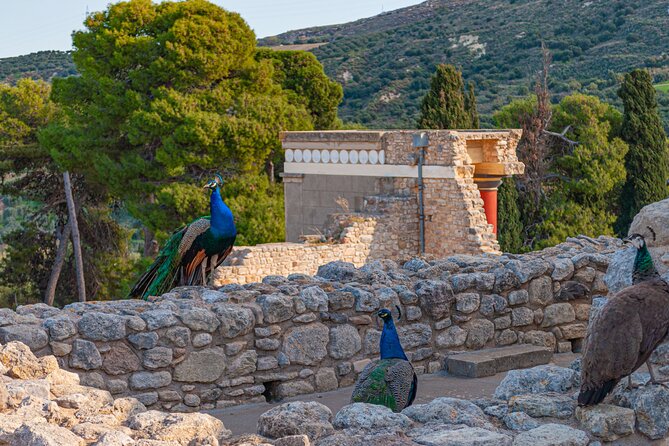
The Throne Room is another major stop. It is one of the best-known spaces at Knossos, and its name naturally draws attention. Here, the guide can explain why the room matters and how it fits within the wider palace.
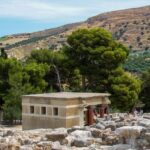
Knossos includes restored and reconstructed elements, which can make the site easier to picture but also require a careful eye. A guide can help you distinguish the physical remains from the way the site has been presented to modern visitors.
That balance is important. Reconstruction gives shape to a place that might otherwise be difficult to understand, but it can also make the palace appear more complete than the surviving evidence allows. I appreciate a tour that lets you enjoy the visual impact while keeping the archaeological limits in view.
The Throne Room is likely to be a memorable stop for first-time visitors, but it should not be treated as the entire story of Knossos. The palace’s importance comes from the relationship among its courts, apartments, work areas, storage rooms, and entrances. The two-hour route works best when you see the Throne Room as one part of that larger plan.
You can also read our reviews of more private tours in Crete



Storerooms, pottery, and the practical side of a palace
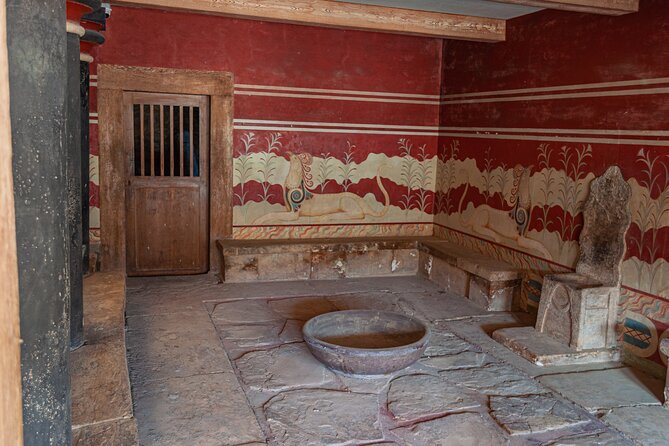
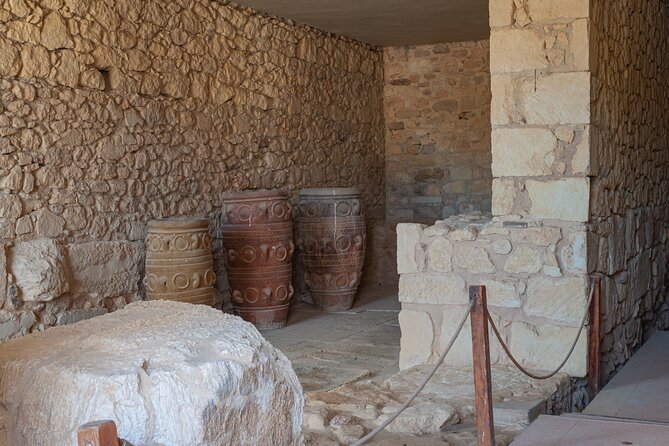
The Storerooms add a useful change of focus. Grand rooms attract the eye, but storage areas reveal how a large center functioned from day to day.
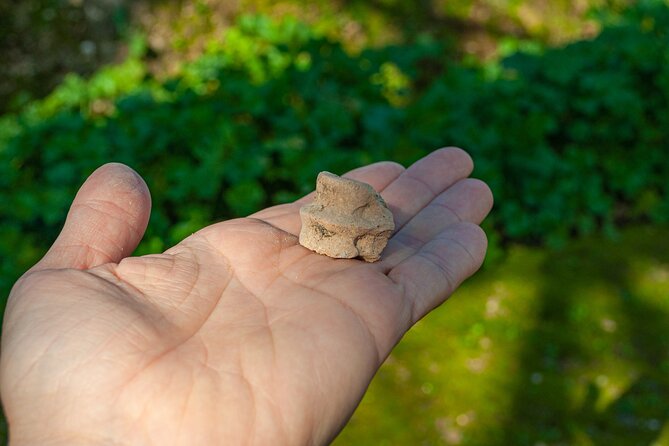
These spaces can help you understand the planning behind the palace. Food, goods, and supplies had to be collected, stored, and managed. The storerooms show that Knossos was not only a place of ceremony or royal display. It was also a working center that depended on systems of supply.
I like this part of the route because it keeps the visit grounded. After the named royal rooms and decorated areas, the storerooms remind you that ancient life involved logistics. A guide can connect these plain spaces to the wider Minoan economy and explain why they deserve attention.
If you are visiting with children, this can be an easy point for practical questions. What was stored here? How did people move goods? Why were the rooms designed this way? The supplied tour information does not promise specific demonstrations or activities for children, but the guide’s storytelling style has worked well with younger visitors.
The Bull-Leaping Fresco and the power of an image
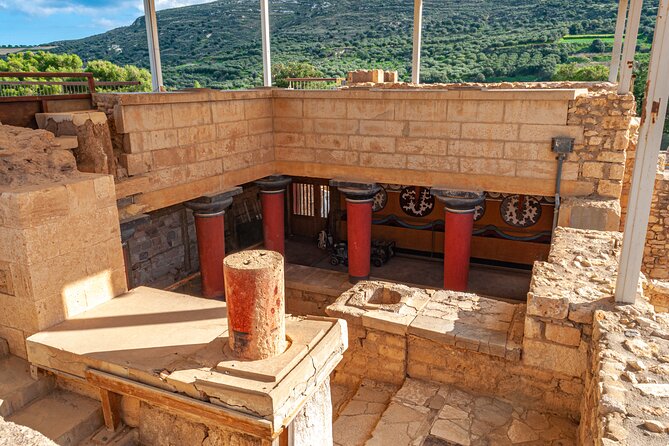
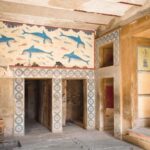
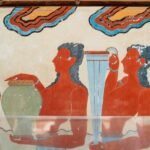
The site features a replica of the Bull-Leaping Fresco, one of the most recognizable images linked with Knossos. Seeing a replica is useful because it gives you a clearer idea of the color and visual energy associated with Minoan decoration.
The word replica matters. You are not being shown the original artwork, so you should treat it as a presentation of the image rather than the ancient fresco itself. Still, it helps you understand how wall paintings shaped the character of the palace.
A guide can explain the scene and place it within the wider culture of the Minoans. The image is more than a striking decoration. It points to the importance of bulls and athletic or ceremonial activity in Minoan art, though the exact meaning of ancient images can be difficult to settle.
This is another reason storytelling matters. A dry description of a fresco will not hold every visitor. A well-paced explanation can connect the image to the rooms around it and help teenagers or children remember what they saw after the tour ends.
The guide’s style and the family factor
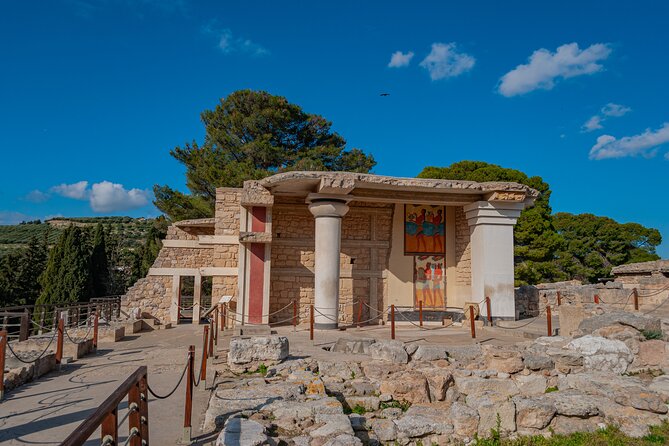
The strongest feature here is the guide. Thalia, also written as Talia in one account, is described as passionate about history and skilled at keeping young people engaged. One family found her suitable for children, while another specifically noted that she held the attention of two teenagers.
That suggests a lively approach rather than a purely academic one. You can expect the guide to explain the site through stories and human details, not just dates. The supplied information does not give a fixed script, so the exact balance may depend on your group and the guide assigned that day.
The tour is offered in English. A licensed professional guide is included, along with informational support from Cherry Travel during your stay in Crete. You can also ask the guide for local recommendations for restaurants and other attractions.
That added advice can be useful at the end of a site visit, when you are ready for lunch, dinner, or another stop in Crete. It is not a meal or a wider sightseeing tour, so treat the recommendations as a helpful extra rather than a core part of the experience.
Timing, crowds, and the two-hour limit
The operating hours provided are 8:00 a.m. to 4:30 p.m., from November 1 through March 31 in the listed seasons. You should check the time shown for your booking and allow enough time to reach the meeting point.
An early evening visit has worked well for crowd levels, with fewer people around the site. That can make a private tour feel more relaxed and can help you hear the guide more clearly. The exact crowd level will change by date, so this is a useful tip, not a guarantee.
The two-hour length is a practical middle ground. It is long enough to cover the major highlights without demanding an entire day. I would choose it if you want to pair Knossos with other plans in Crete.
You should also be realistic about the pace. The tour is a walking visit through an archaeological site, and the supplied information does not list special transport within the site. Most people can participate, and service animals are allowed, but anyone with particular mobility concerns should confirm the details before booking.
What the $319.39 group price really means
The listed price is $319.39 per group for up to 15 people. That can be fair value for a large family or a group of friends, since the guide fee is not multiplied by each person in the same way as a standard individual tour.
For two people, the same price feels much less attractive. You are paying for privacy and a licensed guide, not simply for admission. I would compare the total against shared tours and against the value your group places on personal attention.
Admission is separate. The supplied pricing notes €20 for visitors from age 26 and free admission for EU citizens up to age 25 and non-EU visitors up to age 18, but the same information also shows €30 per person. Because those figures conflict, confirm the current ticket price before you commit to your budget.
Headphones cost €2 per person if your group is larger than seven. That extra charge is small, but it matters for a group of 8 to 15, especially since it is not included in the headline price.
The price also includes the guide and local support from Cherry Travel. It does not include transport, meals, or admission. I would judge the value mainly by group size, guide quality, and your desire for a private explanation of Knossos.
Who should book this Knossos visit
I would recommend this tour most strongly to:
- Families who want a guide able to keep children or teenagers involved.
- Groups of friends who prefer a private walk to a shared tour.
- First-time visitors who want the major Knossos rooms explained in a clear order.
- History fans who want to ask questions as they walk.
- Visitors who can meet at Knossos and do not need transportation included.
I would think twice if you are traveling alone or as a couple on a tight budget. The group price can be hard to justify for a very small party, especially after adding admission and possible headphones.
I would also avoid assuming that two hours covers every detail. This is a focused introduction to the site’s main areas. If you want a slower archaeological study, you may need more time than this activity provides, though no longer option is specified here.
Booking includes free cancellation up to 24 hours before the start time for a full refund. Changes or cancellations made less than 24 hours before the start are not accepted for a refund, and poor weather may lead to a different date or a full refund.
Should you book the private Knossos tour?
Book it if you want Knossos explained by a licensed English-speaking guide and your group values privacy, questions, and a family-friendly pace. Thalia’s storytelling, the private format, and the quieter early evening timing make this more personal than simply walking through the site on your own.
Before paying, confirm the current admission price, check the meeting point, and decide if $319.39 makes sense for your group size. For a larger party, the cost can work well. For just one or two people, a shared option may offer better value.
FAQ
How long does the Knossos private walking tour last?
The tour lasts approximately two hours.
Is admission to Knossos included?
No. The entrance fee is not included in the tour price.
How much is the Knossos entrance ticket?
The supplied details list €20 for visitors from age 26 and free admission for EU citizens up to age 25 and non-EU visitors up to age 18. They also list €30 per person, so confirm the current ticket price before visiting.
How many people can join the private tour?
The private activity is for your group only and can include up to 15 people.
Is the tour offered in English?
Yes. The experience is offered in English with a licensed professional guide.
What is the cancellation policy?
You can cancel up to 24 hours before the start time for a full refund. Cancellations or changes made less than 24 hours before the start are not accepted for a refund. If poor weather causes the tour to be canceled, you will be offered another date or a full refund.