REVIEW · THESSALONIKI
Learn an Ancient Music Instrument: The Lyre of Apollo
Book on Viator →Operated by Seikilo · Bookable on Viator
The most unusual thing about this Thessaloniki activity is that you do not just look at an ancient instrument behind glass. You receive a lyre and learn to play the Seikilos Epitaph, the oldest complete melody with lyrics known to survive. The lesson takes place at the Seikilo Museum of Ancient Music, where the instruments are reconstructed by hand.
I like the private format, which gives you and your own group the instructor’s full attention. I also like that the loaner lyre and museum admission are included, so the $48.06 price covers more than a short demonstration. The main consideration is time: one hour goes quickly, especially if you want both a lesson and time to inspect the exhibits.
In This Review
- Key points at a glance
- Why this one-hour lyre lesson is different
- Arriving at Seikilo Museum of Ancient Music
- Looking closely at the reconstructed lyre
- Learning the Seikilos Epitaph
- What the private format adds
- Is $48.06 a fair price?
- Who will enjoy this activity most?
- Small museum, strong focus
- Timing, cancellation, and practical planning
- Should you book the ancient lyre lesson?
- FAQ
- Where does the lyre lesson take place?
- What time does the experience start?
- How long does the activity last?
- Is the lesson offered in English?
- Do I need musical experience?
- Is a lyre provided?
- Is museum admission included?
- Can I cancel for a full refund?
Key points at a glance
- Play a real reconstructed Greek lyre: Every participant receives a loaner instrument during the lesson.
- Learn the Seikilos Epitaph: You work toward playing the oldest complete surviving melody with lyrics.
- Private instruction: Only you and your party take part, with the lesson adjusted to your level.
- Meet at Seikilo Museum: The activity begins and ends at Filippou 5 in Thessaloniki.
- No musical background required: The instructor presents the lyre as a simple, approachable instrument.
- Museum access is included: You can explore the handmade lyres and other exhibits at no extra charge.
Why this one-hour lyre lesson is different
Thessaloniki offers plenty of ways to spend an hour, but few involve making music on an instrument linked to ancient Greek education. The lyre was not simply a performance object. It was used as a teaching tool for young people in ancient Greece, and this lesson gives you a practical sense of why it was considered approachable.
The session begins with a close look at a reconstructed ancient Greek lyre. You learn about its sound, appearance, and place in the music system of antiquity before putting your own hands on the strings. That order matters. You are not asked to copy a tune without context. First, you see what the instrument is trying to do, then you learn how to use it.
I like the directness of the activity. You do not spend the hour watching someone else perform while you take photographs. Every participant gets an instrument, and the lesson is private for your group. That makes this a good choice for couples, families, and small groups who want a shared activity rather than another passive museum visit.
The experience is offered in English, and no musical education is needed. If you already play an instrument or have professional training, the instruction can be adjusted to suit your level. That flexibility helps keep the lesson useful for beginners without making it too basic for experienced musicians.
You can also read our reviews of more tours and experiences in Thessaloniki.



Arriving at Seikilo Museum of Ancient Music
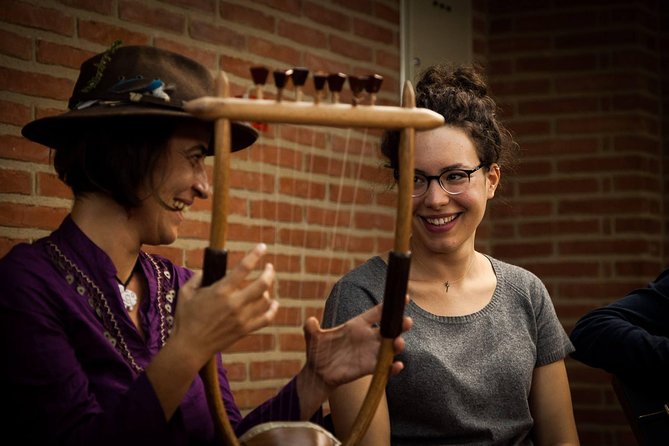
The meeting point is SEIKILO Museum of Ancient Music, Filippou 5, Thessaloniki 546 30, Greece. The start time is 11:30 a.m., and the activity returns to the same location when the lesson ends.
Use the address in your confirmation details rather than relying only on a map pin from a booking page. One person found that the map address did not match the actual location, so checking the confirmation email is a sensible step before you set out. This is a small issue, but a wrong address can turn a one-hour appointment into a rushed arrival.
The museum is near public transportation, which makes the meeting point reasonably practical for a short scheduled activity. Since the session starts at a fixed time, give yourself enough time to find Filippou 5. The activity ends where it begins, so you do not need to arrange a separate pickup or work out a second location afterward.
The venue itself is small. That is worth knowing in advance. You will not be entering a large national museum with rooms of monumental sculpture. Instead, the focus is on ancient music, reconstructed instruments, and the chance to handle and play them.
Looking closely at the reconstructed lyre
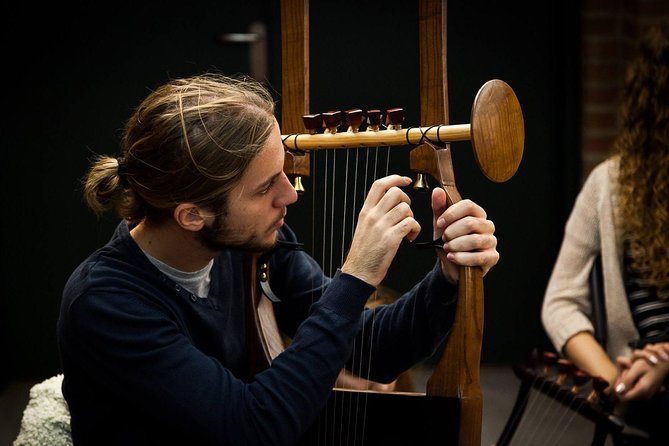
The first part of the lesson introduces the lyre’s design and sound. The instruments used here are handcrafted by Luthieros, a specialist brand known for making reconstructed ancient Greek lyres. That detail gives the activity a practical link to historical research and modern craftsmanship.
You get to examine the shape and construction before playing. The lesson also covers the music system of antiquity, giving you a basic framework for understanding how the instrument was used. The information is not presented as a long lecture. The goal is to move from looking, to listening, to playing within the same hour.
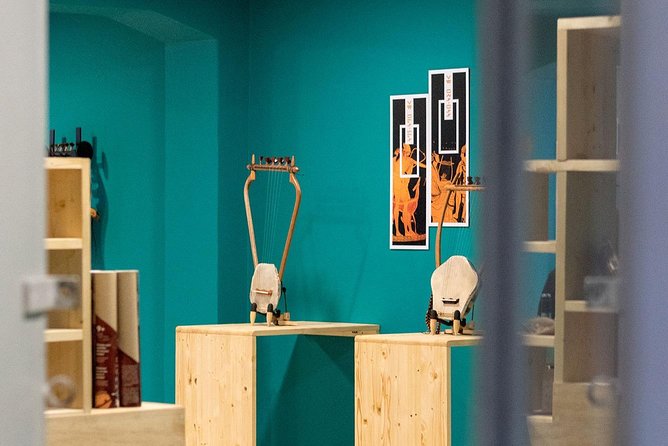
The museum’s collection includes handmade and historically accurate lyres, and you may be allowed to play the instruments on display. That makes the space more active than a typical exhibition. You can compare the appearance of different instruments and hear how the lyre feels in your hands rather than treating it as a fragile object that must remain untouched.
The small size of the museum works in your favor here. The lesson can stay focused, and you are not likely to lose time crossing a large building. The tradeoff is that the museum portion is compact. If you want a full afternoon of exhibits, this is not that kind of visit. It is a focused music lesson with a museum setting.
Learning the Seikilos Epitaph
The central goal is to learn the Seikilos Epitaph, an ancient melody that survives with its lyrics intact. You do not need to arrive with the ability to read music or play guitar. The instructor teaches the piece step by step, using the lyre’s relatively simple arrangement to help you make progress quickly.
I find this the strongest part of the activity for curious beginners. You leave with more than a general impression of an old instrument. You have worked on a specific melody with a documented connection to antiquity. That gives the hour a clear purpose and a satisfying finish.
The lyre may be easier to approach than a guitar or many modern instruments, but that does not mean the lesson is a gimmick. You still need to listen, follow instructions, and coordinate your hands. The private format is useful because the teacher can slow down, repeat a passage, or offer extra help without holding up a larger class.
The instructor named in the feedback is Lisa, who was described as kind and patient in her teaching. The activity is offered by an English-speaking instructor, and the lesson can be tailored if you already have professional musical experience. You can therefore expect the teaching to focus on your group rather than follow a rigid presentation for a crowd.
What the private format adds
Private instruction is one of the clearest reasons to consider this activity. Only your group takes part, so you do not have to compete with strangers for attention or feel self-conscious about making mistakes in front of a large class.
For a couple, the private setting turns the lesson into a shared project. For a family, it allows each person to try the instrument at a comfortable pace. For musicians, it creates room to ask more technical questions and request instruction suited to existing skills.
This format also makes the activity more personal than a standard museum tour. You are not simply being told that the lyre was important in ancient Greece. You are given the chance to test its size, sound, and playing method for yourself.
There is one practical limit. A private lesson is still only about an hour long, and the time must cover the introduction, museum setting, instrument practice, and melody. If your group includes several people who all want extensive individual instruction, the session may feel short. It works best when you see it as an introduction and hands-on cultural activity, not a full course in ancient music.



Is $48.06 a fair price?
At $48.06 per person, this is not the cheapest museum stop in Thessaloniki. The value comes from the combination of several parts: private English instruction, a loaner lyre for each participant, admission to the Seikilo exhibits, and a lesson built around a genuine ancient melody.
If you only want to see an ancient instrument, the price may feel high for a one-hour visit. If you want to play one and receive personal instruction, the calculation changes. You are paying for access to instruments that you might not otherwise be permitted to handle, plus a teacher who can guide your group through the basics.
The private structure is especially important when comparing prices. A group class might cost less per person, but it would not offer the same control over pace and attention. Here, the cost makes more sense for people who value participation and a focused lesson.
I would also consider the activity’s place in your Thessaloniki schedule. It fills roughly one hour and begins at 11:30 a.m. Because it ends back at the museum, you can plan another activity afterward without dealing with a distant drop-off. The short duration is useful on a busy day, though it leaves little spare time if you arrive late.
Who will enjoy this activity most?
This is a natural fit for music lovers, curious families, and anyone who prefers doing something over simply looking at displays. It also suits visitors interested in Greek culture who want a connection with antiquity that feels physical and immediate.
You do not need to play an instrument. In fact, the lesson is designed to show that the lyre is less difficult to approach than a guitar or many other modern instruments. Beginners can take part without special preparation, while professional musicians can request a lesson matched to their ability.
Children may appreciate the hands-on format, but the supplied information does not give a minimum age or specific child policy. If you are booking for young children, check those details before paying. The same applies to anyone in your group who needs a particular arrangement, since only general participation information is provided.
Service animals are allowed, and the museum is near public transportation. Most people can take part, but the activity requires good weather. That condition may seem surprising for a museum lesson, so keep an eye on any messages from the operator if the forecast is poor.
Small museum, strong focus
The Seikilo Museum is described as small, but its compact size is part of the appeal. The exhibits center on ancient music and include historically accurate, handmade lyres. You are not trying to cover a huge collection in a short period.
I like that museum access is included rather than treated as a separate extra. You can use the time before or after the lesson to look at the instruments at your own pace. Since the activity ends at the same place, you do not have to rush away immediately after playing.
Still, set your expectations correctly. This is a specialist cultural space, not a major archaeological museum. If you want a broad survey of Greek art and archaeology, visit another museum as well. Seikilo is valuable because it focuses tightly on one subject and lets you interact with it.
The lesson also gives the exhibits more meaning. After hearing the instrument and trying to produce a melody, you look at the lyres with a clearer sense of their practical purpose. That connection between display and action is what makes the museum stop worthwhile.
Timing, cancellation, and practical planning
Confirmation is provided at the time of booking, and the activity uses a mobile ticket. Keep the confirmation available on your phone, especially because the correct meeting address is important.
You can cancel for a full refund up to 24 hours before the 11:30 a.m. start time. Changes made less than 24 hours before the activity are not accepted, and the amount paid is not refunded for a late cancellation. Cutoff times use local time in Thessaloniki.
The activity may be canceled if the minimum number of participants is not met or if weather conditions are poor. In either case, you are offered another date or experience, or a full refund. Since the tour is private for your party, confirm the final arrangements before setting out.
Plan to arrive with enough time to find Filippou 5 and settle in. A one-hour lesson has a tight schedule, and losing ten minutes to a map error or late arrival takes a noticeable part of the session.
Should you book the ancient lyre lesson?
Book it if you want a short, hands-on cultural experience and like the idea of leaving Thessaloniki having played an ancient Greek instrument. The private English instruction, included lyre, museum access, and chance to learn the Seikilos Epitaph give the activity a clear purpose and good personal value.
Skip it if you want a large museum, a long archaeological tour, or an in-depth music course. The museum is small, the lesson lasts about an hour, and the price is easier to justify when you plan to take part rather than simply observe.
For most curious beginners, I would consider this a worthwhile change of pace. Check the confirmation address carefully, arrive on time, and think of the session as a lively introduction to ancient music rather than a complete musical education.
FAQ
Where does the lyre lesson take place?
The activity takes place at SEIKILO Museum of Ancient Music, Filippou 5, Thessaloniki 546 30, Greece.
What time does the experience start?
The scheduled start time is 11:30 a.m.
How long does the activity last?
The lesson lasts approximately one hour.
Is the lesson offered in English?
Yes. The experience is offered in English with an English-speaking instructor.
Do I need musical experience?
No. You do not need any musical education to participate. The lesson can also be adjusted to suit professional musicians.
Is a lyre provided?
Yes. An ancient Greek lyre is provided to each participant during the experience.
Is museum admission included?
Yes. You can explore the Seikilo Museum exhibits at no extra charge.
Can I cancel for a full refund?
Yes. You can cancel at least 24 hours before the experience start time for a full refund. Late cancellations and changes made within 24 hours are not accepted for a refund.