REVIEW · ATHENS
Private Walking Tour in Athens
Book on Viator →Operated by Guide in Athens and archaeologist Гид в Афинах Экскурсии от археолога · Bookable on Viator
The best part of this private Athens tour is the way it links the Acropolis with the city below. You do not simply climb to the Parthenon, take photos, and leave. You follow old paths toward the Roman Agora, Hadrian’s Library, Plaka, Anafiotika, and Monastiraki, watching Athens change from ancient city to modern capital.
I like the archaeologist-led approach, especially for visitors who want myths and ancient sites explained in plain language. I also like the private format. Your group can ask questions, set the pace, and focus on the details that interest you most.
The main drawback is cost. At $127.34 per person, this is not a cheap way to see Athens, and the Acropolis ticket, usually €10 to €20 depending on the season, is extra. The tour lasts about two and a half hours, so it gives you a strong introduction rather than a full day of sightseeing.
In This Review
- Five reasons this Athens walk is worth considering
- Starting at Thissio and heading toward the Acropolis
- The Acropolis and Parthenon in 90 focused minutes
- The Roman Agora and the old paths below the hill
- Hadrian’s Library and the Roman city
- Monastiraki, Plaka, and Anafiotika on one walk
- What the private format adds
- Price, timing, and what you actually receive
- Who should book this Athens experience
- Should you book this private Athens walk?
- FAQ
- How long does the private Athens walking tour last?
- Where does the tour start?
- Where does the tour end?
- Is Acropolis admission included?
- Is the tour private?
- Who leads the tour?
- What sights are included?
- Can I cancel for a full refund?
Five reasons this Athens walk is worth considering
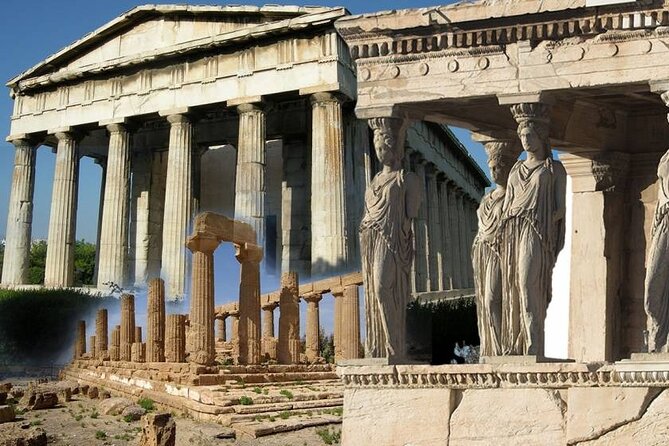
- The Acropolis comes first: Spend about 90 minutes at Athens’ most important ancient site, with the Parthenon, Propylaea, and archaeological area as the main focus.
- You connect several eras on foot: The route moves from Periclean Athens to Roman Athens, Ottoman Athens, and the neoclassical city around Monastiraki.
- A historian or archaeologist leads the walk: The experience is built around explanation, mythology, architecture, and archaeology rather than simple photo stops.
- The tour is private: Only your own group participates, making it easier to ask questions or request more attention to mythology, art, or daily life.
- Oksana may be available: One particularly strong recommendation names Oksana as an excellent guide, so ask about her availability when booking.
Starting at Thissio and heading toward the Acropolis
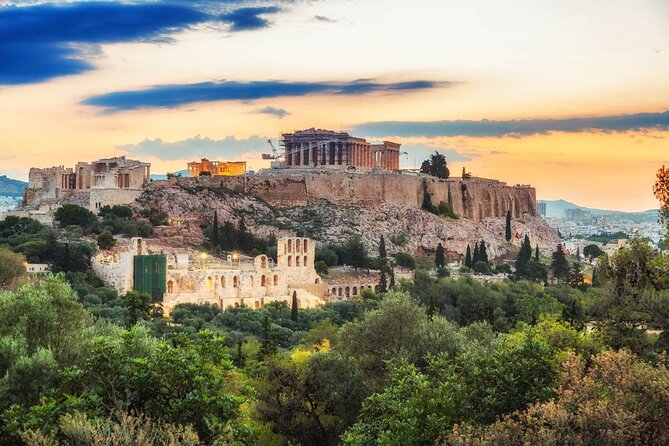
The meeting point is Thissio View at Apostolou Pavlou 25, in the Thissio area of Athens. The tour ends in Monastiraki, at the other end of a route that brings together several of the city’s major sights.
That start point makes practical sense. You begin near the pedestrian paths around the Acropolis before reaching the hill itself. The opening walk helps you see the ancient citadel as part of the city, not as an isolated monument.
Because this is a private walk, you can use the opening minutes to tell your guide what you want from the experience. If you enjoy mythology, say so. If you care more about construction, sculpture, Roman Athens, or the daily life of ordinary people, say that too. The guide is described as a historian, archaeologist, and professional guide, so the tour can go beyond a memorized list of dates.
The tour is offered in two daily time windows: 10:00 a.m. to 12:30 p.m. and 3:00 p.m. to 5:30 p.m. The morning departure gives you the rest of the day for museums or neighborhoods. The afternoon option works well if you arrive late or prefer to see the Acropolis after spending the morning elsewhere.
You can also read our reviews of more walking tours in Athens



The Acropolis and Parthenon in 90 focused minutes
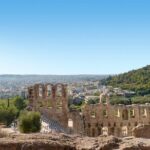
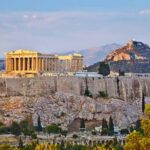
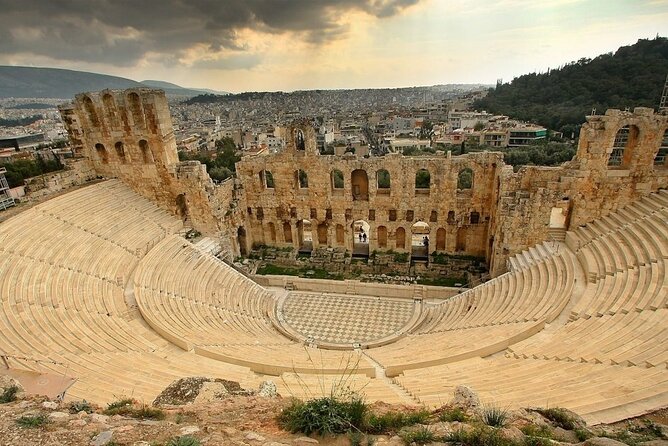
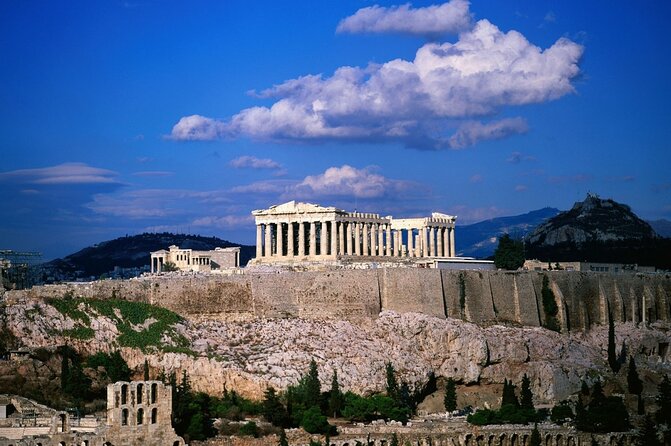
The Acropolis receives the longest part of the tour, about one hour and 30 minutes. You walk through the archaeological area, climb the hill, and see the monuments that made Athens famous around the world.
The central sight is the Parthenon, the temple dedicated to Athena the Virgin. Your guide can place it in the age of Pericles, when Athens produced some of the best-known architecture and sculpture of the fifth century BC. That context matters. Without it, the Parthenon can become just another ancient building in a busy sightseeing schedule.
You also see the Propylaea, the monumental entrance to the Acropolis. The route is not only about reaching the top. The entrance, approach, and views help show how the hill was designed as a sacred and ceremonial center.
The tour description says you walk through the archaeological area around the hill and then climb the Acropolis. That means you should expect an uphill route on historic paths, not a flat city stroll. Wear practical shoes and plan for exposed outdoor conditions. The experience requires good weather, so rain or poor conditions can lead to a new date or a full refund.
Acropolis admission is not included. The stated price varies by season, from €10 to €20 per person. That extra charge is important when comparing this tour with other private walks. You are paying for the guide’s time and the private format, then adding the site ticket separately.
The Acropolis portion is long enough for a useful introduction, but it is not a substitute for a full archaeological visit. If you want extended time at every monument, detailed sculpture study, or a slow museum visit, you may need more time elsewhere in Athens.
The Roman Agora and the old paths below the hill
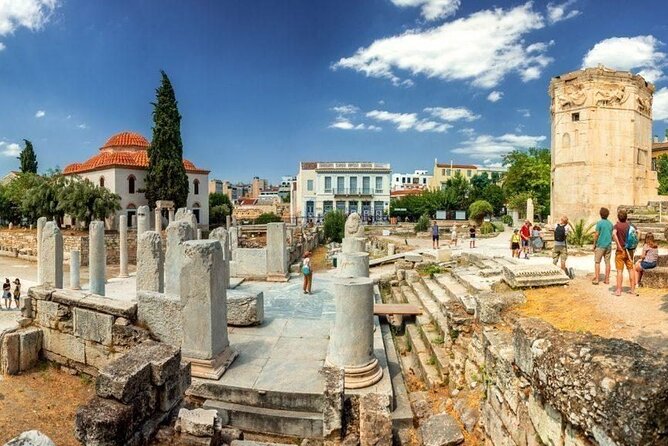
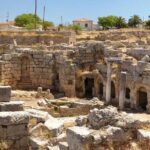
After the Acropolis, the walk continues toward the Roman Agora, listed as a short stop of about 10 minutes. The timing is brief, but the area helps explain how Athens continued to function after its classical peak.
The route follows the paths associated with Socrates, Plato, and Aristotle. You also hear about the Peripatos path around the Acropolis, a name connected with the Peripatetic school of philosophers. These references give the walk a human scale. Instead of treating Athens as a row of ruins, the guide can help you picture thinkers moving through the city and people using its public spaces.
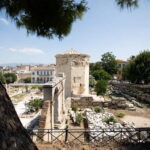
The Roman Agora is especially useful because it shows Athens under Roman rule. The Tower of the Winds is one of the key features here, and the site connects naturally with Hadrian’s Library. The nearby Cycladic-style buildings of Plaka and Anafiotika add a sharp change in mood and appearance.
Anafiotika is known for its small-scale Cycladic character within central Athens. The tour uses this area to bring you into the atmosphere of the nineteenth century, after the ancient and Roman portions of the route. That shift is one of the walk’s best ideas. In a short distance, you move across several periods of Greek urban life.
Since the listed stop is only about 10 minutes, do not expect a long, detailed exploration of every corner. Think of it as a guided connection between major sites, with the archaeologist supplying the links that make the route easier to understand.
Hadrian’s Library and the Roman city
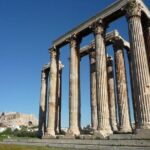
Hadrian’s Library is another short stop, also listed at about 10 minutes. Built by Emperor Hadrian in AD 132, the complex was designed as a quiet place near the busy ancient marketplace.
The scale was impressive. The building formed a large quadrangle, measuring about 122 by 82 meters, with high walls. Ancient descriptions refer to 100 columns made from Phrygian stone, gilded rooms, alabaster ceilings, statues, and paintings.
Those details help you imagine what has disappeared. Today, you see surviving walls and architectural remains. The guide’s role is to explain how the pieces fit into a much larger complex and why Hadrian invested in a place for reading, thought, and rest so close to the market.
I find this stop valuable because it broadens the usual Athens story. The Acropolis represents the city’s classical identity, while Hadrian’s Library shows the later Roman interest in shaping Athens as a center of culture. You get a sense of continuity, but also of change.
Admission to Hadrian’s Library is listed as free for this tour. The same is true of the other short city stops described in the route. Only the Acropolis ticket is specifically identified as an extra cost.
Monastiraki, Plaka, and Anafiotika on one walk
The route continues through Plaka and Anafiotika before ending in Monastiraki. This is where the ancient sites meet everyday Athens.
Plaka and Anafiotika bring a different architectural mood, with Cycladic details and the atmosphere of older neighborhoods. The tour connects these streets to the second half of the nineteenth century, giving you a useful contrast with the ancient remains you have just seen.
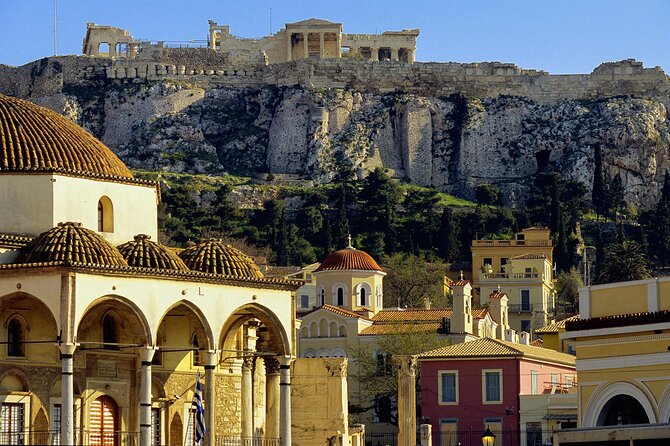
Monastiraki Square is a lively meeting point of cultures and eras. The Orthodox Church of Our Lady of Pantanassa sits on one side, while the Ottoman-era Tzistarakis Mosque faces it. The square also includes neoclassical buildings, including the metro station, adding another layer to the scene.
Look upward from the square and the Acropolis forms the backdrop. The connection is visual and practical: you finish near the hill you have just explored, but now see it from the level of the modern city.
The square also preserves a curious trace of ancient Athens. The Eridanos, described as a sacred river, can be seen in the area. The Tower of the Winds and Hadrian’s Library add further reminders of the Roman city nearby.
This final section is not just a walk through attractive streets. It helps you understand how Athens kept rebuilding over earlier foundations. Classical, Roman, Byzantine, Ottoman, and modern elements appear close together. A guide can point out those overlaps quickly, something you might miss if you walk the same route alone.
You can also read our reviews of more private tours in Athens




What the private format adds
A private tour changes the experience more than the word private might suggest. You are not trying to keep up with a large group or waiting for everyone to gather before moving on. Your guide can answer questions as they arise and adjust the level of detail.
That matters on a mythology-focused tour. Children can follow stories about gods and heroes, while adults can ask about architecture, archaeology, or the political world of Pericles. The tour is specifically designed to work for both children and adults, with an emphasis on interesting explanations rather than dry fact lists.
The private format can also help families and small groups with different interests. One person might want to hear about the Parthenon’s design. Another might prefer the Roman period or the neighborhoods below the Acropolis. You have more room to steer the conversation than on a fixed group excursion.
The guide named in the strongest personal recommendation is Oksana, described as a top-level professional guide for Athens and Greece. Her availability is not guaranteed, but it is sensible to ask for her when you arrange the tour.
Price, timing, and what you actually receive
The price is $127.34 per person. Guiding and the excursion with a historian archaeologist are included. Dinner is not included, and admission tickets are not included.
The price makes the most sense for people who value expert attention and a private group. For a solo visitor or a large family, the total cost may feel high. For a small group splitting the cost, the private format can be easier to justify, especially if you want a guide who can tailor the explanation to your interests.
At two hours and 30 minutes, the tour is compact. The Acropolis receives most of the time, while the Roman Agora, Hadrian’s Library, and Monastiraki are shorter stops. This balance works if you want an introduction on your first day in Athens. It may feel rushed if you expect detailed time at every location.
The tour ends in Monastiraki, which is useful for continuing your day in central Athens. The area is near public transportation, so you can move on after the walk. The route begins and ends in different places, so plan around that rather than expecting to return to Thissio.
Confirmation is provided when you book. Most people can participate, and the tour is private for your group only. Free cancellation is available up to 24 hours before the start time. Cancellations or changes made inside that window are not refunded or accepted. Poor weather or failure to reach the minimum number of participants can lead to a new date, another experience, or a full refund.
Who should book this Athens experience
I would recommend this walk to first-time visitors who want the major ancient sights explained in one clear route. It also suits families, couples, and small groups who prefer conversation over a fixed lecture.
You should consider it if mythology helps you enjoy archaeology. The tour is built to make temples, forums, statues, towers, and stories easier to connect. It is also a good choice if you want an archaeologist’s perspective without committing to a full-day program.
I would be more cautious if you have already spent several days studying the Acropolis or want a slow, highly detailed archaeological examination. The short stops below the hill are useful, but they are not lengthy site visits.
Before booking, check the Acropolis ticket price for your date and ask if Oksana is available. Also choose your time carefully. The morning and afternoon schedules give you flexibility, but the Acropolis portion remains outdoors and depends on suitable weather.
Should you book this private Athens walk?
Book it if you want the Acropolis placed in the context of Roman ruins, old neighborhoods, Ottoman architecture, and modern Monastiraki. The strongest features are the private setting, the archaeologist-led explanation, and the way the route links famous monuments with less obvious details such as the Eridanos and the Peripatos path.
Skip it if you want a low-cost, self-guided visit or several hours inside each archaeological site. The $127.34 price per person, plus the Acropolis admission, requires a real interest in guided interpretation.
For families and small groups, this is a practical first look at Athens, especially with a mythology-loving guide such as Oksana if she is available. You finish with the city’s most famous hill behind you and Monastiraki at your feet, a strong position for continuing your own exploration.
FAQ
How long does the private Athens walking tour last?
The tour lasts approximately 2 hours and 30 minutes.
Where does the tour start?
It starts at Thissio View, Apostolou Pavlou 25, Athens 118 51, Greece.
Where does the tour end?
The tour ends in Monastiraki, Athens, near public transportation.
Is Acropolis admission included?
No. Acropolis admission is separate and costs between €10 and €20 per person, depending on the season.
Is the tour private?
Yes. Only your own group participates in the activity.
Who leads the tour?
The experience includes guiding by a historian archaeologist and professional guide. Oksana is a specifically recommended guide, and you can ask about her availability.
What sights are included?
The route includes the Acropolis, the Roman Agora, Hadrian’s Library, Plaka, Anafiotika, and Monastiraki.
Can I cancel for a full refund?
Yes, if you cancel at least 24 hours before the experience start time. Cancellations made less than 24 hours in advance are not refunded.