REVIEW · ATHENS
The Acropolis, Plaka & Ancient Greek Agora: Private Walking Tour
Book on Viator →Operated by Travel Curious · Bookable on Viator
The best reason to book this tour is its smart four-hour route. You move from the Acropolis to the Ancient Agora, then finish in Plaka, seeing Athens as both a classical city and a living neighborhood. The earliest start time gives you the best chance of finding the Acropolis quieter.
I like the private format, since you can ask questions about mythology, architecture, and Greek customs without waiting for a large group. I also like the included Acropolis and Agora tickets, plus the combo ticket that lets you visit additional sites during the next four days. The main caution is the price: at $320 per person, this is a premium choice, and the tour does not include transport, food, drinks, or hotel pickup.
In This Review
- Key points to know before booking
- Why this Athens walking route works
- Starting at the Acropolis and Parthenon
- The Erechtheion and its unusual design
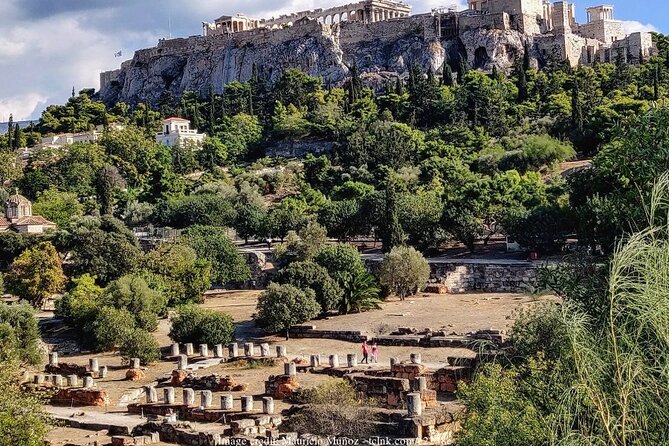
- Walking down to the Ancient Greek Agora
- The Temple of Hephaestus, Athens’s best-preserved ancient temple
- Plaka and the Lysicrates Monument
- What the private guide adds
- Price, timing, and what you receive
- Who should book this tour
- My verdict on the Athens route
- FAQ
- How long does the private Athens walking tour last?
- Is the tour private?
- Is the tour offered in English?
- Are Acropolis admission tickets included?
- Are Ancient Agora admission tickets included?
- Does the tour include tickets for later visits?
- Where does the tour start and end?
- Are hotel transfers, food, and transportation included?
Key points to know before booking
- Early Acropolis access matters: Choose the first available start if you want the best chance of seeing the Parthenon with fewer people.
- The route covers five major stops: You visit the Acropolis, Erechtheion, Ancient Agora, Temple of Hephaestus, and Plaka.
- Your group stays private: Only your own party participates, with an English-speaking guide.
- Greek mythology gets special attention: Guides such as Onoufrios Dovletis are noted for bringing mythology, culture, and ancient stories into the walk.
- The tour ends in the Ancient Agora: You finish at Adrianou 24, a useful location for continuing into central Athens.
- The price buys time and guidance, not a full-day package: Tickets are included, but meals, transport, gratuities, and hotel transfers are extra.
Why this Athens walking route works
Athens can feel like a pile of major sights scattered across busy streets. This tour gives those sights a clear order. You begin high on the Acropolis, where the city’s most famous monuments make the strongest first impression, then walk downhill toward the political and commercial center of ancient Athens.
The four-hour length is well judged for a first look. You get enough time to understand the main sites without signing up for a full day of ruins. I would think of it as a focused introduction, not a slow archaeological study.
The private setup changes the pace. You can ask why the Parthenon was built, how Greek drama worked, or which gods belong to which myths. If one part of the story catches your attention, your guide can spend more time there instead of following a fixed group script.
The tradeoff is cost. At $320 per person, the value depends heavily on your group size, your interest in ancient Greece, and how much you value a personal guide. Group discounts may help, but the exact saving is not provided, so check the final booking price before you commit.
You can also read our reviews of more walking tours in Athens



Starting at the Acropolis and Parthenon
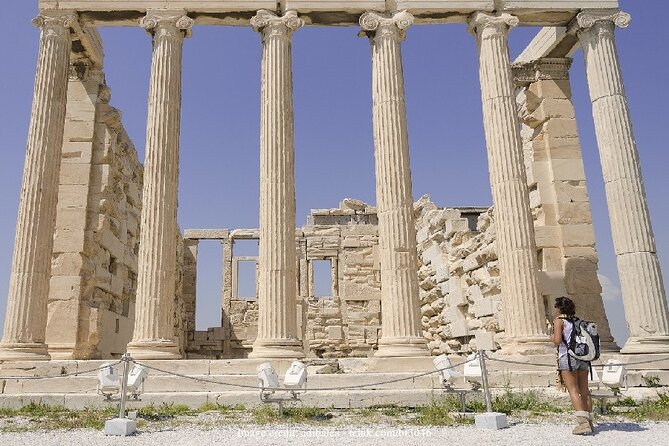
The tour begins at To Kafenedaki, Propileon 9, near the Acropolis entrance area. From there, you receive admission to the Acropolis, including the Parthenon and other major monuments on the hill.
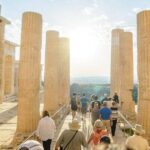
The Acropolis is the emotional center of this walk. The Parthenon is the familiar image, but the setting is what makes it powerful. You look over Athens while standing among buildings created for religious, civic, and artistic purposes more than two thousand years ago.
The scheduled time at the Acropolis is about one hour. That is enough for a strong overview, especially with a guide who can explain what you are seeing rather than leaving you to sort out a forest of columns on your own.
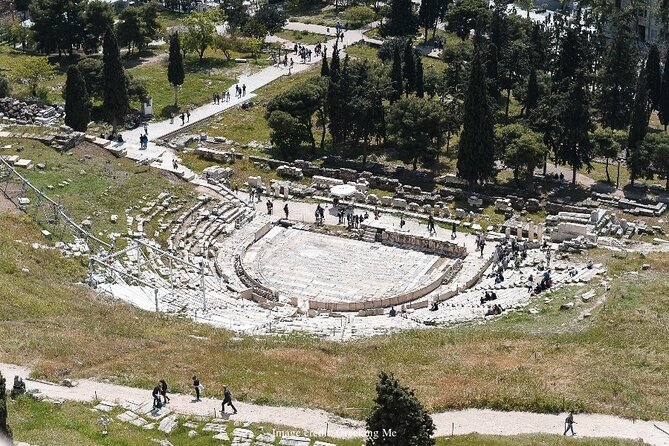
You also visit the Theatre of Dionysus. This is where classical works by major Greek poets were first performed in the fifth century B.C. It gives the Acropolis a human voice. Instead of seeing ancient Athens only as temples and stones, you connect the site with public drama, poetry, and shared civic life.
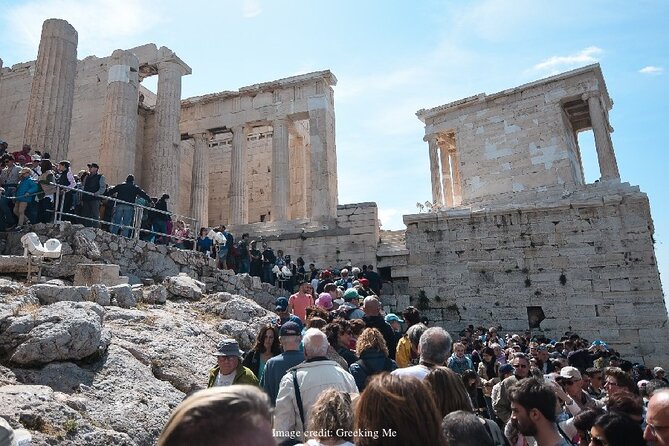
If you can handle an early start, take it. The tour information specifically points to the earliest time as the best option for avoiding crowds. That advice matters here. The Acropolis is open and exposed, and the experience becomes more pleasant when you can pause near the monuments without being surrounded by a large flow of people.
Still, without crowds should be treated as a goal, not a guarantee. The Acropolis is Athens’s best-known sight, and conditions can change. The early time improves your odds, but it cannot promise an empty hill.
The Erechtheion and its unusual design
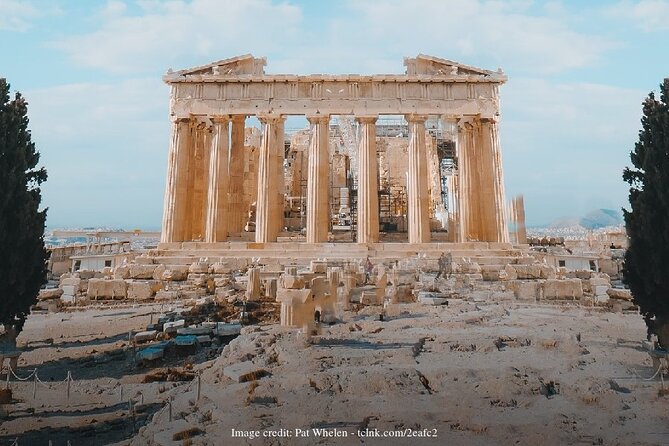
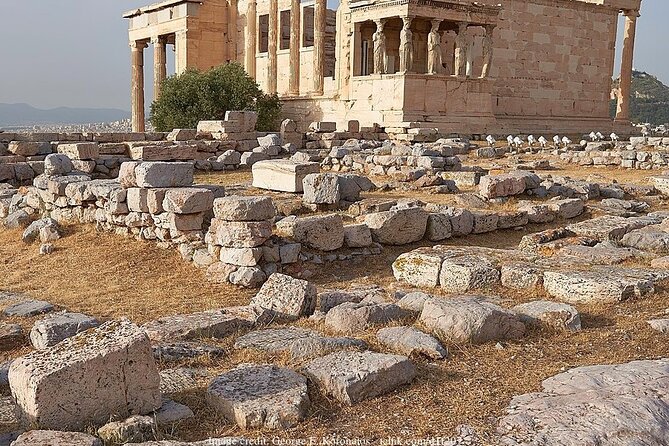
The next major stop is the Erechtheion, with about 30 minutes set aside for it. This temple is often overshadowed by the Parthenon, yet its design is more complicated and, to many eyes, more intriguing.
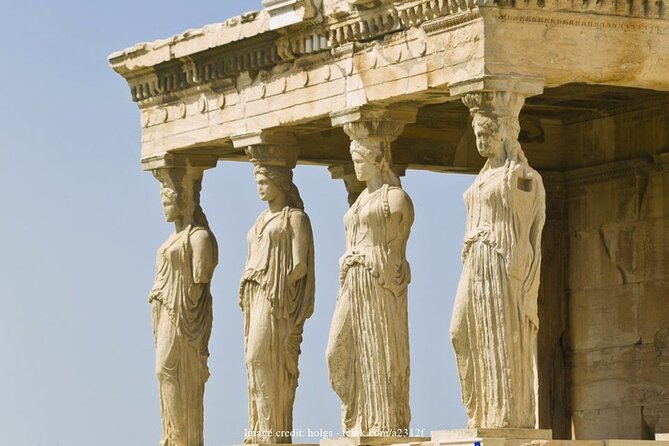
The building has an uneven plan because it served several religious purposes and had to work around the contours of the rock. Its famous Caryatid figures make it instantly recognizable, but the value of a guide is in explaining why the structure looks so different from the clean, symmetrical Parthenon.
This is a good place to ask questions. Greek temples can look simple at first glance, but their details often reflect competing traditions, sacred areas, and practical limits. A private guide can give you the background at a pace that suits your group.
The half-hour allocation is reasonable for an introduction. If you are an architecture specialist, you may want more time. For most people, the stop offers a useful contrast: the Parthenon shows idealized order, while the Erechtheion reveals the complications behind ancient religious buildings.
Walking down to the Ancient Greek Agora
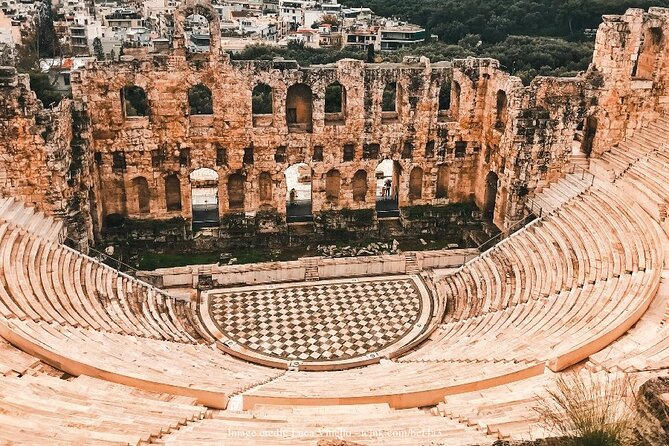
The route then leads toward the Ancient Greek Agora and Roman Forum area. About 30 minutes is scheduled for the Agora, and admission is included.
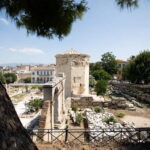
The Agora was the economic and political center of ancient Athens. This is where the city’s public life comes into focus. The Acropolis represents ceremonial power, while the Agora helps you picture debate, trade, administration, and ordinary civic activity.
I like this change of setting. You are no longer looking only at a mountaintop sanctuary. You are entering the place where ancient Athenians handled the practical business of public life.
Thirty minutes will give you the main idea, but it is not a long archaeological visit. If you enjoy reading every sign and examining every remaining foundation, you may wish the schedule were looser. The benefit of this tour is breadth: you see several important sites in one morning or afternoon rather than spending all four hours in one complex.
The tour ends inside the Ancient Greek Agora at Adrianou 24. That makes the final location useful. You are already in central Athens, close to Plaka and other places where you can continue walking after the guide says goodbye.
The Temple of Hephaestus, Athens’s best-preserved ancient temple
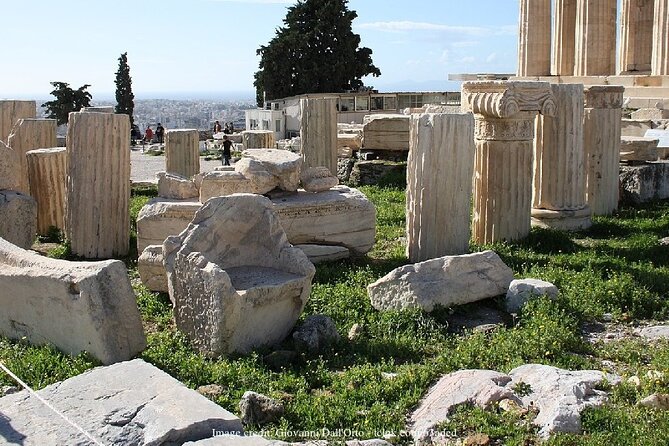
The Temple of Hephaestus receives about 45 minutes, which is more time than the itinerary gives the Agora itself. That makes sense. This is one of the clearest surviving ancient Greek temples, and it is even older than the Parthenon.
The temple is dedicated to Hephaestus, the god associated with metalworking and craftsmanship. You can use this stop to look closely at the columns, pediments, and overall form of a classical temple. Because so much of the structure remains, it is easier to understand how these buildings were arranged than it is at sites reduced to scattered stones.
A guide adds the most value here by helping you compare the temple with the Parthenon. You see how the two buildings relate in age, design, and purpose. The stop also offers a calmer stretch after the busier Acropolis.
The stated 45 minutes gives you room to appreciate the site without rushing. Exact access and viewing conditions can vary, but the tour includes admission to the Ancient Agora complex, which covers this important monument.
You can also read our reviews of more private tours in Athens




Plaka and the Lysicrates Monument
The final portion takes you through Plaka for about 45 minutes. This is not another archaeological enclosure. It is a walk through one of Athens’s most appealing central districts, with white staircases, cafés, terraces, and narrow streets.
Plaka gives the tour a welcome change of mood. After temples, theaters, and civic ruins, you see how present-day Athens occupies the same historic center. The neighborhood is a practical place to continue your day, stop for food later, or return for a slower stroll.
The route includes the Lysicrates Monument. This small circular monument is easy to miss if you are simply wandering through Plaka, so having it built into the walk adds a specific point of interest beyond cafés and souvenir shops.
The stop is free, but that does not mean it is filler. It links ancient Athens with the modern city. You finish not at a distant transport hub, but in a district where you can keep exploring on foot.
What the private guide adds
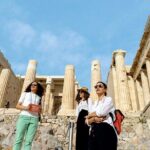
The guide is the central reason to choose this format instead of visiting the same places independently. You receive a friendly, professional English-speaking guide for your own group, and the private arrangement means you can ask plenty of questions.
The strongest guide feedback centers on Greek mythology, ancient history, and personal presentation. Onoufrios Dovletis is specifically named in the supplied feedback, with praise for explaining mythology and history, knowing good places for photographs, and offering a movie tip connected with the experience.
That kind of detail can make a difference. A good photo location is useful, but the larger benefit is learning how to look at the monuments. Ask your guide to point out details you might otherwise walk past, and ask for help separating later legends from what is known about the ancient sites.
The private format is especially useful for families, couples, and friends with different levels of interest. One person may want architecture, another mythology, and another a quick orientation to Athens. A private guide can adjust the emphasis more easily than a large scheduled group.
There is no promise that every booking will have Onoufrios as its guide, so treat his name as a helpful detail, not a guarantee. The supplied information confirms an English-speaking guide, but not a specific guide assignment.
Price, timing, and what you receive
The listed price is $320 per person. That is expensive for a four-hour walk, so you should examine what is included before deciding.
The package includes:
- A private English-speaking guide
- Acropolis admission
- Ancient Agora admission
- A combo ticket for additional sites during the four days after the tour
The extra ticket can improve the value if you plan to keep visiting archaeological sites during your stay. It gives you a reason to use this tour as the first day of an Athens sightseeing plan rather than as an isolated activity.
You pay separately for food and drinks, transportation on the day, and optional gratuities. Hotel pickup and drop-off are not included. You should plan your own way to the starting point at To Kafenedaki, Propileon 9, and remember that the tour ends at Adrianou 24 inside the Agora.
Because the activity lasts about four hours, it can fit well into a day with other plans. I would avoid scheduling something that requires you to cross Athens immediately afterward. The walk includes ancient sites and a neighborhood route, and the Acropolis requires a moderate level of physical fitness.
Wear practical shoes and bring what you need for several hours on foot, but the tour data does not specify equipment or clothing requirements. The key point is simple: this is an active walking visit, not a vehicle-based sightseeing tour.
Who should book this tour
I would recommend it most strongly to first-time visitors who want a clear introduction to ancient Athens without joining a large group. It also suits people who enjoy asking questions and want mythology, civic life, architecture, and modern neighborhood life combined in one outing.
Families may appreciate the private pace, especially if children respond better to stories than to museum labels. Couples and small groups can also make good use of the format by shaping the conversation around their own interests.
History and archaeology fans should note the limits. The tour is broad rather than exhaustive. You see several major places, but the stop times are fixed and the entire route takes about four hours. If your priority is a slow study of every Acropolis building, a longer specialist tour may suit you better.
The cost may be hard to justify for a solo visitor or a very small group on a tight budget. Group discounts could change the calculation, but you need to check the price offered for your party.
Also keep the weather policy in mind. The tour requires good weather. If poor weather causes cancellation, you are offered another date or a full refund. However, if you cancel or request an amendment for another reason, the payment is not refundable.
My verdict on the Athens route
Book this tour if you want the main ancient sights arranged in a sensible order, value a private English-speaking guide, and can take the earliest start time. The combination of the Acropolis, Erechtheion, Agora, Temple of Hephaestus, and Plaka gives you a useful picture of Athens in one compact outing.
I especially like the contrast between the monuments and the final Plaka walk. The ancient sites explain how Athens worked, while Plaka brings you back to the city you are actually visiting.
Skip it if $320 per person feels too high, if you prefer exploring independently, or if you want long, unhurried time at each archaeological site. For everyone else, this is a polished first look at Athens, with the private guide and included tickets doing much of the heavy lifting.
FAQ
How long does the private Athens walking tour last?
The tour lasts approximately four hours.
Is the tour private?
Yes. Only your own group participates in the activity.
Is the tour offered in English?
Yes. The tour includes a professional English-speaking guide.
Are Acropolis admission tickets included?
Yes. Admission to the Acropolis is included in the tour price.
Are Ancient Agora admission tickets included?
Yes. Admission to the Ancient Agora is included.
Does the tour include tickets for later visits?
Yes. You receive a combo ticket for additional sites during the four days following the tour.
Where does the tour start and end?
It starts at To Kafenedaki, Propileon 9, Athina 117 42, Greece. It ends inside the Ancient Greek Agora at Adrianou 24, Athina 105 55, Greece.
Are hotel transfers, food, and transportation included?
No. Food, drinks, transportation on the day, gratuities, and hotel pickup and drop-off are not included.