REVIEW · ATHENS
The Best of Athens Tour: Top Sights and Attractions
Book on GetYourGuide →Operated by Truevoyagers · Bookable on GetYourGuide
Athens in 2.5 hours can sound rushed, but this walk feels built for real people. You start in the city’s modern heart and thread your way through gardens, monuments, and old streets until the Acropolis Museum area, with a local guide keeping the pace sane.
I love two things most. First, you get a local expert’s context, so each stop clicks into place instead of feeling like checkboxes. Second, the route blends the headline landmarks with pleasant neighborhood wandering through Plaka and Anafiotika-style lanes.
One thing to consider: this is a walking highlights tour, not an archaeological ticket. You’ll see major sights, but you don’t get access inside archaeological sites.
In This Review
- Key highlights that make this Athens walk worth it
- Getting your bearings fast: from Nike Store to Syntagma Square
- Tomb of the Unknown Soldier: a quick stop with a strong mood
- National Garden: the rare calm break right in the city center
- Maximos Mansion: where Greek politics gets a landmark address
- Panathenaic Stadium: the Olympic story you can actually see
- Zappeion Garden: elegance, shade, and another garden pause
- Arch of Hadrian and Temple of Olympian Zeus area: big empire energy
- Plaka’s small alleys and Anafiotika-style lanes: where the city turns human
- Pnyx and Dionysiou Areopagitou: the “looking up” part of Athens
- The Acropolis area pass-by: the iconic skyline moment, minus the entry
- Ending at the Acropolis Museum area: plan your next move
- Price and value: what $47 buys you in Athens time
- Guide impact: why the person matters on a short Athens tour
- Who this tour suits best (and who should skip it)
- Should you book the Best of Athens Tour?
- FAQ
- Where does the tour meet?
- How long is the walking tour?
- What language is the tour guide?
- What’s included in the tour?
- Does this tour include entry to archaeological sites?
- Where does the tour finish?
- What should I bring?
- Can I cancel and get a full refund?
- Can I reserve without paying right away?
Key highlights that make this Athens walk worth it
- Nike Store to Syntagma Square orientation: a smart starting point for modern Athens and what comes next
- Ceremony + monuments in one stretch: Tomb of the Unknown Soldier and Parliament area stops
- Green breaks from the heat: National Garden and Zappeion Garden photo stops
- Iconic “big ticket” sights without long waits: Panathenaic Stadium, Arch of Hadrian
- Plaka lanes with real atmosphere: small alleys, colorful houses, and sometimes traditional music vibes
- A great finish line: the Acropolis Museum area, where you can choose how you continue
Getting your bearings fast: from Nike Store to Syntagma Square

This tour starts outside the Nike Store, across Syntagma Square. That matters more than you might think. Syntagma is the clean hub where Athens feels “easy” to navigate, and it sets the tone for what you’ll explore: the layers of a city that still runs on history.
From the first minutes, you’re not just looking at stone. You’re learning how Athens organizes itself—where power sits, where everyday life spills into side streets, and how the older neighborhoods connect to the monumental zone toward the Acropolis. If you’re visiting Athens for the first time (or you only have a half-day), this is a fast way to understand the city’s geography without having to study a map for hours.
And yes, the walking is real. You’ll want comfortable shoes. You’re also on your feet long enough that you’ll appreciate the guide’s pacing, plus the short photo breaks that keep the tour from turning into a sprint.
You can also read our reviews of more tours and experiences in Athens.

Tomb of the Unknown Soldier: a quick stop with a strong mood
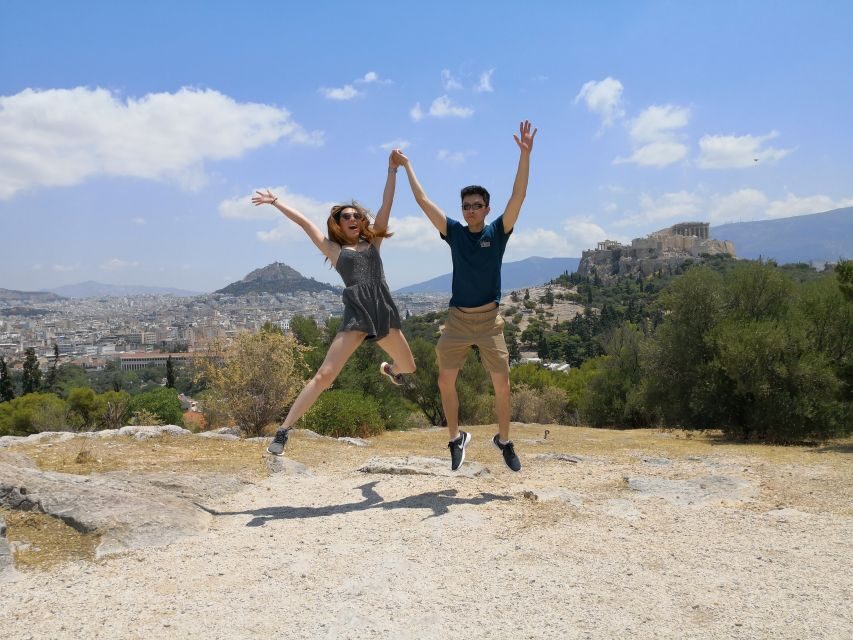
The first major photo stop is the Tomb of the Unknown Soldier. This is one of those Athens moments that hits emotionally even if you’re not a history nerd. It’s a ceremonial landmark tied to modern national identity, and your guide helps you read what you’re seeing instead of treating it like scenery.
What makes it useful on a short tour: it’s an anchor. After this, everything else—Parliament, guards, nearby streets—feels connected. You’re not hopping randomly between sights. You’re building a mental map.
National Garden: the rare calm break right in the city center
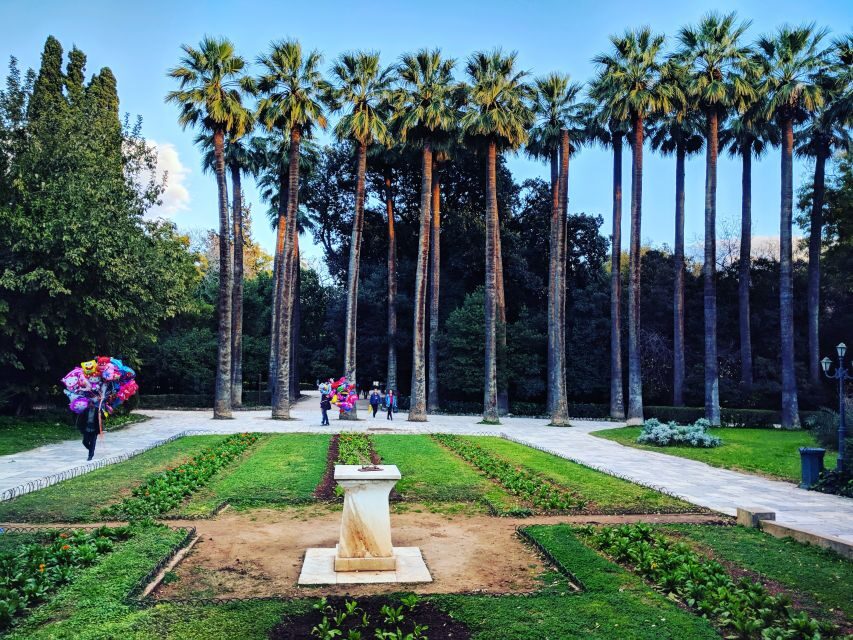
Next up is the National Garden, a green oasis that resets your senses. In a city where everything feels sun-baked and stone-heavy, this stop is a practical sanity break. You’ll have time to step aside, take a breath, and notice the contrast between Athens’ outdoor rhythm and its interior green spaces.
Why this matters for you: if you’re walking Athens in warm weather, this kind of pause can make the difference between enjoying the tour and feeling drained halfway through. Even a short garden stop gives your body a moment to catch up, and your eyes a new kind of scene to look at.
Maximos Mansion: where Greek politics gets a landmark address
Then comes Maximos Mansion, the residence of the Greek Prime Minister. It’s not a place you’ll wander freely, but the outside view and photo stop are a smart way to connect Athens to how modern governance lives on the ground.
Your guide’s explanations here are usually the “aha” part—how Athens balances the monumental past with an active present. If you like cities that feel like they’re still functioning while history looms nearby, this is a good stop to appreciate that Athens isn’t just museums and marble.
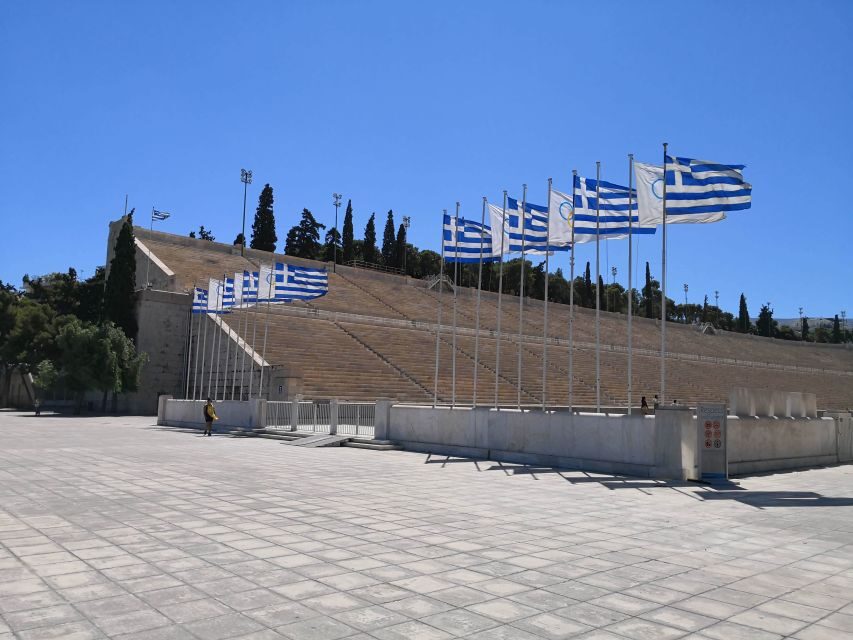
Panathenaic Stadium: the Olympic story you can actually see
The tour hits Panathenaic Stadium, one of Athens’ most iconic sports landmarks. This is where the story of the Olympics isn’t abstract—it’s a real site you can stand beside.
What makes Panathenaic Stadium special on this walk is that it represents a revival of classical ideas in modern times. Your guide points out the significance of the Olympic context tied to the place where the first Olympic village was set, and you’ll get architectural and cultural details you’d likely miss if you just took photos and kept moving.
Time-wise, it’s a short photo stop. Don’t expect a long, detailed stadium tour. But it’s enough to spark curiosity for later—especially if you plan to return for museums, or you’re interested in how Athens reuses its historical identity.
- All Day Cruise -3 Islands to Agistri,Moni, Aegina with lunch and drinks included
★ 5.0 · 4,958 reviews


Zappeion Garden: elegance, shade, and another garden pause
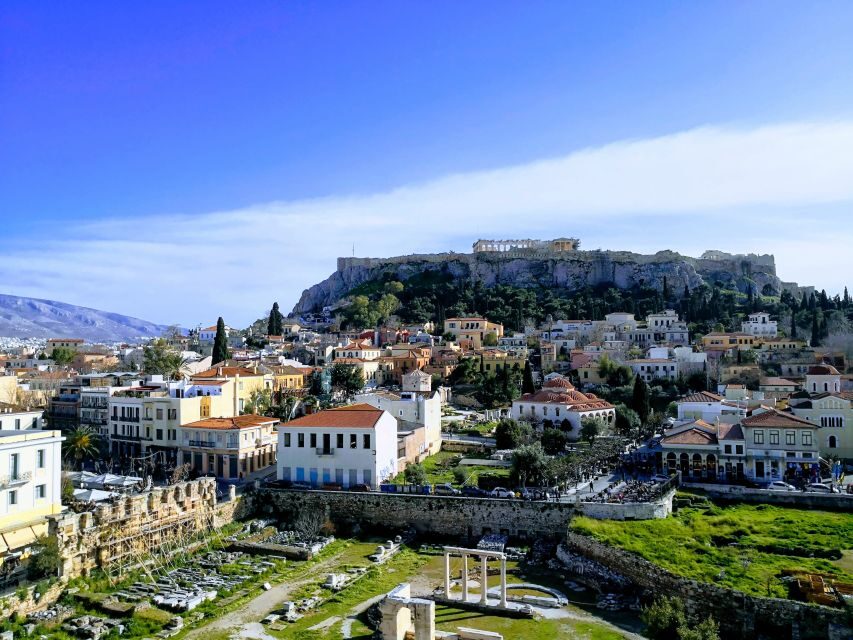
Zappeion Garden is another quick photo stop, and it keeps the “break rhythm” alive. After stadium-scale history, this garden gives you something calmer: open space, pleasant scenery, and another chance to regroup before the city gets denser.
If you’re traveling with friends who prefer different styles of sightseeing—some people want monuments, some want pretty streets—stops like this help everyone feel like the tour fits them.
Arch of Hadrian and Temple of Olympian Zeus area: big empire energy
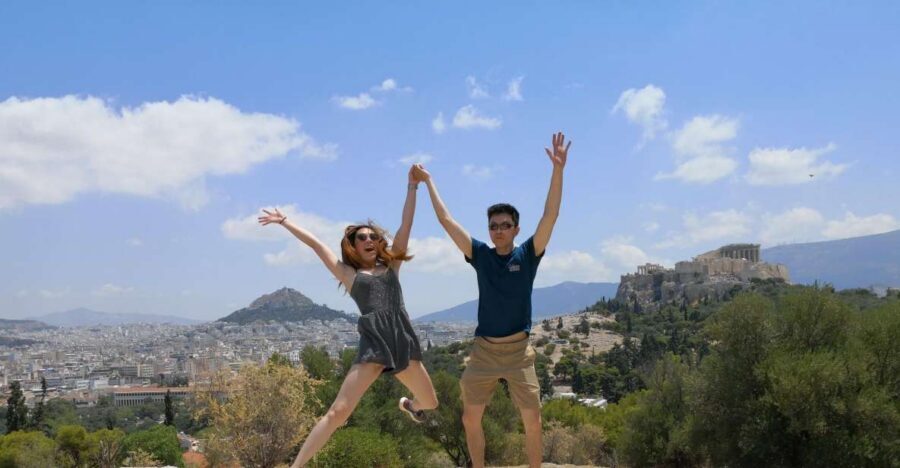
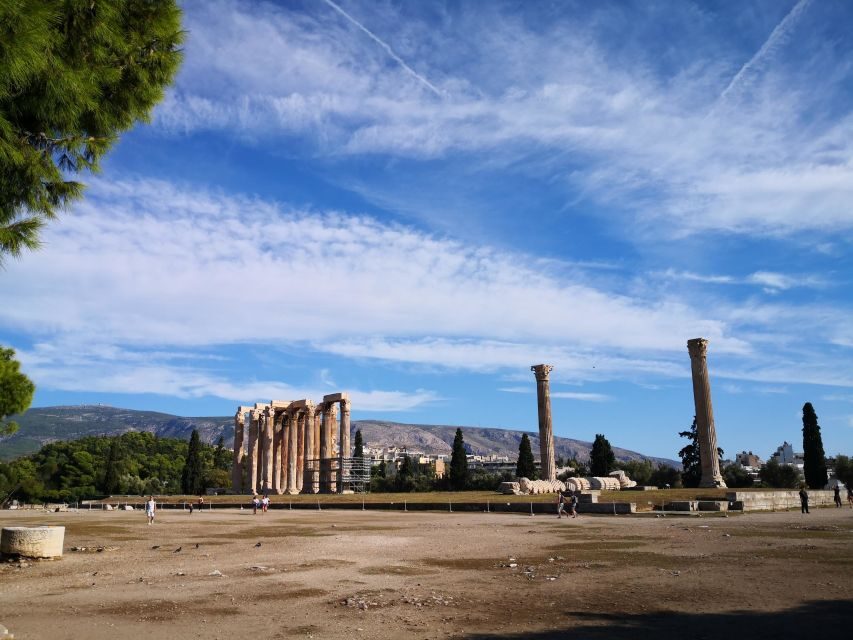
You’ll then pass by the Arch of Hadrian and be in the broader area of the Temple of Olympian Zeus. Even without going into archaeological sites, these are powerful visual anchors. They show you how Athens’ monumental scale was shaped by eras that weren’t “ancient Athens” in the simple textbook sense.
This is where the guide’s job really pays off. The landmarks around here make more sense when you understand what they were meant to project—power, wealth, and an empire’s message stamped into stone. You’ll get explanations that tie the arch and nearby monumental zone into the bigger Athens story.
Plaka’s small alleys and Anafiotika-style lanes: where the city turns human
Then the walk shifts into Plaka. This is the part I always recommend to friends because it’s where Athens stops feeling like an outdoor classroom and starts feeling like a living city. You’ll stroll through small alleys and around colorful houses, and you’ll likely catch the kind of everyday texture that makes a neighborhood memorable.
One detail your guide may work into the walk: the presence of traditional music. The tour includes time where you can hear or notice locals playing the bouzouki. It’s not guaranteed at every moment, but it’s the kind of “why Athens feels Athens” moment that makes the tour stick in your mind.
Also, this is where you’ll hear about Anafiotika—its look and why it feels distinct within Athens. On a short tour, you don’t need to spend hours wandering. A guided stroll through the right pockets is enough to show you where you’ll want to return later on your own.
Pnyx and Dionysiou Areopagitou: the “looking up” part of Athens
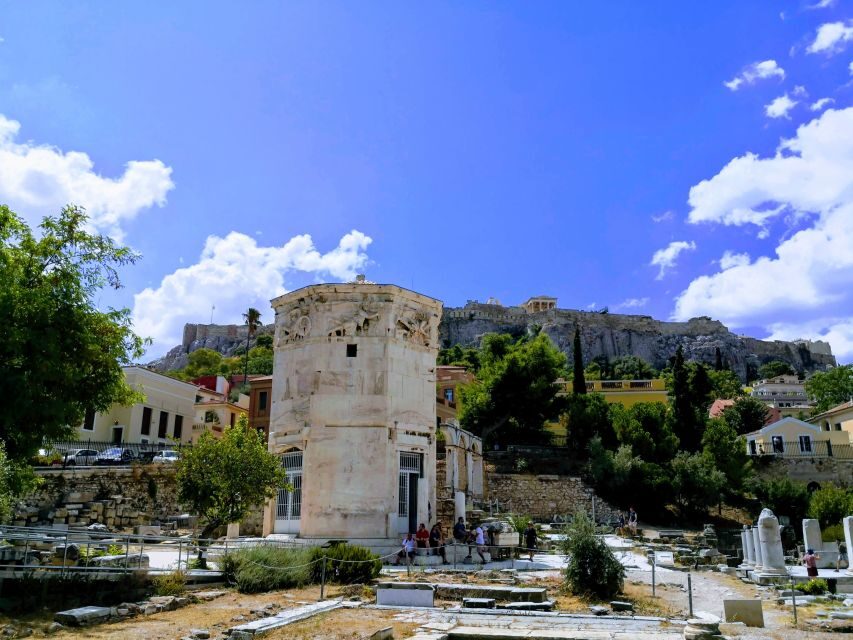
Next is Pnyx, with a photo stop. Pnyx is tied to Athens’ political past, and even when you’re only viewing from the outside, you’ll get the sense of a place built for public life and debate.
Then you walk along Dionysiou Areopagitou, a street that’s all about perspective. The route here is carefully chosen so you get moving views toward the Acropolis zone. You’re not stuck in one angle. You’re getting the slow, walking-form of sightseeing, which helps you understand the slope and the visual relationship between neighborhoods and monuments.
One practical note: parts of Athens are steep. Your guide will keep it manageable, but this is still a walking tour. Take your time on the uphill moments and use the photo-stop pacing to rest your legs.
The Acropolis area pass-by: the iconic skyline moment, minus the entry
You’ll pass by the Acropolis of Athens. Because this tour doesn’t provide access to archaeological sites, you’re not going inside for a long visit. But the pass-by still works because it gives you the skyline moment and sets context for what you’ll do next.
For many first-timers, this is exactly the right approach. You see the shape of the Acropolis and you understand where it sits in the city. Then you can decide whether you want a separate ticketed visit later with more time.
Ending at the Acropolis Museum area: plan your next move
The tour finishes at the Acropolis Museum. This ending is smart because it gives you a natural “continuation point.” Even if you don’t go into the museum right away, you’re in the right zone to keep the story going with your own schedule.
Why this finish helps you: after walking through Parliament area to Plaka to the uphill views, the museum becomes less random. You’ve already learned the city’s major threads—modern identity, classical legacy, and how Athens packages history into public space.
If you want to make the most of the last stretch, ask your guide for food and entertainment recommendations at the end. The tour includes tips and guidance for what to do next, and Athens is one of those cities where a good suggestion can lead you to a neighborhood you’d never find by yourself.
Price and value: what $47 buys you in Athens time
At $47 per person for a 2.5-hour walking tour, the value is mostly about concentration. You’re not just paying for someone to point and say “this is that.” You’re paying for a route that hits major landmarks and scenic neighborhoods in a compressed time window.
Here’s what that means for you:
- You’ll likely save time and energy compared with doing a self-guided route from scratch.
- You get local context at multiple stops, which makes the city easier to remember.
- You get practical food and entertainment ideas so the rest of your day doesn’t become a guessing game.
The trade-off is also clear: it’s walking, and it’s not a museum-day plan. If your priority is sitting inside archaeological sites for hours, you’ll need additional tickets or a longer tour. But for orientation plus highlights, it’s a strong deal.
Guide impact: why the person matters on a short Athens tour
A walking tour lives or dies on the guide, and this one attracts guides who can explain without turning your brain into a spreadsheet. You’ll hear clear, paced storytelling, with room for questions.
From the guides you might encounter—people like Victor, Penelope/Penelope, Viktor, Lucas, Greg, and Grigoris—you’ll notice a common theme: they talk through history and culture in a way that feels usable. Some guides also tailor the experience when the group is smaller (even down to just you and your party), which can make the pacing feel more comfortable and personalized.
If you’re the kind of traveler who wants context and not just snapshots, you’ll feel the difference quickly.
Who this tour suits best (and who should skip it)
This tour is a great fit if you:
- Want a first-pass overview of Athens with real neighborhoods, not just monuments
- Like guided walking and short photo stops over long museum sessions
- Appreciate cultural context, including Greek traditions and how modern Athens fits over ancient bones
It may be less ideal if you:
- Want to go inside archaeological sites during this single outing (this tour does not include that)
- Have limited mobility or struggle with walking and short uphill moments
- Prefer to spend time in one place, slowly, rather than covering many highlights
Should you book the Best of Athens Tour?
I think you should book it if your goal is to get your bearings fast and see the Athens “greatest hits” in a thoughtful order. The price is reasonable for what you cover, and the ending near the Acropolis Museum makes it easy to build your next step.
If you’re unsure, use a simple test: do you want a guided route that connects the modern city, the gardens, Plaka’s lanes, and the Acropolis zone? If yes, this is a smart way to spend 2.5 hours.
FAQ
Where does the tour meet?
It meets outside the Nike Store, across Syntagma Square, on the shop’s corner.
How long is the walking tour?
The duration is 2.5 hours.
What language is the tour guide?
The tour is guided in English.
What’s included in the tour?
You’ll get a local expert guide, plus tips and recommendations for food and entertainment, and you’ll visit areas including Syntagma, the Hellenic Parliament, the National Garden, Maximos Mansion, Panathenaic Stadium, Zappeion, Temple of Olympian Zeus, Plaka, Anafiotika, and the Dionysiou Aeropagitou area.
Does this tour include entry to archaeological sites?
No. This tour does not provide access to archaeological sites.
Where does the tour finish?
The tour finishes at the Acropolis Museum.
What should I bring?
Wear comfortable shoes for walking.
Can I cancel and get a full refund?
Yes. Free cancellation is available up to 24 hours in advance for a full refund.
Can I reserve without paying right away?
Yes. You can reserve now and pay later to keep your plans flexible.