REVIEW · THESSALONIKI
Thessaloniki: Walking Talking Food
Book on Viator →Operated by MTM Experiences · Bookable on Viator
Thessaloniki’s best food stories unfold in its old markets, not behind a formal restaurant door. This two-hour walk takes you from the White Tower into Kapani, Modiano, Athonos, and Louloudadika, where fish, spices, coffee, flowers, tavernas, and everyday city life share the same streets. Food and local history come together naturally here.
I like the small maximum of 15 people, which should make it easier to hear the guide and ask questions. I also like the focus on places you could miss on your own, especially the market lanes and less polished corners of central Thessaloniki. Guides named Nico and Nikolas have received particular praise for friendly conversation and a good selection of regional treats.
The main thing to consider is the tour’s flexible style. One guest found it felt more like a market walk than a carefully planned food tour, with only a few tastings and about 1.5 hours of activity. If you want a full lunch, this is not it, and the meal afterward costs extra.
In This Review
- Key points to know before booking
- What this Thessaloniki food walk is really like
- Kapani Market: Thessaloniki’s everyday food world
- Modiano Market: an old market with a new role
- Athonos Square: spices, tavernas, and a livelier pause
- Louloudadika: flowers and the old commercial center
- What you actually eat and drink
- The guides and the value of a small group
- Is $84.21 a fair price?
- Who should book this walk?
- Timing, meeting point, and cancellation details
- Should you book Thessaloniki: Walking Talking Food?
- FAQ
- Where does the tour start?
- What time does the tour begin?
- Where does the tour end?
- How long does the tour last?
- Which markets and areas are visited?
- Is food included?
- Is the tour offered in English?
- How many people can join the tour?
- Can I cancel for a full refund?
Key points to know before booking
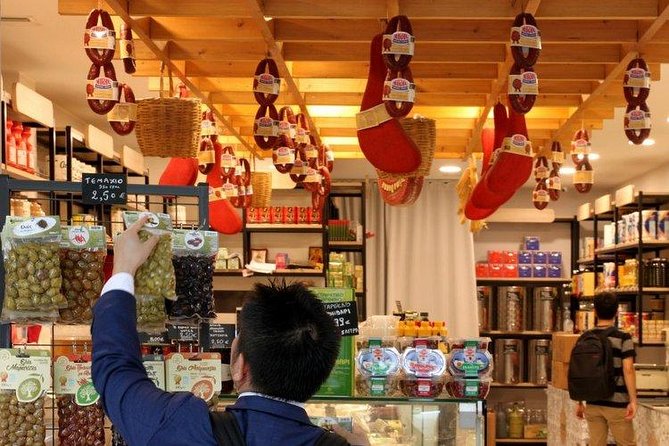
- Four central food districts: Visit Kapani Market, Modiano Market, Athonos Square, and Louloudadika.
- Traditional Greek coffee included: You get a local coffee experience along with food tastings.
- Small group format: The tour accepts no more than 15 people.
- Guides set the tone: Nico and Nikolas are specifically praised for warmth, conversation, and regional food knowledge.
- A walking introduction, not a full meal: Tastings are included, but lunch after the tour is not.
- Easy central meeting point: Meet at the White Tower at 11:30 a.m. and finish back there.
What this Thessaloniki food walk is really like
This is a short introduction to Thessaloniki through its food markets. You are not sitting down for a long succession of restaurant courses. Instead, you walk through several old commercial quarters, pause for tastings, drink Greek coffee, and hear how food fits into the city’s past and present.
That format has real value early in a stay. I like using a food walk to get my bearings, learn what local products look like, and collect ideas for later meals. A good guide can also explain the difference between a place designed for visitors and a market still used for ordinary shopping.
The meeting point is the White Tower, one of Thessaloniki’s easiest landmarks to find. From there, the route heads toward the central markets. The tour lasts about two hours, though one account describes a shorter experience of roughly 1.5 hours, so I would allow the full time but avoid scheduling something immediately afterward.
The tour is offered in English, and a Greek and English-speaking guide leads the walk. The group limit of 15 matters in narrow market streets. You should have a better chance of staying close to the guide than on a large coach-style food outing, though the markets themselves can still be busy and noisy.
You can also read our reviews of more walking tours in Thessaloniki


Kapani Market: Thessaloniki’s everyday food world
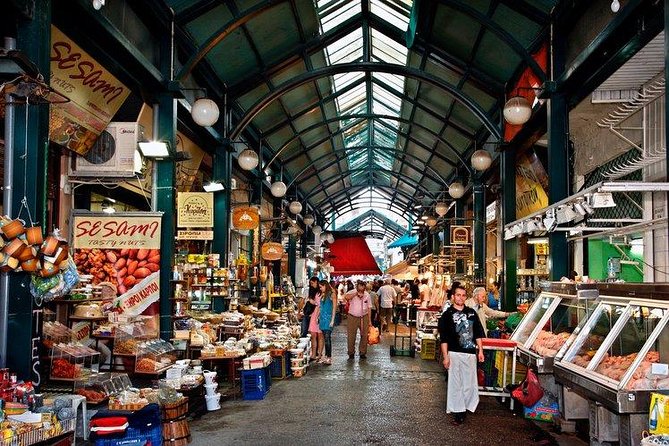
Kapani, also known as Vlali Market, is the first major stop. This historic open market is presented as one of the most genuine food experiences in the city, and that makes sense: its appeal comes from the mix of people, smells, displays, and ordinary commerce.
You can expect about 25 minutes here. Admission is free, and the included part is the guide’s walk and the food tastings rather than a separate entrance attraction.
Kapani is useful because it gives you a fast lesson in how Thessaloniki shops and eats. The point is not only to look at products. Your guide can help connect the stalls to local cooking and point out foods you may want to seek out later.
I would pay attention to the guide’s recommendations here. Food markets are often the best place to ask what is seasonal, what is commonly eaten at home, and what makes a good small purchase. Since the tour includes local delicacies, Kapani may also be one of the places where the walk’s food side feels most direct.
The tradeoff is that a market stop can feel less structured than a restaurant tasting. You may spend more time moving and looking than eating. That is fine if you want a sense of place, but less satisfying if your main goal is quantity.
Modiano Market: an old market with a new role
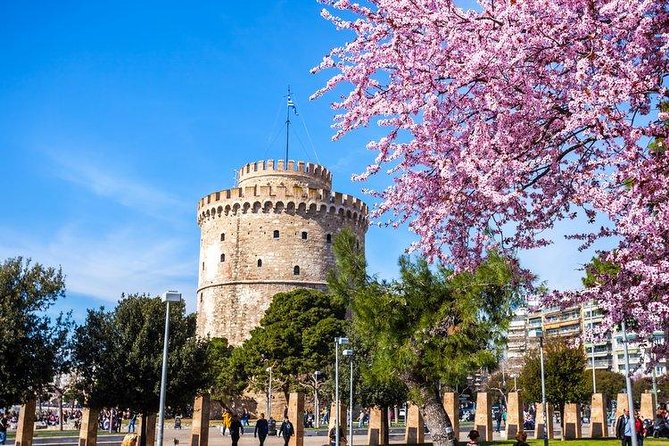
The second stop is Modiano Market, also planned for around 25 minutes. It sits in the heart of Thessaloniki and has been part of city life for about 80 years. Construction began in 1922 and finished in 1930, with architect Eli Modiano responsible for the building.
That background adds a useful layer to the walk. Modiano is not just another food hall. Its architect came from a prominent Sephardic Jewish family in Thessaloniki, studied architecture in Paris, and returned to create important buildings in the city. The market therefore connects food, architecture, and the city’s Jewish past.
For you, the benefit is context. A guide can point out why the market matters rather than treating it as a place to pass through, take a photograph, and leave. You get a better sense of how central markets helped shape city life and how food trade fits into Thessaloniki’s urban story.
The stop is free, and the tour’s food tastings are included. Still, you should not assume every food display means another substantial serving. The overall experience is designed as a moving introduction, not a replacement for lunch.
I would use Modiano as a chance to ask practical questions about where to eat later. The tour includes food tips, and that may be one of its most useful features. A short recommendation from a local guide can save you from choosing a restaurant only because it sits on the most obvious street.
Athonos Square: spices, tavernas, and a livelier pause
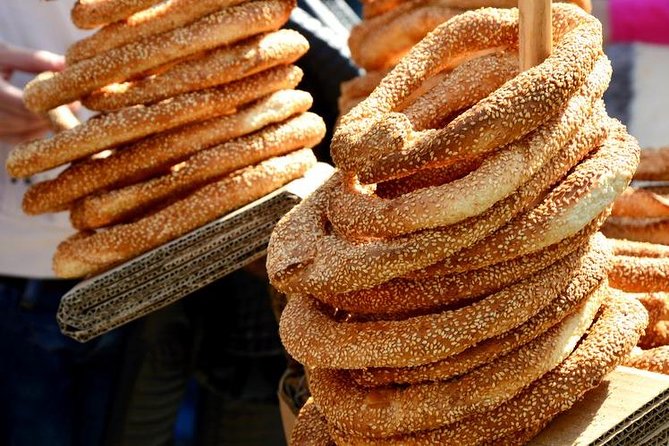
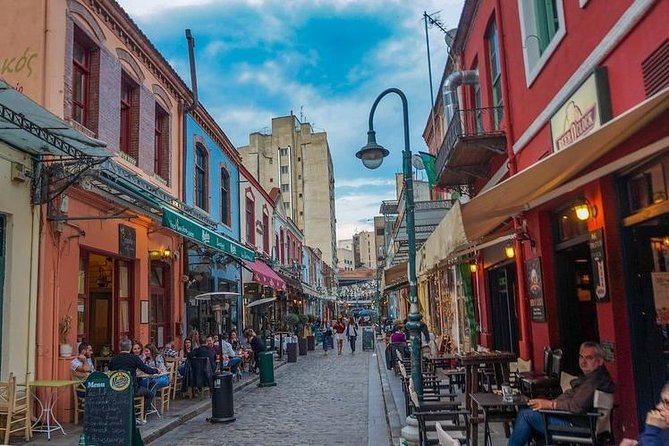
Athonos Square gives the route a different feel. It is a central gathering place with food at its core, and the range of shops is broad: spices, tea, nuts, fruit, vegetables, fish, delicatessen items, handmade accessories, clothing, and small decorative goods.
You have about 25 minutes here. That is enough for a brisk introduction, but not enough to inspect every shop or settle in for a long meal. The traditional tavernas are a major part of the square’s character. Their cooking smells and occasional live Greek music add atmosphere, but lunch is not included in the tour price.
This is likely the stop where you most clearly see the difference between a food walk and a food tasting menu. The guide can show you ingredients, explain what the shops sell, and steer you toward local specialties. You also get a look at the square’s small craft businesses, including shops connected with wickerwork and handmade wooden furniture.
I like that range. Food does not exist in a vacuum, and a market square tells you more about local life when you see what people buy, sell, and make alongside what they eat. The stop may appeal especially to someone who has already seen Thessaloniki’s main sights and wants a more everyday side of the center.
The limitation is time. Athonos can tempt you to wander, shop, and stop for a drink, but the group needs to keep moving. If you want to return later, make a note of the square and come back without the clock running.
Louloudadika: flowers and the old commercial center
The final named stop is Louloudadika, a small historic-center area around Komninon, Frangon, and Vasileos Herakliou streets. Its name comes from the outdoor flower shops that once occupied the area.
Only four flower shops continue to operate there today. In the 1950s, there were 11, and the shops were known beyond Thessaloniki, including in provincial cities. That detail gives the stop a pleasant sense of change. You are not seeing a frozen old quarter. You are seeing a small piece of a former trade that has become less common.
The area adds variety after the food-heavy markets. It also helps explain how different trades once filled the central streets. A food walk does not need every stop to involve eating, especially when the point is to understand the city’s working center.
You should expect about 25 minutes here, though the exact rhythm can depend on the guide and the group. The route ends back at the White Tower meeting point, so you do not need to arrange a separate return transfer.
You can also read our reviews of more food & drink experiences in Thessaloniki


What you actually eat and drink
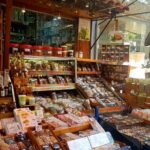
The tour includes food tastings and traditional Greek coffee. The information does not provide a fixed menu, so you should not book expecting a guaranteed list of dishes or a set number of portions.
That uncertainty cuts both ways. A flexible selection may let the guide respond to what is available in the markets on the day. It can also mean the food portion feels modest if you arrive hungry.
I would eat a light breakfast before the 11:30 a.m. start. You want enough energy for walking, but you also want room for the tastings. Since lunch afterward is specifically not included, plan to eat later at one of the places the guide recommends or make your own choice.
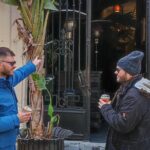
The traditional Greek coffee is a nice inclusion because it gives the walk a pause and connects the tasting to local habits. It is not simply another drink added to a package. Coffee can create a relaxed moment for questions, and the reviews specifically praise guides for conversation as much as for food.
If you have allergies or dietary restrictions, ask the operator before booking or at the start of the tour. The supplied details confirm food tastings, but they do not explain substitutions or a special dietary menu.
The guides and the value of a small group
The guide can make or break a short food walk. With only two hours, you need someone who keeps the route moving while still leaving room for questions.
Nico receives especially strong praise for combining local food with city history and making the experience feel like an afternoon with a friend. Nikolas is also singled out for friendly conversation and a good selection of regional treats. Those comments suggest that the human side of the tour is a major part of its appeal.
The group limit of 15 is another practical advantage. You will not get the private attention of a one-on-one tour, but 15 is small enough to make the walk feel manageable. It should also be easier to hear explanations in a market than it would be with a much larger crowd.
The flexible approach deserves a clear warning. The operator says the guide may ask what else you want to see or experience. Some people appreciate that personal touch. I would not, however, assume the route will feel like a tightly scripted tasting itinerary. If you prefer a firm schedule with carefully measured food portions, this may not be the best match.
Is $84.21 a fair price?
At $84.21 per person, this is not a cheap way to grab a snack. You are paying for a guide, route planning, local context, coffee, tastings, and the convenience of being led through four central areas.
The value depends on how you use it. I think the price is easier to justify if you are new to Thessaloniki, want help understanding the markets, or value conversation with a local guide. It is less convincing if you mainly want a large meal or already know the central food districts well.
The tour’s strongest value is orientation. In two hours, you can learn where Kapani, Modiano, Athonos, and Louloudadika sit in relation to one another, hear useful food background, and collect ideas for later. That can save time during the rest of your visit.
There is also a practical limit. Lunch afterward costs extra, and the tasting quantity is not specified. One low-rated experience described only a few tastings and felt overpriced for the time provided. I would book this for access and guidance, not for the promise of being full by the end.
Who should book this walk?
I would recommend it to:
- First-time visitors who want an introduction to Thessaloniki’s central food districts
- People who enjoy markets, ingredients, and local stories as much as sit-down dining
- Anyone who wants a friendly guide and a small group
- Repeat visitors looking for a different angle on the city
- Food-focused visitors who plan to use the guide’s tips for later meals
I would be more cautious if you have only two hours in the city and want a large number of tastings. I would also think twice if you dislike flexible tours or want a precise menu confirmed in advance.
The walk is likely a good fit for people who want to explore on foot and do not mind that some of the experience is observation, conversation, and context. It is not presented as a full lunch, cooking class, or restaurant crawl.
Timing, meeting point, and cancellation details
Meet at the White Tower of Thessaloniki at 11:30 a.m. The activity ends back at the same meeting point, which makes onward planning simple.
A mobile ticket is provided, and the experience is offered in English. The standard tour does not include hotel pickup. Pickup from hotels, villas, or Airbnb properties outside the selected route may cost extra, with the amount quoted based on the location.
Most people can participate, according to the supplied tour information. The tour also requires a minimum number of participants. If that minimum is not met and the activity is canceled, you are offered another date or experience, or a full refund.
You can cancel free of charge up to 24 hours before the start time. Changes or cancellations made less than 24 hours ahead are not accepted for a refund, based on local time.
Should you book Thessaloniki: Walking Talking Food?
Book it if you want a guided introduction to Thessaloniki’s markets, a little local history, traditional coffee, and several food tastings in a small group. The strongest reason to go is the guide-led access to places that are easy to pass without understanding, especially if you can join Nico or Nikolas.
Skip it if you want a substantial meal, a fixed tasting menu, or a tour that never asks you what interests you. At $84.21, the experience makes the most sense when you value local explanation and a useful first look at the city’s food districts. Have a light breakfast, keep lunch plans open, and treat the walk as a flavorful orientation rather than your main meal.
FAQ
Where does the tour start?
The tour starts at the White Tower of Thessaloniki, Thessaloniki 546 21, Greece.
What time does the tour begin?
The start time is 11:30 a.m.
Where does the tour end?
The activity ends back at the White Tower meeting point.
How long does the tour last?
The tour lasts approximately two hours. One experience was described as lasting about 1.5 hours, so you should allow the full two-hour window.
Which markets and areas are visited?
The route includes Kapani, also called Vlali Market, Modiano Market, Athonos Square, and Louloudadika.
Is food included?
Yes. Food tastings and traditional Greek coffee are included. The cost of lunch after the tour is not included.
Is the tour offered in English?
Yes. The experience is offered in English, and it includes a Greek and English-speaking guide.
How many people can join the tour?
The tour has a maximum of 15 participants.
Can I cancel for a full refund?
Yes. You can cancel up to 24 hours before the experience start time for a full refund. Cancellations or changes made less than 24 hours before the start time are not accepted for a refund.