REVIEW · CRETE
“YAMAS” – Winery tour &wine tasting
Book on Viator →Operated by Οινοποιείο Δουλουφάκη · Bookable on Viator
Wine tasting in Crete can be a fun rabbit hole.
At Douloufakis Winery in Dafnes, you get a guided stop-to-stop look at how wine is made and then sip six estate-made wines with the focus on Cretan grapes. The way the hosts explain Vidiano and Liatiko makes the whole hour-and-change feel like real understanding, not just drinking. One thing to plan for: transport isn’t included, so you’ll need to get yourself there.
I like that this tour stays hands-on and focused. You’ll spend time in the production area, learn the story behind the wines, and taste both whites and reds that come from the island’s own varieties. And with a maximum of 40 people, it’s usually calm enough to ask questions and actually hear the answers.
In This Review
- Key Highlights You’ll Care About
- First Stop: Douloufakis Winery in Dafnes
- The Six-Wine Tasting: What You Actually Learn
- A practical tip for tasting without overthinking
- Inside the Cellar: Why the Guided Part Matters
- Amphora to Barrel: The Production Tour You Can Talk About
- Whites and Reds Together: How the Pairing Helps
- The Included Starter: Cretan Rusks (and why you’ll be glad)
- Price and Value: What You’re Really Paying For
- Logistics That Affect Your Day: Meeting Point and Transport
- Group Size and Experience Feel: Small Enough to Ask Questions
- Who Should Book This Wine Tour (and Who Might Skip It)
- Book This If You Want a Clear, Crete-Focused Tasting
- FAQ
- How long is the YAMAS winery tour and wine tasting?
- How many wines will I taste?
- Is transportation to the winery included?
- What’s included with the tasting?
- Is the tour offered in English?
- Do I need a printed ticket?
- What’s the maximum group size?
- Are service animals allowed?
- Where do I meet for the tour?
- Is free cancellation available?
Key Highlights You’ll Care About
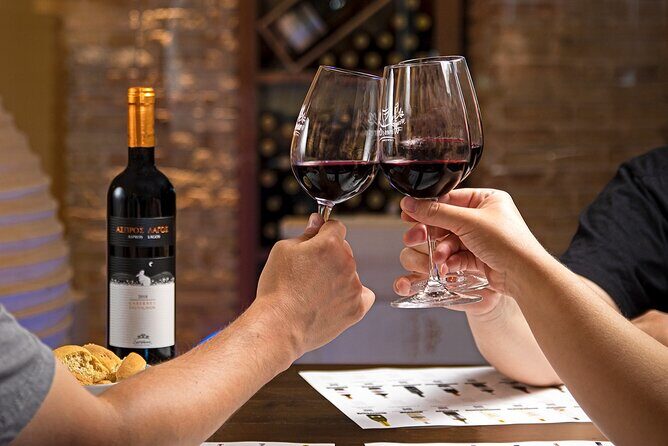
- Six-wine guided tasting with 60ml pours in total, plus water to keep it comfortable
- Cretan grape focus featuring Vidiano and Liatiko, alongside other whites and reds
- Winemaking walkthrough from amphora to barrel fermentation (not just a quick sales pitch)
- Estate-driven experience in the cellar with a guided tour of the production process
- Cretan rusks included, with food-pairing energy that many visitors really enjoy
First Stop: Douloufakis Winery in Dafnes
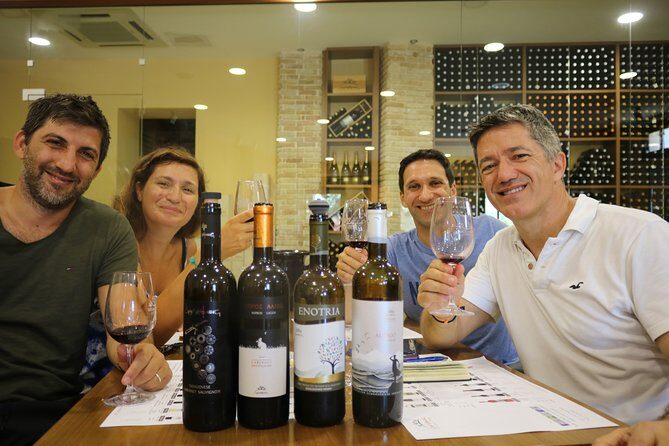
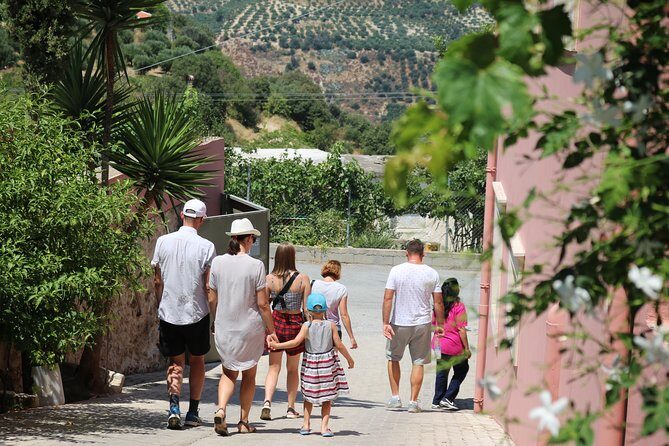
This experience is built around one main location: Douloufakis Winery. You start at Dafnes 700 11 and you finish back there, which keeps the day tidy if you’re using taxi and bus schedules elsewhere in Crete.
The pace is short but not rushed. Expect about 1 hour 20 minutes overall, though some tours can run closer to a couple of hours depending on questions and how the tasting is paced in the room.
If you’re the type who wants a single, reliable wine plan without a full half-day commitment, this is a good match. It’s also in English, so you won’t be stuck trying to guess what you’re tasting.
You can also read our reviews of more food & drink experiences in Crete

The Six-Wine Tasting: What You Actually Learn
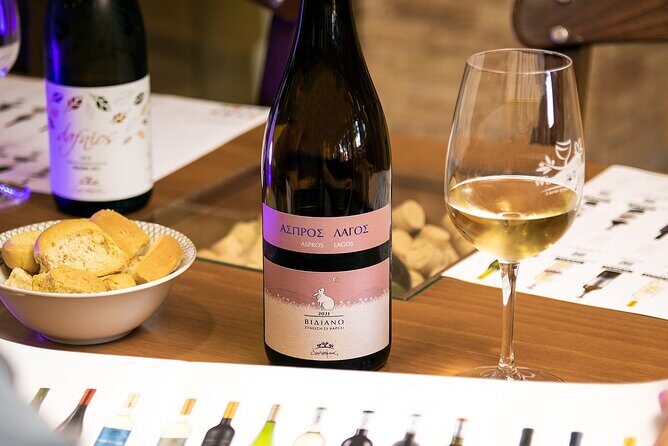
The heart of the visit is the guided tasting of six wines, each served as a 60ml portion. Six might sound like a lot, but the pours are modest. That means you can taste, compare, and keep your brain switched on instead of fading into a blur.
What I like most is the balance between local and international styles. You’ll get indigenous Cretan varieties like Vidiano and Liatiko, plus additional white and red selections that show how the winery works across different grapes and approaches.
Here’s what this format does for you as a visitor: it helps you notice how a winery’s choices connect to the island. You’re not just collecting flavors; you’re learning how terroir and grape character show up in the glass.
A practical tip for tasting without overthinking
During the tasting, don’t try to label every aroma like it’s a chemistry exam. Instead, focus on three quick checkpoints for each wine:
- Is it more fresh and crisp or round and soft?
- Does it taste more fruit-forward or more drier and structured?
- Where do you feel it most: on the front, middle, or finish?
The guide’s explanation (and their ability to answer questions clearly) is what makes this easier. If you get a host like Georgios, for example, the vibe tends to be friendly and very question-friendly, with clear pointers on how to taste properly. Another guide, Catarina, is often described as charismatic and highly communicative, so the tasting usually feels lively rather than stiff.
Inside the Cellar: Why the Guided Part Matters
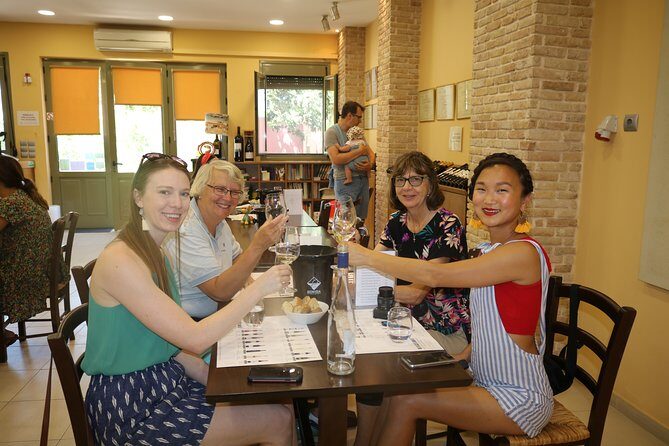
Many wine tastings stop at tasting and then quietly turn into shopping. This one keeps the focus on the wines and the process first, and the buying comes later if you want it.
The tasting happens in the cellar, which makes a difference. It’s not about fancy rooms; it’s about being in the right setting to understand how the winery thinks. When you’re tasting estate-crafted labels, you’re tasting the winery’s decisions—fermentation choices, aging style, and how they balance tradition and modern methods.
A good guide will also help you connect what you’re tasting to what you just saw. That’s where the winery tour earns its keep.
Amphora to Barrel: The Production Tour You Can Talk About
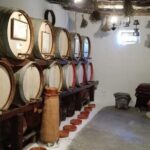
Before you settle into the tasting room, you get a guided tour of the winery’s production area. The main winemaking themes you’ll hear about are the winery’s use of techniques like amphora fermentation and barrel fermentation, and how those choices shape flavor and texture.
This is one of the biggest reasons I’d pick this tour even if you’re not a die-hard wine nerd. The production explanation turns wine from a mysterious product into something you can reason about. You start to understand why two wines can come from different grapes yet both feel balanced.
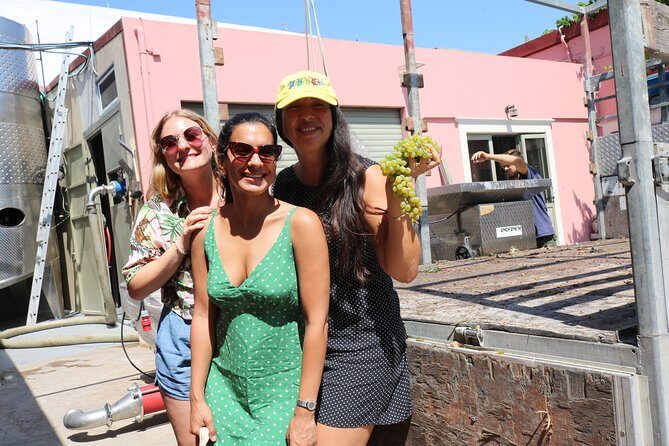
Some visitors also mention seeing the bottling plant, which adds a real-world wow factor. Even if that’s not the exact moment you catch, you’ll still get the sense of how the winery moves from fermentation to bottles.
And yes, it’s still fun. It’s not a museum lecture. It feels like a guided behind-the-scenes walk, where you’re allowed to ask what’s happening and why.
You can also read our reviews of more wine tours in Crete





Whites and Reds Together: How the Pairing Helps
The tasting includes both white and red wines. That matters because it prevents the session from turning into a one-note comparison.
When you go through the set, you’re likely to notice how the winery’s approach changes with grape and style. Whites often highlight freshness and aroma, while reds tend to show structure, aging, and fermentation decisions more clearly.
Also, you’re not tasting with dry mouth energy. Water is included, and the small 60ml pours keep things comfortable enough that you can still enjoy the final wines instead of losing track halfway through.
The Included Starter: Cretan Rusks (and why you’ll be glad)
Your included food is simple: Cretan rusks, plus water. For a winery tour, that’s a smart inclusion. Rusks are practical, not heavy, and they give you a little something to anchor flavors.
Some visitors report additional pairing-like boards during their tastings, like locally sourced cheeses and charcuterie. The exact spread may vary, but the takeaway is consistent: the goal here is to pair wine with something Cretan, not to serve you a random snack and rush you out.
If you’re the kind of person who gets a little lightheaded with too much alcohol on an empty stomach, you’ll appreciate the included rusks.
Price and Value: What You’re Really Paying For

The price is $36.20 per person (about). For that, you’re getting:
- A guided winery tour of the production area
- A six-wine tasting with 60ml pours
- Water
- Cretan rusks
So you’re not just paying for the drinks. You’re paying for a guided learning experience tied to the winery itself.
Is it a budget-wine deal? It’s not the cheapest option in Crete, but it is strong value because the tasting isn’t only about variety—it’s about explanation and context. If you’ve ever done tastings that felt like you were handed a menu and left alone, this one is structured enough that you’re guided through it.
Logistics That Affect Your Day: Meeting Point and Transport
Here’s the practical bit: transport to the winery is not included. You’ll meet at Dafnes 700 11, Greece, and the tour ends back at the meeting point, so you’re responsible for getting there and then arranging your return.
This matters because your best plan depends on what else you’re doing in Crete. If you’re staying in or near Heraklion, a taxi can make this straightforward. If you’re further out, plan your ride in advance and don’t assume the schedule will magically line up with your wine timing.
On the bright side, starting and ending at the same spot reduces stress. You can keep the rest of your day open for dinner without worrying about a long drop-off route.
Group Size and Experience Feel: Small Enough to Ask Questions
The tour has a maximum of 40 travelers. That’s not tiny, but it’s also not a giant bus crowd. You should expect a setup where the guide can still address questions during the tasting and keep the session moving.
Also, the experience uses a mobile ticket, which makes last-minute timing easier. Confirmation happens at booking, so once you’ve booked, you’ll know you’re set.
If you like tours where you can actually interact, this size generally supports that better than the large-group models.
Who Should Book This Wine Tour (and Who Might Skip It)
I’d recommend this tour if:
- You want a guided tasting that teaches you how to think about Cretan wines
- You’re curious about the differences between indigenous grapes like Vidiano and Liatiko
- You prefer a short, focused winery visit rather than an all-day production tour
You might skip it if:
- You don’t want to handle transport at all (since it’s not included)
- You’re expecting a full meal experience
- You’re only interested in very large tastings without guidance
That said, the six-wine format is a sweet spot for most people: enough variety to learn something real, not so much that it becomes a test of your tasting endurance.
Book This If You Want a Clear, Crete-Focused Tasting
Should you book? Yes, if you want a Crete-centered winery visit that goes beyond sipping. The combination of a production-area tour, an organized six-wine tasting, and Cretan rusks makes it feel like an actual experience rather than a quick stop.
Before you go, do two simple things:
- Arrange transport to Dafnes 700 11 so you’re not rushing
- Come ready to ask at least one question about what you’re tasting, because the guides who run these sessions tend to respond well when you engage
If you’re building a Crete itinerary and want one wine stop that’s easy to fit in and still feels meaningful, YAMAS at Douloufakis Winery is a solid pick.
FAQ
How long is the YAMAS winery tour and wine tasting?
The experience lasts about 1 hour 20 minutes.
How many wines will I taste?
You’ll have a guided tasting of six wines, with a 60ml tasting portion of each.
Is transportation to the winery included?
No. Transportation to the winery is not included. You meet at Dafnes 700 11, Greece, and the tour ends back at that meeting point.
What’s included with the tasting?
You get a guided tour at the production area, water, Cretan rusks, and the six wine tastings.
Is the tour offered in English?
Yes, the tour is offered in English.
Do I need a printed ticket?
No. You can use a mobile ticket.
What’s the maximum group size?
The tour has a maximum of 40 travelers.
Are service animals allowed?
Yes, service animals are allowed.
Where do I meet for the tour?
The tour starts at Dafnes 700 11, Greece.
Is free cancellation available?
Yes. You can cancel for a full refund up to 24 hours before the experience’s start time.