REVIEW · ATHENS
10 Day Private – The Ultimate Ancient Greece Tours Experience
Book on Viator →Operated by Ancient Greece Tours & Transfers · Bookable on Viator
The most striking thing about this private 10-day Greece tour is its reach. In one sweeping trip, you go from Thermopylae and the monasteries of Meteora to Delphi, Olympia, Monemvasia, the Mani, Mycenae, Corinth, Athens, and Cape Sounion. Your driver handles the long road days while you set the pace at most stops.
I like the freedom of having a vehicle for just your group, and I like the mix of famous ruins with places such as Limeni, Monemvasia, Arachova, and Nemea. The main consideration is cost: at $3,758.43 per person, accommodation, meals, and entrance tickets are extra, so your final bill will be much higher.
In This Review
- Key points to know before booking
- A private road trip through Greece’s biggest ancient sites
- Day 1: Thermopylae and the sunset at Meteora
- Day 2: More monasteries, then Delphi
- Day 3: Olympia and the birthplace of the Olympic tradition
- Day 4: Medieval Monemvasia and the Mani Peninsula
- Day 5: Diros Caves, Aeropoli, and slow time in Limeni
- Day 6: Nafplio and the 999 steps of Palamidi
- Day 7: Epidaurus, Mycenae, and wine country at Nemea
- Day 8: Corinth, the canal, and a return to Athens
- Day 9: Athens, the Acropolis, and Cape Sounion
- What the $3,758.43 price really covers
- How to make the tour work better for you
- Should you book this ancient Greece tour?
- FAQ
- How long is the tour?
- Where does the tour start?
- Is the tour private?
- Is hotel accommodation included?
- Are entrance fees included?
- Is a licensed guide included?
- What transportation is included?
- Is airport transportation included?
- Which major ancient sites does the tour visit?
- Can the tour be canceled for a refund?
Key points to know before booking
- Meteora gets a sunset visit and a second day for more monasteries, a smart way to experience one of Greece’s most dramatic places.
- The private vehicle saves time on difficult routes, especially between central Greece, the Peloponnese, and Athens.
- Monemvasia and Limeni add atmosphere beyond the major ruins, with medieval lanes, sea views, village food, and the Mani Peninsula.
- Ancient Greece is covered at full speed, from the battlefield of Thermopylae to Delphi, Olympia, Mycenae, Corinth, and the Acropolis.
- You explore sites independently, while a licensed guide can be added for museums and archaeological areas.
- The final Athens day is packed, combining central Athens with Cape Sounion and an evening by the Saronic Gulf.
A private road trip through Greece’s biggest ancient sites
This is not a stay-in-one-region holiday. It is a long-distance road trip built for people who want to see a large portion of Greece without renting a car or arranging every transfer themselves.
Your driver provides transportation in a private luxury vehicle, hotel and port pickup and drop-off, WiFi, bottled water, refreshing wipes, and handmade Greek biscuits. The driver also has in-depth knowledge of Greek history and can arrange skip-the-line tickets on request. That last point matters, but it does not replace a licensed guide. For deeper explanations inside the sites and museums, you need to pay extra for one.
The private format is the tour’s strongest practical feature. You are not waiting for a large bus or adjusting every stop to an unfamiliar group. If your party wants more time at the Temple of Apollo or less time shopping in Plaka, you have a better chance of shaping the day.
Ask at booking about the driver assigned to you. The names Taz and Anastasios are associated with this company’s long private tours, and both are worth asking about if personal continuity and local knowledge matter to you. The tour is offered with English-speaking and multilingual drivers.
You can also read our reviews of more private tours in Athens

Day 1: Thermopylae and the sunset at Meteora
Thermopylae makes a good opening stop because it places Greek history in a real setting before the sightseeing becomes a string of monuments. The narrow pass was the scene of the 480 BC battle between the Greek alliance led by Leonidas of Sparta and the Persian army of Xerxes.
You’ll see the Monument of King Leonidas, a brass statue made by sculptor Vasos Falireas in 1955. The nearby hot sulfur springs help explain the old name Gates of Fire, with its added link to Greek mythology and the entrances to Hades.
The Thermopylae museum is included in the stop, though admission is listed as free. You have about an hour here, enough for the monument and a short museum visit, but not enough for a slow historical study.
Then the road continues to Meteora, one of Greece’s most unforgettable settings. Huge rock pillars rise above Kalambaka and Kastraki, with monasteries perched on their tops. On the first day, you visit one or two monasteries, then have time for a sunset view, a taverna meal, and a walk through village shops.
Meteora is worth handling at this pace because the overnight in Kalambaka or Kastraki gives you a chance to see the rocks after the main sightseeing period. Your admission tickets are not included, and monastery visits involve steps and religious-site rules, so ask your driver what is open and suitable for your group.
Day 2: More monasteries, then Delphi
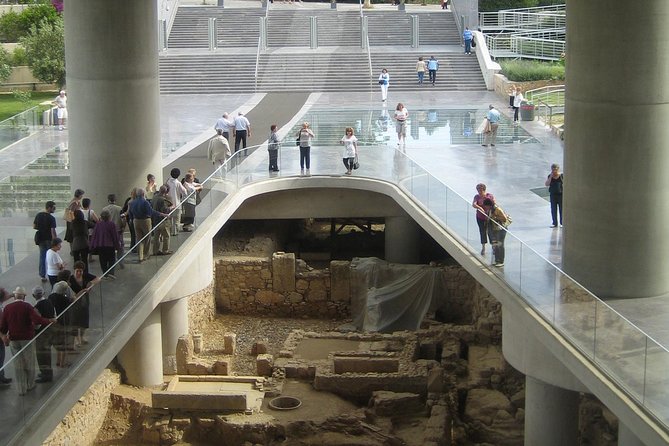
The second morning continues at Meteora, with visits to the remaining monasteries. Four monasteries are listed for this day, following the one or two visited on Day 1.
This two-part plan is better than a quick photo stop. Meteora is a place where the setting matters as much as the buildings, and a second day lets you see more than one monastery without treating the whole area as a roadside attraction.
After lunch and coffee, you drive to Delphi and check into your selected hotel. The evening is free, with an optional dinner in Arachova. That mountain town is a useful choice for a meal, especially if you want a more atmospheric evening after the long drive.
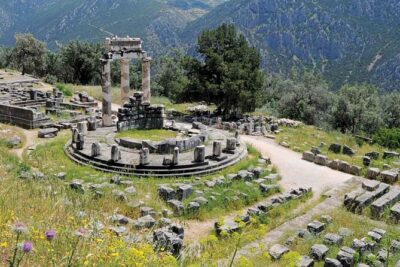
Delphi gets its own four-hour visit. At the archaeological site, you’ll see the Sanctuary of Apollo, the ancient theater, the stadium, the Athenian Treasury, the gymnasium, and the Sanctuary of Athena Pronaia. Delphi was famous for its oracle, but it also hosted athletic and cultural events, including the Pythian Games.
The museum gives the ruins a stronger sense of place. Look for the Frieze of the Treasury of the Siphnians and the Naxian Sphinx, dated to 560 BC. Without a licensed guide, you’ll need to read the signs and use your own background knowledge, so adding one may be worthwhile here.
Day 3: Olympia and the birthplace of the Olympic tradition
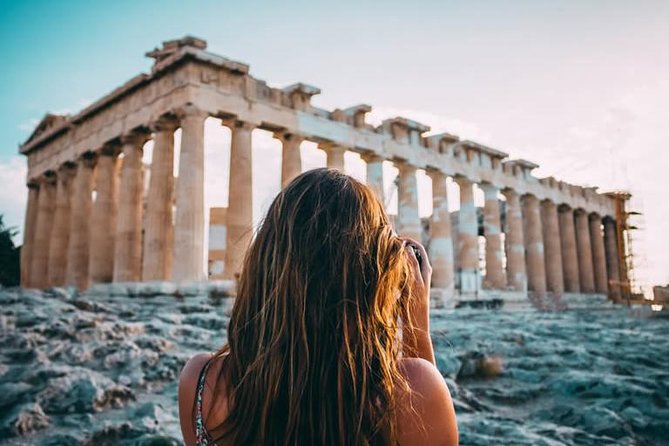
The Olympia portion centers on the archaeological site and its major buildings. You’ll see the Temple of Zeus, a fifth-century BC Doric temple that helped define the classical Greek style.
The Temple of Hera is especially important in modern times because the Olympic flame is lit among its ruins during the ceremony connected with the modern Games. The Philippeion, a circular building inside the Altis, adds a different architectural form to the site.
You have about five hours for Olympia, including breakfast and the site visit. Entrance fees are extra. The amount of time is useful because Olympia is spread out, and rushing through it would undercut the reason for coming.
This day also marks the tour’s transition toward the Peloponnese. The schedule is ambitious, and the information supplied does not spell out every overnight location or transfer between stops. Confirm the hotel plan before you pay, especially if you are traveling in a season when rooms in smaller towns are limited.
Day 4: Medieval Monemvasia and the Mani Peninsula
Monemvasia changes the mood completely. Instead of classical temples, you get a medieval settlement on a dramatic rock connected to the mainland by a causeway.
You’ll walk through the castle town, see the Church of Christ Elkomenos, visit St. Sofia, and pass the Ritsos family residence. The site includes about 40 churches, so allow time to wander rather than treating it as a quick fortress visit.
A stop at Vathysfero cafe gives you refreshments with a view toward the Myrtoan Sea. Lunch at Matoula’s is described as village-style food with panoramic views, followed by the drive to Limeni in the Mani Peninsula.
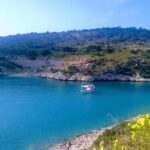
Limeni is one of the tour’s most appealing overnight bases. A boutique hotel, dinner beside the water, and a second evening near the coast offer a needed pause after several major archaeological sites. This is also where the private format helps. You can spend your free time at the shore instead of being hurried back to a coach.
- All Day Cruise -3 Islands to Agistri,Moni, Aegina with lunch and drinks included
★ 5.0 · 4,958 reviews






Day 5: Diros Caves, Aeropoli, and slow time in Limeni
The fifth day is lighter. After breakfast, you visit the Diros Caves and explore Aeropoli, then have time at leisure in Limeni.
The schedule lists about five hours, including the cave visit and town time. Admission details for these stops are not clearly itemized, so confirm the current ticket arrangements with the operator.
I like this day because it prevents the trip from becoming ten straight days of temples and museums. The Mani is included for its villages, coast, food, and sense of place. Dinner at an authentic fish taverna by the sea is a natural finish, though food remains your own expense.
Day 6: Nafplio and the 999 steps of Palamidi
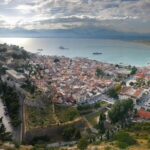
From Limeni, you drive to Nafplio, one of the most attractive towns on the route. After checking into your chosen hotel, you explore Palamidi Castle, the Venetian fortress high above the town.
The famous route has 999 steps. You do not have to climb them from the town if your vehicle can take you higher, but the stop still requires some walking on uneven surfaces. At the top, the view over the Argolic Gulf is the reward.
In town, you’ll see Constitution Square, Freedom Square, and the harbor fortress of Bourtzi. The small streets and historic buildings make Nafplio a good place for an evening stroll, though the itinerary gives roughly four hours for the main visit.
Nafplio is also a sensible base for the next day’s sites. The private vehicle means you do not have to search for separate transport to Epidaurus, Mycenae, and Nemea.
Day 7: Epidaurus, Mycenae, and wine country at Nemea
Epidaurus is famous for its theater and its astonishing acoustics. The program connects the theater with the works of Euripides, Sophocles, Aristophanes, and Aeschylus, but the key experience is standing at the stage and hearing how clearly sound carries to the upper seats.
The archaeological museum adds context through temple reconstructions, columns, and inscriptions. You’ll also see the Sanctuary of Asclepius, an ancient medical center dedicated to the demi-god of healing.
The road then continues to Mycenae, the Bronze Age citadel linked with Agamemnon in Homer’s epics. The Lions Gate, Grave Circles A and B, Cyclopean walls, and royal palace give you a clear sense of the site’s power.
Mycenae receives about an hour and a half, which is enough for the main remains but may feel short if you want to study the museum as well. Uneven ground and slopes are part of the visit.
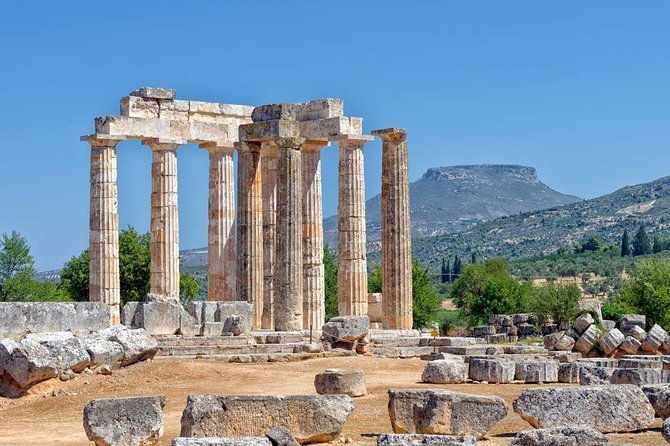
Ancient Nemea finishes the day with a different kind of setting: soft hills, vineyards, the Temple of Zeus, ancient baths, and the apodyterium, where athletes changed before competition. Nemea is a fine addition because it connects ancient sport with the modern wine-producing countryside.
Day 8: Corinth, the canal, and a return to Athens
Acrocorinth is one of the most commanding stops on the tour. The ancient acropolis sits on a massive rock above Corinth, with several circuit walls, towers, a keep, the Peirene Spring, remains linked to the Temple of Aphrodite, and a Frankish tower.
You have about an hour here, so wear practical shoes and expect some uphill walking. The fortress covers a large area, and the short visit means you’ll focus on the main viewpoints and structures rather than every corner.
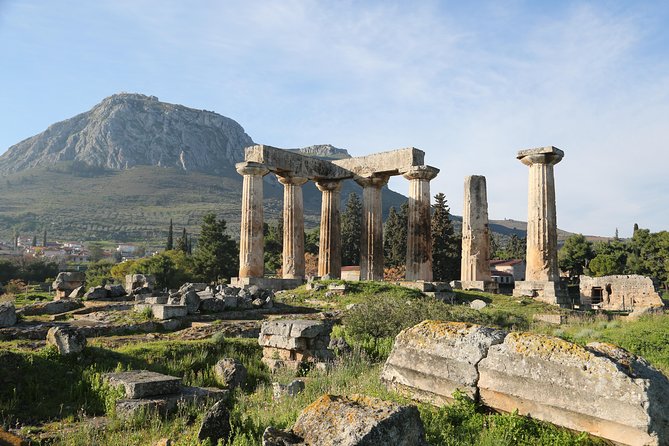
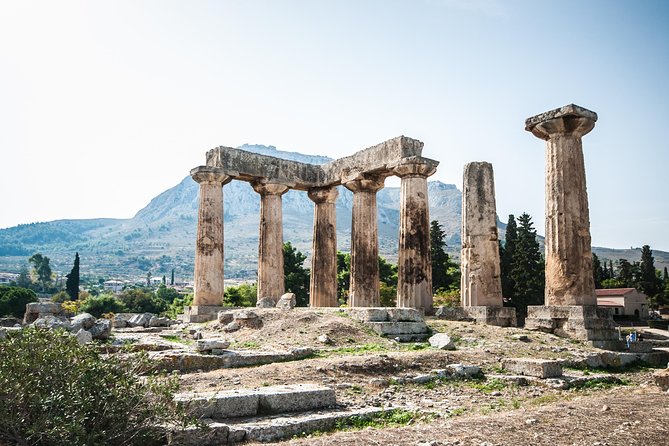
At Ancient Corinth, the archaeological museum holds finds from the city and nearby sites. The Temple of Apollo, the agora, the Bema associated with the Apostle Paul, the theater, odeon, and Roman buildings show how the city changed across Greek and Roman periods.
The Corinth Canal is a short but memorable engineering stop. You’ll see the narrow waterway cut through the Isthmus, then continue to Kechries Port, linked with the route associated with St. Paul. Lunch by the Saronic Sea in the village of the Baths of Helen of Troy precedes the return to Athens.
An evening meal overlooking the Acropolis is offered as an option. Since you check into your chosen Athens hotel that night, confirm the hotel location and airport transfer plans before booking.
Day 9: Athens, the Acropolis, and Cape Sounion
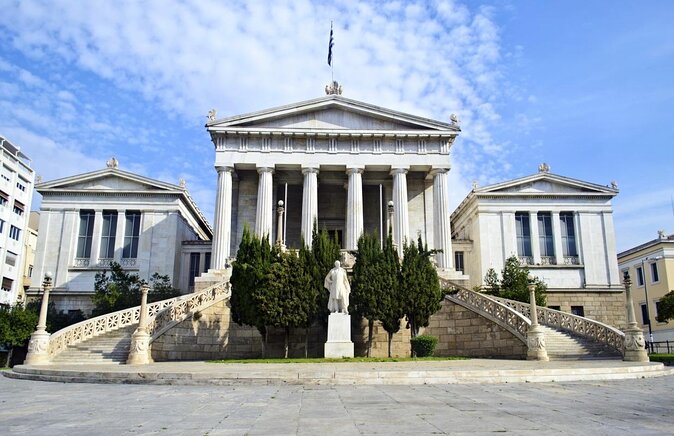
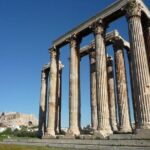
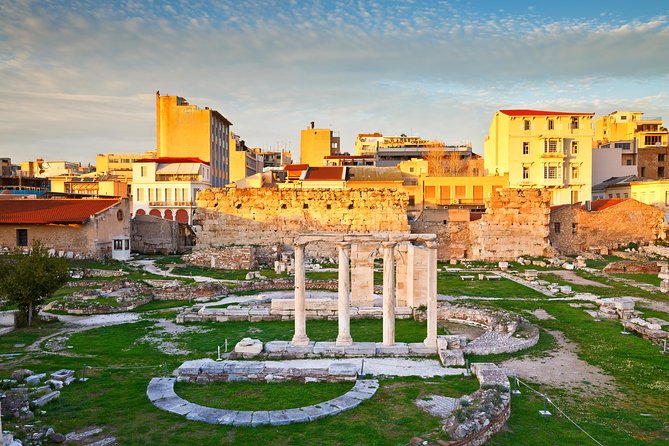
The Athens day tries to cover a great deal. You begin with the Temple of Olympian Zeus, then visit the marble Panathenaic Stadium, Mount Lycabettus, a major museum, the Parliament, Monastiraki, Plaka, the Ancient Agora, the Acropolis, and Cape Sounion.
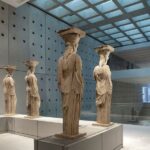
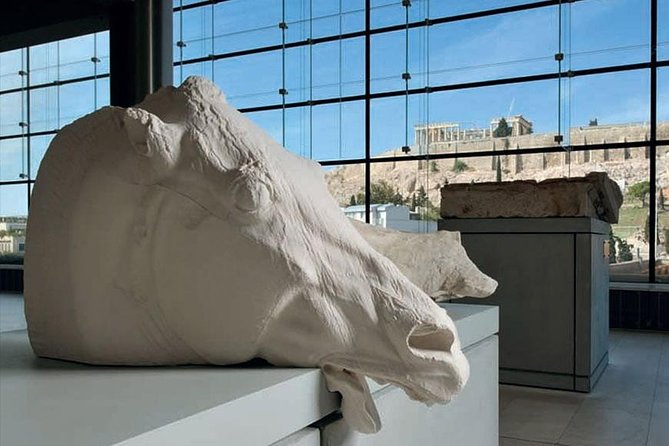
The National Archaeological Museum is one option. The Acropolis Museum is the other. You should decide based on your interests before the day begins. The National Archaeological Museum gives you objects from across Greece, while the Acropolis Museum focuses more closely on Athens and the sacred hill.
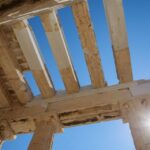
The Ancient Agora was the center of civic, commercial, religious, and political life in ancient Athens. It deserves more than a rushed glance, but the listed 45-minute visit is brief. The Acropolis visit is also listed at 45 minutes, which is enough for the central experience but not a leisurely examination of every monument.
The itinerary includes drive-bys of the neoclassical trilogy, Stadiou Street, and the statue of Theodoros Kolokotronis. You also get the changing of the guards at Parliament and lunch in Monastiraki, with shopping time in the flea market or Plaka.
Then comes the long coastal run along the Athens Riviera, past Glyfada, Vouliagmeni, Voula, and Varkiza, to Cape Sounion. The Temple of Poseidon, built around 444 to 440 BC, crowns the headland above the sea. This is one of the best sunset-style finishes in the country, though the exact timing will depend on the season and the day’s traffic.
Dinner at Megalo Kavouri beside the Saronic Sea is an optional final meal. The day is the tour’s most crowded schedule, so you should expect an overview rather than a full scholarly visit to Athens.
What the $3,758.43 price really covers
The price buys a private multi-day service, not an all-inclusive holiday. Transportation, a professional driver, hotel and port pickup and drop-off, WiFi, water, wipes, biscuits, and possible ticket assistance are included.
The following are extra:
- Nine nights of accommodation
- Entrance fees
- Food and drinks
- Airport pickup and drop-off
- Licensed guides for archaeological sites and museums
That distinction is important. If you add nine nights of hotels, meals, admission fees, and an airport transfer, the total can rise considerably. On the other hand, arranging this route independently would involve rental-car planning, long drives, parking, ferry or road research where needed, hotel coordination, and navigation between widely scattered sites.
I see the price as strongest for a small group that values convenience and privacy. It is less attractive if you prefer to stay several nights in one town, use public transport, or spend long periods inside museums. Group discounts are offered, so the per-person value may improve when several people share the vehicle.
How to make the tour work better for you
Before confirming, ask for the exact hotel list or hotel categories. The tour allows hotel recommendations and reservations on request, but accommodation is not included. This is your chance to control the comfort level and location.
Ask how many monasteries are planned at Meteora and which museum you will visit in Athens. Also ask for current admission prices, the airport transfer fee, and the cost of a licensed guide. Delphi, Olympia, Mycenae, Epidaurus, Corinth, the Ancient Agora, the Acropolis, and Cape Sounion all have separate admission considerations.
Bring shoes with a firm sole. Meteora, Acrocorinth, Mycenae, Palamidi, and the Acropolis all include steps, slopes, or uneven stone. Most travelers can participate, and service animals are allowed, but the itinerary is not designed as a low-walking tour.
The stated start time is 10:00 am, with pickup from a chosen hotel or apartment. Airport pickup and drop-off cost extra, while the final airport transfer is included only as a private transfer from Athens to the airport on Day 10.
Cancellation is generous only if you act early: cancel at least six full days before the start time for a full refund. Cancellation two to six full days ahead receives 50 percent, and cancellation less than two full days ahead is nonrefundable.
Should you book this ancient Greece tour?
Book it if you want a private, road-based survey of Greece and you value having one driver coordinate a complicated route. The strongest parts are Meteora, Monemvasia, Limeni, Delphi, and the combination of Epidaurus, Mycenae, and Nemea.
Think twice if you want a relaxed holiday or detailed guided study at every ruin. The route is ambitious, the final Athens day is especially full, and the advertised price does not include hotels, food, admissions, or a licensed guide.
For a first major visit to Greece, this tour gives you remarkable range. Just budget beyond the headline price, confirm the hotel and guide arrangements, and treat the itinerary as a fast-moving introduction rather than the final word on every site.
FAQ
How long is the tour?
The experience lasts approximately 10 days and includes nine nights of accommodation, though the hotels themselves are not included in the price.
Where does the tour start?
The tour starts in Athens, with pickup from your chosen hotel or apartment. The listed start time is 10:00 am.
Is the tour private?
Yes. Only your group participates in the activity, and transportation is provided in a private luxury vehicle.
Is hotel accommodation included?
No. Nine nights of accommodation are not included. The provider can recommend or reserve hotels on request.
Are entrance fees included?
No. Entrance fees to archaeological sites, museums, and other attractions are separate. Skip-the-line tickets may be arranged on request.
Is a licensed guide included?
No. The tour includes professional drivers with knowledge of Greek history, but a licensed guide to accompany you inside sites and museums costs extra.
What transportation is included?
Private transportation, hotel and port pickup and drop-off, WiFi, bottled water, refreshing wipes, and handmade Greek biscuits are included.
Is airport transportation included?
Airport pickup and drop-off are listed as an additional cost. The final day includes a private transfer from Athens to Athens International Airport.
Which major ancient sites does the tour visit?
The route includes Thermopylae, Meteora, Delphi, Ancient Olympia, Epidaurus, Mycenae, Ancient Nemea, Acrocorinth, Ancient Corinth, the Ancient Agora, the Acropolis, and the Temple of Poseidon at Cape Sounion.
Can the tour be canceled for a refund?
You can receive a full refund by canceling at least six full days before the experience start time. Cancellation two to six full days ahead receives a 50 percent refund, while cancellation less than two full days ahead is nonrefundable.