REVIEW · ATHENS
3 days Spanish guided tour in Epidaurus, Mycenae, Olympia, Delphi
Book on Viator →Operated by ArtyTours · Bookable on Viator
This is a big, rewarding sweep through ancient Greece, from the Corinth Canal and the tombs of Mycenae to the stadium at Olympia and Apollo’s sanctuary at Delphi. You cover a lot of ground in three days, but the route gives you a useful picture of how the ancient Greek world stretched across the mainland.
I like the Spanish-speaking guide and the fact that entrance fees, transport, hotel stays, breakfasts, and two dinners are bundled into the price. I also like the mix of famous ruins and smaller stops, especially the Corinth Canal and the mountain town of Arachova. The trade-off is time: you spend long stretches on the road, and each archaeological site gets a fixed visit rather than a slow, private exploration.
In This Review
- Key points to know before booking
- Why this route works for a first look at ancient Greece
- Day one: Corinth Canal, Mycenae, and the theater at Epidaurus
- Day two: Olympia and the long route toward Delphi
- Day three: Delphi, its museum, and Arachova
- What the $497.43 price really covers
- Guides, coach comfort, and the group experience
- Who should book this three-day tour?
- Final call: a strong choice for broad coverage
- FAQ
- Where does the tour start?
- What time does the tour depart?
- Where does the tour finish?
- Is the tour conducted in Spanish?
- What sites are visited?
- Are entrance fees included?
- Are hotel stays included?
- Are lunches and drinks included?
- Can I cancel for a full refund?
Key points to know before booking
- Four major ancient sites in three days: Visit Mycenae, Epidaurus, Olympia, and Delphi, with museums at Olympia and Delphi.
- Spanish guidance throughout: The tour is designed for Spanish-speaking visitors, with headsets to help you hear the guide.
- Hotels and two dinners included: Accommodation is in three or four-star hotels, with breakfast and dinner provided on both nights.
- A full mainland route: The journey includes the Corinth Canal, Rio-Antirrio Bridge, Olympia, Delphi, and Arachova.
- Large group format: The coach can hold up to 55 people, so this is organized sightseeing rather than a small private tour.
- Good value at $497.43: The price covers transport, entry fees, guides, rooms, meals, WiFi, and taxes, but not lunches, drinks, hotel room fees, or tips.
Why this route works for a first look at ancient Greece
The smart feature of this tour is its order. You begin in the northeastern Peloponnese, continue west to Olympia, cross back toward mainland Greece, and finish at Delphi before returning to Athens. Each day has a clear theme, and the route avoids turning the trip into a string of unrelated ruins.
You’ll see places tied to different parts of Greek life. Mycenae brings you into the Bronze Age world of royal power and heroic legends. Epidaurus shows the Greeks’ skill with theater and acoustics. Olympia connects religion with athletic competition, while Delphi focuses on prophecy, ritual, and political influence.
I also appreciate the practical structure. The coach has air conditioning, WiFi, and headsets, which matter when the road stretches between sites. You do not have to arrange separate admission tickets or figure out several hotel changes on your own.
Still, you should expect a group schedule. The maximum group size is 55, and a coach of that size cannot move at the pace of a private guide. If you want long stretches of quiet time at each ruin, this may feel rushed. If you want to see the major classical sites without handling the transport, it makes much more sense.
You can also read our reviews of more guided tours in Athens



Day one: Corinth Canal, Mycenae, and the theater at Epidaurus
The first stop is the Corinth Canal, where you get about 20 minutes for photographs. The canal links the Saronic Gulf with the Corinthian Gulf, cutting through the narrow strip of land between them.
This is a short stop, not a full canal visit. Think of it as a quick visual introduction to the route. You’ll have enough time to look, take photographs, and get back to the coach, but not enough for a long walk or extended explanation.
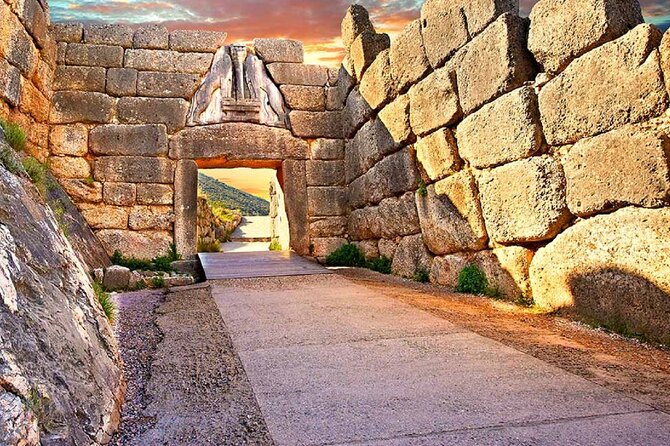
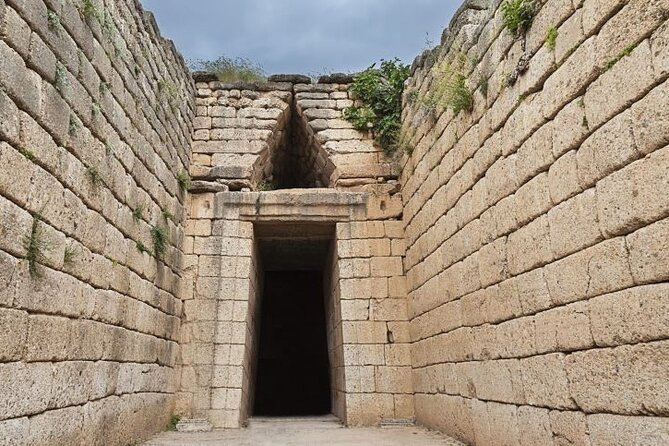
Mycenae is the day’s main archaeological stop. You have about an hour to see the Lion Gate, the huge Cyclopean Walls, the royal tombs, and the Treasure of Atreus, often linked with Agamemnon. The local museum is part of the visit too.
Mycenae feels different from the later classical sites on this route. Its walls and tombs belong to an older Greek world, one shaped by fortified hilltop centers and powerful rulers. The Lion Gate gives the site its memorable entrance, while the massive stonework explains why later people associated the walls with giants.
The Treasure of Atreus is especially important. It is a large beehive-shaped royal tomb, and its scale helps you understand the status of the people buried there. The visit also includes excavated royal tombs connected with the work of Heinrich Schliemann, the archaeologist who helped bring Mycenae to wide public attention.
One hour is enough to get the basic shape of the site, but you will need to stay focused. Mycenae covers an open archaeological area, and the ground can make the visit feel more active than a museum stop. Wear shoes you can walk in comfortably, and keep your camera ready because the Lion Gate and surrounding walls are the visual highlights.
Epidaurus follows with a one-hour visit to the ancient theater. Built in the fourth century BC, it is known for its balanced design and remarkable acoustics.
The theater is the clearest example on this trip of ancient Greek design serving a public purpose. From the seating area, you can look down toward the stage and understand the basic shape of a classical performance space. The setting also makes the stop feel calmer than the fortified site at Mycenae.
Do not expect a full performance or a long free period. The schedule gives you a guided hour, so listen for the explanation of how the theater worked and take time to appreciate the view from the seating area. Epidaurus is one of those places where a short visit can still leave a strong impression.
After Epidaurus, you continue to Olympia for the overnight stay. The first day combines three very different experiences, but it is also the day when the pace may feel most demanding. You visit two ancient centers and spend time on the road before reaching the hotel.
Day two: Olympia and the long route toward Delphi
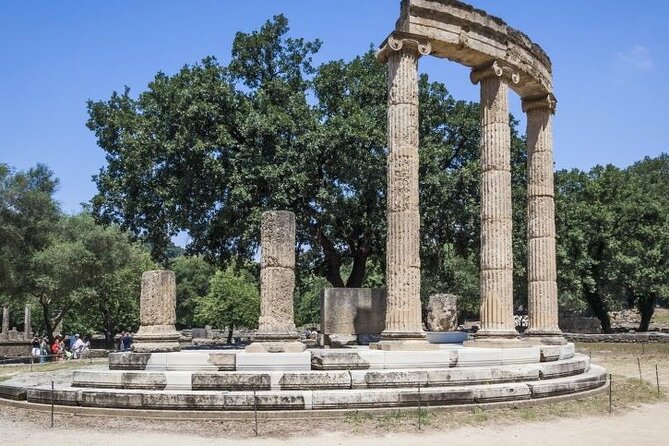
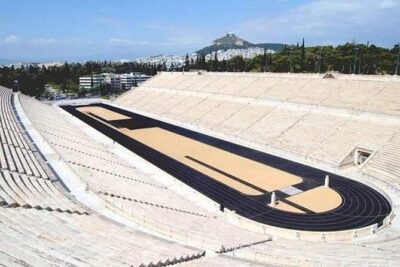
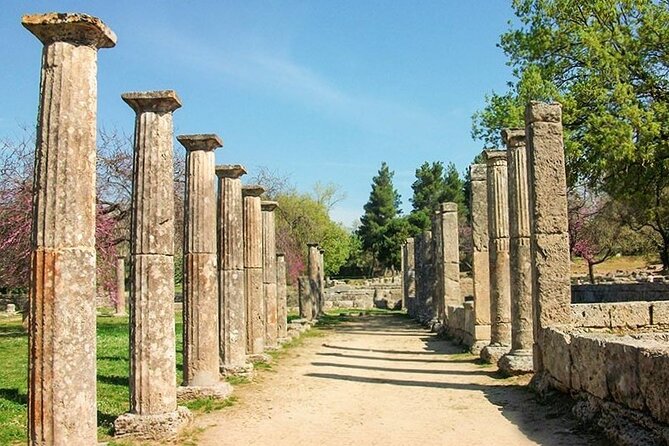
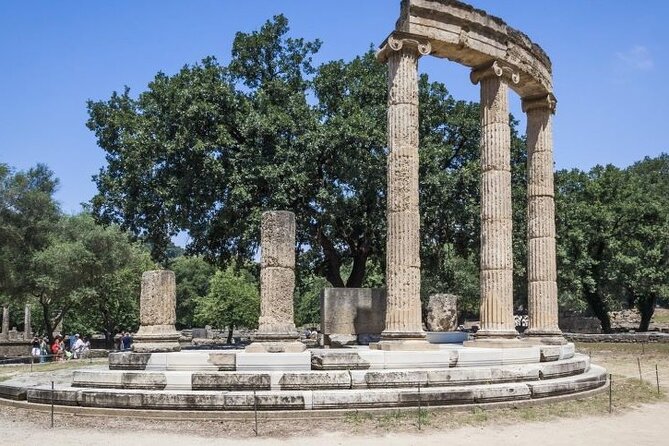
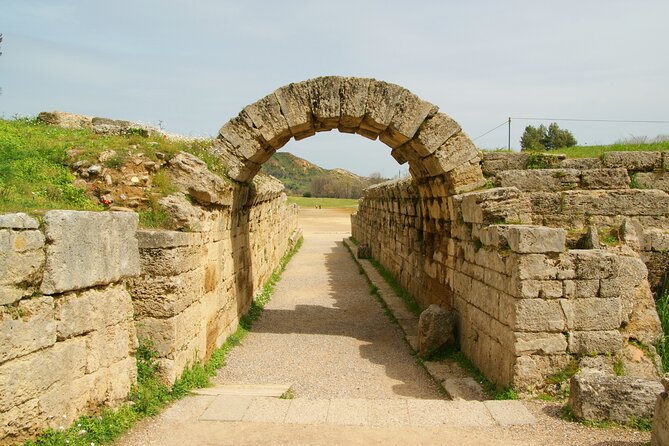
Olympia receives the main attention on day two. The morning visit to the archaeological site lasts about two hours and includes the Olympic Sanctuary Stadium, the Temple of Hera, the Temple of Zeus, and athletic facilities.
Olympia is not just an old sports ground. It was a religious sanctuary, and the athletic contests took place within that sacred setting. The stadium gives you a sense of the physical side of the games, while the temples show why the site mattered far beyond competition.
The Temple of Zeus was one of the great buildings of the sanctuary, and the Temple of Hera connects Olympia with an older layer of religious tradition. You’ll need to picture much of the original architecture because the site is now an archaeological field rather than a complete ancient town.
The two-hour visit is useful because Olympia needs room to make sense. The site spreads across several areas, and a very short stop would reduce it to a few fallen columns. Your guide can help connect the buildings, rituals, and athletic facilities into one story.
The Archaeological Museum of Olympia follows for about an hour. Its best-known work here is the statue of Hermes by Praxiteles. The museum gives you a chance to see important objects at close range after walking through the open ruins.
I like this pairing of site and museum. At Olympia, the stones show the size and layout of the sanctuary, while the museum provides the detailed sculpture and archaeological finds. You get both the broad view and the close view, which is more satisfying than seeing the ruins alone.
After lunch, which is not included, the coach leaves Olympia for Delphi. The route crosses the Rio-Antirrio Bridge, a major structure linking the Peloponnese with mainland Greece across the Corinth Strait. At 2,883 meters long, it required special construction methods to handle difficult conditions.
The bridge is more than a practical part of the drive. It marks a clear change in the journey, taking you out of the Peloponnese and toward central Greece. You will spend much of the rest of the day traveling to Delphi, so plan for a road-heavy afternoon.
Because lunch and drinks are excluded, budget for those separately each day. The included dinners help control the overall cost, but you should not assume every meal is covered. This is one of the small details that can affect the real price of a multi-day tour.
Day three: Delphi, its museum, and Arachova
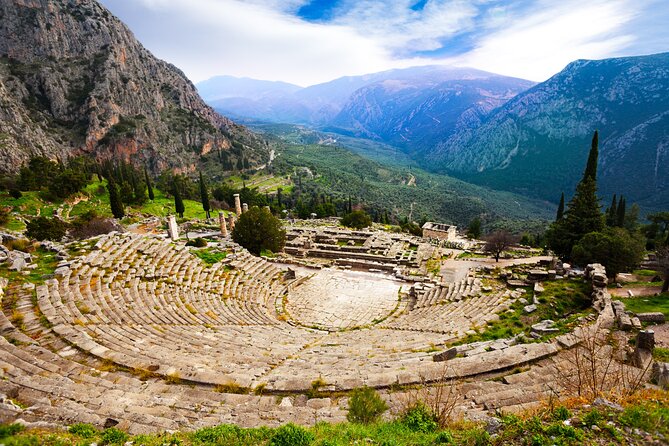
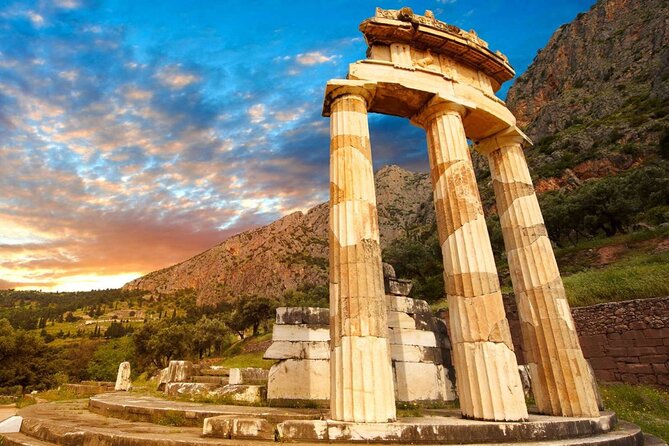
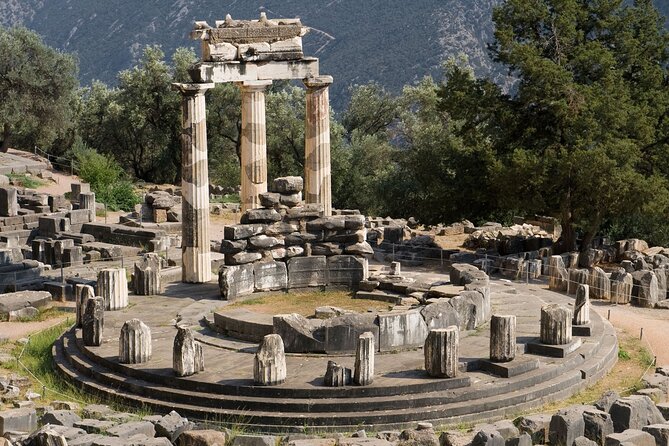
Delphi is the final major site, and the visit begins at the archaeological area connected with the Temple of Apollo. You’ll follow part of the Sacred Way, see the Treasury of Athens, and view the Temple of Apollo. The scheduled site visit lasts about 90 minutes.
Delphi was a religious center where Greek communities came to consult Apollo’s oracle. The Sacred Way helps you understand how people approached the sanctuary, passing monuments and treasuries along the route. The Treasury of Athens is a particularly useful stop because it shows how city-states placed their wealth and identity within this shared sacred setting.
The Temple of Apollo is the central sight, although much of the structure survives only in ruins. From the height of the local theater, you get a panoramic view over the surrounding area. That viewpoint is one of the reasons Delphi feels so different from Olympia. The setting is a major part of the experience, not just a backdrop.
Ninety minutes is a reasonable introduction, but it is not enough for every corner of the site. Stay close to the guide and use the headset so you do not miss explanations while looking around. The terrain and uphill sections may also make the visit feel more strenuous than a museum tour.
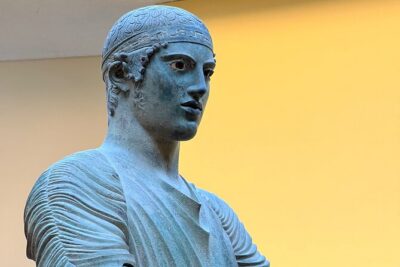
The Delphi Archaeological Museum takes about 45 minutes. Its most famous object here is the Charioteer of Delphi, a bronze figure of a young athlete. The museum is a valuable follow-up to the sanctuary because it gives you a better sense of the sculpture and objects once associated with the site.
The short museum visit means you should focus on the major pieces rather than trying to see everything. If the Charioteer is a priority, make sure you allow time for it even if the group moves on quickly.
The final stop is Arachova, a mountain town known for local crafts. The tour passes through the town for about 20 minutes. This is not a long shopping visit or a full town tour, but it adds a modern Greek note after several days focused on antiquity.
Arachova also breaks up the return journey. You may have time to look around briefly, but do not plan on a long meal or detailed shopping session. The coach then returns to Athens and finishes at the Melina Mercouri Monument on Leof. Vasilisis Amalias 54.
What the $497.43 price really covers
At $497.43 per person, the tour is not a budget day trip, but the inclusions give the price a solid case. You receive luxury air-conditioned coach transport, a professional Spanish-speaking guide, entrance fees, headsets, WiFi on board, two hotel nights, two breakfasts, two dinners, and taxes.
That package matters because admission fees for several major archaeological sites and museums can add up. You also avoid arranging a separate route between Athens, the Peloponnese, Olympia, and Delphi. For a visitor who wants a single booking and Spanish-language guidance, the convenience is a large part of the value.
The hotels are listed as three or four-star properties, but the exact hotel is not specified. Breakfast and dinner are included on both nights, which reduces planning, though you still pay for lunches and drinks.
There is also a hotel fee charged per room per night. For three-star hotels, the fee is listed as €1.50 in winter and €3 in summer. For four-star hotels, it is €3 in winter and €7 in summer. Tips and personal expenses are extra.
Group discounts are available, so the price may work better if you are booking for several people. At the same time, the group can reach 55 people. That is worth weighing carefully. The tour gives you a Spanish-speaking structure and broad coverage, but not the intimacy of a small group.
A few more Athens tours and experiences worth a look



Guides, coach comfort, and the group experience
The guide is central to this trip because the ruins are spread across several sites and historical periods. The Spanish-speaking team has included guides named Faneri, Georgios, and Zoii, with Zoii receiving especially warm praise for her work with a family and child. Georgios has also been singled out for giving detailed explanations and showing clear enthusiasm for the subject.
You should not assume a particular guide will lead your departure unless the operator confirms it. Still, the repeated focus on the guide’s care, attention, and historical explanations suggests that the human side of the tour is one of its strongest features.
The coach includes air conditioning and WiFi, which are useful during the long transfers. Headsets let you hear the guide without needing to stand right beside the group, though you still need to keep track of the meeting times and return to the coach promptly.
Most people can take part, and the tour is near public transportation at its Athens meeting point. Departure is at 8:00 am from the Melina Mercouri Monument. Since the days begin early and include several walks through archaeological areas, you should be comfortable with a busy sightseeing schedule.
Who should book this three-day tour?
I would choose this tour if you want to see the main mainland classical sites but do not want to rent a car or plan several hotel stops. It is also a strong fit if Spanish is your preferred tour language and you value having a guide present for the full journey.
Families may appreciate the structure, included dinners, and clear route. The positive comments about guide Zoii and a child named Lucas suggest that a good guide can make the ancient sites more engaging for younger visitors, although the long coach rides may test their patience.
History-focused visitors will like the range. You move from Mycenaean fortifications to classical theater, religious sanctuaries, athletic culture, sculpture, and modern craft traditions. The route gives you a useful framework for understanding how different parts of ancient Greece connected.
I would hesitate if you dislike fixed schedules, large groups, or long road transfers. You will not have much control over how long you spend at each place, and some stops, including the Corinth Canal and Arachova, are brief. A private tour or slower self-drive trip would give you more freedom, but it would also require more planning and likely more expense.
Final call: a strong choice for broad coverage
Book this tour if your priority is efficient coverage with Spanish guidance. The combination of Mycenae, Epidaurus, Olympia, and Delphi is hard to match in only three days, and the included hotels, meals, admissions, and transport make the cost easier to judge.
Skip it if you want leisurely archaeological visits or a small, quiet group. For most first-time visitors who want a well-organized introduction to classical Greece from Athens, the route offers a practical balance of famous monuments, museum time, and local scenery.
FAQ
Where does the tour start?
The tour starts at the Melina Mercouri Monument, Leof. Vasilisis Amalias 54, Athens.
What time does the tour depart?
Departure is scheduled for 8:00 am.
Where does the tour finish?
The activity ends back at the starting meeting point in Athens.
Is the tour conducted in Spanish?
Yes. A professional Spanish-speaking guide accompanies the tour throughout the journey.
What sites are visited?
The route includes the Corinth Canal, Mycenae, the ancient theater of Epidaurus, Olympia, Delphi, and Arachova.
Are entrance fees included?
Yes. Entrance fees to the listed places of interest are included, along with skip-the-line access.
Are hotel stays included?
Yes. Two nights of accommodation in three or four-star hotels are included, with breakfast and dinner provided.
Are lunches and drinks included?
No. Lunches and drinks are not included in the tour price.
Can I cancel for a full refund?
You can receive a full refund if you cancel at least three full days before the experience start time. Cancellations or changes made less than three full days before departure are not refunded or accepted.