REVIEW · ATHENS
A unique day private tour to Meteora Monasteries from Athens
Book on Viator →Operated by Athens Tours Greece · Bookable on Viator
Meteora is one of Greece’s great surprises: enormous stone pillars rise from the Thessalian plain, topped by Eastern Orthodox monasteries that seem to hang above the world. This private day trip from Athens gives you a practical way to see it without changing hotels, but expect a long day, with roughly four and a half hours each way on the road.
I like the private vehicle and hotel pickup, especially for a group of up to three. I also like the chance to combine Meteora with Kalambaka and the Leonidas monument at Thermopylae. The main concern is value: at $817.04 per group, the price is easier to justify for three people than for one or two, and monastery opening days must be checked carefully.
In This Review
- Key points to know before booking
- Why Meteora is worth the long road from Athens
- The Athens departure and the long ride through Thessaly
- Kastraki, the village beneath the rocks
- Choosing your monasteries at Meteora
- Great Meteoron, the largest monastery
- Saint Stephen, the easiest contrast in the itinerary
- Varlaam, Rousanou, and Saint Nicholas Anapafsas
- Lunch in Kalambaka and time to reset
- Thermopylae and the Leonidas monument
- The cost and what you receive
- Who should book this private Meteora day trip
- Should you book it?
- FAQ
- How long does the Athens to Meteora tour take?
- Is hotel pickup included in Athens?
- How many people can join the private tour?
- How many Meteora monasteries will I visit?
- Is a licensed guide included inside the monasteries?
- Are monastery entrance fees included?
- Is lunch included in Kalambaka?
- Can I cancel for a full refund?
Key points to know before booking
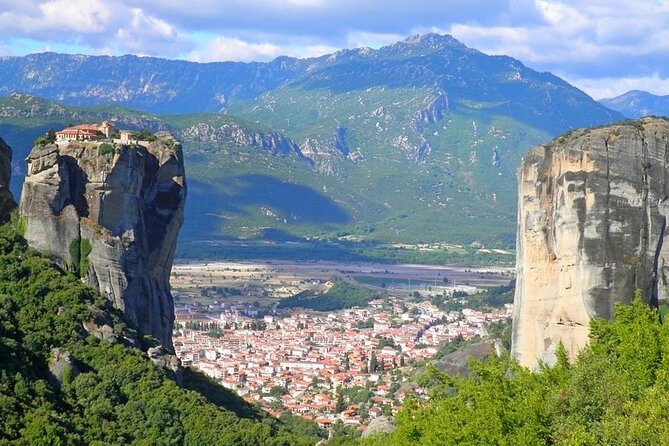
- Meteora is a very long day from Athens: Plan on about 12 hours in total, with a large share spent in the vehicle.
- You will normally enter two monasteries: A third may be possible if you are fit and move quickly.
- The driver is not a licensed inside guide: A professional English-speaking driver explains the region and takes you to the sites, but cannot accompany you inside monasteries or museums.
- Opening days matter: Each of the six monasteries has its own closing schedule, and one or two are closed every day.
- The price works best for a small group: The $817.04 rate covers up to three people, making group size important to the value.
- Thermopylae adds a useful history stop: You see the Leonidas monument on the return journey, though the stop is brief.
Why Meteora is worth the long road from Athens
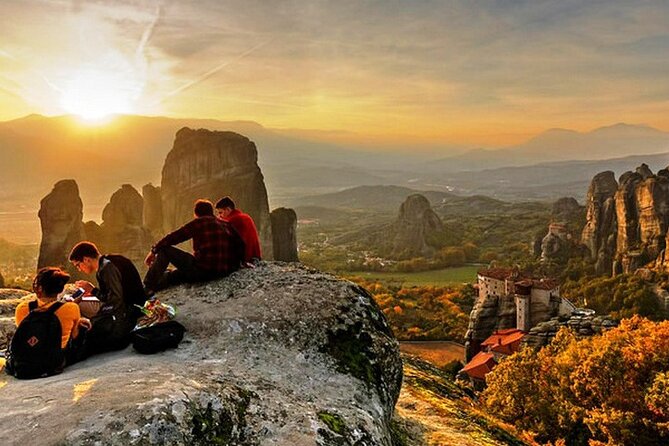
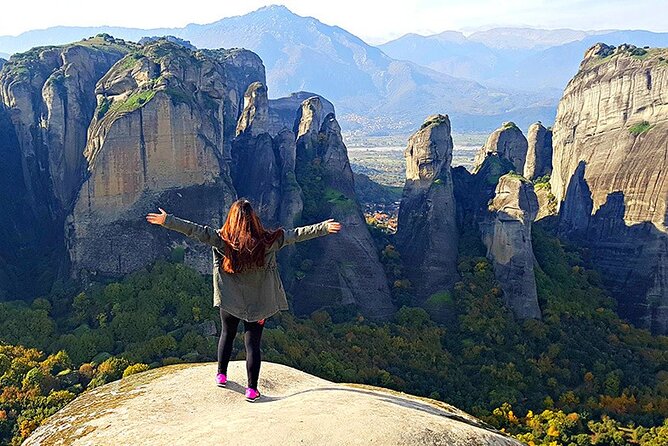
The appeal here is not simply ticking off churches. Meteora combines geology, religious history, and sheer visual drama in one place. The rocks rise more than 600 meters above the surrounding plain, and the monasteries were built on top of these natural pillars to provide isolation and protection for monks.
The first organized monastic life began in the 14th century, when Saint Athanasios the Meteorite founded the Great Meteoron community. At its height, Meteora supported a much larger monastic world. Six monasteries remain active today, and the site entered the UNESCO World Heritage List in 1988.
I find the setting especially powerful because the monasteries are not isolated museum pieces. They are working Eastern Orthodox religious communities, with chapels, icons, courtyards, and religious rules that still shape your visit. You should dress formally and respectfully, and you need to be prepared for steps and walking on uneven ground.
The private format helps with the distance. Your driver collects you at your Athens hotel, handles the driving and parking, and returns you to the same place. You do not need to work out a complicated train connection or manage a rental car on a very full day.
You can also read our reviews of more private tours in Athens

The Athens departure and the long ride through Thessaly
The day begins at the main entrance of your hotel. At a small hotel, you should alert the receptionist. At a larger property, the porter can expect the driver to call for you.
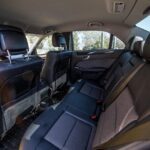
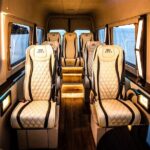
The vehicle is air-conditioned and chosen for your group size. Bottled water is included. Since the drive to the Meteora area takes about four and a half hours, the vehicle matters more than it would on a short city excursion.
The route crosses Central Greece and Thessaly. Thessaly is a broad region between Mount Oeta or Othrys and Mount Olympus, known for mountains, rivers, beaches, the Tempi Valley, Plastira Lake, traditional settlements, and ski areas. Ancient Thessaly also appears in Homeric tradition as Aeolia, and the area is linked with stories of Achilles and Odysseus.
You should keep your expectations realistic during this part of the day. This is transport time, not a series of guided stops. The driver can explain Greek history and culture along the way, but the journey still takes hours. That is the central tradeoff of seeing Meteora from Athens in one day.
Kastraki, the village beneath the rocks
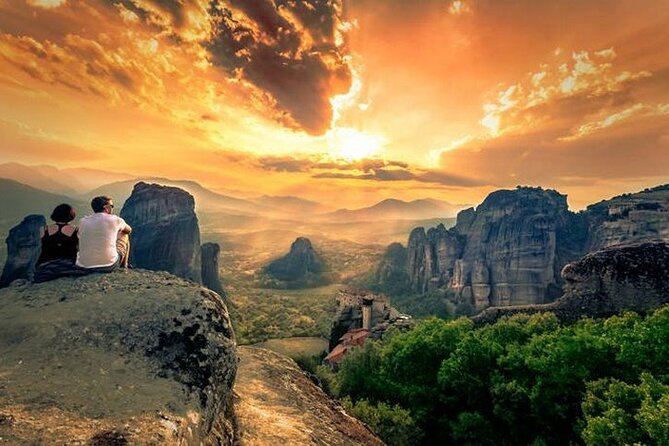
Kastraki sits at the western side of Meteora, beneath the towering rock formations. It is a natural base for climbers and for visitors who want to see the formations at close range. The village has old sections, tavernas, guesthouses, and a local tradition tied to customs and folk songs.
The setting changes quickly as you approach. The rock pillars appear above the trees and buildings, with narrow cliffs, ledges, and rounded formations creating the famous Meteora silhouette. Kastraki is also part of the UNESCO-protected Meteora area.
This stop helps you understand the relationship between village and monastery. The monks did not build in a random scenic spot. They chose rocks that offered difficult access and a degree of solitude, while the settlements below supplied a practical connection to ordinary life.
Do not expect a long independent village tour unless you arrange that with the driver. The published schedule gives the main attention to the monasteries, so Kastraki works mainly as a scenic and geographic introduction.
Choosing your monasteries at Meteora
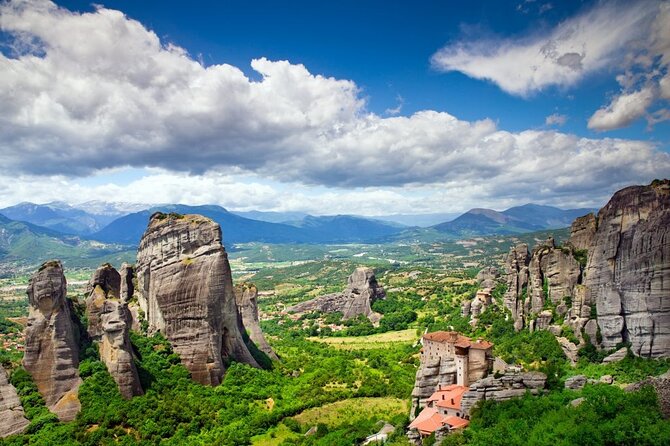
The day allows visits to two monasteries, with a third possible if you are fast and physically fit. That wording is important. You are not guaranteed entry to all six, and the best combination depends on the day’s opening schedule, your pace, and how much time remains after the drive.
One or two monasteries are closed every day. The closures vary by season and by monastery, so check the current schedule before booking and again shortly before departure. A past experience associated with this tour described arriving when the intended monasteries were shut, leaving too little time inside the sites. That is the clearest warning attached to this day trip: a closure problem can turn an expensive excursion into a long drive with limited sightseeing.
Entrance fees are not included. The driver can take you to the entrances and guide you through the region, but drivers are not permitted to accompany visitors inside archaeological sites and museums. A licensed state tour guide can be arranged for an additional fee, subject to availability.
For the best result, ask in advance which monasteries are expected to be open on your date and which two are planned. If the schedule allows a choice, your driver can help adjust the route. You should also ask about the extra cost of a licensed guide if art, icons, and church history matter to you.
Great Meteoron, the largest monastery

Great Meteoron, also called the Holy Monastery of the Transfiguration, is the oldest and largest monastery in Meteora. It occupies the most commanding rock and began the organized monastic community that made Meteora famous.
The planned visit lasts about 1 hour and 15 minutes, not including the entrance ticket. This is the monastery to prioritize when it is open and your schedule permits. Its size and position give you a strong introduction to the scale of the site.
The monastery is male and was founded shortly before the middle of the 14th century by Saint Athanasios the Meteorite. Its name, Great Meteoron, reflects both its importance and its location high above the plain.
The schedule changes by season. In winter, it is closed Tuesday, Wednesday, and Thursday. In summer, it is closed Tuesday. You should not assume that it will be available simply because it is the most famous monastery.
- All Day Cruise -3 Islands to Agistri,Moni, Aegina with lunch and drinks included
★ 5.0 · 4,958 reviews


Saint Stephen, the easiest contrast in the itinerary
The Holy Monastery of Saint Stephen has a long history, with monks living there by the late 12th century and major building work continuing through the 14th, 15th, and 16th centuries. A later church dedicated to Saint Charalambos was built in 1798.
Your scheduled time here is about 50 minutes, excluding admission. Saint Stephen gives the itinerary a different feel from Great Meteoron, with its own buildings, religious art, and views over the area.
The monastery is closed on Mondays. That makes it a useful option on some dates and impossible on others. Since the six monasteries do not share one common closing day, the exact date of your tour has a direct effect on what you can see.
You should arrive ready for a formal religious site. The stated dress code is formal, and the tour requires a strong level of physical fitness. The experience may involve stairs and steep approaches, so comfortable walking shoes are a sensible choice even though the dress code calls for respectful clothing.
Varlaam, Rousanou, and Saint Nicholas Anapafsas
Varlaam Monastery takes its name from the hermit Varlaam, who lived on the rock in the 14th century. The present monastic community developed in the early 16th century under the brothers Theophanes and Nektarios Apsaras. The monastery includes the church of All Saints and a historic winch tower.
Varlaam is closed Thursday and Friday in winter, and Friday in summer. Its planned visit time is not specified separately, so the total schedule depends on how many monasteries you enter.
Rousanou is a compact four-story monastery founded in 1529 by the monks Ioasaf and Maximos from Ioannina. Its Church of the Transfiguration dates from about 1530. Rousanou is closed on Wednesdays.
Saint Nicholas Anapafsas is close to Kastraki. The monastery occupies a narrow, striking rock, and its church was painted by Theophanes Strelitzas, a major figure of the Cretan School of Byzantine painting. This is an appealing choice if you care about religious art and want a monastery with a close connection to Kastraki.
The practical point is simple: the tour is flexible within the listed route, but flexibility depends on opening hours and available time. A private trip gives you more control than a large group departure, but it cannot make a closed monastery open.
Lunch in Kalambaka and time to reset

Kalambaka, also spelled Kalabaka, lies at the foot of Meteora beside the Pineios River. It is the main town for visiting the monasteries and has its own historic churches, including the Church of the Assumption of the Virgin Mary.
The itinerary allows about one hour of free time for lunch. Food and drinks are not included, so budget separately. This is a useful pause after the monastery visits, particularly before the return drive.
Do not expect a long food tour or a carefully planned restaurant meal. You have free time, not a hosted lunch. The advantage is choice and speed. You can select a simple meal and get back on the road without adding another formal activity to an already packed day.
Thermopylae and the Leonidas monument
The return journey includes a short stop at Thermopylae, the ancient Hot Gates. The name refers to the area’s sulfur springs. In antiquity, the coastal passage was much narrower than it is today, but deposits from the Spercheios River have pushed the shoreline several kilometers away.
The Battle of Thermopylae took place in 480 BC, when Greek forces under Leonidas faced the Persian army led by Xerxes. The Greek position held for two days before Ephialtes showed the Persians a route behind the defenders.
The Leonidas monument sits near the modern national road between Athens and Thessaloniki. The stop at Thermopylae lasts about 15 minutes, followed by roughly 10 minutes at the monument. Admission to the monument is not included.
This is a quick historical pause, not a full archaeological visit. I like its place in the route because it breaks up the return journey and connects the day with another major chapter of Greek history. If you want extended time at the springs or battlefield area, this schedule will feel too short.
The cost and what you receive
The price is $817.04 per group of up to three people. That means the per-person cost changes sharply depending on your group:
- Three people: about $272 per person
- Two people: about $409 per person
- One person: $817.04
For three people, the private vehicle, hotel pickup and drop-off, bottled water, parking help, and transport over a very long route make the price easier to defend. You are also paying for privacy and control, not just a seat in a vehicle.
For one person, the value is much harder to make work. A train or overnight stay in Kalambaka may provide more time at Meteora for less money, though that would not offer the same door-to-door convenience or private schedule.
The basic price does not include monastery admission, food, drinks, or a licensed guide inside the sites. Those costs should be part of your budget. The English-speaking driver provides commentary and regional knowledge, but the distinction between driver and licensed guide is important.
Who should book this private Meteora day trip
I would recommend it most strongly to a small group that has limited time in Greece, wants a private vehicle, and does not want to change hotels. It also suits people who value door-to-door service and prefer having one driver manage the route and parking.
It is a good fit if you are comfortable with a long day and want to combine Meteora with Thermopylae. The private format also lets you request adjustments within the planned route, which can be useful when monastery closures change the day.
I would hesitate if you dislike long road journeys, want detailed guided interpretation inside every church, or expect to visit all six monasteries. I would also think twice if you are booking alone, since the group price remains the same.
Before paying, confirm three things: which monasteries are open on your date, whether a licensed guide is available at extra cost, and how much time you will actually have inside each site. Those questions address the main risk better than any general promise of flexibility.
Should you book it?
Book this tour if you have only one day, have two or three people to share the cost, and want the convenience of Athens hotel pickup. Meteora is extraordinary, and the private vehicle makes the long journey manageable.
Do not book it casually. The distance is substantial, the entrance fees and guide cost are extra, and monastery closures can change the experience. If you can stay overnight near Kalambaka, you will likely have a less rushed visit. If you cannot, this is a practical way to see Meteora, provided you verify the opening schedule before departure.
FAQ
How long does the Athens to Meteora tour take?
The tour lasts approximately 12 hours. The journey through Central Greece and Thessaly takes about four and a half hours, leaving time for monastery visits, Kalambaka, and Thermopylae.
Is hotel pickup included in Athens?
Yes. Pickup and drop-off are included from your Athens accommodation. You meet the driver at the main hotel entrance, or notify the receptionist if you are staying at a small hotel.
How many people can join the private tour?
The price covers one private group of up to three people. Only your group participates in the activity.
How many Meteora monasteries will I visit?
You will have the chance to visit two monasteries. A third may be possible if you are fast and physically fit, but all six cannot be guaranteed because one or two monasteries close each day.
Is a licensed guide included inside the monasteries?
No. The tour includes a professional English-speaking driver who can explain Greek history and culture and guide you to the entrances. Drivers are not licensed to accompany you inside archaeological sites and museums. A licensed English-speaking guide can be arranged for an extra charge, subject to availability.
Are monastery entrance fees included?
No. Entrance fees to archaeological sites and museums are not included. Food and drinks are also separate, although bottled water is provided.
Is lunch included in Kalambaka?
No. You have about one hour of free time for lunch in Kalambaka, but the meal is not included in the tour price.
Can I cancel for a full refund?
Yes, if you cancel at least 24 hours before the experience start time. Cancellations or changes made less than 24 hours before the start time are not eligible for a refund.