REVIEW · ATHENS
Acropolis, Plaka & Ancient Agora Guided Tour
Book on GetYourGuide →Operated by ATHENS WALKING TOURS · Bookable on GetYourGuide
The best feature of this 3.5-hour Athens tour is its pairing of the Acropolis with the Ancient Agora. You get the famous hilltop monuments, then walk into the old city center where Socrates, Plato, merchants, officials, and craftspeople once crossed paths. The south-slope entrance also brings you past the Dionysus Sanctuary and Theater before the climb begins.
I like the licensed English-speaking guide and the careful use of shade and pauses during the uphill walk. I also like the Agora addition, especially the Temple of Hephaestus and the Attalos Museum, which give the broken stones a clearer human setting. The main drawback is the pace and physical demand: you climb steps and inclines, skip a leisurely lunch, and must arrive with the correct tickets if you choose the option without admission.
In This Review
- Key points at a glance
- Why combine the Acropolis and Ancient Agora?
- Meeting near Hadrian’s Arch
- Entering through the Acropolis south slope
- The Parthenon and the monuments above Athens
- A short break, not a restaurant lunch
- Walking into the Ancient Agora
- The Attalos Museum and ordinary ancient life
- What the guides add
- Physical demands and practical limits
- Who gets the best value?
- Should you book the Acropolis and Agora tour?
- FAQ
- How long does the Acropolis and Ancient Agora tour last?
- What language is the tour conducted in?
- Where is the meeting point?
- How early should I arrive?
- Are entrance tickets included?
- Is there time for lunch?
- Is the tour suitable for wheelchair users or baby strollers?
Key points at a glance
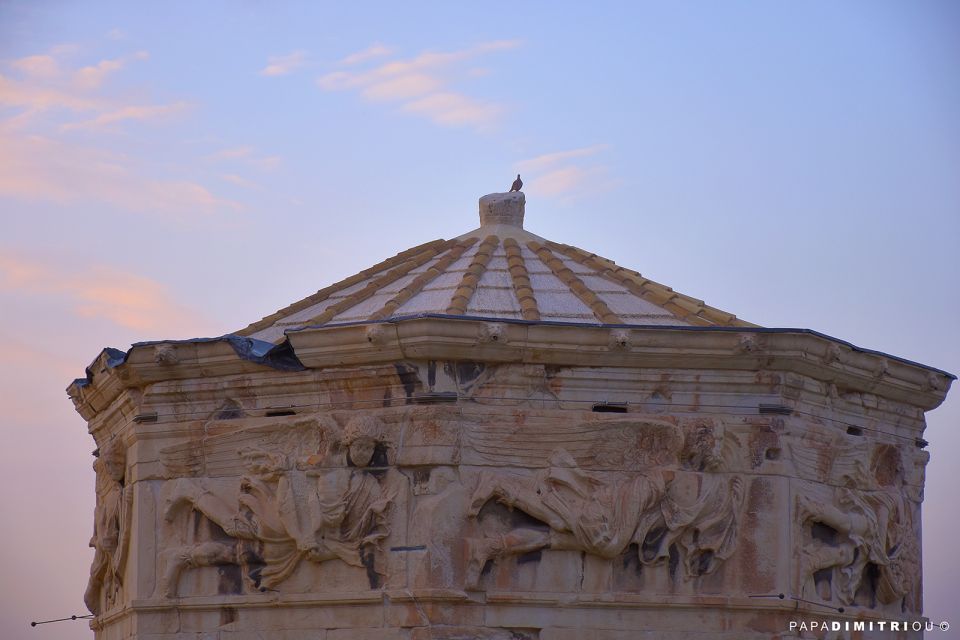
- Start at the Dionysus Theater: Enter from the Acropolis south slope and see the birthplace of Greek drama before reaching the summit.
- See the major Acropolis monuments: The route covers the Parthenon, Erechtheion, Propylaia, Temple of Nike, Agrippa Monument, and nearby hill views.
- Continue to the Ancient Agora: Walk to the former commercial, political, and financial center of Athens at about 1 p.m.
- Visit the Attalos Museum: See ancient measures, weights, and other objects connected to daily life and the Agora market.
- Expect a serious walking tour: Strollers, luggage, and large bags are not allowed, and the route is not suitable for wheelchair users or people with mobility limits.
- Check the ticket choice closely: The with-ticket option includes admission, while the without-ticket option requires you to buy official tickets for the right date and time.
Why combine the Acropolis and Ancient Agora?
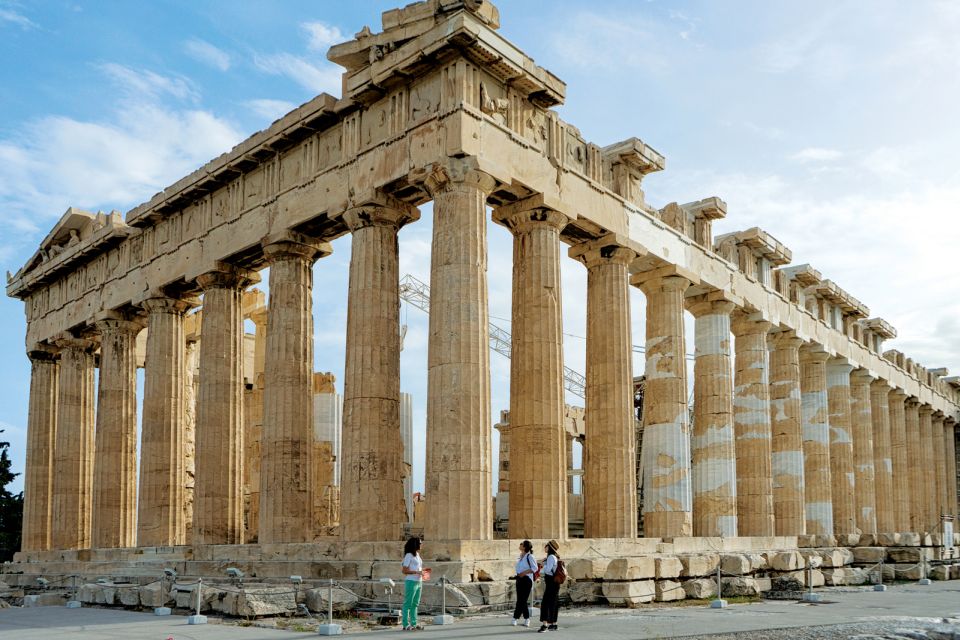
Athens can feel like a city of scattered ruins until someone explains how the pieces fit together. The Acropolis was the sacred high point, crowned by temples. The Agora below was the place where business, politics, public debate, and ordinary errands happened.
That contrast gives this tour a useful shape. You first see the monuments that symbolize Athens, then move through the civic center that made the ancient city function. The second stop is not simply an extra archaeological site. It helps you understand the people who lived, argued, worshipped, traded, and taught beneath the Acropolis.
The tour costs $66 per person. Its value depends on the ticket option you choose and on how much help you want at major archaeological sites. If admission is included, the price buys a guide, a planned route, and entry to two important places. If you select the without-ticket option, the fee covers the guiding service but you must arrange admission yourself through the official ticket site.
For a first visit to Athens, I think the combination makes more sense than seeing the Acropolis alone. A self-guided audio tour can explain the names, but a live guide can stop in the shade, answer a question about mythology, or point out a monument that you might otherwise walk past.
You can also read our reviews of more guided tours in Athens

Meeting near Hadrian’s Arch
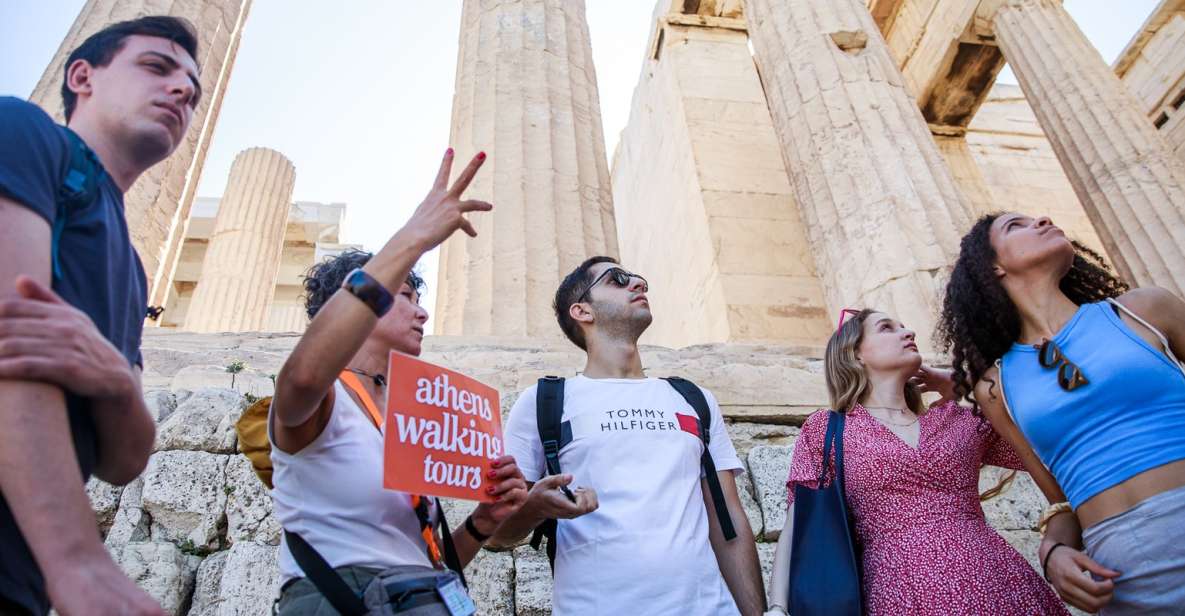
The meeting point is at 3 Dionyssiou Areopagitou Street, at the start of the pedestrian route leading toward the Acropolis from Hadrian’s Arch and Syngrou Avenue. Look for the orange Athens Walking Tours sign.
Arrive 20 minutes before departure. That buffer matters because the Acropolis uses timed admission and airport-style security. Even with skip-the-ticket-line service, you may wait from zero to 10 or 30 minutes, and peak-season lines can last longer than 30 minutes.
The tour does not provide hotel pickup or drop-off. You need to make your own way to the central meeting point, and you should keep your passport or identity card with you. Bring a student card if you are using a student admission category, and carry some cash for a snack or drink during the break.
The tour name includes Plaka, but the detailed route focuses on the Acropolis and Ancient Agora. You meet near the historic center and walk between major sites, yet this is not presented as a separate, extended Plaka neighborhood tour.
Entering through the Acropolis south slope
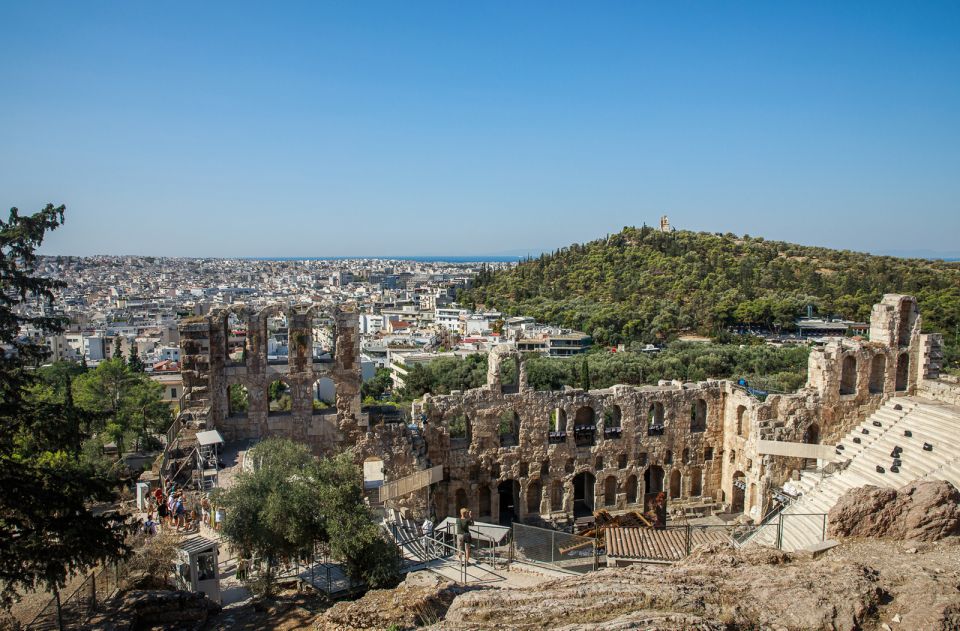
The route begins on the south slope, an approach that helps avoid some of the main entrance crowding and adds two important early stops. Before the summit, you see the Sanctuary of Dionysus and the Theater of Dionysus, built in the 5th century BC.
The theater matters because it gives context to Greek drama. Here, the Acropolis is not only a hill of temples. It is also part of a religious and cultural center where performances formed part of public life.
From there, the route climbs toward the sacred hilltop. Expect inclines, steps, and exposed areas. The climb is manageable for many people, but this is not a gentle stroll. In summer, the heat can make the ascent feel harder than the distance suggests.
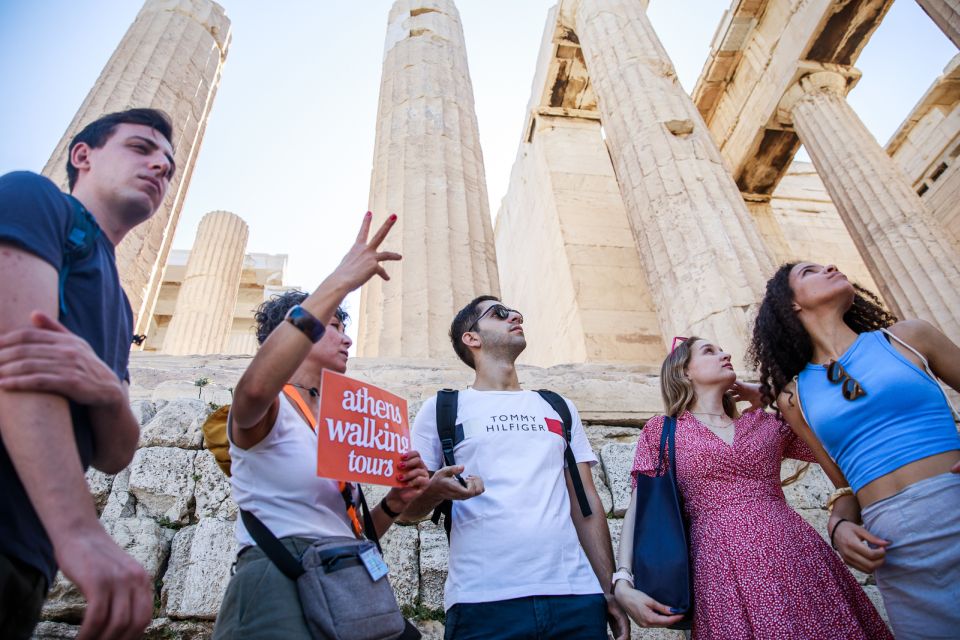
The guide’s pacing is one of the most useful parts of the experience. Vasaliki, one of the guides praised by name, was described as stopping in the shade to explain what the group was seeing. That approach is especially helpful for older visitors or anyone with knee concerns. It does not remove the physical work, but it can keep the walk from becoming a race.
The Parthenon and the monuments above Athens
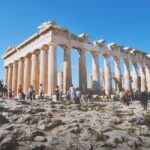
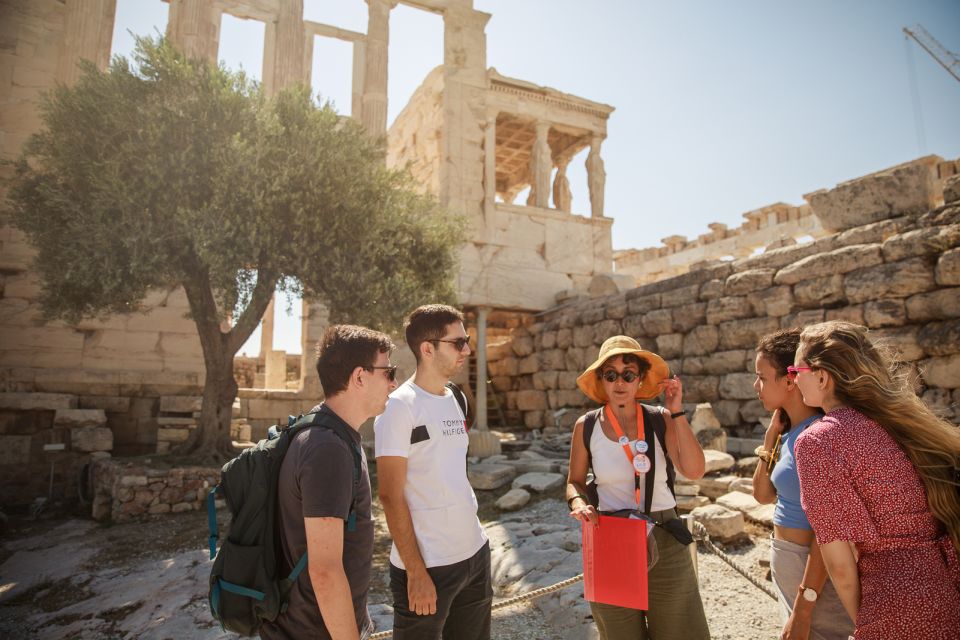
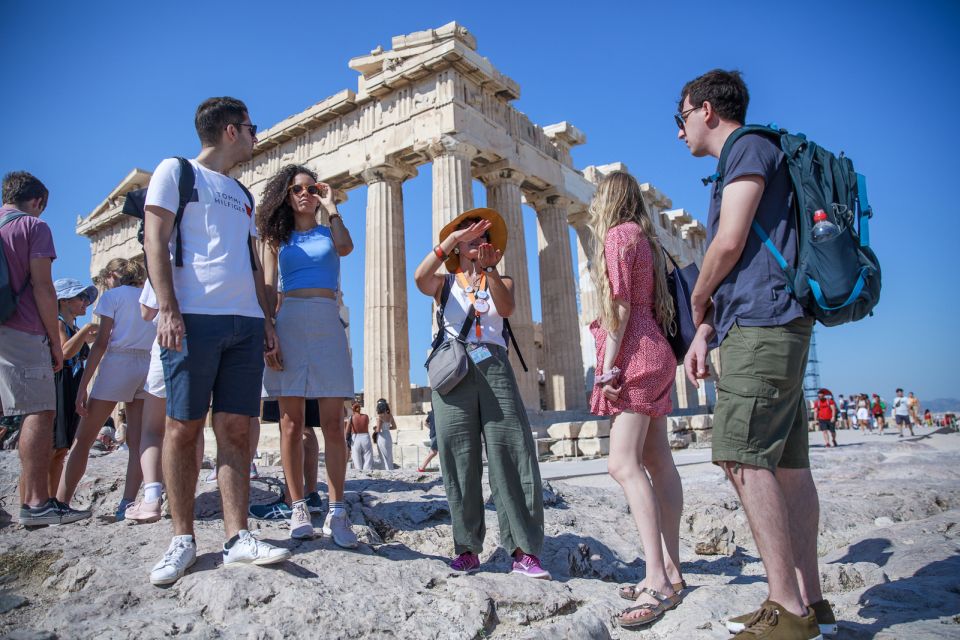
At the summit, the guide explains the Parthenon, the most recognizable building on the Acropolis. You learn to look beyond its fame and notice its setting, scale, damaged surfaces, and relationship to the other monuments.
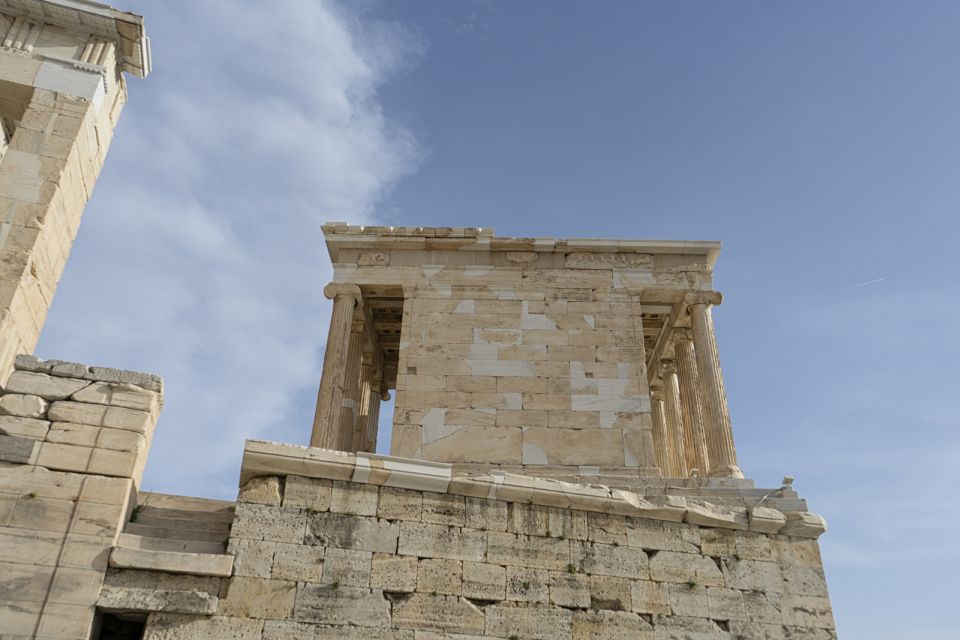
The route also covers the Erechtheion, Propylaia, Temple of Nike, and Agrippa Monument. Each has a different role and appearance. The Erechtheion is known for its unusual design and the famous Caryatid figures. The Propylaia forms the grand approach to the sacred precinct. The Temple of Nike is small compared with the Parthenon but important for the way ancient Athenians linked religious buildings with civic identity.
The Agrippa Monument and surrounding remains can be easy to overlook when the Parthenon dominates your attention. This is where a guide earns the fee. You get help sorting the names and functions of buildings instead of seeing one impressive ruin after another with no clear order.
The views also carry much of the experience. From the Acropolis, you look across central Athens toward the Observatory, Philopappos Hill, Mars Hill, and Pnyx Hill. The guide points out these nearby landmarks and explains how they fit into ancient public life and later city development.
Mars Hill, also called the Areopagus, is particularly useful to identify from above. Pnyx Hill is tied to the ancient assembly, while the surrounding hills show how closely the city’s religious, political, and residential areas were linked.
After the guided portion, you have free time at the Acropolis for photographs and additional looking. Use it wisely. You may want a few minutes to return to the Parthenon, take in the city views, or study a monument without having to keep up with the group.
A short break, not a restaurant lunch
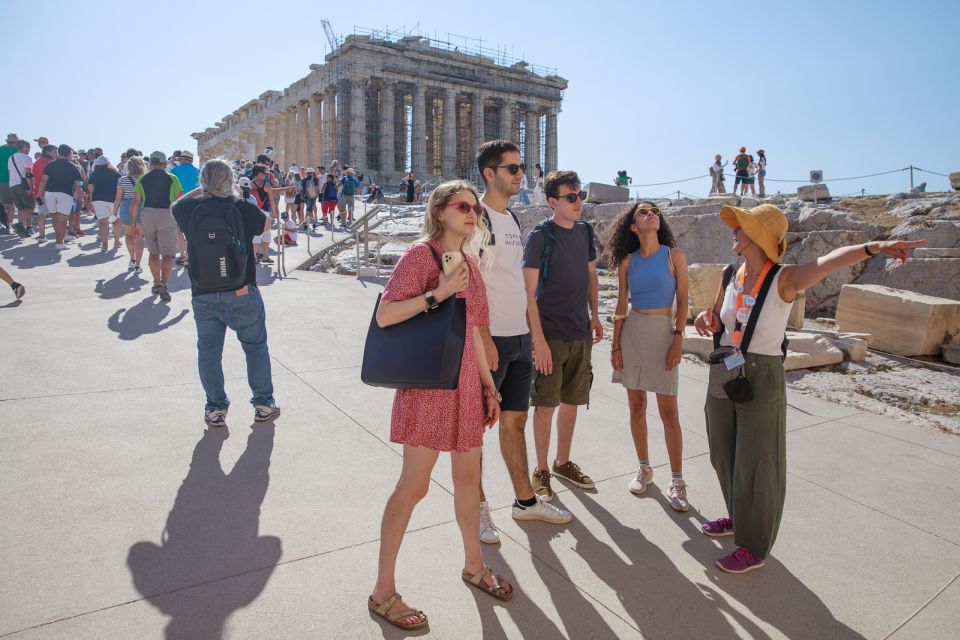
The schedule allows a short pause before the Agora portion. You can buy a snack or drink from the canteen, but there is no time for a leisurely lunch.
This is a small detail with a big effect on your day. Eat before the tour if you need a proper meal, especially during hot weather. A sandwich, fruit, or water in your bag may be useful, provided it complies with site rules. The tour information specifically says food and beverages are not included, so plan to pay for your own refreshments.
The break also gives your legs a chance to recover before the walk to the Ancient Agora. Do not treat the pause as free time to wander far. The next part of the tour follows a schedule, with Agora access expected at about 1 p.m.

Walking into the Ancient Agora
The Ancient Agora was the commercial, political, and financial center of Athens. After the religious grandeur of the Acropolis, its open paths and lower buildings offer a different view of the city.
This is where the tour becomes especially useful for understanding daily life. The Agora was not just a field of columns. It was a working civic space, connected with trade, government, public discussion, and religious practice.
Your guide explains the surviving monuments, including the Temple of Hephaestus, the best-preserved Greek temple from the 5th century BC. It is one of the clearest places in Athens to see what a Greek temple looked like when much of its structure remained intact.
You also see the Church of the Holy Apostles, the Temple of Apollo Patroos, the Stoa of Zeus, and the Altar of Zeus. These remains cover different periods and purposes, which helps show that the Agora changed over time rather than existing as one fixed ancient scene.
The references to Socrates and Plato are not just decorative name dropping. This was a place of public conversation and teaching, and the guide uses the setting to explain how philosophy took shape in shared civic spaces. If you like history, politics, philosophy, or mythology, this section adds substance to the better-known Acropolis visit.
The Attalos Museum and ordinary ancient life
The Attalos Museum is housed in a reconstructed stoa at the Agora. It provides the indoor, object-based counterpoint to the outdoor ruins.
You see artifacts connected to the workings of the ancient marketplace, including identification items, original measures, and weights used by market inspectors. These objects may seem less dramatic than a temple, but they answer practical questions: How were goods measured? How was trade checked? How did officials manage a public market?
I find this kind of collection valuable because it brings daily business into a site often described only through famous philosophers and temples. The museum helps you picture people buying and selling goods, not just famous men walking and teaching.
It also offers some relief from the sun. The Acropolis portion is largely exposed, while the museum gives you a more contained setting for the final part of the tour.
What the guides add
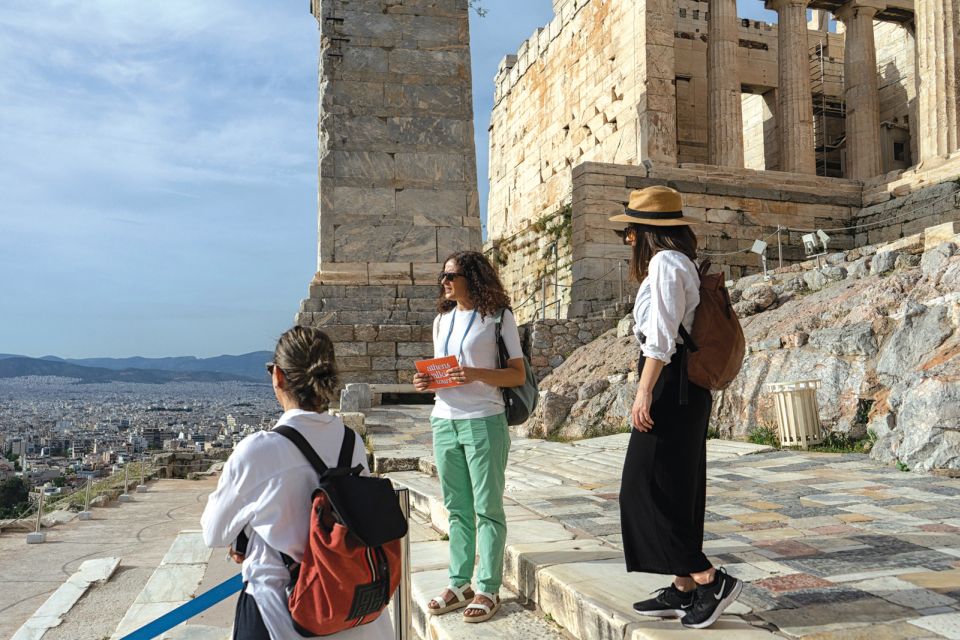
The strongest praise for this experience centers on the guides’ command of Greek history and mythology, their friendly manner, and their willingness to answer questions. Sissy, described as an archaeologist, is especially well suited to families who want more than a list of dates and building names.
Vasaliki’s style, with pauses in shaded areas and a steady pace, may appeal to older visitors. Tina led a tour that included the Agora and helped make the ruins easier to picture. Other guides have been described as personable and patient, with no rush to move on.
Guide quality can vary from one departure to another, so you should not expect one specific person. Still, the experience is built around a licensed local guide rather than a recorded commentary. That matters at the Acropolis, where crowded paths and similar-looking stones can make a self-guided visit confusing.
You also receive an Athens guide magazine and map. These are modest extras, but they can help you continue exploring after the tour, especially if you want to find a restaurant or return to a site later.
Physical demands and practical limits
You should be comfortable walking uphill, using steps, and staying on your feet for much of 3.5 hours. The Acropolis has uneven surfaces and exposed sections, while the walk to the Agora adds more distance.
The tour is not suitable for wheelchair users or people with mobility impairments. Baby strollers, luggage, and large bags are not allowed. Wear sturdy shoes, carry water, and bring sun protection, though these recommendations are practical advice rather than listed inclusions.
The tour runs rain or shine. Check the forecast before you go, but do not assume poor weather cancels the departure. Timed Acropolis entry is strict, and the group cannot wait for late arrivals. Missing the correct entry time can mean losing the tour and receiving no refund.
If you choose the without-ticket option, buy admission through the official site before booking the tour. You must select the correct date, time slot, and ticket category, and your entry time must match the tour schedule. A ticket for the wrong hour is not a useful ticket here.
Who gets the best value?
This tour suits a first-time Athens visitor who wants the major ancient sites explained in one morning or early afternoon. It is also a strong choice for families, history fans, and anyone who finds archaeological ruins hard to interpret alone.
The combination is less suitable if you want a relaxed day with long meals, unplanned wandering, or extensive time at each monument. The schedule is organized and fairly tight. You have free time for photographs at the Acropolis, but the main purpose is guided sightseeing, not slow independent exploration.
At $66, the value is strongest when admission is included and when you would otherwise pay for separate entry, navigation help, and a guide. If the price refers to the without-ticket choice, add the official Acropolis and Agora admission fees before comparing it with other options.
The free cancellation deadline is 24 hours before the activity, and reserve-now-pay-later booking is available. Those terms make planning easier, but they do not protect you from arriving late or bringing an invalid ticket.
Should you book the Acropolis and Agora tour?
Book it if you want the Acropolis to make sense rather than simply look impressive. The south-slope entrance, Dionysus Theater, hilltop monuments, Ancient Agora, Hephaestus Temple, and Attalos Museum form a well-chosen history lesson.
I would choose the with-ticket option for simplicity, then arrive early with identification, water, comfortable shoes, and a small bag. If you prefer to manage admissions yourself, the without-ticket option can work, but only if you carefully match both official entry times to the tour schedule.
Skip it if you need step-free access, a full lunch break, or a slow private visit. For most able-bodied first-time visitors who want clear explanations and two major sites in a single outing, this is a practical and worthwhile introduction to ancient Athens.
FAQ
How long does the Acropolis and Ancient Agora tour last?
The tour lasts approximately 3.5 hours.
What language is the tour conducted in?
The live guided tour is conducted in English.
Where is the meeting point?
Meet at 3 Dionyssiou Areopagitou Street, near the beginning of the pedestrian walkway leading to the Acropolis from Hadrian’s Arch and Syngrou Avenue. Look for the orange Athens Walking Tours sign.
How early should I arrive?
Arrive 20 minutes before the scheduled departure time.
Are entrance tickets included?
Tickets are included if you select the with-ticket option. With the without-ticket option, you must buy official Acropolis and Ancient Agora tickets yourself, choosing entry times that match the tour schedule.
Is there time for lunch?
No. The schedule includes a short break to buy a snack or drink from the canteen, but not a leisurely lunch.
Is the tour suitable for wheelchair users or baby strollers?
No. The tour is not suitable for wheelchair users or people with mobility impairments, and baby strollers, luggage, and large bags are not allowed.