Athens is at its best when its famous monuments and ordinary city streets appear in the same walk. This tour links Syntagma Square, the Acropolis, Plaka, and Monastiraki with quieter corners, a local café stop, and small shops that large sightseeing groups often pass by.
I like the route for two clear reasons: you get a useful first look at several major sights, and the guides, including Elena, Dionysis, and Alice, have been praised for patient, detailed explanations. I also like the Greek sweet stop, which gives the tour a welcome taste of daily Athens.
The tradeoff is the pace and terrain. Two and a half hours is short for this much ground, and the route includes uphill walking near the Acropolis and Mars Hill. Wear good shoes, and do not book it if you need a slow, deeply detailed visit at every monument.
In This Review
- Key points to know before booking
- From Syntagma Square into the heart of Athens
- The National Garden and traces of ancient Athens
- The Panathenaic Stadium and the 1896 Olympic story
- Zeus, Plaka, and the route toward the Acropolis
- Mars Hill and the best city views
- A Greek sweet in a local café
- Artisan shops and the old market route
- What the guides add to the walk
- Price, group size, and overall value
- Who should choose this Athens walk
- Practical details that affect your day
- Should you book the Highlights and Hidden Gems in Athens Walking Tour?
- FAQ
- Where does the Athens walking tour begin?
- Where does the tour end?
- How long does the tour last?
- Is the tour offered in English?
- What major sights are included?
- Is food included?
- What is the cancellation policy?
Key points to know before booking
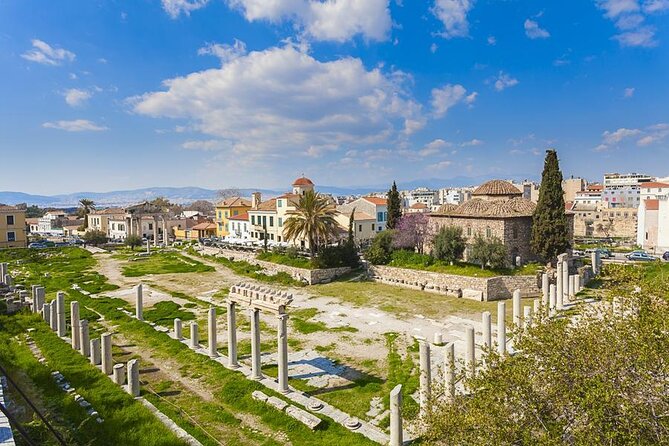
- See Athens from Syntagma to Monastiraki: The route connects the modern center with ancient monuments, Plaka, and the old market district.
- Expect uphill walking: The Acropolis area and Mars Hill require comfortable footwear and steady legs.
- Meet the Evzones at Syntagma: The opening stop includes the Tomb of the Unknown Soldier and Greece’s famous National Guards.
- Mix headline sights with smaller corners: You will pass the National Garden, old city remains, red-roofed houses, artisan shops, and local cafés.
- A small-group style keeps questions practical: The tour is described as limited to 12 people, though booking information also calls it private, so confirm the exact group setup.
- Good for a first Athens orientation: You finish at Monastiraki Square, near public transportation and a lively part of central Athens.
From Syntagma Square into the heart of Athens
Your walk begins at Leoforos Vasilisis Amalias 2, beside Syntagma Square. This is a sensible starting point because Syntagma gives you a quick lesson in modern Athens before the route turns toward ancient sites.
The word Syntagma means constitution, and the square is tied to Greece’s modern political life. From here, your guide introduces the Tomb of the Unknown Soldier and the National Guards, known as the Evzones. Their uniforms and formal movements are among the most memorable sights in central Athens.
The opening stop is brief, listed at about 10 minutes. That is enough to understand the setting and watch the guards, but not enough for a long ceremony explanation or an extended look at the surrounding buildings. If the changing of the guard matters greatly to you, ask the guide how the timing works on your date.
This first section is also useful for orientation. You are not dropped straight into a maze of ancient stones. Instead, you begin in a broad civic square, learn where you are, and then move toward the National Garden and the older parts of the city.
You can also read our reviews of more walking tours in Athens



The National Garden and traces of ancient Athens
The route continues through the National Garden, where the city becomes quieter and more shaded. The garden offers a change of rhythm after the traffic and open pavement around Syntagma Square.
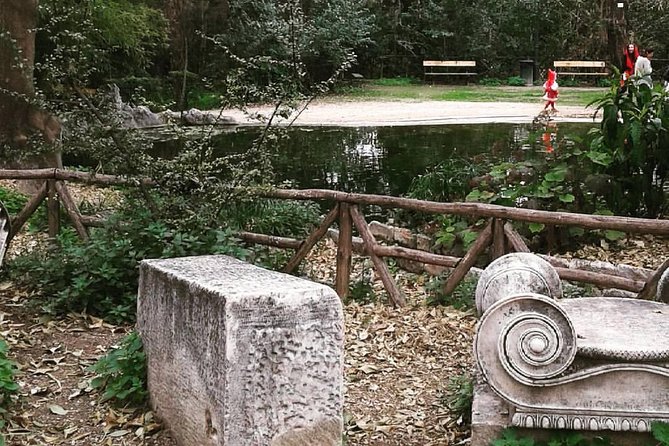
You also look for ruins connected with the ancient city. These remains are not presented as a single grand monument, and that is part of their value. Athens often reveals its past in fragments, tucked beside roads, gardens, and later buildings. A guide helps you notice what you might otherwise walk past without understanding.
Do not expect the National Garden to be the main event of the tour. It works better as a bridge between modern Athens and the major ancient sites ahead. If you want a long garden stroll, the fixed two-and-a-half-hour schedule may feel tight. If you want variety, this pause keeps the walk from becoming one monument after another.
The Panathenaic Stadium and the 1896 Olympic story

The next major stop is the Panathenaic Stadium, the white-marble ceremonial center built for the first modern Olympic Games in 1896. Its long, curved seating and bright stone make it easy to recognize, even in a city full of ancient landmarks.
This stop adds a different layer to Athens. The Acropolis represents the ancient city, while the Panathenaic Stadium connects Athens with the modern revival of the Olympic Games. Your guide can place the building in that larger story and explain why it remains important beyond its impressive shape.
The tour includes a look at the stadium, but the information provided does not say that admission is included or that you have time for an interior visit. Treat this as a sightseeing stop unless your guide confirms otherwise. That distinction matters when you compare the $90.93 price with a tour that includes paid monument entries.
You may also find this section more exposed to the sun than the garden. Athens can be hot, and there is little reason to wear anything other than light casual clothing and comfortable walking shoes.
Zeus, Plaka, and the route toward the Acropolis
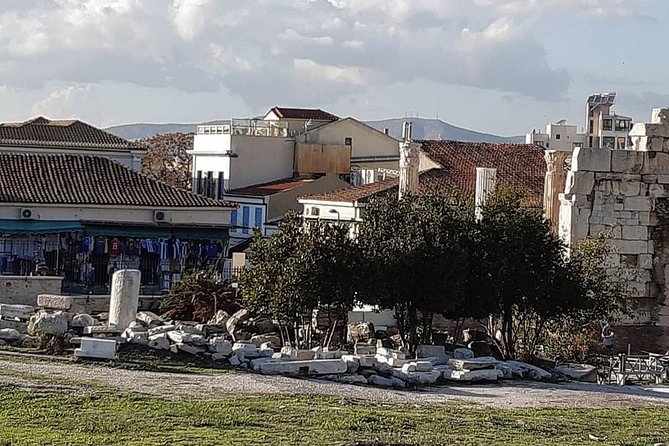
From the stadium, the walk heads toward the Temple of Olympian Zeus. Even in its ruined state, the remaining columns show the enormous scale of the project. The temple was built over a long period and was once among the largest in the Greek world.
The tour takes you around the Temple of Zeus rather than promising a full archaeological visit. That keeps the route moving, but it also means you should not expect the same amount of time you would have on a dedicated Acropolis and archaeological-sites tour.
This is one of the places where a guide’s explanation earns its keep. A row of columns can look simple at first glance. With context, you begin to see the ambition behind the building, the gaps left by time, and the way later Athens grew around ancient foundations.
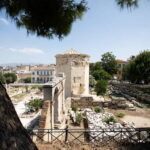
The route then moves toward the Acropolis and Plaka. Plaka is one of the most pleasant parts of central Athens for a first walk, with narrow streets, older homes, shops, and small lanes. The tour includes the area’s less obvious corners, including the red-roofed houses noted by one participant. These details give you a more grounded view of Athens than a straight march to the Acropolis entrance.
The main limitation is distance. You cover several major areas in a short period, so the route may feel brisk. One account describes a lot of uphill walking, especially around the Acropolis area. If you have a five-year-old, the walk can still work, but an adult needs to stay attentive to the child’s pace. The tour guide Elena was specifically praised for making the experience enjoyable for a young granddaughter.
Mars Hill and the best city views
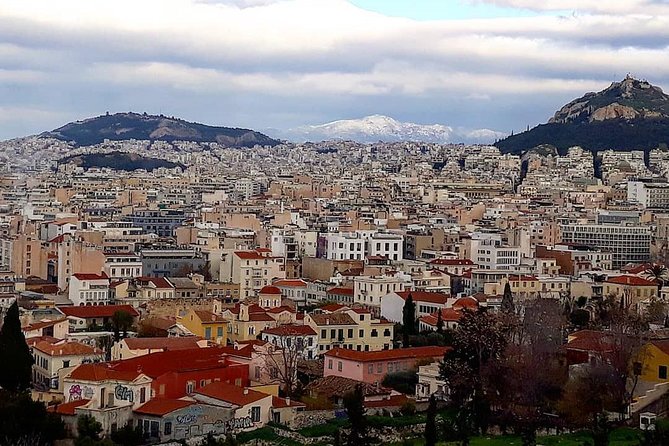
Near the Acropolis, the route includes Mars Hill, also known as the Areopagus. This rocky rise gives you a view across Athens and provides one of the tour’s strongest photo stops.
The surface is uneven, and the climb requires care. This is not the place for thin sandals or shoes with poor grip. The reward is a broad view that helps you understand how Athens fits together, from the older neighborhoods below to the Acropolis above.
Mars Hill also gives your guide a natural place to connect mythology, philosophy, and the city’s religious past. The value here is not simply reaching a viewpoint. It is seeing the relationship between the Acropolis, Plaka, and the modern city around them.
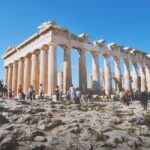
You should be clear about what this tour does and does not offer. It takes you around the Acropolis area and provides views, but the supplied details do not confirm an inside visit to the Acropolis monuments. The promise to skip long lines may help with included attractions, but you should verify exactly which admissions are covered before booking.


A Greek sweet in a local café

After the monuments and uphill sections, the café stop is a welcome idea. You pause for a traditional Greek sweet at a café favored by local residents, with drinks and other food available to buy.
The sweet is included as part of the experience, but the information does not specify its name. That is probably best viewed as a small tasting rather than a meal. Lunch is not included, and drinks are extra, so eat beforehand if you are likely to need something substantial during the walk.
This stop gives you a chance to sit down, ask questions, and hear about life in Athens outside the ancient sites. A café break also matters in practical terms. A continuous walk through the city can become tiring, especially in warm weather, and a short pause makes the final stretch more manageable.
One account describes a stop at a lovely café or restaurant in a quaint setting, with very good food. Since the exact venue and food arrangement can vary, you should not book this as a full culinary tour. Think of it as a modest local touch that breaks up the sightseeing.
Artisan shops and the old market route
Before the tour ends, your guide points out artisan souvenir shops. This is more useful than a generic shopping stop because you can learn which nearby stores focus on local craft items rather than simply following the busiest tourist signs.
You do not have to buy anything. The real benefit is knowing where to return after the tour if you want a souvenir with a stronger connection to Greece. The guide can also help you understand the difference between a small workshop-style shop and a standard retail outlet.
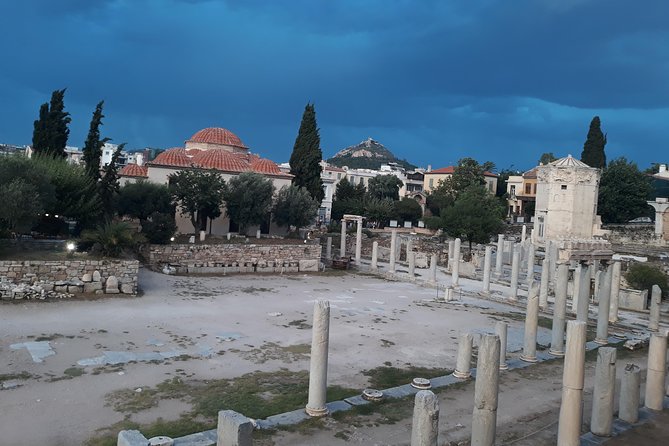
The route then heads through a market area with more than a thousand years of use. That long commercial history helps explain why this part of Athens still feels like a meeting point between old and new. The streets around Monastiraki are practical as well as atmospheric, with shopping, food, transport links, and historic buildings close together.
Monastiraki Square is a good finish because you are not left at an isolated monument. The tour ends at Apollonos 21, near Monastiraki metro station. From there, you can continue on foot, use public transportation, or return to an area you passed earlier.
What the guides add to the walk
The strongest part of this experience is the guide’s role. The route itself includes sights you could reach independently, but good commentary changes how you see them.
Dionysis was praised for explaining both the major attractions and the less obvious places along the way. Alice was described as patient during the long walk, which matters if you want to ask questions instead of simply keeping up with a group. Elena was praised for her historical explanations, respectful answers, and attention to a young child.
Those details suggest the tour works best when you treat it as a conversation. Ask about the guards, the ruins, daily life in Athens, or the meaning of the places you pass. The experience is not just a checklist of the Acropolis, Zeus, and the stadium.
Guide quality can vary from date to date, of course. The named guides give you useful examples of the style to expect, but they do not guarantee who will lead your particular departure.
Price, group size, and overall value
At $90.93 per person, this is not the cheapest way to walk around central Athens. You can reach the same neighborhoods on your own, and several stops are viewed from outside or along the route.
The price makes more sense if you value historical explanation, route planning, and local orientation. In two and a half hours, you connect Syntagma Square, the National Garden, the Panathenaic Stadium, the Temple of Olympian Zeus, Plaka, the Acropolis area, Mars Hill, and Monastiraki. Building that route yourself would take time, especially if Athens is new to you.
The included local guide and advertised line-skipping benefit also add value, though you should confirm which entrance fees and queues are covered. Food and drinks are not included apart from the traditional sweet element described in the experience. Alcohol is available to purchase, while lunch is not part of the tour.
The booking information describes a small group limited to 12 people and also labels the activity private, with only your group participating. Those descriptions do not fully match, so ask for clarification if group size is central to your decision. A genuinely private walk offers more freedom with questions and pace. A group of 12 is still manageable, but less personal.
The tour is booked an average of 71 days ahead, which suggests that popular dates can fill early. I would reserve before arrival if you are visiting Athens on a cruise schedule or have only a short stay.
Who should choose this Athens walk
I would recommend it most strongly to a first-time visitor who wants a fast, structured introduction. You see the major names, but you also get Plaka lanes, garden paths, a café, shops, and a market district.
It also suits you if you enjoy history but do not want to spend several hours inside museums. The walk keeps changing scenery, and the guides’ detailed explanations help you connect ancient landmarks with modern Greek life.
Families can consider it, especially if the guide is attentive to children. Still, the distance and uphill stretches are real. A five-year-old may manage with a patient guide and regular encouragement, but this is not a stroller-focused outing.
Cruise passengers need to plan carefully. The start is near central Athens, and the end is at Monastiraki metro station, but the tour will not refund a missed departure caused by a late or absent cruise ship. Leave a generous buffer before your required return time.
I would choose another experience if you want a slow Acropolis visit, a full meal, extensive archaeological detail, or a tour built around wheelchair-friendly surfaces. The route includes uneven and uphill areas, and the schedule covers a lot of ground.
Practical details that affect your day
The tour lasts about two hours and 30 minutes. Wear casual clothes and sturdy, comfortable shoes. Bring water, particularly if the weather is warm, though drinks are not included.
The tour is offered in English and includes a mobile ticket. Confirmation arrives when you book. Children must be accompanied by an adult, and service animals are allowed. The route is near public transportation, and most people can take part, but the uphill walking deserves honest consideration.
Free cancellation is available if you cancel at least 24 hours before the local start time. Within 24 hours, you receive no refund, and changes are not accepted. That rule is especially important for cruise passengers and anyone arranging several timed activities in Athens.
Should you book the Highlights and Hidden Gems in Athens Walking Tour?
Book it if you want a well-packed first look at Athens led by a guide who can explain the city’s famous sights and point out the corners between them. The combination of Syntagma Square, the guards, Zeus, the stadium, Plaka, Mars Hill, a Greek sweet, and Monastiraki gives you a useful framework for the rest of your stay.
Skip it if you dislike brisk walks, uphill streets, or seeing major monuments without a confirmed interior admission. At $90.93, the value depends on how much you want a guide’s context and a ready-made route.
For most first visits, I see the appeal. You finish knowing where the main neighborhoods connect, which places deserve a longer return visit, and how ancient Athens sits inside the modern city.
FAQ
Where does the Athens walking tour begin?
The tour begins at Leof. Vasilisis Amalias 2 in Athens, beside Syntagma Square.
Where does the tour end?
The walk ends at Monastiraki Square, at Apollonos 21, near Monastiraki metro station.
How long does the tour last?
The experience lasts approximately two hours and 30 minutes.
Is the tour offered in English?
Yes. The tour is offered in English and uses a mobile ticket.
What major sights are included?
The route includes Syntagma Square, the Tomb of the Unknown Soldier, the National Garden, the Panathenaic Stadium, the Temple of Olympian Zeus, the Acropolis area, Plaka, Mars Hill, and Monastiraki.
Is food included?
A traditional Greek sweet is included as part of the café stop. Drinks, lunch, and other food are not included. Alcoholic drinks are available to purchase.
What is the cancellation policy?
You can cancel at least 24 hours before the local start time for a full refund. Cancellations or changes made within 24 hours are not accepted and are not refunded.