REVIEW · ATHENS
Ancient Athens tour: Acropolis, Parthenon and Acropolis Museum
Book on Viator →Operated by Athens Walks Tour Company · Bookable on Viator
A hilltop full of ancient stories beats a download. This 4-hour Athens walk combines the Acropolis monuments with time at the New Acropolis Museum, so you connect what you see on the rock to the sculptures and artifacts kept inside.
I especially like the licensed guide-led pacing through a crowded site, and the way the tour stops are short enough to stay focused but still allow you to tailor where you linger. The other big win is the Acropolis Museum stop, which turns the visit from just photos into real context you can walk away with.
One consideration: the walk up top needs moderate fitness, and some footing can be slick. Add heat and the crowds, and you’ll be glad you start early and follow the hydration advice.
In This Review
- Key highlights worth planning around
- Why the New Acropolis Museum Changes Everything
- The 9:00 AM start: timing that actually helps in Athens
- Acropolis monuments with a guided route you can still steer
- Parthenon views: short stop, big payoff
- Theatre of Dionysus: when scale feels real
- Herod Atticus Odeon: the ancient space still acting alive
- Propylaea and Erechtheion: the details tourists miss
- Museum time: what you should look for before you leave
- Comfort tips: heat, footing, and hearing your guide
- Price and value: what you pay for, what you still need
- Who this tour suits best
- Guides and group vibe: why people rate this so high
- Should you book this Acropolis, Parthenon and Museum tour?
- FAQ
- How long is the Ancient Athens tour?
- What time does the tour start?
- Where is the meeting point?
- How large is the group?
- Is the tour offered in English?
- Are the Acropolis and Acropolis Museum tickets included?
- What should I bring for this walking tour?
- Can I cancel for a full refund?
- What about ID for younger travelers?
Key highlights worth planning around

- New Acropolis Museum included: a purpose-built space for Acropolis finds, plus it sits over older ruins
- Small group (max 20): easier crowd flow and more chances to hear your guide
- Acropolis views on a timed route: Parthenon and key monuments get their moment without feeling like a sprint
- Comfort-first touches: bottled water is provided for the Greek sun
- Guides you can recognize by name: reviews mention archaeologist-level guides like Giannas, Selena, Afrofithi, and Efie
Why the New Acropolis Museum Changes Everything
Most Acropolis visits stop at the ruins. This one does the smarter thing: it follows the monuments with a focused museum hour. That pairing is what helps everything click.
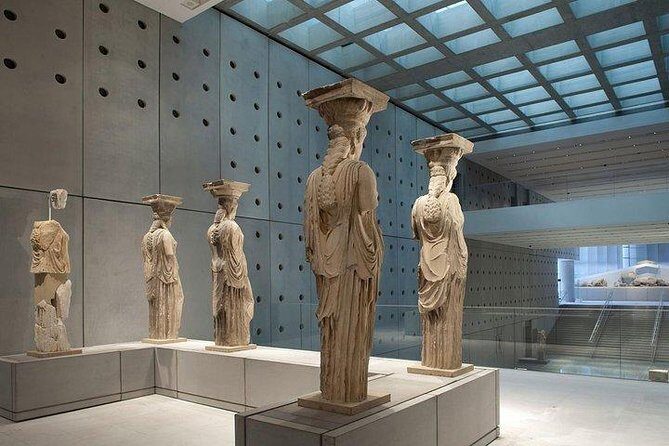
The New Acropolis Museum is built to house the artifacts found on the rock and the surrounding slopes. You’re not just looking at a random collection; you’re seeing the kind of materials that match what the buildings on the hill used to represent. The museum also covers layers of time, from the Greek Bronze Age through Roman and Byzantine Greece.
There’s another detail worth caring about: the museum is constructed over parts of Roman and early Byzantine Athens. Even if you’re not hunting for architectural trivia, that physical overlap quietly reinforces the idea that Athens kept living, rebuilding, and reusing the same dramatic ground.
You can also read our reviews of more museum experiences in Athens


The 9:00 AM start: timing that actually helps in Athens
This tour runs from 9:00 am and starts at Porinou 5, Athina 117 42. Ending back at the meeting point keeps it simple if you want to continue your day on your own afterward.
The early start matters because the Acropolis area gets hot fast. The tour includes bottled drinking water, which is practical, not performative. Starting before the midday crush also makes the walking feel less like shoulder-to-shoulder. It also gives your brain a better chance to absorb the story your guide is telling.
If you’re the type who likes a smooth day, you’ll appreciate the group size cap of 20 travelers. Smaller groups move more naturally, especially when the site turns into a photo queue.
Acropolis monuments with a guided route you can still steer
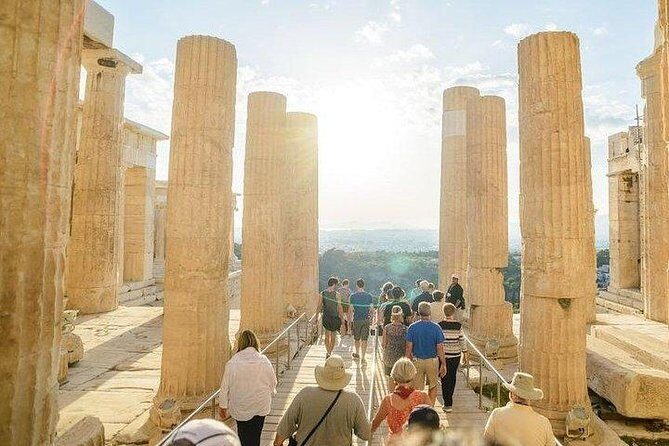
You spend about 2 hours on the Acropolis before the tighter look at specific monuments. That opening block is where the tour does something useful: it gives you time to get your bearings, take in the scale, and decide what you want to see more closely.
You’ll then get short, targeted stops at the big hits:
- Parthenon (about 10 minutes)
- Theatre of Dionysus (about 10 minutes)
- Herod Atticus Odeon (about 10 minutes)
- Propylaea (about 10 minutes)
- Erechtheion (about 10 minutes)
These time windows can feel brief on paper. In practice, they help because you’re rotating through distinct spaces instead of losing an hour to one overlook. The downside is that if you love reading every inscription and studying every column, you may finish wanting more free wandering up there. One review even pointed out that the pacing was perfect but the Acropolis could use extra independent time if you have it.
Still, for most people, this approach is a sweet spot: guided enough to understand what you’re seeing, flexible enough that you’re not stuck in a rigid drill.
Parthenon views: short stop, big payoff
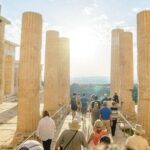
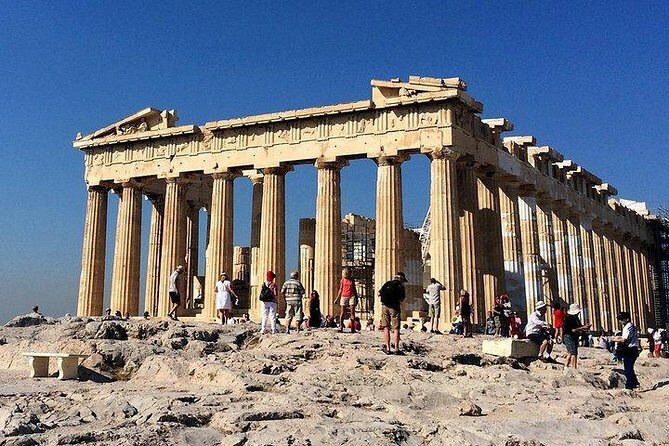
At the top, the Temple of Goddess Athena at the Parthenon is the iconic focus. The tour’s brief stop is designed for first-hand impressions: you get the moment, you get the context, and you’re not stuck waiting in a long line with no guidance.
If you’re trying to separate the Parthenon as a structure from the myths attached to it, a guide-led stop helps. You get a framework for why people cared about these buildings beyond the obvious wow-factor.
Theatre of Dionysus: when scale feels real
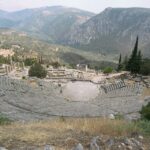
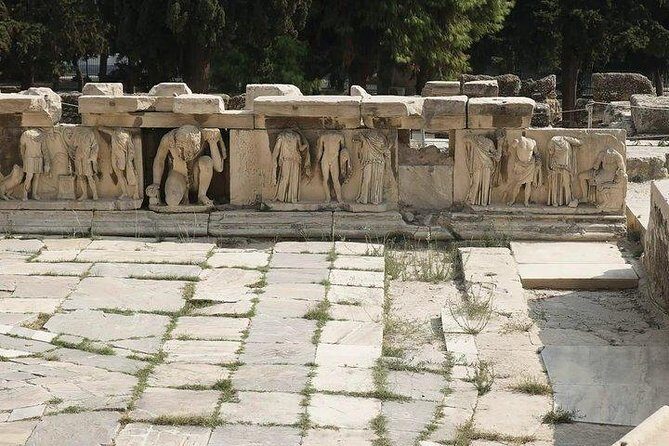
Next up is the Theatre of Dionysus, described as one of the most important ancient theaters in the world. That phrasing is doing real work here. In a single stop, you can grasp how theater wasn’t just entertainment; it was a major public space, tied to civic life.
Even in a short visit, you’ll likely notice the geometry and seating shape from multiple angles. And because it’s a place you can physically look at like a bowl, your guide’s explanation tends to land faster than it would for carvings hidden in a corner.
- All Day Cruise -3 Islands to Agistri,Moni, Aegina with lunch and drinks included
★ 5.0 · 4,958 reviews




Herod Atticus Odeon: the ancient space still acting alive
The tour also includes Herod Atticus Odeon, noted as a Greek Roman temple that still operates. That’s a powerful detail for visitors because it links stone to sound. You’re not just visiting ruins; you’re standing near a site that has continued to function through time.
You get about 10 minutes here, which won’t be enough for deep seating analysis, but it’s enough to feel why this particular location stays famous.
Propylaea and Erechtheion: the details tourists miss
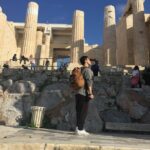
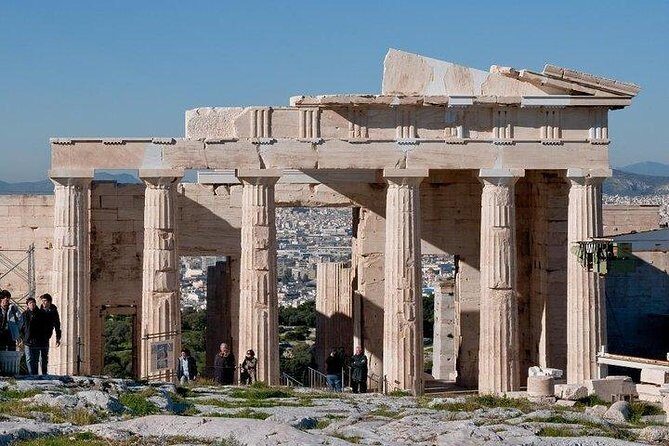
The route then moves through Propylaea, the gates of the Acropolis. Think of this segment as the transition point: you go from outdoor landmark views into the tighter, more architectural side of the story.
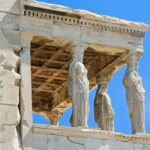
Finally, you reach Erechtheion, with its famous Caryatids statues. This is one of those places where a short stop is still meaningful because the sculptures are impossible to ignore once you find the right angle. The Caryatids act like a visual anchor, and they’re exactly the type of feature that a guide can help you interpret quickly.
Museum time: what you should look for before you leave
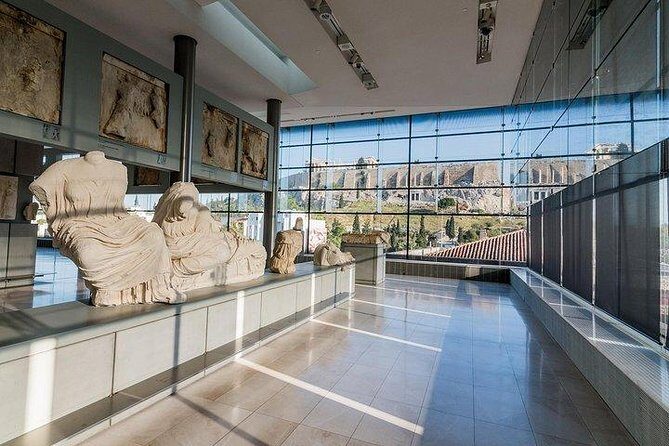
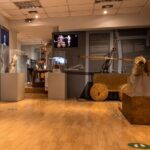
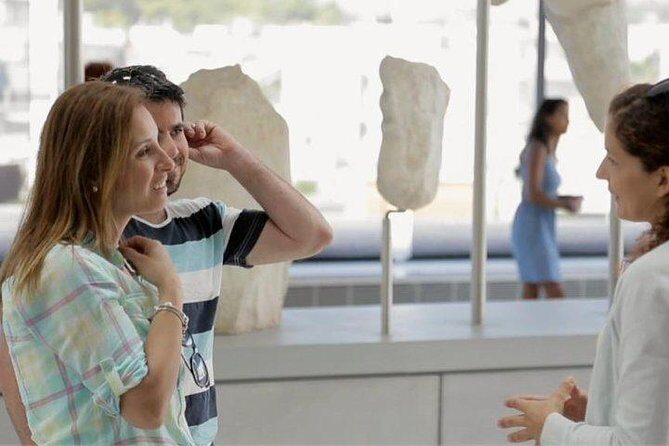
The museum portion runs about 1 hour and is the heart of the “see it, then understand it” approach. If you only have a few hours in Athens, I’d rather you spend that time here than add extra museum hopping.
Here’s what makes the museum stop so useful:
- It focuses on Acropolis findings rather than being a scattershot archaeology museum
- It covers multiple eras, from Bronze Age through Roman and Byzantine
- It connects the objects you saw on the hill to the larger story of what the site meant
One review also described how the guide walked the group through the museum, then encouraged staying on your own to maximize your experience. That advice is practical: after your guided hour, slow down and find what stood out to you at the monuments.
If you’re deciding what to prioritize, start with anything related to decorative elements or sculpture fragments. The museum is where those details stop being background texture and become the main event.
Comfort tips: heat, footing, and hearing your guide
This tour is a walking day on uneven ground, and the tour notes a moderate physical fitness level requirement. You’ll be moving uphill and across stone surfaces.
Two practical warnings from the experience help you plan well:
- Some sections can have slippery rocks, especially if the light makes the ground look dry but it isn’t
- The area can be crowded, so audio can be tricky
Good news: many guides use audio gear (reviews mention microphone devices/ear pieces for clearer listening in busy spots). If you know you struggle hearing in crowds, bring your own wired headphones as a backup. A small safety net can make a big difference for your enjoyment.
And yes, the sun is real. Even with bottled water provided, bring sunscreen and wear a hat. One review called out hydration and sun protection as the key to staying comfortable.
Shade breaks also matter. Reviews include comments about guides being conscious of shade and water breaks, so choose footwear and gear that let you take those pauses without feeling rushed.
Price and value: what you pay for, what you still need
The advertised price is $72.59 per person and the tour runs about 4 hours. This is not an all-in-one “no thinking required” deal, because entrance fees are sometimes separate depending on what option you selected.
What you should know from the info provided:
- Acropolis entrance fee is listed at €30.00 per person unless your booking includes it
- Acropolis Museum entrance fee is listed at €20.00 per person unless your booking includes it
- If you don’t have the entrance tickets, you’re told to buy them in cash from your guide at the meeting point unless you selected an option with tickets
So how do you judge value? I’d frame it like this:
- You’re paying for a licensed guide plus the structure of a guided route that gets you from monument to museum without wasting time figuring it out.
- You may still need to cover entry, so total cost depends on your ticket option.
Small group tours on the Acropolis tend to be more about reducing hassle than saving money. If you hate crowd chaos, the guide-led pacing and the museum pairing usually make the extra cost feel worth it.
Who this tour suits best
This is a great fit if you want a high-impact Athens day with clear guidance:
- You want to see the Parthenon area, Theatre of Dionysus, Herod Atticus Odeon, Propylaea, and Erechtheion without planning a route from scratch
- You like the idea of tying the ruins to what’s preserved in the Acropolis Museum
- You appreciate early timing to beat heat and crowd density
- You’re traveling with moderate walking ability and can handle uphill stone paths
It may be less ideal if you want hours of slow, independent wandering across the entire hilltop. The route is focused, and that’s the point. You get a lot of meaning in a limited time, but you may want more unstructured time afterward.
Guides and group vibe: why people rate this so high
The reviews are strong for a reason: the human factor shows up again and again. I saw several guide names referenced in feedback, including Giannas and Selena, plus guides like Afrofithi, Efie, and others. The common theme is guide quality plus a pace that doesn’t steamroll you.
A few extra signals worth noting:
- Reviews mention clear English and strong storytelling, not just dates and dates
- Guides are described as patient with group movement, including navigating busy spots
- The museum portion often feels like a guided tour first, then a chance to stay on your own after
If you’ve ever tried to do the Acropolis alone, you’ll know how easy it is to see the shapes without understanding the why. This tour is built to fix that gap quickly.
Should you book this Acropolis, Parthenon and Museum tour?
I’d book it if you want the best of Athens in one focused morning: Acropolis monuments with guided context, then a museum stop that gives those monuments a second life in the artifacts you can actually inspect.
Skip it only if you already have a flexible plan for extra time up on the Acropolis and you prefer a totally self-guided pace. Otherwise, this one is an efficient, crowd-aware way to get the meaning of the site, not just the skyline.
FAQ
How long is the Ancient Athens tour?
The tour lasts about 4 hours.
What time does the tour start?
The start time is 9:00 am.
Where is the meeting point?
The meeting point is Porinou 5, Athina 117 42, Greece.
How large is the group?
The maximum group size is 20 travelers.
Is the tour offered in English?
Yes, it is offered in English.
Are the Acropolis and Acropolis Museum tickets included?
Entrance tickets are not included unless you booked an option with entrance tickets. The Acropolis entry fee is listed at €30.00 per person, and the Acropolis Museum fee is listed at €20.00 per person. If you are without tickets, you are told you can buy them in cash from your guide at the meeting point unless you selected the ticket option.
What should I bring for this walking tour?
Wear shoes for uneven ground and be ready for sun. Bottled drinking water is provided, and sunscreen and water are specifically advised in feedback. The walk includes areas that can be slippery.
Can I cancel for a full refund?
Yes. There is free cancellation, and you can cancel up to 24 hours in advance for a full refund. If you cancel less than 24 hours before the start time, the amount paid is not refunded.
What about ID for younger travelers?
If you are under 25, you will need a physical passport or ID to help ensure the reduced-price policy for your group.