REVIEW · ATHENS
Ancient Olympia/ Ancient Corinth private tour from Athens/ Nafplio (up 12 hours)
Book on Viator →Operated by GREECE TAXI · Bookable on Viator
Ancient Olympia is nearly three and a half hours from Athens, so seeing it alongside Ancient Corinth makes for a long, ambitious day. The payoff is a private route through the Peloponnese, with the Olympic stadium, the Corinth Canal, and two major archaeological centers in one outing. Onboard Wi-Fi and historical videos help make the long drive easier.
I like the freedom of a private vehicle, especially if you are traveling with family or a small group. I also like the scenic route through the Arcadia mountains and the useful stops at the Archaeological Museum of Olympia and the Corinth Museum. The catch is important: your driver is not a licensed guide and does not accompany you inside the sites.
In This Review
- Key points before you book
- What this private Olympia and Corinth day really is
- The Corinth Canal makes a dramatic first stop
- The Moreas Motorway turns the long drive into part of the trip
- Ancient Olympia deserves the largest share of your attention
- The Archaeological Museum of Olympia rewards a separate visit
- The Archimedes Museum adds a short change of pace
- Arcadia gives the return journey a different character
- Ancient Corinth connects archaeology with early Christianity
- The Corinth Museum fills in the missing details
- A 12-hour day requires careful timing
- Vehicle size and group value matter
- Who should book this private day
- Should you book it?
- FAQ
- How long does the Ancient Olympia and Corinth experience last?
- Where can pickup and drop-off be arranged?
- Is pickup from Piraeus available?
- Does the driver guide visitors inside Olympia and Corinth?
- Are entrance fees included?
- What vehicle types are available?
- Can the tour time be extended?
Key points before you book
- The Corinth Canal comes first: Stop for photos and walk across a pedestrian bridge high above the water.
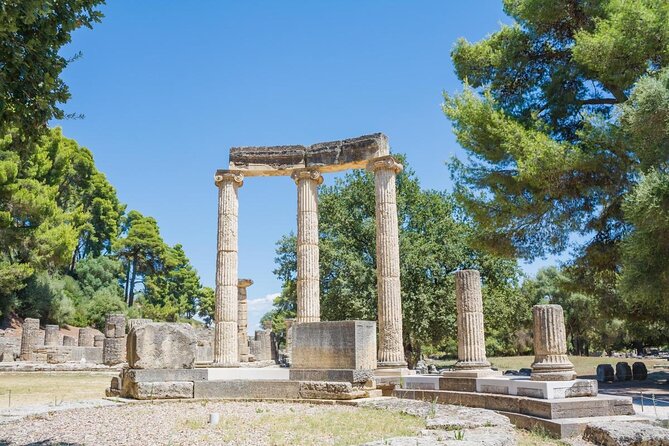
- Olympia is the main event: Allow time for the sanctuary, ancient stadium, Temple of Zeus, Temple of Hera, and museum.
- This is a private drive with sightseeing stops: Your driver shares information during the journey but does not lead your walk through the ruins.
- The day can reach 12 hours: An early start, ideally around 7 a.m. or earlier in winter, gives you the best chance of keeping the schedule comfortable.
- The route works from several bases: Pickup and return are available from central Athens, Piraeus, or Nafplio, with extra charges for some locations.
- Vehicle choice affects comfort: Sedan, minivan, and minibus options are available, with different passenger limits and prices.
What this private Olympia and Corinth day really is
I would think of this experience as a long-distance private transfer with a carefully planned sightseeing route, not a traditional guided excursion. That distinction matters. You get a vehicle reserved only for your party, a flexible departure time, and a driver who can explain Greek history and local culture while you travel.
At the archaeological sites, you are on your own unless you separately arrange a licensed archaeologist guide. The driver can provide maps, books, audio material, and documentaries during the ride, but the actual visit inside Olympia and Corinth is self-guided.
That setup suits independent visitors who enjoy setting their own pace. It is less suitable if you want someone beside you explaining every column, statue, and inscription as you walk.
The route covers roughly 650 kilometers in total, depending on your exact pickup and return points. You should expect a serious road day, not a relaxed half-day outing. The private format helps, since you can adjust the departure time and make reasonable arrangements with the driver, but the distance cannot be wished away.
You can also read our reviews of more private tours in Athens


The Corinth Canal makes a dramatic first stop

The Corinth Canal is a quick but worthwhile introduction to the day. Built between 1881 and 1893, it cuts through the Isthmus of Corinth and links the Aegean and Ionian seas. More than 2,500 workers spent twelve years excavating the channel, which runs for about 6.4 kilometers.
You get around 15 minutes here, enough to take photographs and walk across the pedestrian bridge. From roughly 80 meters above the water, the canal looks much more striking than it does from road level.
This is not a full canal visit, and there is no admission charge for the stop. If you like engineering, big construction projects, or quick photo breaks, it is a good use of the morning. If you prefer more time at archaeological sites, you may find the stop brief, but its location makes it an efficient pause on the drive west.
The Moreas Motorway turns the long drive into part of the trip

After Corinth, the route follows the Moreas Motorway through the Peloponnese. The A7 connects Corinth with Kalamata by way of Tripoli, crossing a broad section of the peninsula.
The road itself is not a sightseeing attraction in the usual sense, but it gets you through a large amount of territory in a practical way. Improvements to the motorway include tunnels, safer curves, lighting, and upgraded road sections. That matters on a day when much of your experience takes place inside a vehicle.
The driver supplies historical books, maps, audio material, and documentary content for the journey. Some drivers have also used the long ride to discuss Greek agriculture, history, and daily life. Alex, Christos, and Nikolas are names associated with particularly warm and informative service on this route, though your assigned driver may be someone else.
On the return drive, entertainment can be useful. One account describes historical videos on the way to Olympia and films during the longer ride back. Do not count on a full guided lecture or a set entertainment program, but the vehicle is equipped to make the hours pass more comfortably.
Ancient Olympia deserves the largest share of your attention
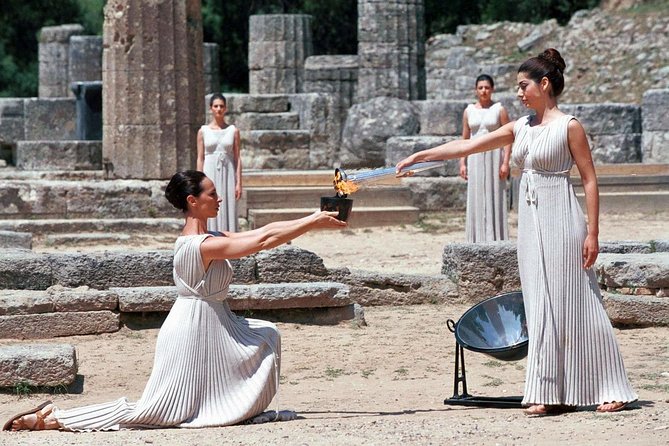
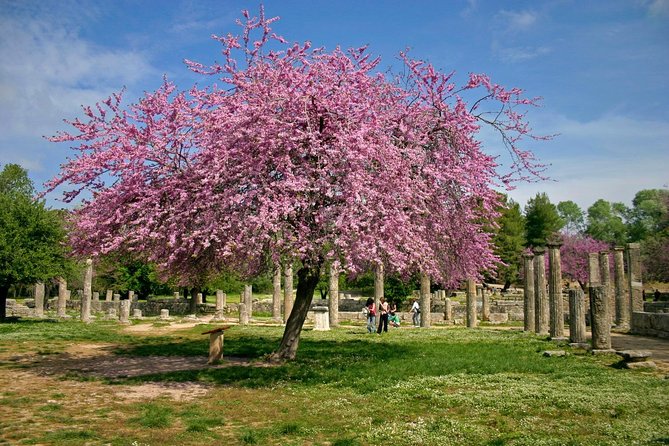
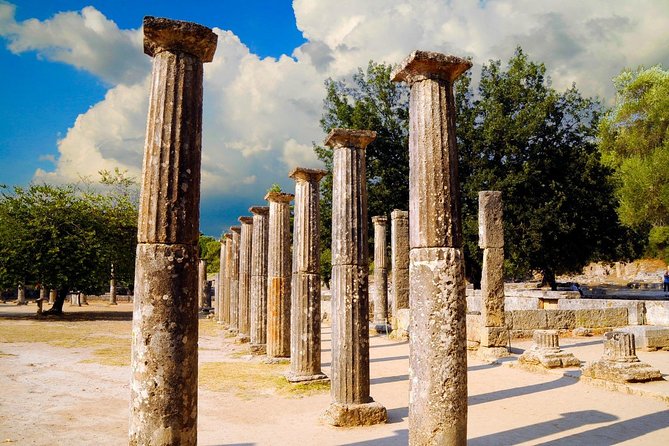
Olympia sits in western Peloponnese at the meeting point of the Alpheios and Kladeos rivers. Its setting is calm and open, with ruins spread among low trees rather than packed into a tight urban site.
This was the sanctuary famous for hosting the Olympic Games every four years, beginning in 776 BCE. The ancient games honored Zeus and drew competitors and visitors from across the Greek world. Today, you can walk among the remains of the Temple of Zeus, the Temple of Hera, the workshop of the sculptor Pheidias, Roman-era buildings, and the stadium where the games took place.
The listed site visit is about 1 hour and 15 minutes. That is enough for a brisk visit, but it is not generous if you want to read every sign, take your time in the stadium, and visit both museums carefully.
I would use your time in a deliberate order. First, walk through the main sanctuary and find the Temple of Zeus and Temple of Hera. Then make your way to the ancient stadium, where the straight running track gives you the clearest sense of how the contests worked.
The stadium is the emotional center of the visit. It is a simple earth track rather than a modern arena, and that simplicity helps you picture athletes running before large stone grandstands existed.
Olympia includes remains from the Bronze Age through the Byzantine period. You will see more than Olympic facilities, including religious buildings, fountains, baths, statues, and later Roman additions. The site is spread out, so comfortable walking shoes and a realistic sense of time will help.
Admission to the archaeological site is not included. The supplied pricing information lists a combined Olympia ticket with the Archaeological Museum and the History of the Olympic Games Museum, with a summer price of €12 and reduced rates in some seasons or age groups. Another section gives different winter and total figures, so confirm the current fee before departure rather than relying on one quoted amount.
The Archaeological Museum of Olympia rewards a separate visit
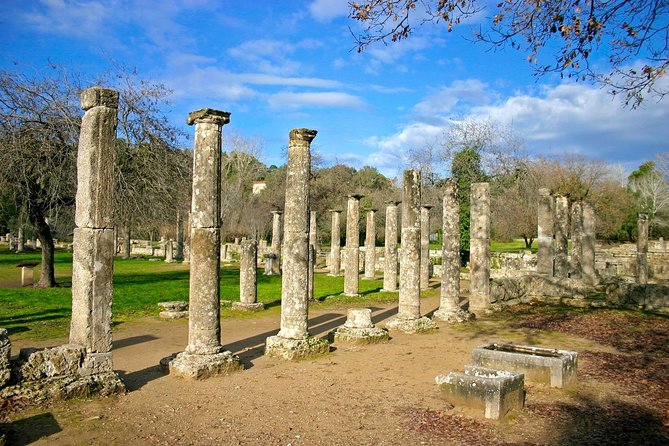
The Archaeological Museum of Olympia is not just an optional add-on for rainy weather. It gives shape to the broken columns and scattered foundations you have just seen outside.
The museum displays major finds from excavations that began in 1875 and continue today. Among the most important works are the Hermes of Praxiteles and the Nike of Paionios. The museum also displays dedications connected with Greek victories, including a helmet associated with Miltiades after the Athenian victory at Marathon in 490 BCE.
The museum visit is listed at about 45 minutes. That is a useful amount of time for the main pieces, though art lovers could easily spend longer. Since the outdoor site and museum together require more than a quick glance, I would ask the driver at the start of the day how the available time will be divided.
A common concern with this experience is arriving at Olympia with only about two hours for the outdoor site and both museums. That may be workable for a fast visit, but it can feel rushed if Olympia is the reason you chose the day. Clear communication at pickup is essential. Tell the driver which museum matters most to you and how much time you want outdoors.
- All Day Cruise -3 Islands to Agistri,Moni, Aegina with lunch and drinks included
★ 5.0 · 4,958 reviews


The Archimedes Museum adds a short change of pace
The Archimedes Museum in the modern village of Ancient Olympia is a small thematic museum devoted to ancient Greek science and technology. It focuses on the work of Archimedes as a mathematician, physicist, engineer, astronomer, and inventor.
The visit is optional and listed at about 15 minutes. I would treat it as a bonus rather than a core part of the Olympia visit. If your priority is the sanctuary and its major sculptures, use the time there. If you enjoy machines, inventions, and the development of scientific ideas, this short stop may be a pleasant addition.
The museum occupies a two-floor building in the center of Ancient Olympia. Because it is in the modern settlement rather than inside the main archaeological site, your driver can help fit it into the schedule if time allows.
Arcadia gives the return journey a different character
The route back takes you through the Arcadia mountains and central Peloponnese. Arcadia is tied to the mythological figure Arcas and to the stories of the god Pan. Later European art used Arcadia as an image of an untouched, peaceful wilderness.
The actual scenery includes grassland, farmland, wooded mountain areas, and stretches of shrubland. Mount Mainalo is known for winter skiing, while Mount Lykaion carries its own ancient myths and archaeological associations.
This is one of the best reasons to choose a private car over a tightly fixed bus route. You can look out at a large part of the interior Peloponnese instead of seeing only the major coastal stops. Still, the schedule is tight, so scenic pauses are likely to depend on traffic, daylight, and your driver’s judgment.
Ancient Corinth connects archaeology with early Christianity
Ancient Corinth is closer to Athens than Olympia and makes a strong second archaeological stop. In 400 BCE, it was one of the largest Greek cities, with a population given as about 90,000. Rome destroyed the city in 146 BCE, then founded a new Roman Corinth in 44 BCE, making it the provincial capital of Greece.
The ruins allow you to trace several layers of the city’s past. The site is also closely linked with the New Testament, since Saint Paul’s letters to the Corinthians and the Acts of the Apostles refer to his time and work here.
The scheduled stop is about 30 minutes, which is a brisk introduction. You can see the main remains, but you will not have much time for a slow, detailed examination of the forum, temples, and surrounding structures.
Admission is not included. The supplied details list a summer combined ticket of €8 and a winter price of €4, while the cost section gives a different €15 figure. Because these amounts conflict, verify the current Ancient Corinth ticket price when booking.
The Corinth Museum fills in the missing details
The Archaeological Museum of Ancient Corinth is included as part of the site visit and holds finds from several periods. Its collections cover prehistoric objects, Geometric through Hellenistic material, Roman and Byzantine pieces, sculptures, inscriptions, and discoveries from the Asklepieion of Corinth.
The museum is housed in a building first constructed in 1931 and expanded in 1950. Thirty minutes is the listed time for the museum, which makes it possible to see the main collection without adding a large amount of time to the day.
I like the pairing of the ruins and museum here. The outdoor site gives you the scale of Corinth, while the museum provides the objects and inscriptions that make the city easier to understand. Just remember that the driver will not walk through the collection with you.
A 12-hour day requires careful timing
The suggested departure is 7 a.m. or earlier in winter. I would take that advice seriously, especially if you are starting in Athens and want meaningful time at Olympia.
Pickup is offered from hotels or apartments in central Athens within about 7 kilometers of the city center. Piraeus Port and the cruise terminal can be arranged for an additional €15 each way. Airport and Lavrio Port transfers require prior agreement and are not covered by that port charge.
Pickup in pedestrian areas can require a short walk. One difficult experience involved a Plaka apartment that a minivan could not reach, with a new meeting point about 80 meters away. Confirm the exact curbside meeting place before the morning of departure.
The day is private and flexible, but flexibility does not mean unlimited time. Extending the outing costs €30 per hour for a sedan, €45 for a minivan, or €60 for a minibus. The driver must also complete the long return journey, so agree on any changes early and keep the schedule realistic.
Vehicle size and group value matter
You can choose a sedan for up to two adults and two children, a minivan for one to seven people, or a minibus for one to fourteen people. Two children up to age 11 are listed as free in the sedan and minivan arrangements, with pricing varying by group size and vehicle type.
The price shown is $336.43 per person, but the final value depends heavily on how many people share the vehicle. For one or two people, the cost is high, though it buys a private car, fuel, toll roads, parking, and door-to-door service. For a family or small group, the same arrangement can make more sense than buying several transport tickets or arranging separate transfers.
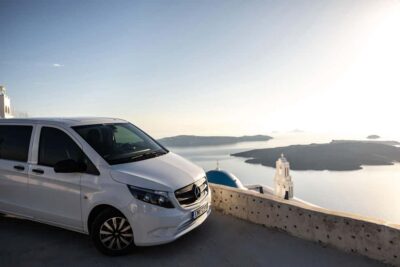
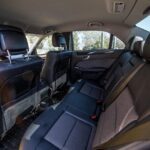
Ask about the exact vehicle before booking if long legs or seating style matter. A Mercedes minivan may have rows facing each other, which can give a family more room to talk but may feel awkward for some adults. Seat belts are provided, and the vehicle choice should match both your party size and comfort needs.
Who should book this private day
I would recommend this experience if you have limited time in Greece and want to reach Olympia without changing hotels or organizing a complicated independent route. It is also a good match for families, older relatives, or groups that value door-to-door transport and control over the day.
The route works especially well for someone moving between Athens and Nafplio, since the tour can begin or end in either place. It is also useful for people who do not plan to explore more of the Peloponnese but still want to see its most famous ancient sites.
I would not choose it if you want a slow museum day, a fully guided archaeological experience, or a relaxed pace. In that case, spend a night near Olympia and arrange a licensed guide separately.
Free cancellation is available up to 24 hours before the start time. Changes or cancellations inside that window are not accepted for a refund.
Should you book it?
Book this private Olympia and Corinth day if access and flexibility matter more to you than a leisurely pace. You will see an extraordinary Olympic site, a memorable canal, and an important ancient city without arranging the long drive yourself.
Before paying, confirm four things: the vehicle layout, the exact pickup point, the current entrance fees, and how much time you will have at Olympia. If the driver is Christos, Alex, or Nikolas, you may get especially helpful conversation during the road sections, but the service can vary, and no driver is a substitute for a licensed guide inside the ruins.
For a small group, this can be a practical and worthwhile way to cover a huge stretch of Greece in one day. Just book it with clear expectations: it is a private, informative drive with archaeological stops, not a guided walking tour.
FAQ
How long does the Ancient Olympia and Corinth experience last?
The experience lasts approximately 12 hours, depending on traffic, pickup location, and the time spent at each stop.
Where can pickup and drop-off be arranged?
Pickup and return are offered from hotels or apartments in central Athens within about 7 kilometers of the city center. The private route can also operate from Athens, Piraeus, or Nafplio.
Is pickup from Piraeus available?
Yes. Piraeus Port and the Piraeus Cruise Terminal can be arranged for an additional €15 per way. Airport and Lavrio Port transfers require prior agreement.
Does the driver guide visitors inside Olympia and Corinth?
No. The driver is not a licensed tour guide and does not accompany you inside the archaeological sites or museums. A licensed archaeologist guide can be hired separately.
Are entrance fees included?
No. Entrance fees for Ancient Olympia, its museums, Ancient Corinth, and the Corinth Museum are not included in the tour price. The supplied fee information gives different amounts for some seasons, so confirm the current prices before your visit.
What vehicle types are available?
You can choose a sedan for up to two adults and two children, a minivan for up to seven people, or a minibus for up to fourteen people. Prices vary by group size and vehicle type.
Can the tour time be extended?
Yes, if arranged with the driver. The additional hourly charge is listed as €30 for a sedan, €45 for a minivan, and €60 for a minibus.