REVIEW · ATHENS
Ancient Sparta Ancient Corinth Private Tour from Athens/ Nafplio
Book on Viator →Operated by GREECE TAXI · Bookable on Viator
Sparta in one day can feel unreal. This private 10-hour route turns big-history stops into a workable plan, with round-trip transport and built-in time for photos, museums, and breaks.
I especially like that you’re not wrestling public buses across the Peloponnese all day.
I also like the way the ride itself supports the sites. Your driver provides English context with informative books and an audio documentary as you travel, so you’re not just arriving at ruins with guesswork. The itinerary also gives enough pacing that you can grab a meal without rushing.
One consideration: the driver is not a licensed archaeologist. If you want deep, museum-level explanations inside the sites, you’d need to arrange that separately (and some museums also close on specific weekdays, especially Tuesdays).
In This Review
- Key highlights at a glance
- The real value: a private driver who saves you time
- Corinth Canal: the morning stop with instant wow-factor
- Sparta’s lesson plan: ruins plus the social system
- Sparta Archaeological Museum: plan around the Tuesday closures
- Acropolis and Ancient Theater of Sparta: Roman marble, big numbers
- Leonidas Monument: the Thermopylae message in stone
- Olive and Olive Oil Museum (optional): fossil leaves and Linear B replicas
- Ancient Corinth: Paul’s letters meet real city size
- Archaeological Museum of Ancient Corinth: a short capstone
- Driver-led context vs hiring an archaeologist guide
- Pacing and comfort: how to make a long day feel manageable
- Price and logistics: what you should budget beyond the base fare
- Should you book Ancient Sparta and Ancient Corinth from Athens?
- FAQ
- What is included in the private tour from Athens?
- Are museum tickets included in the price?
- Which museums are closed on Tuesdays?
- What time should I plan to start the tour?
- Does the driver act as an archaeologist guide inside museums?
- Can families join, and what vehicle sizes are available?
- Can I cancel for a full refund?
Key highlights at a glance

- Corinth Canal photo walk with a pedestrian crossing and big height views
- Sparta stops that explain the society, not only the battlefield myths
- Ancient Theater of Sparta with clear scale cues (and Roman-period marble detail)
- Optional Olive and Olive Oil Museum for fossil olives and Linear B replicas
- Ancient Corinth plus museum time using a combined ticket approach
- Private, flexible day with your own driver and dedicated transport
The real value: a private driver who saves you time
For $265.50 per person (for this Athens-based private day), you’re paying for one main thing: a driver who handles the long logistics. That matters because the route is spread out—Corinth, Sparta, and Corinth again. When those distances are put into a smooth schedule, you spend less time figuring things out and more time actually looking.
You’re also covered on the basics that usually add hidden costs: an air-conditioned vehicle, and the day includes fuel, tolls, and parking. Pickup and drop-off are offered from your hotel/apartment in Athens center (up to 7 km). If you’re coming from farther out (like Piraeus), there can be an extra per-way charge.
The private setup is the other big value lever. This is just your group, and you can adjust pacing within the planned window. One practical note: in winter, the tour is recommended to start at 8:00 am or earlier, which helps you beat some of the day-light pressure.
You can also read our reviews of more private tours in Athens


Corinth Canal: the morning stop with instant wow-factor
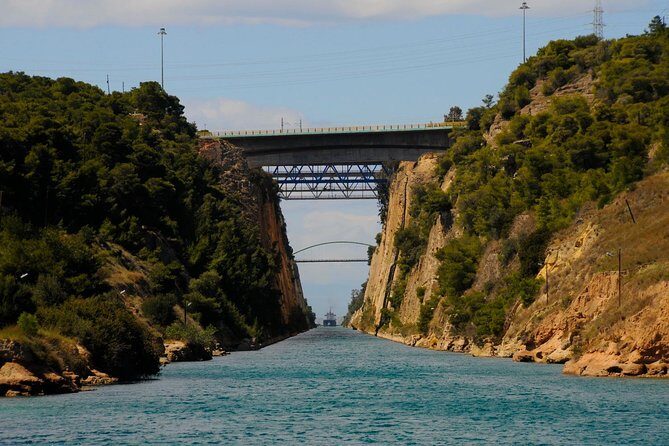
You start at the Corinth Canal, the man-made cut that links the Aegean and Ionian Seas, and connects the Peloponnese with central Greece. The scale is the point: workers dug it over more than a decade (1881–1893), with 2,500 workers. The canal is about 6.4 km long, and you’ll get a view from roughly 80 meters up.
What you’ll actually do here is simple and effective:
- a quick stop for photos
- a walk across a pedestrian bridge
- time to admire the canal from above
This is one of those stops that’s not just pretty. It helps you understand why Corinth mattered so much—shipping lanes, control points, and movement. And because the admission is free for this stop, it’s a low-stress way to begin the day.
Sparta’s lesson plan: ruins plus the social system
Sparta can be treated like a one-liner—warrior city, tough discipline, done. This tour gives you more than that. You’ll stop in Sparta with time to see the key areas and then move on to the museum and the major ruins.
The most useful background you’ll pick up is Sparta’s social structure:
- Spartiates (citizens with full rights)
- mothakes (non-Spartan free men raised in Spartan ways)
- perioikoi (free residents tied to commerce)
- helots (state-owned serfs)
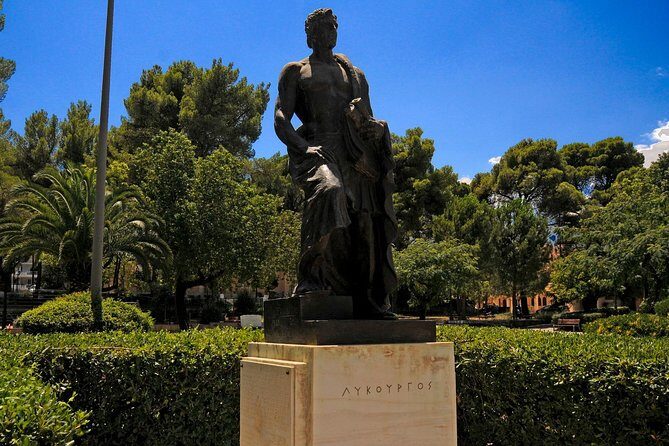
And you’ll hear the story of Lycurgus, the near-mythical lawgiver often linked to the Spartan constitution. Even if you’re not a classic-nerd, this framework makes the ruins more readable. You’re not just standing in stone; you’re matching stone to a system.
You’ll also notice how Sparta doesn’t “feel” like Athens. It’s less monumental in the Acropolis sense, more spread out, and that can be a good thing. It means you’re walking a quieter version of ancient Greece.
Sparta Archaeological Museum: plan around the Tuesday closures
Next comes the Archaeological Museum of Sparta, which is housed in a neoclassical building built in the mid-1870s. It’s described as the oldest provincial archaeological museum in Greece, and it’s worth it if you want labels, objects, and an easier on-ramp into what you’re seeing outside.
Here’s your practical timing reality:
- the stop is around 30 minutes
- the ticket costs extra (you’ll budget €10 in summer or €5 in winter)
- the museum is closed on Tuesdays
So if your day includes Tuesday, don’t expect this one to work. The good news is the tour still covers major outdoor highlights, and you’re not left with nothing to do. But it’s smart to double-check the day you’re booking so you don’t pay for museum time that won’t open.
Acropolis and Ancient Theater of Sparta: Roman marble, big numbers
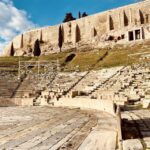
You then go to the Acropolis and Ancient Theater of Sparta—one of the most dramatic “scale” stops on the day. The theater was built in the late first century B.C. and used local white marble during the Roman period. The numbers matter: it’s said it could hold around 16,000 people, and it had a mobile stage.
In plain terms, this is where Sparta starts looking more than just “ruins in the sun.” You can picture gatherings, performances, and the way entertainment sat inside political and civic life.
Also, the condition is part of the story. Much of the auditorium was destroyed during the Byzantine period, and remaining blocks show erosion. That doesn’t ruin the visit—it makes the site feel honest, like history with texture, not a restored set.
Expect about an hour here, and use it actively. Look for the structure, then look outward. When you can tie those sightlines to the way the theater was designed, the visit clicks.
- All Day Cruise -3 Islands to Agistri,Moni, Aegina with lunch and drinks included
★ 5.0 · 4,958 reviews



Leonidas Monument: the Thermopylae message in stone
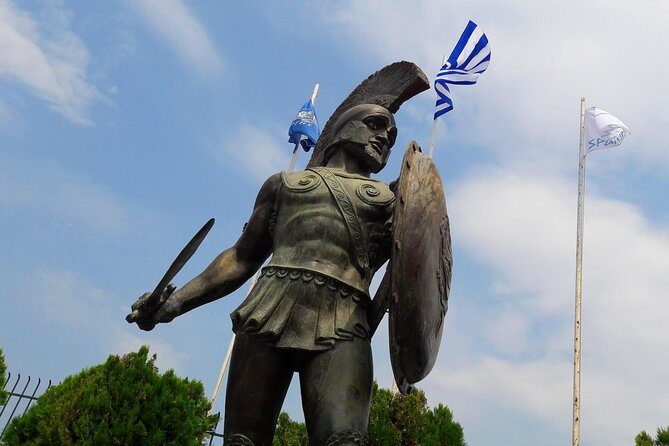
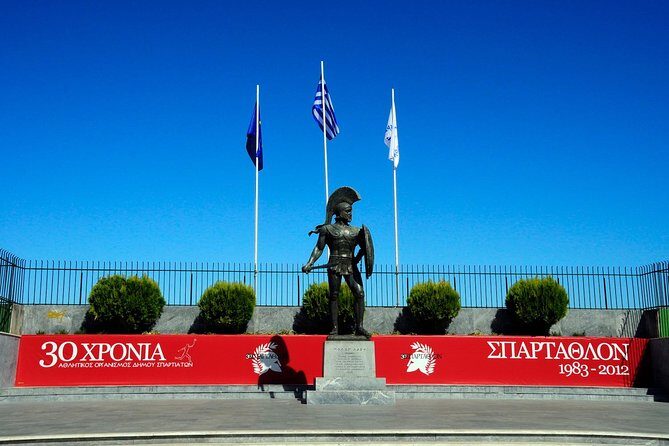
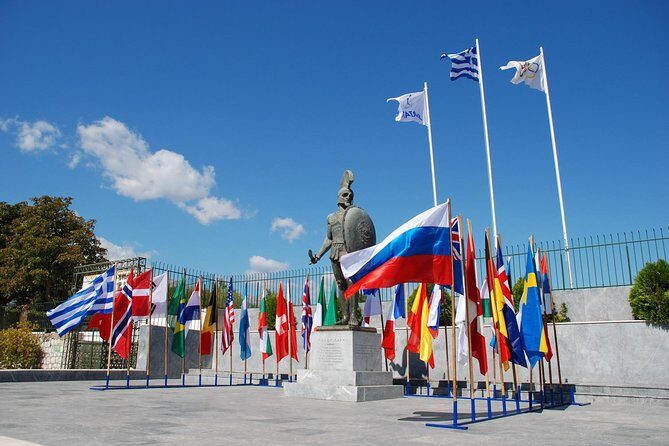
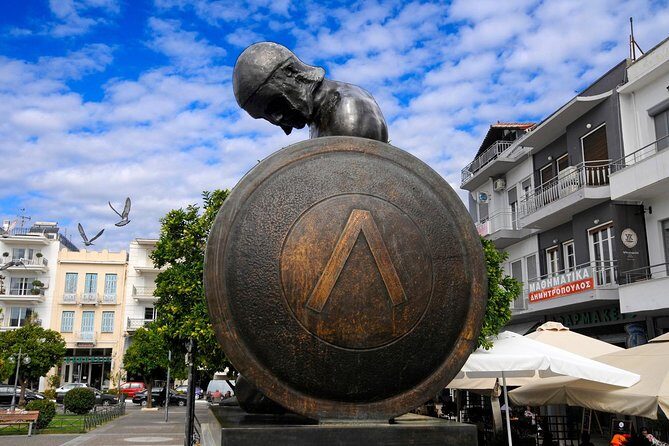
From there, you’ll visit the Leonidas Monument, right in front of a stadium area. The statue frames the story of the Persian invasion and the famous reply often rendered as Molon labe, meaning Come and get them.
What makes this stop more than a photo op is the nearby ancient structure tied to the 5th century B.C. excavations. Those digs uncovered an impressive limestone building that some archaeologists initially thought might be a smaller temple. Its use hasn’t been fully verified, but it’s believed to relate to Leonidas—possibly even functioning as the tomb associated with the transfer and burial of remains after Thermopylae, as Pausanias described.
The time here is short (about 15 minutes). But it’s a strong emotional anchor after the larger theater and acropolis view.
Olive and Olive Oil Museum (optional): fossil leaves and Linear B replicas
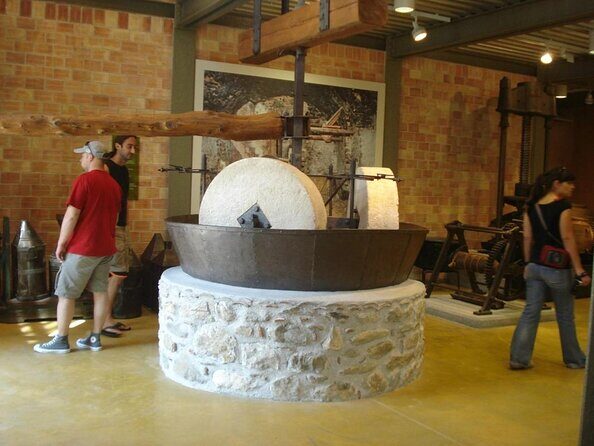
If time allows, you can add the Museum of the Olive and Greek Olive Oil in Sparta. This is optional and depends on your schedule. It’s usually worth it if you like food history or you want Greece to feel physical—things people grew, used, traded, and wrote about.
The museum’s angle is pretty focused:
- olive and olive oil production from prehistoric times to the early 1900s
- how the olive shaped economy, nutrition, religious worship, and technology
The details are the selling point. You can see rare fossilized olive leaves aged roughly 50,000–60,000 years from Santorini. You can also see Linear B tablets from the 14th century B.C., presented as exact replicas, covering early written references.
Practical note: this museum is closed on Tuesdays, and the ticket costs €5. If you end up skipping it, you still have Ancient Corinth later to catch the big “ancient city” feeling.
Ancient Corinth: Paul’s letters meet real city size
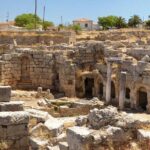
Ancient Corinth is next, and it’s the stop where the day’s story expands again. You’ll have about 1 hour 10 minutes here, walking through the remains of one of the largest ancient cities in Greece.
What makes Corinth stand out is that it has multiple layers you can feel even in ruins. For Christian history, Corinth connects to Saint Paul’s letters and also shows up in Acts as part of his missionary journeys. If you like connecting biblical geography to physical places, this is one of the better matches in Greece.
And size matters. Corinth feels like a place where life spread outward, not a single hill with a few buildings. As you walk, you start to understand why the region was so important for travel and trade.
Tickets here are extra and vary by season:
- winter: €8
- summer: €15
That combined ticket includes the museum component.
Archaeological Museum of Ancient Corinth: a short capstone
After the site walk, you’ll do time at the Archaeological Museum of Ancient Corinth. Your total museum access is tied to the Ancient Corinth ticket. The tour gives about 30 minutes here, which is just long enough to absorb key objects without turning the day into a museum-only marathon.
There’s one closure detail to keep in mind: in winter time, the museum is closed on Tuesdays. If your visit lands on Tuesday in winter, you’ll want to adjust expectations.
In practice, this museum segment is a good “capstone.” You leave the ruins with concrete images, then you’re ready to connect it back to the road travel you’ve done since morning.
Driver-led context vs hiring an archaeologist guide
This is a private tour with an experienced English-speaking driver, and that driver is your main source of interpretation during the drive and at stops. You’ll get explanatory books and an audio documentary as you travel, and the driver can help you spot good photo angles and time your day smartly.
But here’s the key line for your planning: the driver is not an archaeologist guide for walking the sites and giving licensed, site-by-site archaeology interpretation inside museums. If you want that level of depth, you need to hire a licensed archaeologist guide separately, depending on availability.
So decide what you want from the day:
- If you want a smooth, informative overview that keeps momentum, this driver format works well.
- If you want granular art-historical details and expert commentary inside every building, budget time and money for an archaeologist add-on.
Pacing and comfort: how to make a long day feel manageable
This is a full-day plan with multiple stops. Even with a dedicated driver, it can feel intense in a good way, because you’re getting variety: canal views, Sparta ruins, museums, then Ancient Corinth.
Two practical tips:
- Wear shoes you can walk in for ruins and uneven ground.
- Bring water and plan for quick meals on the route; the itinerary is structured so you can eat without losing the whole day.
One more comfort note: the route includes mountain road sections, but the road conditions are described as improved in recent years, so the drive tends to feel better than many people expect.
And if you have needs (like restroom breaks), you should be able to ask. The tour is private, so there’s room to handle small, real-life timing issues.
Price and logistics: what you should budget beyond the base fare
The headline price is $265.50 per person for a private day, roughly 10 hours. That’s a fair price for a private, hotel-pickup route that covers long distances with fuel, tolls, and parking handled.
But your final budget depends on admission fees, which are not included:
- Olive and Greek Olive Oil Museum: €5 (optional; closed Tuesdays)
- Sparta Archaeological Museum: €10 summer / €5 winter
- Ancient Corinth site: €15 summer / €8 winter (combined ticket includes museum)
- Archaeological Museum of Sparta and other museum components follow the listed seasonal rates
Gratuities are also separate (there’s a small gratuity suggestion per person).
If you’re traveling as a group, also watch the vehicle choice. Sedan, minivan, or minibus options exist, and pricing can shift based on group size.
If you’re staying in Athens center and your pickup is within 7 km, you’ll avoid the extra Piraeus-type surcharges. If you’re starting from Nafplio instead, pricing can adjust downward because Sparta and Corinth are closer from that direction.
Should you book Ancient Sparta and Ancient Corinth from Athens?
Book this if you want a one-day hit of two major ancient sites—Sparta and Corinth—without spending your whole day stuck on transit. The private ride, hotel pickup/drop-off, and driver interpretation are the key reasons it works.
Skip or rethink if:
- you need museum-heavy time on a Tuesday (several museum stops close on Tuesdays)
- you specifically want an archaeologist guide for deep indoor explanations at every site
If you fall somewhere in the middle, it’s a smart choice. Start early, wear good shoes, and treat the day as a guided path through big ideas: how societies organized themselves in Sparta, and why Corinth kept mattering across centuries.
FAQ
What is included in the private tour from Athens?
You get an air-conditioned vehicle, private transportation with fuel, tolls, and parking included, plus hotel/apartment pickup and drop-off in Athens center (up to 7 km). The tour also includes a professional English-speaking driver who provides informative books and an audio documentary during the trip.
Are museum tickets included in the price?
No. You’ll pay for admissions separately for the Olive and Olive Oil Museum (€5), the Sparta Archaeological Museum (seasonal: €10 summer / €5 winter), and Ancient Corinth (seasonal: €15 summer / €8 winter). The Ancient Corinth ticket is noted as including the museum component.
Which museums are closed on Tuesdays?
The Archaeological Museum of Sparta is closed on Tuesdays. The Museum of the Olive and Greek Olive Oil is also closed on Tuesdays. In winter time, the Archaeological Museum of Corinth is closed on Tuesday as well.
What time should I plan to start the tour?
It’s recommended to start at 8:00 am or earlier in winter. If that timing doesn’t work, you can adjust the time according to your needs.
Does the driver act as an archaeologist guide inside museums?
No. The driver is not an archaeologist and does not function as a licensed archaeologist guide inside sites. If you want that type of guidance, you can hire a licensed archaeologist guide for an additional charge, depending on availability.
Can families join, and what vehicle sizes are available?
Yes. Vehicle options include a sedan (up to 3 adults or family of 4 with kids under 12 free), a minivan (1 to 7 people with kids under 12 free), and a minibus (up to 14 people with kids under 12 free). Pricing varies by group size and vehicle type.
Can I cancel for a full refund?
Yes. You can cancel up to 24 hours in advance for a full refund. If you cancel less than 24 hours before the experience starts, the amount paid is not refunded.