REVIEW · ATHENS
Athens: Acropolis Self-Guided Audiovisual Tour w/ 3D Models
Book on GetYourGuide →Operated by Culture App · Bookable on GetYourGuide
The Acropolis is best understood when you can stop, look, and replay an explanation instead of being hurried along. This self-guided tour uses 3D reconstructions to show how monuments such as the Parthenon, Propylaia, and Erechtheion may have looked, adding useful context to the stones in front of you.
I like the low price and the freedom to use the tour across five days from first activation. I also like the mix of audio, text, GPS mapping, videos, 360-degree views, and models of the monuments. The main drawback is simple: the €20 entrance fee is not included, and you must bring a charged smartphone, headphones, and an internet connection.
In This Review
- Key points at a glance
- What the $9.02 Acropolis tour actually provides
- Starting at the West Slope entrance
- The Propylaia and the approach to the summit
- The Parthenon through models and narration
- The Erechtheion and the other monuments
- About one hour of audio, with room to linger
- Views across Athens and toward the sea
- What you need to bring
- The separate entrance fee matters
- Who should choose this self-guided format
- Should you book the Culture App tour?
- FAQ
- Is the Acropolis entrance ticket included?
- Where does the self-guided tour start?
- How long does the audio tour last?
- How long is the tour valid?
- Which languages are available?
- What does the app include?
- Do I need my own smartphone and headphones?
- Do I need internet access?
Key points at a glance

- See the Acropolis with digital reconstructions: 3D models, 360-degree panoramas, and videos give you more than a spoken explanation alone.
- Visit at your own pace: The audio portion lasts about one hour, but the app remains valid for five days after activation.
- Cover 17 monuments: Audio narration and written information are provided across the site.
- Choose from eight languages: English, French, German, Italian, Dutch, Spanish, Chinese, and Greek are available.
- Start at the West Slope entrance: Go directly to the Acropolis main entrance near Theorias Street, with no group meeting point.
- Pay separately for admission: The tour costs $9.02 per person, while the Acropolis ticket costs €20 at full price or €10 at the reduced rate.
What the $9.02 Acropolis tour actually provides
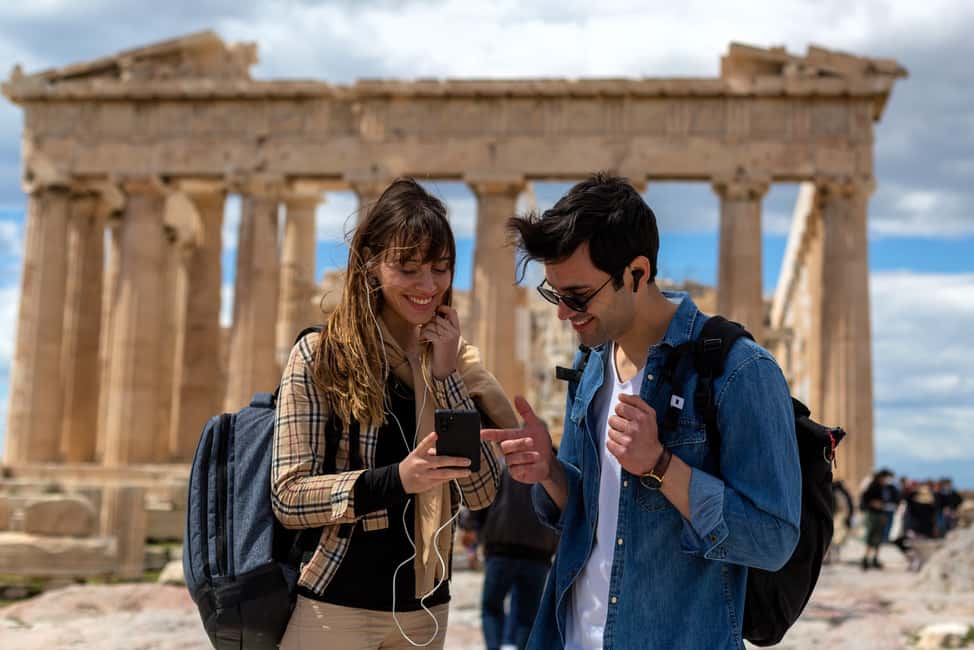
This is not a guided walk with a person waiting for you at the gate. It is a digital companion that you use on your own phone through the Culture App.
After booking, you receive an email with instructions and a download link. You open the app, select your language, and the tour content downloads automatically. The app requires internet access to function properly, so I would take care of the download and check the app before setting off for the Acropolis.
At $9.02, the price is modest compared with the entrance ticket. That matters because the tour is an add-on, not a replacement for admission. A full-price visitor pays €20 for entry, then adds the cost of the app. Even so, the digital guide can be good value if you want background and visual help without paying for a private guide or joining a scheduled group.
The tour is listed at about one hour. That is enough time to hear the main explanations, but the Acropolis itself deserves longer if you want to pause at the monuments, study the views, and use the models carefully. Since the app remains valid for five days after first activation, you have some breathing room instead of needing to consume every feature in one circuit.
You can also read our reviews of more guided tours in Athens



Starting at the West Slope entrance

You begin at the Acropolis main entrance on the West Slope, near Theorias Street. There is no designated meeting point and no transport service, so you make your own way there and enter with your separate admission ticket.
Once inside, open the app and follow the interactive map. GPS tracking helps identify where you are, which is useful on a large archaeological site where several monuments and viewpoints compete for your attention.
The map is one of the most practical parts of the experience. A normal audio file can tell you what you are hearing, but it cannot easily show you where to walk next. Here, the map links the narration to the site, helping you match the audio with the monument in front of you.
You should still pay attention to your surroundings rather than staring at your phone. The Acropolis is a place where the physical setting matters: the elevated position, the stone remains, and the views across Athens all add meaning that a screen cannot replace.
The Propylaia and the approach to the summit
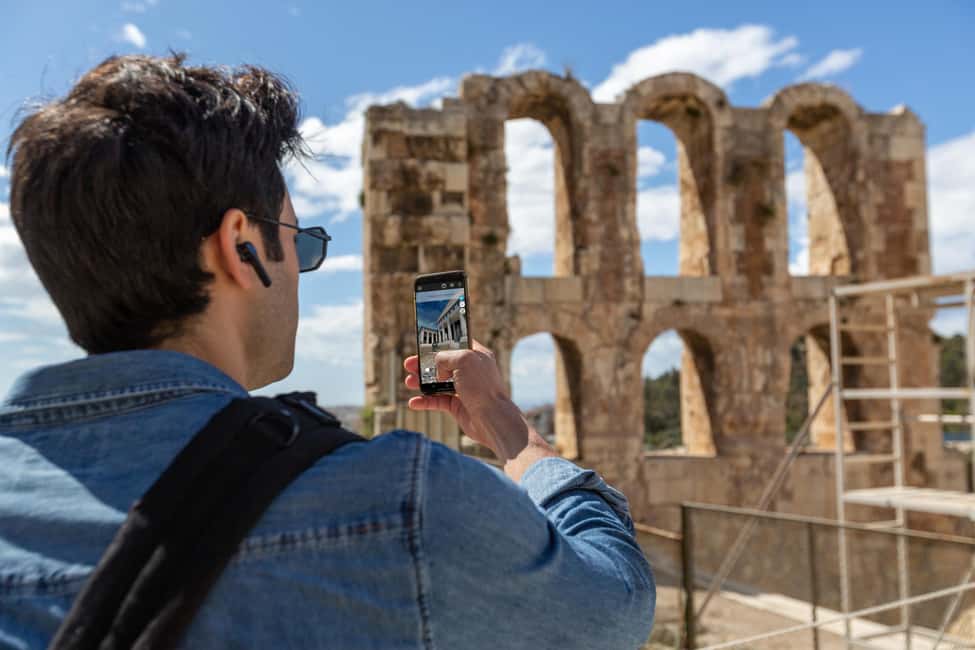
The Propylaia is among the first major architectural features you encounter as you make your way upward. It served as the monumental entrance to the Acropolis, so it is a fitting place for the tour to explain how the site was approached and presented.
The audio narration gives you a structured introduction rather than leaving you to identify columns and foundations on your own. The 3D material is particularly useful here because a reconstruction can suggest the scale and design of a building that now survives only in part.
This is also where the self-guided format earns its keep. You can pause the narration while looking closely at the stonework, then restart it when you are ready. A live guide may naturally move a group along, but the app lets you spend more time with the details that catch your eye.
There is a tradeoff. A recorded guide cannot answer a question or adjust its explanation to your interests. If you want a conversation, a specialist guide, or a carefully paced group tour, this product will feel limited. If you prefer quiet exploration and control over the pace, it is a useful fit.
The Parthenon through models and narration

The Parthenon is the main reason most people come to the Acropolis, and the app gives it the attention it deserves. Audio narration and written information explain the monument while visual tools let you examine its design from different angles.
The 3D model allows you to zoom in on architectural features and see a reconstruction that goes beyond the current ruins. That does not replace looking at the real building. It helps you connect the remaining columns and fragments with the larger structure they once formed.
The app includes 360-degree panoramas and videos for many of the monuments. These can help you understand the building as a complete architectural object rather than a collection of isolated stones. For someone visiting ancient sites for the first time, that visual comparison can make the Acropolis easier to read.
You should treat reconstructions as an aid to understanding, not as a promise that every detail is certain. The real monument remains the focus, and the digital version works best when you move your eyes between the screen and the ruins.
The Parthenon also offers some of the site’s finest views across Athens and toward the sea. The tour points you toward the setting as well as the structure, which is important because the Acropolis was designed to be seen from many positions around the city.
The Erechtheion and the other monuments
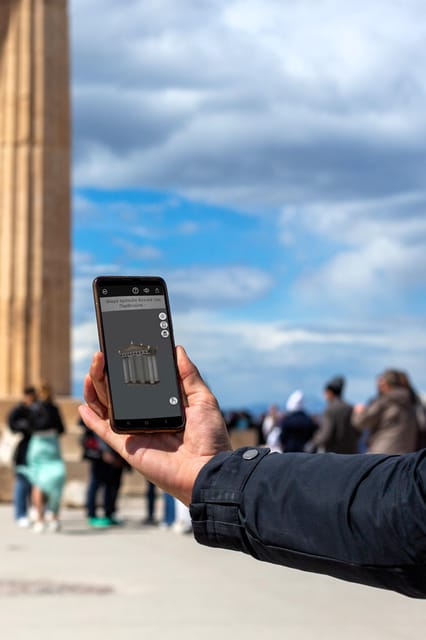
The Erechtheion has a different character from the Parthenon, and the audio tour helps keep the two from blending into one long sequence of columns. Its unusual design and important architectural features benefit from a clear explanation, especially when you are seeing several ancient buildings in a short period.
The app provides audio narration and text information for 17 monuments. That gives you more coverage than a tour focused only on the two most famous buildings. You can use the written material when the site is noisy or when you want a quick fact instead of a full audio segment.
Sixteen monuments include 3D models and 360-degree panoramas, while 15 include videos. The coverage is not identical for every monument, so do not expect the same collection of digital tools at every stop. Still, the range makes this more than a simple recording with a map attached.
The exact value depends on how you like to visit archaeological sites. I find the app most useful when I want an overview before looking closely, then a visual reconstruction after seeing the remains. If you mainly want to take photographs and move on, you may use only a small part of what you paid for.
A few more Athens tours and experiences worth a look






About one hour of audio, with room to linger
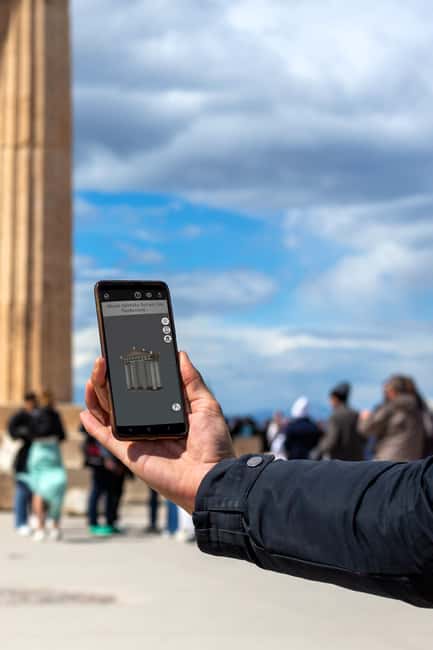
The core tour lasts approximately one hour. That makes it manageable for a first visit, particularly if you want a clear introduction without committing to a long guided program.
You are not locked into a one-hour appointment. The self-guided setup lets you pause, replay, skip sections, and spend extra time at the places that interest you. The five-day validity period adds flexibility, although the tour is still tied to the first activation.
That five-day window could help if you want to visit the Acropolis once for a general orientation and return later to focus on specific monuments. The supplied details do not promise any special repeat-visit arrangement, so you still need to follow the Acropolis admission rules and ticket conditions for entry.
The audio is available in English, French, German, Italian, Dutch, Spanish, Chinese, and Greek. Having the same content in your preferred language is more valuable than it may sound. Ancient architecture can be difficult enough to follow without translating technical terms in your head.
Views across Athens and toward the sea

The Acropolis is not only an archaeological site. It is also an elevated viewing point over Athens, and the setting helps explain why the hill mattered so much.
From the summit, you can look across the city and out toward the sea. The app cannot make the view more dramatic, but it can give the monuments a stronger connection to their surroundings by explaining what you are seeing and why the site was placed here.
I would pause the audio for the best viewpoints. Let the city spread out in front of you without narration for a moment, then return to the app when you are ready. The freedom to switch between quiet observation and explanation is one of the better features of a self-guided tour.
What you need to bring

The tour does not supply a phone or headphones. You need an iOS or Android smartphone, and you should bring headphones so you can hear the narration without disturbing people around you.
Internet access is required for the app to work properly. Follow the email instructions before arriving, download the Culture App, choose your language, and allow the tour content to download automatically. It is sensible to check that the tour opens before you reach the entrance.
The app includes text, audio, a GPS map, 3D models, panoramas, and videos. Those features use more battery and attention than a simple audio file, so starting with a well-charged phone is practical advice, even though a battery requirement is not specified.
There is no food, drink, hotel pickup, or drop-off included. You arrange your own arrival and leave the site on your own. The activity ends back at the meeting point, meaning the Acropolis entrance area, rather than at a separate transport destination.
The separate entrance fee matters

The $9.02 price is for the digital tour only. The Acropolis entrance fee is listed separately at €20 for full-price admission and €10 for reduced admission.
This distinction is important when comparing the tour with other options. You are not buying an inexpensive Acropolis ticket. You are buying a low-cost guide to use once you have secured entry.
The value is strongest for independent visitors who want more explanation than a printed map provides but do not need a human guide. It is less attractive if you already have a museum guidebook, a separate audio system, or a person in your group who can provide detailed commentary.
Free cancellation is available up to 24 hours before the activity for a full refund. You can also reserve now and pay later, which helps if your Athens schedule is still shifting.
Who should choose this self-guided format
I would recommend it to independent visitors who like setting their own pace and using their phone as a travel tool. It also suits couples or families who do not want to stay beside a guide for every minute of a site visit.
The eight language choices make it practical for international visitors. The 3D models and videos are especially helpful if you have trouble picturing ancient buildings from partial remains.
This is not the best choice for someone who wants expert discussion, personal questions answered, or a fully managed visit. There is no guide service, and the experience depends on your own phone, headphones, internet connection, and ability to use the app.
The overall rating is 4.1 from 25 ratings, and the strongest basic point is hard to argue with: visiting the Acropolis is an essential part of Athens. The app does not replace the monument, but it can help you understand what you are looking at.
Should you book the Culture App tour?
Book it if you want an affordable digital guide with strong visual features and the freedom to explore alone. The combination of one-hour narration, 17 monument entries, 3D models, panoramas, videos, and five-day validity gives you more flexibility than a fixed group tour.
Skip it if you want admission included, a live expert, transport, or a completely offline experience. Remember to budget separately for the €20 entrance ticket, prepare your phone before arrival, and bring headphones.
For most self-directed visitors, this is a sensible companion to the Acropolis. It gives you structure without taking control of the visit, and the reconstructions can make the ancient site easier to understand while leaving the real stones and the Athens views to do the most important work.
FAQ
Is the Acropolis entrance ticket included?
No. The entrance fee is separate and costs €20 at full price or €10 at the reduced rate.
Where does the self-guided tour start?
Start at the Acropolis main entrance on the West Slope, near Theorias Street. There is no designated meeting point for a group.
How long does the audio tour last?
The audio tour lasts approximately one hour. You can explore at your own pace and use the app within its five-day validity period.
How long is the tour valid?
It is valid for five days from the first activation.
Which languages are available?
The audio guide is available in English, French, German, Italian, Dutch, Spanish, Chinese, and Greek.
What does the app include?
It includes multilingual audio narration, text information for 17 monuments, an interactive GPS map, 3D models and 360-degree panoramas for 16 monuments, and videos for 15 monuments.
Do I need my own smartphone and headphones?
Yes. A smartphone and headphones are not included. The app works on iOS and Android devices.
Do I need internet access?
Yes. The tour requires internet access to function properly. After booking, use the emailed instructions to download the app and its tour content.