REVIEW · ATHENS
Athens Koukaki food and culture tour: Alluring sensations 4hr
Book on Viator →Operated by Epiculiar · Bookable on Viator
Athens Koukaki Food and Culture Tour: Alluring Sensations puts breakfast and lunch on the same walking route. You move through Koukaki, a relaxed neighborhood below the Acropolis, stopping at local food places for pastries, coffee, savory specialties, and refreshing drinks while your host explains Greek customs and daily life.
I like the small maximum of six people, which gives the walk a friendly, flexible feel. I also like the behind-the-scenes angle, including possible access to a pastry production venue and a Friday market when the schedule lines up. The main drawback is simple: four hours of eating can feel like a lot, so arrive hungry and wear good shoes.
In This Review
- Key points
- Why Koukaki makes a smart food-tour base
- Starting with pastries and Greek coffee
- Savory Greek specialties beyond the usual souvlaki
- A Friday market and a pastry production visit
- The cultural side: name days, coffeehouses, and local habits
- How much food do you actually get?
- Is $105 a fair price?
- Walking, group size, and family practicalities
- Who will enjoy this Koukaki food walk?
- Should you book the Alluring Sensations tour?
- FAQ
- Where does the Athens Koukaki food tour start?
- How long does the tour last?
- How much walking is involved?
- Does the tour include meals?
- Are drinks included?
- Is a vegetarian option available?
- Can children join the tour?
- How many people can join?
- Does the tour return to the starting point?
Key points
- Koukaki setting: Explore an easygoing Athens neighborhood close to the Acropolis rather than staying only on the main tourist streets.
- Breakfast and lunch included: The tastings are designed to add up to a full Greek breakfast and lunch, with drinks included.
- Small groups: Bookings are limited to six people, making conversation with the host easier.
- Friday market option: If you go on Friday, the route may include a local market with food aromas and everyday Athenian activity.
- Local hosts: Eleni, Xenia, Theo, and Thanasis are among the hosts associated with this experience.
- Practical walking: The route covers about 2 kilometers and ends away from the starting point, with return directions supplied.
Why Koukaki makes a smart food-tour base

Koukaki gives you a useful middle ground in Athens. It is close to the Acropolis and the Acropolis Metro Station, yet the tour is built around neighborhood food stops rather than major monuments. That matters because Athens is not a city you understand from ruins alone.
The route introduces you to the sounds, habits, and food customs of modern Athens. Your host may point out buildings and places of interest along the way, then connect them to Greek traditions and everyday routines. The focus is not a formal history lecture. It is a walk with context, snacks, and plenty of chances to ask questions.
I especially like this approach for a first visit. You get a feel for where locals eat and shop, then you can return later in your trip to places or foods that caught your attention. You also avoid spending the whole morning in a bus or seated restaurant.
The tour starts at 11am outside the Acropolis Metro Station, at the Makriyanni and Dionysiou Areopagitou Street exit. That is a useful meeting point if you are staying near the Acropolis, Plaka, or central Athens. You will need to identify your host, so keep your booking details handy and arrive a little early.
You can also read our reviews of more food & drink experiences in Athens

Starting with pastries and Greek coffee
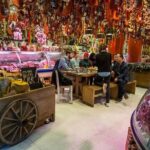
The first part of the walk centers on breakfast. Expect pastries and coffee in a local setting, rather than a standard hotel-style meal. The precise businesses can vary, but the tour description points to distinctive Greek places where the food is part of the setting.
This is a good time to pay attention to the host’s explanations. Greek pastry traditions are not just about sweetness. The food reflects family habits, local ingredients, and the Greek preference for taking time over coffee and conversation. Your host can explain what you are eating, how it fits into the day, and which customs may be unfamiliar to you.
One earlier route associated with the company included a coffee shop and bookstore, creating an especially pleasant opening stop. That detail is not guaranteed for every departure, but it shows the kind of neighborhood setting this experience aims for. You are not simply handed a pastry on a street corner. You are introduced to a place with its own character.
The breakfast portion also helps you settle into the pace. This is a walking tour, but it is not a march from one address to the next. The hosts, including Eleni and Xenia, have been praised for making the time feel relaxed and personal. Theo has also been singled out for his personality and understanding of local food and culture.
Savory Greek specialties beyond the usual souvlaki
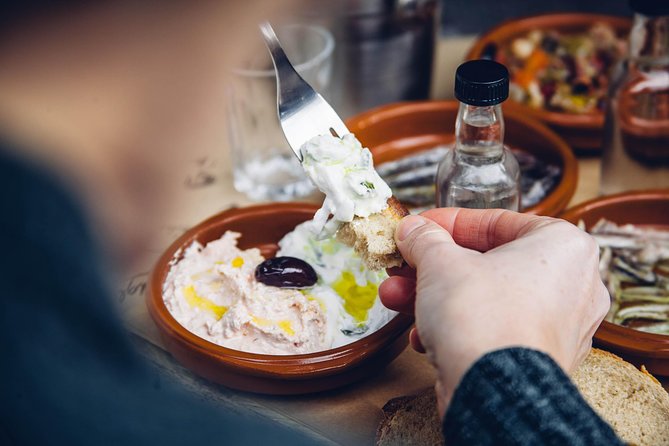
After the opening coffee and pastries, the tastings broaden. You can expect savory delicacies, drinks, and enough food to represent both a Greek breakfast and lunch. That is a better deal than a tour built around three tiny samples, but it also means you should not eat a large meal beforehand.
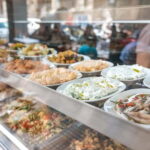
The food is intended to show variety. Greek cuisine is often reduced to gyros, souvlaki, and Greek salad. Those foods have their place, but a local food walk can show you more: pies, preserved products, bakery items, regional flavors, and the everyday snacks people pick up from small shops.
One stop described by past participants involved a place specializing in traditional Greek pies. Another included a long-established kafenion, the traditional coffeehouse setting associated with conversation, coffee, and local social life. A specialty grocery, sometimes called a pantopolion, has also featured on related routes, with olive oils and other Greek products available to sample or discuss.
Do not treat those individual venues as a fixed promise. The route may change by day, season, or availability. The important point is the range: bakery, coffeehouse, market-style shop, and food producer rather than one long restaurant meal.
I like that format because it teaches you how to keep eating after the tour ends. You may learn how to recognize a Greek pie, compare olive oils, or understand why a certain drink belongs at a particular point in the day. The host can also help you separate foods made for local life from products packaged mainly for tourists.
A Friday market and a pastry production visit
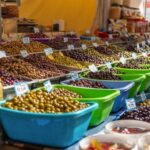
Friday offers the most distinctive variation. When the local market is open, the tour may include a stop there. The market adds color, smells, and a direct look at the way people shop for food. It also changes the feel of the walk, since you are seeing a working neighborhood venue rather than a stop designed only for sightseeing.
This is one of the strongest reasons to consider a Friday departure if your schedule allows. The market can give you a better sense of Athens as a living city, with produce, food aromas, and ordinary shopping woven into the morning.
The tour may also visit a local pastry production venue. The phrase behind the scenes is important here. You are not just tasting a finished item. You may get a look at how pastries are made and gain a better understanding of the care and labor behind familiar Greek sweets.
Again, these special visits are not guaranteed as an identical sequence every day. The Friday market depends on the day, and food businesses have their own schedules. Still, the possibility adds something you do not get from a generic restaurant crawl.
If you have food allergies or strict dietary needs, ask before booking. A vegetarian option is available when requested at the time of booking, but the supplied details do not promise specific substitutions for every allergy or restriction.
The cultural side: name days, coffeehouses, and local habits
The food is only half of the experience. The host also explains customs, traditions, and social habits. That can be more useful than a long list of dates and monuments because it helps you understand the people you meet during the rest of your trip.
One detail that has come up on the walk is the Greek name day. In Greece, people commonly celebrate the feast day linked to their first name, and the occasion can be as important as a birthday. It is the kind of custom you might miss entirely without a local explanation, yet it gives you a new way to understand greetings, family gatherings, and holiday celebrations.
The hosts also add historical context while walking between stops. Eleni has been praised for combining organization with stories about Athens, while Xenia is known for enthusiasm about Greek food, traditions, and local specialties. Some departures have included two hosts, such as Xenia and Thanasis, especially for larger family groups, though the normal booking limit is six people.
Language is worth checking at booking. The host may be multilingual, but the exact language depends on the departure. One past booking changed from a German-language tour to a tour with Eleni after a guide became ill, and the replacement worked well. Even so, you should confirm your preferred language rather than assume it.
A few more Athens tours and experiences worth a look




How much food do you actually get?
The included food is described as the equivalent of breakfast and lunch, with drinks and bites covered in the four-hour price. That makes this more substantial than a tasting walk where you need to find lunch immediately afterward.
The exact amount depends on the day and the stops. You will sample several foods rather than receive one large plated meal. The pacing should leave room to talk, walk, and digest, but anyone with a light appetite may find the total generous.
My best advice is to eat very little beforehand. A coffee or small snack may be sensible if you need it, but do not arrive after a full breakfast. The experience is designed to carry you through the middle of the day, and one of the clearest practical tips is to save your appetite.
Personal shopping is not included. If you discover an olive oil, pastry, or packaged specialty you want to take home, you will pay for that separately. That is not a flaw, but it helps to budget for purchases if food souvenirs are part of your plan.
Is $105 a fair price?
At $105, this is not a bargain snack walk. The value comes from the combination of food, a four-hour host-led route, drinks, cultural explanation, and access to selected local venues.
You are also paying for a small group. With a maximum of six people, the host can answer questions and adjust the conversation more easily than on a large bus-style tour. That is especially useful if you are curious about Greek ingredients, dining customs, or places to eat later.
The price makes the most sense if you count the included food as a real breakfast and lunch. It is less appealing if you mainly want a quick sampling of pastries or if you prefer to choose each meal yourself. You should also remember that hotel pickup, drop-off, and personal purchases are not included.
For a first day in Athens, the value improves. The tour can serve as a practical orientation to the city and the food, giving you ideas for the rest of your stay. If you already know Koukaki well and have spent time eating through local shops, the cultural stories and host may still be worthwhile, but the food discovery will be less new.
Walking, group size, and family practicalities
The route covers about 2 kilometers, spread across roughly four hours. That is manageable for most people, but the pavement, stops, and summer heat can still make comfortable shoes important. Wear clothing suited to walking and eating, and bring water for the spaces between tastings.
The tour does not finish at the Acropolis Metro Station. You receive detailed directions for returning, so note the final location before you leave. If you have a later booking, allow extra time rather than scheduling something immediately after the tour.
The group limit is six people per booking, and the activity itself also has a maximum of six participants. That small size is one of the experience’s best features. It creates more room for conversation and reduces the awkwardness of trying to hear a host in a large crowd.
Families can join. Children under five who will not eat at the tasting stops do not need a separate ticket. Children ages five to twelve pay half price. Older children may enjoy the variety, especially if they are open to trying unfamiliar foods, but four hours of tasting and walking can be a long stretch for a very young child.
Most people can take part, and the route is near public transportation. The supplied information does not provide detailed accessibility specifications, so ask the operator directly if you need information about steps, narrow entrances, or mobility equipment.
Who will enjoy this Koukaki food walk?
I would choose this tour for a first or second day in Athens, especially if you want help getting oriented without giving up half a day to a formal sightseeing program. It suits curious eaters who want local context along with their food.
It is also a good fit for couples, small groups of friends, and families who prefer a private-feeling outing. The hosts are a major part of the experience. Eleni, Xenia, Theo, and Thanasis have all been associated with warm, sociable guiding, and the strongest praise centers on their ability to make the walk feel like time spent with a well-informed local friend.
The tour is less suited to people who want a fixed menu, a restaurant table, or a tightly timed itinerary. The wording allows for changes in stops, and the total length is approximate, so leave some flexibility in your schedule.
It also may not suit very selective eaters. The route is built around trying Greek foods at several places, and the pleasure comes from sampling things you might not order on your own. A vegetarian option exists, but you must request it when booking.
Should you book the Alluring Sensations tour?
Book it if you want Athens explained through its food, you like walking between small local venues, and you value a personal host over a rigid sightseeing script. The four-hour format gives you enough time to eat well, learn about Greek customs, and see Koukaki in a more everyday way.
Choose a Friday if the market appeals to you, while understanding that the market and production visits can depend on the day’s operation. Arrive hungry, wear solid shoes, and leave room for the tour to run a little longer than the approximate four-hour estimate.
Skip it if you mainly want ancient monuments, a short snack break, or complete control over your own restaurant choices. For everyone else, $105 is reasonable when you treat the experience as a full food-focused morning and early afternoon, not just a handful of samples.
FAQ
Where does the Athens Koukaki food tour start?
The tour starts at 11am at the Acropolis Metro Station, using the Makriyanni and Dionysiou Areopagitou Street exit.
How long does the tour last?
The walk lasts approximately four hours. The total length is approximate, so allow a grace period in your schedule.
How much walking is involved?
The route covers about 2 kilometers. Comfortable clothing and walking shoes are recommended.
Does the tour include meals?
The included drinks and bites are intended to equal a Greek breakfast and lunch. Breakfast is specifically included.
Are drinks included?
Yes. Drinks are included along with the food tastings.
Is a vegetarian option available?
Yes. You must advise the operator at the time of booking if you need a vegetarian option.
Can children join the tour?
Yes. Children under five who will not eat at the tasting locations do not need a separate ticket. Children ages five to twelve pay half price.
How many people can join?
The tour has a maximum of six participants, and each booking can include up to six people.
Does the tour return to the starting point?
No. The tour finishes somewhere other than the Acropolis Metro Station. Detailed directions for returning are provided.