REVIEW · ATHENS
Athens Riverside: A Journey in Mythical Athens
Book on Viator →Operated by Urban Athens Collective · Bookable on Viator
Athens hides much of its oldest story beneath its streets. This three-hour walk follows the buried Eridanos and Ilissos rivers, linking ancient waterways with sanctuaries, caves, Roman ruins, the Agora, and the Acropolis slopes. It is a smart way to see Athens as a living city, not just a string of famous monuments.
I like two things especially: the route reaches Pnyx and Philopappos Hills, where you get broad views and a feel for ancient civic life, and it shows lesser-seen corners that can be missed on a standard Acropolis visit. Guides such as Helena and Eleni have also been praised for connecting mythology with Athens today.
The main caution is physical. This is a three-hour walk with hills and little shelter, and one couple found spring weather pleasant but warned that summer could be brutally hot. The tour is private, but the $83.77 per-person price is easier to justify with a full group than with only one or two people.
In This Review
- Key points to know before you book
- Why the Eridanos river makes a good starting point
- Following the Ilissos and the world of Socrates
- Ancient Agora and the Acropolis slopes
- The small rock of Ares and the Areopagus
- Pnyx, the Hill of Nymphs, and Athenian democracy
- Philopappos Hill and the best views on the route
- A private tour with several possible guide styles
- Is $83.77 a fair price?
- Timing, weather, and what to bring
- Who should book this Athens walk?
- Should you book Athens Riverside?
- FAQ
- Where does the tour start?
- Where does the tour end?
- How long does the experience last?
- What language is the tour offered in?
- Is this a private tour?
- What is included in the price?
- Are food and drinks included?
- Does the tour visit the Ancient Agora and Acropolis?
- Is the tour suitable in bad weather?
- Can I cancel for a full refund?
Key points to know before you book
- Ancient rivers under modern Athens: See part of the Eridanos uncovered during metro construction and trace the old course of the Ilissos.
- Myth and real city life together: Hear stories of river gods, Socrates, Ares, the Nymphs, and the old Athenian assembly.
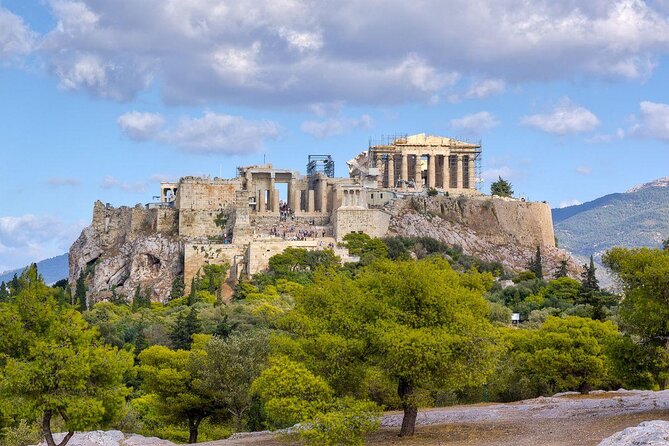
- Hilltop views without a long museum visit: Pnyx and Philopappos Hills bring wide views of the sacred hill and central Athens.
- A private walking experience: Only your group takes part, with an English-speaking local guide.
- A useful route for repeat visitors: The walk reaches archaeological parks and neighborhoods beyond the usual first-time Athens circuit.
- Plan for heat and uneven ground: Casual clothing is fine, but good walking shoes, water, and sun protection matter.
Why the Eridanos river makes a good starting point
The tour begins at Ermou 111 in central Athens, near Monastiraki Square. Confirm the exact meeting spot when you book, since the tour description also identifies Monastiraki Square as the place to meet.
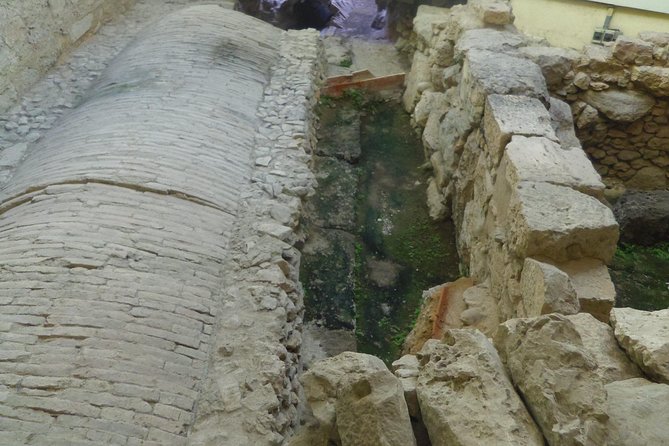
One of the first sights is a section of the ancient Eridanos river, uncovered during work on the Athens metro in the 1990s. This is not a grand, open riverfront. That is precisely what makes it interesting. You see how much of old Athens lies below the modern city, preserved in fragments beneath roads, stations, and buildings.
The Eridanos began near Mount Lycabettos and once flowed toward Kerameikos. Ancient Greeks associated it with a river god, so your guide can use this small exposed channel to explain how myth and practical city life overlapped. Rivers supplied water, shaped settlement, and became part of the stories people told about their city.
I like this opening because it changes the way you look at Athens. Afterward, a modern pavement or metro entrance may seem less like an obstacle and more like a lid covering another layer of the city.
You can also read our reviews of more tours and experiences in Athens.

Following the Ilissos and the world of Socrates
The walk then turns to the old course of the Ilissos, another ancient waterway now mostly underground. In classical writing, its banks appear as a favored setting for teaching and conversation. Socrates is linked with this part of Athens, giving the river a strong connection to philosophy as well as mythology.
Do not expect a continuous stream to guide you along the route. The value lies in following the river’s former path through modern Athens and learning what once occupied these spaces. Your guide fills in the missing pieces with stories about ancient citizens, sacred places, and the beliefs attached to the water.
This is where the quality of the guide matters most. The strongest feedback for the tour centers on guides who can explain ancient culture while also showing how Athens changed through Christian and Roman periods and into modern life. Eleni, for example, has been praised for linking ancient customs with later cultural change. Helena has been described as friendly and well informed, especially with younger people.
If mythology leaves you cold, the route still has practical value. You are learning how Athens grew, why certain sites were sacred, and why much of the city’s ancient structure is hidden rather than gone.
Ancient Agora and the Acropolis slopes
The route includes the Ancient Agora and the Acropolis area, two places that help organize the story of Athens. The Agora was a central public space, tied to trade, politics, law, and everyday life. The Acropolis, by contrast, rises above the city as its sacred center.
The tour description does not clearly state that admission tickets to every archaeological site are included, and the listed inclusions mention only a local guide. Ask about entry arrangements if you want an interior visit rather than an exterior explanation. The route may be most useful as a guided walk through the archaeological areas and their surroundings.
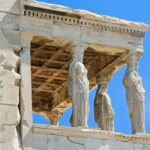
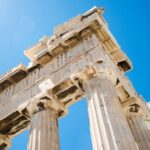
At the Acropolis slopes, the guide focuses on legends and views of the sacred hill. This gives you a different perspective from standing among the monuments at the summit. You can see how the hill relates to the city below and why it held such power in Athenian religion and civic identity.
The route also passes the Roman Conservatory of Athens, a reminder that Athens did not stop changing after the classical period. Roman buildings, Christian remains, older sanctuaries, caves, and modern neighborhoods all appear in the same walk. That mixture is one of the tour’s strongest features.
The small rock of Ares and the Areopagus
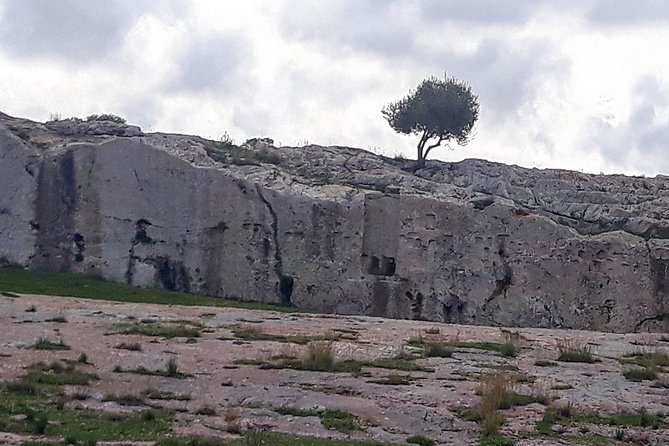
One stop centers on the small bare rock associated with Ares. This is the Areopagus, or Hill of Ares, a compact but important outcrop near the Acropolis.
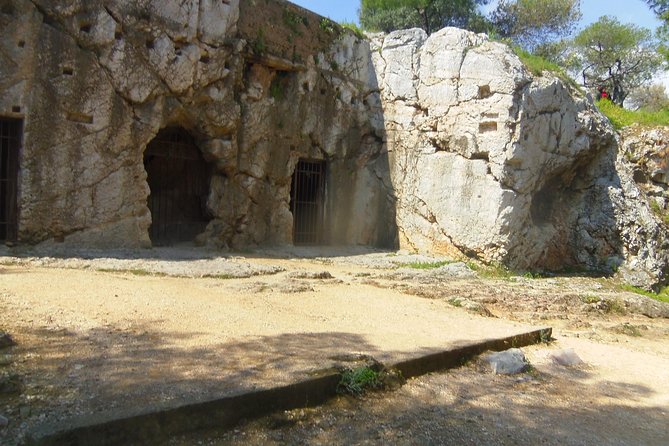
The stop is less about size than meaning. Ancient Athenians attached legal and mythic importance to the rock, and its position gives you a close view of the Acropolis slopes and the old city. The stone can be slippery or uneven, so take care, particularly if rain has passed through.
This is also a point where a guide can prevent the visit from becoming a quick photo stop. The story of Ares connects the physical rock to the gods, while the site’s civic role points to the way Athenians used sacred places for public matters. You get both the legend and the human activity behind it.
Pnyx, the Hill of Nymphs, and Athenian democracy
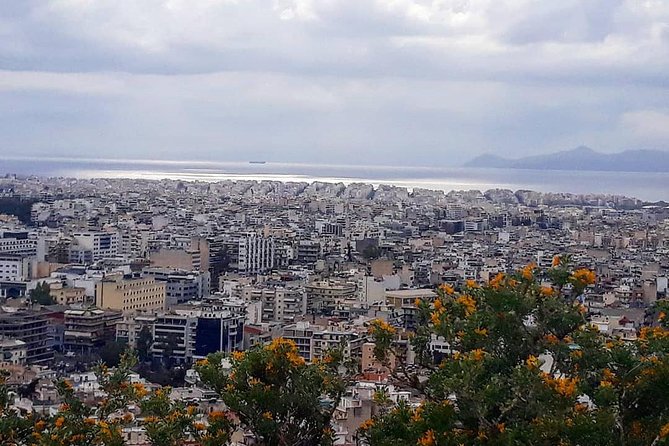
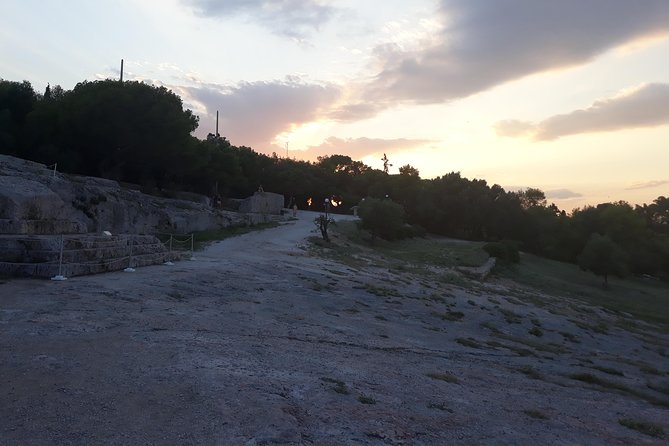
The walk continues through the Hill of Nymphs toward the Pnyx, the meeting place of the Athenian assembly. The Pnyx is one of the best places on the tour for understanding how democracy operated as a physical act. Citizens gathered outdoors, faced a speaker, and made decisions in a setting that remains tied to the city’s political imagination.
The stop is not simply another ancient ruin. It helps explain how Athens functioned as a community. You are looking at the place associated with citizens meeting to debate and vote, not just a temple built for the gods.
The hill also gives the route breathing room. After city streets and archaeological fragments, you reach an open viewpoint with a broader sense of Athens. Depending on departure time, the light may be especially attractive near sunset. Several daily start times make it possible to choose a morning, afternoon, or later walk, though the exact view and temperature will depend on the season.
The Pnyx involves an uphill walk. It is manageable for most people according to the supplied participation information, but it is not a flat city stroll. If you have limited mobility, ask before booking because the tour includes hills and walking between several sites.


Philopappos Hill and the best views on the route
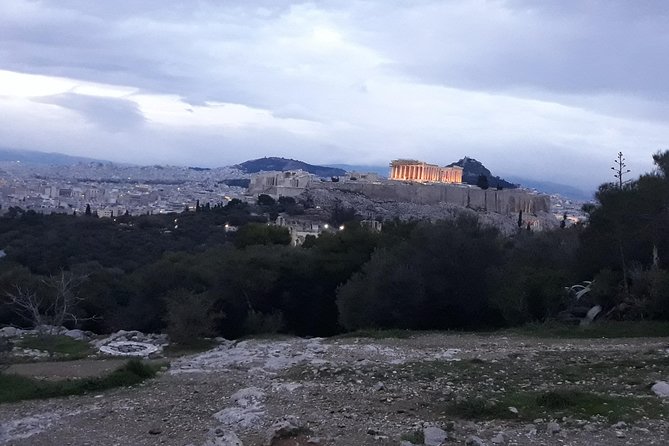
The walk across the Hill of the Muses, commonly associated with Philopappos Hill, is a high point of the experience. From the slopes, you can take in views toward the Acropolis and across Athens.
This is where the tour feels most different from a standard central-city route. You are still close to major monuments, yet the setting is quieter and more open. The views help you understand the relationship between the Acropolis, the surrounding hills, and the city spreading below.
The hill is also tied to later layers of Athens, not only the classical age. Your guide may point out how the city’s sacred and civic spaces changed over time. The route’s appeal comes from this long view of Athens, from riverbeds and ancient gods to Roman buildings, Christian remains, and modern streets.
Wear shoes with a firm sole. The tour is described as casual in dress code, but casual clothing does not mean sandals with poor grip are a good choice. Carry water, especially from late spring through summer. One couple enjoyed the walk in spring wildflowers but warned that summer heat could make the same route hard work.
A private tour with several possible guide styles
This is a private activity, so only your group takes part. That gives you room to ask questions and adjust the conversation to your interests. A family with teenagers can ask for stories and visual details, while repeat visitors can focus on archaeology, mythology, or the way Athens changed over the centuries.
The named guides in the available feedback include Helena, Eleni, Arthur, and Dionysus. Eleni received especially strong praise for connecting ancient history and culture with Athens today. Helena was noted for making the walk engaging for teenagers and even bringing koulouri, a ring-shaped sesame bread, for a school group. Arthur led one guest through the mythology-focused route alone, and Dionysus was described as pleasant and well informed.
Guide experience can vary, of course. One couple had a slightly awkward start when their guide arrived a few minutes late, but they soon found him able to answer their questions and show them new places despite having visited Athens many times. That is useful context: the tour’s greatest strength is the guide’s storytelling and local command of the route, so a small delay may matter less if the conversation becomes strong.
Is $83.77 a fair price?
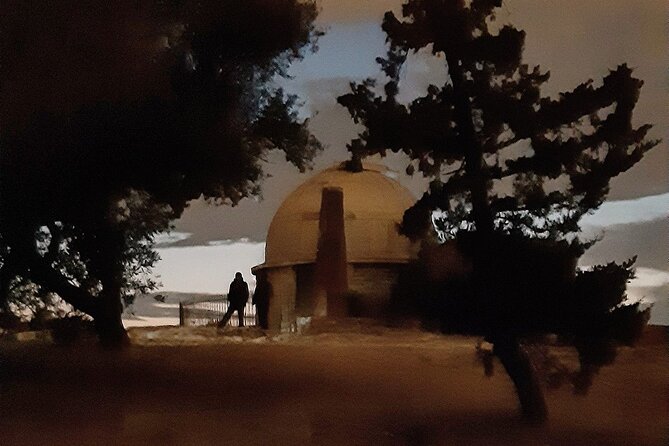
At $83.77 per person, this is not a bargain-priced orientation walk. Food and drinks are not included, and the duration is about three hours. You are paying for a private guide and a specialized route rather than a quick introduction to the Acropolis.
The value improves if you are sharing the booking with family or friends. A private walk gives your group personal attention, and the route covers several kinds of sights: buried rivers, mythology, archaeological sites, hill views, ancient politics, and later Roman and Christian remains.
For a first visit with limited time, compare this tour with a more direct Acropolis experience. If your main goal is to enter the Parthenon and spend your time among the summit monuments, this route may feel indirect. If you have already seen the headline sights, the price makes more sense because the walk reaches archaeological parks and city corners that standard visits may skip.
The strong overall score, 4.6 from 11 ratings, and 91 percent recommendation rate suggest a well-regarded experience, though the sample is small. I would treat those numbers as encouragement, not a guarantee of identical guide performance on every departure.
Timing, weather, and what to bring
The tour runs in all weather, so check the forecast and dress for the conditions. Casual clothes are fine, but you should bring:
- Comfortable shoes with a firm grip
- Water
- A hat and sunscreen in warm months
- A light rain layer if wet weather is possible
- A small snack, since food and drinks are not provided
Several daily departure times give you useful control. Morning usually means cooler conditions, while a later departure may offer softer light and a chance of sunset from the hills. The available information does not promise a sunset, so choose a time for convenience first.
The route is near public transportation and most people can participate. Still, the combination of three hours on foot, uneven archaeological ground, and hills deserves attention. If you dislike heat or uphill walking, a morning departure is the safer choice.
You can cancel free of charge up to 24 hours before the start time. Changes or cancellations made inside that period are not accepted for a refund.
Who should book this Athens walk?
I would recommend it most strongly to three kinds of people:
- You have visited Athens before and want more than the standard monuments.
- You enjoy mythology, ancient civic life, and stories tied to actual places.
- You want a private route where your group can ask questions and set the pace of the discussion.
Families can also do well with this tour if children or teenagers enjoy stories, ruins, and views. The guide can make a difference, and the example of Helena bringing koulouri for younger participants shows the sort of personal touch that may appear.
I would be more cautious if you have only one day in Athens and have not yet visited the Acropolis. The route includes Acropolis surroundings and important archaeological sites, but it is not presented as a simple summit visit. You may prefer to see the main monuments first, then use this walk to add context and reach less familiar corners.
Should you book Athens Riverside?
Book this tour if you want Athens told through its buried rivers, old myths, and hilltop viewpoints, rather than through monuments alone. It gives you a strong sense of how the ancient city survives beneath the modern one and how history continues across the same streets.
Skip it if you want a flat walk, guaranteed interior admissions, or a tightly focused visit to the Acropolis summit. For everyone else, especially repeat visitors and curious families, the private format and unusual route make the $83.77 price reasonable when shared across a group. Bring water, start early in hot weather, and allow the guide’s stories to be the main event.
FAQ
Where does the tour start?
The meeting point is listed as Ermou 111, Athens 105 55, near Monastiraki Square. The tour information also identifies Monastiraki Square as the meeting area, so confirm the precise spot at booking.
Where does the tour end?
The walk ends at Str. Makryianni 1, Athens 117 42, in front of the Acropolis Museum.
How long does the experience last?
The walking tour lasts approximately three hours.
What language is the tour offered in?
The tour is offered in English.
Is this a private tour?
Yes. Only your group participates in the activity.
What is included in the price?
A local guide is included.
Are food and drinks included?
No. Food and drinks are not included.
Does the tour visit the Ancient Agora and Acropolis?
The route includes the Ancient Agora and Acropolis area, along with archaeological sites and the Acropolis slopes. The provided information does not specify that admission tickets are included.
Is the tour suitable in bad weather?
Yes. It operates in all weather conditions, so dress appropriately for the forecast.
Can I cancel for a full refund?
Yes. You can cancel at least 24 hours before the local start time for a full refund. Cancellations or changes made less than 24 hours before the start time are not accepted for a refund.