REVIEW · ATHENS
Biblical Corinth in 7 hours private tour
Book on Viator →Operated by Athens Tours Greece · Bookable on Viator
The most striking part of this day is how much ground you cover beyond Athens. In about seven hours, you cross the narrow neck of Greece, watch the Corinth Canal cut through the land, walk among the remains of an ancient trading power, and reach places tied directly to Saint Paul.
I like the private format, especially for a family or small group that wants to set its own pace. I also like the mix of major sights and quieter Biblical locations, including Cenchrea, where Paul stopped before sailing to Ephesus. The main consideration is that entrance fees and a licensed guide inside the archaeological sites cost extra.
In This Review
- Key points at a glance
- Why Corinth makes such a good day from Athens
- Pickup from Athens or Piraeus
- The Corinth Canal: an ancient idea finally cut through rock
- Ancient Corinth: two hours among trade, temples, and Paul
- Acrocorinth: the fortress above the ancient city
- Cenchrea: a quieter Biblical stop by the eastern harbor
- The submersible bridges at Isthmia and Corinth
- What the seven-hour schedule really means
- What is included, and what costs extra
- Who should book this Corinth tour?
- Should you book it?
- FAQ
- How long is the Biblical Corinth private tour?
- Where can pickup take place?
- Is the tour private?
- Is an English-speaking guide included?
- Are archaeological entrance fees included?
- Which main places does the tour visit?
- Can cruise ship passengers book this excursion?
- Is cancellation free?
Key points at a glance
- Corinth Canal: Stop above the narrow 6.4-kilometer waterway linking the Saronic and Corinth gulfs.
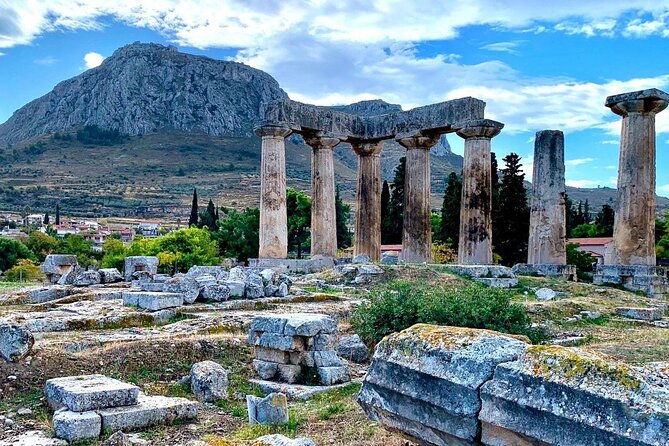
- Ancient Corinth: Spend about two hours at the archaeological site, where Greek, Roman, and Biblical stories meet.
- Acrocorinth: Visit the old fortress on a huge rock above Corinth, with remains from several ruling periods.
- Cenchrea: See the former eastern harbor associated with Paul’s journey and the early Christian church.
- Private transport: Ride in an air-conditioned vehicle with pickup from an Athens hotel or Piraeus cruise terminal.
- Flexible interpretation: Your English-speaking driver explains the sites from outside, while a licensed guide can be added for the archaeological areas.
Why Corinth makes such a good day from Athens
Athens gets the grand headlines, but Corinth gives you a different view of Greece. Here, geography explains the history. The narrow Isthmus of Corinth connects mainland Greece to the Peloponnese, while the two gulfs on either side created a natural crossroads for ships, merchants, armies, and ideas.
That position made ancient Corinth powerful. Goods could move between the western Mediterranean, Asia Minor, Syria, Macedonia, and mainland Greece. Corinth also founded important colonies, including Corfu and Syracuse, giving the city influence far beyond its own walls.
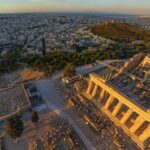
The drive takes you from Attica toward the Peloponnese. The opening section introduces the wider Athens region, a place shaped over roughly 6,000 years by ancient monuments, medieval buildings, museums, festivals, and modern city life. You will not spend this day touring the Acropolis, but the route description refers to Athens and the Acropolis as the great starting point for understanding the country’s ancient culture.
That distinction matters. If you want a full Acropolis visit, book that separately. This excursion is built around Corinth and the sites on the Isthmus.
You can also read our reviews of more private tours in Athens


Pickup from Athens or Piraeus
The tour begins at your Athens hotel or at your cruise ship pier in Piraeus. At a hotel, you meet the driver at the main entrance. At the port, you walk outside the terminal exit, where the driver waits with a sign bearing your name.
For cruise passengers, timing deserves care. You must provide the ship name, docking time, disembarkation time, and re-boarding time when booking. The return is to the same Athens hotel or Piraeus pickup point.
The drive from Piraeus follows the coastal road along the Saronic Gulf. This gives you a look at the connection between the port and the capital before the road turns toward Corinth. Piraeus is about 12 kilometers from Athens and is Greece’s largest port, so pickup there can make this a useful shore excursion.
The vehicle is air-conditioned and chosen to suit your group size. Since the booking covers up to three people, the price of $433.48 works out to about $144.50 each for a full group. That is not a bargain basement day trip, but it is reasonable for private transport, hotel or port pickup, and a full day beyond Athens. The value improves if you are traveling as a couple or family and want privacy rather than a large coach.
The Corinth Canal: an ancient idea finally cut through rock
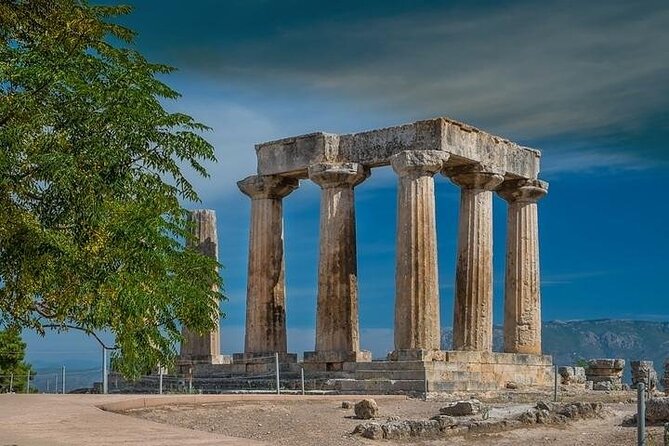
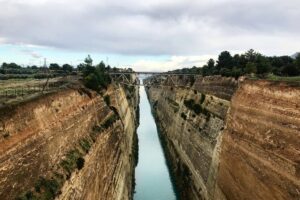
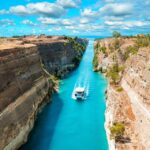
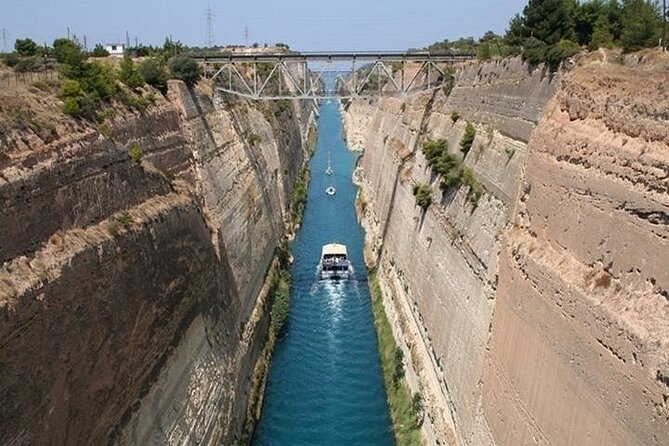
The first major stop is the Corinth Canal, with about 15 minutes to look over the waterway and take photographs. The canal is only about 25 meters wide and runs 6.4 kilometers through the Isthmus.
The scale is easy to underestimate until you see the steep walls dropping toward the water. The canal connects the Saronic Gulf with the Gulf of Corinth and turns the Peloponnese into what is technically an island.
The canal opened in the late 19th century, but the idea is much older. Periander, the ruler of Corinth in the 7th century BC, is said to have considered cutting through the Isthmus. The engineering was too difficult then, so an alternative route was built. The diolkos was a stone track used to move ships on wheeled platforms across the land.
Your stop is brief, so do not expect a long walk or a canal cruise. You get a clear look at the engineering project and the strategic problem that helped make Corinth wealthy. If boats are passing, the narrow channel makes the scene even more interesting.
Ancient Corinth: two hours among trade, temples, and Paul
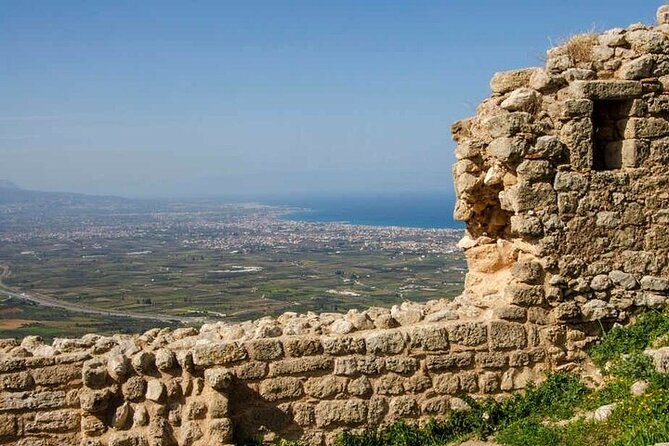
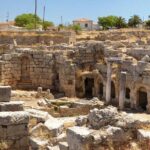
Ancient Corinth is the heart of the excursion. The planned visit lasts about two hours, though the driver does not accompany you inside as a licensed guide.
The settlement was inhabited as early as the Neolithic period, from about 6500 to 3250 BC. Its location made it more important than its size alone might suggest. Land routes crossed the Isthmus, and sea routes connected the western and eastern Mediterranean. That combination gave Corinth a strong hand in trade.
By the 8th century BC, Corinth had founded colonies such as Corfu and Syracuse. The city’s agricultural output supported commercial growth, while its workshops and ports helped move goods across the ancient Mediterranean.
For a Bible-focused visit, Corinth is especially meaningful because Paul spent time here during his missionary work. The city was not a small village on the edge of the ancient world. It was a busy commercial center with wealth, social divisions, religious traditions, and international connections. Those details give greater weight to Paul’s letters to the Corinthians.
The archaeological area is an open-air site, and entrance is not included. You can walk through the remains on your own, but I would consider paying extra for a licensed English-speaking guide if ancient history is central to your trip. The driver provides historical and cultural information up to the entrances, but drivers are not permitted to lead visitors inside archaeological sites or museums.
That arrangement is common in Greece, but it affects the experience. Without a licensed guide, you will see the ruins and have the driver’s explanations before entering. With one, you can ask detailed questions among the remains and better understand how the pieces fit together.
Allow time for uneven ground and outdoor conditions. The supplied details do not promise a museum visit, so confirm exactly which admission tickets are needed and what the driver plans to cover before departure.
Acrocorinth: the fortress above the ancient city
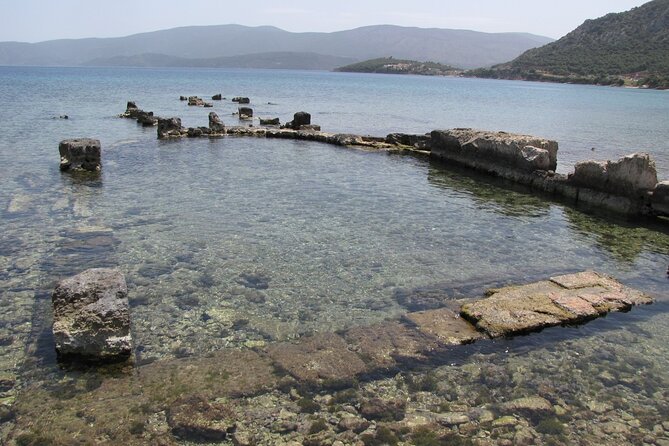
After Ancient Corinth, the vehicle continues up toward Acrocorinth, the fortified rock above the city. The planned stop lasts about 50 minutes.
Acrocorinth means Upper Corinth. Its position made it the area’s key defensive stronghold from antiquity through the Ottoman period. From below, the monolithic rock gives the site its drama. From the fortress, the reason for its location becomes clear: control of the Isthmus meant control of movement between mainland Greece and the Peloponnese.
The defenses tell a long story. Sections of the walls include work from ancient, Byzantine, Frankish, Venetian, and Turkish periods. Three circuit walls, strengthened by towers, protected the upper settlement.
Inside, you can find traces of changing communities and religions. Remains include churches, mosques, houses, fountains, and cisterns. On the highest peak are traces linked to the Temple of Aphrodite, followed later by a church and then a Turkish mosque.
The 50-minute stop is enough to appreciate the setting and see part of the fortress, but it is not a full exploration of every wall and ruin. If you have mobility concerns, ask the operator how much walking and climbing the day’s route involves. The provided information says most people can participate, but it does not give a detailed accessibility description.



Cenchrea: a quieter Biblical stop by the eastern harbor
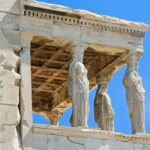
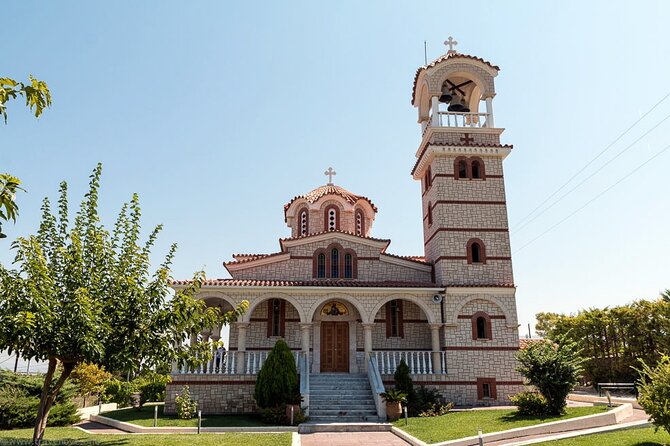
Cenchrea, also spelled Cenchreae, was one of Corinth’s two controlled harbors. It sat on the eastern side of the Isthmus and helped goods move between Asia Minor, Italy, Achaia, and Macedonia.
The stop lasts about an hour and connects the ancient trade network with the New Testament story. According to Acts, Paul stopped at Cenchrea before sailing to Ephesus on his return toward Syria. He had his hair cut there after fulfilling a vow, often understood as a Nazirite vow.
Cenchrea is also linked with an early Christian congregation. Paul is not specifically identified as the person who founded the church there, but his long stay in Corinth gave him a clear opportunity to work in the nearby harbor community.
This stop will appeal most to you if Biblical connections matter as much as monumental ruins. It is less about standing before a huge structure and more about understanding how Paul’s journeys followed the working ports and roads of the ancient world.
The hour here also breaks up the archaeological focus. After Corinth and Acrocorinth, Cenchrea gives the day a more reflective pace. Do not expect a large intact harbor city. The value lies in the location and its connection to Corinth’s maritime life.
The submersible bridges at Isthmia and Corinth
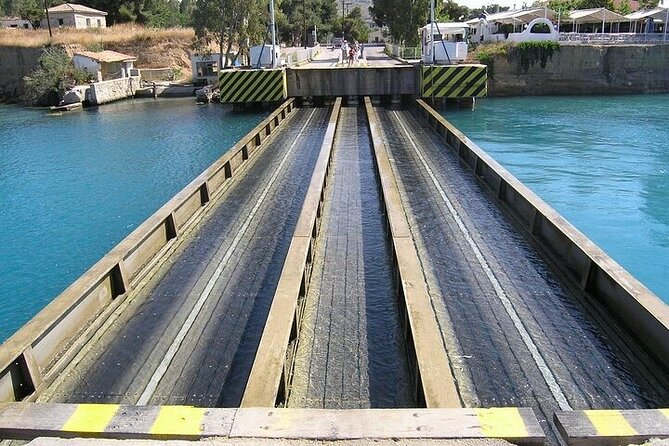
The final unusual stop is at one of the Corinth Canal’s submersible bridges. The tour allows about 15 minutes.
Unlike a lift bridge, this type of bridge lowers the roadway below the water level. At each end of the canal, bridges built in 1988 can drop about eight meters beneath the surface so ships can pass.
The system suits a canal with a one-way traffic pattern. Ships pass one at a time, and larger vessels may need to be pulled through. Around 11,000 ships use the Corinth Canal each year, many of them tourist boats.
The design has a practical advantage. Since the bridge goes down instead of rising above the channel, there is no height restriction for tall sailing ships or tourist vessels.
This is a short stop, but it adds a modern engineering note to a day otherwise filled with ancient places. It also helps you see that the Corinth Canal is not just a scenic cut in the earth. It remains a working water route.
What the seven-hour schedule really means
The listed stops total about six and a half hours, including the drive back to Athens or Piraeus. The remaining time covers the road between sites, traffic, pickup, and short transitions.
That makes the schedule full but realistic for a private day. You get roughly two hours at Ancient Corinth, 50 minutes at Acrocorinth, and an hour at Cenchrea. The canal and bridge stops are quick viewing points rather than extended activities.
The private format gives you some control. A driver can respond to your interests and needs, though the supplied details do not promise unlimited changes to the route. One family described the experience as especially successful because their driver, Peter, was personable, flexible, and attentive to what they needed. Peter may not be the driver assigned to every booking, but his service gives you a useful standard to expect from the company.
The published rating is 5 out of 5 from 10 ratings, with 100 percent recommending the experience. That is a small sample, so I would treat it as encouraging rather than conclusive. The strongest praise centers on friendly service, good historical background, and flexibility for a family group.
What is included, and what costs extra
The price includes:
- Private transport in an air-conditioned vehicle
- An English-speaking professional driver
- Hotel pickup and drop-off in Athens
- Pickup and drop-off at Piraeus port
The price does not include archaeological entrance fees, food, drinks, or a licensed English-speaking guide inside the sites. Airport transfers can be arranged separately for an additional charge.
The driver has a good grasp of Greek history and culture and can explain the sites until you reach the entrances. For Ancient Corinth and other archaeological areas, a licensed guide must be arranged separately if you want guided interpretation inside.
Dress is listed as formal. That is worth noting when packing, though a day with outdoor ruins also calls for practical clothing and shoes. The formal requirement may be connected with expected standards at religious or cultural places, so ask the operator if you are unsure.
Free cancellation is available if you cancel at least 24 hours before the start time. Changes or cancellations inside that window are not accepted for a refund.
Who should book this Corinth tour?
I would recommend this tour to a small family, a couple with a strong interest in Biblical history, or cruise passengers who want a private excursion beyond Athens. It is also a good choice if you want to combine Greek mythology, ancient trade, Roman-era Corinth, and Christian history in one day.
You will get the most from it if you enjoy listening to historical context during drives and are comfortable with a full schedule. The private vehicle is particularly useful for a group of three, since you share the cost and avoid coordinating with strangers.
I would hesitate if your main goal is a slow archaeological study. Ancient Corinth receives about two hours, and Acrocorinth less than one. Add the cost of a licensed guide and entrance tickets, and the final bill will be higher than the advertised transport price.
I would also choose another experience if you want a full Acropolis visit. Athens appears in the opening route description, but the main day is clearly directed toward Corinth, the canal, Acrocorinth, Cenchrea, and Isthmia.
Should you book it?
Book this private Corinth tour if you want a well-packed day that links ancient trade routes with Paul’s journeys and includes both famous and less obvious locations. The Corinth Canal, Ancient Corinth, and Acrocorinth provide the big historical sights, while Cenchrea adds a personal Biblical connection.
The strongest value comes when three people share the vehicle and when pickup from your hotel or cruise ship saves you transport planning. Before booking, confirm the entrance costs, ask about adding a licensed guide, and make sure the schedule fits your port return time.
If those details suit you, this is a practical way to see the Corinth region without renting a car or piecing together several buses and taxis.
FAQ
How long is the Biblical Corinth private tour?
The tour lasts approximately seven hours, including transportation between Athens or Piraeus and the Corinth area.
Where can pickup take place?
Pickup is available from your Athens hotel or from your cruise ship pier at Piraeus port. Return is to the same pickup location.
Is the tour private?
Yes. Only your group participates, with a maximum of three people based on the stated price.
Is an English-speaking guide included?
An English-speaking professional driver is included. The driver provides historical and cultural information outside archaeological sites and museums, but a licensed guide inside those places is not included.
Are archaeological entrance fees included?
No. Entrance fees to archaeological sites and museums are separate.
Which main places does the tour visit?
The route includes the Corinth Canal, Ancient Corinth, Acrocorinth, Cenchrea, and the submersible bridges at the Corinth Canal.
Can cruise ship passengers book this excursion?
Yes. Cruise passengers can be picked up at Piraeus port and returned there. You must provide the ship name, docking time, disembarkation time, and re-boarding time when booking.
Is cancellation free?
You can receive a full refund if you cancel at least 24 hours before the experience starts. Cancellations or changes made less than 24 hours before departure are not refunded or accepted.