Cooking in Corfu beats watching. It’s a home-style Greek cooking class where you help make a full feast, starting with fresh produce from the host’s garden and ending with a long table and excellent wine.
What I like most is the small-group setup. You get real attention at your station, not a quick walk-through. And the hands-on garden-to-table flow turns everyday ingredients into classic dishes you’ll actually remember when you’re back home.
One thing to consider: the class can’t run with only one participant. If you book solo and there’s no one else on that date, you may be asked to cancel or reschedule.
In This Review
- Key things to know before you cook with Christos
- A Corfiot home-kitchen class, not a demo
- Meet Christos, and expect real guidance at your station
- Picking vegetables in the on-site garden
- How the cooking class actually runs (roles, stations, and timing)
- The menu you’ll cook: starters, dips, mains, and dessert
- Starters and dips (where most hands-on work happens)
- Main dishes (the comfort-food payoff)
- Dessert (the sweet ending you’ll remember)
- The big table: how the feast feels when you make it yourself
- Price and value: what you get for about $132.75
- Practicalities: where to meet and how to plan your day
- Who should book Corfood Bites with Christos?
- Should you book this cooking class?
- FAQ
- How long is the cooking class?
- How many people are in the group?
- Is the class offered in English?
- Do you cook hands-on or watch?
- Do you harvest ingredients from the garden?
- What kinds of dishes are included?
- Where is the meeting point?
- Do I need to cancel due to weather?
- Can solo travelers book this class?
Key things to know before you cook with Christos
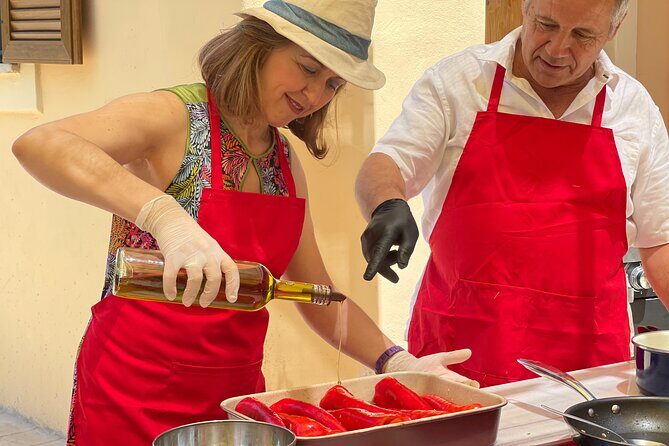
- Small group (max 9) means you’ll be actively working, not standing around
- On-site garden harvest: you pick vegetables when they’re ripe, then cook them the same day
- Bilingual instruction (English or French) helps if you’re not confident with Greek terms
- Christos guides throughout so tasks make sense even if you’ve never cooked Greek food before
- A full feast stretches from starters to dessert, with wine as part of the meal
A Corfiot home-kitchen class, not a demo
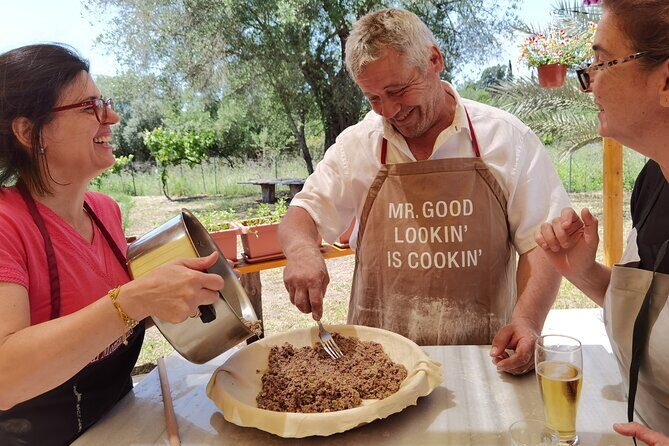
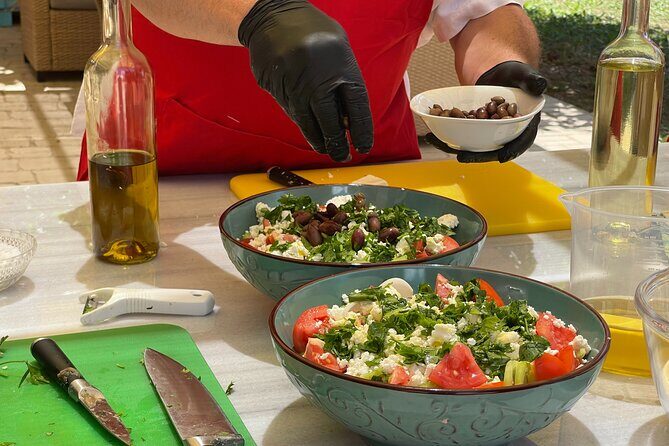
Corfood Bites is the kind of cooking experience that feels like you got invited into a local home for a day. The setting is practical and relaxed: an outdoor kitchen/pavilion and a table where the food is the main event. You’re not there to collect facts for a slideshow. You’re there to chop, mix, shape, and bake, then eat the results together.
The pace matters. The class runs about 4.5 to 6 hours, and that time includes both cooking and the big sit-down meal. If you’re the type who gets impatient with long lectures, this format works. You’ll be busy the whole way through, and Christos keeps the stations moving.
There’s also a nice social rhythm. You start with a quick chat and role assignments based on your cooking skills, which helps everyone feel useful right away. In a group of up to 9, you can still meet people without the chaos of a giant tour bus kitchen.
You can also read our reviews of more cooking classes in Corfu
Meet Christos, and expect real guidance at your station
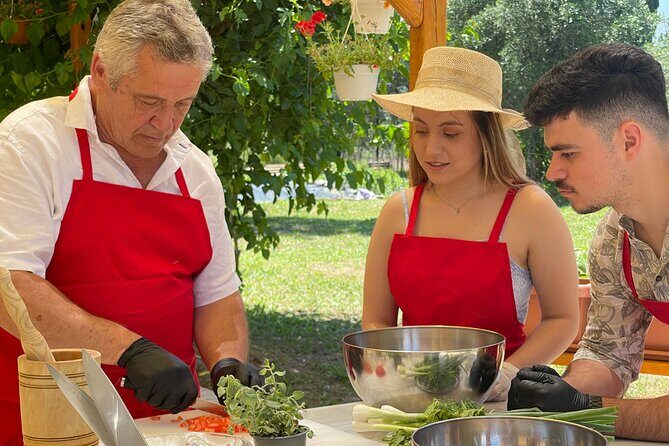
Christos is the teacher and supervisor of the day. That matters because the class is designed around active participation, not passive observation. You’ll get instructions step-by-step, plus the kind of practical coaching that helps your food turn out better than you could manage alone.
The vibe is friendly and warm, and the group size supports that. People in the class are often busy at the same time, but Christos keeps everyone coordinated so you’re not constantly waiting. If someone needs extra help, he moves around and makes sure they catch up.
If language has you worried, you’re covered a bit. The class is offered in English and French, and the day is built around teaching the names of ingredients and dishes so you’ll know what to order or find later.
Picking vegetables in the on-site garden
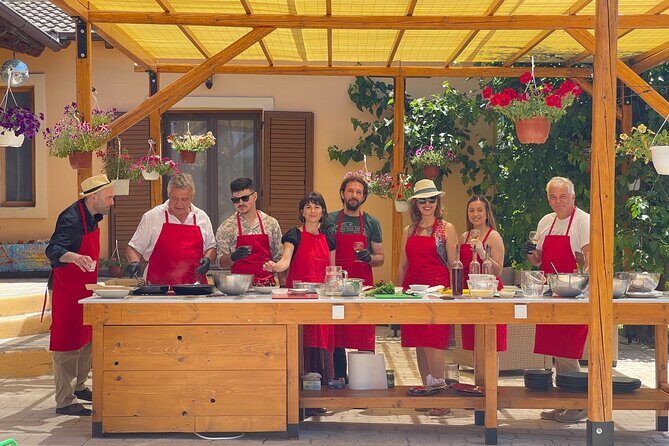
The day starts with a simple plan: you’ll begin with a brief chat, then you go harvest fresh vegetables from the garden (if ripe). This is a big part of why the class feels authentic. It’s not just a marketing phrase. You can actually see and handle the ingredients before cooking.
Practical tip: don’t plan a heavy breakfast. Once you harvest and cook multiple dishes, you’ll be ready to eat—lots. Many people end up treating the class lunch as their main meal of the day, then calling it a day afterward.
Also, the garden part changes with the season. That means the specific produce you pick may vary, but the goal stays the same: use what’s fresh and local, then learn how Greek cooking tastes when it’s not based on pre-packaged shortcuts.
How the cooking class actually runs (roles, stations, and timing)

After the initial welcome and skill check, roles are assigned so you’re not just doing one tiny task. You’ll work at different steps for the day’s dishes—chopping, assembling, mixing, and prepping—while Christos is present to guide and supervise.
Here’s the flow you can expect:
- Welcome and role assignment based on cooking skills
- Garden harvest when produce is ready
- Cooking starts with starters and dips
- Main dishes move into baking and stovetop work
- Dessert finishes the menu and sets the pace for the big meal
One smart detail: the class can shift length depending on menu complexity and the number of participants. So your schedule isn’t fixed to a strict 6-hour block, but you can count on a full experience rather than a quick workshop.
You’ll also likely get an appetizer and drinks during the day. Wine shows up as part of the meal, and you may see Greek spirits like ouzo during the earlier stages, depending on the day’s flow.
The menu you’ll cook: starters, dips, mains, and dessert
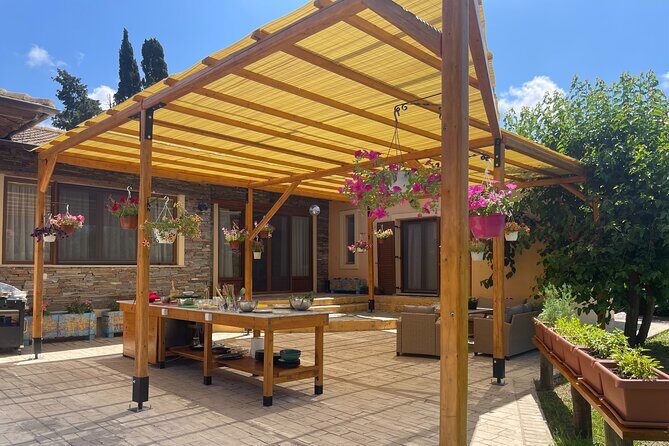
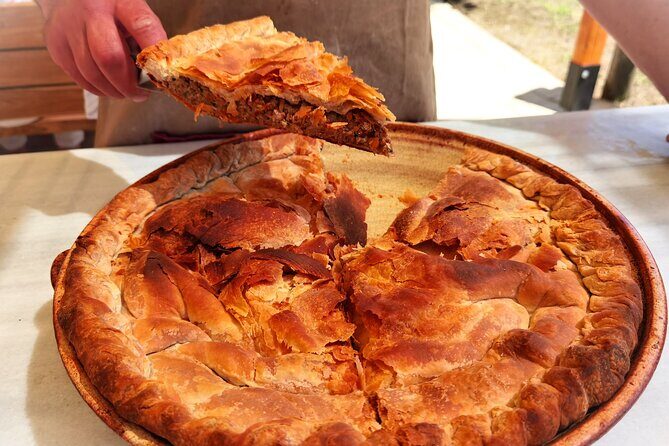
This is not a single-dish class. It’s a full Greek feast, typically including starters, salad, a main course, and dessert. The sample menu gives you a strong idea of what you’ll learn to make.
A few more Corfu tours and experiences worth a look


Starters and dips (where most hands-on work happens)
You may make one or more of these:
- Bouyourdi: baked feta and kasseri with tomatoes and hot peppers (spicy)
- Kolokithokeftedes / Marathokefedes / Taramokeftedes / Ntomatokeftedes: patties made from zucchini, fennel, fish egg, or tomato
- Tzatziki, Melitzanosalata, Tirokafteri, Taramosalata: a set of classic dips
- Bourdetto: a Corfiot fish dish cooked in hot chilli sauce
- Spetsofai: sausages (loukaniko) with peppers and onion in a red sauce with wine
- Soutzoukakia: meatballs in red tomato sauce with cumin as a dominant flavor
- Imam: baked eggplant stuffed with caramelised onions, garlic, and crushed tomatoes
This is where you learn technique. Greek starters often look simple, but the details matter: texture, seasoning balance, and how you combine ingredients so each bite feels intentional.
Main dishes (the comfort-food payoff)
You may cook:
- Sofrito: Corfiot beef slices cooked with garlic and vinegar white sauce
- Gemista: peppers and tomatoes stuffed with rice, baked in the oven
Gemista is a great dish for learning patience. The stuffing and baking rhythm teaches you how Greek home cooking achieves flavor without complicated steps.
Dessert (the sweet ending you’ll remember)
You can expect options like:
- Baklava
- Halva
- Galaktoboureko
- Orange pie
Dessert here isn’t an afterthought. It’s part of the feast you worked toward all afternoon, and it’s one of the easiest ways to understand Greek dessert styles after you’ve seen how the components come together.
The big table: how the feast feels when you make it yourself
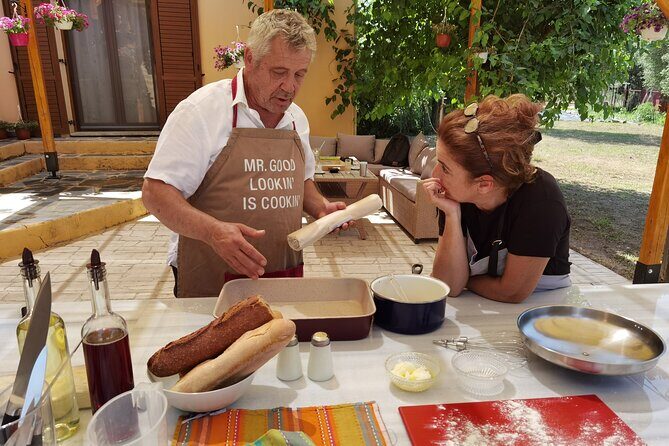
Once cooking finishes, you sit down and eat everything you made. This is the moment the class shifts from skill-building to celebration. You’ll likely share tips and process with other participants because multiple people are working at different stations at the same time.
The overall atmosphere is cheerful and relaxed. It’s the kind of meal where conversation keeps going because everyone has a stake in what’s on the table. And it’s plentiful. Plan on leftovers if you’re anything like most people—there’s often enough food to stretch the meal into the next day.
Wine is part of the experience too. One of the best-value surprises with classes like this is that you get a full meal that actually tastes local, not just a light tasting. Here, the meal is described as a gargantuan feast, and the tone of the day is clearly built around eating well.
Price and value: what you get for about $132.75
At $132.75 per person, this isn’t a bargain cooking class. But it doesn’t feel overpriced for what you actually get: a guided, hands-on half-to-full day, a small group (max 9), fresh garden produce, and a menu that can easily turn into a true lunch—or late lunch—plus dessert.
Where the value shows up:
- Hands-on learning: you make multiple dishes, not one recipe
- Ingredients included: garden harvest plus the components for starters, mains, and dessert
- A real sit-down meal: you’re not just sampling, you’re feasting
- Small-group attention: Christos can supervise properly, so you don’t feel lost
If you’re choosing between a tasting-only tour and a cooking experience, this is a clear upgrade. You’ll leave with recipes you can realistically recreate, and you’ll also understand how Greek flavors build across a full meal.
Practicalities: where to meet and how to plan your day
You meet at ΔΙΑΣΤΑΥΡΩΣΗ ΤΡΙΚΛΙΝΟ ΑΦΡΑ, Eparelia 491 00, Greece, and the activity ends back at the meeting point.
A few practical notes so your day goes smoothly:
- The location can be a bit tricky at first, so give yourself a little buffer to arrive calm.
- You’ll be working outdoors, so dress for a day of cooking and eating. Wear shoes you can stand in.
- Since the class is weather-dependent, plan to keep your schedule flexible around that day. If conditions force changes, you’ll need to adapt.
- Bring your appetite. You’ll be eating a lot, and it’s hard to resist Greek classics once you’re elbow-deep in the process.
Also, keep an eye on group size and timing. This class is often booked about 34 days in advance on average, so last-minute planning can be risky.
Who should book Corfood Bites with Christos?
This fits best if you want:
- Hands-on Greek cooking with guidance from a real host (Christos)
- A small group that feels personal
- A farm-to-table style experience using on-site produce
- A full meal that ends in real satisfaction, not just a few bites
It’s also a great choice for mixed skill levels. Because roles are assigned based on cooking ability, you’re less likely to feel like you’re falling behind if you’re a beginner.
If you’re traveling as a single person, check your date carefully. The class can’t proceed with just one participant, so you may need another booking to make your session possible.
Should you book this cooking class?
Yes, if you want a Corfu food day that feels like family hospitality and you’re ready to cook and eat. The strongest reasons to book are the small-group attention, the garden harvest, and the fact that the menu is broad enough to teach you real Greek home cooking habits—not just one party trick.
I’d pass if you only want a short activity or you’re hoping for a low-commitment snack session. This is a proper meal day, built around time in the kitchen and a big table afterward.
If your dates line up and you’re up for a full, hands-on Greek feast, Corfood Bites is exactly the kind of experience that makes your Corfu trip taste like the place.
FAQ
How long is the cooking class?
The class lasts between about 4.5 and 6 hours, depending on the menu and the number of participants.
How many people are in the group?
The experience has a maximum of 9 travelers.
Is the class offered in English?
Yes. It’s offered in English (and also French).
Do you cook hands-on or watch?
You’ll be actively involved in preparing the dishes, with Christos guiding and supervising throughout.
Do you harvest ingredients from the garden?
You may pick fresh vegetables from the on-site garden if the produce is ripe, then cook with them.
What kinds of dishes are included?
You can expect a Greek feast with a variety of starters (including dips), salad, main dishes, and dessert. A sample menu includes items like bouyourdi, Greek dips (tzatziki and others), sofrito, gemista, and desserts such as baklava and orange pie.
Where is the meeting point?
The class meets at ΔΙΑΣΤΑΥΡΩΣΗ ΤΡΙΚΛΙΝΟ ΑΦΡΑ, Eparelia 491 00, Greece, and ends back at the meeting point.
Do I need to cancel due to weather?
The experience requires good weather. If it’s canceled due to poor weather, you’ll be offered a different date or a full refund.
Can solo travelers book this class?
The cooking class cannot proceed with only one participant. If you’re alone and there are no other bookings for that day, you’ll be asked to cancel or reschedule.