REVIEW · CYCLADES ISLANDS
Cretan Cooking Class and Dinner: Evening in a Rethymno Home
Book on Viator →Operated by eatwith · Bookable on Viator
A Cretan dinner worth your hands-on time. I love learning from Androniki and the way her wood oven turns dinner into a team effort. I also love that you eat what you make, with Greek wine and a sip of raki right from the home table. One heads-up: this experience is capped at 10 people, so popular dates can fill up.
This is held in a real home in the hills outside Rethymno, with outdoor cooking that feels less like a show and more like joining an evening ritual. You’ll work with homegrown produce, and you’ll hear stories that explain why these dishes are made the way they are.
If you’re hoping for a hands-off, sit-and-watch tour, this probably won’t scratch that itch. You’ll be standing, tasting, and helping at a steady pace. Also, you’ll need to plan for getting to the home address shared after booking, since the meeting point listed is more general.
In This Review
- Key things you’ll notice right away
- Starting at 6:00 pm: where the evening begins
- The home and herb garden setup (and why it matters)
- The cooking class flow: hands-on, not just watching
- Cretan pies and wild greens: kremidokalitsouna, chortopites, sfakianes
- The salad course that’s more than tomatoes and olive oil
- Dolmadakia, moussaka, and giouvetsi: the meal rounds into form
- Wine, raki, and eating at the same table you cooked
- What you take home: recipes plus practical technique
- Price and value: $126.50 for a 4-hour Cretan meal-and-class
- Who should book this cooking class (and who might skip it)
- Handy logistics: what to know before you go
- Should you book this Cretan Cooking Class and Dinner?
- FAQ
- How long is the Cretan Cooking Class and Dinner?
- What time does the experience start?
- Where is the meeting point?
- Is the class taught in English?
- How many people are in the group?
- What food and drinks are included?
- Does the menu include dishes like moussaka and giouvetsi?
- Can I bring up allergies or dietary restrictions?
- Is there free cancellation?
Key things you’ll notice right away
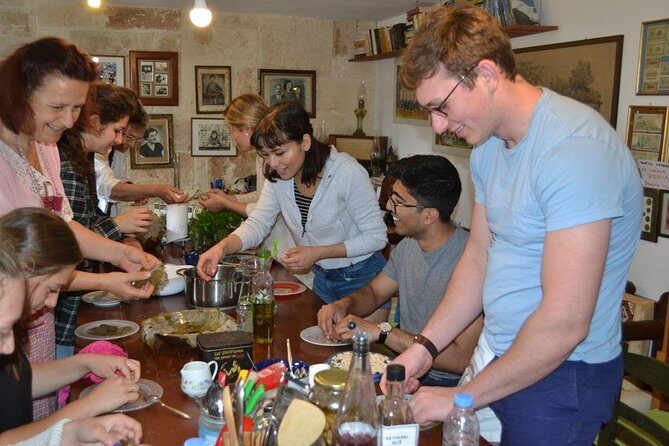
- A true small-group dinner capped at 10 people or fewer
- Androniki’s home-style technique for classic Cretan dishes
- Wood-oven cooking outdoors with homegrown produce and olive oil
- A full meal you build yourself plus wine and after-dinner drinks
- Cretan raki from the host family (made at home)
Starting at 6:00 pm: where the evening begins
The experience starts at 6:00 pm, and the meeting point is listed as Loutra 741 50. That timing matters. Late afternoon tours often feel rushed as the sun goes down. This one lands you right in the sweet spot: you can arrive, get your bearings, and settle into the rhythm of cooking without feeling like everyone’s sprinting.
It also ends back at the meeting point. That’s a small detail, but it makes your night easier to plan. You can treat this as a full activity, not something that turns into a complicated transport puzzle later.
The big practical note: the full address of the home is provided on your confirmation. The host’s place is in the hills, and the details you’re given after booking are important for getting there on time. If you’re using public transport, you’ll want to check the nearest options early and build in a little buffer.
You can also read our reviews of more cooking classes in Cyclades Islands

The home and herb garden setup (and why it matters)
This evening isn’t just about recipes. It’s about context: where the ingredients come from, how the kitchen works, and how Cretan food stays practical.
You start outdoors, and it’s common to begin with a walk and some prep that connects food to place. In particular, you’ll spend time with fresh herbs and vegetables, including homegrown produce and an herb garden feel. That’s not fluff. When you learn which greens go into a pie or why one herb shows up in a salad, you’re building instincts that make cooking at home easier later.
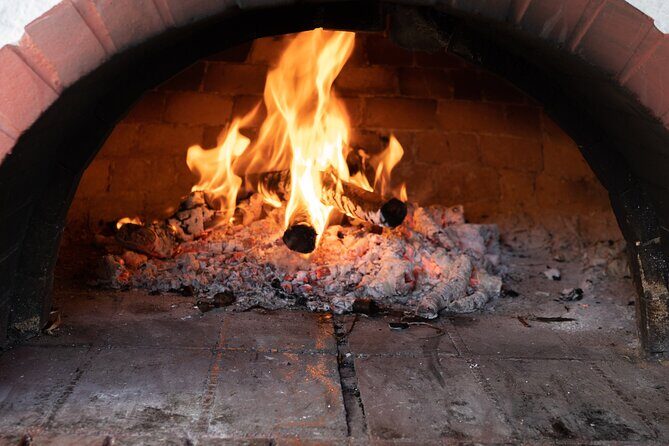
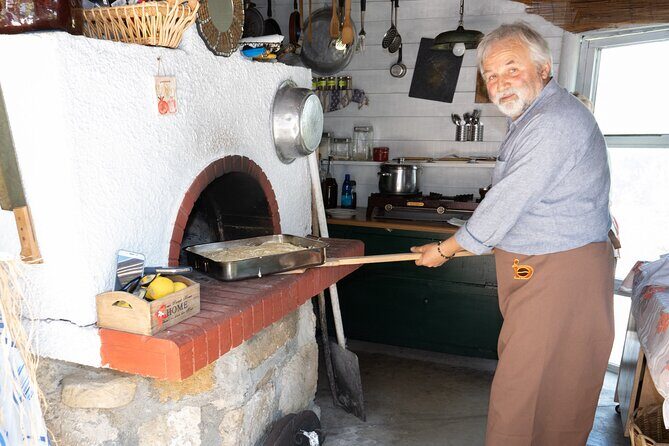
The wood oven is the star. When fire is part of the process, you pay attention differently. Heat changes timing. Smell changes attention. And everyone in a small group ends up participating more because the work has momentum.
Andromiki’s hospitality is also part of the recipe. Her husband Pantelis is part of the evening too, especially around the raki. You don’t just get a drink. You get a story for why it tastes the way it does.
The cooking class flow: hands-on, not just watching
Plan on a steady mix of instruction and doing. You’re not standing like a museum visitor. You’ll be shown how the dishes come together, then you’ll help with steps along the way. That’s one of the biggest reasons this class earns a high rating: you learn by making.
The “fundamentals” angle is also real. The evening focuses on classic Greek and local Cretan dishes, including kremidokalitsouna, Chortopities, and Sfakianes pites. That doesn’t just mean big-name dishes. It means you get taught how home cooks think: how dough or fillings are handled, how balance is achieved, and how the process becomes repeatable.
Here’s what I like about this teaching style for a normal visitor: even if you can’t match Cretan home timing or local ingredients perfectly, you can still reproduce the method. That’s the stuff that makes your own dinner feel confident instead of random.
You’ll also see how the garden ingredients show up in multiple courses. That’s how a Cretan meal stays coherent instead of feeling like a series of separate snacks.
Cretan pies and wild greens: kremidokalitsouna, chortopites, sfakianes
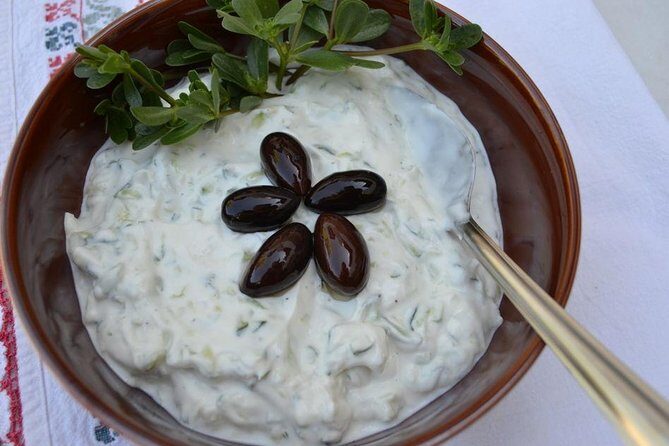
Let’s talk pies, because that’s where this evening gets especially Cretan.
Your sample menu includes multiple pastry-style courses, such as:
- Cheese pies
- Kremidokalitsouna
- Small onion pies
- Chortopites with many wild greens (10 to 12)
- Sfakianes pites with home-made cheese
Even if you’ve never cooked a pie before, the structure helps. You’ll learn what each filling is aiming for, and you’ll get direction on how to assemble and cook it. Wild greens can sound intimidating until you’re working with them in hand. Once you see the variety and learn how they’re used, you stop thinking of them as a mystery and start thinking of them as greens with roles.
One detail I’d call out for practical success at home: you’re being taught local technique, not a generic cooking class script. Cretan cooks use what grows and what keeps. That’s why these recipes feel tied to place, but still teach you usable steps.
Also, the wood oven timing creates a natural pace. Samples often come from the fire while you’re still working. So you’re tasting as you go, which helps your brain connect instruction to flavor fast. You’re not waiting until the end to realize whether you did it right.
The salad course that’s more than tomatoes and olive oil
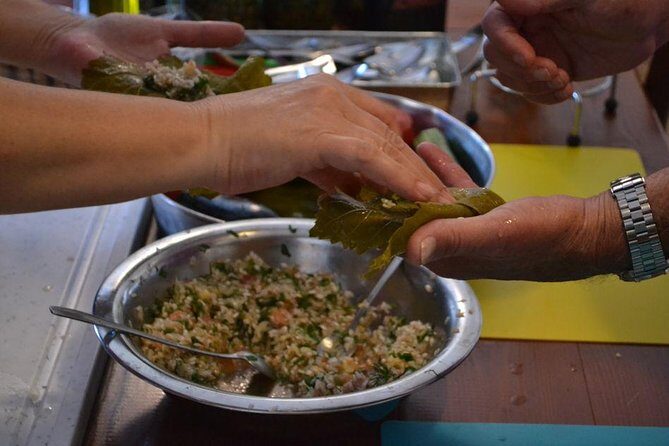
Yes, you’ll have Greek salad. But this one has a few upgrades that matter.
The sample menu lists Greek salad with:
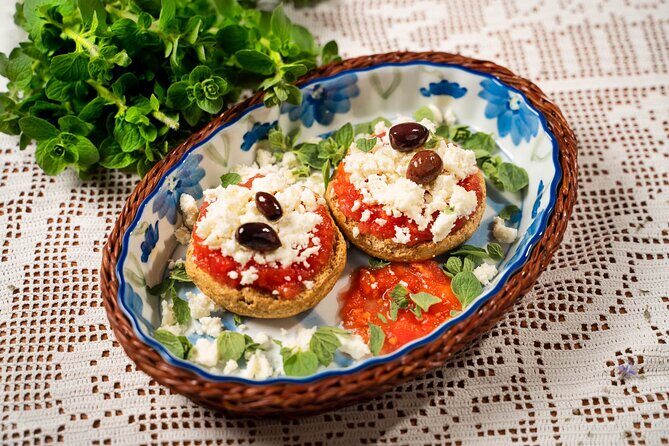
- home made barley rusk
- tomatoes, cucumber, green pepper, onion
- caper, kritamo
- olives
- and, of course, enough olive oil
Why does that matter? Because the barley rusk is part of what makes the salad feel like a full meal instead of a side dish. It adds texture and a bit of heartiness. And kritamo (a local herb/plant used in Cretan cooking) gives the salad a distinctly island taste.
This is a good course for beginners. You can’t really hide behind technique here. Flavor choices show. When you learn how the host builds this, you’ll be more confident recreating it later, even with different greens.





Dolmadakia, moussaka, and giouvetsi: the meal rounds into form
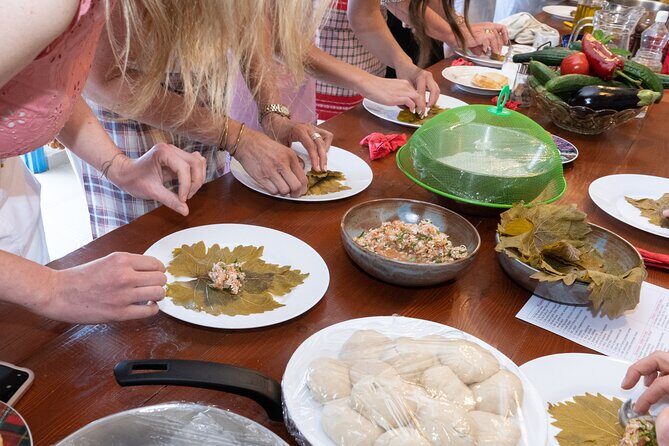
After the pie-heavy start, the evening shifts into classics that define Greek comfort food.
Your menu includes:
- Dolmadakia (stuffed vine leaves), plus zucchini flowers with rice, vegetables, herbs, and olive oil
- Moussaka (potatoes, zucchini, aubergines, minced meat in tomato sauce, béchamel)
- Giouvetsi (rooster with orzo in the wood oven), a traditional Sunday-style dish
- dessert such as Greek yogurt or homemade ice cream, plus a local sweet option
If you’re used to thinking of moussaka as a once-a-year project, this is the right kind of class to break that idea. You’re learning from home process and familiar ingredient logic. You’re not just memorizing a recipe card. You’re understanding where each layer comes from and why the final bake matters.
Giouvetsi is the course that makes the wood oven feel worth it. Rooster with orzo sounds like a dish you’d only see in a family cookbook, not a casual tourist dinner. And that’s the value here. You get exposed to a Sunday dish style that doesn’t pop up in every restaurant.
And dolmadakia and zucchini flowers add another layer of Cretan specificity. These ingredients show up because they’re local and seasonal, not because they sound fancy.
Wine, raki, and eating at the same table you cooked
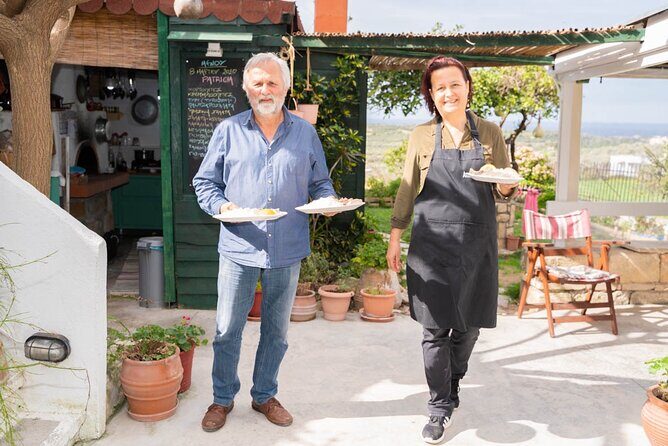
Once the work is done, you sit down and eat what you made together. That’s when the whole evening clicks.
You’ll try raki that Androniki and Pantelis make at home. Raki is fiery by reputation, and it earns its place here. It’s not just a gimmick drink. It’s part of the family-meal ending, like dessert or a digestif after a long day.
You’ll also have Greek wine with the meal, plus after-dinner drinks. This is a key value point: your money isn’t only buying instruction. You’re paying for a full evening of food, drink, and a real table moment at the end.
Small-group dinners work better than big groups for a simple reason: you get more attention, and the conversation isn’t swallowed by volume. With 10 people or fewer, the tone stays human. You’ll laugh, you’ll ask questions, and you’ll learn faster because you’re not waiting for a guide to circle back.
What you take home: recipes plus practical technique
A big difference between “cooking demo” and this kind of class is transfer. You’re not just told what to do. You’re taught how to do it.
You’ll leave with amazing recipes to make in your own kitchen. But more importantly, you’ll understand what to adjust when you don’t have the exact same greens or the exact same goat-cheese style. The fundamentals around classic dishes give you a cooking framework you can use beyond one evening.
This is also where the herb garden and homegrown produce experience pays off. It trains your eye. When you go to a market later, you’ll know what kind of greens can work in a pie or how certain herbs can move from garden to table without feeling like substitution roulette.
And yes, you’ll probably want to recreate it quickly. The dishes are substantial, and the satisfaction is immediate when the food comes from your own hands.
Price and value: $126.50 for a 4-hour Cretan meal-and-class
At $126.50 per person for about 4 hours, the value depends on what you want.
If you’re looking for a cheap snack and a couple of bites while someone explains food, this is too much. But if you want a serious cooking lesson plus a full meal with wine and after-dinner drinks, it’s strong value.
Here’s why it adds up:
- You’re getting hands-on instruction with a chef guide.
- You’re eating a full Cretan multi-course menu that includes both cooking work and table time.
- The setting is intimate: a small group in a private home with a wood oven.
- You’re learning dishes like moussaka, giouvetsi, and several pie courses, not just one appetizer.
Also, the timing is evening-friendly. A four-hour window is long enough to learn, cook, and eat without rushing out for a second dinner. That reduces your overall trip cost in a sneaky way: you’re already covered for the whole meal portion of the night.
Who should book this cooking class (and who might skip it)
This evening is a great fit if you:
- like cooking and want to learn classic Cretan dishes for real
- want an authentic home experience in the hills near Rethymno
- enjoy eating well, not just tasting
- appreciate small-group pacing and conversation
It may be less ideal if you:
- want a passive tour with minimal participation
- dislike spending time outdoors and moving around a working kitchen setup
- have very specific dietary needs and aren’t ready to communicate them ahead of time
That last point matters because you’ll need to mention food restrictions (allergy or special diet) when booking, so the host can plan.
Handy logistics: what to know before you go
A few practical things will help you enjoy the evening more:
- The activity starts at 6:00 pm and runs around 4 hours.
- You’ll end back at the meeting point, so you can plan the rest of your night with less stress.
- Confirmation includes the full address in the Before You Go section.
- It’s offered in English.
- Service animals are allowed.
- It’s near public transportation, but the hillside home address is key for timing.
If you’re visiting in a busy week and you hate last-minute scrambling, I’d book earlier. This one is often booked about 49 days in advance, and the group cap makes it easier for spots to disappear.
Should you book this Cretan Cooking Class and Dinner?
I think you should book it if you want an evening that feels like Cretan life, not a package. The combination of Androniki’s teaching, the wood oven setting, and a full meal with wine and home-made raki is exactly how you get more than memories. You get recipes you can actually use.
Skip it only if you’re looking for a quick, hands-off food stop. This is a cook-and-eat night. The reward is huge, but you have to show up ready to participate.
FAQ
How long is the Cretan Cooking Class and Dinner?
It lasts about 4 hours.
What time does the experience start?
It starts at 6:00 pm.
Where is the meeting point?
The meeting point is listed as Loutra 741 50, Greece, and the experience ends back at the meeting point.
Is the class taught in English?
Yes, it is offered in English.
How many people are in the group?
The experience has a maximum of 10 travelers.
What food and drinks are included?
You’ll cook and then enjoy what you make, with wine and after-dinner drinks included.
Does the menu include dishes like moussaka and giouvetsi?
Yes. The sample menu includes moussaka and giouvetsi, along with multiple starter courses and dessert.
Can I bring up allergies or dietary restrictions?
Yes. You’ll need to communicate any allergy or special diet requirements during booking.
Is there free cancellation?
Yes. You can cancel for a full refund up to 24 hours in advance of the experience. If you cancel less than 24 hours before, the amount paid is not refunded.