REVIEW · GREECE
Crete: Raku Pottery Experience with Master Potter in Myrsini
Book on GetYourGuide →Operated by Raku Pottery Workshop · Bookable on GetYourGuide
Raku pottery is part craft lesson, part small fire show. In Myrsini, master potter Nikos Makrynakis guides you as you decorate a pre-made plate, then fires it using heat, smoke, and water to create patterns you cannot fully predict. The result is personal, useful, and made during a relaxed 2.5-hour evening workshop.
I like two things here. First, you get to work directly with Nikos rather than simply watch a demonstration. Second, the finished plate is ready to take home, giving you a real reminder of Crete instead of another shop-bought souvenir. The main consideration is that Raku is intentionally unpredictable, so your plate may not look exactly as you imagined.
In This Review
- Key points to know before booking
- Why the Raku kiln makes this workshop special
- Decorating your plate with Nikos
- Clay work while the kiln does its work
- Taking home a handmade piece from Crete
- The setting and evening timing in Myrsini
- What the $117 price means
- Who will enjoy this pottery experience
- The personal side of Nikos’s teaching
- Practical details that affect your evening
- Should you book the Myrsini Raku workshop?
- FAQ
- Where does the Raku pottery workshop take place?
- How long does the experience last?
- On which days does the workshop operate?
- What language does the instructor speak?
- Do I need previous pottery experience?
- What will I make during the workshop?
- Can I take my pottery home?
- How long does it take to collect additional clay creations?
- Can additional pottery be shipped home?
- Is the workshop suitable for children?
- What is included in the price?
- Can I cancel the booking?
Key points to know before booking
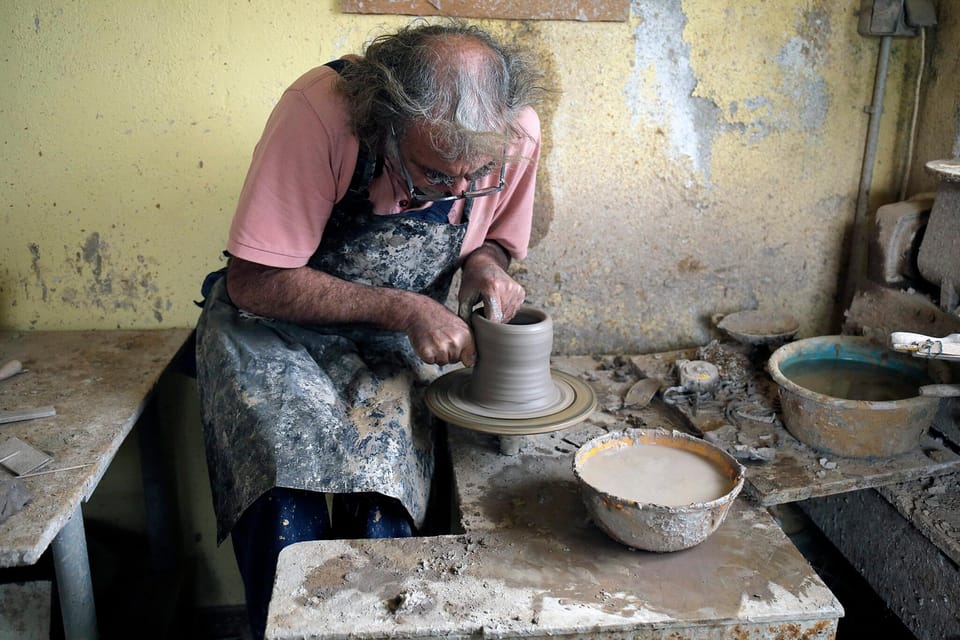
- Nikos Makrynakis leads the session: You learn from a working potter who teaches in English and Greek.
- The kiln is part of the show: Your decorated plate is fired during the workshop, creating smoky, irregular colors and patterns.
- You work on a pre-made plate: This is a design and finishing session, not a full lesson in throwing a plate from wet clay.
- You also handle clay: While your plate is in the kiln, Nikos demonstrates traditional techniques and works with you on clay.
- Your main souvenir goes home with you: Additional clay pieces can be glazed and fired, then collected about five days later or shipped for an added fee.
- The timing suits a warm Crete day: Sessions run Tuesday through Sunday, from 5:00 PM to 7:30 PM.
Why the Raku kiln makes this workshop special
Many pottery activities end when you finish shaping the clay. Here, the most exciting part is still ahead. You decorate your plate, and Nikos fires it using the Raku method, an old Japanese technique known for quick firing and dramatic results.
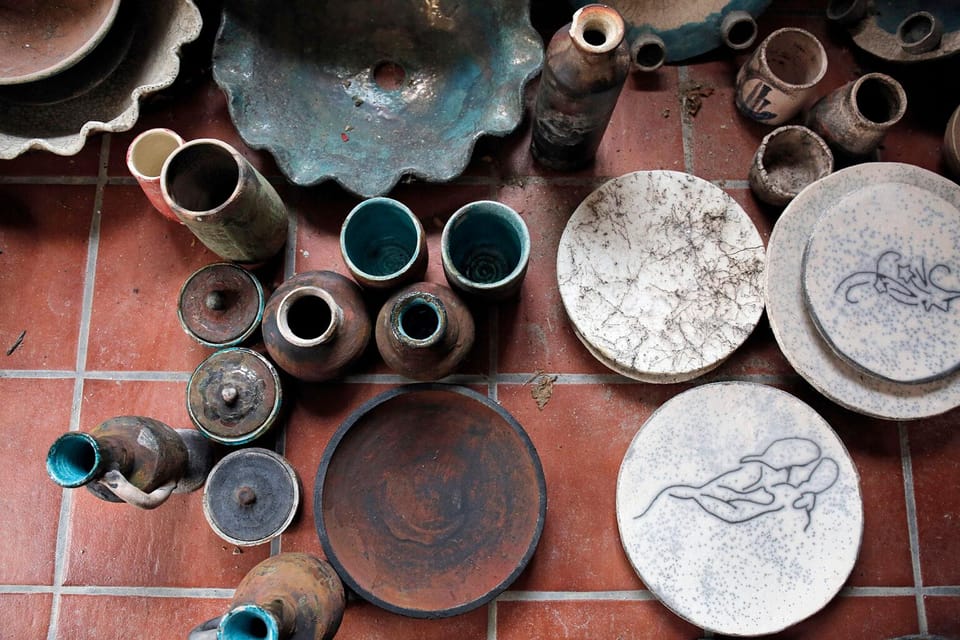
The kiln process creates colors and marks that are difficult to control completely. Heat, smoke, and water all affect the surface. That uncertainty is the point. You are not ordering a perfect factory finish. You are making a small object that records what happened during one particular firing.
The supplied information describes the process as involving fire and water, and that is a useful way to understand the mood of the session. It has a theatrical quality, but it is still a working pottery lesson. You see how a craftsperson handles the material, and you gain a better sense of why Raku pieces often have cracked, smoky, or uneven surfaces.
I would not book this expecting a polished, identical result from a catalog. Raku rewards curiosity. If you like handmade objects with surprises built into them, the firing is likely to be the high point. If you want exact control over shape and color, the method may test your patience.
You can also read our reviews of more tours and experiences in Greece.

Decorating your plate with Nikos
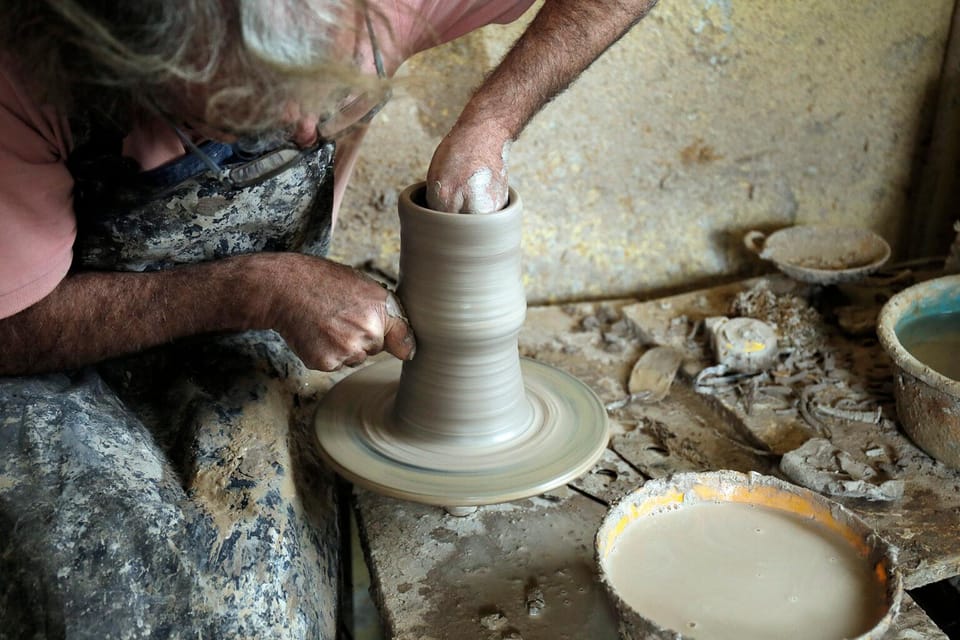
The workshop begins with a pre-made plate. Under Nikos’s direction, you detail and design its surface before it goes into the kiln. This keeps the activity manageable within two and a half hours and means you do not need previous pottery experience.
That format matters. Making a plate from raw clay, letting it dry, firing it once, glazing it, and firing it again normally takes much longer than an evening. Here, you get to focus on the creative decisions that will affect the finished piece, then see the result soon afterward.
Nikos supplies the materials and tools, so you do not need to pack anything special. His role is hands-on. He explains what to do, helps you work through the design, and shares practical details about the Raku process as you go.
Your plate will be unique partly because of your own design and partly because the kiln adds its own marks. That gives the finished object more character than a standard souvenir. It also means you should be comfortable with a little uncertainty before you begin.
Clay work while the kiln does its work
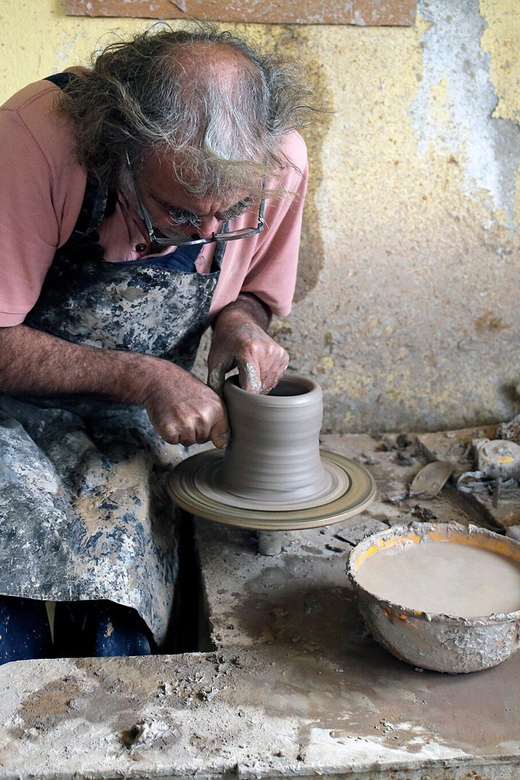
While your Raku plate is being fired, the session shifts to hands-on clay work. Nikos teaches traditional techniques and gives you time to handle the material yourself. This is a useful second act because you are not simply waiting for the kiln.
You also get to watch Nikos demonstrate pottery techniques on the wheel. Seeing an experienced potter work can clarify things that are hard to understand from verbal instructions alone: how clay responds to pressure, how quickly a form changes, and how much control comes from small movements.
The clay portion is also where the workshop feels most like a meeting with an artist rather than a standard activity. Nikos shares amusing stories from his life along with background about pottery and the Raku method. The personal stories add a human side to the technical lesson, and they help make the session feel connected to the person teaching it.
If you have always wanted to try a pottery wheel, keep your expectations sensible. The information provided promises a demonstration and hands-on clay work, but it does not promise that each person will throw a finished wheel-made pot. Your guaranteed finished item is the Raku plate.
Taking home a handmade piece from Crete
Each person leaves with a hand-designed Raku plate. That is a strong part of the value. You do not just leave with photographs or a short-lived memory. You take home an object you helped design and watched emerge from the kiln.
The plate will not be identical to anyone else’s. The combination of your decoration and the firing conditions gives it its own surface. The unevenness that might be a flaw in mass-produced pottery becomes part of the appeal here.
You may also create additional pieces during the clay session. These extra works are not included as ready-to-take-home Raku plates. They can be glazed and fired for collection approximately five days later, or shipped to your home for an additional cost.
That five-day timing is worth noting if you are moving around Crete. You need to remain in the area long enough to collect the pieces, or arrange shipping. Ask about the extra cost before committing to additional work, particularly if you are traveling with limited luggage or a tight onward schedule.
The setting and evening timing in Myrsini
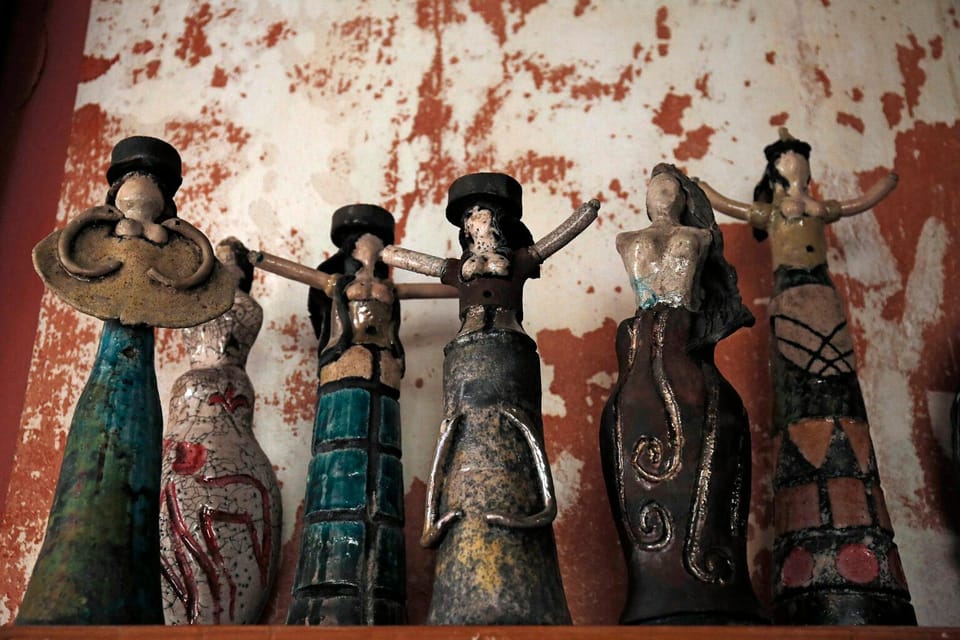
The workshop takes place in Myrsini, a village area in Crete with its own local character. The activity gives you a reason to spend an evening focused on a working craft rather than moving from one sightseeing stop to the next.
Sessions run Tuesday through Sunday, from 5:00 PM to 7:30 PM. That late-day schedule is practical in Crete, especially if you prefer to keep the hottest part of the day free. It also gives the workshop a slower evening rhythm, with time for conversation and a creative activity instead of a rushed stop.
Coffee and water are available on site, and restroom facilities are provided. These are modest details, but they matter during a hands-on class. You can settle in without needing to organize refreshments during the session.
No transportation service is listed, so check how you will reach the workshop in Myrsini before booking. The available details do not specify pickup, parking, or the exact meeting point. If you are staying elsewhere, confirm the address and allow enough time to arrive before the 5:00 PM start.




What the $117 price means
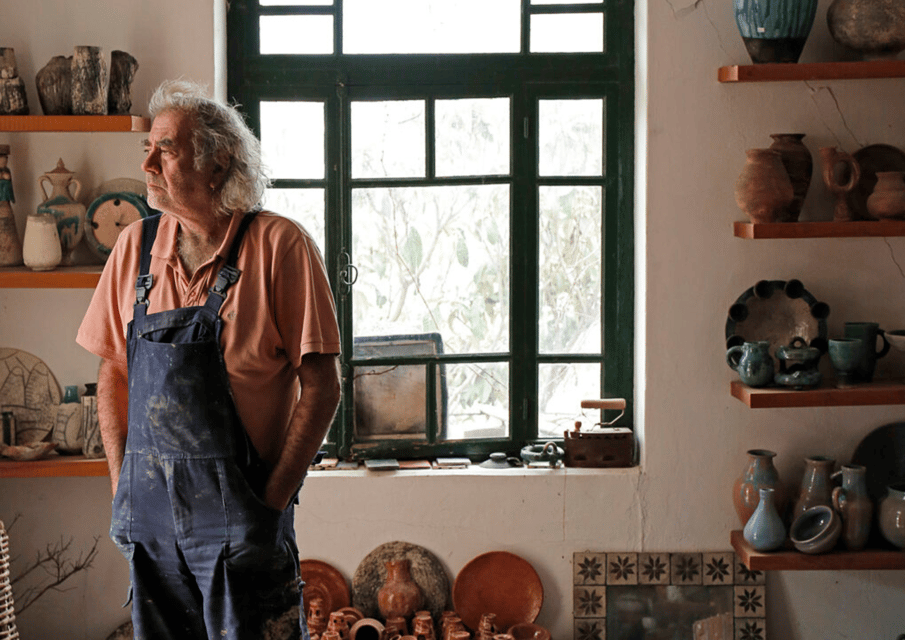
The advertised price is $117 per person. The session details also give a price of 100 euros per person, so you should confirm the current currency and final amount when booking. A discount is available for young children.
For the price, you receive a 2.5-hour lesson with Nikos, the plate design and detailing session, all tools and materials, firing of your plate, clay work, the wheel demonstration, coffee and water, and your finished Raku plate. That is a substantial package for a small, artist-led workshop.
The value is strongest if you care about personal instruction and a handmade souvenir. You are paying for time with a master potter, not only for an object. You also get to see the firing process, which gives the plate a story and makes the result harder to duplicate.
The value is less clear if you want a long studio course or a large amount of finished pottery. You work on a pre-made plate, and extra pieces cost more to glaze and fire. This is best understood as a focused cultural activity with a tangible result, not a complete ceramics apprenticeship.
Because the group size is not provided, I would confirm how many people will attend if close instruction is important to you. The experience promises hands-on guidance, but the amount of individual attention can depend on the number of participants.
Who will enjoy this pottery experience
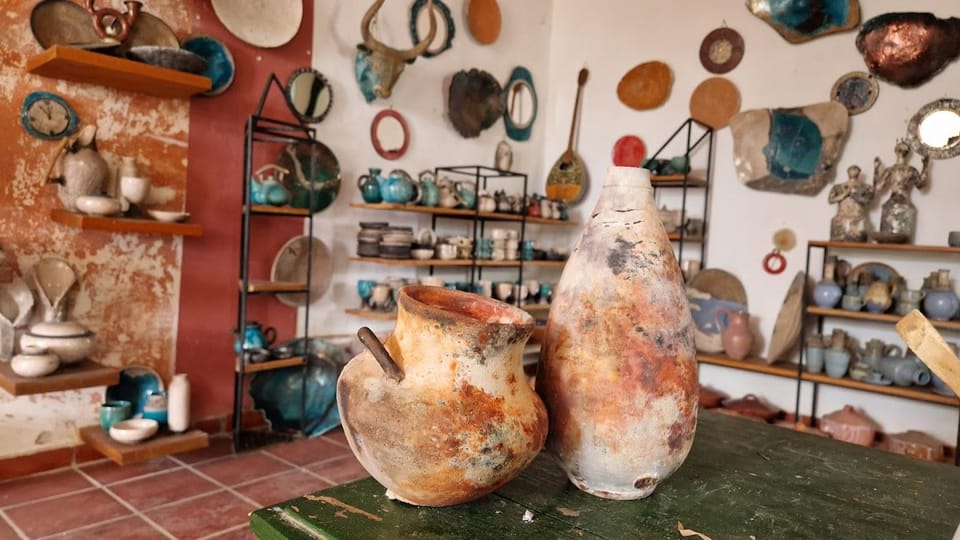
I think this workshop suits several types of people particularly well:
- Creative beginners: You do not need to arrive with pottery skills, and the pre-made plate lets you focus on design.
- Couples and friends: The activity offers something to talk about and do together, with each person leaving with a different piece.
- Families with young children: A child discount is available, though parents should consider how well each child handles a hot kiln environment and a 2.5-hour session.
- Art and craft enthusiasts: You get instruction, a wheel demonstration, traditional clay work, and a close look at Raku firing.
- People seeking a meaningful souvenir: The finished plate is connected to your own time in Myrsini and to Nikos’s workshop.
It may not suit someone looking for a quick, highly controlled activity. Nor is it ideal if you cannot manage an evening session or do not want to arrange your own transport to the site.
The workshop is listed as wheelchair accessible. Since the available information does not explain the studio layout or kiln area, contact the provider if you need specific access details.
The personal side of Nikos’s teaching
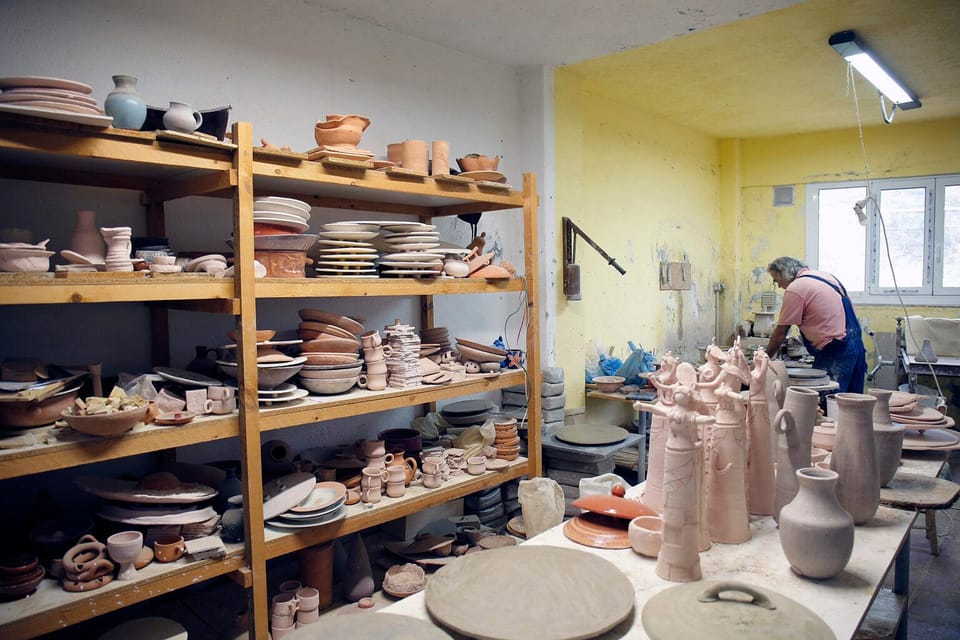
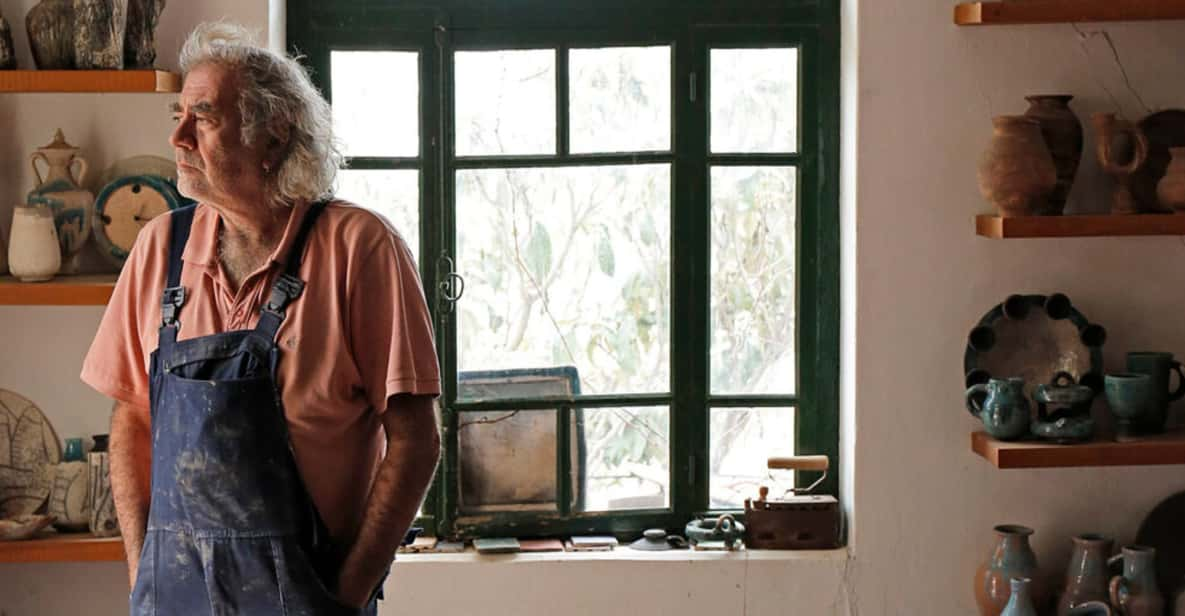
The strongest part of the experience is the direct connection with Nikos. He is presented as a renowned potter with a long working life in ceramics, and the session combines his technical instruction with stories about his life and Crete.
That combination matters. A pottery lesson can feel stiff if it is only a set of instructions. Nikos’s amusing stories give the workshop a more informal character. You learn about the craft while also meeting the person who has spent years working with clay and fire.
The available feedback describes him as warm, interesting, and eager to share his skills. One participant from Germany called the process wild and focused on the excitement of seeing pottery made with fire and water. Another participant from Poland described the workshop as a genuine local experience and said it was something to repeat.
Those comments point to the quality I would value most here: the session seems built around conversation and participation, not just production. Still, the number of published ratings is small, with two five-star ratings, so treat the perfect score as encouraging rather than definitive proof for every type of participant.
Practical details that affect your evening
The activity lasts 2.5 hours, with starting times available during the stated 5:00 PM to 7:30 PM window. It operates Tuesday through Sunday, so Monday is not available according to the supplied schedule.
English and Greek are spoken. That makes the workshop accessible to English-speaking visitors, while the Greek setting and local stories keep the experience connected to Crete rather than making it feel like a generic international class.
Coffee and water are available, but the information does not mention a meal or substantial food. Plan to eat before or after if you need dinner. The session ends at 7:30 PM, so it can fit neatly before a later evening plan, but do not assume transport or restaurant arrangements are included.
The booking terms are flexible. You can cancel up to 24 hours ahead for a full refund, and you can reserve now and pay later. Those terms are useful if your Crete plans may change, though you still need to allow time for the workshop’s Tuesday through Sunday schedule.
Should you book the Myrsini Raku workshop?
Book it if you want an evening activity with real participation, a personal connection to a local potter, and a handmade object to carry home. The combination of plate design, dramatic firing, clay work, and Nikos’s stories gives the session more substance than a simple craft demonstration.
I would especially recommend it to people who like objects with irregular marks and a clear making process behind them. The unpredictable finish is not a minor detail. It is the heart of Raku, so you should welcome variation rather than expect perfection.
Think twice if your schedule is too tight to reach Myrsini comfortably, if you need a guaranteed wheel-thrown pot, or if you dislike surprises in the finished design. Also confirm whether the current cost is $117 or 100 euros before paying, since both figures are provided.
For most visitors seeking a genuine, creative side of Crete, this is a good use of an evening. You leave with a plate, but the more lasting memory may be watching Nikos turn heat, water, smoke, and clay into something no one could reproduce exactly.
FAQ
Where does the Raku pottery workshop take place?
The workshop takes place in Myrsini, Crete.
How long does the experience last?
The workshop lasts 2.5 hours, from 5:00 PM to 7:30 PM according to the stated schedule.
On which days does the workshop operate?
Sessions are available Tuesday through Sunday. Monday is not listed as an operating day.
What language does the instructor speak?
Nikos Makrynakis teaches in English and Greek.
Do I need previous pottery experience?
Previous experience is not required in the provided information. The workshop includes guidance from Nikos, a pre-made plate to decorate, and hands-on clay work.
What will I make during the workshop?
You will design and detail a pre-made plate for Raku firing. You will also have an opportunity to work with clay using traditional techniques.
Can I take my pottery home?
You can take home your bespoke, hand-designed Raku plate after the workshop. Additional clay creations require glazing and firing before collection or shipping.
How long does it take to collect additional clay creations?
Additional clay creations can be collected approximately five days later after they have been glazed and fired.
Can additional pottery be shipped home?
Yes. Additional clay creations can be shipped to your home for an extra shipping cost.
Is the workshop suitable for children?
Young children can receive a special discounted price. The activity is listed as wheelchair accessible, and parents should consider the length of the workshop and the kiln-based nature of the session.
What is included in the price?
The price includes instruction from Nikos, materials and tools, plate design, Raku firing, a clay work session, the pottery wheel demonstration, coffee and water, and your finished Raku plate.
Can I cancel the booking?
You can cancel up to 24 hours in advance for a full refund. You can also reserve the activity and pay later.