REVIEW · GREECE
Greece in a Drop: Olive Grove Walk and Olive Oil Tasting
Book on GetYourGuide →Operated by Aloades Estate · Bookable on GetYourGuide
Aloades Estate puts the spotlight on one of Greece’s most important foods: olive oil. You’ll stroll among centuries-old trees, hear how traditional and sustainable methods shape the harvest, then sit down to taste several award-winning oils with bread, tomatoes, and feta. I like the small group of up to eight and the chance to compare oils from both Greece and Italy. The main drawback is simple: you must arrange your own transport to the estate.
I also like that the tasting is not just a quick splash of oil on a plate. Dimitri and Costantino explain aroma, texture, harvest time, and the difference between delicate fruity oils and bold peppery ones. The generous tasting portions are a pleasant bonus, though anyone expecting a long farm visit should note that the whole experience lasts only 1.5 hours.
In This Review
- Key points at a glance
- Why this olive grove visit is worth your time
- Walking through Aloades Estate and its old olive trees
- Learning what makes extra virgin olive oil different
- Bread, tomatoes, and feta make the tasting practical
- A compact 1.5-hour itinerary from Pournari
- Small groups, language support, and accessibility
- Is $25.41 a fair price?
- Who will enjoy Aloades Estate most?
- What to bring and how to prepare
- Should you book this olive oil tasting?
- FAQ
- Where does the olive oil experience take place?
- How long does the visit last?
- What is included in the price?
- Is transportation included?
- What food is served with the olive oil?
- Which languages are available?
- How many people are in each group?
- Is the estate wheelchair accessible?
- Are children and pets allowed?
Key points at a glance

- Ancient olive trees: Walk through the estate and see the trees that give the setting its character.
- Dimitri and Costantino: Greek and English-speaking guides lead the tour and tasting.
- Greek and Italian oils: Compare several award-winning extra virgin olive oils side by side.
- Local food pairing: Use bread, tomatoes, and feta to taste the oils in a simple Greek setting.
- Small-group format: With no more than eight participants, questions and conversation should be easy.
- Pournari starting point: You meet at Pournari and must provide your own way to and from the estate.
Why this olive grove visit is worth your time
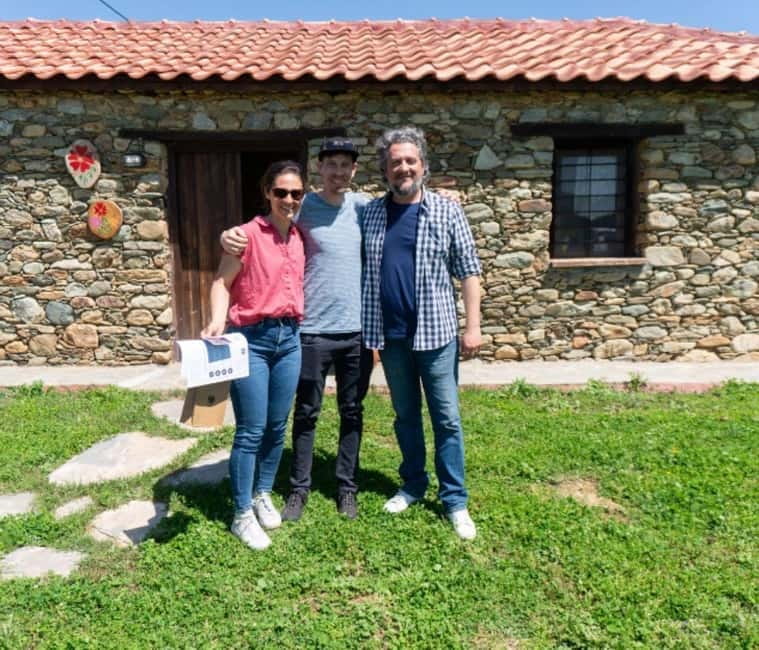
Olive oil is not just a condiment in Greece. It is part of daily cooking, village life, farming, and the rhythm of the seasons. This visit gives you a short, practical way to understand that connection without committing to a full-day food tour.
The setting does much of the work. Instead of tasting oil in a shop or restaurant, you walk among the trees that produce it. That physical link matters. You can look at the groves, hear about cultivation and harvesting, and then taste the finished product while the process is still fresh in your mind.
I like this format for anyone who wants a local food experience that feels connected to the countryside. The tour is short enough to fit around other plans, but it still includes a guided walk, an explanation of farming methods, and a proper tasting with food.
The experience takes place at Aloades Estate in the Thessaly region, with the meeting point listed as Pournari. The available information does not include transport from nearby towns, detailed driving directions, or pickup service, so plan that part before you book. The estate is the destination, not a city-center attraction you can assume is easy to reach on foot.
You can also read our reviews of more walking tours in Greece


Walking through Aloades Estate and its old olive trees
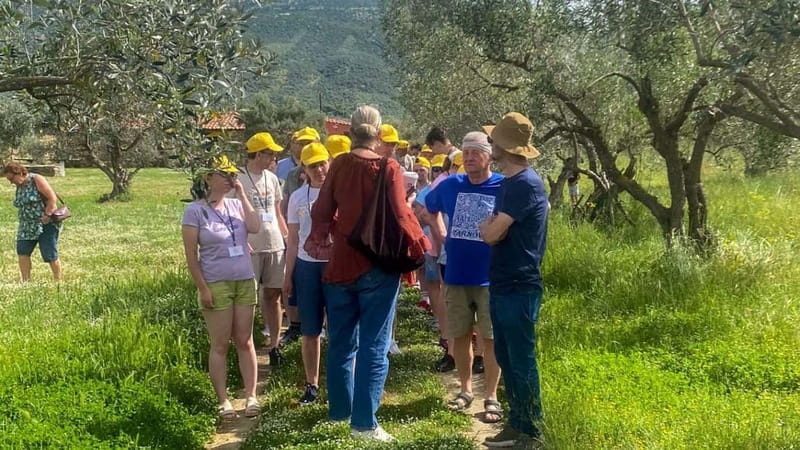
Your visit begins with a guided tour of the estate. The walk introduces you to the olive groves and the traditional and sustainable methods used to cultivate and harvest the trees.
The centuries-old olive trees are a key part of the experience. You are not simply looking at a modern production site. The trees give you a sense of the long relationship between Greek communities and olive farming, even though the tour is not presented as a formal history lesson.
You can expect the guide to explain how olives are grown and collected, with the conversation focused on practical farming rather than sightseeing alone. This is a good reason to wear comfortable shoes. The activity includes a walk through the estate, and the advice specifically calls for footwear suited to walking.
Bring a hat, too. The visit takes place outdoors among the groves, and shade conditions can vary. The provided information does not state how much of the route is shaded, so a hat is a sensible item even for a relatively short visit.
The estate also offers views across the Mediterranean countryside. Those views add a calm, scenic element, but the main attraction remains the olive production itself. If you want a tour built around monuments, museums, or long historical storytelling, this is not that kind of outing. It is a focused rural visit with food at its center.
Learning what makes extra virgin olive oil different
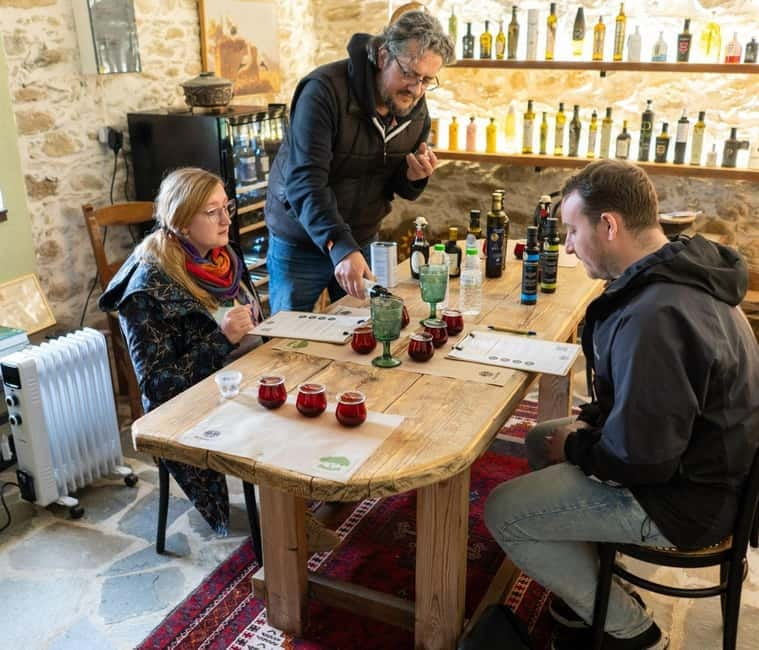
The tasting is designed to teach you how olive oil looks, smells, and tastes. You’ll compare oils with different profiles, from delicate and fruity examples to oils with a stronger peppery character.
That contrast is useful because many people buy olive oil by country or price without knowing what they prefer. Here, you can think about flavor in a more direct way. One oil may seem soft and fresh, while another may have a sharper finish. Texture also matters, and the guide explains how to notice it.
The session includes award-winning extra virgin olive oils produced in Greece and Italy. Comparing oils from two countries gives the tasting a broader point of reference. You are not limited to one estate’s preferred style, and you can consider how varieties and harvest times affect the final oil.
The guide also explains how to taste olive oil properly. That is a practical skill you can use later in shops, markets, restaurants, or your own kitchen. Pay attention to the oil’s aroma before tasting it, then notice its flavor and finish. The experience is meant to help you understand the differences, not just consume them.
Dimitri and Costantino lead the experience in Greek and English. The small group makes this part especially appealing. With a maximum of eight people, you should have a better chance to ask why one oil tastes fruitier or why another feels more peppery. It also avoids the anonymous feel of a large food demonstration.
The tasting is generous, according to the available feedback. That detail matters because some tastings give you only tiny drops, making comparison difficult. Here, you can expect a substantial range of oil to sample, though the exact number of oils is not specified.
Bread, tomatoes, and feta make the tasting practical
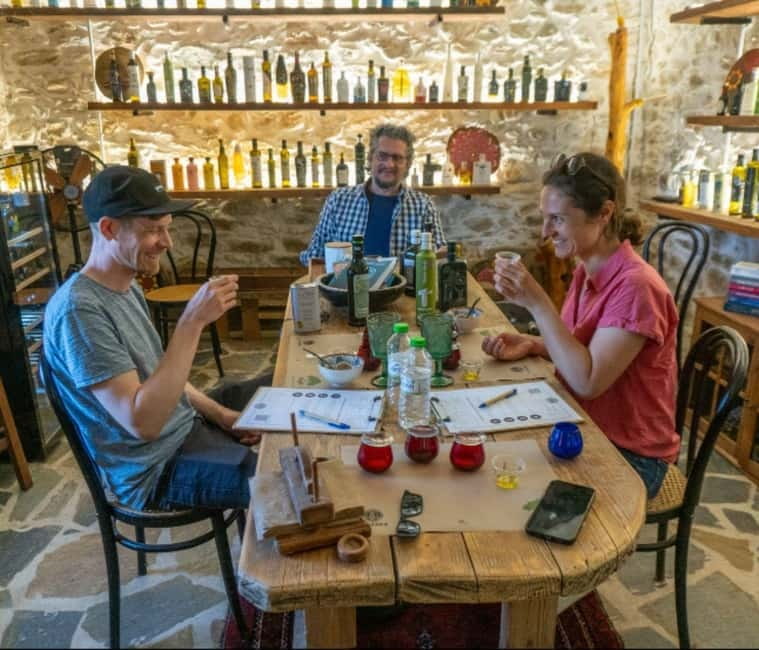
The oils are served with local artisanal bread, fresh tomatoes, and feta cheese. This is a simple pairing, but it is exactly the right kind of food for understanding olive oil in everyday Greek cooking.
Bread lets you focus on the oil itself. Tomatoes show how a fruity or peppery oil can change a familiar ingredient. Feta adds salt and creaminess, giving you another way to notice how the oil works with food rather than on its own.
I like this part because it turns the tasting from a technical exercise into lunch-sized pleasure, even if it is not described as a full meal. Do not arrive assuming that the food pairing replaces breakfast or lunch. The experience lasts 1.5 hours and includes tasting, but no full meal is promised.
The food also keeps the experience tied to the region. You are sampling local products rather than generic crackers and packaged snacks. That makes the visit feel more connected to Greek food habits, where good oil, bread, tomatoes, and cheese can make a very satisfying combination.
If you are new to olive oil tasting, the food will help you. Some oils can taste intense when sampled alone, especially those with a peppery finish. Pairing them with bread and cheese gives you a more familiar way to judge what you like.
A compact 1.5-hour itinerary from Pournari
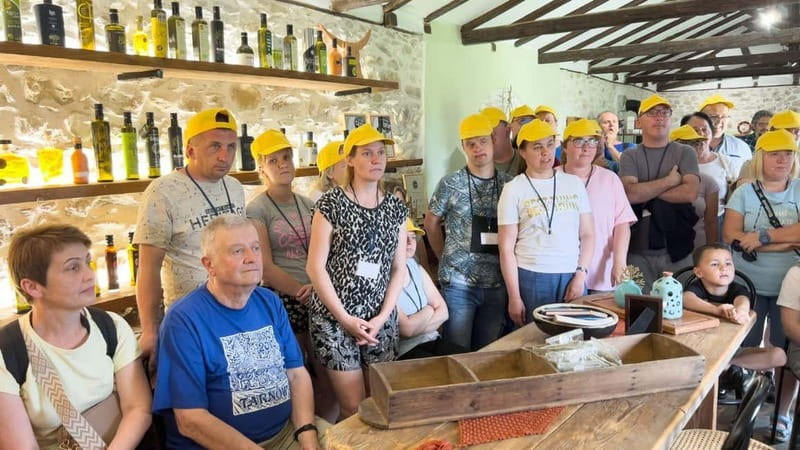
The schedule is straightforward. You start at Pournari, take part in the estate visit and guided walk, spend about an hour on the food tasting, then return to Pournari.
The listed duration is 1.5 hours, so this is easy to add to a day of sightseeing in the wider Thessaly region if your transport plans line up. It is not an all-day agricultural program, and that is both a strength and a limitation.
The short length suits you if you want a focused food stop. You get the essential parts: the grove, the farming explanation, the oil lesson, and the food pairing. You do not have to give up an entire day for the visit.
The limitation is that there may not be time for a long walk or an extended discussion of every stage of production. The supplied details do not mention an on-site mill, a harvest demonstration, or a chance to watch oil being pressed. Book this for the olive grove and tasting, not for a complete working-mill tour.
Starting times vary, so check availability before planning the rest of your day. Since there is no transportation included, allow enough time to reach Pournari and leave afterward. The tour returns to the same general starting point, which makes the arrangement simpler once you have arrived.
You can also read our reviews of more food & drink experiences in Greece





Small groups, language support, and accessibility
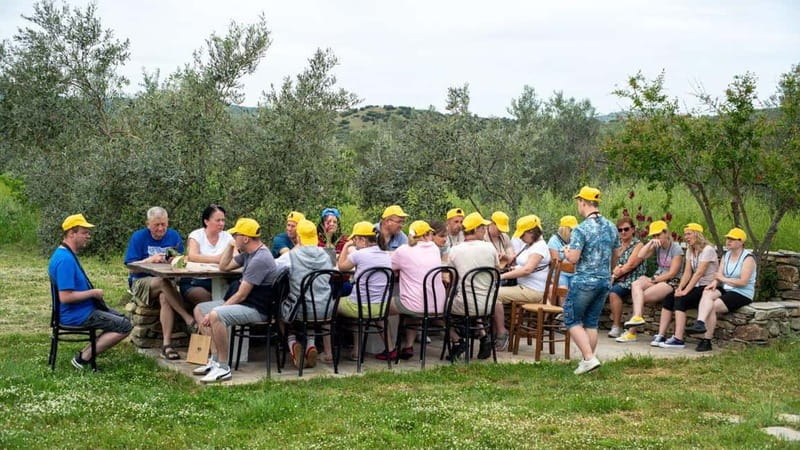
The group is limited to eight participants. That is one of the strongest practical features. A small group usually makes it easier to hear the guide outdoors, ask questions, and taste at a comfortable pace.
Dimitri and Costantino are identified as the guides connected with the experience. They conduct the tour in Greek and English, so English-speaking visitors can follow the explanations about cultivation, harvesting, flavor, and tasting technique.
The activity is listed as wheelchair accessible. That is useful information, but you may still want to confirm the exact route and ground conditions when booking, especially since the visit includes a walk through olive groves. The listing does not describe the surfaces, slopes, or accessible facilities in detail.
Children under eight enter free. The estate does not allow pets, and smoking is prohibited, including indoors. Those rules are worth noting if you are planning a family visit or combining the tour with other activities.
The experience should suit adults and older children who are interested in food, farming, or the countryside. Younger children may enjoy the open-air setting, but the tasting and explanation are the heart of the visit. The free entry for children below eight makes it easier for families to bring them along, though the experience is not described as a special children’s program.
Is $25.41 a fair price?
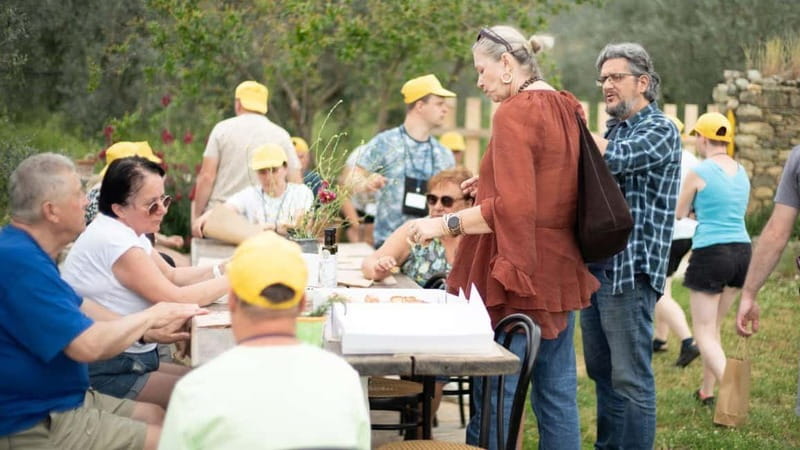
At $25.41 per person, the price is reasonable for a guided estate visit that includes a tasting and a food pairing. You are paying for more than a few samples. The cost covers the walk, the explanation of olive cultivation, guidance on tasting, several extra virgin oils, and local bread, tomatoes, and feta.
The value is strongest if you appreciate food education. You leave with a better sense of how oil can vary by style, harvest time, aroma, and texture. That kind of comparison can make future purchases more informed, especially if you usually reach for the first bottle on a supermarket shelf.
The price is less attractive if your main goal is simply to see an olive grove. You can find scenic rural views in many parts of Greece without paying for a guided tasting. This activity earns its price through the instruction and the range of oils, not just the setting.
Keep transport in your budget. The $25.41 price does not include getting to or from the estate. The exact cost will depend on where you are staying and how you reach Pournari, so the total outing may be higher than the admission price suggests.
Free cancellation up to 24 hours before the activity and the option to reserve now and pay later add useful flexibility. These policies matter if your schedule in Thessaly is still changing. Check the specific booking terms and available times before you finalize your plans.
Who will enjoy Aloades Estate most?
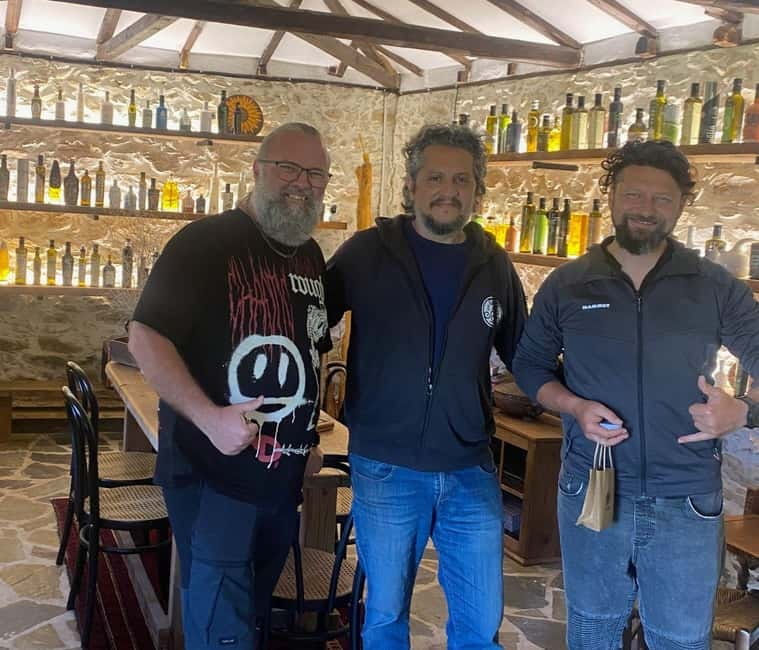
I would choose this experience if you enjoy regional food, small farms, and simple tastings with a clear sense of place. It gives you a closer look at an everyday Greek staple without turning the visit into a formal lecture.
It is also a good fit for people who want a short activity between larger sightseeing plans. Ninety minutes is enough to make the visit worthwhile, but not so long that it takes over your day.
Food-minded couples and small groups should find the format comfortable. The group limit of eight gives the guides room to explain the oils and respond to questions. Solo visitors can also benefit from the intimate setting, particularly if they want a more personal introduction to Greek olive oil.
Families can bring children under eight free of charge, but remember that pets are not permitted. If your group includes someone with limited mobility, the activity is listed as wheelchair accessible, though confirming the exact grove route is still sensible.
You may want to skip it if you need included transport, a full meal, or a long production tour. The estate visit is focused and compact. Its appeal comes from the combination of trees, instruction, and tasting rather than a packed schedule of farm activities.
What to bring and how to prepare
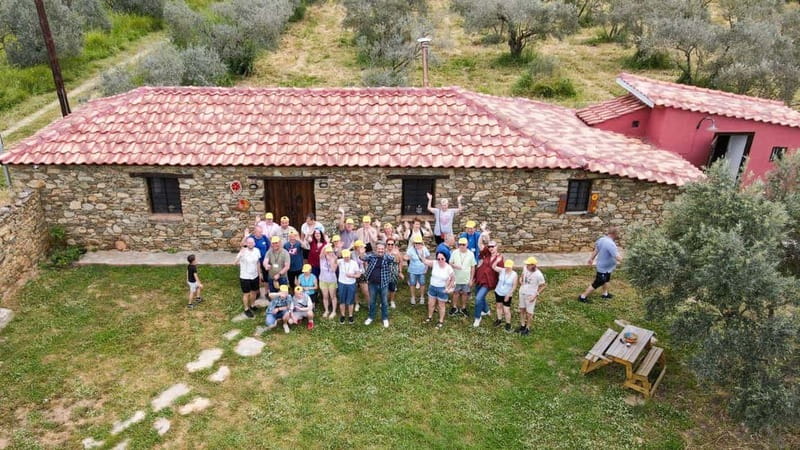
Wear comfortable shoes. This is the clearest preparation tip because part of the experience involves walking through the olive estate.
Bring a hat for sun protection. The activity takes place outdoors, and the supplied information does not promise consistent shade.
You do not need to bring food for the tasting. Bread, tomatoes, and feta are included, along with the olive oils. Still, do not treat the included pairing as a guaranteed full meal, since the experience is described as a tasting rather than lunch.
Arrive with a curious palate. Try not to decide that you like or dislike olive oil based on the first sample. The point is to compare. Notice which oils smell fruity, which feel mild, and which leave a peppery sensation.
If you plan to drive or arrange a taxi, confirm the meeting details and timing in advance. Transportation is not included, and the listed starting point is Pournari. That is the one part of the visit you must organize yourself.
Should you book this olive oil tasting?
Book Aloades Estate if you want an affordable, compact introduction to Greek olive oil with a real countryside setting. The centuries-old trees, small group, Greek and Italian oils, and generous food pairing give the 1.5-hour visit enough substance to justify the price.
I would especially recommend it to anyone who enjoys learning how everyday foods are made. Dimitri and Costantino provide the named guide contact for the experience, and their tasting explanations are a central part of what you are paying for.
Think twice if you are looking for included transport, a full farm-to-bottle production tour, or a complete meal. For everyone else, this is a pleasant and useful stop in Thessaly, provided you can get to Pournari and are ready to spend a little time paying attention to what is in your glass.
FAQ
Where does the olive oil experience take place?
The experience takes place at Aloades Estate in the Thessaly region of Greece. The listed starting and ending point is Pournari.
How long does the visit last?
The activity lasts 1.5 hours. The food tasting portion takes about one hour.
What is included in the price?
The price includes a guided tour of the estate, an olive oil tasting session, and food pairings with local products.
Is transportation included?
No. Transportation to and from the estate is not included, so you must arrange your own way to Pournari and back.
What food is served with the olive oil?
The tasting is paired with local artisanal bread, fresh tomatoes, and feta cheese.
Which languages are available?
The live guides conduct the experience in Greek and English.
How many people are in each group?
The activity is offered as a small-group experience with a maximum of eight participants.
Is the estate wheelchair accessible?
Yes. The activity is listed as wheelchair accessible. Since the visit includes a walk through olive groves, you may wish to confirm route details before booking.
Are children and pets allowed?
Children below eight years old enter free. Pets are not allowed on the estate, and smoking is prohibited, including indoors.