REVIEW · ATHENS
Delphi and Meteora Two Days Tour from Athens
Book on Viator →Operated by Let's Book Travel · Bookable on Viator
Meteora’s monasteries are the star here: gray sandstone pillars rise above Kalambaka, crowned by old Orthodox monasteries that seem to hover between earth and sky. This two-day trip pairs that unforgettable setting with Delphi, Greece’s ancient center of prophecy, without asking you to rent a car or plan a complicated route.
I like the all-in-one format, especially the included hotel, dinner, breakfast, entrance fees, driver, and guide. I also like the stop at Thermopylae, even though it is brief, because it connects the modern road with the story of Leonidas and the 300 Spartans.
The trade-off is time. You will spend long hours on the bus, and Delphi receives less time than many visitors would prefer. This is a strong sightseeing shortcut, not a slow cultural trip.
In This Review
- Key points to know before booking
- Two legendary sites, one very full weekend
- Leaving Athens through Arachova
- Delphi, where the ancient world sought answers
- The long road to Kalambaka
- Meteora, the reason to make the trip
- Thermopylae and the return to Athens
- Transport, group size, and pace
- Who will get the most from this tour
- Should you book the Delphi and Meteora two-day tour?
- FAQ
- How long is the Delphi and Meteora tour from Athens?
- Is hotel pickup included?
- What transportation is provided?
- Where do you stay overnight?
- Are dinner and breakfast included?
- How many monasteries do you visit at Meteora?
- What should women wear to the monasteries?
- What should men wear to the monasteries?
- Is the accommodation tax included in the tour price?
- Can I cancel the tour for a refund?
Key points to know before booking
- Two famous mainland sites in one trip: See Delphi on the first day and two Meteora monasteries on the second.
- About five hours of bus travel per day: Rest and coffee stops break up the ride, but this remains a road-heavy tour.
- Kalambaka overnight included: Hotel options include Grand Meteora, Amalia, or Kosta Famissi, with dinner and breakfast provided.
- Meteora needs proper clothing: Women must wear skirts at least to the knee and cannot wear trousers; men cannot wear sleeveless tops or shorts above the knee.
- A group of up to 50 people: The bus format keeps the price reasonable, but it cannot offer the flexibility of a private tour.
- Good value at $355.21: Transport, admission, guiding, meals, and lodging are covered, but add the €7.50 accommodation tax, lunch, and optional gratuities.
Two legendary sites, one very full weekend
This tour is built for you if your time in Greece is short and you want to see more than Athens. Delphi and Meteora are not minor side trips. They offer two very different views of Greece: Delphi connects you with the religious and political world of ancient Greece, while Meteora brings you into a living Orthodox setting shaped by isolation, faith, and dramatic rock formations.
The route also gives you a taste of central Greece. You pass through Thebes, Levadia, Arachova, Lamia, and Trikala before reaching Kalambaka. The towns and fields viewed from the bus are part of the experience, though you should not expect long stops in each place.
The price of $355.21 per person is reasonable for what is bundled into two days. You receive round-trip transport from Athens, an air-conditioned coach, a licensed guide, hotel accommodation, dinner, breakfast, and entrance fees. The value weakens if you dislike group travel or want plenty of unstructured time, since the schedule is tight and lunch is not included.
A few more Athens tours and experiences worth a look

Leaving Athens through Arachova
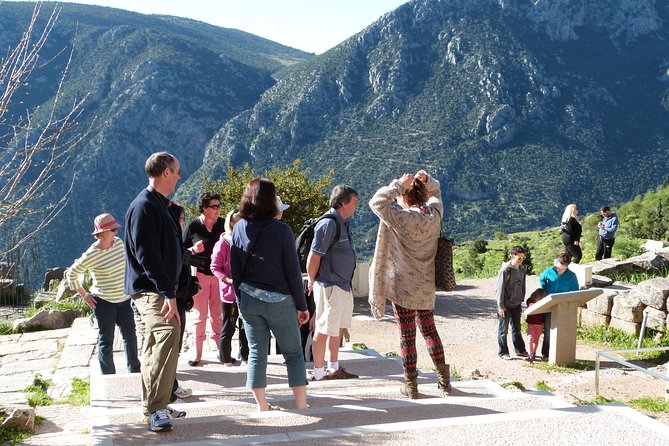
Pickup begins around 8:30 a.m. from selected Athens hotels and apartments. The exact pickup point depends on your accommodation, and if your address falls outside the service area, you will be directed to a nearby meeting point. Some central streets are too narrow for a large bus, so you may need to walk a short distance to meet it.
The first stretch heads toward Delphi through Thebes and Levadia, then climbs toward Arachova on the slopes of Mount Parnassus. Arachova is described as picturesque, and the road gives you a change from the dense streets of Athens to mountain villages and open countryside.
Expect a long ride, not a quick transfer. Stops are made for restrooms and coffee, often about every two hours, but the overall travel time remains substantial. One practical advantage is that you can watch the countryside, nap, or listen to the guide instead of managing Greek roads yourself.
Bus changes have occurred on some departures, particularly during the first day. That can be confusing, so keep your small bag, phone, and tour details close at hand whenever you leave the vehicle.
Delphi, where the ancient world sought answers
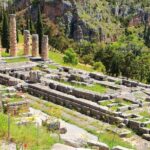
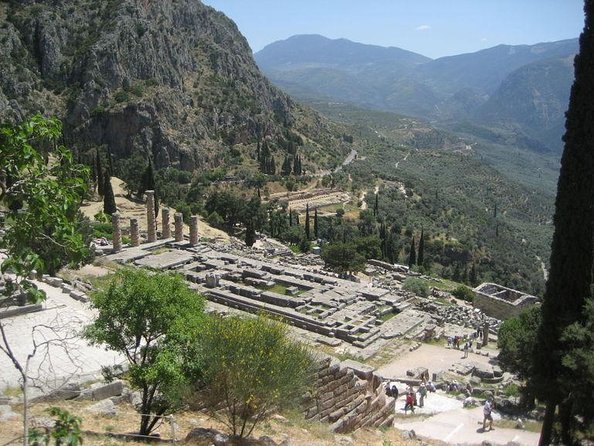
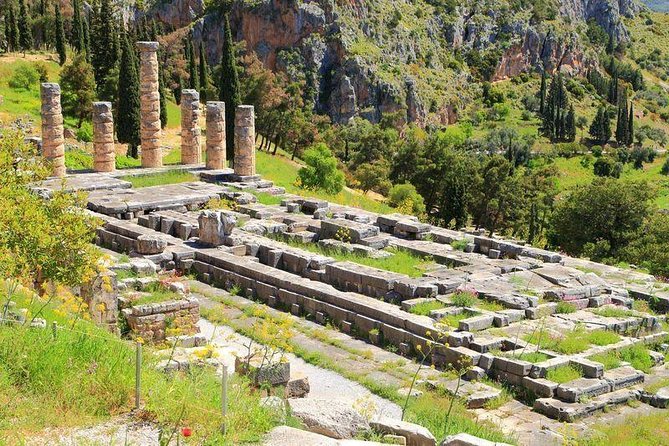
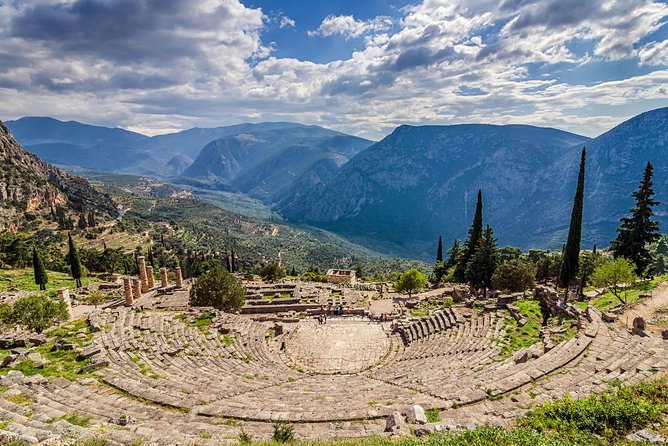
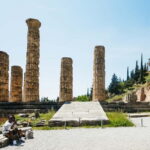
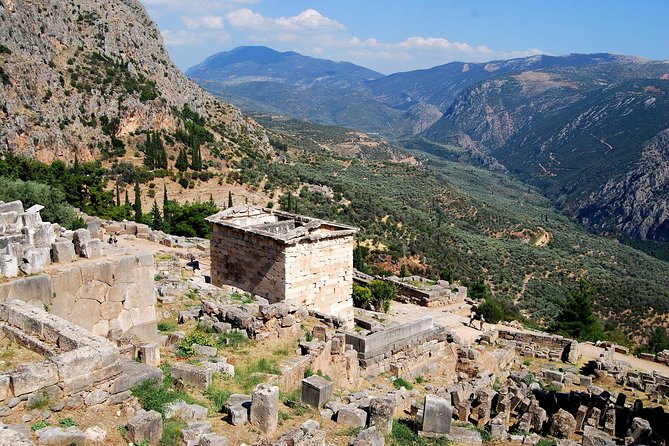
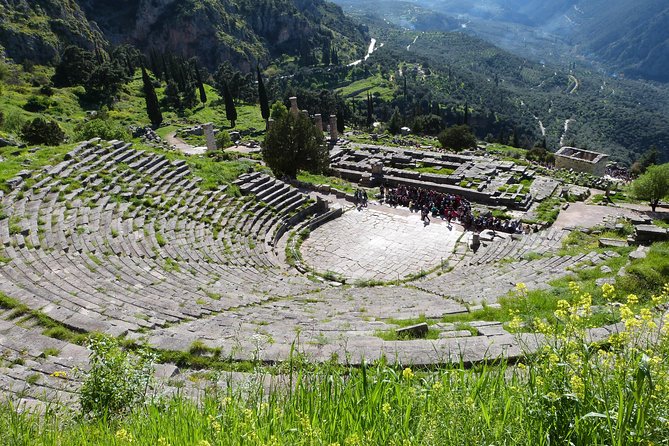
At Delphi, you follow the Sacred Way through the archaeological site. The route leads past the Athenian Treasury, the Stoa of Athens, the Temple of Apollo, and the ancient theater.
Delphi was regarded by ancient Greeks as the center of the earth and the universe. The Temple of Apollo was the home of the famous oracle, whose pronouncements influenced kings, generals, colonies, and ordinary people seeking guidance. The site is not simply a collection of broken stones. Its position on the slopes of Mount Parnassus helps you understand why the ancient sanctuary carried such power.
The planned visit lasts about two hours, though the actual time can feel closer to an hour and a half depending on the guide, group movement, and day’s schedule. That is enough to see the central remains, but it is not enough for a slow visit or a long museum stop.
This is where the tour’s pace may frustrate you. The drive to Delphi is long, and the ancient site deserves concentration. If you want time to study inscriptions, wander at your own speed, or see every section of the sanctuary, plan a separate Delphi visit. On this tour, stay close to the guide and make your priorities clear from the start.
Guiding quality can vary by departure. Guides named Maria and Anastasia have led well-received trips, while other departures have had less satisfying explanations at Delphi. The strongest guides add context during the bus ride and at the ruins, so you gain more than a quick photo stop.
The long road to Kalambaka
After Delphi, the coach crosses central Greece toward Lamia and Trikala, then continues across the Thessalian plain to Kalambaka. The ride to Meteora is the longest stretch of the first day, and lunch is generally taken at a tavern along the route.
Lunch is not part of the tour price. Give yourself enough cash or payment capacity for that meal and for any drinks or snacks during the day. Rest stops can be crowded, especially when several coaches arrive together, so do not count on a relaxed café break.
You reach Kalambaka at the foot of the Meteora rocks, usually after a full day on the road. Dinner and overnight accommodation are included. The stated hotel options are Grand Meteora, Amalia, or Kosta Famissi, all described as A-class, four-star, or five-star properties.
The rooms have not been equally consistent on every departure. You might receive a comfortable room in the better hotel category, but room size, views, and bed quality can vary. If a quiet room or a particular room standard matters greatly to you, ask what hotel category is assigned before you book.
Dinner is served as a buffet. It removes the need to find a restaurant after a tiring day, but it is a practical group meal rather than a carefully chosen local dining experience. Breakfast is also included before the next morning’s visit.
An accommodation tax of €7.50 per person per night is payable at checkout. It is not included in the advertised tour price, so budget for that extra charge.
Meteora, the reason to make the trip
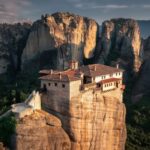
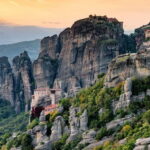
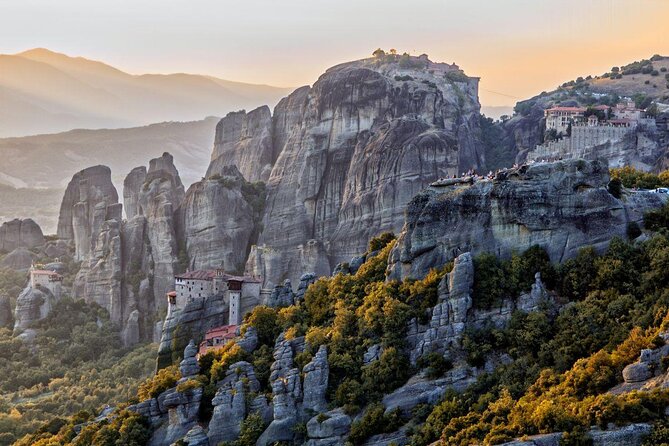
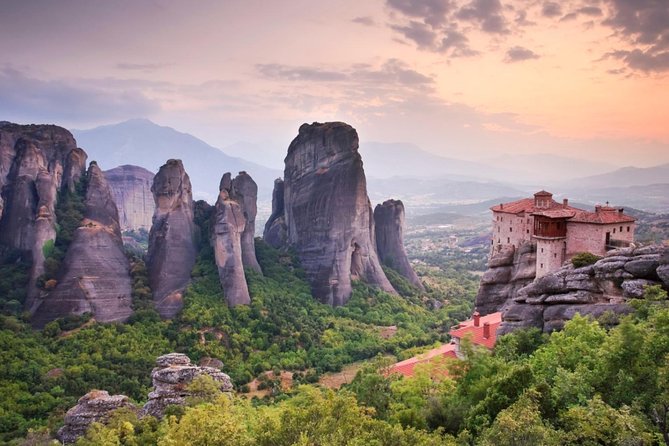
The next morning begins with breakfast before the short ride to Meteora. Here, enormous sandstone pillars support monasteries built by Orthodox monks seeking remote places for prayer and protection.
The setting is the great reward of the trip. Monasteries sit on rock towers above the surrounding plain, and the views change as the bus climbs between the formations. Meteora is both a natural wonder and a working religious site, not only a scenic overlook.
The history of access adds to the sense of place. Before modern steps and roads, monks reached some communities by rope nets raised with a hand-cranked windlass. The isolation was not decorative. It was central to the way these communities lived.
You visit two of the six monasteries with a guide. The tour lasts about four hours, including driving between viewpoints and monasteries. Two monasteries give you a useful introduction without turning the morning into a marathon, though you will not see every religious foundation in the area.
Inside, you may see old Orthodox treasures and iconography, including works dating as far back as the sixteenth century. Dress rules are strict. Women must wear a skirt reaching at least to the knee and cannot enter in trousers, shorts, or sleeveless shirts. Men cannot wear sleeveless clothing or shorts above the knee.
Do not wait until the monastery entrance to think about clothing. Pack a long skirt or another permitted covering in your day bag, and choose modest clothes from the start. The rules can feel unfair, especially the different requirements for women and men, but they are part of the entry conditions supplied for this tour.
The Meteora guide can make a major difference. Anthony and Anastasia have been praised for clear explanations, good English, and a pleasant sense of humor. The monasteries already provide the drama, but a strong guide helps you understand the religious customs and the practical challenges of building communities on those rock towers.
- All Day Cruise -3 Islands to Agistri,Moni, Aegina with lunch and drinks included
★ 5.0 · 4,958 reviews


Thermopylae and the return to Athens
After Meteora, the bus begins the return to Athens. The route includes a short stop at the monument to Leonidas at Thermopylae, the pass known for the battle in which the 300 Spartans fought the Persian army.
This is a history stop, not a full archaeological visit. You have about 15 minutes to see the monument from across the road, take photographs, and hear the basic story before continuing. Some departures have spent less than five minutes here, so treat it as a quick pause rather than a major part of the tour.
The final drive brings you back to Athens around 6:30 to 7 p.m. Drop-off arrangements may differ from pickup. If your accommodation is outside the return route, you may be left at a nearby point and need to arrange a taxi or walk with your luggage. Confirm the exact location before the bus leaves Meteora.
Transport, group size, and pace
The bus is air-conditioned and described as comfortable. The maximum group size is 50 people, which explains both the lower price and some of the tour’s limits.
A large group works well for the major road connections. You do not need to navigate, reserve hotels, buy separate admission tickets, or work out the route between Delphi and Meteora. The driver handles difficult transfers while you look out the window.
The same group size can make the ancient sites feel hurried. If someone falls behind or misses a turn, it may not be obvious to the guide at once. Stay near your guide when getting off the bus, especially at the first stop, and make sure you know the guide’s name and what they are wearing.
Recent departures have included guides such as Anastasia, Maria, Anthony, and Marianna, with drivers including Vasili. Names are not guaranteed for your date, but the tour’s strongest experiences have come when the guide gave useful information on the road as well as at the monuments.
If you want a calm schedule, consider three days instead. A two-day trip gives you the headline sights, but much of your time is spent sitting on the bus. If your choice is two days or no Meteora at all, this is a practical solution. If you can add a day, you will have more breathing room.
Who will get the most from this tour
I would choose this trip for a first visit to mainland Greece when Athens is your base and your calendar is tight. It suits you if you want the main sights organized for you and do not want to rent a car.
It is also a good match for visitors who appreciate having meals and lodging settled in advance. The included entrance fees help keep the final cost predictable, though you still need to pay for lunch, the accommodation tax, and any gratuities.
You may want another option if you need a slow pace, have trouble with long bus rides, or want control over hotel rooms and meal choices. The tour involves many hours in transit, quick comfort stops, a short Thermopylae visit, and a Delphi stop that may feel too brief.
The monastery clothing rules also deserve a clear decision before booking. If you do not want to follow them, you may find the Meteora visit difficult.
Should you book the Delphi and Meteora two-day tour?
Book it if your priority is seeing Delphi and Meteora efficiently from Athens, with transportation, guiding, admission, and a one-night hotel handled for you. At $355.21, the package is fair when you use the included meals, lodging, and tickets.
I would book with realistic expectations: this is a fast, road-heavy overview. Stay alert for pickup instructions, bring suitable monastery clothing, budget for lunch and the €7.50 tax, and keep close to the group at every stop.
If Delphi matters as much to you as Meteora, or if you prefer unhurried visits, choose a three-day plan instead. If your main goal is to reach Meteora without arranging a complicated trip, this two-day route earns its place on your Greece schedule.
FAQ
How long is the Delphi and Meteora tour from Athens?
The tour lasts approximately two days. You leave Athens around 8:30 a.m. on the first day and return in the early evening on the second day, around 6:30 to 7 p.m.
Is hotel pickup included?
Pickup is offered from selected Athens hotels and apartments. If your accommodation is outside the pickup area, you will be directed to the nearest pickup point.
What transportation is provided?
Round-trip transportation is provided by a luxury air-conditioned bus. The tour has a maximum of 50 participants.
Where do you stay overnight?
The overnight stay is in Kalambaka, the town at the foot of the Meteora rocks. Listed hotel options include Grand Meteora, Amalia, and Kosta Famissi.
Are dinner and breakfast included?
Yes. Dinner is included on the first evening, and breakfast is provided at the hotel before the Meteora visit. Lunch is not included.
How many monasteries do you visit at Meteora?
You visit two of the six Meteora monasteries with a guide. The Meteora portion lasts about four hours.
What should women wear to the monasteries?
Women must wear skirts reaching at least to the knee or longer. Trousers, shorts, and sleeveless shirts are not permitted under the stated monastery dress rules.
What should men wear to the monasteries?
Men cannot wear sleeveless clothing or shorts above the knee. Modest clothing is required for entry.
Is the accommodation tax included in the tour price?
No. An accommodation tax of €7.50 per person per night is payable at checkout. Optional gratuities and lunch are also separate.
Can I cancel the tour for a refund?
You can cancel at least 24 hours before the local start time for a full refund. Cancellations or changes made less than 24 hours before departure are not accepted for a refund. Poor weather or failure to meet the minimum group size can result in a different date, another experience, or a full refund.