REVIEW · DELPHI
Delphi Site & Museum with Multilingual 3D Audiovisual Tour
Book on GetYourGuide →Operated by Key Tours · Bookable on GetYourGuide
Delphi’s myths run on your phone. You get a pre-bought entrance ticket plus a multilingual 3D audiovisual guide, letting you wander at your own speed through Apollo’s sacred ground and the famous theater.
I like the practical side first: your ticket is on your phone, so you can skip some of the back-and-forth at the ticket hall. I also love how the audio brings the ruins to life with 3D models and guided storytelling in several languages.
One possible drawback is that the app needs internet access, so bright-sun delays or a weak connection can slow you down. Also, earphones aren’t included, so plan to bring your own.
In This Review
- Key Things to Know Before You Go
- Delphi in One Day: What This Phone Audioguide Lets You Do
- Ticket on Your Phone and Timed Entry: Saving Time Without Stress
- Preparing Your Phone: Internet, Earbuds, and Comfort
- Museum Highlights: Artifacts and 3D Reconstructions You See First
- Outside Ruins Walk: Theater, Apollo Temple, and the Heart of Delphi
- Following the Audio Map: Pythia Stories and the 3D Layer
- Languages and Audio Quality: English to Greek to Italian (and Beyond)
- Price and Value at About $42: Is It Worth It?
- When This Delphi Format Fits Best (and When It Doesn’t)
- Should You Book This Delphi Site & Museum Audio Tour?
- FAQ
- How long is the Delphi Site & Museum visit?
- Is the entry time slot changeable?
- Which languages are available for the audiovisual guide?
- Does the experience include earphones?
- Do I need internet for the guide app?
- What is included in the ticket price?
- What should I bring to the site?
- Is this suitable for wheelchair users?
Key Things to Know Before You Go

- Phone ticket = less waiting at the entrance, especially during high season
- 3D audiovisual narration with interactive maps to follow the story of Delphi
- Apollo Temple and the theater ruins are the core stops, tied to myth and architecture
- On-site museum artifacts add context before (or after) your outdoor walk
- App reliability matters since the guide requires a connection and can be glitchy for some phones
- Bring earphones and a charged phone so the experience stays smooth
Delphi in One Day: What This Phone Audioguide Lets You Do
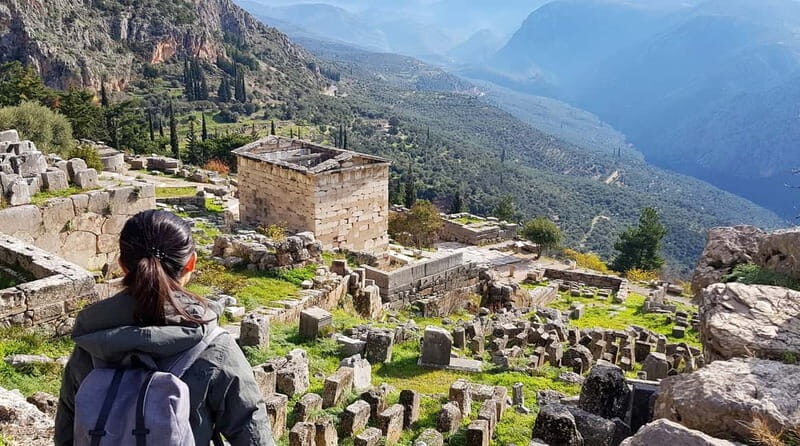
Delphi is one of those places where time feels layered. The ruins aren’t just ruins—you’re standing in a landscape tied to prophecy, sacred rituals, and big ideas about the center of the world. With this experience, the big win is control: you’re not stuck in a group rhythm, and you’re not guessing what you’re looking at.
Instead, the guide uses a phone-based audiovisual format with 3D reconstructions, interactive mapping, and audio narration. You follow at your pace, pausing when a detail catches your eye. The route naturally supports the two major experiences here: the archaeological site outdoors (temple and theater) and the museum indoors (artifacts and explanations).
If you already like ruins but want the background without hiring a private guide, this style fits well. It’s also a smart choice if you’re traveling with mixed interests—some people want myths, others want stones and layout. The guide tries to serve both.
You can also read our reviews of more museum experiences in Delphi



Ticket on Your Phone and Timed Entry: Saving Time Without Stress
This is built around one practical idea: show up with your ticket already set. You receive your entrance ticket by email and use it on your phone at the site, which can save you time on arrival.
There’s also a timed-entry element tied to your voucher. You can’t amend your date or entry time slot, so treat that start time as part of your plan rather than a suggestion. One helpful way to think about it: if your schedule is flexible, aim for a calmer window in the morning or midday so you’re not rushing across the site when the light is harsh.
Also note the admission structure. At Delphi, the site and museum can be sold as separate areas at the ticket counters. So even if you could buy onsite, the pre-bought pass tends to reduce hassle—especially when you’re managing heat, photos, and your phone battery.
Preparing Your Phone: Internet, Earbuds, and Comfort
This is a self-guided experience, so your phone becomes your guide. Two details matter a lot:
First, the audiovisual app requires internet access. The instructions for downloading come with your voucher, and you’re strongly advised to download the guide before your visit. Then, make sure you’ll have mobile data or Wi‑Fi when you’re on-site—otherwise the whole “3D + audio” concept becomes a guessing game.
Second, bring your own earphones. The experience does not include them. Having earbuds in your daypack turns the guide from optional to usable immediately, especially if you’re in a quieter corner and want the narration without blasting audio for everyone around you.
Now for the physical basics. Delphi can be hot and very sunny. Bring sunglasses, a sun hat, comfortable clothes, and good walking shoes. A charged smartphone isn’t a nice-to-have—it’s the foundation of the tour. Add water, and a passport or ID card in case you need to show eligibility for reduced/free admission rules.
One more limit to remember: no strollers, no luggage/large bags, and no pets. If you’re traveling light, you’ll feel more comfortable moving between outdoor ruins and the museum.
Museum Highlights: Artifacts and 3D Reconstructions You See First

A lot of Delphi’s power hits hardest when you have context. The on-site museum helps with that, because it collects the kinds of objects people associate with Delphi’s past—Greek artifacts and treasures that connect the myths to real, handled history.
Plan to spend time inside rather than sprinting. Even if you mostly came for the outdoor highlights, museum time pays off outdoors. Seeing objects before you walk the temple area changes how you read the site. You start noticing why certain structures mattered and how the sacred setting ties to what people valued.
The audiovisual approach also supports the museum phase. There’s a common scenario at Delphi with reconstructions and visuals: you may encounter film or 3D-style presentation elements that show how things once looked. In practice, this can be a good way to understand scale and layout before you try to map it onto stone ruins.
If you’re someone who enjoys how construction worked—materials, layout, and what the builders were trying to achieve—this is where the experience can feel especially useful. The audio is designed to explain history while also aiming at those “how did they do that?” questions.
Potential drawback to plan for: the guide content can feel tightly timed, and not every language version will feel equally deep. If a narration track feels clipped, treat it as a starting point. Look at the nearby written descriptions and then return to your audio track when the next key stop appears.
Outside Ruins Walk: Theater, Apollo Temple, and the Heart of Delphi
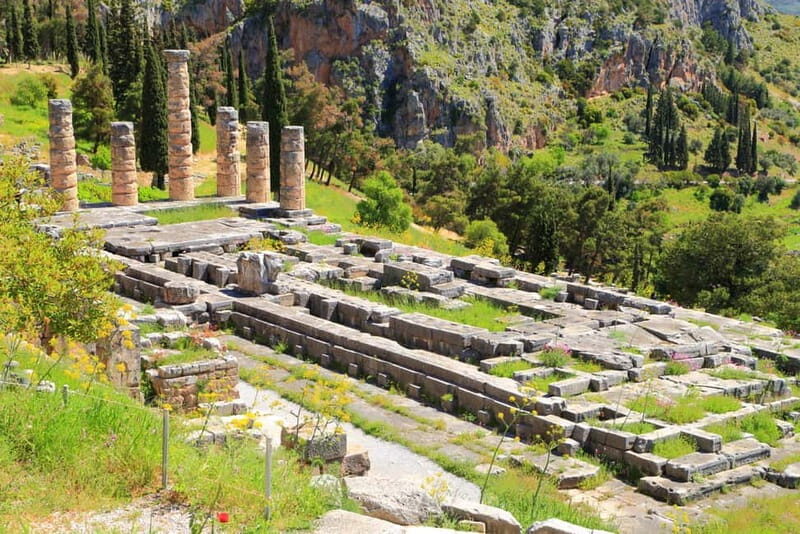
The outdoor circuit is where Delphi becomes unforgettable. You’ll focus on two big anchors: the theater ruins and the Apollo Temple area.
The theater is more than a seating bowl. It’s part of how Delphi communicated ideas publicly—performances and gatherings tied to community life and sacred space. As you move through it, keep an eye on sightlines and structure. When the audio narration syncs to the ruins, it helps you picture the space in use, not just as a collapsed monument.
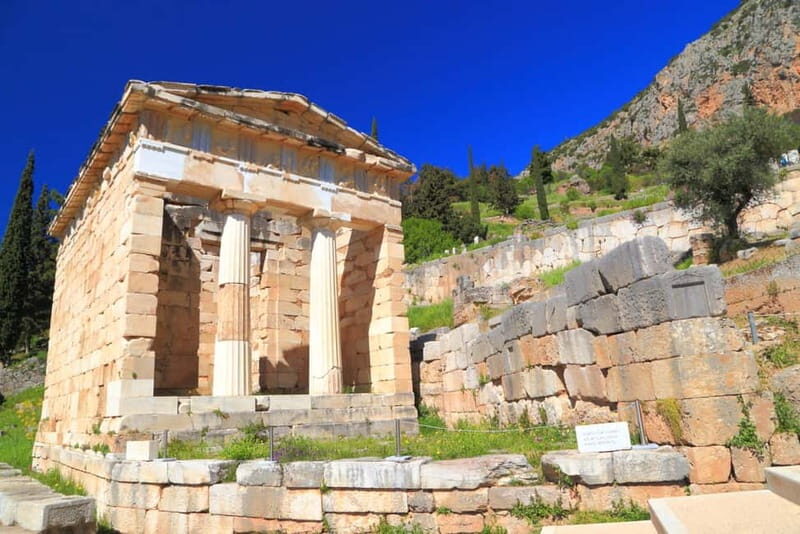
Then comes Apollo’s sacred zone, the part many people dream about. This is where the guide’s myth elements matter, because Delphi is famous not only for architecture but for meaning. The narration connects what you’re seeing with local myths, including the role of the Pythia and Delphi’s reputation as a spiritual center.
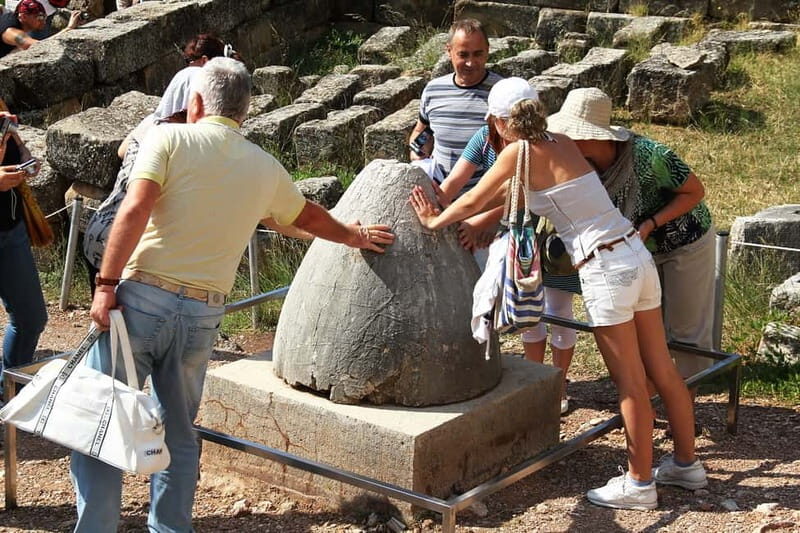
The tour also frames Delphi as the navel of the earth—a mythic idea about cosmic geography. Even if you’re skeptical, that’s part of why the site mattered to ancient visitors. The buildings weren’t just functional. They were part of a worldview.
Two practical tips for the outside walk:
- Take breaks when the light is strong. Strong sun can make your phone screen harder to read and can strain your patience.
- Don’t be afraid to pause the audio and just look around. Delphi’s power is spatial. You’ll often understand more after a full minute of silent looking.



Following the Audio Map: Pythia Stories and the 3D Layer

The real magic of this format is the ability to follow an audio route without guessing. The guide includes interactive maps and 3D models, and that’s what keeps you from feeling lost when you’re in a big, open archaeological site.
Here’s how I’d use it to get the best results:
- Start with the museum context, then switch to outdoors with your mental “map” already in place.
- When the audio prompts a spot, don’t just stand anywhere. Move to the area indicated and let the narration and the visuals line up.
- If you notice you’ve skipped a stop, don’t panic. Slow down and re-check the map.
Some people can find specific named points tricky to locate at first, especially when the site is spread out and you’re balancing photos, heat, and screen brightness. The fix is simple: treat the first 20–30 minutes as “settling in.” Once you understand the layout, the rest of the walk usually clicks.
The 3D layer is also a key expectation-setter. It can help you visualize reconstructions, but not every angle of “3D” will be equally obvious in every area. If you’re hoping for constant dramatic holograms everywhere, you might be surprised. Still, when the 3D elements do appear, they can make the architecture easier to decode.
Languages and Audio Quality: English to Greek to Italian (and Beyond)

This guide comes in many languages: English, Spanish, Chinese, Dutch, Greek, Italian, German, and French. That’s a big deal at Delphi because the site attracts international visitors, and you don’t want to rely on a limited set of explanations.
Audio quality is usually the strongest part of a guided format, and here the goal is “expertly crafted audio” rather than simple reading aloud. The content tries to cover history, architecture, and Delphi myths about the prophetic process tied to the Pythia.
That said, you should know what can affect the experience:
- The pacing may feel short in some languages, depending on how the narration track is structured.
- You might run into machine-like translation phrasing for certain tracks, which can reduce the feeling of a native storyteller.
None of that ruins the visit—your eyes still see the ruins and the museum still explains objects—but it can change how “immersive” the narration feels.
Price and Value at About $42: Is It Worth It?
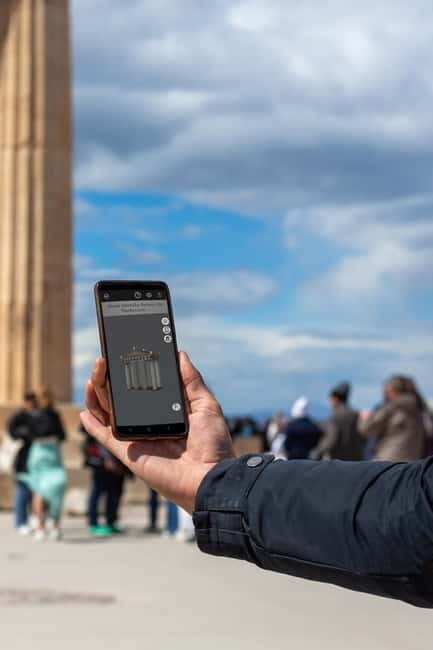
At $42 per person for a one-day visit, you’re paying for three things: the entrance ticket, and the convenience and added context of a multilingual audiovisual guide.
Here’s why that can be good value. Delphi is a place where you can spend time meaningfully only if you understand what you’re looking at. If you’re going without a guide, you’ll likely spend that understanding effort reading signs and piecing together your own narrative. This format gives you a structured storyline you can follow at your own pace.
It can also be value-positive because the ticket setup here can be confusing if you try to handle everything at the counters. In practice, there are often separate costs for the museum and the outdoor areas at ticket booths. Pre-booking can reduce that friction and let you concentrate on the walk itself.
But you should decide based on your “phone comfort level.” If you like tech and don’t mind managing battery life and internet access, the purchase makes sense. If you’d rather rely only on printed signage and you know you’ll have unreliable connectivity, you might not get full value from the audiovisual format.
When This Delphi Format Fits Best (and When It Doesn’t)
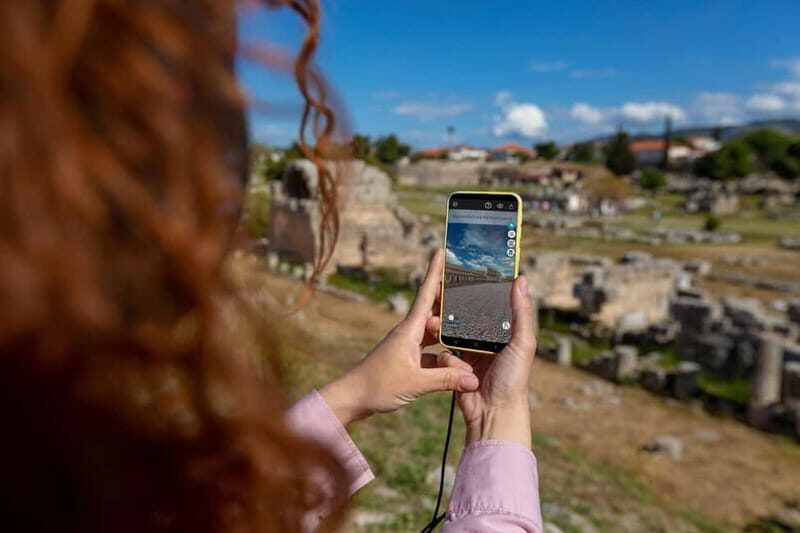
This experience fits best if you:
- Want a self-guided route but still crave real explanation
- Appreciate myth and architecture, not just one or the other
- Travel in multiple languages and want the option to switch tracks rather than hunt for translations
- Prefer stopping when something catches your attention rather than following a strict group schedule
It’s less ideal if:
- You need wheelchair access (it’s listed as not suitable for wheelchair users)
- You’re traveling with strollers, luggage, or pets (those aren’t allowed)
- Your phone’s internet reliability is questionable and you can’t count on mobile data or Wi‑Fi
Should You Book This Delphi Site & Museum Audio Tour?
Book it if you want your Delphi day to feel guided without feeling locked into a tour group. The combination of a pre-bought phone ticket and an audiovisual, multilingual 3D guide is exactly the kind of practical value that turns a big ancient site into something you can actually follow.
Skip or reconsider if you’re nervous about internet dependence, don’t plan to bring earphones, or you prefer to rely only on signage and your own reading. In those cases, you may end up spending energy troubleshooting your phone instead of enjoying the ruins.
If you do book, go in prepared: download the app before you arrive, keep your phone charged, and take advantage of the museum context so the outdoor stops—especially the theater and Apollo Temple—make even more sense as the day unfolds.
FAQ
How long is the Delphi Site & Museum visit?
You get a one-day visit. The duration is listed as 1 day, and the ticket is valid for that day.
Is the entry time slot changeable?
No. The travel date and entry time slot cannot be amended.
Which languages are available for the audiovisual guide?
The guide is available in English, Spanish, Chinese, Dutch, Greek, Italian, German, and French.
Does the experience include earphones?
No. Earphones are not included, so you should bring your own.
Do I need internet for the guide app?
Yes. The app requires internet access, so make sure you have mobile data or Wi‑Fi.
What is included in the ticket price?
Entrance to the Delphi Archaeological Site & Museum is included, and the audiovisual guide is included if you selected that option.
What should I bring to the site?
Bring sunglasses, a sun hat, comfortable clothes, a charged smartphone, water, and your passport or ID card.
Is this suitable for wheelchair users?
No. It is not suitable for wheelchair users.