REVIEW · ATHENS
Discover your talent in sculpture, in a country where golden section was born.
Book on Viator →Operated by Ancient Symposium · Bookable on Viator
The most unusual part of this Athens workshop is the setting. You do not simply sit at a table with a lump of clay. At Ancient Symposium, sculptor Manos first introduces you to an old-world studio filled with sculpture, ancient Greek themes, wine-making stories, and weapons created for Assassin’s Creed Odyssey. Then you make a Hermes face from Cretan clay, using real sculpting tools under his calm direction.
I like two things especially. First, the class is hands-on without demanding art-school skills. Manos shows you what to do, then lets you work at your own speed. Second, you leave with a personal souvenir, not a mass-produced statue from a shop. The main consideration is the location in Kallithea, which may require a taxi or a walk from your hotel, and two hours can pass quickly if you want a highly finished piece.
In This Review
- Key points to know before booking
- Entering Ancient Symposium in Kallithea
- A small museum before the clay
- Learning the tools by hand
- Building the face of Hermes
- Ancient methods, from casting to stone carving
- Manos as teacher and host
- What $58.05 buys you
- Timing, transport, and group size
- Who should book this workshop
- Should you book Ancient Symposium?
- FAQ
- Where does the sculpture workshop take place?
- How long does the activity last?
- What will I make during the class?
- Do I need previous sculpting experience?
- Who teaches the workshop?
- Can I see Assassin’s Creed Odyssey props?
- Do I take my sculpture home?
- Is this a private activity?
- Is the meeting point near public transportation?
- What is the cancellation policy?
Key points to know before booking
- A working sculptor leads the class: Manos teaches patiently and gives help when you need it.
- The visit begins with culture: See a small museum and studio collection before touching the clay.
- Assassin’s Creed connection: The studio made armor, helmets, swords, and other props connected with Assassin’s Creed Odyssey.
- You make a Hermes face: The project uses air-dry Cretan clay and selected sculpting tools.
- Private format: Only your own group takes part, which allows the pace to adjust to your skill level.
- Good value for a keepsake: At $58.05 per person, you get instruction, a cultural visit, materials, and an artwork to carry home.
Entering Ancient Symposium in Kallithea
The workshop takes place at Doiranis 39 in Athens, in the Kallithea area. It is near public transportation, but the address is not beside the Acropolis or the central Plaka streets. If you are staying nearby, you might walk. From some Kallithea hotels, the walk can feel longer than expected, so a taxi is a sensible choice if you have a tight schedule or are arriving in the evening.
The activity returns to the same meeting point. Opening hours are listed from 9:00 in the morning until 10:00 at night, Monday through Sunday, with the actual start time arranged when you book. That broad window is useful on an Athens holiday. You can fit the class around a morning museum visit, a hot afternoon, or dinner.
The setting is part of the experience. Ancient Symposium includes a small museum and gallery area, so the first minutes are not spent rushing straight into the clay. Manos welcomes you, shows you around, and explains the objects in the room. The space also connects sculpture with ancient Greek social life, including the role of wine in the ancient symposium.
I would allow a few extra minutes to find the address. The practical reports about the meeting point suggest that arriving by taxi is easy, while a walk may be less convenient than the map first suggests.
You can also read our reviews of more tours and experiences in Athens.
A small museum before the clay
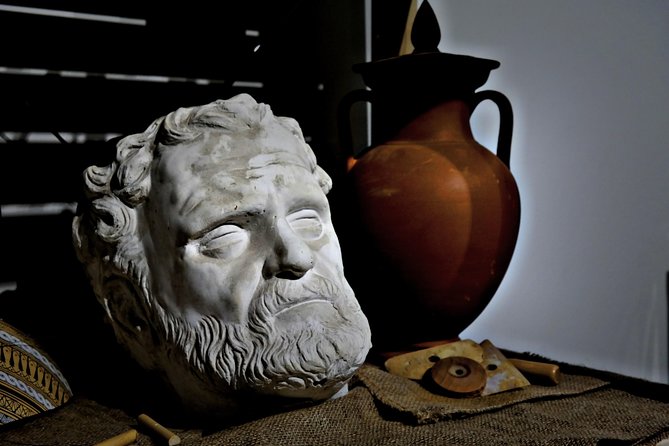
The introduction gives the workshop more shape than a standard craft class. You see objects connected with ancient Greek art and the studio’s own work. You also hear about ancient sculpting methods, supported by videos that explain techniques used by Greek artists.
The exact historical lesson is not presented as a full museum lecture, and you should not book this as a replacement for the Acropolis Museum. Its strength is the personal setting. You can look closely, ask questions, and then handle tools that make the ancient process feel less distant.
Manos also shows selected weapons and armor connected with Assassin’s Creed Odyssey. This is a strong extra for anyone who enjoys the game, but it can interest non-gamers too. The pieces demonstrate how a sculptor’s work can move between historical inspiration, film-style presentation, and modern digital entertainment.
The studio made armor and weapons for the game and related live-action material, including helmets, blades, and swords. That connection gives the introduction a lively twist. You may arrive expecting only a clay lesson and find yourself examining props first.
Learning the tools by hand
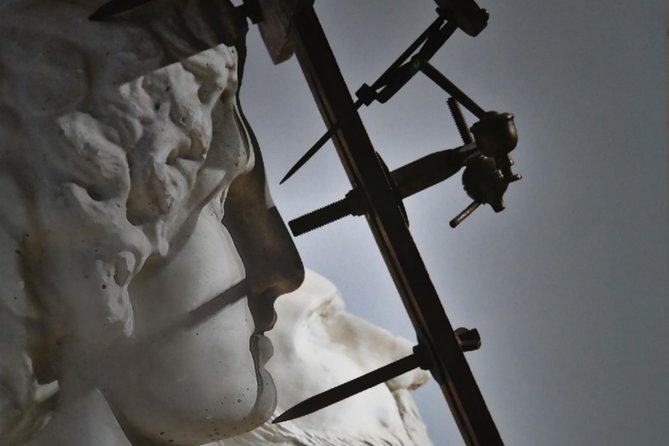
After the introduction, you handle a selection of sculpting tools and learn what each one does. This matters because clay responds differently to pressing, cutting, smoothing, and adding material. Even a simple face becomes easier to understand once you see how a small tool changes an edge or creates a hollow.
You do not need prior experience. Manos gives clear directions and supports you through the steps. The teaching style is patient rather than hurried, which helps if you think you have no artistic ability. You can work independently, then ask for help with a tricky detail.
That private format is valuable. Only your group participates, so the instructor can spend time with each person instead of moving a whole class through identical stages. It also suits couples and families who want to talk while working. If one person finishes quickly and another needs more time, the pace can remain flexible.
The supplied information describes the clay as Cretan clay and the finished material as air-dry clay. That means the sculpture is designed to dry without a kiln after the class. The workshop does not promise a fired ceramic object, so do not expect the hard, glazed finish of a pottery studio.
Building the face of Hermes
The main project is a human face based on the Greek god Hermes. Manos explains the structure, then helps you shape the major forms and refine the details. The goal is not to copy a factory mold. Your hands make the marks, and the final result will reflect your choices.
This is where the class becomes more than a demonstration. You press and model the clay yourself. You learn how a face is built from simple forms, then use the tools to suggest features and expression. Some descriptions of the finished pieces call them clay masks, while the activity description presents the project as a Hermes face. In practical terms, you should expect a small relief-style face or mask-like artwork rather than a full standing statue.
The result may not look perfect. That is part of the appeal, and also the main limit of a two-hour workshop. Manos helps finish details, but he does not simply make the artwork for you. You get guidance, not a professional sculpture produced on your behalf.
I like that balance. A souvenir you made yourself carries a different memory from something bought in a shop. The clay keeps the experience connected to the city, the mythology, and the studio. It also gives you a story to tell when someone asks where the piece came from.
Ancient methods, from casting to stone carving
The workshop introduces more than one sculpting tradition. You learn about methods ranging from lost-wax casting to carving precious stone. These subjects help place your clay exercise within the wider history of sculpture.
Lost-wax casting is especially useful to hear about because it explains how a model can lead to a metal object. Stone carving shows the opposite approach: instead of adding soft material, the artist removes hard material. Your clay project is more forgiving than either process, since you can reshape it while you work.
Do not expect a full technical course in two hours. The value is the connection between the tools, the short videos, the objects around the room, and the artwork under your hands. You get a clear introduction rather than specialist training.
The workshop also links sculpture with wine and ancient Greek culture. Manos is described as an artist and winemaker, and the ancient room provides a setting for talking about wine in Greece. Wine is part of the cultural discussion, not the central reason to book. If you do not drink, the class still works well because the clay and sculpture remain the focus.
- All Day Cruise -3 Islands to Agistri,Moni, Aegina with lunch and drinks included
★ 5.0 · 4,958 reviews


Manos as teacher and host
The instructor is one of the strongest reasons to choose this experience. Manos is patient, encouraging, and good at judging how much help to give. He explains the process clearly, then lets you try it rather than taking control of your work.
That approach works for mixed-skill groups. An experienced hobbyist can focus on detail, while a first-timer can follow simple stages. If your first attempt looks rough, Manos can show you how to improve the form without making you feel clumsy.
His personal connection to the objects also adds interest. He can explain the studio’s role in creating Assassin’s Creed Odyssey props, so the game connection feels tied to actual craft rather than a marketing label. For fans of Ubisoft’s game, this may be the most memorable part of the visit. For others, it is an entertaining look at how historical-looking objects are made for modern media.
The atmosphere is informal and welcoming. You can ask questions, work at your own speed, and enjoy the room without the pressure of a large class. That makes the activity suitable for adults, couples, families, and older children who can participate in a two-hour craft session.
What $58.05 buys you
At $58.05 per person, this is not the cheapest activity in Athens. You can see ancient sculpture in public museums for less, and clay workshops elsewhere may charge less for a basic craft lesson.
The value here comes from the combination. Your price includes a private, guided workshop, the studio and museum introduction, access to sculpting tools, cultural context, the clay project, and the finished artwork to take home. You are paying for personal instruction and the unusual setting as much as for the material.
For a couple, the price can make sense as a shared activity away from the usual sightseeing route. You spend time making something together, and each person takes home a different result. For a solo visitor, the private format may feel especially worthwhile because Manos can adapt the guidance to you.
The souvenir also affects the value. A bought statue may be more polished, but your own piece carries the memory of the afternoon or evening. The artwork may need careful packing for the journey, so ask Manos about how it will be boxed. The experience information confirms that you take the sculpture home, and the studio has boxed pieces for visitors.
Timing, transport, and group size
The class lasts about two hours. That estimate includes the introduction, the studio and collection visit, the tool lesson, and the clay work. I would not schedule it immediately before a timed flight, ferry, or major dinner reservation. The workshop is relaxed, and you will get more from it if you do not watch the clock.
The activity is private, so only your group participates. This is a useful feature for anyone who dislikes crowded classes or wants to ask many questions. It also gives the instructor room to help with the face’s finer details.
You receive confirmation when booking, and the activity is near public transportation. The meeting and ending point are the same: Doiranis 39, Athens 176 72. A mobile ticket is accepted, which keeps the booking simple.
Cancellation is flexible if you plan ahead. You can receive a full refund by canceling at least 24 hours before the start time. Cancellations or changes made inside that 24-hour window are not refunded or accepted, based on local time.
Who should book this workshop
I would choose this for you if you want an Athens activity that is active, personal, and connected to Greek art. It suits people who have already seen the major ruins and want to spend time making something rather than only looking at objects.
It is also a smart pick for Assassin’s Creed fans. The armor and weapons made for Assassin’s Creed Odyssey give the visit a modern link that many traditional art classes lack.
Families and couples should also consider it. The project is approachable for different skill levels, and the instructor can adjust his support. Children should be able to participate in the activity, since most travelers can take part, but the supplied information does not give a specific minimum age. Ask before booking if age is important for your group.
I would choose another activity if you want a long formal lecture on classical sculpture, a fired and glazed pottery piece, or a large finished statue. This is a short, hands-on introduction with an air-dry clay souvenir. Its purpose is enjoyment, learning, and personal involvement.
Should you book Ancient Symposium?
Yes, if you value an experience over a polished purchase. At $58.05, the workshop is fairly priced for a private class that includes a gallery visit, personal instruction, materials, and a take-home sculpture.
Book it especially if Manos’s teaching style, the ancient Greek setting, or the Assassin’s Creed connection appeals to you. Plan your transport to Kallithea, allow the full two hours, and accept that your Hermes face will show your own hand. That is not a flaw. It is the point.
FAQ
Where does the sculpture workshop take place?
It takes place at Ancient Symposium, Doiranis 39, Athina 176 72, Greece, in the Kallithea area of Athens.
How long does the activity last?
The workshop lasts approximately two hours.
What will I make during the class?
You will make the face of the Greek god Hermes using air-dry clay. Some finished pieces are described as clay masks.
Do I need previous sculpting experience?
No. The activity is designed for different skill levels, and Manos provides instructions and assistance throughout the process.
Who teaches the workshop?
The instructor is Manos, a professional sculptor associated with the studio and its work on armor and weapons for Assassin’s Creed Odyssey.
Can I see Assassin’s Creed Odyssey props?
Yes. The introduction includes weapons and other items in the collection connected with Assassin’s Creed Odyssey, including armor, helmets, and swords made by the studio.
Do I take my sculpture home?
Yes. You take your own artwork home as a souvenir, and sculptures can be boxed for the journey.
Is this a private activity?
Yes. Only your group participates in the activity.
Is the meeting point near public transportation?
Yes. The meeting point is described as being near public transportation.
What is the cancellation policy?
You can cancel at least 24 hours before the start time for a full refund. Cancellations or changes made less than 24 hours before the start time are not refunded or accepted.