REVIEW · CORINTH
Epidaurus: Ticket for the Temple of Asclepius &Theater
Book on Viator →Operated by KeyTickets · Bookable on Viator
The most striking feature here is the ancient theatre’s acoustics. From the stage or the upper steps, even a small sound can carry across the shell-shaped seating area. This is a place where the design does much of the talking.
I like the freedom to explore without being tied to a group, and I like that your ticket covers more than the theatre itself. You can also see the Sanctuary of Asclepius and a small archaeological museum. The main drawback is the price: at $33.36 per person, it may cost more than the basic entrance price quoted in some older visitor information.
In This Review
- Key points to know before you book
- Why Epidaurus Theatre deserves your time
- Entering the theatre and reading its design
- Testing the famous acoustics
- The Sanctuary of Asclepius beyond the theatre
- A small museum with useful site context
- How the self-guided format works
- What the $33.36 price means
- Who should choose this experience?
- Timing, heat, and a sensible visit plan
- Booking and cancellation details
- Should you book the Epidaurus ticket?
- FAQ
- Where is this experience located?
- What does the ticket include?
- Is a live guide included?
- Is the audio tour offered in English?
- Are headphones provided?
- How long does the visit take?
- Does the ticket include hotel transportation?
- Can I cancel or change the booking?
Key points to know before you book
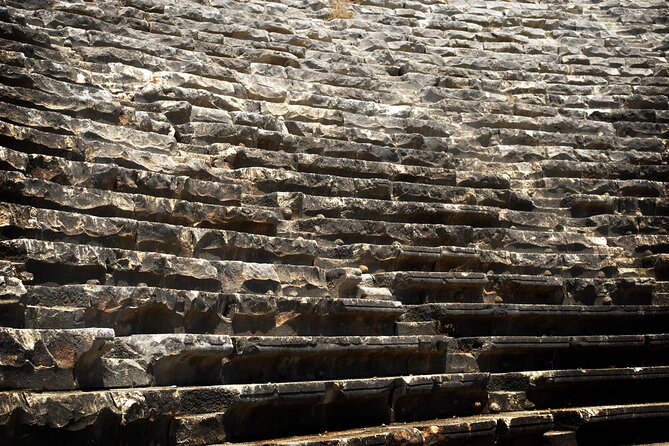
- Hear the famous acoustics: The theatre is built into a mountainside and remains one of the best-preserved ancient theatres in Greece.
- See more than the stage: Your entry also covers the Sanctuary of Asclepius and the archaeological museum inside the site.
- Explore at your own pace: Plan for roughly one to three hours, depending on how much time you give the sanctuary and museum.
- Choose the audio option carefully: An English self-guided audio tour is available if selected, but headphones are not supplied.
- No transport is included: You arrange your own way to the archaeological site.
- Check the price against your priorities: The ticket is listed at $33.36, while some older information cites entrance prices of €12 or €17.
Why Epidaurus Theatre deserves your time
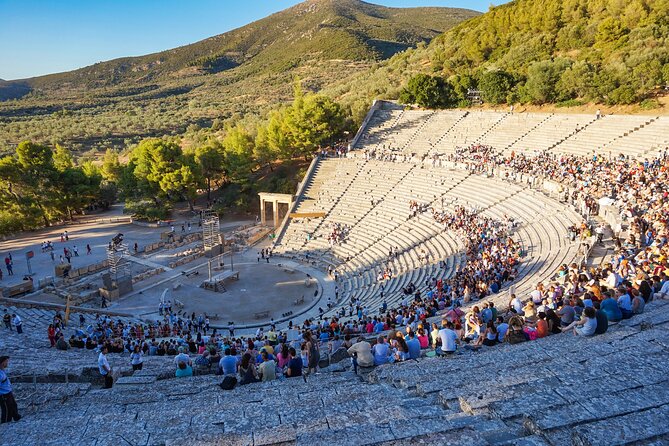
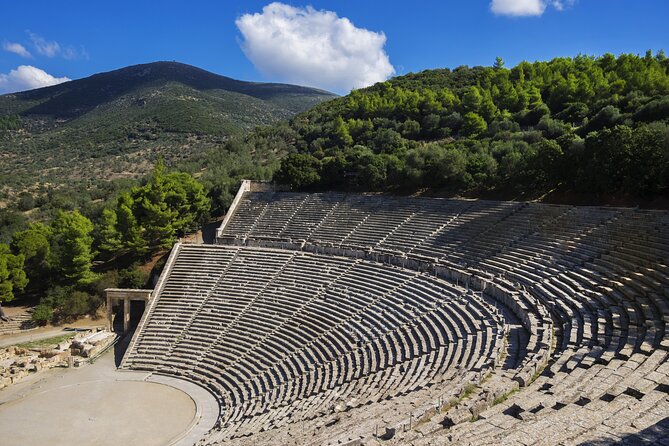
Epidaurus is not just an old theatre with a handsome curve of stone seats. It is a working lesson in ancient engineering. The theatre sits on a mountainside, and its carefully formed rows create a clear path for sound from the stage to the upper seats.
You can test this for yourself once you enter. Walk toward the center of the stage, then have someone stand higher up in the seating area. A quiet word, clap, or other small sound may carry farther than you expect. The effect is simple, direct, and far more convincing than reading a paragraph about ancient acoustics.
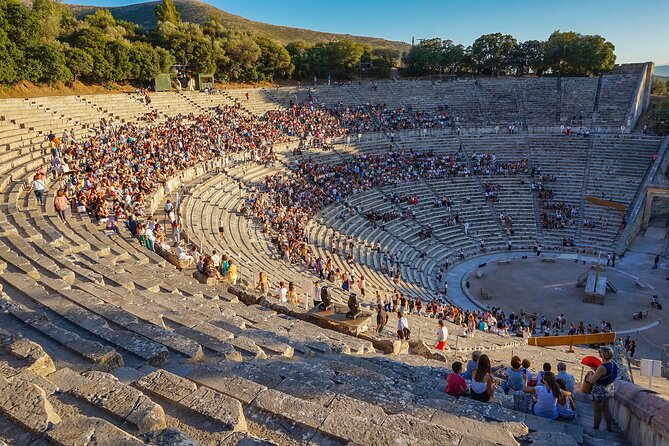
The theatre is also still used for performances. That gives the site a useful connection to the present. You are not looking at a structure that exists only behind glass or in a textbook. The space was designed for drama, music, and an audience, and its shape still makes sense when you stand inside it.
The archaeological site is commonly associated with the Sanctuary of Asclepius, the ancient Greek healing center. This ticket lets you go beyond the theatre and see the remains connected with that wider religious and medical setting. The surviving buildings are not all as instantly readable as the theatre, so give yourself time to look at the ground plan and exposed stones rather than rushing from one famous view to the next.
A few more Corinth tours and experiences worth a look
Entering the theatre and reading its design
The ticket includes admission to the Epidaurus archaeological site, with a skip-the-line entrance described as part of the experience. That can be useful at busy times, though the practical value depends on how crowded the entrance is when you arrive.
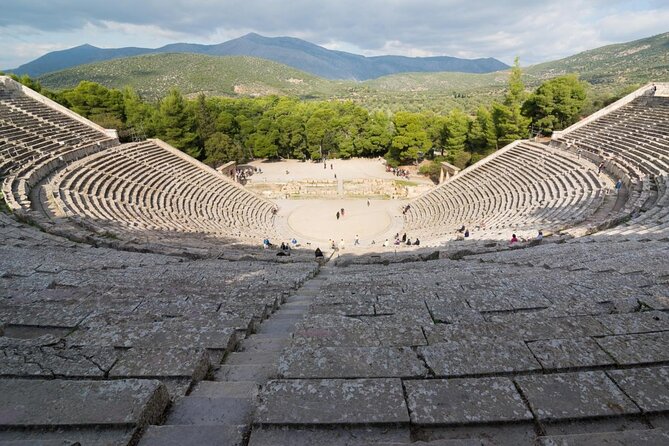
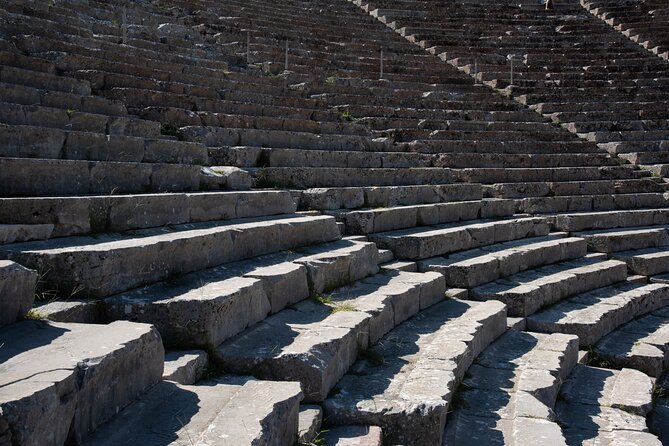
Once inside, head first toward the theatre. Its size is impressive, but the details reward a slower look. The seating rises in clean rows, following the natural slope of the mountain. From the front, the seating forms a broad bowl. From the upper steps, the stage looks smaller and more carefully framed.
You can stand in the center of the stage, walk up through the seating, and find several viewpoints. Do not settle for the first photograph. The theatre changes character as you move around it. From the stage, the seats seem to rise in a precise fan. From above, the stage becomes the focus of an enormous stone auditorium.
The shell-like design is one reason the site feels so complete. The structure has a strong visual order, with curves and lines that remain easy to follow even after centuries of damage and repair. One visitor described the theatre as having been enlarged by Rome, making it the largest in the Peloponnese. The supplied information does not provide a full construction history, so treat that as a detail to observe rather than a reason to expect a guided lecture.
This is a self-guided visit, not a traditional tour with a person leading you from stop to stop. That distinction matters. You get flexibility and quiet time, but you also need to pay attention to the site signs and decide how much context you want.
Testing the famous acoustics
The acoustics are the clearest reason to spend more than a few minutes in the theatre. Ancient builders created a space where voices could reach a large audience without modern sound equipment. The effect is especially noticeable when the theatre is quiet.
You may find other people testing the same feature, so do not expect perfect silence at every moment. Still, the basic demonstration is easy. Stand near the stage area and ask someone to listen from higher up. A clap or spoken phrase can carry across the seating area with surprising clarity.
I like this part because it turns a historical claim into something you can test with your own ears. You are not simply admiring old stone. You are checking whether the design still works.
The theatre is also an attractive place for photography, but the most useful photographs show its relationship to the slope and the surrounding setting. Take one from the stage looking up, then another from the seating area looking down. These two views explain the structure better than a single close image.
The site can become uncomfortable in hot weather. One visit recorded a temperature of 36 degrees Celsius and advised avoiding the hottest part of summer. That is practical advice, especially because much of the appeal lies in walking, climbing steps, and pausing outdoors. Bring water, use sun protection, and allow extra time rather than trying to cover everything quickly in extreme heat.
The Sanctuary of Asclepius beyond the theatre
After the theatre, continue through the wider archaeological site to the Sanctuary of Asclepius. The sanctuary is the reason Epidaurus was more than a performance venue. It formed part of a larger sacred complex connected with Asclepius, the Greek god of healing.
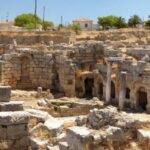
The remains require more imagination than the theatre. You will see exposed parts of ancient buildings, including structures associated with the Roman era. Some stones and foundations make immediate sense, while others need time and attention. This is where an audio option, if you selected it, may help organize what you are seeing.
Do not treat the sanctuary as a quick appendix to the theatre. The theatre is the famous centerpiece, but the sanctuary gives the site its wider purpose. It helps explain why such a large and carefully built complex existed in this location.
The listing describes Roman-era exposed sections, but it does not promise a full guided interpretation of each building. If you want detailed architectural or religious background, the self-guided format may feel limited unless you choose the audio tour. If you prefer to set your own pace and focus on the physical remains, that same format can be an advantage.
A small museum with useful site context
The archaeological museum is located inside the archaeological site. It is described as small, so plan for a focused stop rather than a major museum visit.
Its value is practical. After walking among foundations and exposed building parts, you can see objects and surviving details connected with the ancient structures. The museum helps bridge the gap between a bare ruin and the complete buildings that once occupied the sanctuary.
I would visit it after seeing the theatre and sanctuary. You will have a better sense of why certain fragments matter, and the museum can help you recognize the difference between a decorative piece and a structural one. Since the visit is self-guided, you can give the museum ten minutes or much longer, depending on your interest.
The museum also provides a useful pause from the open-air site, especially during hot weather. Do not expect it to fill an entire afternoon. The main experience remains the theatre and the archaeological grounds.




How the self-guided format works
This is a ticketed site visit, not a scheduled group excursion. You enter with your admission ticket and move through the theatre, sanctuary, and museum independently.
An English self-guided audio tour is available if you select that option. Headphones are not included, so bring your own if you want to listen privately. The supplied details do not name a guide, and there is no indication that a live guide is part of the standard experience.
That makes this a good choice if you dislike rigid timetables. You can spend ten minutes testing the acoustics, linger on the upper seats, or move through the museum quickly without waiting for a group.
The tradeoff is that you are responsible for making sense of the site. A live guide could explain the sanctuary’s purpose, point out Roman changes, and answer questions on the spot. With the self-guided option, your experience depends more on the site information and the audio material, if chosen.
The advertised duration is approximately one to three hours. I would allow at least two quiet hours if you want to see the theatre, sanctuary, and museum without rushing. A short visit can cover the main theatre, but the full site deserves more time.
What the $33.36 price means
The listed price is $33.36 per person. The entry ticket to the archaeological site is included, and the English audio tour is included only if you select that option. Personal expenses, headphones, and transport are not included.
The value depends on what you need. If you want a simple admission ticket and already have your own background information, the price may feel high. One visitor specifically compared an additional charge with an entrance price of €12, while another cited €17. Those figures may reflect different dates, ticket types, or booking channels, but they are worth keeping in mind when you compare options.
The ticket can make more sense if you value skip-the-line access and want the convenience of booking ahead. The audio option may also add value if you want English explanations without hiring a guide. Still, check exactly which option you are selecting before paying, especially if the basic ticket and audio ticket have different prices.
There is no hotel pickup or drop-off. The listing identifies the activity location as Corinth, Greece, while the attraction itself is the archaeological site of Epidaurus. You need to arrange your own transportation to the entrance, so this product is best for someone who already has a route or vehicle plan.
Who should choose this experience?
I would recommend it to independent sightseers who want to explore at their own speed. It suits anyone especially interested in ancient theatre, architecture, acoustics, archaeology, or the Sanctuary of Asclepius.
It is also a sensible option for visitors who want several related sights in one stop. You are not paying only to walk into the theatre. The ticket gives you access to the wider archaeological site and its small museum as well.
Families and casual sightseers can enjoy the theatre’s acoustics without needing a long history lesson. Most people can participate, according to the practical information supplied, but the site includes steps and outdoor walking. Anyone who needs detailed access information should confirm conditions before booking.
This may be less suitable if you want a live guide, hotel transport, or a tightly planned tour with historical commentary at every stop. It is also a poor match for a very hot day if you dislike outdoor walking and exposed ruins.
Timing, heat, and a sensible visit plan
Try to avoid the hottest summer conditions if your schedule allows. The theatre and sanctuary are outdoor archaeological sites, and temperatures can become severe. A reported 36 degrees Celsius made the point clearly: heat can turn a pleasant two-hour visit into a tiring one.
Give yourself a calm sequence:
- Begin with the theatre and walk through the seating.
- Test the acoustics from the stage and upper rows.
- Continue to the Sanctuary of Asclepius.
- Look for the exposed Roman-era building sections.
- Finish at the small archaeological museum.
- Keep a little time for one last theatre view before leaving.
This order puts the most dramatic sight first, then gives the wider site and museum a clear purpose. If you are short on time, prioritize the theatre and sanctuary. If you have the full three hours, slow down and read more of the site information.
The exact best time of day is not provided, so I would simply favor cooler conditions and avoid the middle of a very hot day. Since no transport is included, build your arrival and departure plans around your own schedule rather than assuming this is a transfer service.
Booking and cancellation details
Confirmation is received at the time of booking. The experience is offered in English, and most people can participate.
The cancellation policy is strict. This experience is non-refundable and cannot be changed for any reason. If your plans are uncertain, wait until your schedule is firm before booking.
KeyTickets is the experience provider. Since headphones and personal expenses are excluded, bring what you need for the audio option and budget for any costs outside the admission itself.
Should you book the Epidaurus ticket?
Book it if you want the freedom to explore one of Greece’s finest ancient theatres, test its remarkable acoustics, and continue through the Sanctuary of Asclepius without joining a scheduled group. The theatre is the clear highlight, but the sanctuary and museum make the visit more worthwhile than a theatre-only stop.
Think twice if you are mainly seeking the cheapest entrance price, a live guide, or transportation from your hotel. At $33.36, the value depends on the convenience of advance booking, skip-the-line entry, and the optional English audio tour.
For the best experience, allow about two hours, bring headphones if you select the audio tour, and avoid the hottest part of summer. If those conditions fit your plans, this is a strong independent visit to a site where the ancient design still works right in front of you.
FAQ
Where is this experience located?
The activity is listed in Corinth, Greece, and takes place at the archaeological site of Epidaurus.
What does the ticket include?
It includes entry to the Epidaurus archaeological site. An English self-guided audio tour is included if you select that option.
Is a live guide included?
No live guide is specified. The experience is self-guided, with an audio tour available if selected.
Is the audio tour offered in English?
Yes. The experience is offered in English, and the self-guided audio tour is available in English if selected.
Are headphones provided?
No. Headphones and other audio devices are not included.
How long does the visit take?
The estimated duration is approximately one to three hours.
Does the ticket include hotel transportation?
No. Hotel pickup and drop-off are not included.
Can I cancel or change the booking?
No. The experience is non-refundable and cannot be changed for any reason.