REVIEW · ATHENS
From Athens: 2-Day Meteora Trip with Tansportation & Hotel
Book on GetYourGuide →Operated by VIP Meteora Tours · Bookable on GetYourGuide
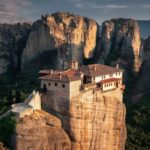
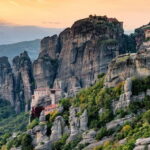
Meteora is Greece at its most dramatic: six monasteries perched on tall stone pillars, with Kalabaka below and broad views in every direction. This two-day trip gives you time for both the golden-hour sunset tour and a more detailed morning visit, rather than squeezing the area into one rushed outing. You travel from Athens, sleep in Kalabaka or Kastraki, and let a local leader handle the sightseeing once you arrive.
I like two things right away. First, the small groups are limited to 10 people, which should make the minibus rides and photo stops easier than a large coach tour. Second, the plan includes all six monasteries, three interior visits, the Hermit Caves, and Kalabaka’s 1,000-year-old Byzantine church. The main consideration is transport: because of flood damage, the journey currently uses a train to a designated point followed by a bus, so this is not a simple direct rail trip.
In This Review
- Key points to know before booking
- Why two days make sense at Meteora
- Leaving Athens and reaching Kalabaka
- Kalabaka and the first look at Meteora
- Sunset among Meteora’s stone pillars
- The morning tour and three monastery interiors
- The Hermit Caves and the older side of Meteora
- Small groups, minibus transport, and the tour leader
- What the $206 price includes
- What to bring and what may catch you out
- Who should book this Meteora trip
- Should you book it?
- FAQ
- How long is the Meteora trip from Athens?
- Where do I meet the tour at the start?
- How do I meet the tour leader in Kalabaka?
- Is the journey currently by train?
- How many monasteries will I visit?
- Are monastery entrance fees included?
- Is the tour suitable for wheelchair users?
Key points to know before booking
- Two different views of Meteora: The sunset tour focuses on scenery and photography, while the morning tour gives you more time with the monasteries.
- All six monasteries included: You see the full group of monasteries and enter three of them.
- Small groups of 10 or fewer: A minibus and limited group size make the touring more personal and practical.
- A stay in Kalabaka or Kastraki: You sleep near Meteora instead of returning to Athens the same day.
- Extra cultural stops: The program includes the Hermit Caves and Kalabaka’s 1,000-year-old Byzantine church.
- Bring cash: Each monastery charges €5 for entry, paid in cash, and meals are not included.
Why two days make sense at Meteora
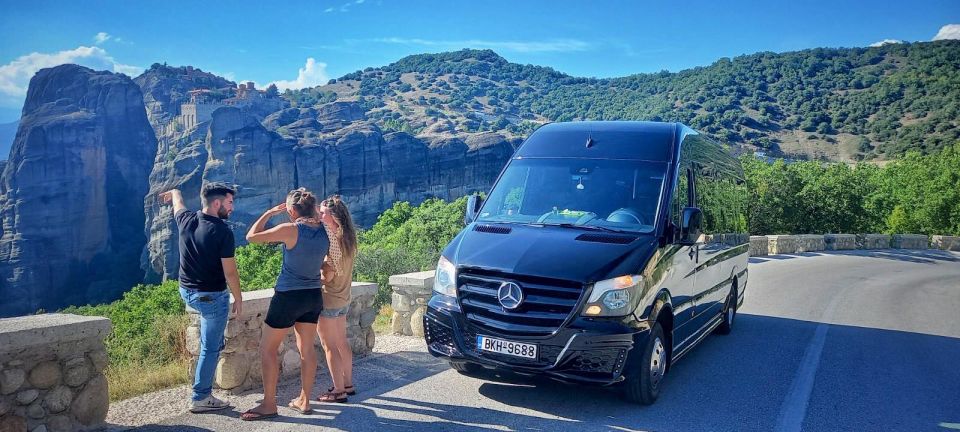
Meteora is not a quick photo stop. The monasteries sit high above Kalabaka, and the rock formations deserve time at different hours of the day. Sunset changes the color of the stone and gives you wide views, while morning is better suited to visiting monastery interiors and learning how the site developed.
A one-day visit from Athens can show you the main sights, but it leaves little room for quiet moments or changes in timing. This trip gives you an overnight stay and two guided outings. That extra night matters because you do not have to choose between scenic viewpoints and the interiors of the monasteries.
The schedule is also sensibly divided. The first day is built around arrival and sunset. The second begins with a morning tour, when you can focus on architecture, religious objects, and the practical details of life in these remote buildings.
A few more Athens tours and experiences worth a look
Leaving Athens and reaching Kalabaka
You begin at Stathmos Larissis, Athens Central Railway Station, where you board the train using the tickets sent to you by email. The train portion lets you watch Greece change from the city and surrounding plains toward the mountains and central mainland scenery.
At present, flooding has interrupted train service in the Meteora region. You still use the provided round-trip tickets, but part of the route continues by bus from a designated point. This is important to understand before you book. The transport arrangement is being handled for you, yet the trip is not currently train-only.
You travel independently from Athens to the meeting point. At Kalabaka Railway Station, the tour leader waits with a sign bearing your name. From there, you are taken to your accommodation in Kalabaka or Kastraki. The instructions and tickets are sent by email a few days before departure, so check your inbox and save the information before leaving Athens.
The arrangement works best for travelers who are comfortable navigating a station on their own. You are not being collected from an Athens hotel. You must reach Stathmos Larissis at the right time and board the train using the supplied tickets.
Kalabaka and the first look at Meteora
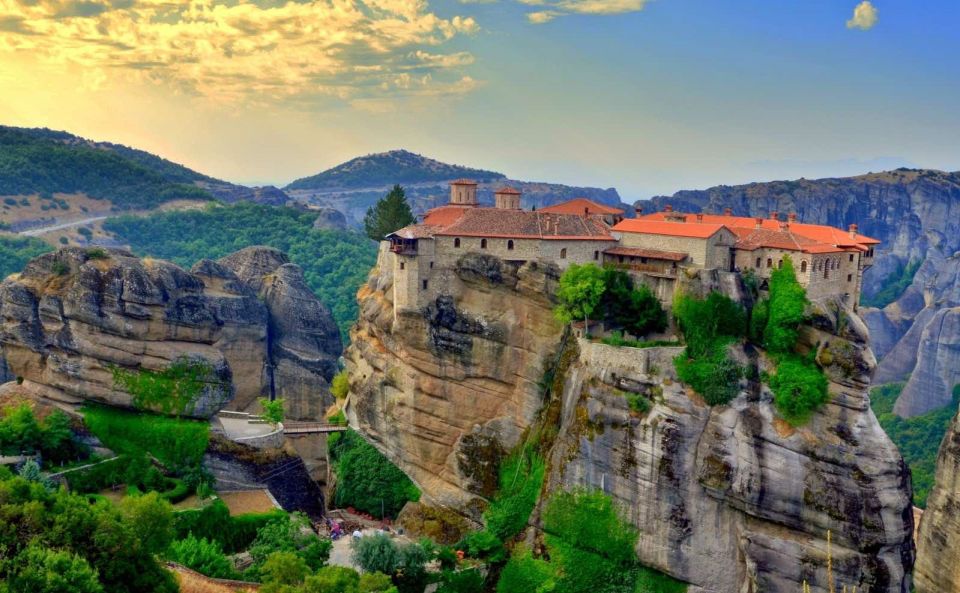
Kalabaka is more than a base for the monasteries. It sits directly below the rock pillars, so your first arrival gives you an immediate sense of the scale of Meteora. The town also provides the setting for the 1,000-year-old Byzantine church included in the program.
That church adds useful context. The monasteries are the headline sight, but the religious story of the area did not begin only with the buildings on top of the rocks. A Byzantine church in Kalabaka helps connect the town, the surrounding countryside, and the monastic communities above.
Your accommodation is described as a top-rated 3-star hotel in Kalabaka or Kastraki. The hotel is included, which makes the $206 price easier to assess. You are paying not only for transport from Athens, but also for a night near Meteora and two small-group tours.
The exact hotel is not named in the supplied details, so do not book this expecting a specific property or room style. What is clear is that the overnight stay is arranged in one of the two nearby bases, with pickup and drop-off included for the tours.
Sunset among Meteora’s stone pillars
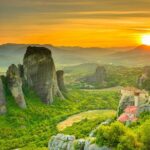
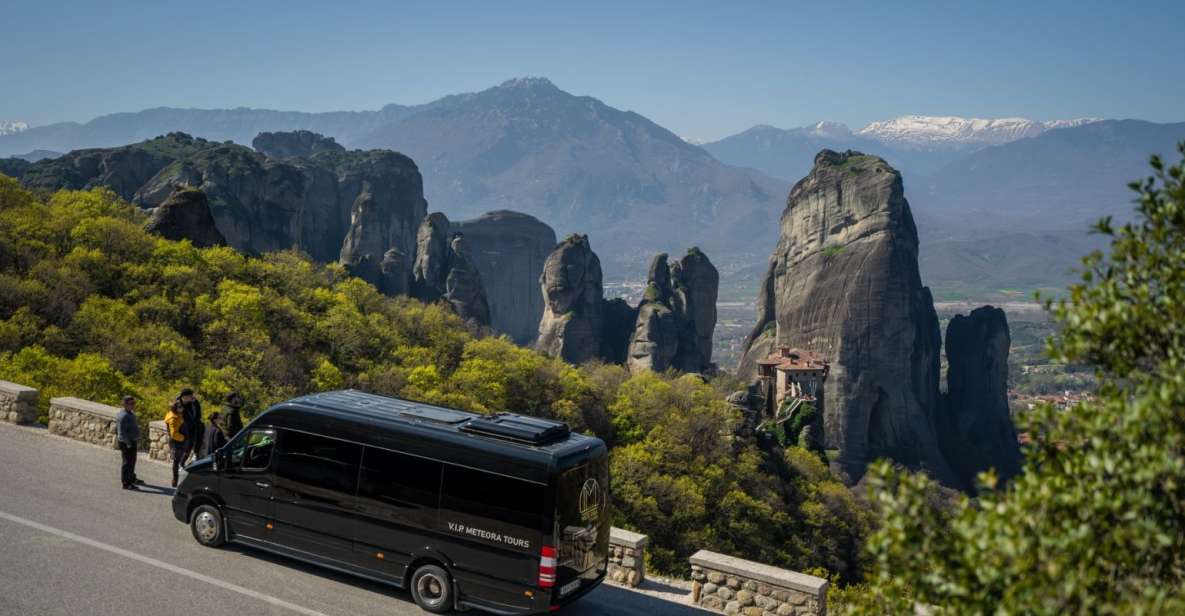
The sunset outing is the scenic heart of the first day. Your tour leader takes you by minibus to the best viewing points, where you can see the monasteries and the rock formations from below and across the valley.
The timing gives you something the morning cannot. As daylight fades, the stone changes color and the monasteries appear more isolated above the plain. This is also the part of the trip most suited to photography. One useful strength of the tour is that the leader knows where to stop for good pictures, rather than simply driving past the major sights.
You see all six monasteries during the two tours, even though you visit only three interiors. That distinction matters. From the viewpoints, you can appreciate how the six buildings relate to one another and to the rock formations. Inside three monasteries, you get a closer look at the religious and architectural details.
The sunset tour is not just a checklist of buildings. It gives you time to understand the setting before the next day becomes more focused on visits. Bring a phone or camera with enough battery, but keep some attention on the views themselves. Meteora is one of those places where the broad scene can be more striking than any single building.
The morning tour and three monastery interiors
The second tour takes a closer look at Meteora’s monasteries. You visit three of the six interiors, with the exact selection likely shaped by opening arrangements and the day’s schedule. The supplied details do not name the three monasteries, so you should not assume a particular set in advance.
The morning timing is practical. It leaves the first day for arrival and sunset, and it gives you a fresh start for the more focused sightseeing. The tour leader explains the history and architecture as you move between sites, while the minibus reduces the need to organize local transport yourself.
You should expect monastery entry fees of €5 per person per monastery, paid in cash. Since three interiors are included in the program, set aside at least €15 for those visits. Bring extra cash in case you need it for food, drinks, or other small expenses, since meals, snacks, and soft drinks are not part of the price.
The monasteries are religious sites, not just viewpoints. Wear practical clothing suitable for entering them and follow any rules in force at each building. The activity details do not provide a full dress code, so the safest approach is to choose modest clothing and comfortable shoes.
- All Day Cruise -3 Islands to Agistri,Moni, Aegina with lunch and drinks included
★ 5.0 · 4,958 reviews






The Hermit Caves and the older side of Meteora
The Hermit Caves offer a different look at Meteora. The famous monasteries are large, visible structures, but the caves point toward the earlier and more isolated side of monastic life. Their inclusion keeps the tour from becoming only a sequence of viewpoints and formal buildings.
The experience at the caves may feel more atmospheric than polished. You are seeing places connected with people who sought solitude in the rock formations, rather than visiting a conventional museum or town attraction. The supplied information does not specify the walking distance or surface conditions, so ask the tour leader about the route if you have mobility concerns.
This is one reason the tour is not suitable for wheelchair users. Meteora involves uneven terrain, elevated sites, and access conditions that can vary between stops. The minibus helps with transportation, but it cannot remove the physical demands of the rock sites.
Small groups, minibus transport, and the tour leader
The maximum group size is 10 people. That is a useful limit in a place where viewpoints and monastery entrances can feel tight. A small group also makes it easier to hear explanations, move through stops, and return to the minibus without the delays common on large coach excursions.
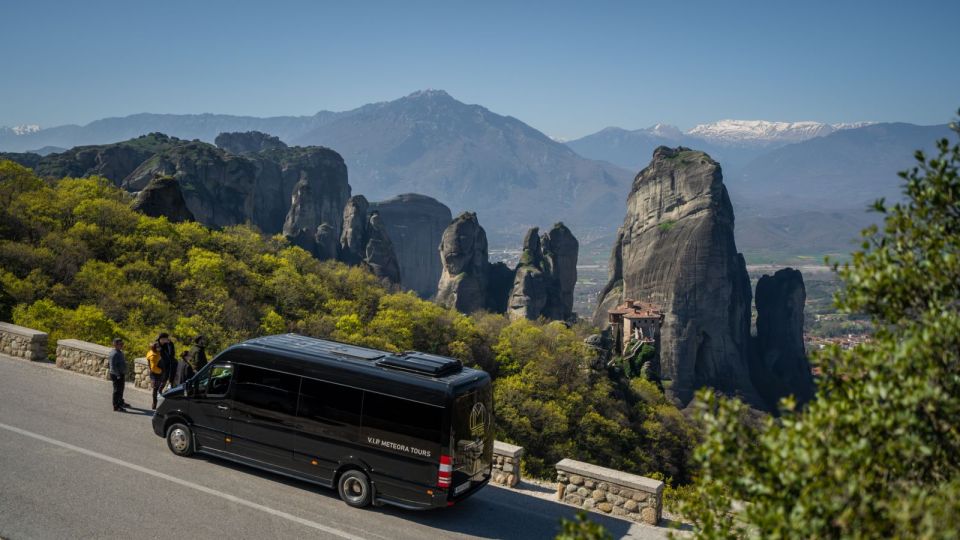
The tours use a minibus in Kalabaka or Kastraki. Hotel pickup and drop-off are included, so you do not need to arrange a taxi for the two local outings. Bottled water and Wi-Fi on board are also included, small comforts that matter during a full day of sightseeing.
The tour leader is English-speaking and accompanies the activity locally. No individual guide names are provided, so I would not book this expecting a named specialist. The guide’s role is practical and interpretive: coordinating pickups, explaining the area, and taking you to the best photo stops.
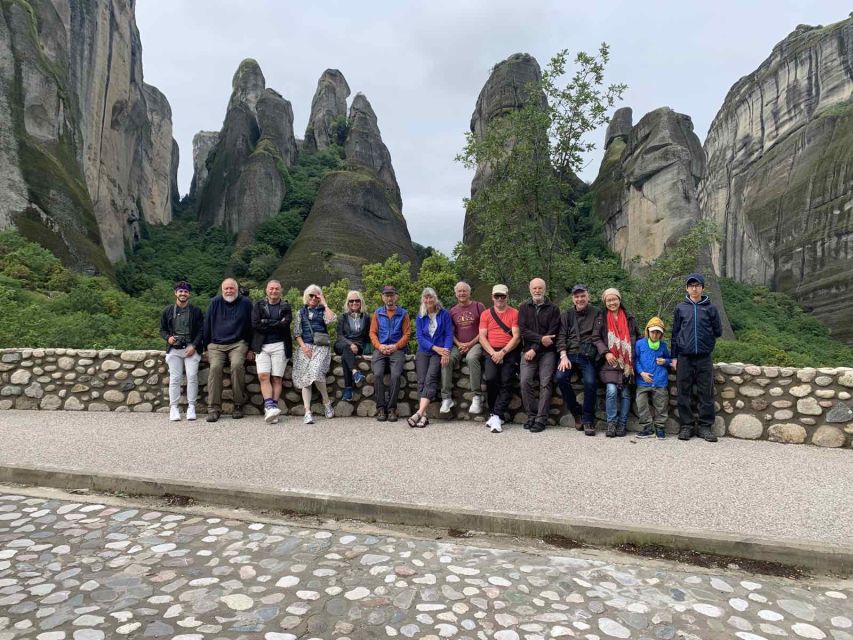
The available feedback points to especially strong guiding and driving. One booking described the guide as very informative and praised the precise choice of photo locations. Another described the organization, guide, and driver as friendly, professional, and well prepared. The small group format can sometimes become a private-feeling outing, especially when only a few places are booked.
What the $206 price includes
At $206 per person, this is not the cheapest way to see Meteora, but it bundles several costs that can add up quickly. You receive round transportation from Athens, local transfers, one hotel night, two guided tours, bottled water, Wi-Fi, and monastery sightseeing with three interior visits.
The value is strongest if you want an organized overnight trip and do not want to arrange the Athens to Kalabaka journey, local transportation, and sightseeing separately. The two tours also give you both sunset and morning conditions, which is a better use of time than a single long visit.
You still need to budget for the monastery fees. Three visits cost €15 per person at the stated rate. Food is also extra, and no snacks or soft drinks are supplied. Those costs are easy to manage, but the advertised price is not an all-inclusive figure.
The hotel category is 3-star, not luxury. That is appropriate for an itinerary built around location and touring rather than resort time. If you want a high-end hotel or a carefully selected restaurant program, this is not that kind of package.
What to bring and what may catch you out
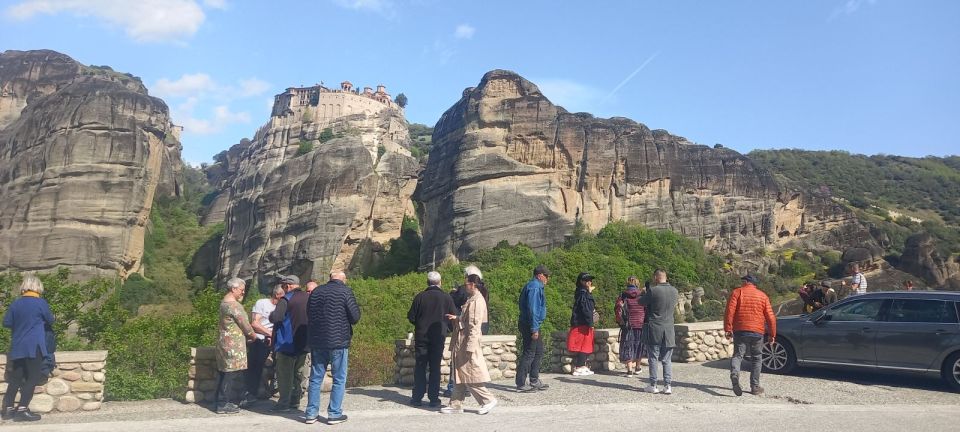
Bring your passport or ID card, sunscreen, and cash. Your identification may be needed for the transport or tour arrangements, while sunscreen is useful during exposed viewpoints and outdoor stops.
Cash is particularly important because monastery entrance fees are paid in cash only. Plan for at least €15 for the three interiors, plus money for meals and drinks.
Alcoholic drinks are not allowed in the vehicle, and alcohol and drugs are prohibited during the activity. Wi-Fi is provided on board, but you should still keep your tickets and tour instructions available offline in case you cannot connect.
The biggest practical issue is the current train and bus arrangement. Read the email instructions carefully a few days before departure. You board independently at Stathmos Larissis, then meet the tour leader at Kalabaka Railway Station. The company provides the same tickets for the adjusted transport route, but you should allow enough time to understand where the change occurs.
Free cancellation is available up to 24 hours before the activity for a full refund, and you can reserve while paying later. Check the available starting time before booking because departure details vary by date.
Who should book this Meteora trip
I would choose this tour if you are based in Athens and want Meteora without planning a hotel, rail tickets, local transport, and two days of sightseeing yourself. It suits first-time visitors who want the main monasteries, the best photo stops, and some context from a local English-speaking leader.
It is also a good fit for photographers who want sunset views and a guide who can select strong viewing points. The morning tour then adds substance, with three monastery interiors, the Byzantine church, and the Hermit Caves.
The trip may not suit you if you need wheelchair access, dislike changing transport, or want a fully private itinerary with a named specialist guide. It also may feel limited if you want to enter all six monasteries. You see all six, but only three are visited inside.
The 10-person maximum is a major advantage for most people, though the exact feel depends on how many places are booked. The available booking information includes an instance where the two-day tour operated for one person, so a very small group is possible, but it cannot be guaranteed.
Should you book it?
Book this trip if you want a well-organized two-day introduction to Meteora with sunset and morning touring, an overnight stay, and transport arranged from Athens. The mix of six monasteries, three interior visits, the Hermit Caves, and the Byzantine church gives you more than a quick scenic stop.
Before booking, be comfortable with the temporary train and bus connection, bring cash for the €5 monastery fees, and remember that meals are not included. If those points work for you, the $206 price offers solid value for a full two-day visit with a small group and local support. It is a practical choice for seeing the highlights without turning your Athens trip into a complicated transport project.
FAQ
How long is the Meteora trip from Athens?
The activity lasts 2 days and includes round transportation from Athens to Meteora, with accommodation in Kalabaka or Kastraki.
Where do I meet the tour at the start?
You go to Stathmos Larissis, Athens Central Railway Station, and board the train to Kalambaka using the tickets sent by email.
How do I meet the tour leader in Kalabaka?
The tour leader waits at Kalabaka Railway Station with a sign showing your name.
Is the journey currently by train?
The route currently uses a train to a designated point and then a bus because floods have temporarily affected train service in the Meteora region. The same supplied tickets are used for the adjusted journey.
How many monasteries will I visit?
You see all six monasteries and visit three of them inside.
Are monastery entrance fees included?
No. Entry costs €5 per person per monastery and must be paid in cash. Since three monastery interiors are visited, plan for at least €15 per person.
Is the tour suitable for wheelchair users?
No. The activity is not suitable for wheelchair users.