REVIEW · ATHENS
From Athens: Meteora Full-Day Trip with Guide on Luxury Bus
Book on GetYourGuide →Operated by Ammon Express · Bookable on GetYourGuide
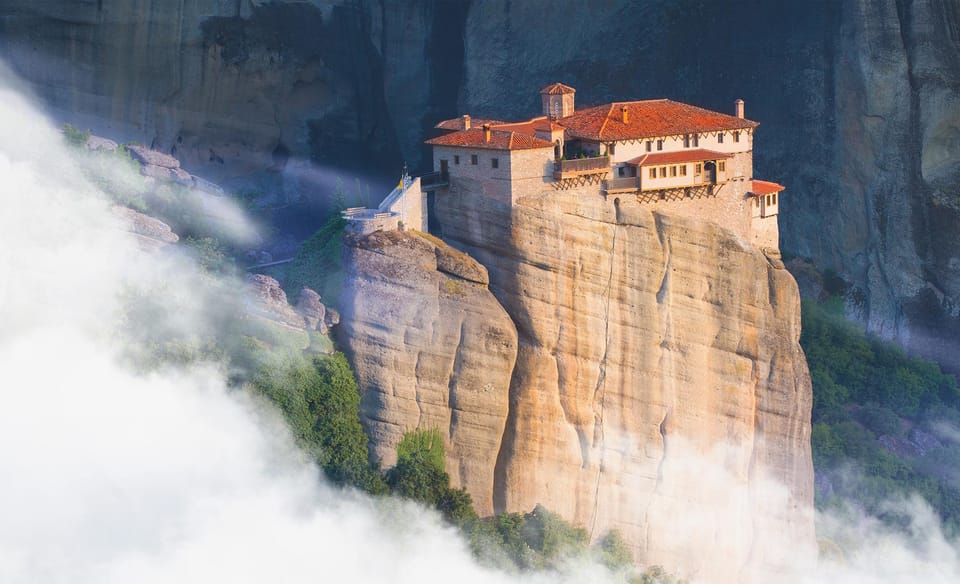
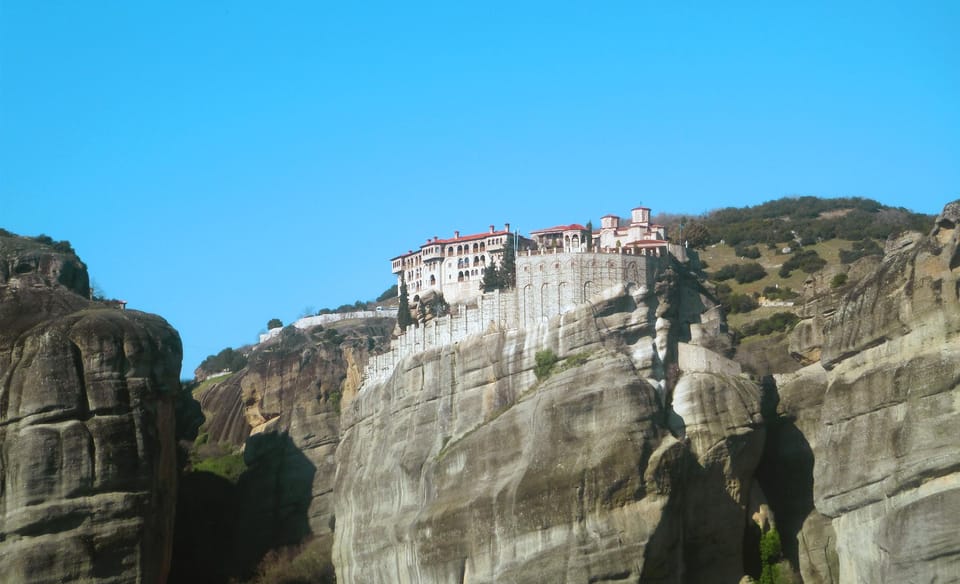
Meteora is one of Greece’s great sights: six medieval monasteries perched on tall, near-vertical rocks above Kalambaka. This full-day trip gives you time inside three monasteries, big valley views, and a traditional lunch stop without asking you to arrange several trains, taxis, and local transfers.
I like the easy departure from Halandri Metro Station, away from central Athens traffic, and the guides’ archaeology background, which gives the rock towers and Orthodox art useful context. I also like the two short breaks each way and the Kastraki taverna stop. The catch is simple: this is a 15-hour day, with about five hours on the road each way, and lunch plus €15 in monastery entrance fees are extra.
In This Review
- Key points to know before booking
- Why Meteora is worth the long ride from Athens
- Starting at Halandri Metro Station
- The five-hour journey through mainland Greece
- Your first look at the rocks above Kalambaka
- Entering three medieval monasteries
- Lunch in Kastraki
- The return journey and what the timing means
- What the $108 price really covers
- Who should choose this Meteora day trip?
- Practical ways to make the day better
- Should you book it?
- FAQ
- Where does the Meteora tour from Athens start?
- Where does the tour end?
- How long does the excursion last?
- How many monasteries will I visit?
- Are monastery entrance fees included?
- Is lunch included in the tour price?
- What language does the guide speak?
- Is the tour suitable for wheelchair users?
Key points to know before booking
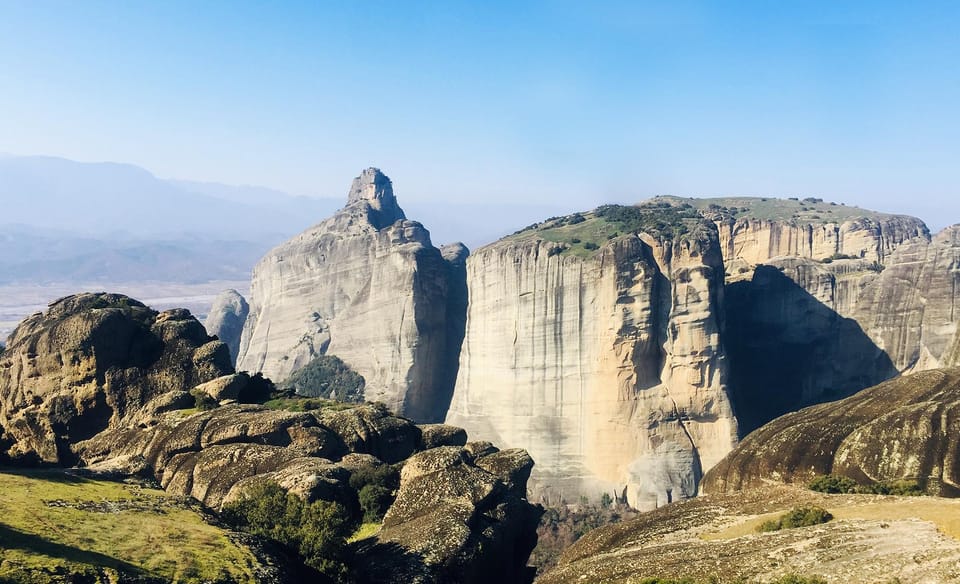
- Three monastery visits: You enter three of Meteora’s six working monasteries, chosen according to their opening schedules.
- About ten hours of driving: The bus ride from Athens takes roughly five hours each way, with short stops at Atalanti and Sofades.
- Guides with archaeology training: Guides including Basil and George provide English commentary on Greek history, Meteora, and Orthodox Christian art.
- Kastraki lunch stop: You have about an hour for a traditional Greek meal near Kalambaka, but the meal is not included.
- Cash is essential: Each monastery charges €5, payable in cash, so budget €15 per person for the three visits.
- Not a gentle sightseeing day: Comfortable walking shoes are important, and the trip is not suitable for wheelchair users or people with mobility impairments.
Why Meteora is worth the long ride from Athens
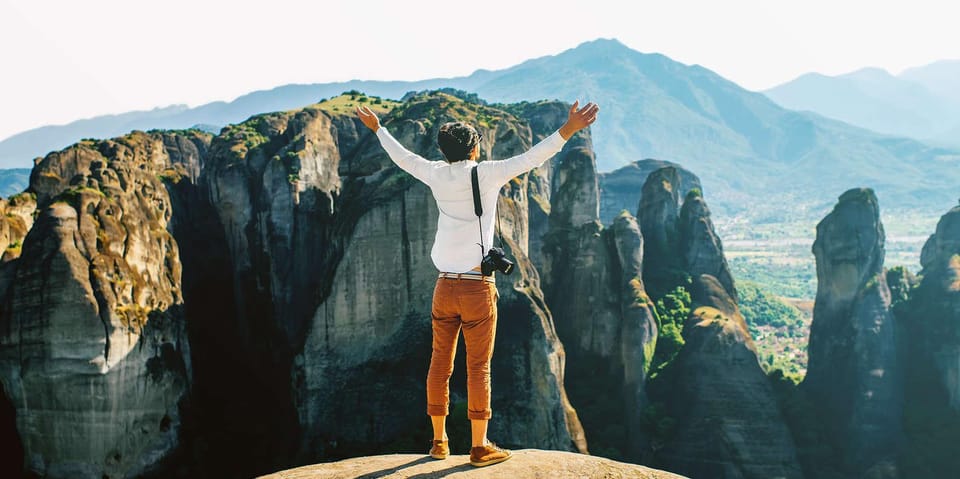
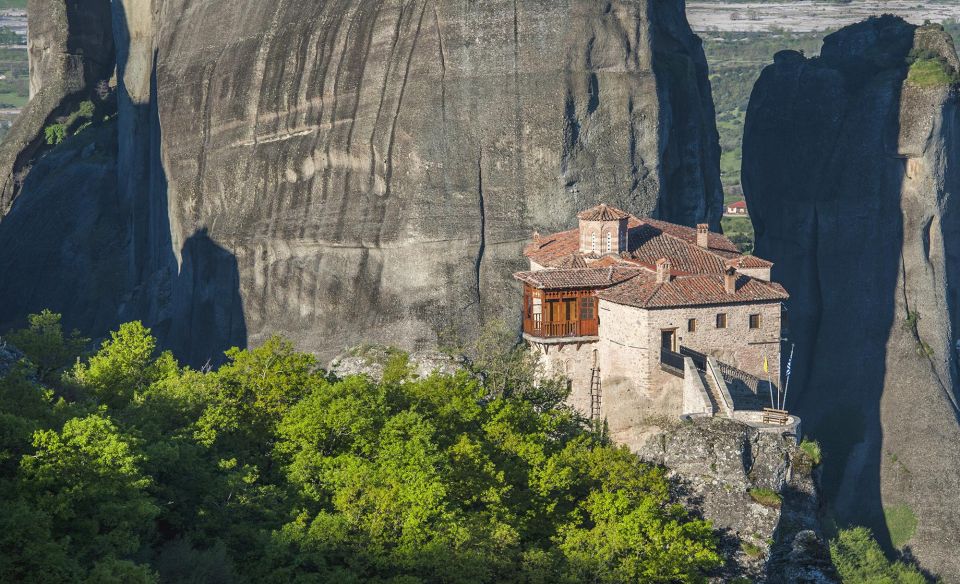
Meteora is not a quick add-on from Athens. It sits in Thessaly, well north of the capital, so the journey takes most of the day. Still, the setting is unusual enough to justify the effort. Huge rock pillars rise above the valley, and monasteries sit on ledges that seem almost impossible to reach.
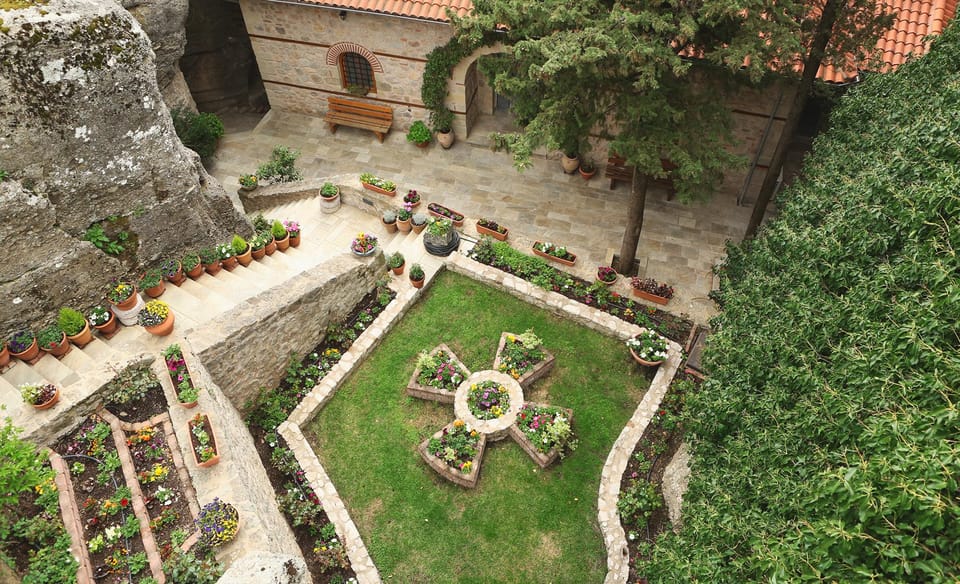
The monasteries date from the medieval period and remain important centers of Orthodox Christian culture. Inside, you can see religious art and learn how these buildings functioned in a place shaped by isolation, steep rock, and monastic life.
You will not see all six monasteries from the inside. This trip takes you into three, with the exact choices based on the day’s operating schedule. That is a practical arrangement because opening days and hours can vary, but it also means you should not book expecting a fixed list of buildings.
The strongest part of the experience is the contrast between the bus ride and the arrival. For hours, you pass through mainland Greece, then the rock formations begin to dominate the view. The first photo stop gives you a chance to take in the whole setting before you start climbing toward the monasteries.
You can also read our reviews of more guided tours in Athens

Starting at Halandri Metro Station
The meeting point is outside Halandri Metro Station, using the exit marked To Vrilissia. This departure point is useful if you are staying north of central Athens or want to avoid a pickup in the city center.
You should give yourself enough time to find the correct exit and your guide. The tour ends at the same station, which keeps the return simple. You are not left arranging a late-night transfer from a distant drop-off point.
The bus is air-conditioned and described as a comfortable luxury coach. One practical detail matters more than the label: you will spend many hours sitting in it. Bring water, snacks, and something small to occupy you during the long stretches between stops. The route includes short breaks rather than frequent sightseeing stops.
The five-hour journey through mainland Greece
The outbound journey includes two planned breaks. The first is at Atalanti after about an hour and a half, with around 20 minutes to use the restroom or buy snacks. You then continue for roughly 100 minutes before a second 20-minute stop at Sofades.
These breaks make the drive easier, but they do not turn it into a relaxed touring route. The purpose is to reach Meteora, not to visit several towns along the way. You will see a broad section of eastern mainland Greece from the bus and hear commentary from the guide about the country’s history.
This is where the English-speaking guide adds value. Guides with history and archaeology studies, including Basil and George on some departures, can explain more than the basic names and dates. The information is delivered on the bus, so you can use the driving time to understand the region before arriving.
If you dislike long coach journeys, be honest with yourself before booking. The trip takes about 15 hours in total, and the road time accounts for roughly ten of those hours. If Meteora is high on your Greece list, the journey may be a fair trade. If you prefer a slower visit, staying overnight in Kalambaka would give you more time and less pressure.
Your first look at the rocks above Kalambaka
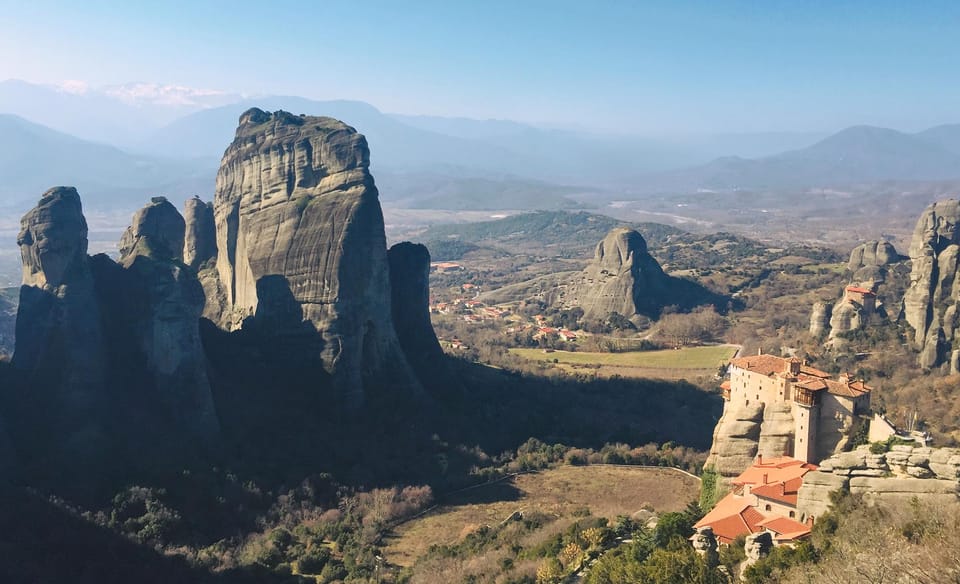
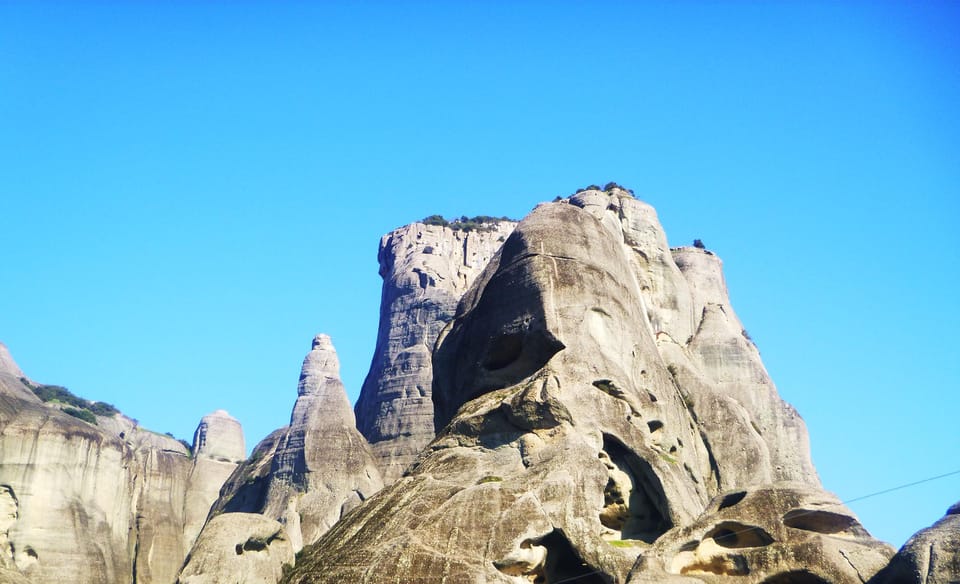
Near Meteora, the bus makes a short photo stop of about 15 minutes. This is a good moment to photograph the full sweep of the rock towers and the valley below.
The view changes quickly as the road rises. From the lower valley, the monasteries can look like small buildings fixed to vast stone walls. From higher viewpoints, you get a clearer sense of their position above Kalambaka and the surrounding countryside.
Keep your camera ready, but do not let the photo stop become the whole experience. The monasteries themselves explain why Meteora matters. The rocks are dramatic, yet the buildings and their painted interiors give the site its human meaning.
Entering three medieval monasteries
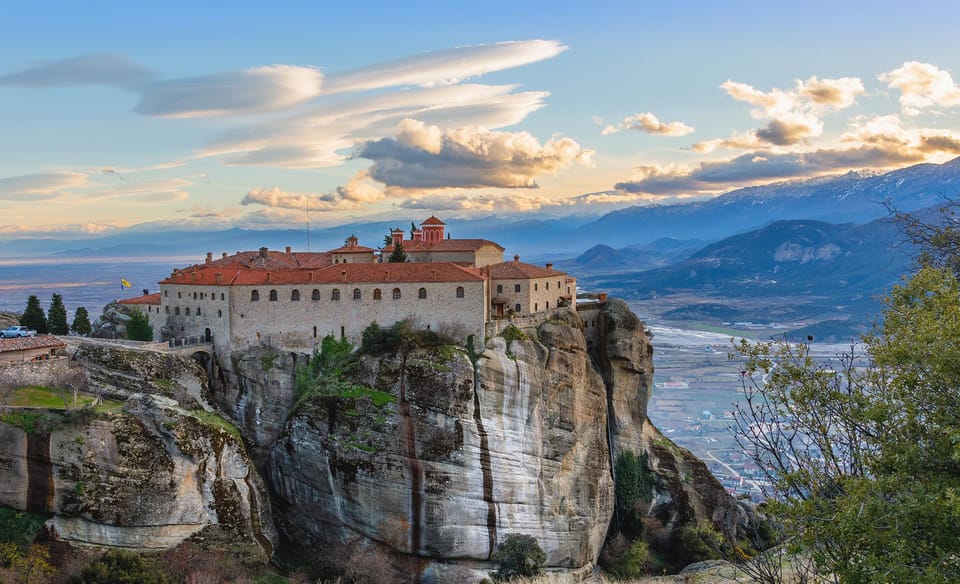
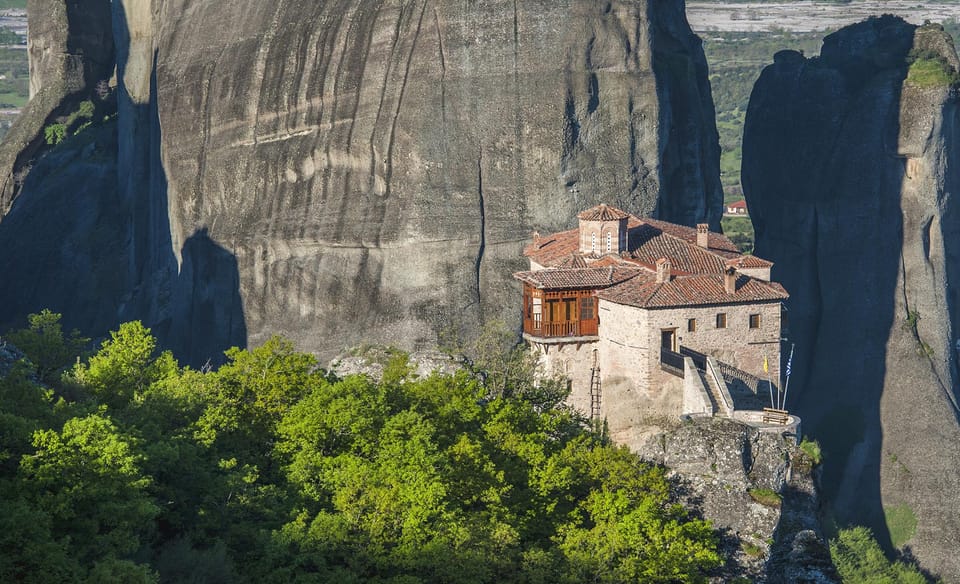
The tour allows about 45 minutes at each of three monasteries. That is enough for a focused visit, but it is not a leisurely study of every room, icon, or museum display.
You should expect steps and uneven walking. The monasteries were built in difficult positions, and access is part of the experience. This is why comfortable shoes are not a minor suggestion. Wear shoes suitable for a hiking session, even though you are not on a full-day trail.
Dress respectfully for Orthodox monasteries. Bring decent clothing that covers your shoulders and knees. The supplied information does not give a specific dress code for each building, so modest clothing is the safest choice.
Entrance costs are not included. You pay €5 per monastery in cash, for a total of €15 if you enter all three. Keep the money easy to reach rather than buried in your bag. The tour also does not include a guided tour inside the monasteries or museums. Your guide provides context during the day, but you should not expect a separate specialist escort inside every building.
That distinction matters. You get transportation, access, and general explanation, not a private art lecture at each monastery. The arrangement suits you if you like some independence and want time to look around without being talked at every minute.
One useful feature is the chance to ask questions after the visits. The guide team can help connect the architecture, religious art, and setting, while you retain some freedom to explore at your own pace.
A few more Athens tours and experiences worth a look

Lunch in Kastraki
After the monastery visits, the bus takes you a short distance to Kastraki for about an hour. This village near Kalambaka is the right place for a Greek meal after a morning of stairs and viewpoints.
Lunch is at a nice tavern, with traditional Greek choices available. The cost is not included, so plan for an additional meal expense. The information does not specify a set menu or a fixed price, so bring enough cash or confirm payment options before you sit down.
An hour is long enough for a proper meal, but not for a slow afternoon. Think of this as a practical food stop with local atmosphere rather than a separate culinary tour. I like that the meal comes after the monastery visits, when you can sit down and take stock of the morning.
The return journey and what the timing means
After lunch, the return trip follows the same general pattern. There is a short stop at Sofades, listed at about 15 minutes, then a longer stop at Atalanti, around 20 minutes, before the final drive to Halandri.
You will return to the same meeting point in Athens. Because the tour lasts 15 hours, the arrival time depends on the starting time and road conditions. Avoid scheduling a tight dinner reservation, show, or airport transfer after the tour.
The long return can feel tiring, especially after walking around the monasteries. Still, the air-conditioned bus and planned rest stops make this more manageable than trying to drive the route yourself after a full day of sightseeing.
What the $108 price really covers
At $108 per person, the cost is reasonable if you want a simple Athens to Meteora connection with organized transport and a guide. The price includes round-trip transportation, the air-conditioned bus, an English-speaking guide, photo stops, entry visits to three monasteries, a lunch stop, and basic travel insurance.
You should add at least €15 for monastery admissions. Lunch is extra, and the price is not specified, so the real total will be higher than the advertised fare.
The value depends on what you need. If you are comfortable organizing trains and local transportation, an independent visit might offer more control. This trip saves you from coordinating the long journey, finding the monasteries, checking which ones are open, and getting back to Athens the same day.
You are also paying for the guide’s running commentary. That matters at Meteora because the site can look like a set of striking photographs unless you understand the religious and historical reasons the monasteries were built there.
Who should choose this Meteora day trip?
I would choose this trip if you have limited time in Greece, want to see Meteora from Athens, and prefer having the transport handled for you. It is especially useful for independent-minded visitors who still want a guide for the road and the big historical picture.
It also suits people who want some freedom during the monastery visits. The day is organized, but the feedback indicates that the tour can feel less restrictive than some group outings. That balance is useful: you get a schedule without being shepherded through every minute.
I would hesitate if you dislike long bus rides, have mobility limits, or want a quiet overnight stay in the region. The tour is not suitable for wheelchair users or people with mobility impairments, and the monastery visits involve walking and steps.
Families and older visitors should think carefully about the 15-hour duration and physical demands. The supplied information does not give an age limit, so the key questions are stamina, footwear, and comfort with a full day away from Athens.
Practical ways to make the day better
Wear walking shoes with a good grip. You may not hike a marked trail, but the monastery approaches and steps are more demanding than ordinary city sightseeing.
Dress modestly from the start. That saves you from trying to cover up at the entrance and keeps the monastery visits respectful.
Carry cash for three €5 entrance fees and for lunch. The admission charge is specifically cash only.
Bring water and snacks for the road. Atalanti and Sofades provide breaks to buy supplies, but the stops are short and you should not depend on finding your preferred food there.
Use the bus commentary well. If the guides are Basil and George, you can expect English explanations and help with questions, but guide assignments may vary by departure. Listen during the journey, then use the monastery time to focus on the buildings and views.
Finally, keep your evening free. A 15-hour excursion can run late enough to make a fixed Athens booking stressful.
Should you book it?
Book this tour if Meteora is a priority and you want to see it from Athens in one demanding but well-organized day. The combination of three monastery visits, photo stops, archaeology-based guiding, and direct transport makes the $108 fare a fair deal once you understand what is and is not included.
Skip it if you want a relaxed pace, dislike five-hour bus rides, or need step-free access. For everyone else, this is a practical way to reach one of Greece’s most unusual religious sites without spending the night away from Athens. Just budget for lunch and €15 in cash, wear proper shoes, and treat the long drive as part of the price of seeing Meteora.
FAQ
Where does the Meteora tour from Athens start?
The tour starts outside Halandri Metro Station. Use the exit marked To Vrilissia and meet the guide outside the station.
Where does the tour end?
The activity ends back at the Halandri Metro Station meeting point.
How long does the excursion last?
The trip lasts about 15 hours. The bus journey from Athens to Meteora takes roughly five hours each way, including two short stops for restrooms and snacks.
How many monasteries will I visit?
You will visit three of Meteora’s six monasteries. The specific monasteries depend on their operating schedule.
Are monastery entrance fees included?
No. Each monastery charges €5, payable in cash. Visiting three monasteries therefore costs €15 per person.
Is lunch included in the tour price?
No. The tour includes a stop for lunch in Kastraki, but you pay for your own meal at the restaurant.
What language does the guide speak?
The live tour guide speaks English. Guides have archaeology or history backgrounds, and guides such as Basil and George have led departures.
Is the tour suitable for wheelchair users?
No. The tour is not suitable for wheelchair users or people with mobility impairments. Comfortable shoes and clothing suitable for walking are recommended.