REVIEW · THESSALONIKI
From Thessaloniki: Full Day Trip to Meteora
Book on GetYourGuide →Operated by Key Tours · Bookable on GetYourGuide
Meteora is one of Greece’s great sights: huge stone pillars rising from the plain, topped by Orthodox monasteries that seem to cling to the cliffs. This full-day trip from Thessaloniki gives you a practical way to see it without arranging a long-distance bus, local transfers, and monastery visits yourself.
I like the small-group feel reported on many departures, and I like the guides’ strong grasp of history, religion, geology, and local stories. The main drawback is the long day and limited time: you visit two monasteries, not all six, and lunch is an extra expense with a restaurant stop that may not suit everyone.
In This Review
- Key points to know before booking
- Why Meteora is worth the long ride
- The early departure from Thessaloniki
- Arriving in Kalambaka at about 11:30
- Inside two monasteries
- What to wear for the monasteries
- One hour in Kalambaka for lunch
- The return trip and coffee stop
- The guides are the heart of the experience
- What the $63 price really covers
- Who should book this Meteora day trip?
- FAQ
- How long does the Meteora trip from Thessaloniki last?
- Where does the tour start?
- How many monasteries do you visit?
- Are monastery entrance fees included?
- Is lunch included?
- What clothing is required?
- Is the tour wheelchair accessible?
- What language is the tour conducted in?
- Should you book it?
Key points to know before booking
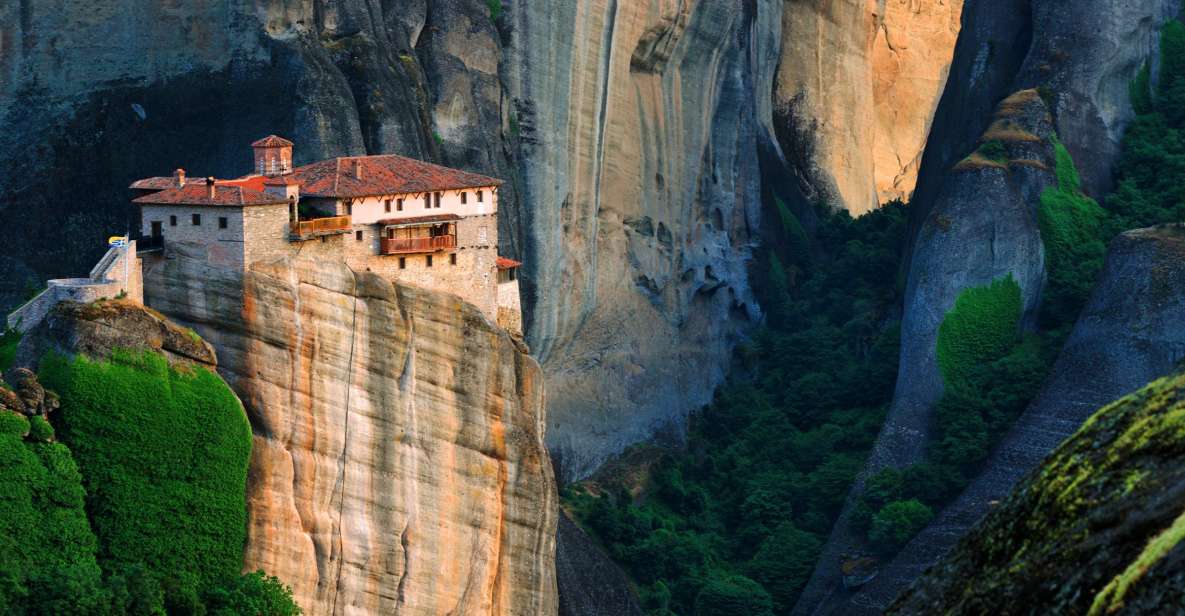
- Two monasteries in about two hours: You get inside selected monasteries to see frescoes and icons, but the exact pair may vary.
- A dramatic journey from Thessaloniki: The tour leaves early and returns around 18:45, with an estimated Kalambaka arrival at 11:30.
- Strong guiding is a major asset: Dimitra, Julia, Francisca, Konstas, Lily, Filos, and Androniki are among the guides associated with departures.
- Kalambaka provides about one hour for lunch: Food is not included, so compare menus before sitting down.
- Monastery clothing rules are strict: Women need long sleeves and no short skirts. Men cannot wear shorts.
- Budget-friendly, but not all-inclusive: The $63 price covers transport and guiding, while monastery entry costs €3 per monastery.
Why Meteora is worth the long ride
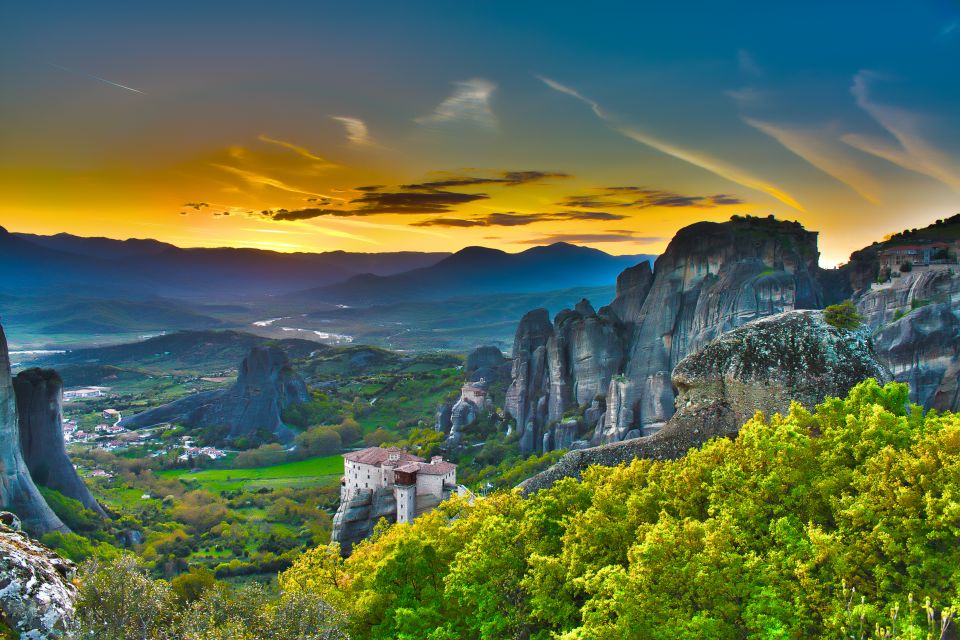
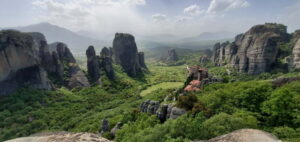
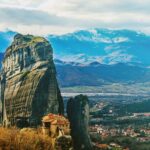
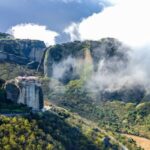
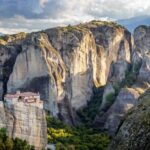
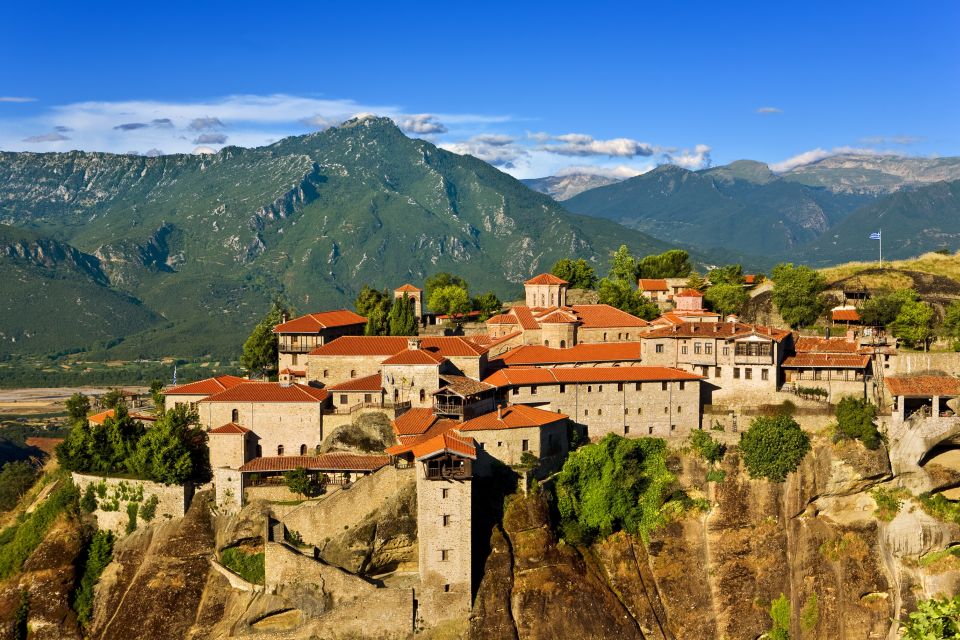
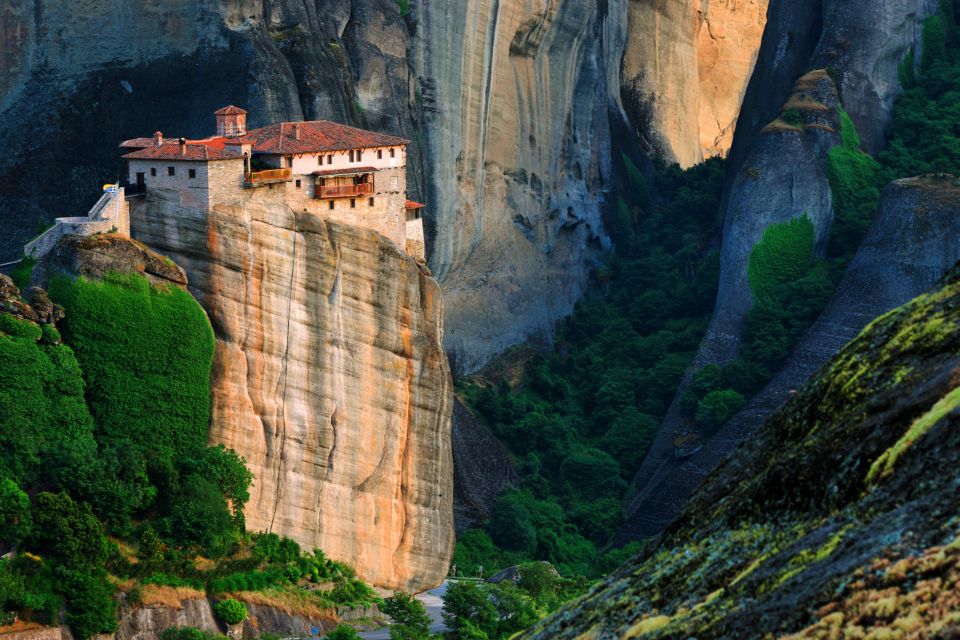
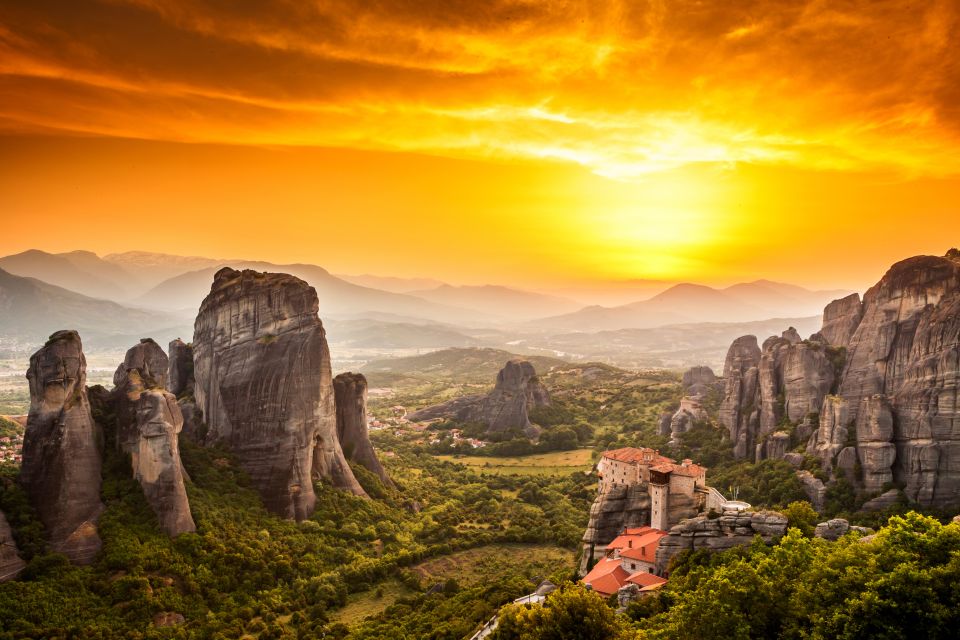
Meteora is not simply a group of old churches. It is a meeting of geology and faith, with towering rock columns rising sharply out of the Thessalian plain. The effect changes as you approach: first the rocks appear in the distance, then the monasteries come into view high above the road.
Eastern Orthodox hermit monks began settling here in the ninth century. Over time, monasteries were built on the rock tops, creating a religious center that was difficult to reach and well protected by its setting. Six monasteries remain well preserved today, and four are still inhabited.
Meteora became a UNESCO World Heritage Site in 1988. That recognition matters, but you do not need to be a history specialist to appreciate the place. The views alone are remarkable. Inside, the painted walls, icons, and small chapels explain why these monasteries remain important religious sites rather than simple monuments.
This trip works well because Meteora is far enough from Thessaloniki to make independent travel awkward in one day. You avoid changing buses and trying to match local transport with opening times. The tradeoff is unavoidable: you spend many hours on the road for a focused visit of roughly two hours.
A few more Thessaloniki tours and experiences worth a look
The early departure from Thessaloniki
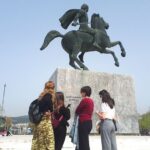
The meeting point is by the statue of Eleftherios Venizelos. A representative waits with a list of names, so arrive with enough time to find the statue and identify the group before departure.
The early start is part of the deal. Exact departure times depend on availability, but this is an 11-hour outing, with an estimated arrival in Kalambaka at 11:30 and a return to Thessaloniki around 18:45. You should think of it as a full excursion, not a relaxed day with a late morning start.
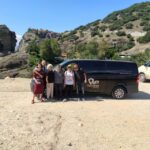
Transport is provided by an air-conditioned luxury bus. Vehicle size can vary with the group. Several departures have used smaller buses, which can make the ride more personal and help the group move around the monasteries more easily. Taller passengers should be aware that a small bus may feel a bit tight, and charging ports are not guaranteed.
The long ride is easier if you bring water, a snack, and something to read. The tour includes a coffee stop on the way back, but you should not count on that stop to replace breakfast or lunch.
Arriving in Kalambaka at about 11:30
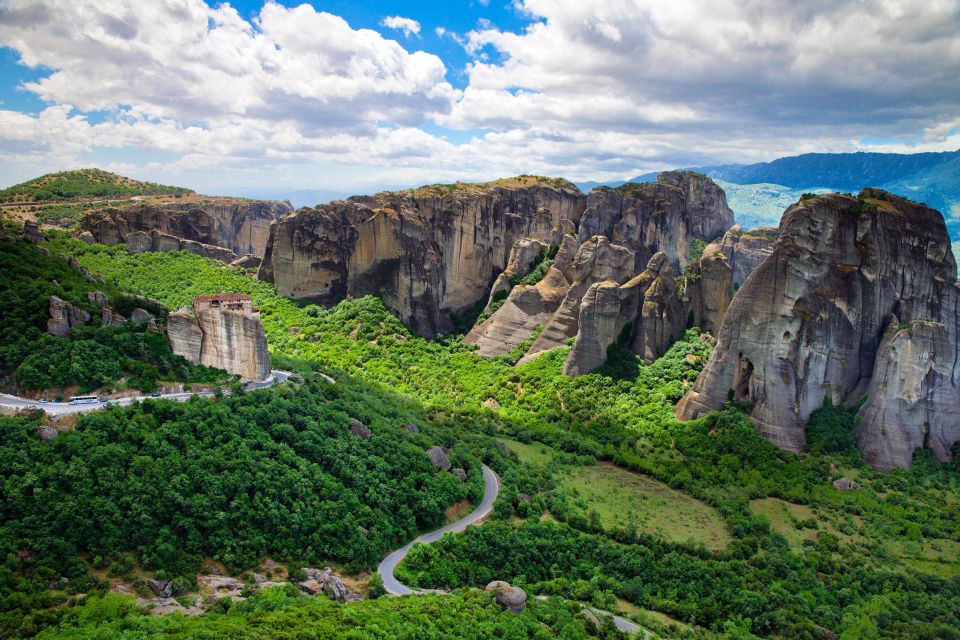
Kalambaka is the gateway town for Meteora. The tour uses it as both the arrival point and the place for free time later in the day. From here, the road climbs toward the rock formations and the monasteries.
The timing gives you a useful first look at the area before lunch. You are not dropped into a tightly packed sightseeing schedule from the moment you arrive. Instead, the tour moves from the bus to the rocks, then allows time back in town for food.
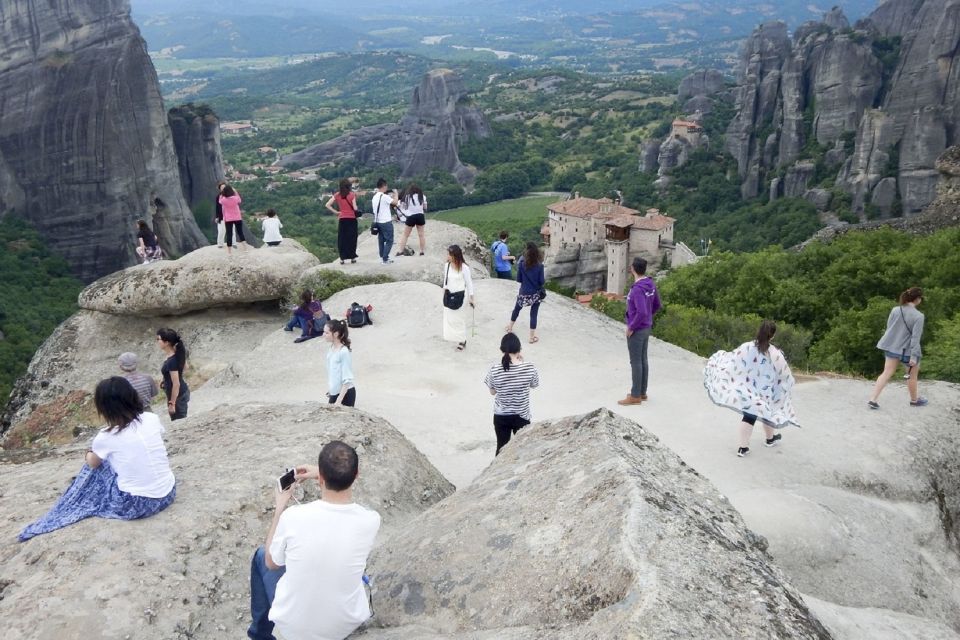
You will want your camera ready during the approach. The rock towers are the main event before you even enter a monastery. Stops for photographs may be included at scenic points, depending on the day’s timing and group size. These pauses matter because the best view of Meteora is often from outside the buildings, where you can see the monasteries in relation to the enormous stone pillars.
Inside two monasteries
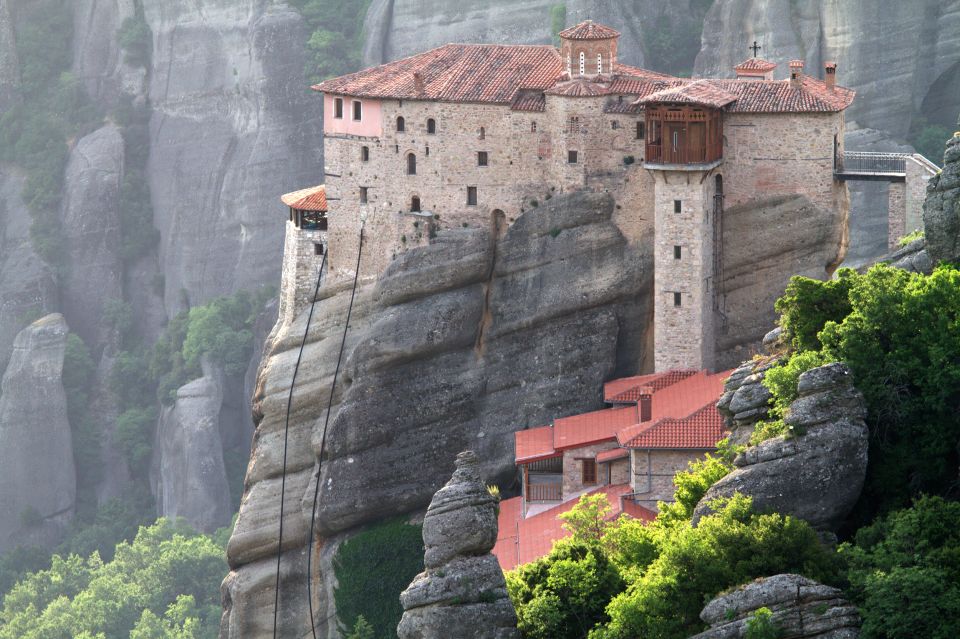
The tour spends about two hours visiting two monasteries. That is enough time for a meaningful look, but not enough to explore all six surviving monasteries or linger everywhere.
The exact monasteries visited can depend on opening schedules and the day’s route. One practical point is worth keeping in mind: the largest or most famous monastery may not be part of your visit. If your priority is one particular building, check before booking rather than assuming it is included.
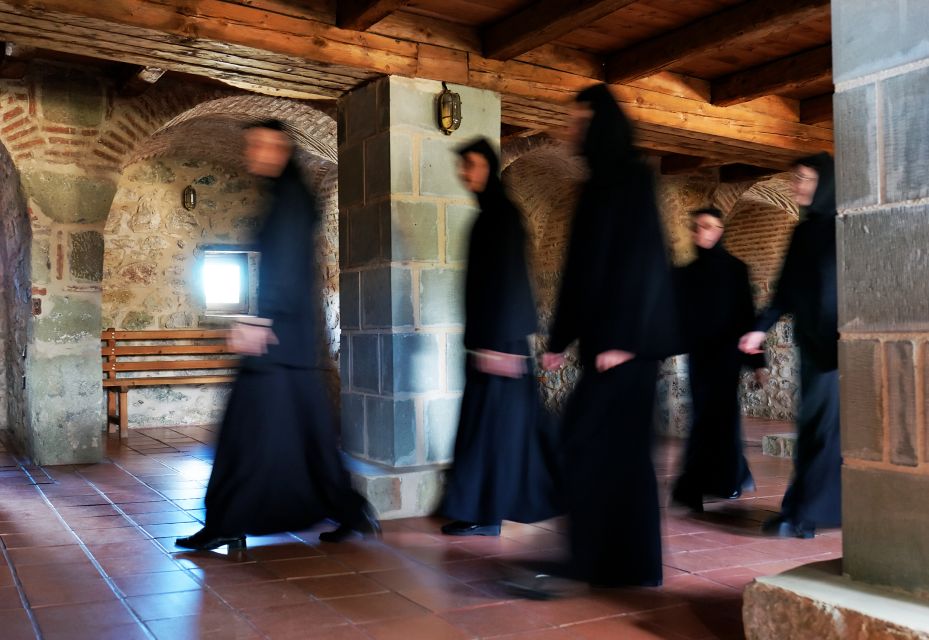
Inside, the focus is on frescoes, religious icons, and the symbolism of the Orthodox tradition. A good guide makes a real difference here. Without explanation, a dark chapel covered in painted scenes can be hard to read. With context, details in the walls and icons become easier to understand.
Guides on different departures have included Dimitra, Julia, Francisca, Konstas, Lily, Filos, and Androniki. The strongest guiding reports describe clear explanations of history, geology, mythology, culture, and religion, along with useful answers to questions. Some guides have also led the group through specific symbols in the churches rather than simply pointing out the paintings.
The group size can help. A smaller party is easier to keep together and less likely to block narrow routes inside the monasteries. It also gives you a better chance of hearing the guide. The tradeoff is that the vehicle may be smaller than you expect.
What to wear for the monasteries
Clothing rules are not a minor detail. Women must wear long sleeves and cannot wear short skirts. Men cannot wear shorts.
Pack suitable clothing before leaving Thessaloniki. The provided information does not specify whether cover-up garments are supplied, so do not rely on borrowing something at the entrance. Respectful clothing also makes the visit more comfortable, since these are active religious places.
The tour is not suitable for wheelchair users. The monasteries are set on steep, rocky sites, and access can involve steps and uneven routes. Anyone with limited mobility should ask the operator for current access details before reserving.
A few more Thessaloniki tours and experiences worth a look


One hour in Kalambaka for lunch
After the monastery visit, you return to Kalambaka for about one hour of free time. Lunch is not included, and the schedule is fairly tight, so this is more of a practical meal break than a long restaurant experience.
The tour may recommend a restaurant, but I suggest looking at the menu and prices before you sit down. Some food stops have been judged disappointing or expensive, while other diners found a different nearby restaurant much better. You have enough time to make your own choice if you act promptly.
One hour is usually enough for a straightforward meal, but not for a leisurely lunch with several courses. If you want to browse shops or explore Kalambaka beyond the meal, keep an eye on the departure time. The bus leaves at about 15:30.
This is one part of the trip where the tour’s value depends on your expectations. The lunch stop is convenient because you do not need to plan food in an unfamiliar town. It is less satisfying if you expect a carefully selected local dining experience.
The return trip and coffee stop
The bus departs Kalambaka at approximately 15:30 and stops for coffee on the way to Thessaloniki. The estimated arrival is around 18:45, though traffic and road conditions can affect the final timing.
The return leg gives you a chance to rest after walking around the monasteries. It also makes the day feel orderly: sightseeing, food, then a simple break before the final run back to the city.
Do not book an evening activity in Thessaloniki too close to the expected arrival time. The schedule is planned, and departures have generally been praised for running on time, but an 11-hour road trip has little room for unexpected delays.
The guides are the heart of the experience
The most praised part of this tour is the guiding. Names connected with different departures include Francisca, Dimitra, Julia, Androniki, Konstas, Lily, and Filos. Their styles may differ, but the useful qualities are consistent: clear English, good organization, and a willingness to explain more than the basic facts.
I especially value a guide who can connect the rock formations with the monasteries’ religious purpose. Meteora can otherwise become a quick photo stop. Explanations about Orthodox frescoes, icons, mythology, and the lives of the monks give the place more meaning.
The guide also controls the rhythm of the day. A good one allows time for photos without losing the group, points out useful views, and keeps the monastery visit moving without making it feel like a race. Several departures have been praised for being informative while still leaving enough breathing room.
There is no guarantee that a specific guide will lead your departure. Still, the repeated names give you a sense of the guiding team associated with this experience.
What the $63 price really covers
At $63 per person, this is a reasonable way to reach Meteora from Thessaloniki in one day. The price includes the bus, an English-speaking guide, central Thessaloniki pickup and drop-off, and taxes.
You must add €3 for each monastery visited. Since the itinerary includes two monasteries, plan on €6 per person for entrances. Lunch and personal expenses are also extra.
That puts the real base cost above the advertised fare, but the transport is the main value. Organizing a return journey to Kalambaka, finding the road up to Meteora, and arranging guiding on your own would take more time and planning. If you are already comfortable with independent transport, you may prefer more control. If you have only one day, the package is easier.
Free cancellation up to 24 hours before departure gives you some flexibility, and you can reserve now and pay later. Those terms are useful if your Thessaloniki plans are still shifting.
Who should book this Meteora day trip?
I would choose this tour if you want to see Meteora from Thessaloniki without changing hotels or planning several transport connections. It suits first-time visitors, people who value historical explanation, and anyone who prefers a guided visit inside active monasteries.
It is also a good fit if you like a clear schedule with room for photos, a fixed return, and a guide handling the practical details. The smaller-group format can be a real advantage inside narrow monastery spaces.
I would hesitate if you want to visit every monastery, spend hours hiking, or choose the exact monastery route yourself. The tour gives you a concentrated introduction, not a slow exploration. It also may frustrate anyone who dislikes long bus rides or wants a carefully planned food experience.
FAQ
How long does the Meteora trip from Thessaloniki last?
The tour lasts about 11 hours. The estimated arrival in Kalambaka is 11:30, and the expected return to Thessaloniki is around 18:45.
Where does the tour start?
The meeting point is by the statue of Eleftherios Venizelos in Thessaloniki. A representative waits there with a list of participants.
How many monasteries do you visit?
You visit two monasteries during approximately two hours at Meteora. Six monasteries remain well preserved in the area, but this day trip does not visit all of them.
Are monastery entrance fees included?
No. Entrance costs €3 per person, per monastery. Visiting two monasteries means planning for €6 per person.
Is lunch included?
No. You have about one hour of free time in Kalambaka for lunch, and you pay for your own meal.
What clothing is required?
Women must wear long sleeves and cannot wear short skirts. Men cannot wear shorts. Appropriate clothing is required to enter the monasteries.
Is the tour wheelchair accessible?
No. The activity is not suitable for wheelchair users.
What language is the tour conducted in?
The live tour guide speaks English. Transportation and guiding are included, with pickup and drop-off at central locations in Thessaloniki.
Should you book it?
Book this trip if Meteora is high on your list and you have only one day from Thessaloniki. The road time is long, but the scenery, cliff-top monasteries, frescoes, and strong guiding make the effort worthwhile.
Go in with clear expectations: two monasteries, a short lunch break, extra entrance fees, and a full day on the road. Bring suitable clothing, keep your evening free, and choose your own lunch spot in Kalambaka. With those details handled, the $63 tour offers a practical and well-guided introduction to one of Greece’s most unforgettable sights.