REVIEW · THESSALONIKI
Guided Walking Tour in the Historical Center of Thessaloniki
Book on Viator →Operated by Dot2dot · Bookable on Viator
Thessaloniki’s story comes alive on foot, from the catacombs beneath St Demetrios to the Roman Forum, Ottoman baths, old markets, and the port facing the White Tower. The tour connects more than 2,300 years of city life in a compact two-and-a-half-hour walk.
I like the small group of no more than 10, which makes it easier to hear the guide and ask questions. I also like the mix of archaeology, food, neighborhood life, and sea views, rather than a tour that only ticks off monuments. The main drawback is that the price of $86.58 is not low for a walking tour, and transport to the starting point is not included.
In This Review
- Key points at a glance
- Why this walk works for first-time visitors
- St Demetrios begins the story underground
- The Greek Agora and Roman Forum
- Louloudadika and Thessaloniki’s many communities
- Kapani Market adds a taste of local life
- Bey Hamam shows the Ottoman layer
- Ladadika recalls the port’s trade
- The port delivers the best open view
- Aristotelous Square ties the city together
- What the guiding is really worth
- Who should book this walk
- Booking, weather, and cancellation details
- Should you book the Thessaloniki walking tour?
- FAQ
- Where does the walking tour start?
- What time does the tour begin?
- Where does the tour end?
- How long does the experience last?
- Is transportation included?
- Is food included in the price?
- What happens if the weather is poor?
Key points at a glance
- St Demetrios and its catacombs: Begin at the city’s patron saint’s church and hear the opening chapter of Thessaloniki’s long story.
- Roman Forum in the old center: See an important archaeological site only a short walk from the meeting point.
- Kapani Market tasting: Sample local delicacies while learning how the city’s market trade developed.
- Louloudadika and Ladadika: Walk two characterful districts shaped by flowers, spices, port trade, and Thessaloniki’s Israeli community.
- Port views: Finish with the White Tower and Thermaic Gulf in view.
- Story-led guiding: Vasiliki and Daphne have been especially praised for careful preparation, archaeology, strong pacing, and visual aids.
Why this walk works for first-time visitors
Thessaloniki can feel scattered at first. Ancient ruins sit beside churches, Ottoman buildings, food markets, cafés, and busy city streets. This walk gives you a useful mental map while showing how different periods overlap in the same small area.
The route begins inland at the Holy Church of Saint Demetrios and gradually heads toward the port. That direction makes sense: you start with the city’s religious and ancient core, pass through its commercial quarters, then finish beside the water. By the end, you have seen the main layers of central Thessaloniki without spending the morning on a bus.
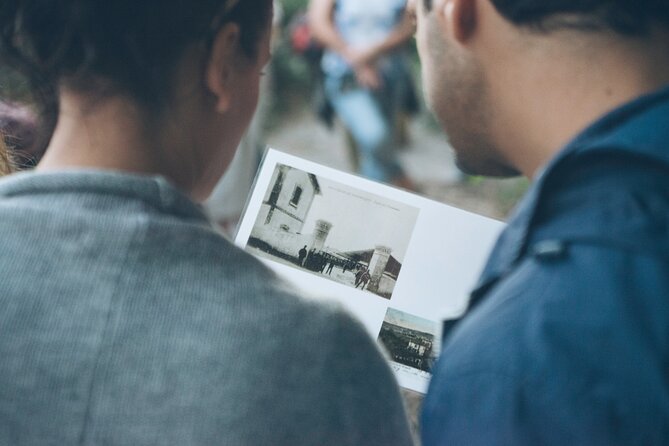
The guide speaks English, and the experience is led by a certified guide. Guides named in the tour details include Vasiliki and Daphne. Daphne has a degree in archaeology, while Vasiliki is noted for bringing laminated picture cards and information sheets to help explain places that can be difficult to picture from ruins alone.
This is not just a walk past buildings. The guide uses stories, images, and smaller details to explain how the city changed through Roman, Byzantine, Ottoman, Jewish, and modern Greek periods. One guide also uses an actor who appears to tell a story, adding a theatrical touch to the historical narration.
You can also read our reviews of more walking tours in Thessaloniki



St Demetrios begins the story underground
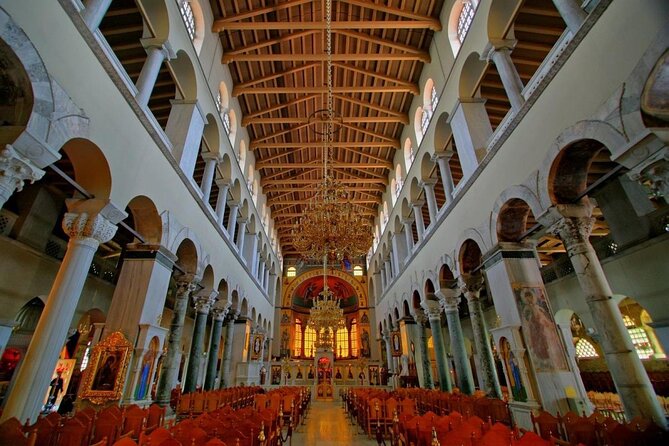
Meet at the courtyard of St Demetrios at 10:00 a.m. The church is dedicated to the patron saint of Thessaloniki, and it gives the tour a strong starting point because the site connects faith, memory, and the city’s early centuries.
You go inside the church and into its catacombs. The tour description promises well-hidden details, so this is a place where a guide adds real value. A visitor walking in alone may see a large historic church, but a trained guide can explain what to look for and why the underground spaces matter.
You spend about 30 minutes here, the longest stop on the route. That extra time is useful. It allows the guide to establish the city’s 2,300-year timeline before the walk moves into the open-air archaeological sites.
The church is an active religious place, so sensible clothing is a good idea. One past participant specifically appreciated the guide’s advice about clothing, luggage, and restaurants, which suggests you can also ask for practical help beyond the formal route.
The Greek Agora and Roman Forum
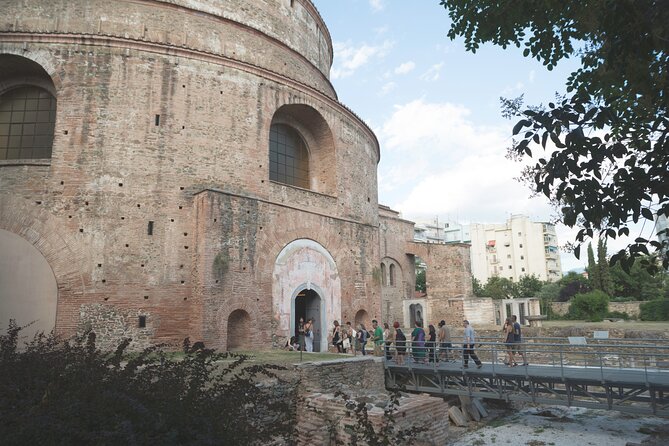
A few steps from St Demetrios, you reach the Greek Agora and Roman Forum. The stop lasts about 15 minutes, enough for an overview rather than a long archaeological lecture.
Here, the guide explains buildings, Roman habits, trade, and the products moving through the city. The mention of an unusual engraving on an ancient Roman commercial road hints at the kind of small detail that can make ruins memorable. Look closely and listen for the story behind the mark rather than treating the site as a collection of broken walls.
This is one of the places where good guiding matters most. Archaeological remains often require imagination. Visual cards and clear storytelling can help you understand how the site once functioned, even when only fragments remain.
If you already visited the Forum on your own, the guide can still add value by pointing out features you may have missed. The stop is brief, so ask your question while you are there rather than waiting until the group has moved on.
Louloudadika and Thessaloniki’s many communities
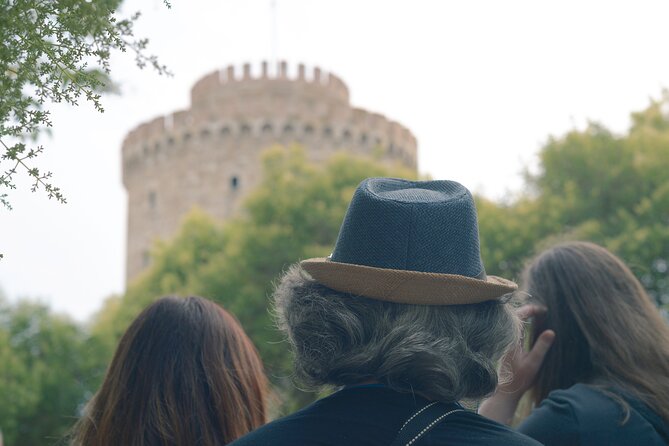
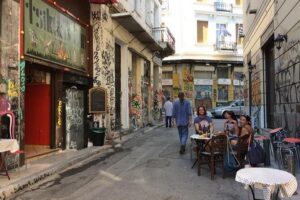
The route then turns into Louloudadika, a colorful quarter named for the flower shops found there. The 15-minute walk through the neighborhood shifts the focus from large monuments to street-level history.
The area also carries traces of Thessaloniki’s Israeli community. The tour brings that part of the city’s past into the story, which is important because Thessaloniki’s identity was shaped by several communities living, trading, worshipping, and working close together.
This section should appeal to you if you prefer neighborhoods to formal sights. You are not only looking at a landmark. You are seeing how commerce and daily life shaped the streets.
The pace is steady, but this is still a walking tour through the center. Comfortable shoes are sensible. The group is limited to 10, which should make it easier to stay together in narrower streets and busier public areas.
Kapani Market adds a taste of local life
At the Kapani, or Vlali, Market, the tour becomes more hands-on. You learn how Thessaloniki’s markets developed and taste top-quality local delicacies. The tasting is included, while anything else you choose to buy is your own expense.
This is a smart part of the route. Food gives you a direct connection to the city, and the market provides a better sense of local life than a quick stop at a restaurant selected only for tour groups. You can see the commercial side of central Thessaloniki while hearing how markets served the city over time.
The tasting is scheduled for about 15 minutes, so expect a sample rather than a full meal. Eat something before the tour if you need breakfast or lunch. The market stop is meant to add flavor and context, not replace a meal.
You may also want to carry a little extra money if you like what you taste. Purchases are not included in the tour price. Since the route ends around the port, you could plan a separate meal afterward in the center or near the waterfront.
You can also read our reviews of more guided tours in Thessaloniki



Bey Hamam shows the Ottoman layer
The next stop is Bey Hamam, Thessaloniki’s first Ottoman bath. It sits beside a road that has remained the city’s most important route from its foundation to the present day.
You spend about 15 minutes here. The stop is less about entering and bathing than about understanding the building’s place in the Ottoman city. The guide can connect the bath to the road, nearby markets, and the movement of people through the center.
This is a good reminder that Thessaloniki’s past is not confined to ancient Greece and Rome. The route deliberately places Ottoman history beside Roman remains and Christian sites, giving you a broader view of how the city developed.
Admission is listed as free for this stop. The tour price covers the guide and market tasting, but no separate paid attraction is part of the experience.
Ladadika recalls the port’s trade
From Bey Hamam, the route continues to Ladadika, one of the liveliest quarters in central Thessaloniki. Its past is tied to the port and to the spices and products arriving from many parts of the world.
Today, the district is known for its social energy, but the guide looks back to its commercial role. That change is worth noticing. A neighborhood can shift from warehouses, merchants, and imported goods to restaurants and evening activity while keeping traces of its older purpose.
You spend around 15 minutes here. It is enough to get the layout and the story, but not enough for a long meal or extended browsing. If Ladadika interests you, mark it for a return visit later, when you can explore at your own pace.
I like this part of the route because it links the market to the port. You see where goods were sold and then learn how they arrived. The walk feels more connected when you follow that chain.
The port delivers the best open view

The port is the final stop, and it offers a change of scale after the close streets and archaeological sites. From here, you can look toward the White Tower, Thessaloniki’s best-known symbol, and across the Thermaic Gulf.
Allow about 15 minutes for the view and the guide’s closing stories. The tour also brings in a local legend about a mermaid searching for her brother. It is a light, memorable way to end a morning filled with archaeology and political history.
The port is also a practical ending point. You finish near the waterfront rather than returning to St Demetrios, so plan your next move in advance. Transport to the start is not provided, and the tour does not include transportation during the walk.
If you arrive by cruise ship, the port finish may be especially convenient, although you should still allow enough time to return to your ship. The tour starts at 10:00 a.m. and lasts about two and a half hours, but you should not treat the stated duration as a guarantee for a tight departure connection.
Aristotelous Square ties the city together
The final listed stop is Aristotelous Square, Thessaloniki’s most important square. Here, the guide tells the story of a fire that changed the city permanently.
This is a strong ending because it moves from ancient foundations to modern urban change. The square helps you think about Thessaloniki not as a frozen old city, but as a place repeatedly reshaped by disaster, rebuilding, trade, and public life.
The route description places both the port and Aristotelous Square at the end of the experience. Since each stop is timed at roughly 15 minutes, the exact order may depend on the guide and the day’s conditions. Either way, the square gives you a useful final piece of the city’s modern story.
What the guiding is really worth
At $86.58 per person, this is more expensive than a basic group walk. You are paying for an experienced certified guide, a maximum group size of 10, and a market tasting, not for transport or a long list of paid admissions.
The value depends on how you like to explore. If you are happy to read plaques and wander alone, the price may feel high. Most stops are free to enter, and the route covers public streets and open archaeological areas.
If you want a clear narrative, the cost is easier to justify. Thessaloniki’s history includes many occupations, communities, religious traditions, and changes in urban life. A guide who can connect those subjects, use images, and keep the pace under control can save you time and help you notice more.
The strongest praise has focused on storytelling, preparation, archaeology, and pacing. Vasiliki’s laminated cards were particularly useful for making the past easier to picture. Daphne’s archaeology background helped explain details at sites that some people had already visited without fully understanding.
The perfect score from 10 reviews is encouraging, but the sample is small. I would treat it as a strong signal about the guide-led format, not as proof that every group will have the same experience.
Who should book this walk
This tour suits you if you want a compact introduction to Thessaloniki early in your stay. It covers major historical themes without taking a full day, and you finish in a useful part of town.
It is also a good fit if you enjoy stories more than fact lists. The actor who appears during one story, the mermaid tale at the port, and the use of picture cards give the walk a more personal feel than a standard monument-to-monument route.
You should be comfortable walking for two and a half hours and participating in an outdoor route. Most people can take part, and service animals are allowed. The tour is near public transportation, but getting to St Demetrios is your responsibility.
The English-only format works well for English-speaking visitors. A small group is another plus if you prefer to ask questions or stay close to the guide.
You may want something else if you need extensive interior visits, a seated experience, or a full meal. The tour includes a tasting, but it is not a food tour in the traditional sense. It also does not include transportation or purchases made along the way.
Booking, weather, and cancellation details
Confirmation is sent within 48 hours, subject to availability. The tour is often booked well ahead, with an average booking time of 38 days, so reserve early if your schedule is fixed.
You can cancel up to 24 hours before the 10:00 a.m. start for a full refund. Changes or cancellations made less than 24 hours before the start are not accepted for a refund. Cut-off times follow local time in Thessaloniki.
The experience requires good weather. If poor weather causes cancellation, you receive the choice of another date or a full refund.
Should you book the Thessaloniki walking tour?
Book it if you want a well-shaped introduction to the city, especially one that combines St Demetrios, Roman remains, Ottoman history, markets, old districts, food, and the waterfront. The small group and guide-led storytelling are the main reasons to choose it over a cheaper self-guided walk.
I would book this early in your stay so you can use the guide’s city advice afterward. Ask for restaurant and neighborhood suggestions, and keep Ladadika or the market on your list for another visit.
Skip it if $86.58 feels too steep for a mostly outdoor route with free admission, or if you prefer to explore independently. For the right reader, though, the value lies in the connections between the stops. You leave with more than a list of sights. You understand how Thessaloniki’s streets, faiths, trade, and waterfront fit together.
FAQ
Where does the walking tour start?
The tour starts at the Holy Church of Saint Demetrios, Ag. Dimitriou 81-83, Thessaloniki 546 33, Greece.
What time does the tour begin?
The scheduled start time is 10:00 a.m.
Where does the tour end?
The tour ends at the Port of Thessaloniki, Thessaloniki 546 27, Greece.
How long does the experience last?
The walking tour lasts approximately 2 hours and 30 minutes.
Is transportation included?
No. Transportation to the starting point is not provided, and the experience is a walking tour.
Is food included in the price?
A tasting of local delicacies at Kapani Market is included. Anything else you choose to buy during the tour is not included.
What happens if the weather is poor?
The experience requires good weather. If it is canceled because of poor weather, you are offered a different date or a full refund.