REVIEW · HERAKLION
Heraklion: Archaeological Museum Ticket with City Audio Tour
Book on GetYourGuide →Operated by Key Tours · Bookable on GetYourGuide
Minoan frescoes in a single, focused stop. This ticket gives you time-specific entry to one of Crete’s top museum stops, so you’re not guessing at doors or lines. I also love how much you can pack into a day here: the museum’s best-known pull is its Minoan frescoes, including the bull-leaping scene, plus major star objects like the Phaistos Disc.
The main thing to watch is the strict timing. Your entry is only allowed in your selected slot (or within 15 minutes before/after), and the ticket is non-refundable, so plan your day carefully.
In This Review
- Key highlights to look for
- Entering the Heraklion Museum with a time-slot plan that actually works
- Minoan galleries: frescoes, pottery, and the bull-leaping scene
- The Phaistos Disc: why one small object becomes a big moment
- Jewelry, tools, and the Heraklion Treasure: wealth you can almost touch
- From Neolithic to Roman: why you should keep walking after Minoan highlights
- City audio tour: using it to connect the museum to Heraklion streets
- What’s included, what’s not, and the few details that change your comfort
- Price and value: is $18 a fair deal for what you’re getting?
- Practical timing tips: how to avoid stress on a ticket with a tight window
- Who this works best for (and who might want a different format)
- Should you book this Heraklion Museum ticket with city audio?
- FAQ
- What does the ticket include?
- Is there an audio tour inside the museum?
- Where is the meeting point?
- Can I change my entry time or date after booking?
- Are entry times flexible?
- What should I bring?
- Is the museum accessible and are pets allowed?
Key highlights to look for
- A pre-booked, email-delivered time slot that matches your museum visit window
- Minoan frescoes with famous scenes like bull leaping, Sacred Grove, and Dolphin
- Phaistos Disc, one of the museum’s most talked-about mysteries
- The Heraklion Treasure, with gold artifacts, weapons, and jewelry
- Audio for Heraklion City, so you can connect what you see indoors to the streets outside
Entering the Heraklion Museum with a time-slot plan that actually works
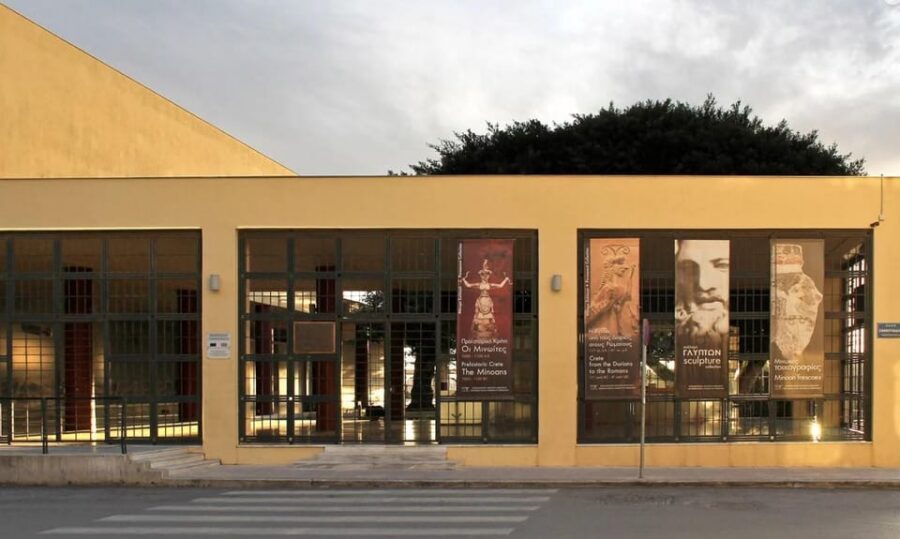
Heraklion’s Archaeological Museum is popular, and that’s exactly why this ticket format helps. You get a pre-booked admission ticket sent to your email, tied to a specific time. That means your visit starts with fewer surprises and more confidence.
When you arrive, the meeting point is the museum entrance. You go in on your own—no waiting for a guide to lead you to your seat. Once you’re inside, you’re free to explore at your own pace with the time you have.
Two rules matter most:
- Entry is permitted only at your selected time slot (or within 15 minutes before or after).
- You can’t amend the entry date or entry time after you book.
If you’re the type who likes to wander, this still works—just be sure you’re not trying to squeeze the museum between a tight bus connection and a late dinner. Build in buffer time.
A few more Heraklion tours and experiences worth a look


Minoan galleries: frescoes, pottery, and the bull-leaping scene
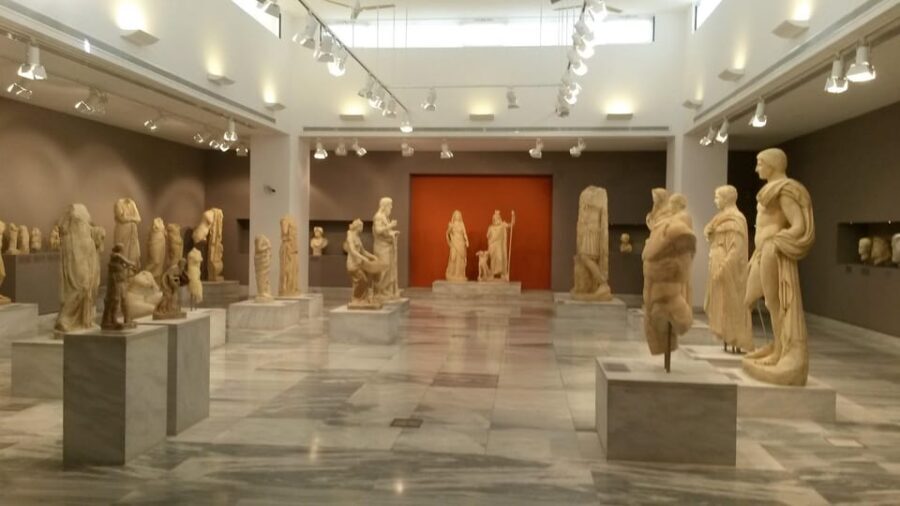
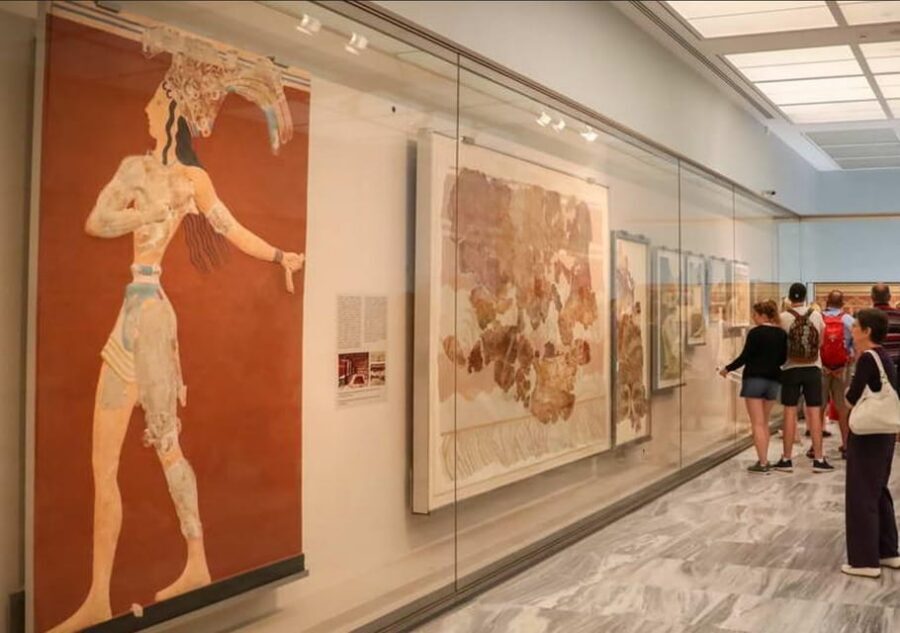
If you’re choosing Crete’s museum hour wisely, this is where to spend it. The museum’s crown jewels are its Minoan displays, and the frescoes get the spotlight for a reason. You’ll be looking at wall-painting style scenes that show religion, sport, and everyday life from a civilization that’s still hard to fully explain.
Here are the big hits to keep your eyes on:
- The Fresco of the Sacred Grove: often the most striking “ritual” themed scene in the Minoan lineup.
- The Fresco of the Dolphin: a vivid example of how playful (and skilled) Minoan artists could be.
- The bull-leaping scene: the image that tends to make people stop walking and just stare.
And it’s not only frescoes. You’ll also find pottery and other artifacts that help you understand what these people made and used. The overall effect is that you’re not just staring at pretty objects—you’re building a mental picture of the Minoan world as something lived-in.
Practical tip: don’t try to read every label on your first pass. Give yourself a quick sweep to orient yourself, then return to the scenes that genuinely pull you in.
The Phaistos Disc: why one small object becomes a big moment
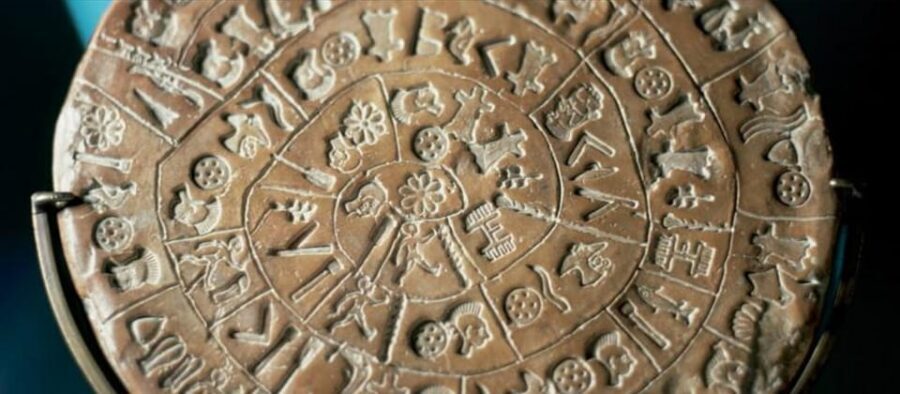
The Phaistos Disc is one of those museum objects that people talk about because it sits in the awkward space between what we have and what we still can’t decode. Even if you don’t know the details, it’s worth giving it time.
Here’s what I like about how the museum uses it: it anchors your attention. After seeing towering fresco scenes, turning to a single compact “mystery object” helps your brain switch gears. It’s the kind of item that makes the whole visit feel more human—because it reminds you that archaeology is partly about interpretation.
To get more out of it:
- Spend a focused moment there, then step back and look at the broader room context.
- Ask yourself what kinds of evidence the museum is using to explain the Minoan era—art style, objects, tools, burial patterns, and more.
Even without any extra add-ons, this museum gives you plenty to think about.
Jewelry, tools, and the Heraklion Treasure: wealth you can almost touch
If frescoes are the emotional hook, the museum’s goldwork is the “wow, that’s real” part of the show. The display often called the Heraklion Treasure includes gold artifacts, weapons, and jewelry. Seeing it in person changes how you think about Minoan wealth and craftsmanship.
A few things you’ll get from this section:
- The precision of intricate jewelry designs—small details that reward slow looking.
- How tools and everyday materials show technical skill, not just fancy objects.
- A sense that Crete’s power and trade networks weren’t tiny or isolated.
Balanced takeaway: it’s easy to treat gold displays as a shortcut to spectacle. Here, the museum’s broader collection helps you connect wealth to culture, labor, and what people valued. You’re not just impressed—you’re learning how the pieces fit together.
From Neolithic to Roman: why you should keep walking after Minoan highlights
One of the best choices the museum makes is not stopping at the Minoans. You get objects spanning about 5,500 years, moving through the Neolithic, Early Bronze Age, and onward into Roman periods.
This matters because it stops your visit from becoming one long “Minoans only” storyline. Instead, you can see:
- continuity and change in material culture,
- how later eras interacted with what came before,
- and how Crete’s story kept evolving after the Minoan peak.
So yes, you should chase the fresco rooms first. But don’t skip the later galleries. If you only do the headline stuff, you miss the bigger lesson: ancient Mediterranean history isn’t one era—it’s a series of overlaps.
You can also read our reviews of more city tours in Heraklion



City audio tour: using it to connect the museum to Heraklion streets
This experience includes a self-guided audio tour of Heraklion City, and that’s a smart add-on if you want your day to feel connected rather than chopped into separate blocks.
One catch: the included audio is for the city, not a self-guided audio specifically for the museum. The museum visit is designed around your own time and reading at exhibits.
Also pay attention to what’s not included:
- You’ll need your own smartphone and/or headphones. The activity doesn’t provide them.
How to make the city audio tour work well:
- Do the museum first (when the big visuals are freshest in your mind).
- Then switch to the audio while walking the streets, looking for links between what you saw—symbols, materials, and historical themes—and what you notice outside.
If you’re staying in or near central Heraklion, this can turn a one-museum day into a more memorable “place” day.
What’s included, what’s not, and the few details that change your comfort
Here’s the clean breakdown of what you get versus what you’ll supply yourself:
Included
- Regular entry ticket
- Free time to explore the museum
- Self-guided audio tour of Heraklion City
Not included
- Self-guided audio tour for the Heraklion Archaeological Museum
- Live guide
- Smartphone or headphones
- Food and drinks
- Transportation
That “not included” list affects how you should prepare. Bring headphones you like, charge your phone, and have a plan for water/snacks outside the museum.
Also note the basic conduct rules: pets are not allowed, and smoking isn’t allowed. Small details, but they keep your visit smooth.
Price and value: is $18 a fair deal for what you’re getting?
At $18 per person, you’re paying for time-slot museum access plus a separate city audio layer. Whether that feels like good value depends on what you’re shopping for:
You’ll feel like you got your money’s worth if you:
- want Minoan highlights without paying for a live guide,
- like wandering at your own speed,
- and you’re excited by both famous fresco scenes and puzzle-like objects like the Phaistos Disc.
Where the value can feel less great:
- If you were specifically hoping for audio guidance inside the museum itself, you won’t get that. Your main “guide” here is the exhibits and labels you read on-site.
In other words, this is a good choice for independent travelers who can handle a museum with self-exploration, and who will actually use the city audio tour after.
Practical timing tips: how to avoid stress on a ticket with a tight window
Because entry is limited to your chosen time slot (plus a 15-minute buffer), your day planning matters more than usual.
Do this:
- Choose a start time that leaves you breathing room before entry.
- Arrive early enough to settle in, find your flow, and not feel rushed.
Don’t do this:
- Don’t schedule the museum as the “last stop” after something that could run long.
- Don’t assume you can shift times if plans change—entry time can’t be amended.
If you want a smooth day, treat the museum as the anchor and let everything else flex around it.
Who this works best for (and who might want a different format)
This experience fits best if you:
- love self-paced museums,
- want major Minoan objects like the bull-leaping scene and Phaistos Disc,
- and plan to walk Heraklion afterward with the included city audio.
It may not fit as well if you:
- strongly prefer guided narration inside the museum,
- want headphones provided for you,
- or are likely to change your schedule last minute.
Should you book this Heraklion Museum ticket with city audio?
I’d book it if you want an efficient, independent way to see the museum’s biggest Minoan hits—fresco scenes, goldwork, and the Phaistos Disc—without extra guiding costs. The $18 price becomes easier to justify when you treat the city audio tour as part of your day, not an afterthought.
I’d think twice if you need museum audio interpretation or if your schedule is fragile. The time-slot rules are strict, and the ticket is non-refundable, so it only pays off when your day plan is steady.
If you want a solid, self-guided Crete culture day in central Heraklion, this is a smart booking.
FAQ
What does the ticket include?
It includes a regular entry ticket to the Heraklion Archaeological Museum, free time to explore, and a self-guided audio tour of Heraklion City.
Is there an audio tour inside the museum?
No. The included audio is for the city, not a self-guided audio tour of the museum itself.
Where is the meeting point?
The meeting point is the entrance of the Museum, and you enter on your own.
Can I change my entry time or date after booking?
No. The entry time slot can’t be amended for any reason.
Are entry times flexible?
Entrance is permitted only at your selected time slot or within 15 minutes before or after.
What should I bring?
You’ll need a smartphone and/or headphones for the self-guided audio tour. Food and drinks and transportation are also not included.
Is the museum accessible and are pets allowed?
The activity is wheelchair accessible. Pets are not allowed, and smoking isn’t allowed.