REVIEW · THESSALONIKI
In the footsteps of Alexander the Great – Macedonian kingdom – 8 hrs
Book on Viator →Operated by Greece Guided Tours by Efi Kalampoukidou · Bookable on Viator
Ancient Macedonia comes into focus on this full-day route from Thessaloniki. At Pella, you see the birthplace of Alexander the Great, its finely made pebble mosaics, and an excellent museum. At Vergina, you go underground into the Great Tumulus to see the royal tomb of Philip II, Alexander’s father, along with gold, silver, and ivory treasures.
I like the clear family story linking the two stops: Pella was the later capital and Alexander’s home, while Aigai, now Vergina, was the earlier royal center. I also like the private format, since your guide can spend more time on the subjects that interest you, from ancient farming and architecture to politics and trade.
The main caution is cost planning. The advertised $308.76 is for the private guiding service for up to 15 people, but transport, entrance fees, lunch, and drinks are extra. Confirm the vehicle price before booking, especially if your hotel is outside Thessaloniki.
In This Review
- Key points to know before booking
- Two capitals that explain Macedonian power
- Pella: mosaics in the birthplace of Alexander
- Pella Museum: objects that make the ruins readable
- Vergina: going underground into the Great Tumulus
- What a private guide adds to the day
- Transport from Thessaloniki needs careful checking
- The real cost: about €40 per person before transport
- Who will get the most from this excursion
- Practical booking advice for Pella and Vergina
- Should you book this Macedonian kingdom tour?
- FAQ
- How long does the tour last?
- Where does the tour start and finish?
- Is transportation included in the price?
- How much are the entrance fees?
- Is lunch included?
- Is this a private tour?
Key points to know before booking
- Two royal centers in one day: Visit Pella, the birthplace of Alexander the Great, and Aigai at Vergina, the first capital of the Macedonian kingdom.
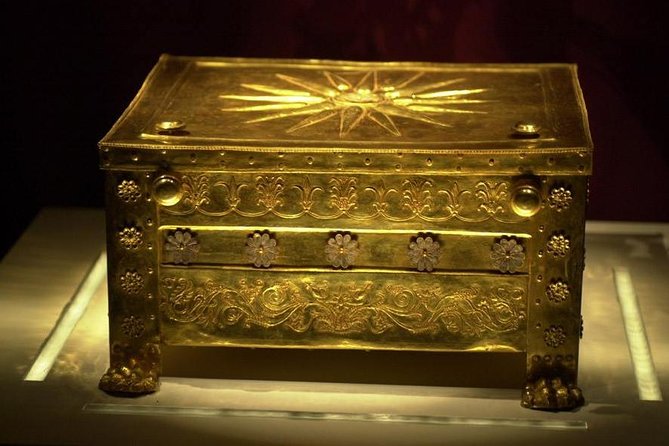
- The royal tombs are underground: Vergina’s museum protects Philip II’s tomb and royal treasures inside the Great Tumulus.
- Private touring for up to 15 people: Only your group takes part, with a certified English-speaking guide for the full day.
- Pella has two separate admissions: The archaeological site and museum each cost €10 per person.
- Vergina costs €20 per person: Add the three listed admissions to your tour budget, for a total of €40 per person.
- Transport is arranged separately: Pickup and drop-off can be set up from a Thessaloniki hotel or apartment, but they are not included in the guiding fee.
Two capitals that explain Macedonian power
This tour works because it tells a connected story rather than sending you to one isolated ruin. You begin at Pella, the second capital of the Macedonian kingdom and the place associated with Alexander the Great’s birth. Later, you visit Aigai, the first capital, at modern Vergina.
That sequence matters. Pella lets you picture the royal city where Alexander grew up, while Vergina brings you close to the earlier royal dynasty through its burial monuments. The day links the public world of streets, houses, mosaics, and museums with the private world of kings, family burial, and royal possessions.
You are not simply ticking off two archaeological sites. You are following the rise of a royal family through its cities and tombs. A certified guide can help connect the objects to geography, agriculture, architecture, economics, and the political world of ancient Macedonia.
The experience has a reported rating of 4.4 from 10 ratings, so it is well regarded but not without a point of debate. Its greatest strength is the personal interpretation. Its main weakness is that someone who has already studied Philip II and Macedonian history may find the guide less necessary, since both sites and museums provide written information.
You can also read our reviews of more tours and experiences in Thessaloniki.



Pella: mosaics in the birthplace of Alexander
The first stop is the archaeological site at Pella, about 45 minutes of the day. This is where the tour begins to feel personal. Pella is known as Alexander the Great’s birthplace, and the remains help you picture the setting behind the famous name.
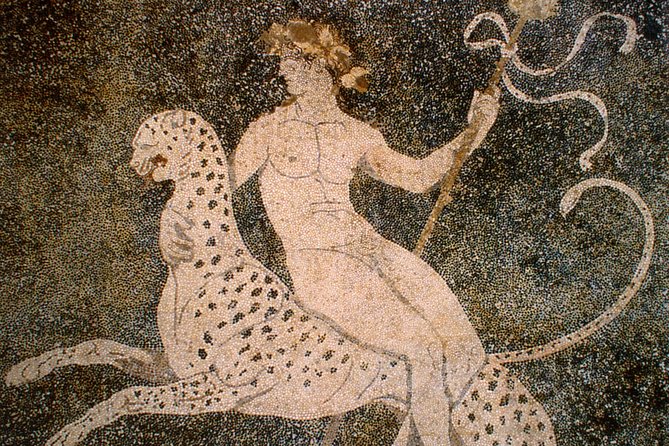
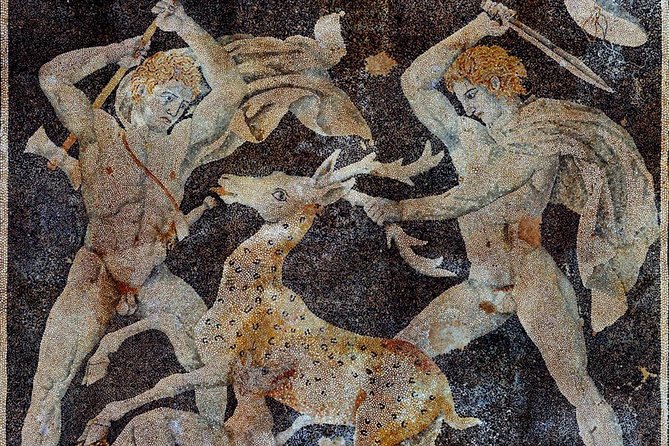
The most memorable feature is the pebble mosaic flooring in the wealthy houses. These floors are not just decorative fragments. They show the taste and resources of the city’s upper class, and they give you something concrete to look at while the guide explains how ancient homes and civic spaces functioned.
Allow yourself time to look closely. Pebble mosaics can seem modest at first compared with the huge marble floors of other ancient sites, but their patterns and workmanship reward patience. Your guide can point out what you are seeing and place the houses within the wider Macedonian setting.
The site visit lasts around 45 minutes, which is enough for an introduction but not an unhurried archaeological study. If you enjoy photographing details or reading every sign, you may want to ask the guide how the timing will be divided between the ruins and museum.
Admission to the archaeological site is not part of the guiding price. The listed fee is €10 per person. That separate charge is easy to overlook, so include it when comparing this tour with a driver-only option or a larger group excursion.
Pella Museum: objects that make the ruins readable
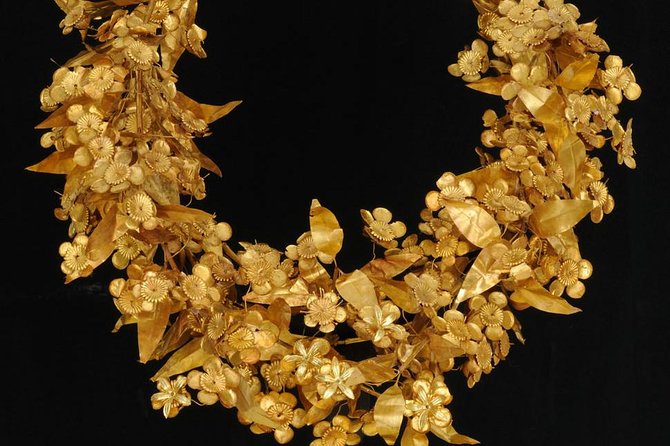
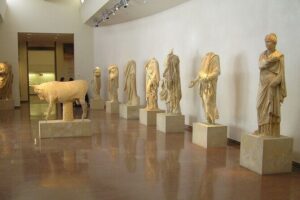
Next comes the Archaeological Museum of Pella, with about an hour set aside. This is an important part of the day, not a backup plan for bad weather. The museum holds the principal finds from the area, including pottery, jewelry, mosaics, and coins.
I like this pairing of site and museum. At the ruins, you see where people lived and moved through the city. In the museum, you see the smaller objects that reveal daily life, wealth, trade, and artistic skill. The two stops make more sense together than either would alone.
The museum is described as new and excellent, but the tour information does not provide details about its layout or individual galleries. Your guide’s role is therefore useful if you want help sorting the displays into a clear story instead of walking past cases of objects without context.
The museum admission is another €10 per person. Since the site and museum have separate charges, you should budget €20 per person for Pella alone. No lunch or drinks are included, although bottled water is provided during the drive.
Vergina: going underground into the Great Tumulus
The second half of the day takes you to Vergina, the modern name for ancient Aigai, the first capital of the Macedonian kingdom. The Museum of the Royal Tombs of Aigai is the emotional center of the excursion.
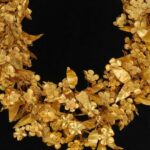
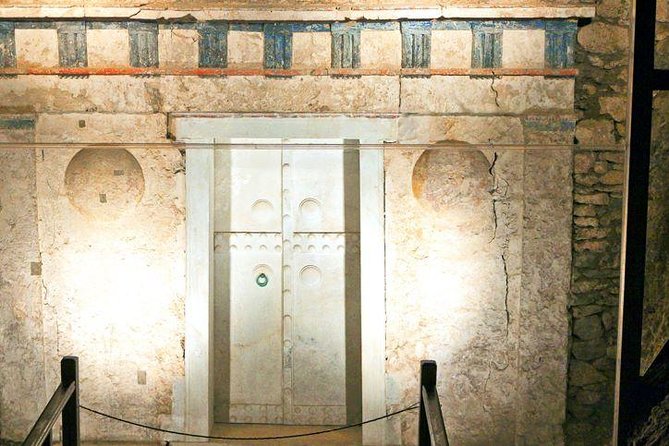
You go underground into the Great Tumulus, the burial mound that protects the royal tombs and their contents. The main focus is the tomb of Philip II, Alexander’s father, along with the tomb of a prince. The museum also displays royal treasures made of gold, silver, and ivory.
This setting changes the mood. Pella is an open archaeological site, where you study foundations and flooring in daylight. Vergina is designed around preservation and discovery, with the burial chambers and precious objects kept within a dark, enclosed museum. The experience is more concentrated and visually powerful.
The tomb museum is allotted about an hour and 30 minutes. That longer visit gives you time to see the burial structures and examine the royal objects without rushing through the most important stop. Admission is €20 per person, making it the single largest entrance charge of the day.
The site is often described as the most important archaeological discovery in Greece in the 20th century. That is a strong claim, but the reason for its importance is clear from what you see: royal burials preserved with their valuable contents, tied directly to the Macedonian ruling family.
You should not expect a casual open-air ruin here. The visit is centered on the tombs and museum displays. If you prefer ancient cities with broad streets and lots of space to wander, Pella will suit you better. If you want royal objects and a focused archaeological presentation, Vergina is likely to be the highlight.
What a private guide adds to the day
The tour includes one certified private guide for the full day, and only your group participates. That makes a real difference on a long historical excursion. You can ask questions as they arise, request more explanation at Pella or Vergina, and keep the pace suited to your group.
The guide can discuss more than Alexander’s military career. A particularly strong guiding style, reflected in the available feedback, covers geography, agriculture, architecture, geopolitics, and the economics of the period. Those subjects help you understand why Macedonia could support a powerful royal state.
This wider view is valuable because Alexander is an easy figure to treat as a standalone hero. The places around Thessaloniki tell a broader story about land, cities, farming, wealth, royal power, and family succession. Ask your guide to connect the objects in the museums with those larger forces.
The tour is offered in English. The provider is Greece Guided Tours by Efi Kalampoukidou, but the available information does not identify the individual guide assigned to every booking. One especially praised guide was described as an older woman with a strong command of the subject and a professional, well-organized approach.
There is also a practical question about how much guiding you want. The museums have plaques and written explanations. If you have already researched Philip II and Macedonian history, you may prefer a driver and independent visits. If you want interpretation, local perspective, and the ability to ask questions, the private guide is the central reason to choose this experience.

Transport from Thessaloniki needs careful checking
Pickup can be arranged from any hotel or apartment in Thessaloniki, with travel by taxi, limousine, or van. The tour ends back at the meeting point, which is useful after a seven to eight-hour day away from the city.
But the vehicle is not included in the stated price. The transport cost depends on the number of people and the type and size of vehicle required. Pickup outside Thessaloniki can add charges for distance, tolls, and extra time.
This arrangement is not necessarily a problem, but you need the complete price before confirming. Send a message through the booking portal and ask for the total cost of pickup, all transportation during the tour, and return to your accommodation. A group of two may face a different per-person cost from a group of ten.
The private format can make transport good value for a family or larger party. The listed guiding price is $308.76 per group of up to 15, not per person. Once divided among several people, the guide fee becomes easier to justify, although the vehicle and entry charges still apply to everyone.
The real cost: about €40 per person before transport
The three listed admission fees add up to €40 per person:
- Pella archaeological site: €10
- Pella Archaeological Museum: €10
- Museum of the Royal Tombs of Aigai at Vergina: €20
You also need to cover lunch. No meal or drinks are included, though bottled water is provided en route. The schedule allows time for lunch, but the exact restaurant and meal arrangement are not specified, so ask how much time will be available and whether the guide will join you.
A small cultural point is worth clarifying. The guide may sit with your group during lunch and help explain Greek dishes or speak with the restaurant staff. One past disagreement involved the guide’s meal and the assumption that the group would pay. To avoid awkwardness, ask directly about the restaurant arrangement and separate checks before ordering.
For value, compare this with what you would pay for a private driver, fuel, parking, and separate guides or audio tools. The tour makes the most financial sense if you want a single person to interpret both sites and your party can share the private guiding and vehicle costs.
Who will get the most from this excursion
I would recommend this day to you if ancient Macedonia is a major reason for visiting northern Greece. It is especially suitable for people who want to understand Alexander through his family, city, and royal setting rather than through battlefield stories alone.
Families and small groups may appreciate the private setup. You can avoid being tied to the pace of strangers, and a guide can adjust explanations for different ages and interests. The day also suits visitors who want pickup from their Thessaloniki accommodation instead of arranging an intercity rental car.
You should think twice if you are looking for a light sightseeing day. The subject is serious, the museums are central, and the total outing lasts about seven to eight hours. There is substantial driving between Thessaloniki, Pella, and Vergina, plus three admission areas and a lunch break.
Independent history readers may also prefer to arrange a car and visit on their own. The signs and museum displays provide information, and a driver can get you between the sites without the private guide fee. You give up the chance to ask questions and have one person link the two capitals into a single story.
Practical booking advice for Pella and Vergina
Confirm four things before you pay:
- The full transport price from your exact Thessaloniki address
- The vehicle type for your group size
- The planned lunch stop and how the bill is handled
- The total entrance cost for every person in your party
The experience requires good weather and may also require a minimum number of participants. If poor weather or an unmet minimum causes cancellation, you are offered another date or a full refund. You can cancel for a full refund up to 24 hours before the start time, but changes or cancellations inside that window are not accepted.
Most people can participate, and service animals are allowed. The information does not give specific details about accessibility at the archaeological site or underground museum, so ask the provider directly if anyone in your group has mobility concerns.
Should you book this Macedonian kingdom tour?
Book it if you want a private, guided day that links Alexander the Great’s birthplace at Pella with Philip II’s royal tomb at Vergina. The route has real historical shape, the museums add substance to the ruins, and the private guide gives you more than a drive-by visit.
Before booking, get the transport quote in writing and add €40 per person for the three admissions, plus lunch. I would choose this tour for a group that values explanation and discussion. If you already know the history well and mainly need a vehicle, book a driver instead and use the site information independently.
FAQ
How long does the tour last?
The experience lasts approximately seven to eight hours, including visits to Pella, the Pella Archaeological Museum, and the Museum of the Royal Tombs of Aigai at Vergina.
Where does the tour start and finish?
It starts in Thessaloniki and ends back at the meeting point. Pickup can be arranged from a hotel or apartment in Thessaloniki.
Is transportation included in the price?
No. Pickup, transportation during the tour, and drop-off are arranged separately. The cost depends on the number of people, vehicle type, distance, tolls, and time required.
How much are the entrance fees?
The Pella archaeological site costs €10 per person, the Pella Archaeological Museum costs €10 per person, and the Museum of the Royal Tombs of Aigai costs €20 per person.
Is lunch included?
No. Lunch and drinks are not included. Bottled water is provided while you are traveling between stops.
Is this a private tour?
Yes. Only your group takes part, with a private certified guide for the full-day tour. The maximum group size is 15 people, and the tour is offered in English.