REVIEW · THESSALONIKI
Jewish Sightseeing Private City Tour in Thessaloniki
Book on Viator →Operated by Hello Thessaloniki · Bookable on Viator
Thessaloniki’s Jewish story is written across the city, from Sephardic arrivals in 1492 to the destruction of nearly the entire community during the Nazi occupation. This private tour connects that story through the Jewish Museum and Monastirioton Synagogue, then adds elegant villas and memorials that show how Jewish families shaped the city’s business and cultural life. I especially like the hotel pickup and private vehicle, since the stops are spread across central Thessaloniki and the eastern villa district.
I also like the human scale of the visit. You get an English-speaking guide, time to ask questions, and photos plus a short video after the tour. The main drawback is price: at $324.41 per person, this is a serious spend, especially since entrance fees, lunch, and drinks are extra. Confirm the guide and schedule before departure, too, since one past booking had a delayed guide change.
In This Review
- Key points to know
- Why Thessaloniki’s Jewish story matters
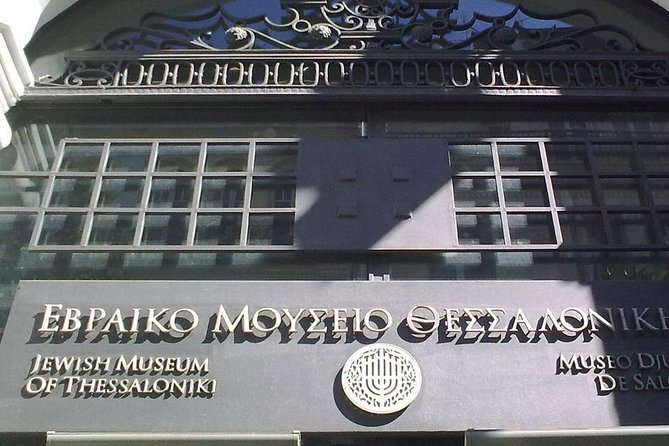
- Starting at the Jewish Museum of Thessaloniki
- Monastirioton Synagogue and a surviving place of worship
- Casa Bianca and the Jewish families who shaped the city
- Villa Modiano and the city’s changing public life
- Villa Allatini and the politics of the Ottoman era
- Remembering the deportations at Eleftheria Square
- Yad Lezicaron and the lost Jewish cemetery
- What the private format adds
- Is $324.41 per person a fair price?
- Who should book this Thessaloniki tour?
- Should you book it?
- FAQ
- How long does the Jewish sightseeing tour last?
- What time does the tour start?
- Is hotel pickup included?
- Is transportation provided?
- Is the tour private?
- Is an English-speaking guide included?
- Are entrance fees included?
- Are food and drinks included?
- Can I cancel for a full refund?
Key points to know
- The Jewish Museum gives the tour its strongest historical foundation, with cemetery stones, family objects, newspapers, clothing, and a Holocaust Room.
- Monastirioton Synagogue is the only Thessaloniki synagogue still preserved in its pre-Holocaust state, though access is not guaranteed and admission is not included.
- The route includes three important villas, Casa Bianca, Villa Modiano, and Villa Allatini, linking Jewish families to architecture, commerce, politics, and public life.
- A private vehicle makes the spread-out itinerary practical, with hotel pickup, WiFi, bottled water, and air conditioning.
- The guide can shape the experience around your questions, and Maria has been especially praised for connecting Jewish history with Greek politics, archaeology, and European history.
- You receive edited photos and a short video by email after the tour, a useful extra for a half-day city experience.
Why Thessaloniki’s Jewish story matters
Thessaloniki was once home to a major Sephardic Jewish community, formed in large part after Jewish refugees arrived from Spain in 1492. Jewish families became central to the city’s trade, industry, publishing, and civic life. This was not a small footnote in Thessaloniki’s past. It was one of the forces that helped shape the port city.
The tour also deals directly with the catastrophe that followed. During the German occupation, about 50,000 Greek Jews from Thessaloniki were murdered in Nazi concentration camps. The experience moves between surviving buildings, museum objects, and memorials, so you can connect ordinary urban places with the people who once lived, worked, worshipped, and built families there.
I find this approach more useful than a museum visit alone. The city itself becomes part of the story. A newspaper office, a mansion, a synagogue, a former cemetery, and a square used for Nazi processing all carry a different kind of evidence.
You can also read our reviews of more city tours in Thessaloniki


Starting at the Jewish Museum of Thessaloniki
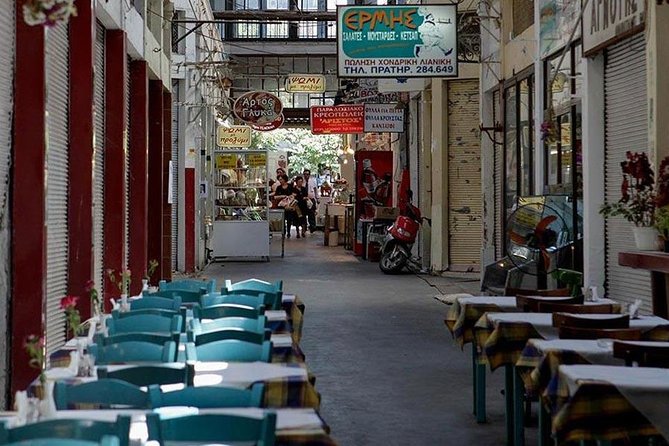
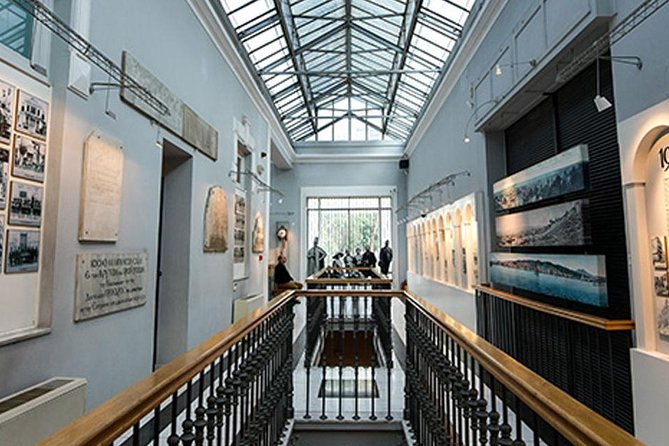
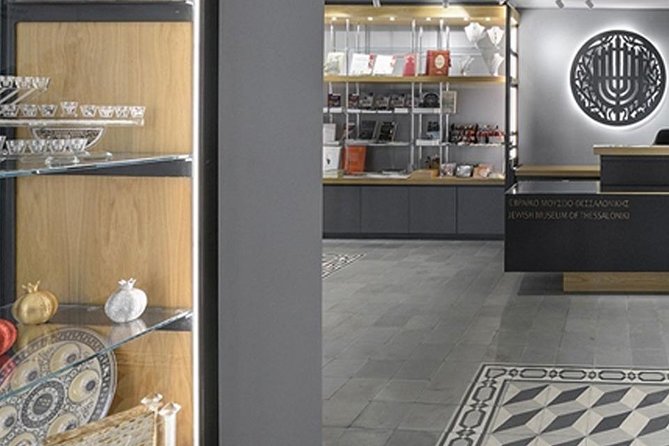
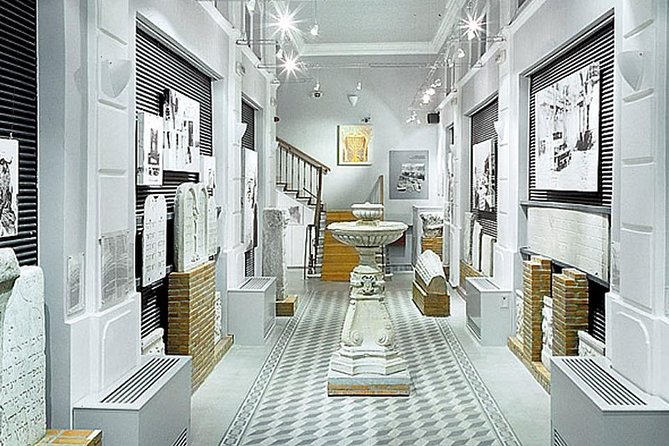
The Jewish Museum is the natural place to begin. It occupies a listed building from 1906 that once housed the Bank of Athens and the French-language Jewish newspaper L’Independent. That setting gives the museum an immediate connection to the city’s commercial and public life.
Inside, you can expect objects from several parts of Jewish life. The permanent collection includes headstones from the old Jewish cemetery, family heirlooms, religious items, old newspapers, and clothing. These materials help you picture a working community rather than reducing the subject to wartime tragedy alone.
The Holocaust Room is the most emotionally difficult part of the visit. It includes objects connected to the persecution and extermination of Thessaloniki’s Jews. Your scheduled time here is about 30 minutes, so the guide’s explanations matter. Admission is not included in the tour price.
I would pay close attention to the cemetery stones. The old burial ground was destroyed during the Nazi occupation, and its site is now tied to Aristotle University. Those stones are not just museum pieces. They are among the remaining physical traces of a cemetery that once served the city’s Jewish population.
Monastirioton Synagogue and a surviving place of worship
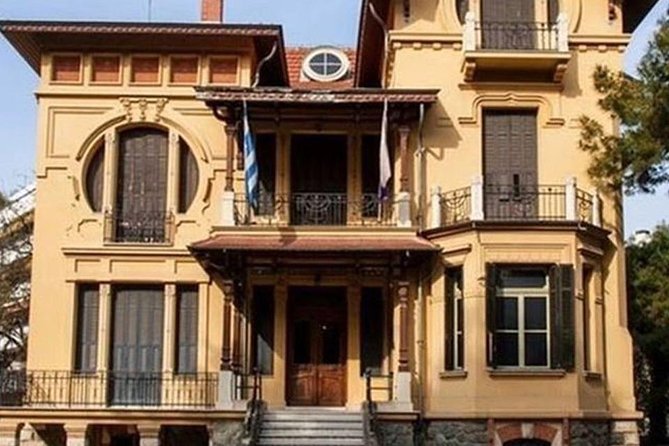
The next stop, Monastirioton Synagogue, offers a rare chance to see a Jewish religious building that survived the Holocaust period in its prewar form. Built between 1925 and 1927, it served Jewish refugees from Monastir, a city now called Bitola in North Macedonia.
The synagogue was not destroyed by Nazi forces because the Red Cross used it as a warehouse. That survival gives the building unusual importance. Other old Thessaloniki synagogues were destroyed, so Monastirioton is the city’s only synagogue remaining in its pre-Holocaust state.
The building also carries a painful wartime connection. Nazi forces used it as a ghetto center in the densely populated Syggrou area before the Jewish population was deported. A guide who explains both the building’s religious role and its wartime use can help you understand how quickly a community’s normal life was overturned.
The planned visit lasts about 30 minutes, but admission is not included. Since synagogue access can depend on practical conditions, I would confirm what you will be able to enter and see before setting out. Even if the visit is partly external, the building’s survival makes this an important stop.
Casa Bianca and the Jewish families who shaped the city
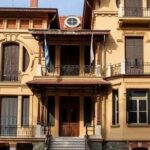
The route then moves toward the grand villas along Vassilissis Olgas Avenue. Casa Bianca, at the junction with Th. Sofouli Street, was built in 1912 for Dino Fernandez-Diaz, a Jewish businessman of Spanish origin, and his Swiss wife, Blanche.
The mansion was designed by Pierro Arrigoni and is mainly Art Nouveau, with an eclectic mix of influences. Its name comes from Blanche, and the building is also tied to the romance between the family’s daughter, Alina, and Second Lieutenant Alibertis. That story adds a personal layer to a house otherwise easy to view as simply an impressive facade.
Casa Bianca now houses the Municipal Art Gallery of Thessaloniki. The tour includes about 30 minutes here, but entrance fees are not included. Ask your guide whether the schedule allows time inside, since the value of this stop changes if you are seeing only the exterior.
I like this part of the route because it broadens the meaning of Jewish heritage. You are not only visiting sites of worship and mourning. You are also seeing the homes and institutions connected with families active in Thessaloniki’s commercial life.
Villa Modiano and the city’s changing public life
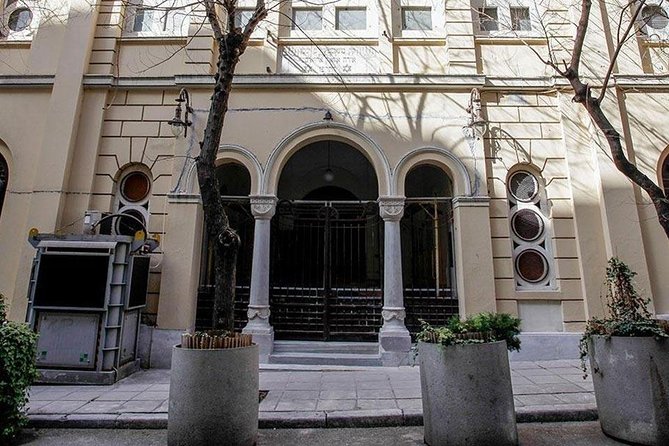
Villa Modiano, at 84 Vassilissis Olgas Avenue, was built in 1906 for Yako Modiano and designed by Eli Modiano. The architect had returned from Paris, and the building shows that French influence through its Art Nouveau details and distinctive trapezoid roof.
The villa later had several public roles. The municipality bought it in 1913 and offered it to King Constantine as a palace. It became a residence for the governors of Macedonia, later housed the Military Medical School, and since 1970 has been home to the Folk and Ethnological Museum.
That sequence tells you something important about Thessaloniki. Private Jewish wealth, royal administration, military use, and public cultural life all occupy the same building at different points. A guide can make these changes easier to follow than a plaque or quick photo stop.
The museum’s setting is part of the appeal, but entrance is not included. The itinerary allows about 30 minutes. If you are particularly interested in architecture or local social history, ask for more detail about the Modiano family and the building’s changing uses.
You can also read our reviews of more private tours in Thessaloniki



Villa Allatini and the politics of the Ottoman era
Villa Allatini, at 198 Vassilissis Olgas Avenue, was built before 1888 as the country home of Charles Allatini. The Allatinis, like the Modianos, were among Thessaloniki’s most powerful business families. Italian architect Vitaliano Poselli designed the villa, which was near the family mills.
The red-brick building sits within a large courtyard and was once the biggest and most luxurious villa in the Exoches area. Its history also reaches into Ottoman politics. From 1909 to 1912, Sultan Abdul Hamid stayed here in exile after the Young Turk Revolution.
The villa later housed the newly founded University of Thessaloniki for a year and served other public purposes. You may not be able to enter, since entrance fees are not included and the building’s current use is not fully detailed in the tour information. Still, the exterior and the guide’s explanation connect Jewish business families with the final years of Ottoman rule and the city’s modern development.
The three villa stops can feel repetitive if you are mainly interested in religious sites. I would view them as a single chapter in the tour, showing how Jewish entrepreneurs helped shape the city’s architecture, industry, and public institutions.
Remembering the deportations at Eleftheria Square
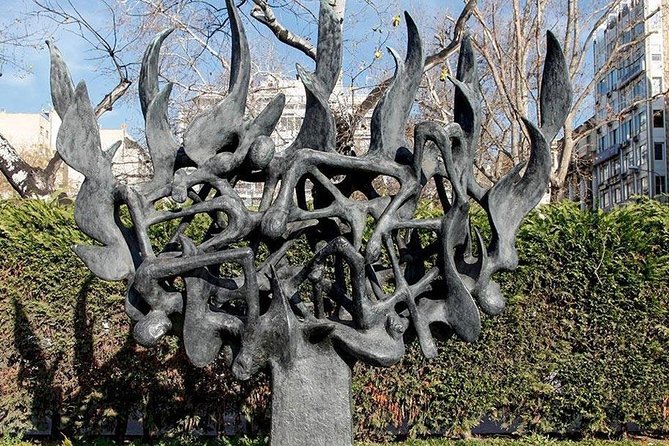
The Holocaust Memorial is located at the southeastern corner of Eleftheria, or Freedom, Square. The square is now used as a parking facility, which can make the setting feel ordinary at first glance. That contrast is part of what makes the stop so affecting.
On July 11, 1942, Nazi forces rounded up Jewish men here for processing before deportation. The men were tortured in public. The memorial remembers the approximately 50,000 Greek Jews from Thessaloniki who were killed in Nazi concentration camps.
The monument is a bronze seven-branched menorah by Nandor Glid, a Serbian professor of applied art. Its flames wrap around human bodies, combining a traditional Jewish symbol with a stark image of death.
You have about 30 minutes at the memorial. That is enough time to hear the setting explained and pause with the sculpture, though the nearby parking area may limit the quiet atmosphere. I would not rush this stop. It is one of the places where the city’s wartime story feels most immediate.
Yad Lezicaron and the lost Jewish cemetery
The final stop, identified as Yad Lezicaron, relates to the old Jewish cemetery and its destruction. The cemetery began in the early Roman period and expanded after Sephardic Jews settled in Thessaloniki in 1492.
During the German occupation and the years after the war, its burial monuments were destroyed. Aristotle University of Thessaloniki now occupies the site, and a related memorial was installed there in 2014. The Jewish community uses the cemetery at Stavroupoli today.
The planned stop lasts about 20 minutes and admission is free. The site may be less visually dramatic than the synagogue or Holocaust Memorial, but it helps explain the scale of what disappeared. A cemetery is a record of generations. Its destruction removed names, family connections, and evidence of long-term Jewish life in the city.
This stop also gives the museum’s headstones more meaning. You see them first as preserved objects, then learn that the original burial ground is no longer intact.
What the private format adds
The tour lasts roughly three to four hours and is limited to your group. Pickup and drop-off are offered at your Thessaloniki hotel, and transport is provided in an air-conditioned car, minivan, or minibus. You also get an English-speaking chauffeur, WiFi, and bottled water.
That vehicle matters because the itinerary covers central sites and the villa district along Vassilissis Olgas Avenue. You avoid arranging taxis between stops, and you can stay focused on the explanations instead of watching the clock.
The private format is most useful if you have specific questions or want the emphasis adjusted. One guide, Maria, was praised for linking the Jewish experience with Greek history, culture, archaeology, politics, and Europe. Another past tour involved KOSTOS and the company owner, Solon. Guide assignments can change, so treat those names as useful context, not a guarantee.
There is one scheduling warning. One booking began with the guide unavailable at 9 a.m., followed by a driver-led gap and a replacement guide at 2 p.m. The replacement guide and driver were described as excellent, but the delay was still disruptive. Confirm the start time, guide, and order of stops shortly before the tour.
Is $324.41 per person a fair price?
At $324.41 per person, this is not a bargain sightseeing ride. The price makes the most sense for a small private group that values hotel pickup, private transport, and a guide who can explain difficult historical material in person.
The included extras help. Air conditioning is useful in Thessaloniki’s warmer months, WiFi and water make the vehicle comfortable, and edited photos plus a short video arrive by email afterward. You are also paying for flexibility and privacy, not simply admission to a series of attractions.
Still, budget for additional costs. Museum and other entrance fees are not included, and neither are lunch, snacks, juice, or drinks at a local coffee stop. The information also lists a licensed guide who speaks your language as not included, while an English-speaking licensed guide is included. If you need a language other than English, clarify the arrangement before booking.
Group discounts may improve the value. For one or two people, the cost is harder to justify unless this subject is a major reason for your visit or you strongly prefer private transport.
Who should book this Thessaloniki tour?
I would choose this experience if you want Jewish history to be a central part of your time in Thessaloniki rather than a brief museum visit. It suits first-time visitors who want a clear route through the city’s Jewish past, as well as people with family, religious, or academic interest in Sephardic communities and the Holocaust in Greece.
It also works well for anyone who prefers a private setting for serious subjects. You can ask questions without worrying about a large group, and the guide can spend more time on the museum, synagogue, or villas that interest you most.
I would hesitate if you want a low-cost tour, guaranteed interior access at every stop, or a relaxed food-and-sightseeing outing. The subject is difficult, the schedule is fairly full, and extra admission costs add up.
Should you book it?
Book this tour if you value context, comfort, and a focused account of Thessaloniki’s Jewish community. The strongest parts are the Jewish Museum, Monastirioton Synagogue, and Holocaust Memorial, while the villas add useful context about Jewish business and civic life.
Before paying, ask about the exact guide, language, entrance fees, and the day’s schedule. If those details are settled and you are comfortable with the price, this private half-day route gives you a thoughtful way to understand a part of Thessaloniki that is essential to the city’s past but easy to miss.
FAQ
How long does the Jewish sightseeing tour last?
The tour lasts approximately three to four hours.
What time does the tour start?
The listed start time is 9:00 a.m.
Is hotel pickup included?
Yes. Pickup and drop-off service from your hotel in Thessaloniki are included.
Is transportation provided?
Yes. You travel between the sites in an air-conditioned car, minivan, or minibus. An English-speaking professional chauffeur, WiFi, and bottled water are included.
Is the tour private?
Yes. Only your group participates in the activity.
Is an English-speaking guide included?
Yes, an English-speaking licensed guide is included. A licensed guide who speaks another requested language is listed as not included, so confirm language arrangements before booking.
Are entrance fees included?
No. Admission fees are not included in the tour price.
Are food and drinks included?
No. Lunch, drinks, snacks, and juice at a local coffee place are not included. Bottled water in the vehicle is included.
Can I cancel for a full refund?
Yes, if you cancel at least 24 hours before the experience’s start time. Cancellations made less than 24 hours in advance are not refunded. If poor weather or an insufficient minimum number of participants causes cancellation, you will be offered another date or experience, or a full refund.