REVIEW · CRETE
Knossos & Archaeological Museum Shared Guided Tour from Chania
Book on Viator →Operated by SeaByBus Explore Crete · Bookable on Viator
Knossos in one day, minus the stress. This shared guided tour from Chania takes you with hotel pickup to the Minoan heart of Crete and the world-class Archaeological Museum in Heraklion.
I love the small group size (up to 15). I also like the practical bus touches like WiFi + USB charging, plus a presentation on Cretan customs while you ride.
One thing to plan for: it’s a long day (about 10 hours), and the Chania–Knossos drive is around 2 hours with no breakfast or WC stops, so come ready.
In This Review
- Key things to know before you go
- Chania to Knossos: a day trip built around getting there
- Knossos Archaeological Site: the palace myths, with context
- Heraklion Archaeological Museum: 5,500 years, mostly focused
- Heraklion city time: Venetian lines, Byzantine corners
- The bus experience that actually helps: comfort, info, and pacing
- Price and value: what’s included, what costs extra
- Who should book this Knossos and Heraklion day trip
- Should you book it? My honest take
- FAQ
- What time does the tour start?
- Is pickup included from Chania?
- How long is the whole day trip?
- How many people are in the group?
- Are entrance tickets included for Knossos and the museum?
- Is there a guided tour at Knossos palace?
- How much time do you get at each stop?
- What’s provided on the bus?
- When does the tour operate?
- Can I cancel for a full refund?
Key things to know before you go
- Hotel pickup from Chania area saves you from early solo logistics.
- Up to 15 people means you can actually hear the guide and follow the story.
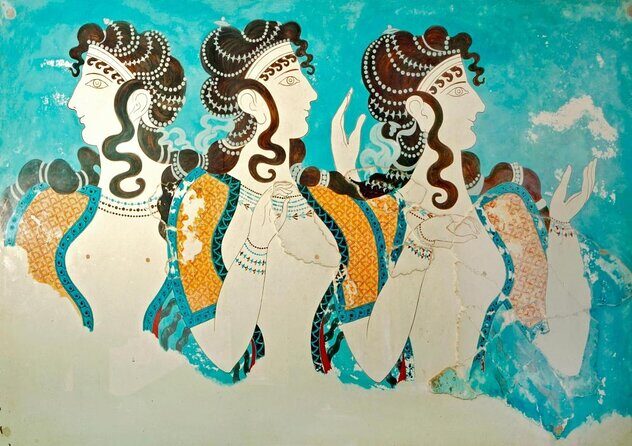
- English guided tour inside Knossos palace focuses on myths and key details.
- Heraklion Archaeological Museum is your hit of Minoan and prehistory highlights, with a tight 1-hour slot.
- Bus comfort matters: air-conditioned vehicle, WiFi, and USB charging ports.
- Knossos and museum entry are extra (both listed at €20 each).
Chania to Knossos: a day trip built around getting there
This is one of those tours that trades freedom for sanity. You start around 8:00 am with pickup offered from your accommodation area, and the goal is simple: maximize your time on the ground and keep the driving off your plate.
The transfer from Chania city center toward Knossos takes about 2 hours. The tour notes there are no breakfast or WC stops during that drive, so I’d treat it like a hike day: arrive hydrated, and don’t wait until you’re already stuck on the road.
You’ll also be in a small, shared group, which is a big deal for a place like Knossos. It’s easier to follow the guide’s pace when you’re not fighting for attention in a crowd. Expect a local tour leader onboard (English and German), along with an audiovisual presentation on Cretan customs.
You can also read our reviews of more guided tours in Crete
Knossos Archaeological Site: the palace myths, with context
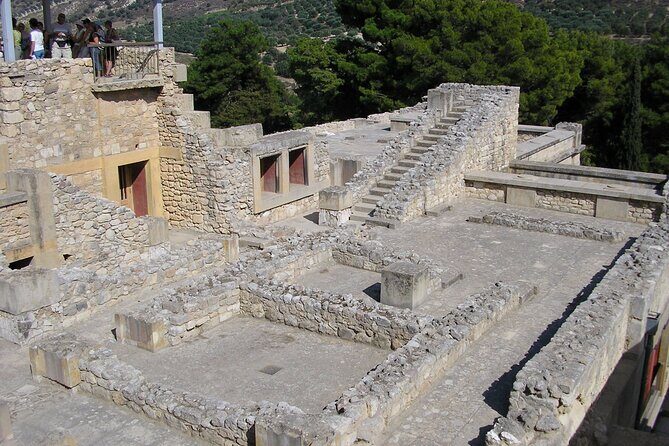
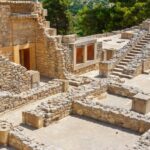
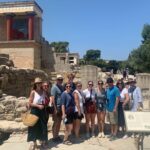
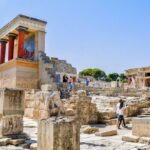
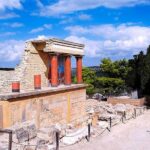
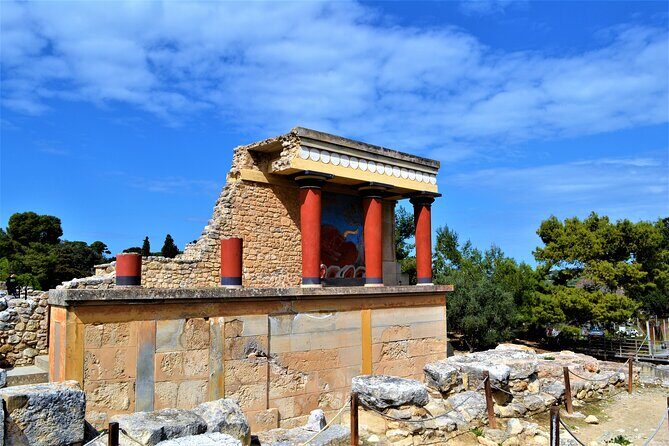
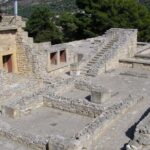
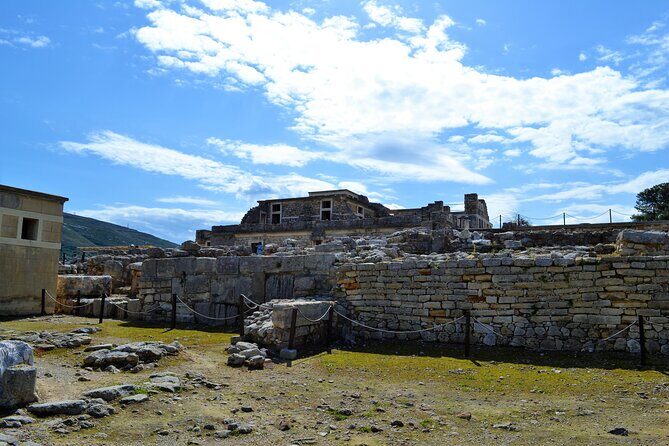
Knossos is the kind of site that can feel like an amazing blur if you go in cold. The big advantage here is that you’ll get a guided tour through the palace route in English, with the myths brought into the conversation as you walk.
What makes Knossos special is the sheer timeline. The site began as a Neolithic settlement way back in the 7th century BC, then stayed occupied for thousands of years. It was eventually abandoned around 1375 BC after destruction tied to the end of the Minoan civilization—so you’re looking at layers of a whole world.
Excavation history is part of the story too. Early large-scale digs started in 1878 under Minos Kalokairinos when Crete was still under Turkish occupation. Later, the long-term work (1900–1913 and 1922–1930) is associated with Sir Arthur Evans, which is when much of the surrounding area was uncovered.
Time-wise, you get about 1 hour 30 minutes at the Knossos Archaeological Site, with the palace portion guided. The entry ticket isn’t included (listed as €20 per person), so budget for that separately.
Practical tip: with a 90-minute slot, your best strategy is to listen first, then look. Knossos is complex. The guide’s job is to help you connect what you see to the big Minoan themes, so don’t rush off to chase photos before you understand the layout.
Heraklion Archaeological Museum: 5,500 years, mostly focused
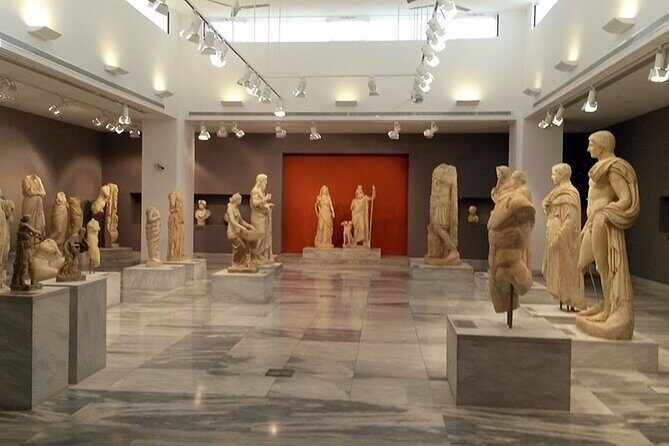
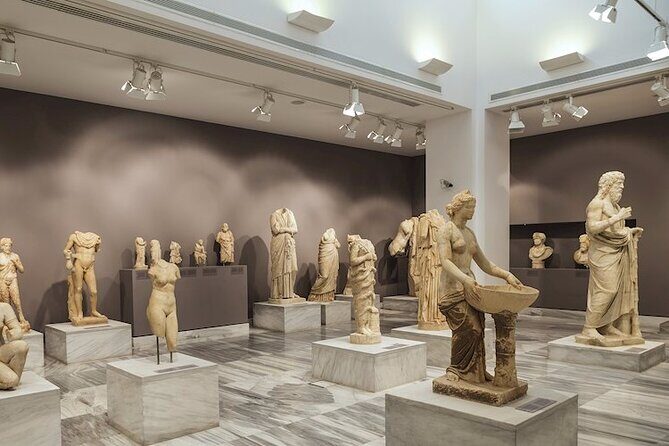
After Knossos, the day pivots from ruins to objects. The Archaeological Museum of Heraklion is among the largest and most visited museums in Greece, and it’s also one of the most important in Europe.
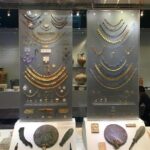
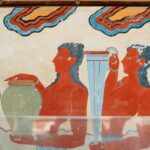
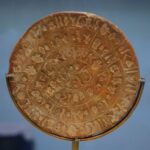
This is where you get the long sweep of Crete’s past in one place: the exhibits cover more than 5,500 years, from Neolithic through Roman times. The museum also has a strong Minoan collection, with standout pieces that are often described as masterpieces of Cretan art.
You’ll spend about 1 hour here. Admission isn’t included (again listed at €20 per person), so you’ll want to plan your “must-see” list before you enter, even if you’re not a museum person.
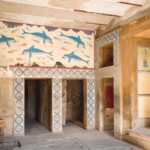
One interesting layer: the building itself was constructed from 1937 to 1940 by architect Patroklos Karantinos. It was built on a site that previously held the Roman Catholic monastery of Saint-Francis, which was destroyed by an earthquake in 1856. The museum’s colors and construction materials are also said to match certain Minoan wall-painting styles, so the space ties back into what you’re studying.
With only an hour, I’d focus on Minoan works first. If you try to see everything, you’ll end up skimming. If you pick the core themes, you’ll leave with a clearer picture of what made Minoan Crete tick.
Heraklion city time: Venetian lines, Byzantine corners
Then you get a slice of modern-day Crete in Heraklion. Heraklion is the island’s capital and Greece’s fifth largest city, and it has the kind of layered architecture you get after centuries of different powers.
You’ll have about 2 hours in the city. This is enough time to reset your brain after archaeology and to get oriented, especially if you’ll be spending more time in Heraklion later.
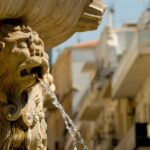
The city is also tied to famous Greek artists: El Greco and Nikos Kazantzakis were born here. On the streets, you’ll notice cultural mix through landmarks and building styles, including Venetian influence near the port area, plus Byzantine churches and monasteries, fountains from Venetian times, and neoclassical buildings.
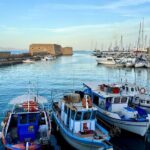
Key sights you might notice or aim for include the Venetian Fortress by the entrance to the port and the Venetian Loggia (where the town hall is today). There’s also the Church of Saint Mark and other Byzantine religious spaces.
Practical tip: this is not a guided “checkpoint tour” of every building. It’s more like time to walk, absorb, and pick what you want to look at closely. Wear comfortable shoes because Heraklion center can mean uneven pavement and plenty of walking.
The bus experience that actually helps: comfort, info, and pacing
A tour can look good on paper but fall apart in transit. This one is built to keep you comfortable and informed while you ride.
You’ll be on an air-conditioned vehicle with WiFi and USB charging ports, which makes a difference if you’re using your phone for photos or maps. There’s also an audiovisual presentation on Cretan customs on the bus, which helps you understand what you’re seeing before you reach the big sites.
In the same spirit, many people seem to appreciate the human touch of the guides. You may meet a local tour leader like Christine, and the driver may be someone like Thanasis, depending on the day. The common thread in real-world feedback is clear communication, a calm pace, and safe driving habits with adherence to speed limits.
Inside the day, small kindnesses show up. On at least some departures, the group has been offered cold water and a snack during transit or between stops. One booking also described a flexible detour to Lake Kournas when the timing worked out, which suggests the operator can sometimes adjust when there’s room.
Bottom line: this tour isn’t just moving you from A to B. It tries to keep your brain engaged while keeping you comfortable.
You can also read our reviews of more museum experiences in Crete


Price and value: what’s included, what costs extra
The tour price is listed at $108.13 per person. That includes a lot of the big-ticket “day trip headaches”: pickup, transport by air-conditioned vehicle, a local tour leader onboard, the guided palace tour in Knossos (English), and group size control (max 15 people). You also get things like WiFi, USB charging, and the onboard customs presentation.
Two major costs are explicitly not included:
- Knossos Archaeological Site entry: €20 per person
- Heraklion Archaeological Museum entry: €20 per person
So, if you’re budgeting, plan on about €40 in entrance fees on top of the tour price. Converting currency is always messy, but the structure is clear: the tour covers the guide and logistics, while you pay the museum and site admissions directly.
Is it worth it? In my view, it’s strongest if you want guided interpretation at Knossos and you don’t want to drive yourself across Crete for a one-day sprint. Paying a bit more also buys you time and less stress, especially with pickup handled.
One scheduling note: the tour runs every Monday in May and every Tuesday in September. It’s also commonly booked around 105 days in advance, so if your travel dates fall in that window, booking early helps you avoid the “sold out” problem.
Who should book this Knossos and Heraklion day trip
This trip is a good fit if you want the classic Crete hit—myth, Minoan archaeology, and Heraklion—without spending your day behind the wheel. The small group size helps a lot if you’re the type who wants to hear the guide and ask questions, even while keeping the pace brisk.
It also tends to work well for mixed groups:
- Families with teens often like the combination of story + real objects, especially once the palace myths are explained.
- Solo travelers usually appreciate not being shut out in a crowd, and the group setup helps you feel included.
- People with limited time on the island benefit because you get both Knossos and the museum in one outing.
If you’re the kind of traveler who wants to linger for hours at each stop, this may feel a bit tight. The day is structured, with about 1 hour 30 at Knossos, 1 hour at the museum, and 2 hours in Heraklion—plus the long drive.
Should you book it? My honest take
If your goal is a well-organized, guided day that hits Knossos palace properly and pairs it with the Heraklion Museum, I’d book this. The standout strength is the English guided tour inside Knossos paired with the practical, small-group transport from Chania.
I’d think twice if you’re sensitive to long days or you really rely on bathroom and breakfast breaks during travel, since the drive from Chania toward Knossos is about 2 hours without stops. Also, remember the admission fees for Knossos and the museum are extra, so the true all-in cost will be tour price plus about €40.
One more practical reason to lean yes: you’ll have free cancellation available up to 24 hours before the start time, so you can book confidently while you finalize your Crete plan.
If you tell me your exact travel dates and where you’re staying in Chania (old town, Venetian harbor, or elsewhere), I can help you estimate whether the pickup setup and schedule will feel smooth for your day.
FAQ
What time does the tour start?
The tour start time is 8:00 am.
Is pickup included from Chania?
Pickup is offered. Guests staying in the Venetian harbor and old city are picked up from the closest bus stop accessible by a minibus, and you’re asked to define your pick-up location.
How long is the whole day trip?
It’s listed at about 10 hours.
How many people are in the group?
The group is limited to a maximum of 15 travelers.
Are entrance tickets included for Knossos and the museum?
No. Knossos Archaeological Site entry is listed at €20 per person, and the Heraklion Archaeological Museum entry is also €20 per person.
Is there a guided tour at Knossos palace?
Yes. There’s a guided tour in the Knossos palace in English.
How much time do you get at each stop?
Knossos Archaeological Site is about 1 hour 30 minutes, the Heraklion Archaeological Museum stop is about 1 hour, and the Heraklion city time is about 2 hours.
What’s provided on the bus?
The included amenities include WiFi on board, USB charging ports, and an air-conditioned vehicle.
When does the tour operate?
It operates every Monday in May and every Tuesday in September.
Can I cancel for a full refund?
Yes. Free cancellation is available up to 24 hours in advance for a full refund.