REVIEW · THESSALONIKI
Rail Tour from Thessaloniki to Meteora 3 Days – 2 Nights
Book on Viator →Operated by Visit Meteora · Bookable on Viator
Meteora is Greece at its most surprising: giant stone pillars rise from the plain, topped by Byzantine monasteries that seem to cling to the rock. This three-day rail trip gives you time to see the famous sites without trying to squeeze them into a rushed day trip. I especially like the small maximum group of 12 and the fact that your hotel transfers are handled at Kalambaka station.
I also like having a choice between a Meteora half-day tour and a hiking tour. Guides such as Dimitre Jim, Costos, and Billy Bo are named in the tour feedback, with particular praise for the sunset and hiking outings. The main drawback is cost: at $1,261, this is a serious purchase, and food and drinks are generally not included. You are paying for convenience, rail transport, two nights, and organized guiding rather than a budget escape.
In This Review
- Key points at a glance
- Why Meteora works well as a three-day rail trip
- The train from Thessaloniki to Kalambaka
- Day one: Saint Stephen, an old church, and the first views
- Day two: Great Meteoron, Varlaam, and Roussanou
- Day three: choose hiking or a half-day tour
- What the small group changes
- Hotel, breakfast, and what you still pay for
- Is $1,261 good value?
- What to pack and how to pace yourself
- Who should book this Meteora tour?
- Should you book it?
- FAQ
- How long is the rail tour from Thessaloniki to Meteora?
- Is transportation from Thessaloniki to Meteora included?
- What activities can I choose from?
- Are monastery admission fees included?
- Is breakfast included?
- What is the cancellation policy?
Key points at a glance

- Rail travel from Thessaloniki: Your journey to Meteora and return are arranged by train, with station transfers in Kalambaka.
- Two nights in a 3-star hotel: Breakfast is included, giving you a practical base for two full days of sightseeing.
- Two guided activities: Choose between a Meteora half-day tour and a hiking tour.
- Monasteries and viewpoints: Saint Stephen, Varlaam, Great Meteoron, Roussanou, and the Byzantine Church of the Assumption of the Virgin Mary feature across the schedule.
- Small-group format: The tour accepts no more than 12 people, a useful size for questions and easier movement.
- Free cancellation: You can receive a full refund if you cancel at least 24 hours before the start time.
Why Meteora works well as a three-day rail trip
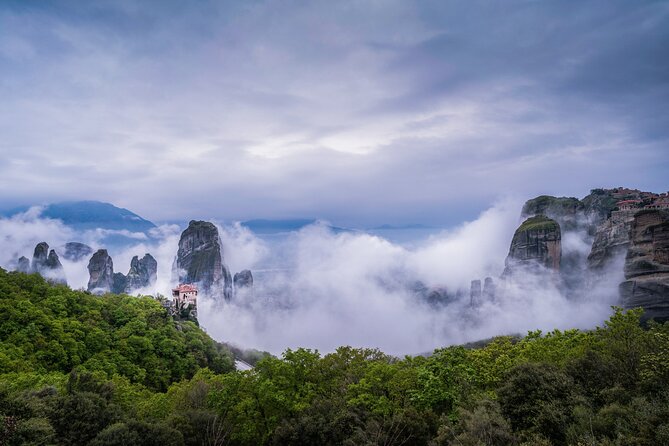
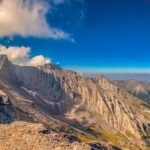
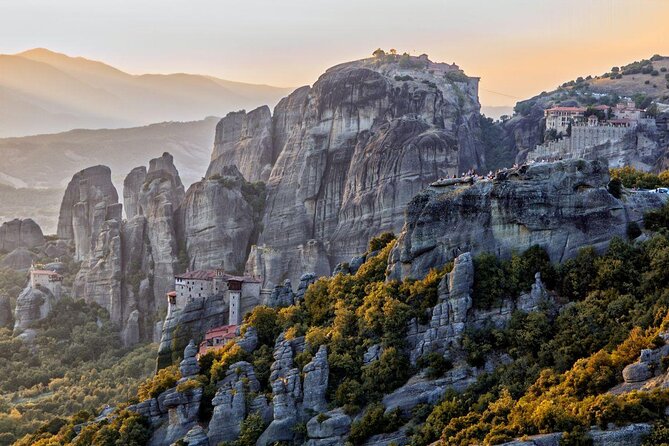
Meteora is not just a collection of old churches. The setting does much of the work. Huge rock formations rise sharply from the surrounding plain, and monasteries sit high above the town of Kalambaka. From the road and viewpoints, you get broad views of the stone towers. Inside the monasteries, you find a quieter world of chapels, religious art, and centuries of Orthodox tradition.
A one-day visit can show you the postcard view, but it leaves little room for weather changes, walking, or a second look. Two nights give you a more sensible pace. You can spend one day on a guided sightseeing route, another visiting monasteries and viewpoints, then use the final morning and afternoon for a chosen activity or your own plans.
The rail arrangement is another useful feature. You do not need to arrange a separate train ticket, hotel transfer, local tour, and return trip on your own. At the same time, a rail itinerary requires you to respect the timetable. The advertised start time is 8:18 in the morning, and a transfer to the station is offered at 5:00 in the afternoon on the final day. Keep your day organized and do not assume you can extend your own sightseeing indefinitely.
You can also read our reviews of more tours and experiences in Thessaloniki.


The train from Thessaloniki to Kalambaka
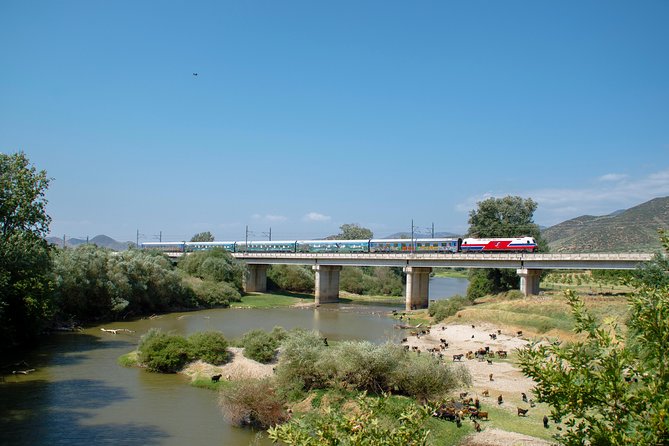
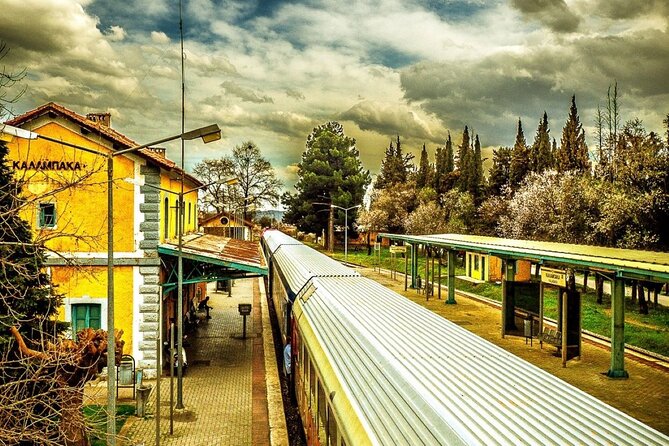
The trip begins in Thessaloniki, Greece’s large northern port city, and heads inland toward Meteora. The train is more than a simple transfer. It lets you watch the urban setting give way to open countryside and then to the dramatic rock formations near Kalambaka.
The package includes travel to Meteora and back to Thessaloniki, along with pickup and drop-off between Kalambaka train station and the hotel. That matters because arriving in an unfamiliar town with luggage and no local transport plan can turn a pleasant trip into a practical nuisance.
Your exact train arrangements and departure details should be checked at booking, since the supplied information gives the start time but not a full rail timetable. Confirmation is issued when you book. I would save the confirmation on your phone and keep a printed or offline copy as a backup.
Day one: Saint Stephen, an old church, and the first views
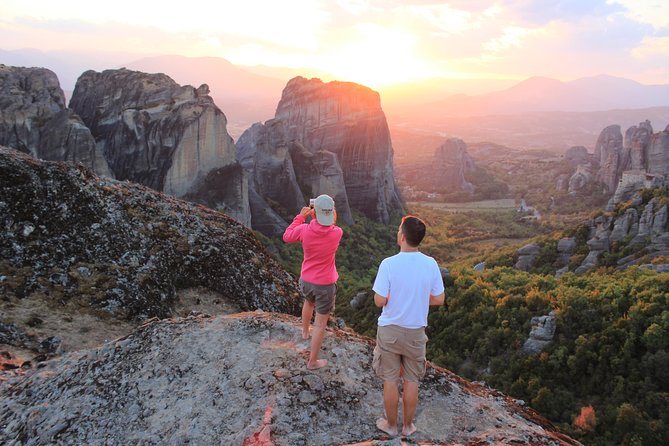
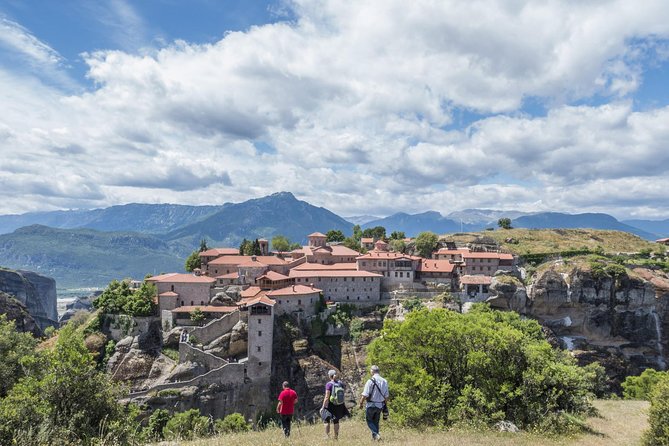
The first day begins with a visit to the Monastery of Saint Stephen, also called Agios Stefanos. You have about 30 minutes there. It is a good early stop because it introduces you to the character of Meteora without using the whole day on one site.
Admission is not included, so bring money for monastery entries. The itinerary does not give the current admission price, and it is wise to check before departure rather than assume every stop is covered by the tour price.
Next comes the Byzantine Church of the Assumption of the Virgin Mary, with another 30-minute visit. This stop adds an older religious layer to the trip. The monasteries are the famous headline, but a Byzantine church helps you see that the area’s importance is not limited to the dramatic rock formations.
The day then includes photo stops at Great Meteoron and Roussanou. At Great Meteoron, the listed stop is about 10 minutes, while Roussanou gets about 20 minutes. These are not full monastery visits on this part of the schedule. Think of them as carefully chosen chances to photograph the buildings against the stone pillars and to get a sense of how the monasteries occupy the heights.
You also have roughly two hours for photos and sightseeing around Meteora. That is valuable because the best view is not always found from inside a monastery. The rock formations change shape as you move along the route, and a little unhurried time lets you take photographs without treating every stop as a race to the next one.
Day two: Great Meteoron, Varlaam, and Roussanou
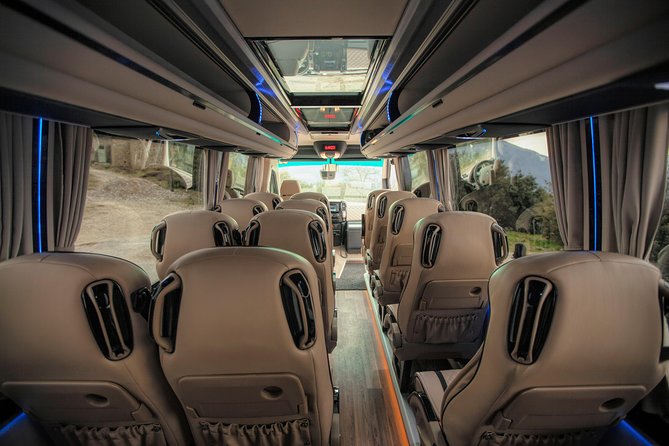
The second day carries more of the interior monastery visits. Varlaam receives about 45 minutes, enough for a focused visit but not an extended stay. Admission is not included, just as it is not included at the other monastery entries.
Great Meteoron gets about an hour. It is one of the main sights in Meteora, and the longer scheduled visit reflects its importance. This is where the organized structure helps. You can spend your time looking at the buildings, religious art, and setting rather than worrying about how to fit the stop into a self-made route.
Roussanou receives about 20 minutes as a proper visit on this day, following the earlier photo stop. The schedule gives you two different ways to appreciate the site: first from outside, then with time to enter. That distinction matters. A monastery can look impressive from the road, but the interior gives you a better feel for its religious purpose.
The day also includes around two hours of photos and sightseeing in Meteora. I would treat this as your chance to compare the viewpoints rather than simply repeat the first day. The itinerary includes several stops, but visit lengths are fairly fixed, so you should listen closely to the guide’s meeting instructions.
The schedule does not list every monastery in the region, and it does not promise long visits at each stop. That is not necessarily a weakness. Meteora can become tiring when every hour is packed with stairs, roads, and church interiors. This plan gives you a strong selection, but it is not designed for a slow scholarly study of every religious site.
Day three: choose hiking or a half-day tour

The final day is intentionally less rigid. You can join an additional activity or explore Meteora on your own, then receive a transfer to the train station at 5:00 p.m.
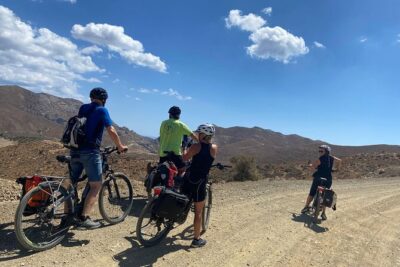
The included choice is between a Meteora hiking tour and a Meteora half-day tour. Pick the hiking option if you want a more active day and enjoy uneven trails, climbs, and a physical challenge. Feedback connected to the hiking outing praises guide Costos for leading people up and down striking trails, while Billy Bo is described as pushing the group in a spirited but supportive way.
The half-day tour is the better match if you want more sightseeing without committing to a demanding walk. The supplied details do not give its exact route or walking level, so ask for the current plan before choosing. That is especially sensible if you have limited mobility, dislike rough paths, or simply want a quiet last day.
If you explore independently, the fixed 5:00 p.m. station transfer becomes the key deadline. Leave plenty of time to return to the agreed pickup point. Missing a group transfer could create a problem, and the tour does not promise a replacement ride.

What the small group changes
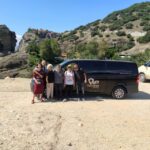
A maximum of 12 people is one of the strongest practical features here. You are not being moved through Meteora in a huge crowd, and an English-speaking tour leader can give directions and answer questions more easily.
Small does not mean private. You will still follow a group schedule, wait at meeting points, and keep to the planned visit times. But a group of 12 is generally easier to manage than a large coach party, especially when you are moving between viewpoints and monastery entrances.
The named guides connected with the activities include Dimitre Jim for a sunset outing, Costos for hiking, and Billy Bo for a more challenging hiking experience. The package information does not guarantee a particular guide, so treat these names as examples rather than promised assignments. The feedback also highlights drivers Satos and Yannis for safe, professional transfers, another sign that the ground arrangements are an important part of the product.
Hotel, breakfast, and what you still pay for
Two nights in a 3-star hotel with breakfast are included. The package description also lists three breakfasts, which is unusual for a two-night stay, so I would confirm exactly how many morning meals apply to your booking.
A 3-star hotel is best understood as a practical base, not a luxury retreat. The value is in having a place arranged for you near the local transport system and tours. You avoid spending your limited time searching for accommodation after arriving by train.
Food and drinks are not included unless specifically stated. Breakfast is covered, but plan a separate budget for lunches, dinners, snacks, and drinks. The supplied feedback describes accommodation and food arrangements as satisfactory, and other comments refer to good restaurants, but restaurant meals are not part of the stated inclusions. Do not read those comments as a promise of included dining.
Bottled water and a free map are provided on the tours. These are small items, but they are useful in a place where you may spend hours outdoors and need to keep track of meeting points. Fuel surcharge is included as well, so you should not face a separate fuel charge for the organized road transfers.
Is $1,261 good value?
At $1,261, the package is not cheap. The right comparison is not the price of a train ticket alone. You are also paying for two nights of accommodation, breakfast, Kalambaka station transfers, two organized activities, a tour leader, water, a map, and the return journey to Thessaloniki.
The price makes more sense if you value a ready-made plan. You do not have to coordinate the rail route, find a hotel, arrange station pickup, or choose between several local outings after arrival. For a short visit to Greece, that can save time and reduce the risk of a poorly connected itinerary.
It makes less sense if you prefer independent travel, already have accommodation, or want to choose every meal and local transfer yourself. You will also need extra money for monastery admission, food, and drinks. Ask for a full breakdown of the train, hotel, and activity arrangements before booking so you can compare the package fairly with separate reservations.
The strong points are organization, a limited group size, and two nights at Meteora rather than a quick stop. The tradeoff is a higher upfront price and less freedom than a self-planned rail trip.
What to pack and how to pace yourself
Bring comfortable walking shoes. Even the sightseeing days include movement between viewpoints and monastery sites, while the hiking choice requires more effort. The tour information does not specify trail conditions, so ask about the hiking route if you have concerns about stairs, uneven ground, or fitness demands.
Carry a small day bag, water, sun protection, and a layer for changing conditions. The tours provide bottled water, but having your own bottle can still be useful. Keep your map and tour details accessible, especially on the final day when the 5:00 p.m. station transfer controls your schedule.
Dress with respect for religious sites. The supplied information does not spell out a clothing code, but monastery visits are religious experiences, not just photo stops. Ask your tour leader what clothing is suitable before entering.
Do not plan every minute. The two-hour sightseeing blocks are a chance to pause and look, not only to collect photographs. Meteora is most rewarding when you allow some quiet time beneath the rock towers.
Who should book this Meteora tour?
I would recommend it to you if you are starting in Thessaloniki, want to see Meteora without arranging several separate bookings, and like having a guide for the main sights. It is also a good fit if you want both organized sightseeing and a choice of active or easier plans on the final day.
The tour suits couples, friends, and solo visitors who appreciate a small group. The hiking option gives active visitors a real reason to stay longer, while the half-day option keeps the trip accessible to people who prefer sightseeing at a gentler pace.
I would hesitate if you want luxury accommodation, a private guide, or long unstructured visits inside every monastery. I would also hesitate if $1,261 stretches your budget, since entry fees and most meals come on top.
Should you book it?
Book this rail tour if convenience is worth paying for and you want Meteora to be a major part of your Greece trip rather than a hurried side trip. Two nights, organized transfers, monastery visits, and a choice of hiking or sightseeing give you a well-shaped visit.
Skip it and plan independently if you already know the area, prefer a lower-cost itinerary, or want complete control of your schedule. For everyone else, the package offers a practical way to reach one of Greece’s most unusual sights, provided you confirm the train details, breakfast count, monastery fees, and activity level before paying.
FAQ
How long is the rail tour from Thessaloniki to Meteora?
The tour lasts approximately three days and includes two nights of hotel accommodation.
Is transportation from Thessaloniki to Meteora included?
Yes. The package includes train travel from Thessaloniki to Meteora and back, plus pickup and drop-off between Kalambaka train station and the hotel.
What activities can I choose from?
You can choose between the Meteora Hiking Tour and the Meteora Half-day Tour. The final day also allows you to explore Meteora on your own.
Are monastery admission fees included?
No. Admission tickets are not included for Saint Stephen, the Byzantine Church of the Assumption of the Virgin Mary, Varlaam, Great Meteoron, or Roussanou.
Is breakfast included?
Yes. Two nights at a 3-star hotel with breakfast are included. The package details also list three breakfasts, so confirm the exact breakfast arrangement when booking.
What is the cancellation policy?
You can cancel at least 24 hours before the experience start time for a full refund. Cancellations or changes made within 24 hours are not accepted for a refund.