REVIEW · KALABAKA
Meteora: Sunset Small Size Tour with Monasteries & Caves
Book on GetYourGuide →Operated by Visit Meteora · Bookable on GetYourGuide
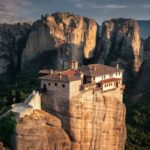
Four hours up in the rocks. This Meteora sunset tour strings together big viewpoints with real monastery life, and guides like Andreas or Lina bring the place to life as you drive between cliffs. Two things I love are the panoramic photo stops timed for the light and the chance to explore inside one active monastery rather than only seeing everything from outside.
One catch to plan for: late-day timing means you only get interior access to a single monastery, even though you’ll visit all six by exterior. Still, that trade-off works well here because you end with a sunset viewpoint.
I also really like the stop at the Badovas hermit caves, where the “why here?” story gets human scale fast. You’ll get a free multilingual audio guide too, which helps when your legs need a break between stops, though you still want comfortable shoes for the short walks and uneven ground.
In This Review
- Key highlights you will feel fast
- Why this late-afternoon Meteora timing works
- Pickup and the air-conditioned minibus: small details that matter
- Kastraki photo stop: the fastest way to orient yourself
- Holy Trinity Monastery: your first interior taste of monastic life
- St. Stephen Monastery: why the long stop feels worth it
- St. Nicholas Anapavsa and the classic Meteora exterior experience
- Kalambaka’s Byzantine Church of the Virgin Mary: art, symbols, and an Apollo past
- Badovas (Bandovas) hermit caves: where the story turns personal
- Great Meteor and Varlaam: seeing Meteora’s “big names” from the road
- The dedicated viewpoint stop: built for photos, not rushing
- Rousanou and the final sunset: how the day lands
- Price and value: $35 plus a couple of entry fees
- What you’ll miss (and how to plan around it)
- Who this tour suits best
- Dress code and small practical tips that prevent headaches
- My decision guide: should you book this Meteora sunset tour?
- FAQ
- How long is the Meteora Sunset Small Size Tour?
- Where does pickup and drop-off happen?
- Is the tour price all-inclusive?
- How many Meteora monasteries do you see?
- Do you need to pay for the monasteries and the Kalambaka church?
- What languages are available?
- Do you get time for photos?
- What should I wear and bring for monastery entry?
- Is this tour wheelchair accessible?
Key highlights you will feel fast
- All 6 Meteora monasteries covered with well-timed exterior views
- Sunset from a dedicated viewpoint at the end of the day
- Badovas hermit caves (Bandovas/Bandovas) with a guided visit to the cave story
- Kalambaka’s Byzantine Church of the Virgin Mary and its Apollo connection
- One monastery interior visit plus free audio guidance inside
- Small-group pacing with regular photo breaks and a bottle of water
Why this late-afternoon Meteora timing works
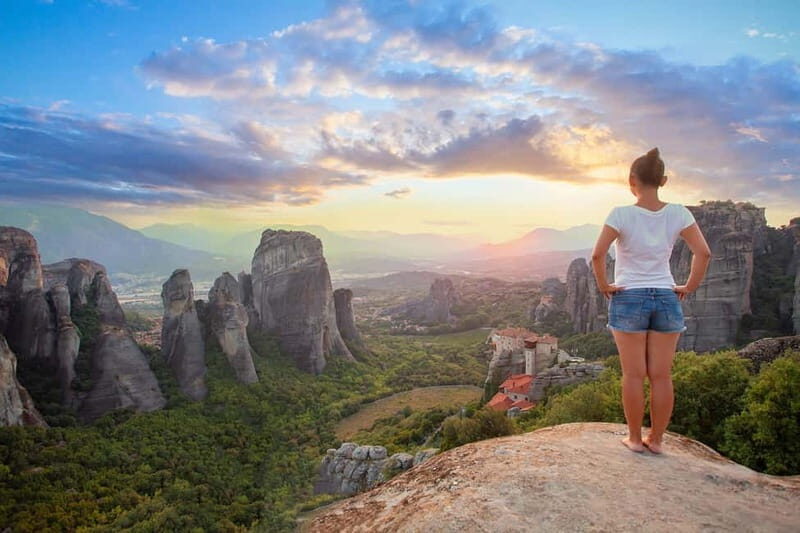
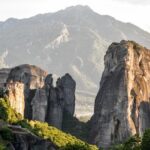
Meteora is famous for its monasteries, but what makes it memorable is the way the rocks change. Late afternoon gives you softer light for photos, and it also means you’re not stuck in the busiest midday flow. By the time you reach the end, the sky and stone start playing together, and the whole place looks different than it does at noon.
This tour is designed around that shift. You’re not just “going to Meteora.” You’re going to Meteora when it’s easier to understand why people chose these dramatic cliffs for prayer and isolation.
You can also read our reviews of more evening experiences in Kalabaka
Pickup and the air-conditioned minibus: small details that matter
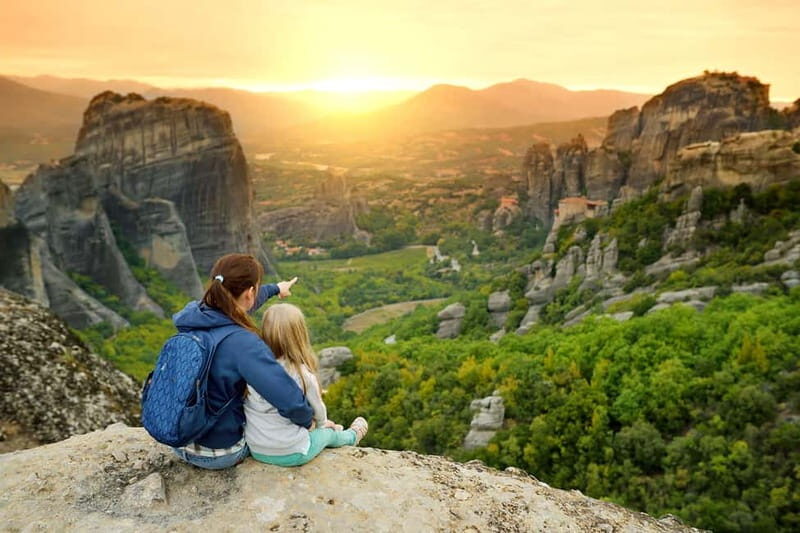
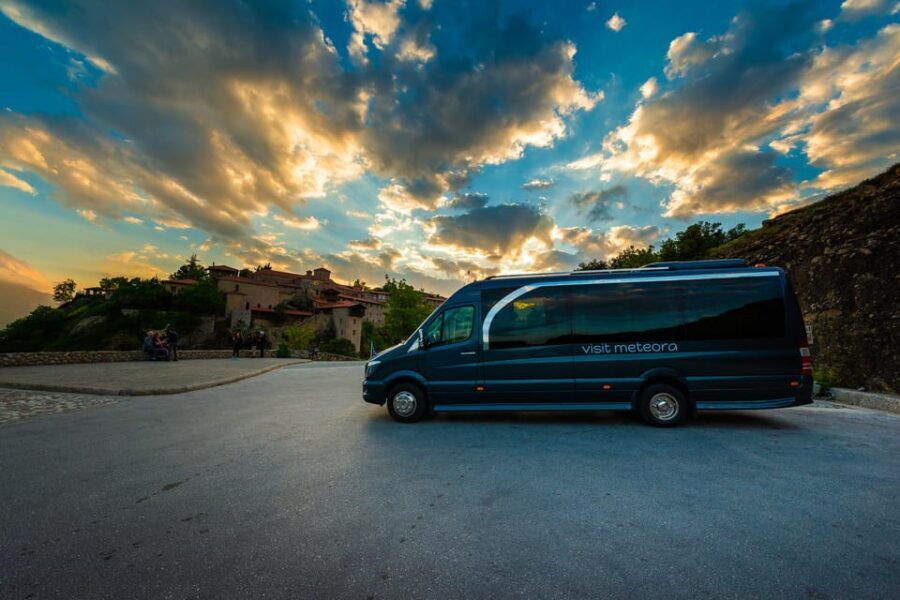
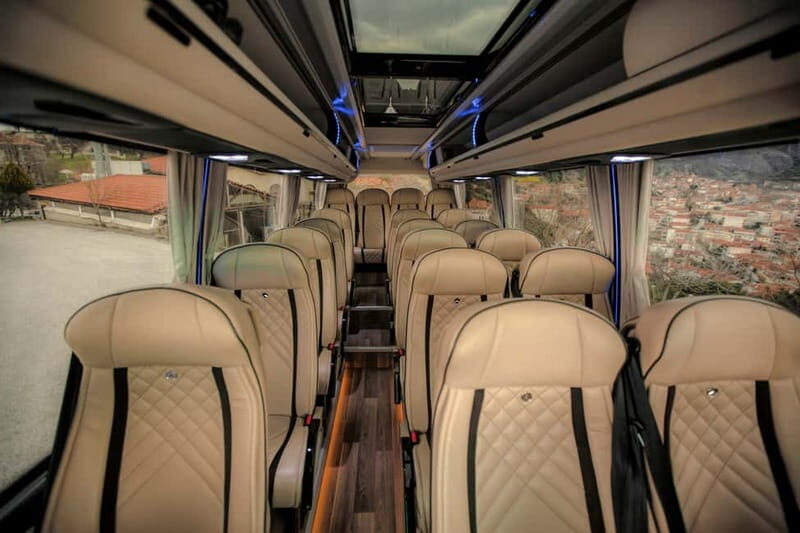
You get hotel pickup and drop-off in the Meteora area, with options in Kalambaka and Kastraki (and meeting points listed for Trikala as well). The ride uses an air-conditioned minibus, which sounds basic until you remember this is Thessaly—hot summers are real, and you’ll be climbing in layers of rock paths and viewpoints.
You’ll also notice the tour has a “mobile sightseeing” rhythm: short drives between sites, then stops long enough to take photos without feeling like you’re sprinting. Even with a packed route, the breaks are frequent.
Kastraki photo stop: the fastest way to orient yourself
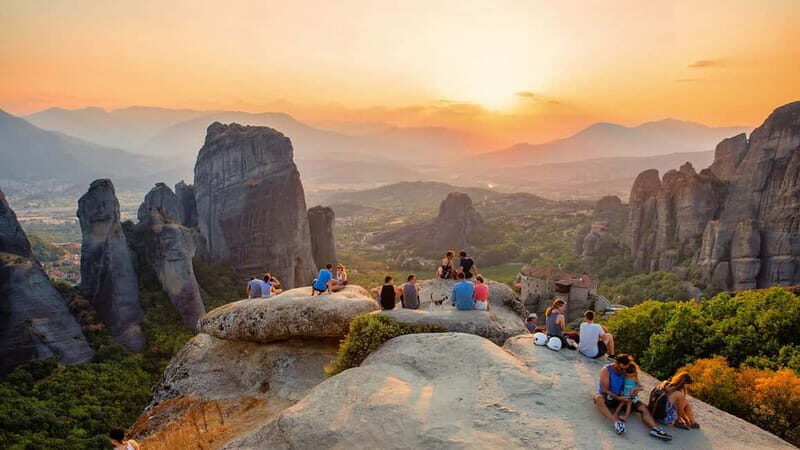
The tour begins with a Kastraki stop—part photos, part breathing room. This matters because Meteora can look confusing at first: dozens of cliffs, multiple monasteries, and constant perspective changes as you move around.
That early pause helps you understand what you’re looking at. You’ll start recognizing the monasteries by their rock positions, not just by name, so later stops feel clearer instead of random.
Holy Trinity Monastery: your first interior taste of monastic life
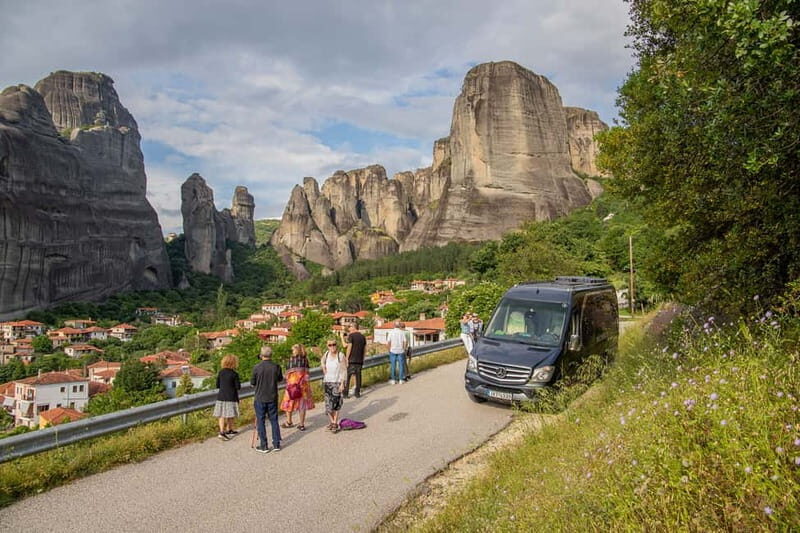
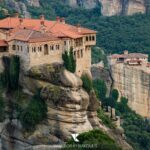
The Holy Trinity Monastery is one of the first major stops, and it sets the tone. You’ll get a photo stop and a guided look at the site from outside, plus scenic views on the drive.
Then you get the big value moment: the tour includes time to explore inside one selected active monastery. The timing here is late-day, so you’ll be grateful for the flexibility, but you should also expect that not every monastery will be open for interior viewing. That’s normal for the schedule of active sites.
A key point: the tour guide/driver doesn’t go inside the monasteries with you. They’ll provide context outside the buildings and you’ll lean on the free audio guide once you’re inside. It’s still a great setup because you can move at your own pace while getting explanations in multiple languages.
St. Stephen Monastery: why the long stop feels worth it
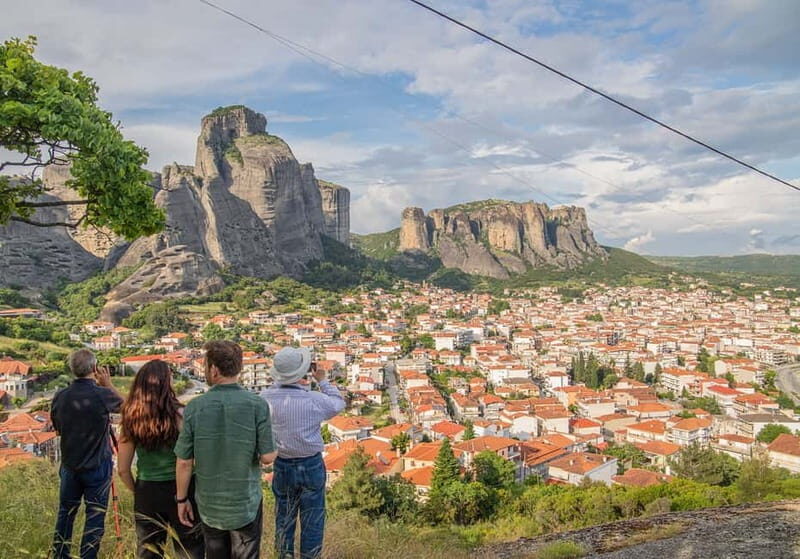
One of the monasteries on your route is St. Stephen, where you get a longer stretch of time than some other stops. That extra window helps you do three things without stress: take photos from the best angles, walk a bit around the site, and actually pause to watch the rock light shift.
You’ll also see how the monastery complex fits into daily life and geography—these are not floating sets. They’re placed like forts, built into the rock’s logic. The longer stop lets the “wow” settle into understanding.
St. Nicholas Anapavsa and the classic Meteora exterior experience
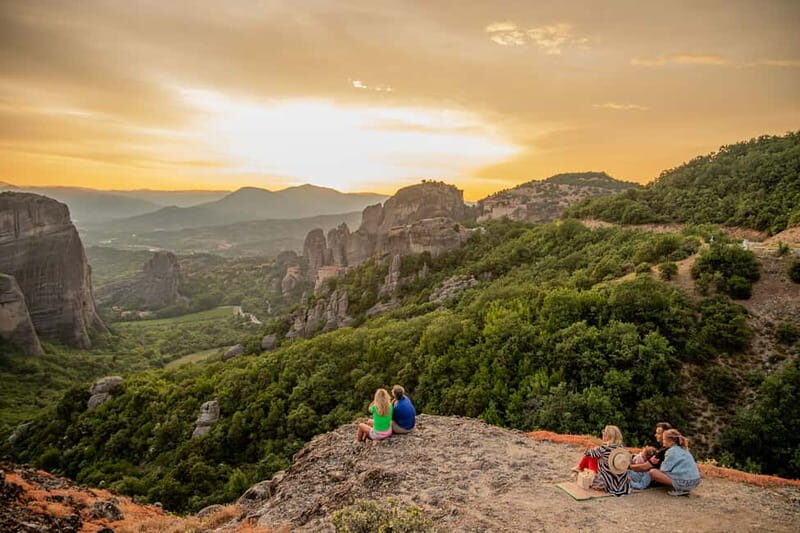
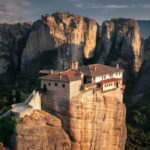
Next up is St. Nicholas Anapavsa. This stop is more about the “seeing the system” part of Meteora: how each monastery sits at a different vantage, how the pathways connect visually, and how the cliff shapes guide where buildings could be placed.
Even when you’re only visiting the exterior here, it’s not a consolation prize. It’s how you experience Meteora as a whole. You’re building a mental map as you go, and by the time you reach the later monasteries you’ll know where to look for dramatic angles.
Kalambaka’s Byzantine Church of the Virgin Mary: art, symbols, and an Apollo past
Between the monasteries, the tour includes a guided visit to the Byzantine Church of the Virgin Mary in old-town Kalambaka. This is one of those stops that rounds out the day, because Meteora isn’t only rock churches on cliffs. It’s also the religious and artistic world that supported them.
The church building is tied to an earlier temple, once dedicated to Apollo. You’ll hear how layers of history can occupy the same spiritual geography.
If you care about art and meaning, this church stop is a standout. You might notice the way frescoes and symbolism get explained during the guided portion outside and through the audio guide inside. This is a good place to slow down for a moment and think about what changed over centuries.
Badovas (Bandovas) hermit caves: where the story turns personal
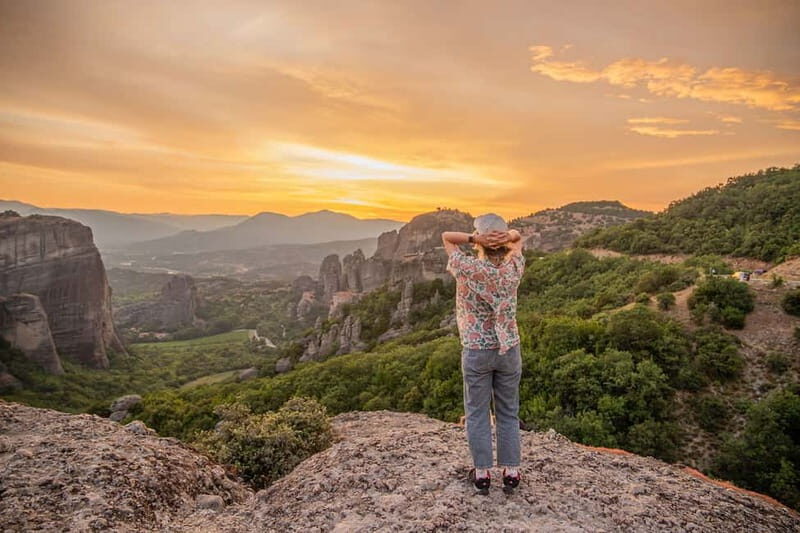
The star of the non-monastery side of this tour is the Badovas hermit caves. The route brings you to the cave hermitages where hermit monks lived about two centuries ago. This is where the day stops feeling like a photo mission and starts feeling like a human story.
You’ll get a guided visit to the caves, and it helps to understand that these monks weren’t hiding from the world with no plan. They were choosing a specific kind of life: isolation with purpose.
You may also walk along cave-related paths or viewpoints around the area. Bring shoes with grip and accept that you’ll be on uneven ground. It’s not a long hike, but it’s enough to make footwear matter.
Great Meteor and Varlaam: seeing Meteora’s “big names” from the road
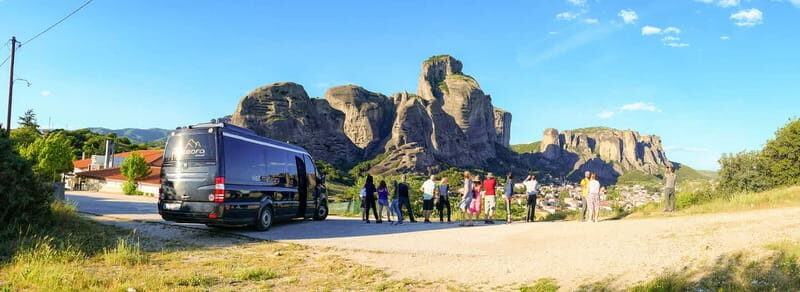
Two of Meteora’s best-known monasteries—Great Meteor and Varlaam—show up as major exterior stops. Here’s what you gain by including them even without guaranteed interior entry: scale.
From the outside, you can grasp the sheer engineering and planning it took to build and maintain sites on these rocks. The route also includes scenic drives with viewpoints, so you’re not stuck only at one angle.
These stops are also where guides shine. You’ll get stories that connect the monasteries to how people lived around them, and that context makes the architecture feel more alive than a checklist.
The dedicated viewpoint stop: built for photos, not rushing
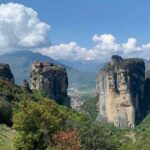
Between monasteries you’ll reach a viewpoint stop. This is where the tour becomes very practical: you get time to frame shots of the rock walls, monasteries, and the wider gorge views.
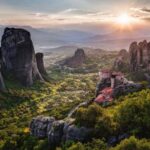
This is also the moment when you’ll likely feel the benefit of the late timing. The light is lower, shadows are longer, and details show up more clearly in photos—especially if you use a slower shutter or just take a moment to shoot multiple angles.
Rousanou and the final sunset: how the day lands
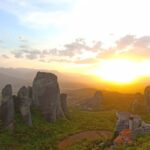
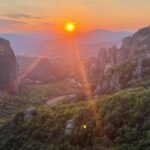
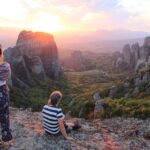
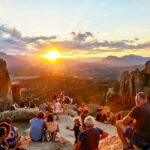
The last major monastery stop on the route is Rousanou, and it’s tied to the closing mood of the tour. You’ll have some time here for photos and exploring, plus a sunset moment at the end from the best viewpoint.
This is where weather can affect what you see. Clear evenings will reward you with that classic Meteora glow. Cloudy or foggy conditions can soften the sunset colors, but the views can still be impressive because the rocks still catch light and contrast.
If sunset is your main reason for booking, treat the viewpoint time as sacred. Bring your camera charged, take water breaks earlier (not at the last minute), and dress for a temperature drop. Even in warm months, rock sites cool off at night.
Price and value: $35 plus a couple of entry fees
The headline price is $35 per person for about 270 minutes (roughly 4.5 hours). For a tour that covers all six Meteora monasteries by exterior, includes hotel pickup, provides a live English-speaking local guide, and adds both Kalambaka’s Byzantine church and the Badovas caves, it’s strong value.
But don’t ignore the extras:
- Monastery entry fee is listed at 5€ per person
- Byzantine Church entry fee is 2€ per person
- Food and drink aren’t included
- A state-licensed guide inside the monastery isn’t included
That means your final cost depends on which sites require paid entry during your exact schedule. The upside is you’re not guessing which day is “worth it.” You’re buying a structured route that focuses on timing and coverage.
Also, your paid experience is supported by added layers: a live guide for the big story beats, and a free multilingual audio guide inside monasteries and for 20 points of interest.
What you’ll miss (and how to plan around it)
The biggest planning issue is also the most honest one: you only get interior access to one active monastery. Even though you’ll see all six by exterior, not every monastery will offer the same inside access at a late-afternoon slot.
If interior viewing of multiple monasteries is your top priority, you might need a second day in Meteora. This tour is best as the “great overview” day that ends with sunset, not as the only day you spend in the region.
Who this tour suits best
This tour is a good match if you want:
- A guided Meteora route without the stress of driving and parking on your own
- A sunset payoff with time to photograph
- Both monastery sites and the hermit-cave angle
It’s not a fit if you rely on wheelchairs, or if you’re outside the stated weight limits (over 150 kg / 331 lbs). It also isn’t suitable for babies under 1 year, and it has a standard policy of not allowing pets.
Kids are doable in many cases because the route is broken into stops with time to walk and photo breaks, and the guide often adapts pacing. Just remember the dress code and the uneven rock-world terrain.
Dress code and small practical tips that prevent headaches
Meteora monasteries have strict clothing rules. For men, no shorts and no sleeveless shirts—entry can be denied. Women can cover with borrowed or purchased skirts and shawls at the monastery entrances, but you still need to plan to have something to cover your shoulders and legs properly.
Bring a scarf even if you think you’ll be fine. It helps you adjust quickly. You’ll also want cash for entry fees and a comfortable camera-friendly outfit that you can move in.
And yes, bring good shoes. Even when the walks feel short, surfaces can be uneven, and you’re stepping around viewpoints.
My decision guide: should you book this Meteora sunset tour?
If you want one high-quality day that covers the key monasteries and ends with a sunset you can actually wait for, I think you should book it. It’s built for timing: views, viewpoints, and the emotional finish that Meteora does best.
I’d only hesitate if you’re chasing interior access to multiple monasteries in one evening. If that’s your priority, plan an extra daytime visit alongside this tour so you get both the sunset mood and the deeper interiors.
If your schedule is tight and you’d rather avoid figuring out logistics on your own, this is a practical way to see Meteora with expert storytelling and lots of photo opportunities—without turning your trip into a scavenger hunt.
FAQ
How long is the Meteora Sunset Small Size Tour?
The tour lasts about 270 minutes, which is roughly 4.5 hours.
Where does pickup and drop-off happen?
Pickup is offered from areas including Kastraki, Trikala, and Kalabaka. Drop-off is also listed for Kastraki, Trikala, and Kalabaka.
Is the tour price all-inclusive?
Not quite. Hotel pickup, transportation, a live English-speaking local guide, and a free audio guide are included, but monastery entry fees and the Byzantine Church entry fee are not included.
How many Meteora monasteries do you see?
You see all six Meteora monasteries by making stops around the area for panoramic views and photos. You also get inside access to one active monastery.
Do you need to pay for the monasteries and the Kalambaka church?
Yes. Monastery entry is listed at 5€ per person, and the Byzantine Church of the Virgin Mary entry fee is listed at 2€ per person.
What languages are available?
The live guided portion is in English (with tour info also offered in Greek). A free multilingual audio guide is available for multiple languages listed by the provider.
Do you get time for photos?
Yes. The route includes multiple scenic photo stops, plus time at key sites for sightseeing and photos.
What should I wear and bring for monastery entry?
Wear clothing that follows the monastery dress code. Men should avoid shorts and sleeveless shirts. Bring a scarf and comfortable shoes. You’ll also want cash for entry fees.
Is this tour wheelchair accessible?
No. The tour is listed as not suitable for wheelchair users.