REVIEW · KALABAKA
Meteora: Panoramic Morning Small Group Tour with Local Guide
Book on GetYourGuide →Operated by Meteora Thrones - Travel Center · Bookable on GetYourGuide
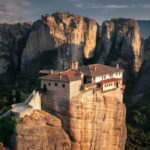
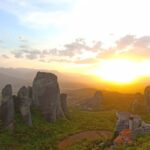
Meteora feels unreal before 10 a.m. On this 4-hour morning small-group tour, you’ll ride out from Kalabaka or Kastraki and get panoramic views of the monasteries perched on giant rock towers.
I really like that you get both the big-picture story and the practical experience: a local English-speaking guide explains how this Byzantine monastic world formed, and a free smart audio guide helps you follow along inside.
One consideration: you’ll do real walking and stairs as you move between sites, so it’s best if you have decent mobility.
In This Review
- Key things to know before you go
- Meteora in four hours: how the morning tour actually pays off
- Getting to the rock tops: pickup, ride comfort, and the first views
- Panoramas of all six active monasteries: what you really see
- The guided story you get between sites (and why it matters)
- Inside three monasteries: how the time is paced at each stop
- Monastery of St. Nicholas Anapavsa
- Great Meteor Monastery
- Monastery of Varlaam
- How the experience works inside
- Hermit caves and the little detours that make the rocks feel real
- Photo stops that create the classic Meteora shots
- What you’ll pay: monastery entry fees and the real cost of the half-day
- Getting your audio guide to work smoothly (ear pads matter)
- Clothing rules and the step-count reality
- Who this Meteora morning tour is best for
- Should you book this Meteora morning tour?
- FAQ
- How many monasteries will I see on this tour?
- Do I have to pay monastery entrance fees?
- What’s included in the tour price?
- Is the audio guide included, and what languages does it come in?
- How long is the tour?
- Do we go inside the monasteries with the guide?
- What should I wear to enter the monasteries?
- Is the group size small?
- Is there walking and stairs?
- What if I need to change plans?
Key things to know before you go
- Small group in an air-conditioned minibus (typically under 20), so you’re not stuck shoulder-to-shoulder.
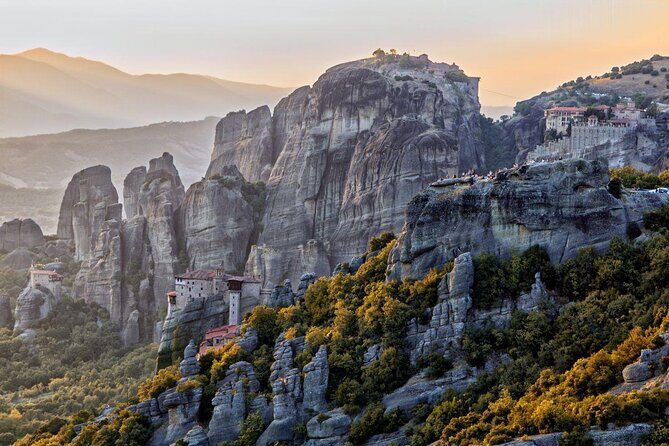
- All six active monasteries from viewpoints, plus interior visits to three of them.
- Free smart audio guide on your smartphone, with options in English, Spanish, French, Italian, German, Dutch, Portuguese, Polish, Russian, Japanese, Korean, and Chinese.
- Monastery entry fees are extra (cash only): €5 per monastery you enter.
- Built-in photo stops and short walks, not just endless bus windows.
- Expect stairs at some stops, including routes with significant step counts.
Meteora in four hours: how the morning tour actually pays off
Meteora is famous for a reason, but the timing matters. The morning start helps you see the best angles while the area is still moving at a human pace. You also avoid the late-morning crush that can make the viewpoints feel like a queue.
This tour is designed to give you structure without feeling like a race. You’ll get panoramic viewpoints first, so the monasteries make sense as a system. Then you visit three monasteries up close, with enough time to wander at your own pace using the audio guide.
The value sits in the balance. You’re paying for hotel pickup, a local guide who ties the monasteries to the region’s history, and a route that hits the major sites efficiently in a half-day.
You can also read our reviews of more guided tours in Kalabaka
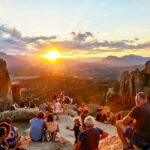
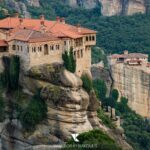
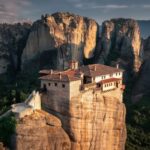
Getting to the rock tops: pickup, ride comfort, and the first views
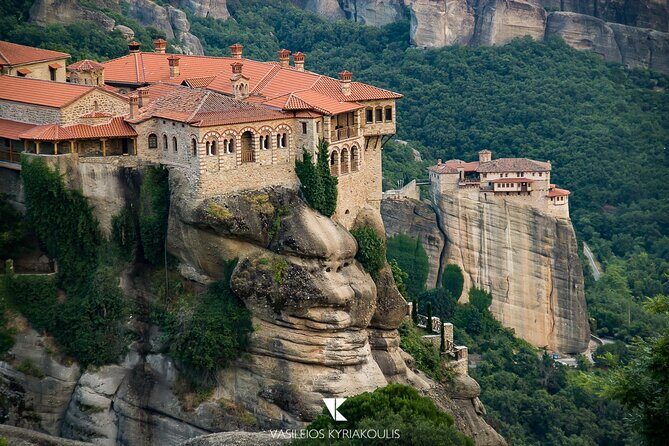
Pickup is available from Kalabaka or Kastraki (and Trikala is listed as an option), and the ride is a short stretch northwest toward Meteora. The minibus is air-conditioned, and the group size stays small, which makes it easier to hear the guide between stops.
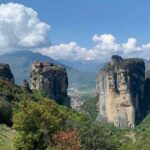
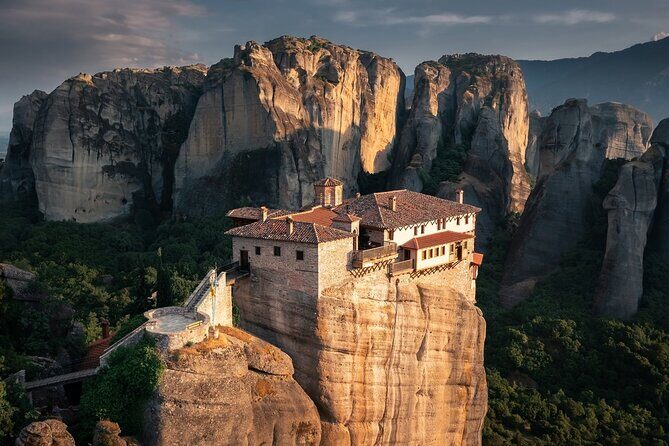
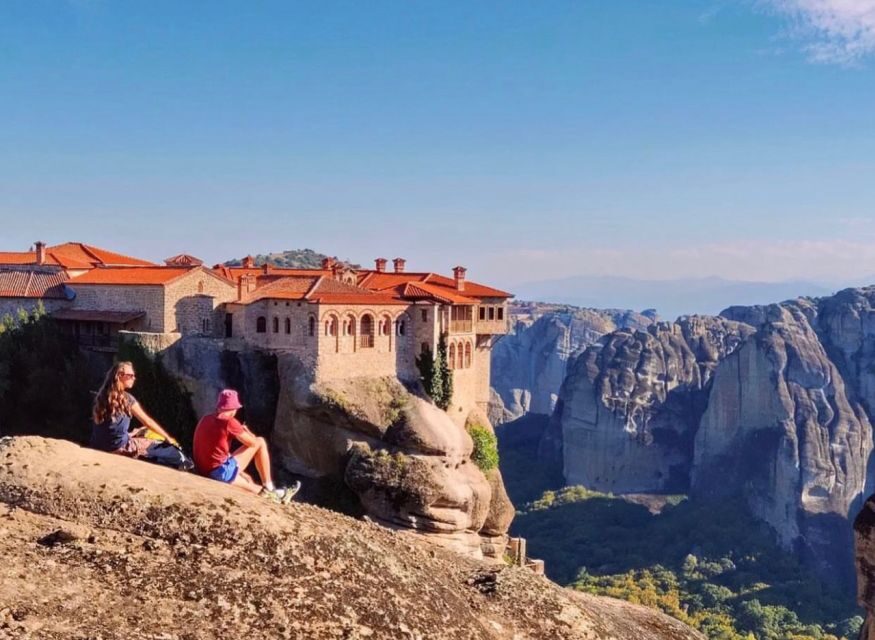
As soon as you start climbing into the Meteora area, you’ll feel why the site is UNESCO-listed. These aren’t just “pretty buildings on cliffs.” The monasteries sit on extreme rock columns that rise out of the Thessaly plain. The drive itself becomes a series of orientation moments, with photo stops along the way.
Practical tip: if you want your best shots, keep your camera ready at every stop. The tour includes multiple photo pauses, and a few viewpoints are specifically chosen for the classic Meteora angles.
Panoramas of all six active monasteries: what you really see
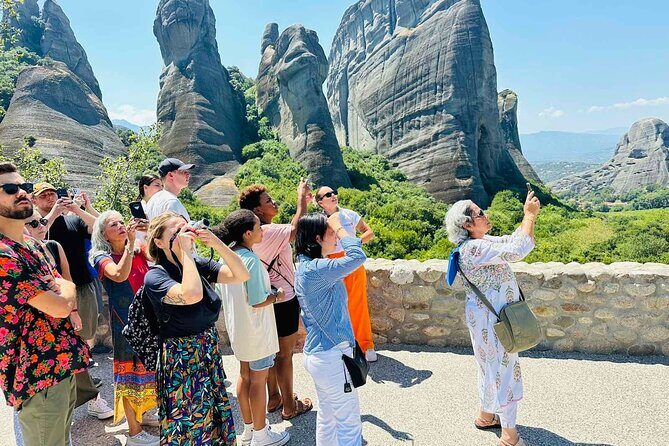
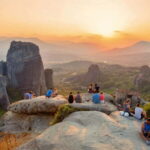
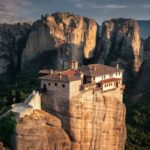
One of the smartest things about this tour is that it doesn’t pretend you can only see Meteora from inside. You’ll be able to see all six active monasteries from scenic viewpoints, even if you only enter three.
That matters because the monasteries were built for a reason: they needed seclusion, defensibility, and visibility. From the viewpoints, you can spot how each monastery relates to the rock formations around it, and you start noticing the patterns—where the access is tight, where the slopes are steep, and why certain places became the monastic anchors.
You’ll also get specific stops that help your brain connect the dots. The itinerary includes photo sightseeing stops for monasteries like Holy Trinity Monastery and Monastery of St. Stephen, even when you’re not going inside them.
The guided story you get between sites (and why it matters)
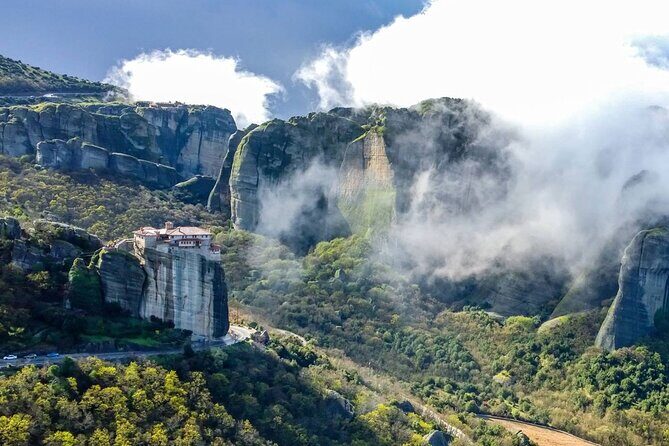
The live guide is the glue. They’ll give you the historical background as you travel, and the goal is not to dump dates on you. It’s to explain the logic behind the monastic community and how these communities functioned on hard terrain.
What I like here is that different guides in this program have been praised for matching the right amount of detail. People have singled out guides such as Vavos, Yannis, Giannis, Nicolas, and Christo, often mentioning that the explanations felt well paced.
Also, you’re not trapped in a “guided museum voice” all day. The format mixes commentary during transfers with time to explore independently when you reach the monasteries.
Inside three monasteries: how the time is paced at each stop
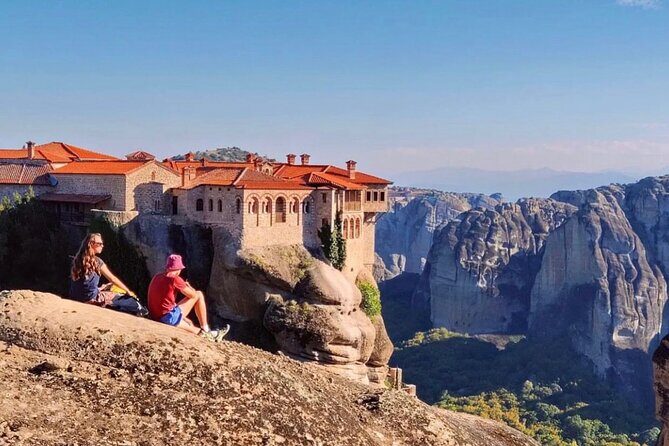
You’ll visit three of the six monasteries (the “three most popular,” with the exact choices depending on which monasteries are open on the day—some have weekly closures). This is one of those tours where you feel the difference between looking at Meteora and walking through it.
A few more Kalabaka tours and experiences worth a look
Monastery of St. Nicholas Anapavsa
This stop includes a photo stop and sightseeing time. It’s a good warm-up monastery: you’ll get the feel of the architecture and the cliffside setting before the bigger interior visits.
Great Meteor Monastery
This is one of the major stops, with about an hour of guided-and-explore time built in. Expect a mix of viewpoint moments and time inside to take in the artifacts and religious space at your own pace.
Monastery of Varlaam
Varlaam is another key monastery stop, with time for sightseeing and an interior visit. The tour typically gives you a solid window so you’re not hurried through the main areas.
How the experience works inside
A recurring theme in the feedback is that the live guide does not walk inside with you. Instead, you go in, use the smart audio guide (free and designed for the monasteries), and explore at your rhythm. That’s a big deal because Meteora interiors can be busy, and moving independently helps you avoid bottlenecks.
Time allocation is practical rather than vague. People have described roughly 30 minutes to a bit over an hour at each monastery they entered, which usually works well if you want photos plus a real look at what’s inside.
Hermit caves and the little detours that make the rocks feel real
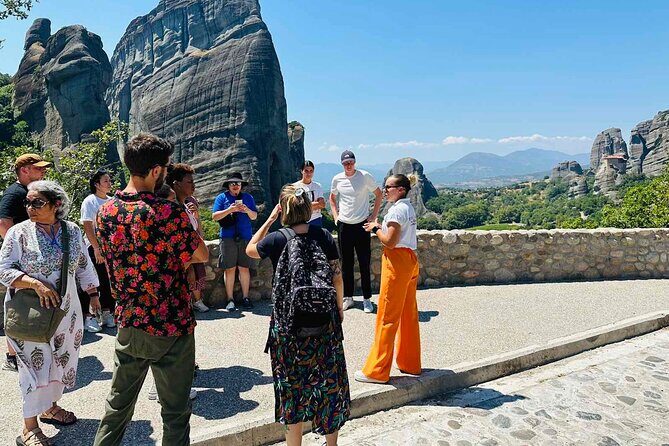
Beyond the monasteries, you also get a stop that adds texture: the Hermit Caves. It’s a great reminder that this wasn’t only about large monastic complexes. The wider Meteora area includes a tradition of eremitic life—people seeking solitude in niches carved into the rock.
These side stops help you see the site as a whole system: geometry (the rocks), access (the paths and steps), and spirituality (how people lived there).
Photo stops that create the classic Meteora shots
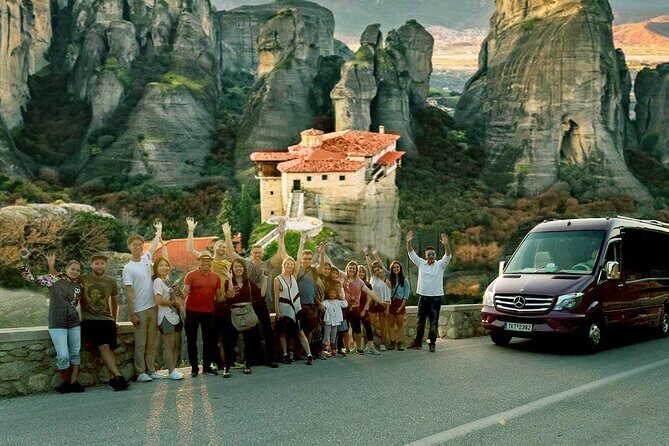
The itinerary includes multiple photo stops, and that’s not an afterthought. Meteora is one of those places where the best pictures happen at the exact right angle—and the tour builds in pauses for that.
You may also get special viewpoint stops. One review mentioned a stop known as Eagles Nest rock, which shows up in discussions as a GoT-related attention-getter. Even if you’re not thinking TV references, it’s a standout view point and an easy place to pause and refocus before your next monastery.
If you care about photos, pack patience. You’ll have opportunities, but you’ll also want to keep an eye on others moving in and out of the viewpoint areas.
What you’ll pay: monastery entry fees and the real cost of the half-day
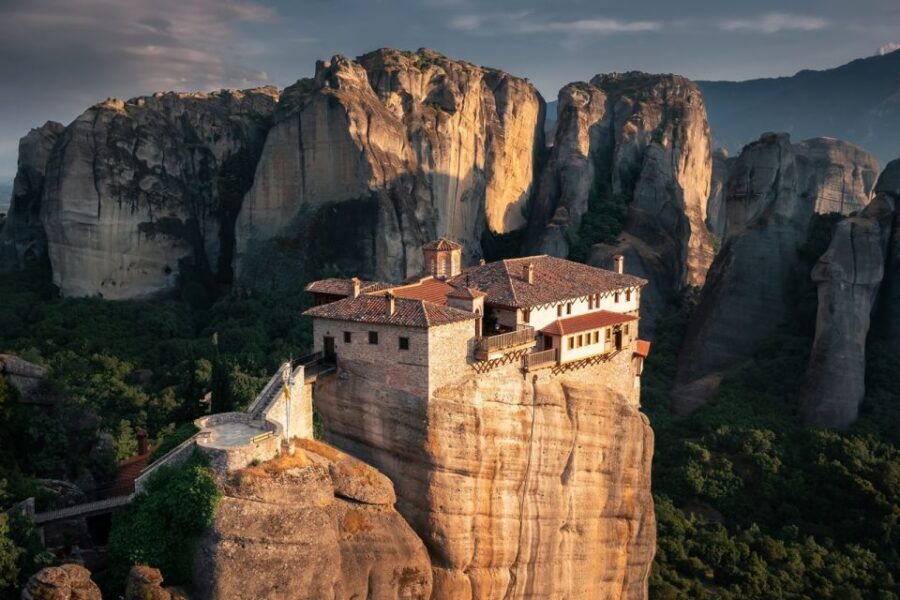
The tour price is listed at about $35 per person, and that’s for hotel pickup/drop-off, the guide, the small-group minibus, and the route that covers the major viewpoints.
There’s one extra line item you should expect: entrance fees to monasteries are €5 each, payable in cash only. Since you enter three monasteries, that’s €15 total if all three are open for your visit.
When I think about value, I weigh what you get for the money:
- You’re not driving yourself on steep, crowded roads.
- You get a local guide to connect the sites.
- You see all six from viewpoints, not just the three you enter.
- You get a free audio guide plus WiFi and a panoramic Meteora map.
So the true cost is the base price plus cash entry fees. It still tends to feel fair because the biggest Meteora “pain points” (timing, getting from place to place, and understanding what you’re looking at) are handled for you.
Getting your audio guide to work smoothly (ear pads matter)
The tour includes a smart audio guide you load/use on your smartphone. It’s free, and it’s available in multiple languages: English, Spanish, French, Italian, German, Dutch, Portuguese, Polish, Russian, Japanese, Korean, and Chinese.
Bring earpads if you can. It makes the experience better because some monastery interiors and viewing areas can be noisy. Also, keep your phone charged, since you’ll rely on it during the interior visits.
One small planning trick: download or get the audio ready before you enter the monasteries, so you’re not fiddling with settings mid-visit.
Clothing rules and the step-count reality
Monasteries are religious sites, so clothing rules are strict:
- Women must wear knee-length or longer skirts and cannot wear pants, shorts, or sleeveless shirts.
- Men cannot wear sleeveless clothing or shorts.
Plan for practicality, not comfort-without-rules. If your outfit doesn’t meet the requirements, you could be stuck outside.
Stairs are another reality. A review noted around 120 steps to reach two monasteries, and that gives you a sense of what to expect at certain points. For many people, it’s doable with steady pace and breaks, especially since the tour offers time at each stop. Still, this is not a “sit down and ride” excursion.
Who this Meteora morning tour is best for
This tour fits best if you:
- want a first-time, high-impact Meteora overview in half a day
- prefer small-group touring (so you can hear the guide and move more freely)
- like using an audio guide to explore at your own pace inside
- don’t want the stress of planning the route and parking yourself
It may be less ideal if you:
- have limited mobility or struggle with stairs and uneven steps
- want to spend a very long time in one single monastery
- hate religious sites with strict dress rules (you’ll still be visiting churches/monasteries, with access tied to attire)
Should you book this Meteora morning tour?
Yes—if you want the smartest half-day introduction to Meteora. You’ll see all six active monasteries from viewpoints, you’ll enter three, and you’ll get the local guide context that makes the rocks and the buildings feel connected instead of random.
Book it especially if you’re short on time in Kalabaka/Kastraki and want a low-stress plan that still gives you room for photos and quiet moments inside.
Skip it or think twice if stairs are a problem for you. Otherwise, it’s a practical, well-paced way to experience UNESCO Meteora without spending your precious vacation time figuring out routes and logistics.
FAQ
How many monasteries will I see on this tour?
You’ll see all six active monasteries from viewpoints. You’ll also visit the three most popular monasteries inside during the 4-hour tour.
Do I have to pay monastery entrance fees?
Yes. Entrance fees are €5 per person per monastery, payable in cash. The tour does not include these fees.
What’s included in the tour price?
The tour includes hotel pickup and drop-off in Kalambaka or Kastraki (and Trikala is listed for pickup options), a small-group ride in an air-conditioned minibus, a local English-speaking guide, a smart audio guide, free WiFi, and a free panoramic Meteora map.
Is the audio guide included, and what languages does it come in?
Yes, the smart audio guide is included and available in English, Spanish, French, Italian, German, Dutch, Portuguese, Polish, Russian, Japanese, Korean, and Chinese.
How long is the tour?
The tour lasts about 4 hours.
Do we go inside the monasteries with the guide?
Based on how the experience is described, you typically explore inside on your own while using the audio guide, rather than having the live guide accompany you throughout the interior rooms.
What should I wear to enter the monasteries?
Women must wear knee-length or longer skirts and cannot wear pants, shorts, or sleeveless shirts. Men cannot wear sleeveless clothing or shorts. Clothing that meets these rules is required.
Is the group size small?
It’s a small group tour in a minibus. Reviews commonly describe groups of fewer than 20 people.
Is there walking and stairs?
Yes, there is walking and stairs. One review mentions around 120 steps to reach two monasteries, so having decent mobility helps.
What if I need to change plans?
The activity lists free cancellation up to 24 hours in advance for a full refund. It also offers a reserve now and pay later option, so you can book without paying immediately.