REVIEW · KALABAKA
Meteora: Majestic Sunset Tour & Monasteries with Local Guide
Book on GetYourGuide →Operated by Meteora Thrones - Travel Center · Bookable on GetYourGuide
Sunset at Meteora feels almost scripted. This small-group tour pairs panoramic viewpoints with real on-the-ground context about the monks, the cliffs, and the faith that shaped these rocks.
I like how smoothly it runs: hotel pickup in Kalabaka or Kastraki, an air-conditioned minibus, and no parking stress. I also love the variety for one evening plan—all six monasteries from scenic stops, plus time for inside visits when timing allows.
One heads-up: monastery and church entry fees are extra and paid cash only, and you’ll need the right clothes. If you have mobility issues, this route isn’t a good fit because you’ll be on uneven ground and stairs near cliff sites.
In This Review
- Key moments to circle
- How the 4-hour sunset loop works from Kalabaka and Kastraki
- St Stephen’s Monastery and the Dormition Church: where the route begins
- Seeing the six monasteries from the outside without the chaos
- Inside visits: 1 or 2 monasteries, depending on the season
- Badova (Bandovas) hermit caves: the quieter side of Meteora
- A comfort check
- Kalabaka’s Byzantine Church of the Virgin Mary and Apollo roots
- Smart audio guide and map: how you squeeze extra value from every stop
- A note on pacing and sound
- The sunset viewpoint: when the rocks do the talking
- Price and value: is $35 a good deal here?
- Entry fees and dress code: the two things that can ruin your day
- Who should book this sunset monasteries tour (and who shouldn’t)
- Choosing between morning and sunset
- Should you book this Meteora Thrones sunset and monasteries tour?
- FAQ
- How long is the Meteora sunset and monasteries tour?
- Where is pickup and where do you get dropped off?
- Are monastery and church entry fees included in the $35 price?
- How many monasteries do we visit inside?
- Is there an audio guide, and what do I need to use it?
- What languages are available for the audio guide?
- What time does the tour start in June to August on Mondays?
- Is the tour suitable for people with mobility impairments?
Key moments to circle
- Hotel pickup + small group comfort: less driving work for you, more time for photos and listening
- All six monasteries in one route: you get the full Meteora overview without hopping around on your own
- Inside visits to 1 or 2 monasteries: the exact number can vary by season and openings
- Badova (Bandovas) hermit caves: see the cliffside retreat story from a quieter angle
- Kalambaka Byzantine Church of the Virgin Mary: a Christian site with older Greek roots
- The sunset viewpoint time block: you’ll be positioned to watch the rocks change as daylight fades
How the 4-hour sunset loop works from Kalabaka and Kastraki
This is built for people who want Meteora without doing logistics. You’re picked up from your hotel in Kalabaka or Kastraki (and Trikala is also part of the pickup/drop-off options), then you ride in a comfortable, air-conditioned minibus. That matters more than it sounds: Meteora isn’t just pretty. It’s also roads, parking, and lots of stop-and-go time if you’re self-driving.
The tour is designed to move you efficiently between cliff sites. You get photo stops along the way, then guided time where the guide can connect what you’re seeing to the bigger story—why these monasteries were built up here in the first place, how communities lived around them, and which legends people still repeat today.
At the start of your planning, note the timing detail that can affect your experience: from June to August, every Monday the tour starts at 4:00 PM. If you’re visiting during peak summer, that can shift which monasteries are available for inside viewing.
You can also read our reviews of more guided tours in Kalabaka
St Stephen’s Monastery and the Dormition Church: where the route begins
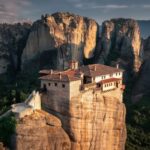
You begin with a stop at the Monastery of St. Stephen. Expect a photo stop first, then about 30 minutes to visit and look around inside. This is a key early moment because you’ll be fresh—no one wants to start their Meteora tour already tired and sweaty.
Next you head to the Holy Church of the Dormition of the Virgin Mary for another 30-minute photo-and-visiting window. This stop is helpful even if you’re not a church person, because it shows how the religious world of Meteora wasn’t only about monks on cliffs. It’s also about the art, worship spaces, and the continuity of tradition.
Two practical notes that affect how much you enjoy these parts:
- Dress code rules are strict, and they’re enforced. If you show up in shorts or a sleeveless top, you may have to turn back or improvise on the spot.
- Entry fees are not included (paid in cash). You’ll want a few euros ready before you get to the gate.
Seeing the six monasteries from the outside without the chaos
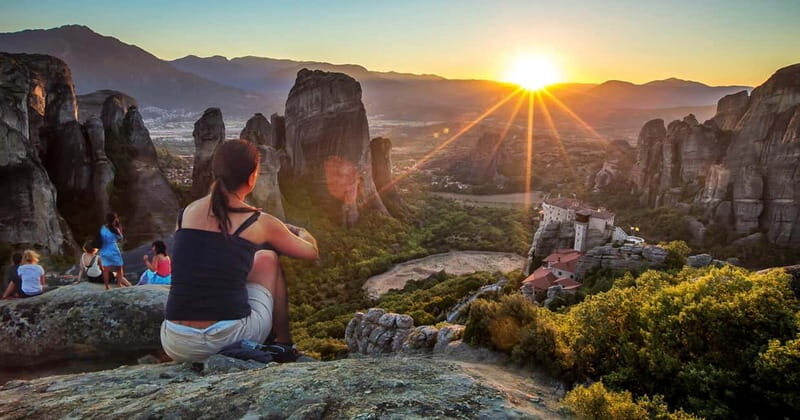
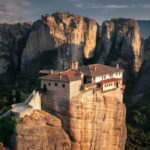
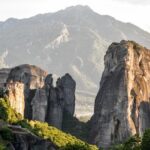
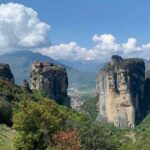
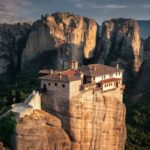
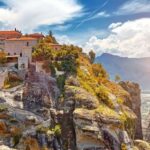
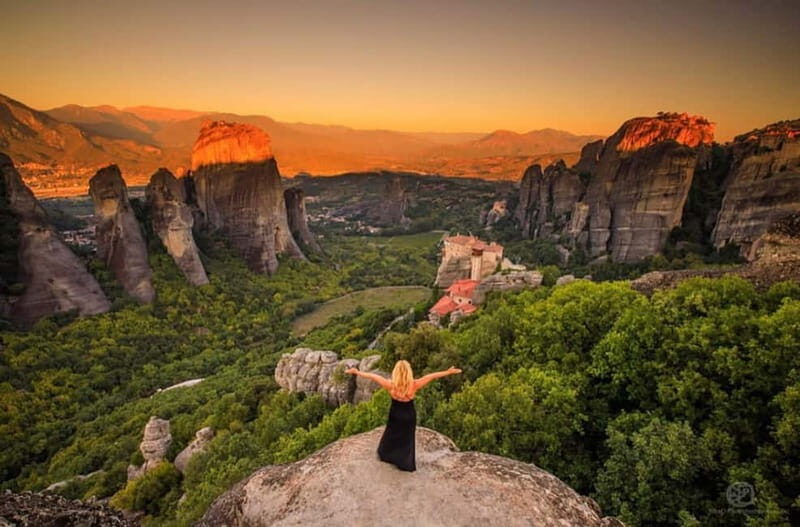
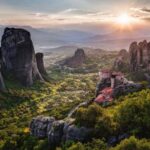
A big reason people book this sunset format is simple: you get the scope of Meteora fast. During the main on-rocks segment, you’ll see all six monasteries from panoramic viewpoints and scenic pull-offs. Even when you don’t go inside, the outside views help you understand the layout—how each monastery sits on different ledges and how the cliffs shape movement between them.
You’ll spend about 2 hours 17 minutes in the Meteora area for sightseeing and a guided tour approach. That longer block matters. It gives your guide time to explain what you’re looking at and it gives you time to linger at the best angles for photos.
One smart detail here is the rhythm. The guide isn’t just shouting facts across a parking lot. You’ll have repeated opportunities to stop, take pictures, and then move on when the scene makes sense. If you’re comparing Meteora to other Greek sights, think less like a museum schedule and more like a guided walk across viewpoints, with driving between each “frame.”
Inside visits: 1 or 2 monasteries, depending on the season
You’re promised to see the full set of monasteries overall, with the option to visit the inside of 1 or 2 monasteries depending on the year’s period. That variability is normal for Meteora, because opening hours shift.
If inside time is a top priority for you, plan to arrive with the mindset that the tour will work around monastery schedules, not against them. The upside: even with only one inside visit, you still get the overview plus the sunset payoff.
Badova (Bandovas) hermit caves: the quieter side of Meteora
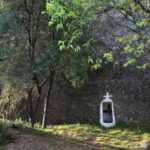
This tour doesn’t stop at cliffs and monasteries only. You also discover the Hermit Caves of Badova (also referred to as Bandovas hermit caves). These are tucked into the rock setting that makes Meteora feel so unusual: the cliffside was not just a place to build. It was also a place to retreat.
What I like about this stop is how it changes your mental picture. Monasteries are visible and dramatic, but hermit caves add a layer of human scale—space meant for solitude, not crowds. You’ll learn the story and historical context from your guide, which helps the caves feel connected to the broader Meteora religious life rather than like a random side trip.
You can also read our reviews of more evening experiences in Kalabaka
A comfort check
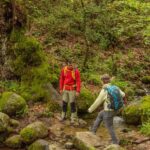
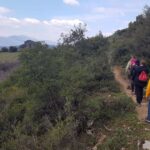
Expect uneven footing and steps. This isn’t a smooth, flat viewpoint. If you’re traveling with anyone who struggles with walking for long periods or climbing stairs, you’ll want to rethink this tour.
Kalabaka’s Byzantine Church of the Virgin Mary and Apollo roots
Another stop that adds depth is the Byzantine Church of the Virgin Mary in the old city of Kalambaka. This isn’t only a religious building—it’s also a reminder that the Greek world keeps layers.
The tour includes the detail that this site used to be an ancient temple to the Greek god Apollo. That’s the kind of connection you only catch when someone explains it as you’re standing there. It also helps you see the region as a continuum rather than a set of disconnected time periods.
This part works well if you’re the kind of visitor who wants Meteora to mean more than scenery. And if you’re more focused on photos, it’s still worth it. The church area gives you a different “texture” to balance the rock cliffs.
Smart audio guide and map: how you squeeze extra value from every stop
You’ll get a free smart audio guide and a panoramic Meteora map. The audio guide includes guided content for 11 points of interest and is available in many languages: English, Spanish, French, Italian, German, Dutch, Portuguese, Polish, Russian, Japanese, Korean, and Chinese.
Practical stuff you should know before you get there:
- Bring a smartphone.
- You’ll need ear pads/earphones to listen comfortably.
- There’s also free WiFi, which can help if you need to access app content or refresh anything related to audio playback.
If you don’t want to rely on audio, no problem. You’ll also have the live local guide and their storytelling while you’re moving between stops. Still, the audio layer is a good safety net if you want more detail during a slow moment at a viewpoint.
A note on pacing and sound
One recurring comfort theme from past experiences is that the in-van audio setup can vary day to day. My advice: use your own earbuds for the audio guide when possible, and don’t worry if you miss a sentence in transit—you’ll get plenty of explanation at the stops.
The sunset viewpoint: when the rocks do the talking
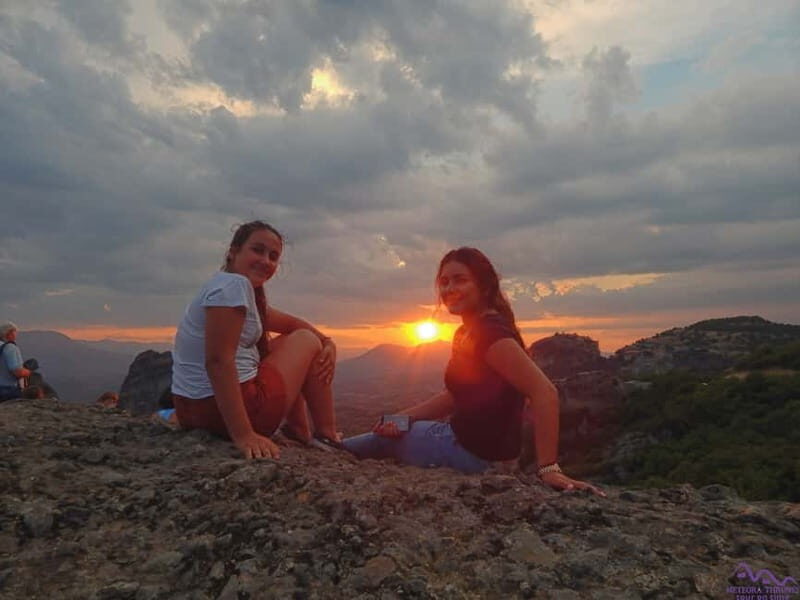
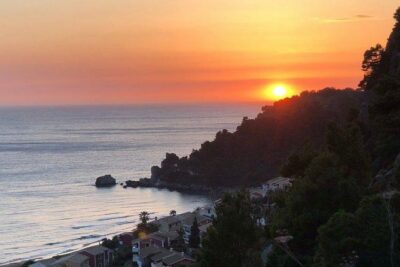
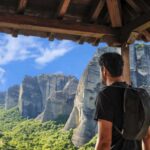
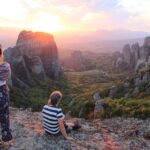
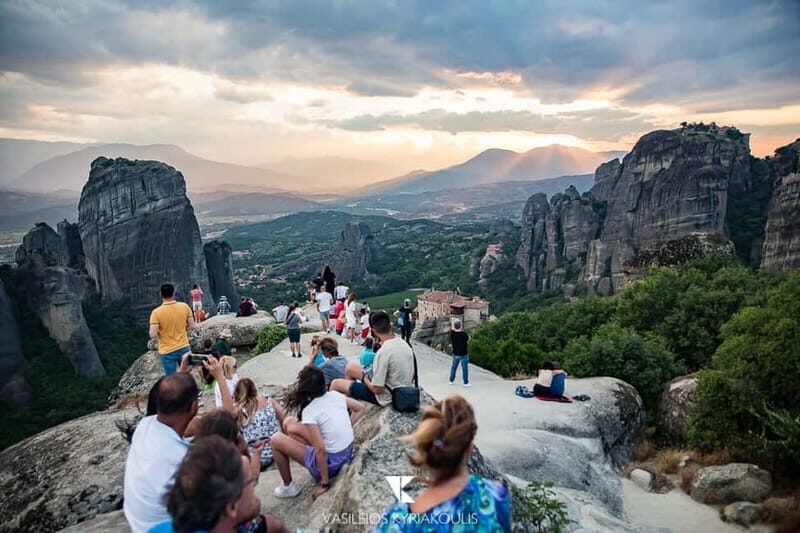
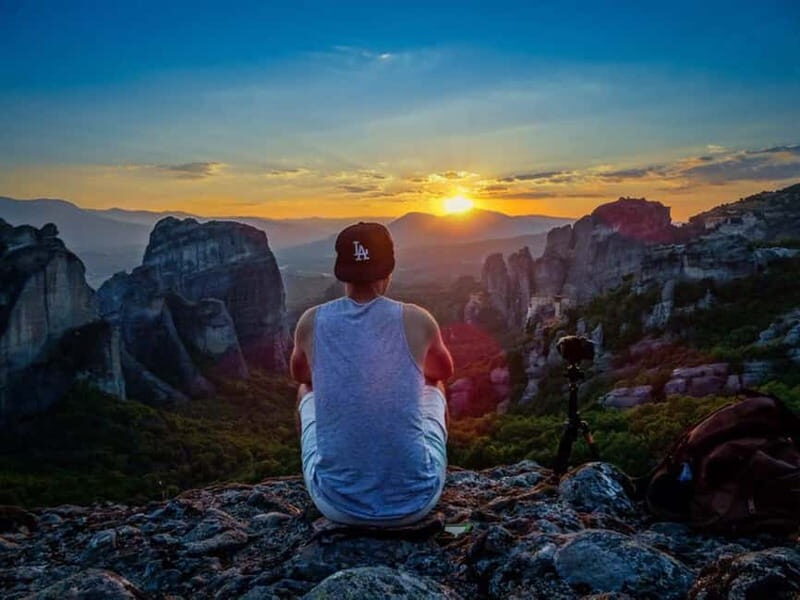
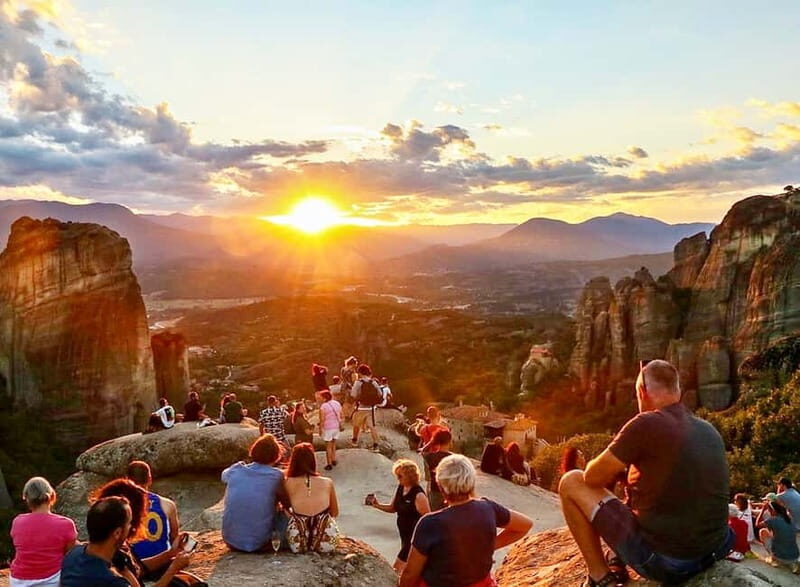
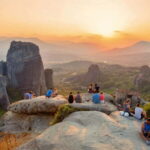
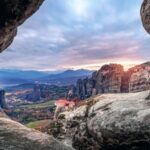
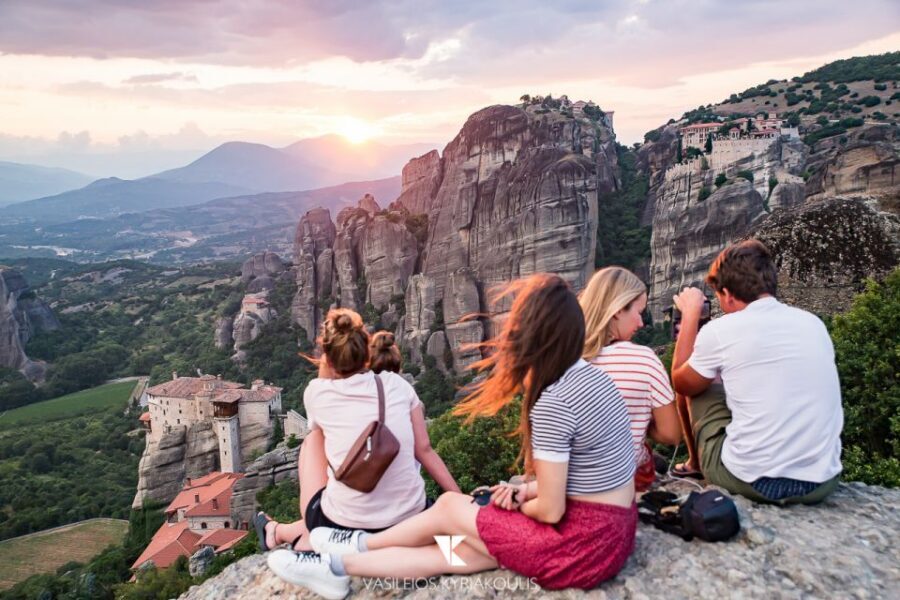
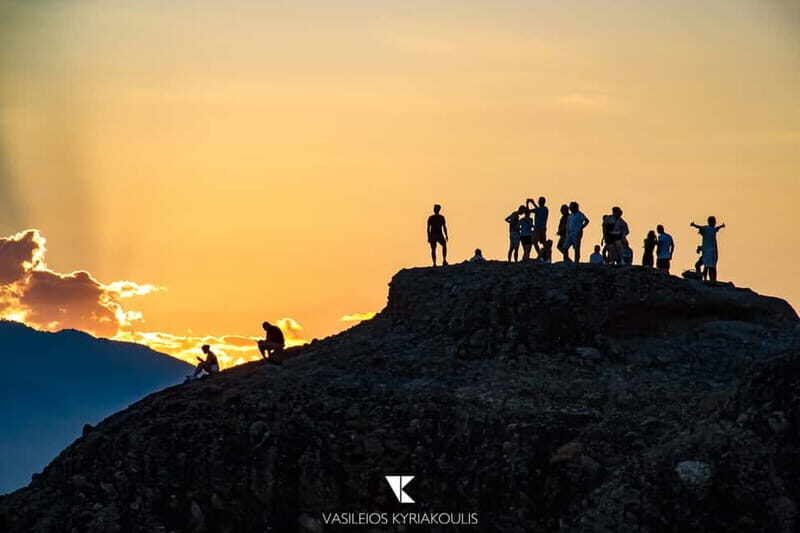
The finale is what you came for: the Meteora sunset from the most panoramic viewpoint on this route, with about 30 minutes dedicated to watching as the light changes. This isn’t just a quick glance from a random corner. The timing is built around giving you room to settle, look, and take pictures without feeling like the group is constantly herding you.
Cloud cover can happen, as it does across Greece. When skies clear, Meteora’s rock shapes seem to sharpen in golden light. When skies are hazy, the colors soften. Either way, the structure of the cliff formations stays dramatic.
A small but meaningful bonus: guides and drivers often help with photos. I’ve seen firsthand how much this matters when your group photo keeps sliding into awkward shadows. Having someone who knows where to stand can save you ten tries.
Price and value: is $35 a good deal here?
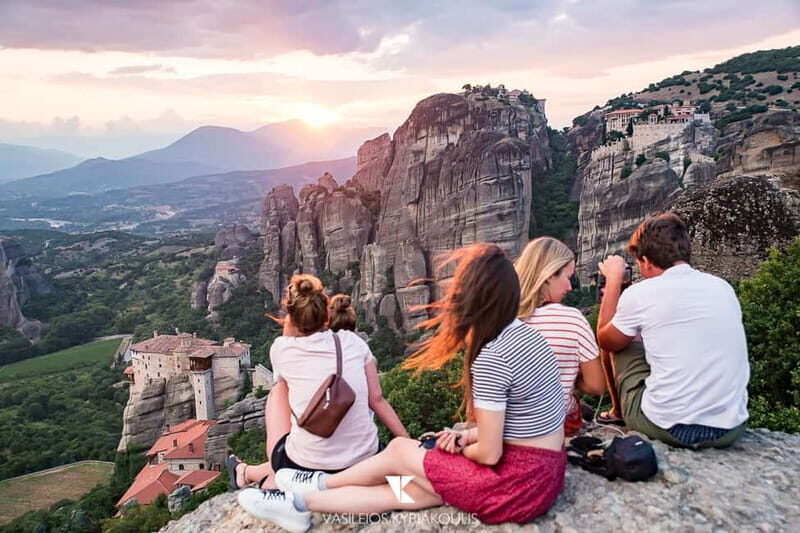
At $35 per person for a roughly 4-hour small-group tour, the value comes from what’s included, not just the sightseeing promises.
Here’s what you’re paying for that would otherwise cost time or money:
- Hotel pickup and drop-off in Kalabaka or Kastraki (or the route options that include Trikala)
- An air-conditioned minibus and a route that avoids the worst parking and traffic headaches
- A local, English-speaking live guide
- A smart audio guide with many languages and content for 11 points
- Access to the core Meteora experience: viewpoints, all six monasteries seen, plus the chance to go inside 1 or 2
- The sunset viewpoint with a dedicated time window
- Free WiFi and a panoramic map
Then there’s the extra cost you must budget: monastery and church entry fees are not included. You’ll pay:
- €5 per monastery, cash only
- €2 for the Byzantine Church of the Virgin Mary, cash only
So if your inside monastery count ends up being two, you should expect up to €12 in entry fees beyond the tour price (and less if only one monastery opens for inside time). This is why I tell friends to carry some cash right away. It keeps you from doing the awkward math at the ticket window.
Entry fees and dress code: the two things that can ruin your day
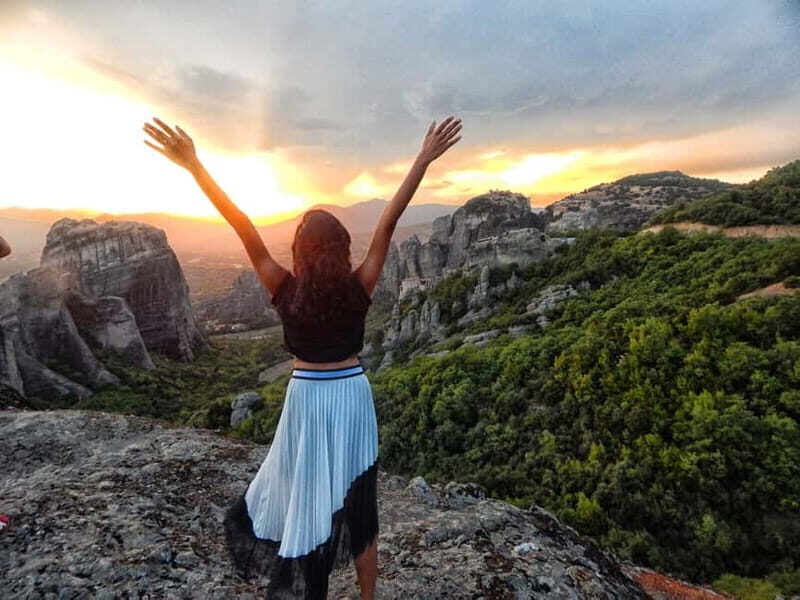
Let’s make this practical. Meteora monasteries are strict about clothing, and it’s not negotiable.
Women’s requirements:
- Knee-length or longer skirts
- No pants
- No shorts
- No sleeveless shirts
Men’s requirements:
- No sleeveless clothing
- No shorts
This is one of those situations where your photos will look better if you follow the rules instead of fighting them. Even when it’s warm, plan for something that meets the dress code.
Also remember: entry fees are cash only. Bring euro bills. If you’re traveling with a group, it helps to coordinate who has cash so nobody loses time.
Who should book this sunset monasteries tour (and who shouldn’t)
This is a strong match if:
- You want a sunset experience without self-driving between viewpoints.
- You want the quick overview: all six monasteries plus inside visits when possible.
- You enjoy explanation. The guide layer is what turns cliff views into understanding.
- You’re flexible and okay with the monastery openings shaping inside visits.
From the variety of group types people have shared, this also tends to work for mixed ages—grandparents, kids, and everyone in between—because the bus keeps the walking manageable compared to doing it all on your own.
This is not a good match if:
- You have mobility impairments. The sites involve walking and uneven terrain.
- You hate churches and prefer only scenery. The tour includes church time in Kalambaka plus monastery interior time when available.
Choosing between morning and sunset
If you’re doing Meteora for more than one day, sunset tours pair well with a separate daytime overview. That way, you’re not spending the whole trip indoors or repeating the same viewpoint angles.
Should you book this Meteora Thrones sunset and monasteries tour?
If your goal is to see Meteora’s monasteries efficiently and end with a proper sunset, I think this tour is an easy yes. The price feels fair because it includes the heavy lifting: pickup, a small-group route, a local guide, and a long enough viewpoint schedule to actually enjoy the rocks as the light fades.
Book it especially if you:
- want sunset plus stories in one evening,
- don’t want to worry about parking,
- like the idea of audio support with a map.
Skip it if you’re sensitive to dress code rules or you need step-free access. And do yourself a favor: bring cash for entry fees and pack the right clothes. That’s the only real snag that can stop the tour from feeling effortless.
FAQ
How long is the Meteora sunset and monasteries tour?
The tour duration is 4 hours.
Where is pickup and where do you get dropped off?
Hotel pickup is available in Kalabaka or Kastraki. Drop-off is also offered in Kalabaka or Kastraki, and Trikala is included as an option in the activity details.
Are monastery and church entry fees included in the $35 price?
No. Monastery and church entry fees are not included. Monastery entry is €5 per person each (cash only), and the Byzantine Church of the Virgin Mary entry is €2 per person (cash only).
How many monasteries do we visit inside?
You’ll see all 6 monasteries, but the number of monasteries you visit inside is usually 1 or 2, depending on the year’s period of the tour.
Is there an audio guide, and what do I need to use it?
Yes, there’s a free smart audio guide. You need a smartphone, and you should bring earpads/earphones to listen.
What languages are available for the audio guide?
The smart audio guide is available in English, Spanish, French, Italian, German, Dutch, Portuguese, Polish, Russian, Japanese, Korean, and Chinese.
What time does the tour start in June to August on Mondays?
From June to August, every Monday the tour starts at 4:00 PM.
Is the tour suitable for people with mobility impairments?
No. The tour is not suitable for people with mobility impairments.