REVIEW · THESSALONIKI
Mount Olympus Hiking Experience – Trekking in Greece
Book on Viator →Operated by Greek Adventure · Bookable on Viator
Mount Olympus is not a gentle stroll with a famous name. This is a two-day mountain trek with long walking hours, a 1,609-meter ascent on the first day, and a serious summit attempt on the second. You sleep in a refuge on the Plateau of the Muses, then rise early for Mytikas, Greece’s highest peak at 2,918 meters.
I like the route’s big payoff: you move from forest trails to high mountain terrain, with views across Olympus and the coast. I also like the careful safety rule that lets the guide cancel the Mytikas climb if weather, snow, altitude sickness, or fitness makes it unsafe. The main drawback is simple: you carry your own gear, and seven to nine hours of walking each day demands solid fitness.
In This Review
- Mount Olympus Hiking Experience: Key Points
- What This Two-Day Olympus Trek Really Demands
- Day One: From Gortsia to the Plateau of the Muses
- Day Two: Mytikas, Safety Gear, and the Descent to Prionia
- Views, Route Variety, and the Feel of the Mountain
- Refuges, Food, and What to Carry
- Fitness, Altitude, and the Summit Decision
- Litochoro Logistics and Transport
- Who Will Get the Most From This Trek
- Should You Book the Mount Olympus Hiking Experience?
- FAQ
- Where does the Mount Olympus hiking experience start and finish?
- Is transport from Thessaloniki or Athens included?
- Is accommodation included?
- Are meals included in the price?
- Is reaching Mytikas guaranteed?
- What fitness level and equipment do I need?
Mount Olympus Hiking Experience: Key Points

- Mytikas summit attempt: Reach 2,918 meters with safety equipment if weather and physical condition allow.
- A long first day: Walk about 13.5 kilometers from Gortsia to a refuge near the Plateau of the Muses.
- High-altitude overnight: Sleep in one of the mountain shelters, with blankets available but a sheet sleeping bag required.
- A guide-led route: An English-speaking Greek Adventure guide handles the route, pace, transfers, and safety decisions.
- Simple transport plan: Meet in Litochoro, ride 13.5 kilometers to Gortsia, and return from Prionia by vehicle.
- Strong customer record: The experience carries a 4.9 rating from 14 reviews, with 100 percent recommending it.
What This Two-Day Olympus Trek Really Demands

At $433.06 per person, this is not a cheap day out. It is priced as a guided mountain trip with refuge accommodation, transport from Litochoro to Gortsia and back to town, taxes, and safety support. Meals and drinks are extra, as is your transport to Litochoro.
I think the price can make sense if you want a managed attempt at Olympus rather than a self-planned hike. The guide removes much of the route-finding work and makes the hard call on Mytikas. You still need to bring the right equipment and carry your pack, so this is not a luggage-free package.
The group can include up to 40 people. That is a fairly large maximum for a demanding mountain route, though the actual group size may be smaller. Group discounts are available, and the tour is offered in English.
The company’s guides have received especially strong praise for organization, safety, and personal care. Names appearing in past Greek Adventure trips include Adam, Sotiris, Giannis, Thanos, Christos, John, and Iraklis. Do not assume a particular guide will lead your departure, but the repeated pattern is useful: expect a guide who manages pace, refuge arrangements, transport, and the summit decision rather than simply walking ahead of you.
You can also read our reviews of more hiking tours in Thessaloniki
Day One: From Gortsia to the Plateau of the Muses

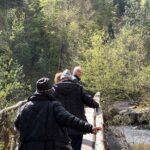
You meet at Enipeos 1 in Litochoro, the town that serves as the start and finish point. From there, the included vehicle takes you 13.5 kilometers uphill to Gortsia, at 1,123 meters. This transfer matters because it puts you directly on one of Olympus’s main mountain approaches and saves you a long road walk.
The day’s walking is estimated at seven to eight hours. You gain about 1,609 meters and reach a maximum height of 2,724 meters, with only about 114 meters of descent. In plain terms, this is a sustained uphill day. You should start with a light pack, good water supplies, and no expectation of a relaxed warm-up.
The trail passes through points called Barba, Koka, and Strangos before reaching the Petrostruga refuge at 1,940 meters. The first section takes roughly two and a half hours. Petrostruga makes a useful rest stop, but do not treat it as the end of the hard work. You still have a major climb ahead.
From Petrostruga, the route continues toward Skourta at 2,476 meters. You then cross Laimos and the Pass of Iossos, where the Plateau of the Muses comes into view. This is the day’s great visual reward. The terrain opens up, the air feels colder, and the mountain begins to look less like a wooded Greek peak and more like a high alpine route.
The final section leads to the G. Apostolidis refuge, where you spend the night at one of the shelters on the plateau. The stated maximum height for the day is 2,724 meters, so you are already sleeping high before the summit morning.
That overnight location is one of the best features of the trip. It cuts out the need to begin the summit attempt from low elevation, giving you a direct start on the second day. The tradeoff is comfort. Mountain refuges are practical places to sleep, not private hotel rooms. Blankets are available, but you need a sheet sleeping bag or similar cover.
Day Two: Mytikas, Safety Gear, and the Descent to Prionia

The second day starts early, after breakfast if you have arranged the meal supplement. The target is Mytikas, at 2,918 meters, the highest summit in Greece. The climb requires extra effort and is only possible if you are free from altitude sickness and fit enough for the final ascent.
Safety equipment is used for the summit attempt. Your guide decides if the climb goes ahead, based on weather and the group’s physical condition. Snow makes the Mytikas ascent impossible under the stated rules, and the guide can also choose a lower objective if the conditions are unsafe.
This is an important point when you book. You are paying for a guided attempt at the summit, not a guaranteed summit certificate. A sensible mountain guide does not push a group onto an exposed route to satisfy a brochure promise. You may reach Mytikas, or the group may turn back and enjoy the high mountain views from a safer point.
Past trips have included ascents to Skala rather than Mytikas. That is not a failure. Skala is still a high Olympus summit area, and the route’s value does not disappear if conditions stop the final section. You should simply decide before booking that safety matters more than the exact top.
From the summit area, you descend toward the Spilios Agapitos refuge. The itinerary allows for a short stop there before the trail continues to Prionia. A vehicle waits at Prionia for the return to Litochoro.
The published walking time for the second day is eight to nine hours. It combines an early high-altitude climb with a long descent, so tired legs are part of the bargain. The trip ends back at the original meeting point in Litochoro.
Views, Route Variety, and the Feel of the Mountain

The route gives you several different versions of Olympus in a short time. You begin at Gortsia, walk through the lower mountain, pass the Petrostruga refuge, and climb into the exposed plateau region. By the next morning, you are moving through the highest part of the range before descending toward Prionia.
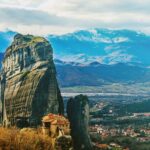
The Plateau of the Muses is the visual centerpiece. From the Pass of Iossos, you can see the plateau spread across the high mountain. From the upper peaks, the view includes the surrounding Olympus summits and the Olympic coast.
You should also plan for quick weather changes. The supplied gear list specifically calls for warm clothes for cold, windy daytime conditions and cool evenings, plus a waterproof jacket with a hood. This is not overpacking. A sunny start in Litochoro says little about conditions above 2,500 meters.
The best photographs often come from the contrast between the lower route and the high plateau. Bring a camera if you want one, but keep it protected and easy to reach. You are carrying every item yourself, and fiddling with a large bag on a steep trail gets old quickly.
Refuges, Food, and What to Carry

Accommodation in the mountain refuges is included. Meals are not. You can add a half-board supplement of 25 euros per person, covering one breakfast and one dinner, or full board for 55 euros, covering one breakfast, two lunch packs, and one dinner.
I would compare the supplements with the refuge prices before deciding. The shelters sell food and drinks, and one past participant found that buying directly at the refuges could be more useful than choosing full board. Drinks may still require cash, so carry money even if you prepay meals.
Pack as lightly as you can, but do not cut safety gear. You need a 40 to 50-liter rucksack with padded straps and a waist belt. A waterproof liner is a smart addition because wet clothing inside a refuge pack is a miserable problem.
Your basic kit should include:
- Worn-in trekking shoes
- Waterproof jacket with hood
- Warm fleece or similar layer
- Quick-drying shorts and long trousers
- Long-sleeved walking shirt
- Water bottle
- Sunglasses, sun hat, and sun block
- Head torch or flashlight
- Walking sticks
- Towel and wash bag
- Simple first aid and blister supplies
- Sheet sleeping bag
- Penknife
The request for worn-in footwear deserves extra attention. Do not bring brand-new boots for a two-day mountain climb. Blisters can turn a good route into a painful one before the first refuge.
You should also test your pack before departure. The route involves a great deal of ascent, and a badly adjusted waist belt or overloaded bag will make the first day much harder. The company specifically warns you to carry everything you bring for all walking days.

Fitness, Altitude, and the Summit Decision
You need moderate physical fitness at a minimum. The numbers tell the story: seven to eight hours on day one, eight to nine hours on day two, and a first-day ascent of 1,609 meters.
You do not need to be an elite climber for the basic trek, but you should be comfortable walking uphill for several hours. The Mytikas attempt adds another level of effort and may involve safety equipment. Altitude sickness is also a clear concern, and the guide can stop you from continuing if your condition is not good.
The guide controls the pace and decides if the summit attempt is safe. That is a real benefit for anyone who lacks high-mountain experience. Past trips have included guides adjusting the speed for participants who felt unwell, but you should not rely on that as a substitute for fitness.
If you arrive exhausted, ill, or poorly equipped, the mountain will not become easier because you paid for the tour. Start rested, bring layers, drink regularly, and tell the guide early if something feels wrong.
Litochoro Logistics and Transport

The trip starts and ends in Litochoro. The included transport covers the route from Litochoro to Gortsia at the beginning and from Prionia back to Litochoro at the end.
Transport from Athens, Thessaloniki, or another Greek town is not included. The company can help with arrangements to and from Litochoro, but you need to organize those plans separately. This is especially important if you are building a short Greece itinerary around Thessaloniki.
The meeting point is Enipeos 1, Litochoro 602 00. The activity returns to this point after the Prionia transfer. Public transport is nearby, and service animals are allowed.
Book ahead if your dates matter. The experience is booked an average of 42 days in advance. Instant confirmation normally arrives at booking, but reservations made within nine days of departure may take up to 48 hours and depend on availability.
Free cancellation is available up to 24 hours before the start time. Poor weather or failure to reach the minimum group size can also lead to a new date, another experience, or a full refund.
Who Will Get the Most From This Trek

I would choose this trip if you want a concentrated Olympus challenge and have only two days. The route gives you the mountain’s major elements: a high climb, a refuge night, a summit attempt, and a descent to Prionia.
It suits people who prefer a guide to handling route decisions, safety gear, and transfers. It also works for families with fit older children, based on the company’s past guided family trips, but the long hours and high elevation still need to be taken seriously.
You may prefer a longer three or four-day Olympus route if you want a slower pace, more time in the national park, or a better chance to enjoy side routes. Past Greek Adventure departures have included longer trips with additional time for flora, wildlife, and less-used paths.
This two-day version is less suitable if you dislike shared mountain accommodation, need private rooms, cannot carry a 40 to 50-liter pack, or want a guaranteed summit. It is also a poor match for anyone who has not prepared for long uphill walks.
Should You Book the Mount Olympus Hiking Experience?
Book it if you want a serious, well-organized attempt at Greece’s highest mountain, and you accept that nature makes the final decision. The guide-led structure, included Litochoro transfers, refuge night, and careful summit policy give you useful support without turning the trek into a soft adventure.
Before paying, confirm the expected group size, the guide assigned to your date, refuge arrangements, and meal plan. Pack light, bring cash for refuge purchases, and train for sustained uphill walking.
I would book this for the scenery, the Plateau of the Muses overnight, and the chance to stand on Mytikas if conditions allow. I would not book it simply to collect a guaranteed summit photo. Olympus rewards preparation, patience, and a willingness to turn back when the mountain says no.
FAQ
Where does the Mount Olympus hiking experience start and finish?
It starts at Enipeos 1 in Litochoro and ends back at the same meeting point after the return transfer from Prionia.
Is transport from Thessaloniki or Athens included?
No. The included transport covers Litochoro to Gortsia and Prionia to Litochoro. Transport from Athens, Thessaloniki, or other towns to and from Litochoro is not included.
Is accommodation included?
Yes. Accommodation in a refuge on Mount Olympus is included. You need to bring a sheet sleeping bag or similar cover, although blankets are available.
Are meals included in the price?
No. You can add half board for 25 euros per person, covering one breakfast and one dinner, or full board for 55 euros, covering one breakfast, two lunch packs, and one dinner.
Is reaching Mytikas guaranteed?
No. The guide decides if the Mytikas climb is safe, based on weather and the physical condition of the group. Snow makes the ascent to Mytikas impossible, and altitude sickness can also prevent the climb.
What fitness level and equipment do I need?
You need moderate physical fitness for walking seven to nine hours per day and carrying your own gear. Bring sturdy worn-in trekking shoes, a 40 to 50-liter rucksack, waterproof clothing, warm layers, a water bottle, torch, walking sticks, sun protection, and a sheet sleeping bag.