REVIEW · PELOPONNESE
One day mosaic workshops in the Southern Peloponnese
Book on Viator →Operated by Dimitra Colomvakou · Bookable on Viator
A small workshop in Sparta lets you do more than look at ancient Greek art. You make your own mosaic, starting with a Greek or Roman pattern, then choose natural stone colours, mix your own pigment, and set each piece by hand. Dimitra Colomvakou gives personal help throughout, with no previous experience needed.
I like the maximum group size of six, which gives this craft lesson a calm, personal feel. I also like the practical finish: your mosaic is wrapped in bubble wrap for the journey, and a written guide to the techniques and mosaic history is sent by email. The main drawback is simple: at about three hours, this is a focused craft session, not a broad tour of Sparta or the Peloponnese.
In This Review
- Key points to know before booking
- Making a mosaic in Sparta, not just looking at one
- Choosing a Greek or Roman pattern
- Selecting stone and mixing the colour
- Nippers, tweezers, and the careful work of placement
- The noon break adds a welcome local touch
- Returning to the table for the final details
- Taking your finished piece home safely
- What the $108.37 price gets you
- Who will enjoy this workshop most
- Timing, meeting point, and practical details
- The personal touch from Dimitra
- Should you book this Sparta mosaic workshop?
- FAQ
- Where does the mosaic workshop take place?
- What time does the workshop start?
- How long does the experience last?
- How many people can join the workshop?
- Is mosaic-making experience required?
- What language is the workshop offered in?
- Are tools and materials included?
- Are food and drinks included?
- Can I use my own design?
- How do I take the finished mosaic home?
Key points to know before booking
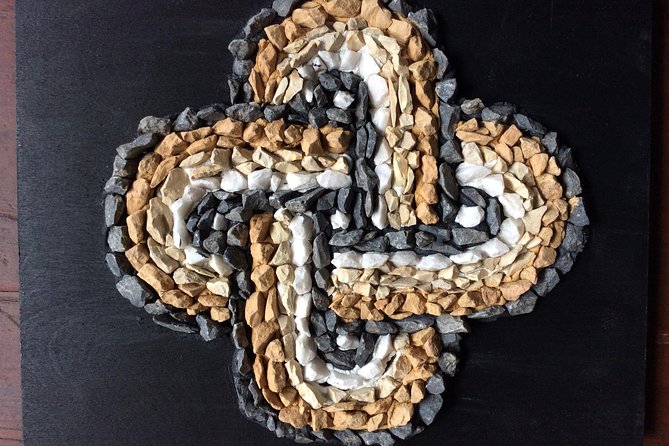
- Choose your own design: Start with a Greek or Roman pattern, or bring your own idea.
- Work with real natural stone: Select from available colours and learn how to prepare the adhesive with dry pigments.
- Use traditional and modern tools: Nippers, tweezers, piping bags, and, if time allows, a hammer and hardie are part of the process.
- Small-group instruction: The workshop accepts no more than six people, so Dimitra can guide you closely.
- A proper break is included: Around noon, you stop for coffee, tea, alcoholic drinks, and a traditional snack.
- Easy to fit into a Sparta day: The workshop begins at 10:00 am at the garden entrance of Mosaic Art Greece and ends at the same place.
Making a mosaic in Sparta, not just looking at one
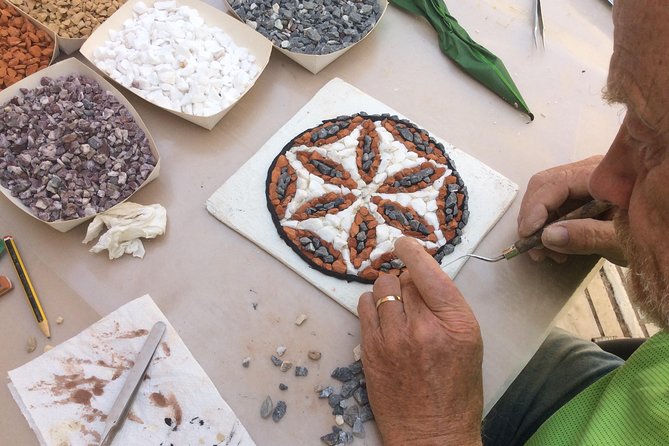
The appeal here is the work itself. You are not simply watching a demonstration or painting a ready-made tile. You choose the design, select pieces of stone, prepare the colour, and slowly build the image.
That process gives the workshop a useful connection to the ancient world around you. Greek and Roman mosaics can look effortless when viewed in a museum or archaeological site. Once you try to place even a small pattern, you see the patience and precision behind them.
Dimitra leads the session at Mosaic Art Greece in Sparta. The instruction is personal rather than formal and academic. She shows you how the tools work, helps with technique, and stays involved as your piece takes shape.
This suits you if you enjoy making things with your hands. It also works well for a mixed-age group. The activity has no experience requirement, and the provided example of two teenagers taking part with their family suggests that younger participants can enjoy it too, provided they are comfortable with careful handwork.
You should not book this expecting a fast souvenir-making class. Mosaic work takes time. The small pieces require attention, and your finished result may have the charming irregularity of something made by hand rather than the neatness of a factory product.
You can also read our reviews of more tours and experiences in Peloponnese.

Choosing a Greek or Roman pattern
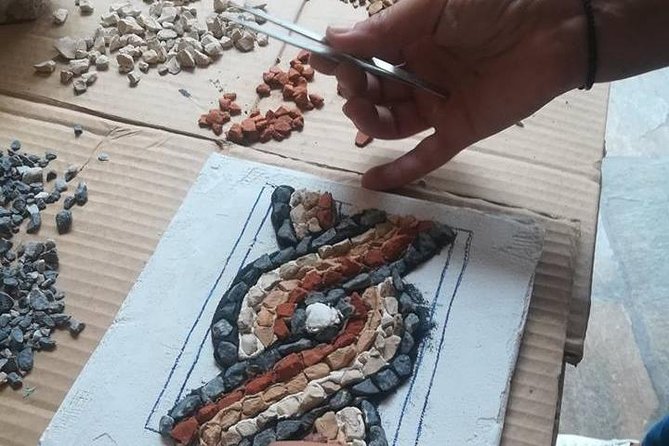
At the start, each person chooses a base with a Greek or Roman design. You can also use your own design, which gives the session a little more freedom for people who already have an idea in mind.
The supplied patterns are a sensible choice if you want to get working quickly. A classical design gives you a clear framework for colour and placement, which matters when you have only about three hours. If you bring your own design, keep it manageable. The workshop time is limited, and a complicated image could leave you rushing near the end.
The choice of a Greek or Roman pattern also makes the activity feel connected to Sparta. You are creating a small piece inspired by the visual language of the region rather than making a generic craft project.
Ask Dimitra about the pattern before you begin if you are unsure how detailed it is. That is one of the benefits of a group capped at six people: you can get help deciding what is realistic, not just instructions delivered to the whole room.
Selecting stone and mixing the colour
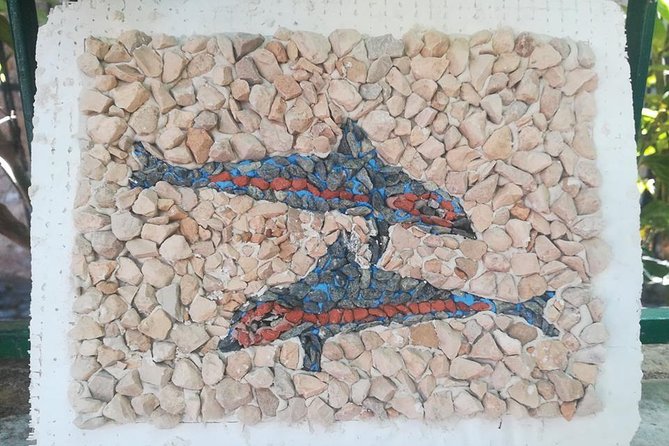
Once the design is chosen, you select from a range of natural stone colours. This is one of the more interesting parts of the process because the materials are not just flat blocks of manufactured colour. The stone gives the finished mosaic a tactile, varied surface.
You then mix the adhesive with dry pigments to reach the shade you need. That small step adds a useful lesson in how colour is made for the project. You are not simply handed a set of pre-coloured pieces and told where to put them.
Expect some trial and adjustment. The right shade depends on how the pigment combines with the adhesive, and Dimitra guides you along the way. If you are particular about colour, take a moment before applying it widely. A small test area can help you decide if the tone works with the stone you selected.
The process also makes this a good choice for curious beginners. You learn several parts of mosaic-making in one sitting: design, colour preparation, adhesive, cutting, placement, and finishing. You do not need to arrive with specialist skills.
Nippers, tweezers, and the careful work of placement
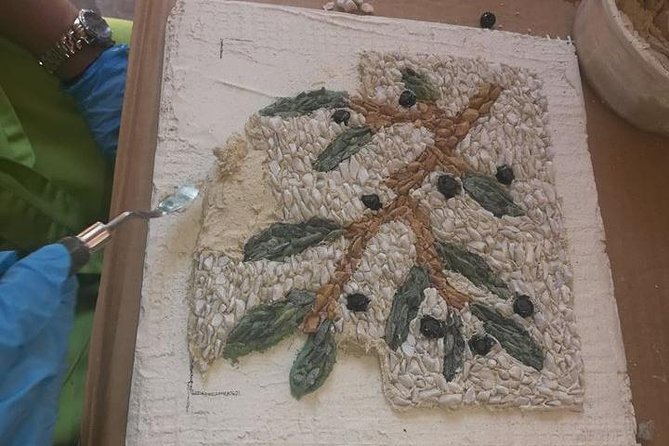
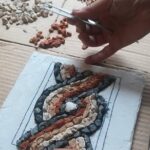
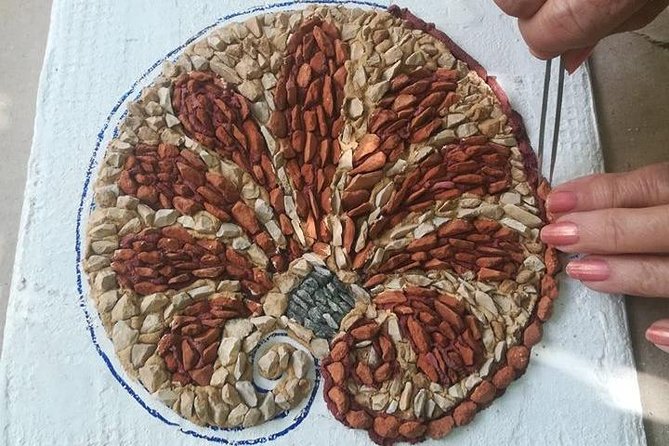
The main construction begins with a collection of hands-on tools. You may use nippers to shape pieces, tweezers to position them, and piping bags to apply adhesive with control.
These tools tell you what kind of experience this is. It is detailed work, not a loud or physically demanding activity. You need to watch your fingers, handle small pieces carefully, and accept that the design develops one section at a time.
Dimitra provides guidance on technique as you go. That matters because the best placement is not always obvious at first. The direction of the stone, the gap between pieces, and the amount of adhesive can all affect the look of the finished panel.
If time permits, you may also use a hammer and hardie, tools associated with Roman mosaic work for 2,000 years. This part is not guaranteed, since it depends on how quickly the group progresses. Still, it offers a memorable link between your modern workshop and the older methods that inspired it.
The time limit is worth keeping in mind. You will likely spend much of the session concentrating on a modest-sized design rather than producing a large wall panel. That is not a flaw, but it sets the right expectation.
The noon break adds a welcome local touch
At 12 noon, the group takes a break for refreshments and a traditional snack. Coffee and tea are included, as are alcoholic beverages and the snack listed with the experience.
This pause is useful for more than eating. Mosaic work asks for close attention, so a break lets you step back and look at your design with fresh eyes. It also gives the session a more relaxed social rhythm than three straight hours at the worktable.
The food is part of the appeal. A traditional snack gives the workshop a small local connection, rather than making it feel like a craft lesson that could happen anywhere. The available information does not specify the exact snack or drink selection, so do not book this expecting a particular dish.
The break occurs during the workshop, not as a separate food stop. If you need a full meal, plan that elsewhere, since the included offering is described as a snack and refreshments.

Returning to the table for the final details
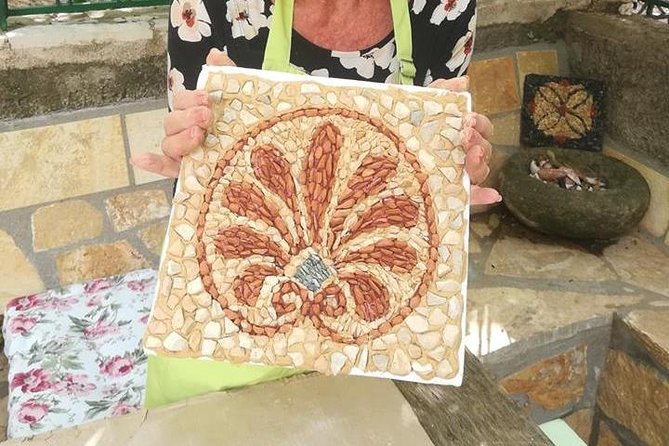
After the break, you continue working with Dimitra’s guidance. The second half is where the piece begins to look complete, but it may also be where patience matters most.
You can ask about technique as you work. That continuing help is especially useful for first-time makers, since the project has several stages and a mistake in one area can affect the next. The small group means you are not left to puzzle through the difficult sections alone.
The workshop is also a good test of your own pace. Some people will move carefully and finish with time to spare. Others may need to simplify a detail or accept that the final stages take longer. If you are working with children or teenagers, encourage them to keep their design clear and not too ambitious.
The stated duration is approximately three hours, beginning at 10:00 am. The workshop returns to the same meeting point, so you do not need to arrange a separate pickup at the end.
Taking your finished piece home safely
When you finish, the mosaic is wrapped in bubble wrap for safer transport. That is a practical detail, especially if Sparta is only one stop on a longer trip through Greece.
The wrap will not turn the piece into an unbreakable package, so carry it with ordinary care. Still, having the provider prepare it for travel is much better than leaving you to improvise with a bag or loose paper.
You also receive a write-up by email covering the techniques demonstrated and the history of mosaics. This gives the activity some value after the class ends. You can refer back to the steps later, though the information provided does not specify when the email is sent or how extensive it is.
All tools and materials are included. You do not need to shop for stone, pigments, adhesive, or equipment before arriving. That makes the $108.37 price per person easier to assess: you are paying for instruction, a guided creative session, materials, refreshments, and a finished object, not merely admission to a room.
What the $108.37 price gets you
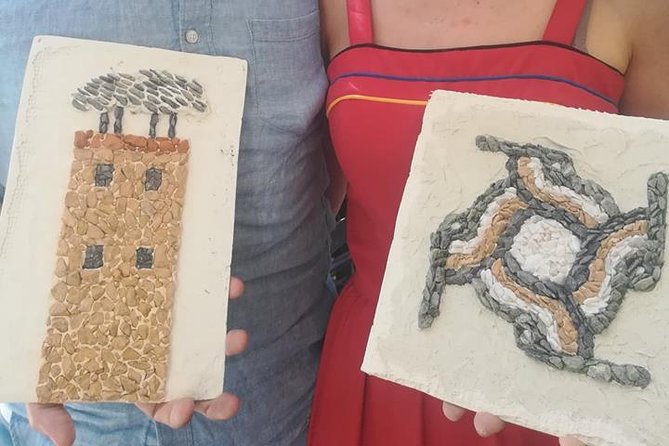
This is not the cheapest way to spend three hours in the Peloponnese, but the price includes nearly everything needed for the activity. Local taxes, free parking, coffee or tea, alcoholic beverages, snacks, tools, and materials are covered.
The strongest value comes from the personal instruction. With no more than six people, Dimitra can respond to your design choices and help with the fiddly stages. A larger class might cost less, but it would likely offer less direct support.
The finished mosaic also has more staying power than a quick craft item. You make it yourself, take it with you, and receive written material that explains the techniques and subject. If you enjoy creative activities, that combination can justify the cost.
The value is weaker if you want a packed sightseeing day or a broad introduction to Sparta. The workshop visits one place, Mosaic Art Greece, and does not include transport to or from other attractions. You will need to make your own way there unless you select an option that includes hotel pickup and drop-off, where available.
Free parking helps if you are driving. The meeting point is the garden entrance at Κων/νου Παλαιολόγου 132, Sparta 231 00, Greece. It is also near public transportation, though no specific route or schedule is provided.
Who will enjoy this workshop most
I would choose this experience for:
- People who enjoy pottery, drawing, crafts, or hands-on cultural activities
- Couples or families who want to make something together
- Curious beginners who like learning a skill without needing prior experience
- Visitors staying in or passing through Sparta
- Anyone who prefers a small group to a large organized outing
The workshop can suit teenagers as well as adults. The available family experience included two teenage boys, and the activity was described as relaxing and creative for the whole family.
I would think twice if you dislike close, careful work or want a highly active morning. Mosaic-making involves small pieces and repeated placement. It rewards patience more than speed.
You should also consider the size of your luggage. The finished mosaic is wrapped for travel, but the activity does not provide a shipping service. If you are moving frequently, make sure you have room to carry it safely.
Timing, meeting point, and practical details
The start time is 10:00 am. The activity lasts about three hours and ends back at the meeting point, so you can plan another Sparta activity before or after it, allowing enough time for getting around.
Confirmation is provided when you book. Mobile tickets are accepted, and the workshop is offered in English.
Service animals are allowed, and most people can participate. The experience is near public transportation. Specific information about wheelchair access, seating, or the physical demands of the workspace is not provided, so contact the provider if you need those details before booking.
Free cancellation is available up to 24 hours before the local start time for a full refund. Changes or cancellations made less than 24 hours before the start are not accepted for a refund.
The experience is booked, on average, 17 days in advance. That does not guarantee that every date will sell out, but the six-person limit makes early planning sensible, especially if you have only one morning available in Sparta.
The personal touch from Dimitra
Dimitra Colomvakou is the experience provider and the person guiding the workshop. The tone is warm and welcoming, with attention given to each person’s work rather than only to the finished product.
A family who took part described the workshop as relaxing and praised the refreshments and Dimitra’s kindness. Dimitra’s response also highlighted patience and precision in the completed designs. Those details point to the kind of session you should expect: friendly, unhurried, and focused on helping you finish well.
That personal approach is important here. Mosaic work can seem simple from a distance, but the small decisions add up. Having Dimitra nearby to explain a technique or help correct a problem is a large part of what you are paying for.
Should you book this Sparta mosaic workshop?
Book it if you want a creative morning with a strong local connection, personal instruction, and a souvenir you actually made. The small group, included materials, traditional snack, and careful packaging make the $108.37 cost reasonable for someone who values an activity rather than another sightseeing stop.
Skip it if your schedule is tight, you dislike detailed handwork, or you want a tour of several Sparta sights. This is a focused workshop, not a general cultural excursion.
For most craft-minded visitors, I would book ahead and keep your design simple enough to finish comfortably. Arrive ready to work slowly, choose your colours with care, and leave room in your luggage for a small piece of your own Greek mosaic art.
FAQ
Where does the mosaic workshop take place?
The workshop takes place at Mosaic Art Greece, at the garden entrance of Κων/νου Παλαιολόγου 132, Sparta 231 00, Greece.
What time does the workshop start?
The start time is 10:00 am.
How long does the experience last?
The workshop lasts approximately three hours.
How many people can join the workshop?
The group has a maximum of six participants.
Is mosaic-making experience required?
No. Previous mosaic-making experience is not necessary.
What language is the workshop offered in?
The workshop is offered in English.
Are tools and materials included?
Yes. All tools and materials needed for the mosaic are included in the price.
Are food and drinks included?
Yes. Snacks, coffee, tea, and alcoholic beverages are included. A traditional snack is served during the noon break.
Can I use my own design?
Yes. You can choose a base with a Greek or Roman pattern, or use your own design.
How do I take the finished mosaic home?
Each completed mosaic is wrapped in bubble wrap to help protect it during travel. A write-up about the demonstrated techniques and mosaic history is also sent to each participant by email.