REVIEW · HERAKLION
Orthodox Crete: In the Footsteps of the Apostle Paul from 55 AD
Book on Viator →Operated by Crete Private & Luxury Tours by Snami Travel · Bookable on Viator
The most unusual part of this Crete day trip is the way it joins Orthodox Christian sites with Bronze Age archaeology and the southern coast. You move from the healing cave of Agios Myronas and Paliani Monastery to Phaistos Palace, then finish at Matala Beach. It is not a standard ruins-and-beach outing.
I like the private format, since your guide can give more time to religious questions or archaeological sites that catch your interest. I also like the comfort details: hotel, villa, cruise, or island pickup; bottled water; Cretan fruit and snacks; Wi-Fi; USB sockets; and help choosing a restaurant.
The main consideration is the pace. Eight hours covers a lot of ground, and the day includes several short visits plus a two-hour stop at Matala. Admission fees and meals are extra, and the religious focus may feel too specialized if you mainly want beaches or ancient ruins.
In This Review
- Key points to know before booking
- Following Paul through central Crete
- Agios Myronas and the saint’s cave
- Crossing the Messara Plain
- Paliani Monastery and its ancient myrtle
- Phaistos Palace adds Bronze Age scale
- Odigitria Monastery in southern Crete
- Matala Beach and the two-hour finish
- What the private vehicle changes
- How the guides shape the day
- Value, extra costs, and practical limits
- Who should book this Crete day trip
- Should you book Orthodox Crete?
- FAQ
- How long does the Orthodox Crete tour last?
- Where does the tour begin and end?
- Is the pickup time fixed?
- Is this a private tour?
- Is a guide included?
- Are meals and drinks included?
- Are entrance fees included?
- Does the tour visit Phaistos Palace?
- Can I cancel for a full refund?
Key points to know before booking
- Agios Myronas at 400 meters: Visit the saint’s cave, where water still flows from the rock.
- Paliani Monastery: See one of Crete’s oldest monasteries and its sacred myrtle tree.
- Phaistos Palace: Add Bronze Age archaeology to an otherwise Christian-themed day. Admission costs extra.
- Odigitria Monastery: Explore a fortified monastery linked with the monastic traditions of southern Crete.
- Matala finale: Allow two hours for the beach, prehistoric caves, and a seafood meal.
- Private guiding: Your day can be shaped around faith, history, archaeology, or local culture.
Following Paul through central Crete
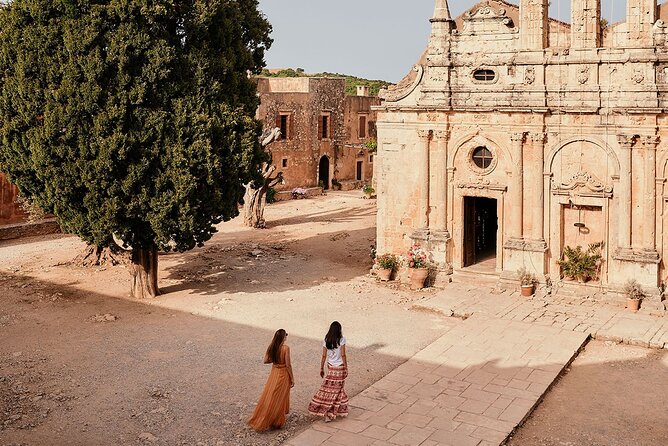
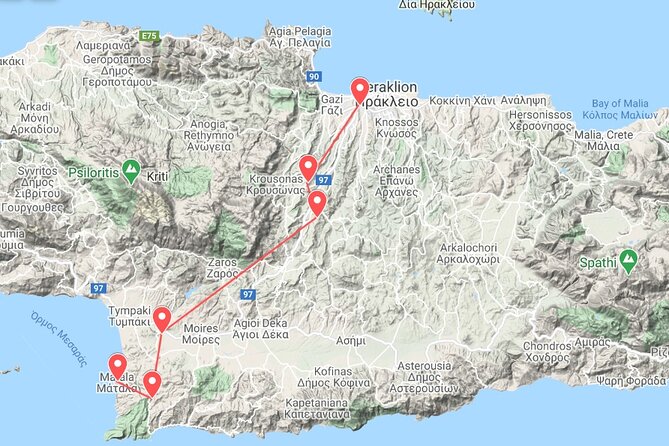
This private tour begins in the Heraklion area and follows a route connected with the early Christian story of Crete and the Apostle Paul’s mission in the eastern Mediterranean. The central idea is spiritual travel, but the actual day is broader. You will see villages, mountain roads, monasteries, ancient ruins, and the south coast.
That mix is the tour’s greatest strength. You are not confined to church interiors, and you are not simply ticking off archaeological sites. Your guide can explain how Christian traditions sit alongside older Cretan customs and the remains of earlier civilizations.
The guide matters a great deal here. The experience is designed around a private local escort, and the named guides associated with similar days include Gethsemane, Ioanna, Alex, and Nektar. Gethsemane is particularly suited to families, having kept two young boys interested during a long day of religious and archaeological sightseeing. Ioanna is a strong choice for travelers who want Judeo-Christian context and a more focused conversation about faith.
The exact guide assigned to you is not specified in advance, so ask when booking if a particular background matters. The tour provider takes pride in its local guides, and the private setup gives you room to ask questions rather than follow a fixed speech.
You can also read our reviews of more tours and experiences in Heraklion.

Agios Myronas and the saint’s cave
The first major stop is Agios Myronas, a village set at about 400 meters above sea level. You have roughly 35 minutes here, enough for an introduction to the village and a visit to the ascetic cave associated with Saint Myron.
The cave is the kind of place that gives this trip its character. Water still gushes from inside the rock, and the site connects religious belief with a physical feature you can see and experience directly. For people interested in Orthodox practice, this is more meaningful than a church visited only for its architecture.
The stop is short, so do not expect a long period of quiet reflection or a detailed village walk. Your guide will need to keep an eye on the clock, especially if the route from your pickup point has taken time. Still, this is one of the most distinctive stops of the day and a good early sign that the tour goes beyond the usual Heraklion circuit.
Crossing the Messara Plain
The route then continues across the Messara Plain, with about 45 minutes devoted to the valley and its surroundings. The point here is less about entering one named monument and more about understanding central Crete through its roads, fields, villages, and old routes.
I like this part because it gives the day breathing room. After the concentrated visit to Agios Myronas, you can look outward and see the region as a whole. A local guide can point out the connection between the valley’s ancient settlements, religious centers, and agricultural life.
The wording of the stop suggests a scenic and interpretive drive, not a formal attraction with a single entrance gate. That makes it flexible, but it also means the experience depends heavily on your guide and the weather. If you want every minute filled with monuments, this section may feel less structured. If you enjoy seeing how places fit together, it adds welcome context.
Paliani Monastery and its ancient myrtle
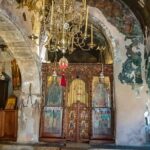
Paliani Monastery is one of the day’s central religious stops. You have about 35 minutes to visit this old Cretan monastery, dedicated to the Assumption of the Virgin Mary.
The monastery is known for a sacred myrtle tree, presented here as a surviving link to older Cretan tree worship from the Minoan period. That detail gives the visit unusual depth. You are seeing an Orthodox site whose traditions are connected, at least symbolically, with religious practices that existed on Crete long before Christianity.
This is a useful place to ask your guide how older beliefs were remembered, adapted, or given new meaning in later Christian culture. The tour’s religious theme works best when it treats Crete as a place where different eras overlap, not as a single-period story.
Keep expectations practical. Thirty-five minutes is enough for a focused visit, but not for a slow examination of every corner. Monasteries are active religious places, so conduct and clothing should be respectful. The supplied information does not specify a dress code, but modest clothing is the sensible choice for any Orthodox monastery.
Phaistos Palace adds Bronze Age scale

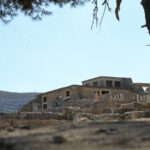
Phaistos Palace changes the mood completely. Instead of a Christian cave or monastery, you enter the world of prehistoric Crete and the Bronze Age. The visit lasts about 35 minutes, and the admission fee is not included.
Phaistos is valuable because it prevents the tour from becoming too narrow. You can place later Christian traditions against a much older Cretan past, one that reaches back to the Minoan age. The ruins also help explain why the Messara Plain has mattered for so long.
The short visit is both a benefit and a limitation. You receive a clear introduction without giving up the southern coast later in the day, but you will not have the time for a leisurely archaeological study. If Phaistos is your main reason for booking, ask whether the private schedule can be adjusted. The itinerary is described as tailored, and the guide can help you decide how much time to give the palace.
Admission is extra, as are meals and drinks. The tour includes assistance with purchasing tickets and VIP skip-the-line access where available, but you should still budget separately for the entrance charge. No tour price is provided in the information available here, so judge the value by the full package rather than the advertised base rate.




Odigitria Monastery in southern Crete

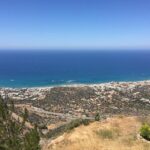
Odigitria Monastery is another 45-minute stop, and it brings you toward the southern corners of the island. The monastery is described as a jewel of monastic Crete, with fortified architecture that reflects the area’s religious and cultural past.
The fortified design is important. It tells you that monasteries were not only places of prayer. They could also serve as protected compounds in a region where remote communities needed security. Your guide can make the stones easier to read, explaining how walls, gateways, and religious buildings fit together.
This is likely to be one of the more rewarding stops for visitors who want a sense of living Orthodox tradition rather than only museum pieces. It also gives the day a strong geographic arc, from the Heraklion area across central Crete to the southern coast.
Again, 45 minutes calls for focus. You can see the essential areas and listen to an explanation, but you may not have time to wander without a plan. Tell your guide before arrival if you care most about architecture, monastic life, religious practice, or local history.
Matala Beach and the two-hour finish
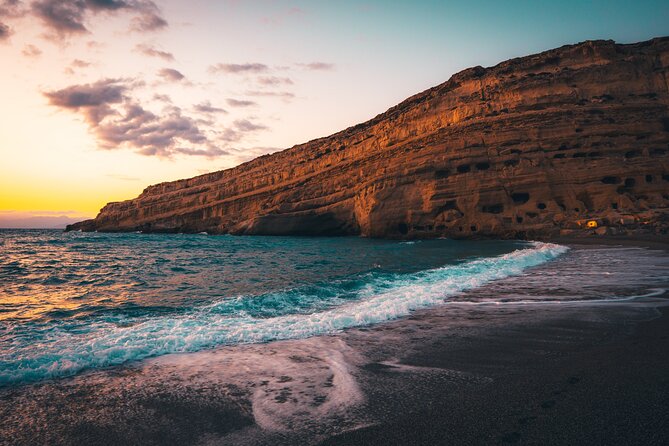
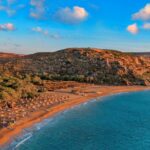
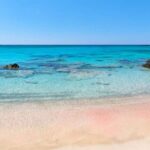
The final scheduled stop is Matala Beach, where you have about two hours. Matala was the prehistoric port of Gortyna and is known for its caves, identified in the tour information as dating to the Neolithic Age.
This is a smart ending. After several concentrated religious and archaeological visits, you get time to sit by the sea, explore the cave area, or have a meal. The tour provider can recommend restaurants and help with reservations, but food and drinks are not included. Seafood is the natural choice mentioned for this stop, though you should expect to pay separately.
Matala is not just a place to pause. Its caves continue the day’s theme of people using rock shelters and sacred or practical spaces across different periods. After seeing Saint Myron’s cave, the prehistoric caves provide an interesting contrast.
Two hours sounds generous, but it can pass quickly if you want lunch, beach time, and a closer look at the caves. Decide with your guide how to use the stop. If swimming is important to you, confirm the available time after accounting for the meal and any delays earlier in the day.
What the private vehicle changes
The tour includes personal pickup and drop-off from a hotel, villa, cruise ship, or another point on Crete. The pickup time is flexible and confirmed after booking. Since this is a private activity, only your group participates.
That matters on a route with several different interests. You can ask for more explanation at a monastery, shorten a stop that does not suit you, or spend extra attention on Phaistos if archaeology becomes your priority. A fixed group would make that harder.
Transport is by a chauffeured premium vehicle. The supplied examples include a Mercedes E-Class, and the vehicle amenities include mineral water, Cretan fruit, snacks, Wi-Fi, USB sockets, and hygiene supplies. These are small comforts, but they count on an eight-hour day with considerable driving.
The private vehicle also makes the tour more suitable for families or mixed-age groups. You can travel at your own rhythm, and a guide can adjust explanations for children. The day is still long, so young children may find the number of historic stops tiring, but the Matala break helps.
How the guides shape the day
This tour is sold on guiding, not simply transportation. Your guide is expected to explain Orthodox Christianity, local traditions, ancient sites, and the places along the route.
Ioanna’s stated strength is Judeo-Christian knowledge and the ability to connect religious ideas with the sites you visit. Gethsemane has been praised for making history engaging for children while leading a full day through monasteries, a saint’s cave, Phaistos, and Matala.
Alex has led days that included Rethymno, Spili, a gorge, Preveli Monastery, Argiroupoli, and a local meal, showing that the provider can build different Orthodox Crete routes around personal interests. Nektar has also led private Christian tours combining monasteries, monks, archaeological sites, and open-air museums.
Those examples are useful, but they do not guarantee that one of those guides will lead your tour. If a particular religious or historical background is important, ask about the guide before final confirmation.
Value, extra costs, and practical limits
No price is provided, so I cannot judge whether the base rate is cheap or expensive. I can explain what you are paying for: private transport, a personal guide, pickup and drop-off, vehicle comforts, help with tickets, restaurant assistance, and concierge support before and during the day.
For a couple or family that values privacy and specialist guiding, this can be a strong use of a day in Crete. The value is less clear if you are traveling alone on a tight budget or mainly want a low-cost transfer between Matala and Phaistos. Shared transport or independent visits would likely cost less, though they would not provide the same level of personal attention.
Admission fees are extra. Meals and drinks are also extra, even though the vehicle includes water, fruit, and snacks. Ask for the current Phaistos entrance fee and clarify which, if any, other site fees may arise.
The tour offers free cancellation up to 24 hours before the start time. Cancellations inside that window are not refunded, and changes made within 24 hours are not accepted. The service is described as suitable for most participants, allows service animals, and is near public transportation, but detailed mobility information is not provided.
Who should book this Crete day trip
I would choose this experience if you want a private day centered on Orthodox Christianity but do not want to give up Crete’s archaeology, villages, and coast. It suits couples, families, church groups, and visitors who prefer conversation with a guide over a large bus tour.
You should also consider it if your interests are mixed. Phaistos gives the day an ancient setting, the Messara Plain adds local scenery, and Matala offers a relaxed finish. The result is broader than a pilgrimage tour.
I would hesitate if your priority is a slow monastery visit, a full archaeological study of Phaistos, or a long beach day. The schedule covers several destinations in about eight hours, so each stop has a defined limit. Ask about adjusting the route before booking if one site matters more than the rest.
Should you book Orthodox Crete?
Book it if you want personal guiding and a faith-focused route through central and southern Crete. The strongest parts are the Saint Myron cave, Paliani’s sacred myrtle, Odigitria’s fortified monastery, and the contrast between Phaistos and Matala.
Skip it if you want a simple beach outing or a relaxed single-site visit. This is a full day with substantial variety, extra admission and meal costs, and a clear Orthodox theme. For the right reader, its value lies in connecting sacred places, ancient Crete, and the modern island in one carefully guided day.
FAQ
How long does the Orthodox Crete tour last?
The experience lasts approximately eight hours.
Where does the tour begin and end?
Pickup and drop-off are available from your hotel, villa, cruise ship, or another agreed point on Crete. The activity ends back at the meeting point or drop-off location.
Is the pickup time fixed?
No. The pickup time is flexible and is arranged with you after final confirmation.
Is this a private tour?
Yes. Only your group participates in the activity.
Is a guide included?
Yes. A private guide is included, along with a chauffeured premium vehicle.
Are meals and drinks included?
No. Meals and drinks are not included. The vehicle does include mineral water, Cretan fruits, snacks, Wi-Fi, USB sockets, and hygiene amenities.
Are entrance fees included?
No. Admission fees are not included. The tour includes help with purchasing tickets and VIP skip-the-line access where available.
Does the tour visit Phaistos Palace?
Yes. The itinerary includes about 35 minutes at Phaistos Palace, with admission charged separately.
Can I cancel for a full refund?
Yes, if you cancel at least 24 hours before the experience start time. Cancellations or changes made within 24 hours are not accepted and are not refunded.