REVIEW · ATHENS
PARADISIAL PELOPONNESE | Semi-Private 8-Day Guided Tour
Book on Viator →Operated by PICTOURS OF GREECE · Bookable on Viator
The big appeal here is the chance to see the Peloponnese without being herded from ruin to ruin. You travel by private minivan with no more than six people, and a certified archaeologist gives meaning to places such as Mycenae, Ancient Messene, and the Palace of Nestor. I especially like the small adult-only group and the mix of famous sites with quieter stops such as Monemvasia, Planitero, and Kalavryta.
I also like that food is part of the trip, not an afterthought. A seafood cooking lesson in Nafplio and an Agiorgitiko wine tasting in Nemea give the week a local flavor. The tradeoff is the price, $4,624.74 per person, plus a busy route and a fair amount of walking, so this suits you best if you want a polished, history-heavy journey rather than an inexpensive base-and-day-trip vacation.
In This Review
- Key points at a glance
- Why this Peloponnese route works
- Athens begins with the Acropolis
- Corinth Canal and the first night in Nafplio
- Epidaurus, Nemea, and the taste of Agiorgitiko
- Mycenae, Sparta, and medieval Monemvasia
- Ancient Messene and the coastal pause in Pylos
- The Palace of Nestor and the road to Olympia
- Planitero and Kalavryta add mountain scenery
- Ancient Corinth closes the circle
- What the $4,624.74 price really covers
- Who should book this tour
- Should you book Paradisial Peloponnese?
- FAQ
- How long is the Paradisial Peloponnese tour?
- How many people can join the tour?
- What is the minimum age?
- Is an archaeologist included?
- Are meals included?
- Where does the tour start and finish?
- Can I cancel or change the booking?
Key points at a glance
- Six people maximum: The private minivan and tiny group make it easier to ask questions, adjust the pace, and hear the guide clearly.
- Seven hotel nights: Accommodation is in 4-5 star hotels across Athens, Nafplio, Monemvasia, Pylos, Olympia, and Kalavryta.
- An archaeologist leads the way: Expect more context at major ruins than you would get from a quick photo stop.
- Ancient sites and local life: The route combines the Acropolis, Mycenae, Epidaurus, Olympia, and Corinth with wine, cooking, rail travel, and small towns.
- No one under 16: This is designed for adults who want long cultural days and serious historical discussion.
- Meals are built in: The package lists seven breakfasts, five lunches, and three dinners, along with a wine tasting and cooking lesson.
Why this Peloponnese route works
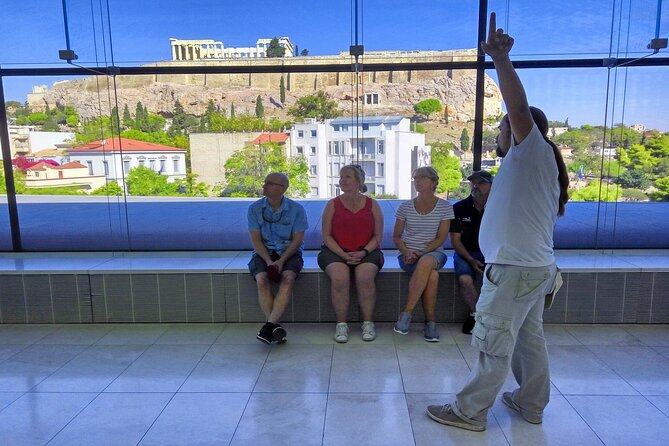
This is not a single-theme archaeology tour. It moves through ancient Greece, medieval fortresses, modern Greek memory, mountain scenery, seaside towns, and regional food.
The route begins in Athens and then loops through the northeastern, southern, western, and northern Peloponnese before returning to Ancient Corinth. That gives you a broad look at the peninsula, but it also means several days involve long drives between stops. The private vehicle matters here. You are not figuring out bus changes or hauling luggage through small towns.
The group limit is one of the tour’s best practical features. Six people can fit comfortably in a minivan, and a guide can respond to what interests you. If one person wants more time at a temple or another prefers a shorter visit, the format is more flexible than a large coach tour, though the overall schedule still has to keep moving.
The experience is child-free, with a minimum age of 16. That usually means the day can stay focused on ruins, historical explanation, food, and scenery without trying to entertain very young children. You should still expect a moderate fitness level: ancient sites have uneven ground, stairs, exposed areas, and limited shade.
You can also read our reviews of more guided tours in Athens

Athens begins with the Acropolis
The opening evening starts with a gourmet dinner and views toward the Acropolis. This is a smart way to begin. Athens can feel noisy and sprawling when you first arrive, so a meal with the city’s most famous monument in sight gives the trip an immediate sense of place.
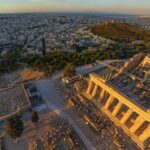
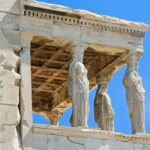
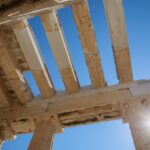
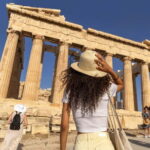
The next day puts the Acropolis first. With a guided visit lasting about two hours, you have time to look at the Parthenon and the wider hilltop sanctuary while hearing the architectural and religious background. Go prepared for sun and uneven stone. Comfortable shoes, water, and a hat will make this part much easier.
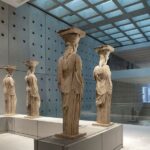
The Acropolis Museum follows, also with about two hours inside. Its modern design and displays help connect the broken stones on the hill with the buildings, sculpture, and daily life they once represented. I like the pairing: the outdoor monument can seem abstract without a museum visit, while the museum makes more sense after you have seen the actual site.
Short stops at the Herod Atticus Odeon, the Temple of Olympian Zeus, and the Panathenaic Stadium fill out the Athens portion. These are brief visits rather than full tours, so think of them as useful introductions. The stadium, originally built in 338 BC, is especially worthwhile for anyone interested in the modern revival of the Olympic tradition.
Corinth Canal and the first night in Nafplio
On the way out of Athens, the minivan pauses at the Corinth Canal. The waterway cuts for 6.3 kilometers through the isthmus and separates the Peloponnese from mainland Greece. Fifteen minutes is enough for a look and photos, but not for a detailed visit.
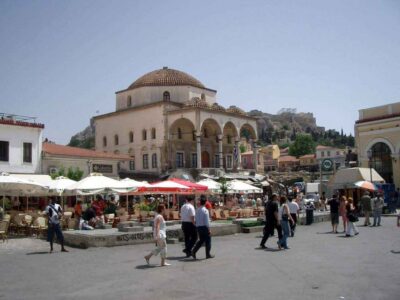
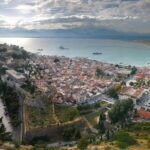
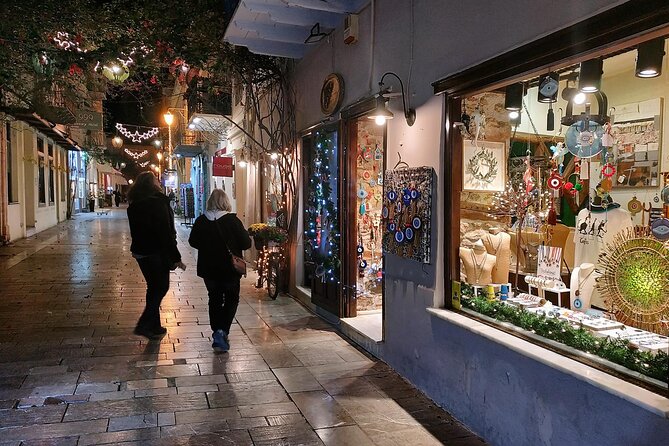
Nafplio is a much slower change of mood. Once Greece’s first capital, it has Venetian buildings, elegant lanes, and a harbor facing the Argolic Gulf. The overnight stop gives you time to walk after the day’s sightseeing and watch the sun go down over the water.
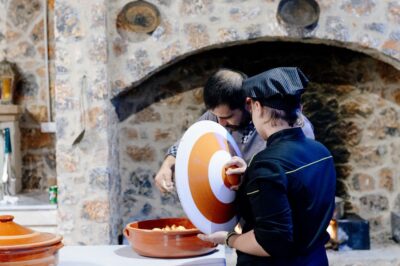
The evening cooking presentation is one of the trip’s more personal touches. A local chef demonstrates seafood dishes, then you eat what has been prepared with harbor views. The tour also accepts vegetarian requests if you provide them at booking, and you should give the operator any other dietary details early.
Epidaurus, Nemea, and the taste of Agiorgitiko
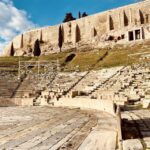
The Ancient Theatre of Epidaurus is famous for its acoustics and balanced design. The planned two-hour visit gives you enough time to appreciate the theater as a working architectural space, not just a photogenic semicircle of stone.
Nemea adds a welcome change from ruins. Here you taste Agiorgitiko, a red wine tied to the story of Hercules and the Nemean Lion. The myth gives the tasting a memorable hook, while the wine itself offers a direct connection to the region’s agricultural traditions.
Ancient Nemea is often less overwhelming than the Acropolis or Olympia, which is part of its charm. You see the Doric Temple of Zeus and the Nemean Stadium, where you can run along the original track if you wish. That small invitation helps make the site feel physical and immediate. You are not only looking at ancient sport from behind a rope.
The three stops make a well-shaped day: theater, wine, and athletics. Still, the combination of driving and two-hour visits can leave you ready for a quiet evening, so do not count on this being a relaxed day with lots of free time.
Mycenae, Sparta, and medieval Monemvasia
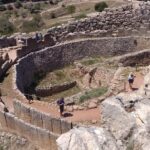
Mycenae is one of the essential stops in the Peloponnese. The Lion Gate and the Treasury of Atreus offer a powerful introduction to the civilization that flourished from about 1600 to 1100 BC. Your guide’s archaeological training should be most useful here, where legends about Agamemnon sit alongside evidence from the Bronze Age.
The Treasury of Atreus is often called Agamemnon’s tomb, but the name reflects tradition rather than a confirmed identification. That distinction is exactly the sort of thing a good guide can explain without flattening the story into either pure myth or dry academic detail.
The stop at Sparta is brief, focused on the Monument of Leonidas. Thirty minutes will not reveal all of ancient Sparta, but it does provide a link to the famous warrior-king and the Battle of Thermopylae in 480 BC.
Then comes Monemvasia, one of the most atmospheric places on the route. The medieval castle town sits on a dramatic rocky outcrop connected to the mainland, with stone lanes and old buildings enclosed within the fortress. The overnight stay is important. A rushed daytime visit would give you pictures, but an evening and morning allow you to experience the town after the main sightseeing hours.
You can also read our reviews of more private tours in Athens



Ancient Messene and the coastal pause in Pylos
Ancient Messene is a strong choice for people who want more than the standard list of Greek sites. Its theater, stadium, fortification walls, and broad setting in a mountain valley show how substantial the ancient city was. The site is extensive and peaceful, so you can get a clearer sense of urban planning than you might at a crowded landmark.
The route then heads toward Pylos, a seaside town with a long connection to the region’s military and maritime past. The overnight stay breaks up the driving and gives the week a coastal pause.
The following morning, Niokastro, or the New Castle of Pylos, provides a different kind of history. This fortress guarded the bay for centuries, and its position helps you understand why Pylos mattered. Unlike a purely archaeological stop, a castle visit brings military strategy, trade, and later periods into the trip.
The Palace of Nestor and the road to Olympia
The Palace of Nestor is one of the best-preserved Mycenaean palaces. You see the megaron hall, storerooms, and evidence linked to Linear B, an early form of Greek writing. The countryside around the palace adds to the experience, but bring patience and curiosity. This is a place where the guide’s explanation carries much of the value because the remains are architectural fragments rather than complete buildings.
Ancient Olympia receives three hours, making it one of the fuller site visits. You walk through the sanctuary and the stadium where athletic contests took place more than 2,000 years ago. The ruined setting can require imagination, especially when picturing the colossal Statue of Zeus, once counted among the Seven Wonders of the Ancient World.
Olympia is famous, but it is not only about sports. The site also shows the religious and political importance of the Olympic festival. A certified archaeologist can help you see the stadium as one part of a much larger sacred complex.
Planitero and Kalavryta add mountain scenery
After Olympia, the tour shifts from major ruins to the mountains. Planitero offers river walks and trout fishing in a calm natural setting. The activity is listed for about two hours, so expect a modest outdoor break rather than a full fishing expedition.
Kalavryta brings another change in tone. This mountain town is surrounded by scenery that shifts with the seasons, from snowy winter views to green spring hills. After so many ancient sites, a night in the mountains gives the week some needed variety.
The next morning begins with the Municipal Museum of the Kalavryta Holocaust. This is a serious and moving stop focused on World War II and the suffering of the local community. Give it your full attention. It is not a light sightseeing interlude, but it adds modern memory and Greek resilience to a route otherwise dominated by ancient and medieval stories.
The Odontotos Rack Railway then carries you through the Vouraikos Gorge. The ride is a fine contrast to the minivan days, offering a slower look at the mountain setting and a piece of 19th-century engineering. Since the train portion is listed at about an hour, it is a compact experience rather than an all-day rail journey.
Ancient Corinth closes the circle
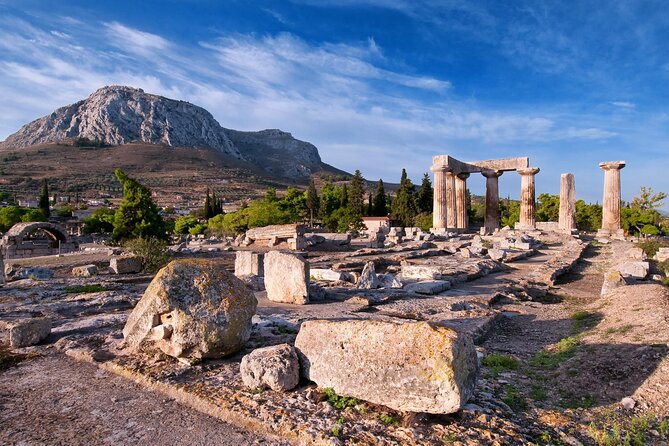
The final archaeological stop is Ancient Corinth, where fertile plains and natural springs supported an important settlement. The Temple of Apollo, Agora, and other remains show the city’s role in the classical world.
Ending here makes geographic sense because Corinth links the Peloponnese back to mainland Greece. It also gives you one last major site after the quieter mountain stops. The two-hour visit should feel substantial, though by day eight you may be carrying some sightseeing fatigue.
The tour ends back at the Royal Olympic Hotel in Athens, the stated meeting point. The listed start time is 8:00 pm, which applies to the opening welcome and dinner rather than the main morning touring schedule. Confirm the exact first-day arrangements after booking, especially if you are coordinating an arrival.
What the $4,624.74 price really covers
At $4,624.74 per person, this is a premium tour. The value comes from bundling several expensive and time-consuming pieces: seven nights in 4-5 star hotels, private transportation, an English-speaking certified archaeologist, private site visits, travel insurance, wine tasting, cooking lessons, and listed meals.
The package shows seven breakfasts, five lunches, and three dinners. Alcoholic drinks are not included, so budget extra for wine, beer, or spirits beyond the scheduled tasting. The meal count also means you should not assume every meal during the week is covered.
For comparison purposes, ask yourself what you would pay to arrange this route independently. You would need to book several hotels, hire a vehicle and driver, buy entrance tickets, coordinate a rail ride, arrange food experiences, and navigate a wide loop through the peninsula. The price may be reasonable for someone who values comfort and expert guidance, but it is not the right choice if your main goal is to keep costs low.
The strongest value is time. You can see places that are awkward to connect by public transportation, and you do not have to change hotels every night on your own. The weak point is flexibility. A private minivan is intimate, but the eight-day plan covers a lot of ground, and you cannot simply skip a long transfer without affecting the group.
Who should book this tour
I would choose this for an adult couple or small group that wants Greece explained, not just photographed. It fits people who enjoy archaeology, ancient literature, local food, and a changing setting each night.
It is also a good match if you want personal attention. Past guides connected with the operator include George, Aristotle Koskinas, and Babis, and the strongest praise centers on their historical storytelling, restaurant choices, lodging decisions, and attention to detail. The exact guide may vary, so ask who will lead your departure.
I would think twice if you prefer independent travel, long beach stays, or plenty of unscheduled afternoons. The plan is active, and the small group does not remove the need to keep pace with the itinerary.
You need at least two people to book, the maximum is six, and the minimum age is 16. A moderate fitness level is required. The experience is non-refundable and cannot be changed for any reason, so travel insurance is useful even though it is listed as included.
Should you book Paradisial Peloponnese?
Book it if you want a polished, history-centered circuit with a tiny group, strong food experiences, and comfortable hotels. The best moments are not limited to the headline sites. Nafplio’s harbor, Monemvasia after dark, Ancient Messene, the Nemea tasting, and the Odontotos railway give the week texture.
Skip it if $4,624.74 feels too high, if you dislike frequent hotel changes, or if you want to set your own schedule. For the right person, the combination of a private minivan, archaeological guidance, and hard-to-link sites can justify the cost. Just arrive ready for full days, uneven ruins, and a lot of Greece in eight days.
FAQ
How long is the Paradisial Peloponnese tour?
The tour lasts approximately eight days and includes seven nights in 4-5 star hotels.
How many people can join the tour?
The maximum group size is six people. A minimum of two people is required per booking.
What is the minimum age?
The minimum age is 16, so no one under 16 may join.
Is an archaeologist included?
Yes. The package includes a certified English-speaking archaeologist guide and private tours.
Are meals included?
The package lists breakfast, lunch, and dinner inclusions, shown as seven breakfasts, five lunches, and three dinners. A wine tasting and cooking lesson are also included. Alcoholic drinks are not included.
Where does the tour start and finish?
The stated meeting point is the Royal Olympic Hotel at Athanasiou Diakou 28 in Athens. The activity ends back at the meeting point.
Can I cancel or change the booking?
No. The experience is non-refundable and cannot be changed for any reason.