REVIEW · ATHENS
Paul”s Footsteps Ancient Corinth Biblical Tour
Book on Viator →Operated by Great Greece Tours · Bookable on Viator
Paul’s footsteps in Corinth are easier to picture than you’d think.
This private route is built around Apostle Paul’s story—from the Corinth Canal area to the port of Kenchreai and into ancient Corinth—so you’re not just sightseeing. I especially like the private vehicle with Wi‑Fi for quick reading as you travel, and the fact that it’s only your group (up to 2) rather than a shared bus day. One thing to consider: entrance fees for several major sites and the museum are not included, so the day’s total cost can creep up.
I like that the stops are time-balanced: enough minutes to see, look up facts on your own, and still have time to react when something clicks. If you want lots of inside-the-site, licensed guiding during ticketed archaeology areas, you should know that part of this experience isn’t included. Still, with an English-speaking biblical tour driver/guide, the pacing and route make this feel like a targeted “Paul route” day trip from Athens.
In This Review
- Key highlights you’ll care about
- Why Corinth Makes Paul’s Story Feel Tangible
- Private Ride from Athens: Faster Than You Think
- Corinth Canal Stop: Photos, Canal Engineering, and Paul’s Route Logic
- The Diolkos: The Ancient Rollway That Moves the Shipping Story Forward
- Temple of Apollo: Light-Music Meaning and a Special Sun Angle
- Corinth Archaeological Museum: Emperors, Trade, and Lots of Amphoras
- Acrocorinth: Caesar’s Winter Palace and Big Views Over the Canal
- Kenchreai Port: Priscilla and Aquila and a First Christian Church Connection
- Ancient Corinth (Archaia Korinthos): Agora, Oracle, Temples, and Paul’s Church
- Apostolos Pavlos Church: A Short Final Stop With an Ancient Timestamp
- Price and Value for Two: $350.68 and the Entrance Fees Reality
- The Guides Matter: Kostas, Nick, George, Constantine, and Konstantinos
- Who Should Book This Tour (and Who Might Not Love It)
- Should You Book This Paul’s Footsteps Ancient Corinth Tour?
- FAQ
- How long is the Paul’s Footsteps Ancient Corinth Biblical Tour?
- Is this a private tour or shared with other people?
- What’s included in the tour price?
- Do I need to pay entrance fees during the tour?
- Is lunch included?
- Where does pickup happen?
- Is the tour only offered in English?
- Can children join, and are child seats available?
Key highlights you’ll care about
- Private car, hotel/cruise pickup, and drop-off: you avoid the hassle of getting to a meeting point.
- Wi‑Fi on board + mobile tickets: you can research Paul and Corinth on the go and keep documents handy.
- Corinth Canal + Diolkos: two iconic “water meets shipping history” stops, tightly connected.
- Acrocorinth views: a big elevation payoff, with the canal and boats in sight from higher ground.
- Museum time with Roman context: expect emperors and a strong focus on Corinthian trade like amphoras.
- Kenchreai + Priscilla and Aquila: the port stop anchors the tour in a specific New Testament connection.
Why Corinth Makes Paul’s Story Feel Tangible
Corinth isn’t just another Greek “ruins town.” It’s the kind of place where geography does story work: waterways, shipping routes, ports, and the movement of people all connect to Paul’s travel pattern.
This tour leans into that. You’re routed through the Corinth Canal area, then on to the rolling-ship history of the Diolkos, and later toward the port world of Kenchreai and ancient Corinth itself. That structure helps you see why the Apostle’s life and letters land where they land.
You can also read our reviews of more tours and experiences in Athens.
Private Ride from Athens: Faster Than You Think
The experience runs about 6 hours 30 minutes, and the vehicle is air-conditioned and described as a luxury ride. Pickup is included from your hotel, Airbnb, or cruise in Athens, with the driver meeting you holding a sign with your name.
This matters more than it sounds. A private day to the Corinth region usually lives or dies on transit time. Here, you’re not also waiting for strangers or trying to coordinate multiple schedules, so you start sightseeing sooner and keep your day moving.
Wi‑Fi on board is a smart touch. As you pass the canal area or read about shipping and ports, you can quickly check names, dates, and background—then connect it to what you’re seeing at the next stop.
Corinth Canal Stop: Photos, Canal Engineering, and Paul’s Route Logic
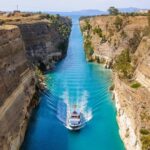
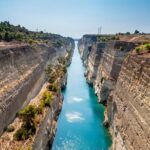
You’ll start at the Corinth Canal (Isthmus Canal). The time is about 20 minutes, and admission there is free.
This stop comes with a neat historical twist. The canal you see today is the result of major excavations—started by King George in 1886 and finished in 1996 after many years and conflicts. But the route connection is older: the tour explanation points out that the existence of the canal area goes back to 2,700 B.C., even before the excavations.
There’s also the “boats crossing” detail. Romans reportedly transferred ships using wooden rollers. That’s the kind of information that makes a viewpoint feel less like a postcard and more like a story you can visualize: water, effort, and movement.
The Diolkos: The Ancient Rollway That Moves the Shipping Story Forward
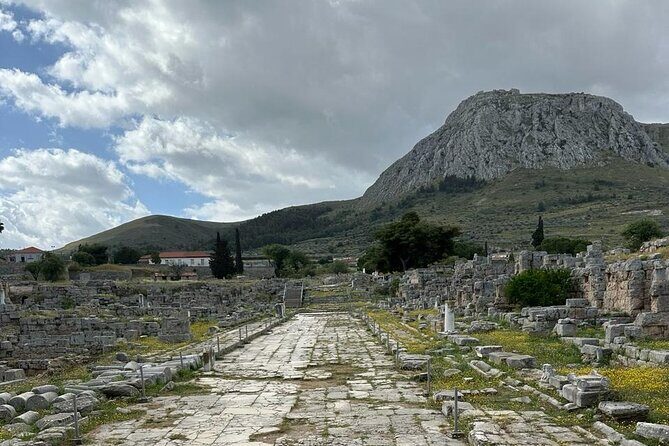
Next up is the Diolkos, the ancient rolling track. You get about 15 minutes, and admission is free.
This is where the tour’s theme clicks for history lovers: shipping wasn’t always “sail around the problem.” The Diolkos is described as a 2,700 B.C. system for rolling boats. Even if you’re not a maritime history expert, it helps you understand why a place like Corinth mattered so much to travel and trade.
It’s a short stop, but it’s also a useful bridge. After the canal viewpoint, the Diolkos adds the “how” behind the “why,” giving you a better mental map before you move toward temples and cities.
Temple of Apollo: Light-Music Meaning and a Special Sun Angle
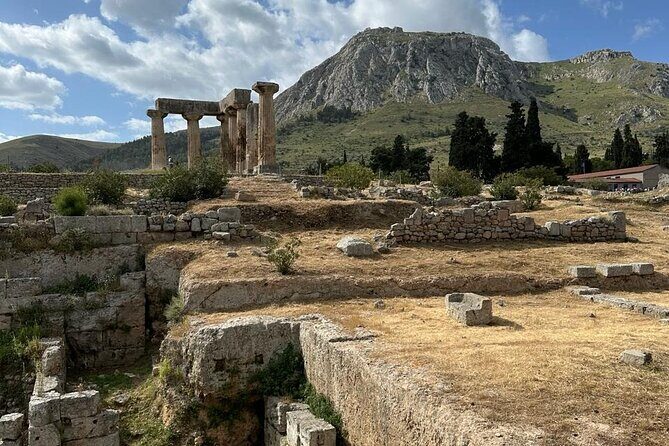
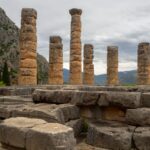
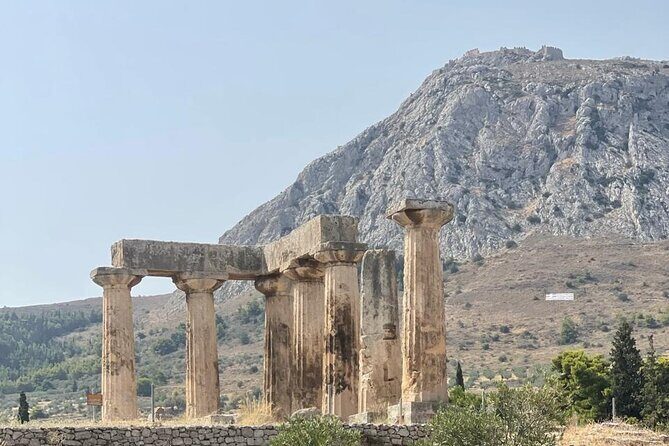
The Temple of Apollo is next, with about 30 minutes planned. Admission isn’t included for this ticketed site.
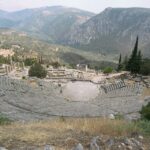
What makes this stop interesting in the Paul-shaped context is the tour framing around Apollo. Apollo is presented as the local deity linked to light and music, and the explanation adds that this particular Temple of Apollo is described as the only one where the sun can be seen from all sights. Whether you treat that as a literal architectural feature or a tour interpretation, the idea helps you look around with purpose instead of just scanning columns.
If you like symbolism tied to places, you’ll probably enjoy this stop. If you prefer strictly “Paul-only” details, you may want to focus on what’s being said about Apollo and then connect it back to the larger Corinth setting.
- All Day Cruise -3 Islands to Agistri,Moni, Aegina with lunch and drinks included
★ 5.0 · 4,958 reviews



Corinth Archaeological Museum: Emperors, Trade, and Lots of Amphoras
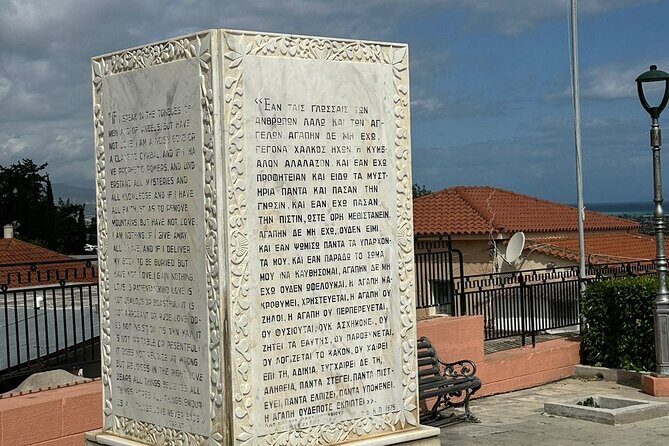
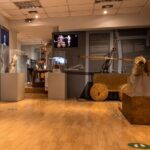
You’ll have about 1 hour at the Archaeological Museum of Corinth, and admission is not included.
This is one of the more value-heavy segments because museums do the heavy lifting of context. The museum focus here is specific: it highlights Roman emperors such as Periander and Gallion, along with other names tied to the city’s broader timeline. The description also calls out 265 amphoras, with different styles and details like Greek key patterns.
Why it matters for your day: amphoras are trade and shipping in pottery form. Corinth is famous for commerce, and seeing the physical evidence of that business makes the canal and port stops feel less random. Instead of hopping from viewpoint to viewpoint, you’re building a picture of the local economy Paul would have encountered.
Acrocorinth: Caesar’s Winter Palace and Big Views Over the Canal
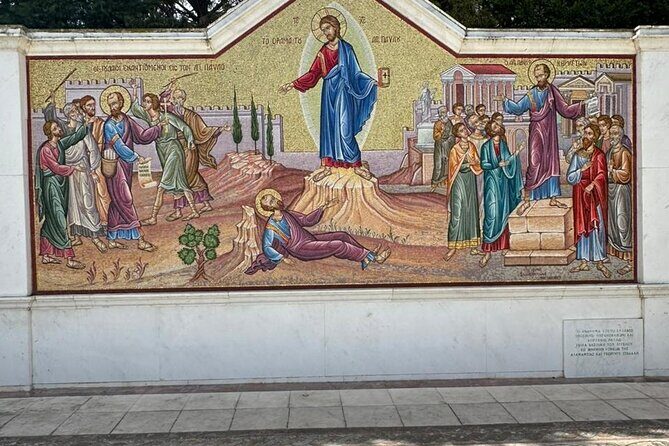
Your next climb on the story map is Acrocorinth, about 1 hour on site, with admission not included.
Acrocorinth is described as a castle dating back to the 5th century B.C. and sitting about 530 meters high. The tour also frames it as the winter palace of Caesar, which helps you imagine the place as both strategic and political—not just scenic.
One of the most memorable details in the tour description is the Temple of Aphrodity and the idea of “the 1000 most beautiful women of Corinth.” The stop also connects local craft life to Priscila and Akila (in a reference to tentmakers nearby in the tour narrative). Even if you only take parts of that at face value, the bigger point holds: Acrocorinth sits at the top of a city story, with religion, power, and local life layered together.
The real payoff is what you can see. From here, Corinth Canal and boats are described as viewable, which turns a long drive into something that feels earned.
Kenchreai Port: Priscilla and Aquila and a First Christian Church Connection
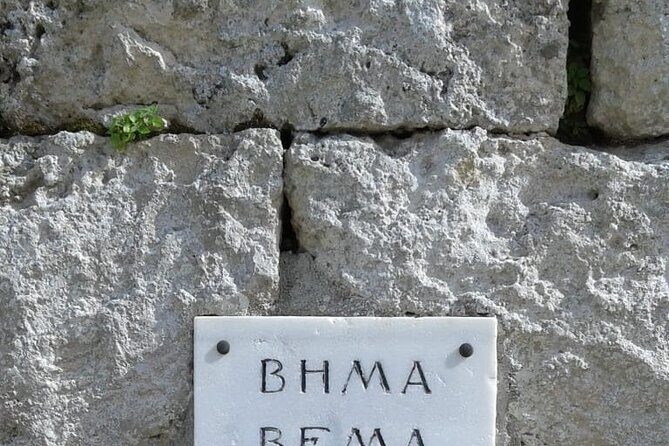
The Ancient Port of Kenchreai is about 45 minutes, and admission is free.
This is one of the stops that makes the tour feel like more than a normal countryside outing. The narrative connects Paul in 51 A.D. with Priscilla and Akila—specifically that they were making tents there. You’re also told Paul had overnights in the area, and that you can see what’s described as the very first Christian Church tied to this part of the route.
The story timing detail—Paul leaving for Ephesos after 16 months—isn’t just trivia. When you know a place has a “when” attached to it, your brain starts placing people and letters into real geography.
Ancient Corinth (Archaia Korinthos): Agora, Oracle, Temples, and Paul’s Church
You’ll spend around 2 hours at Ancient Corinth, and admission is not included.
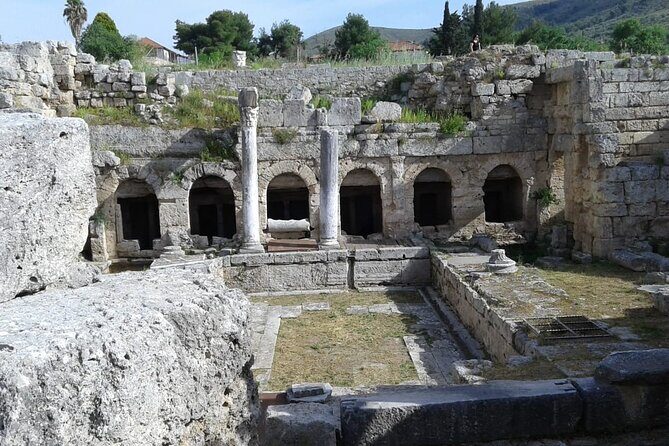
This is the heart of the day for people who like to connect religion to everyday city layout. You’re in a place described as around 7,000 years old, and the tour route inside covers multiple anchors: the Temple of Apollo, the Octavias Temple (described as Caesar’s mother), the Agora, the Oracle of Corinth, and the Ancient Church of Paul, plus a museum and other areas.
Two things make this stop especially useful:
- You get to see the city as a system—public space (Agora), sacred space (temples), and the belief machinery (oracle).
- The Paul connection isn’t only “a church exists.” You’re told it’s part of the ancient city context, so you can mentally connect why messages would circulate where they did.
One possible drawback: this is also the stop where you may spend the most time without a fully separate licensed archaeological guide. The transportation and biblical guide are included, but the tour data specifies that a licensed tour guide for inside the archaeological sites is not included. If that sounds like a deal-breaker, consider asking the operator what level of on-site guiding they can provide during ticketed areas.
Apostolos Pavlos Church: A Short Final Stop With an Ancient Timestamp
You’ll wrap the main route at Apostolos Pavlos Church, about 20 minutes, and admission is free.
This church is presented as the ancient church of Paul from 51 A.D. It’s brief by design, which works well if you’ve already built momentum through the earlier city and port context. Think of it like a focused punctuation mark at the end of the day’s story.
If you want quiet time, this is a good moment to slow down, absorb, and then let the final geography sink in before heading back to Athens.
Price and Value for Two: $350.68 and the Entrance Fees Reality
The price is $350.68 per group (up to 2) for about 6.5 hours. Since it’s private and includes hotel/cruise pickup and drop-off, that baseline cost often makes sense for couples or a duo of friends—especially compared with piecing together taxis and separate admission tickets.
What you should budget for:
- Entrance fees are not included and are listed as €15.00 per person.
- Lunch is not included.
What you get that helps justify the price:
- Air-conditioned luxury vehicle and private transportation
- Wi‑Fi on board (rare for car-based day trips)
- Bottled water
- An English-speaking expert driver/guide for biblical tours
- Mobile ticket included
My practical advice: treat the entrance fees as part of your plan, not a surprise. If you’re a couple, you’ll likely feel the value most when you use the private ride time well—ask questions, take short notes on your phone, and use Wi‑Fi to connect what the guide says with what you’ll see inside.
The Guides Matter: Kostas, Nick, George, Constantine, and Konstantinos
In the feedback you provided, guide names come up repeatedly: Kostas, Nick, George, Constantine, and Konstantinos. The common thread is clear, practical explanation and a friendly style that keeps the day moving.
One reason this matters for you: a day built around a single biblical storyline can either feel like a steady thread—or like scattered facts. The higher-rated experiences stress that your guide keeps the route understandable and the pacing comfortable, so you don’t just stand around at each stop wondering what to notice.
Who Should Book This Tour (and Who Might Not Love It)
Book this if you:
- Want a Paul-focused day with a route that traces where the story intersects Corinth.
- Prefer a private car and hate logistical headaches.
- Like having Wi‑Fi on board so you can read and connect ideas while riding between sites.
- Enjoy museum time when it supports the “why this place mattered” question.
You might think twice if:
- You’re expecting lots of deep social-historical analysis inside every ticketed archaeological zone. The tour data notes that a licensed tour guide for sites isn’t included, so the depth of on-site guiding may vary.
- You’re very cost-sensitive, since entrance fees plus lunch can add to the total.
Should You Book This Paul’s Footsteps Ancient Corinth Tour?
If your goal is a focused, Paul-shaped day trip that mixes big scenery, key ancient areas, and a museum that explains Corinth’s trade and Roman connections, this is a strong pick. The private vehicle, hotel pickup/drop-off, and Wi‑Fi make it feel smoother than most DIY attempts, and the route includes both “story places” (Kenchreai, churches) and “city systems” (Agora, oracle, temples).
If you like structure, ask questions, and use the time between stops to connect the dots, you’ll likely walk away with a clearer sense of how Paul’s world worked in geography, not just in words.
FAQ
How long is the Paul’s Footsteps Ancient Corinth Biblical Tour?
The tour runs about 6 hours 30 minutes.
Is this a private tour or shared with other people?
It’s private—only your group participates (up to 2).
What’s included in the tour price?
The price includes air-conditioned luxury vehicle, private transportation, Wi‑Fi on board, bottled water, English-speaking expert driver/guide, and hotel/cruise pickup and drop-off. A mobile ticket is also included.
Do I need to pay entrance fees during the tour?
Yes. Entrance fees are not included and are listed as €15.00 per person.
Is lunch included?
No. Lunch is not included.
Where does pickup happen?
Pickup is offered from any location in Athens. You’ll be met with a sign showing your name, and pickup also applies to hotels, Airbnb, and cruises.
Is the tour only offered in English?
Yes, the tour is offered in English.
Can children join, and are child seats available?
Most travelers can participate, and child seats are available upon request.