REVIEW · ATHENS
Hellenic Motor Museum Entrance Ticket
Book on GetYourGuide →Operated by HELLENIC MOTOR MUSEUM · Bookable on GetYourGuide
Cars, wheels, and history in one Athens stop. This ticket gets you into the Hellenic Motor Museum in Capitol Mall, where you can wander through 110+ automotive exhibits and trace how cars evolved across centuries. The museum’s layout uses a spiral ramp with early mechanical displays, so it feels like you’re moving through time, not just looking at cars behind glass.
I especially like the scale and variety: you’ll see more than 110 unique vehicles and components tied to the global auto world, including makers that no longer exist. I also love how the museum teaches, not just displays, with an old car workshop walkthrough and exhibits that connect the car’s story to the history of the wheel.
One thing to consider: the museum is on the upper levels of Capitol Mall, and signs outside the entrance can be hit-or-miss, so plan a little extra time to find it.
In This Review
- Quick hits before you go
- Hellenic Motor Museum in Athens: why this is worth your time
- Finding Capitol Mall and getting to the museum entrance
- Your self-guided route: spiral ramp and the 300 B.C. to 20th-century idea
- Three floors of 110+ exhibits: what makes the collection feel global
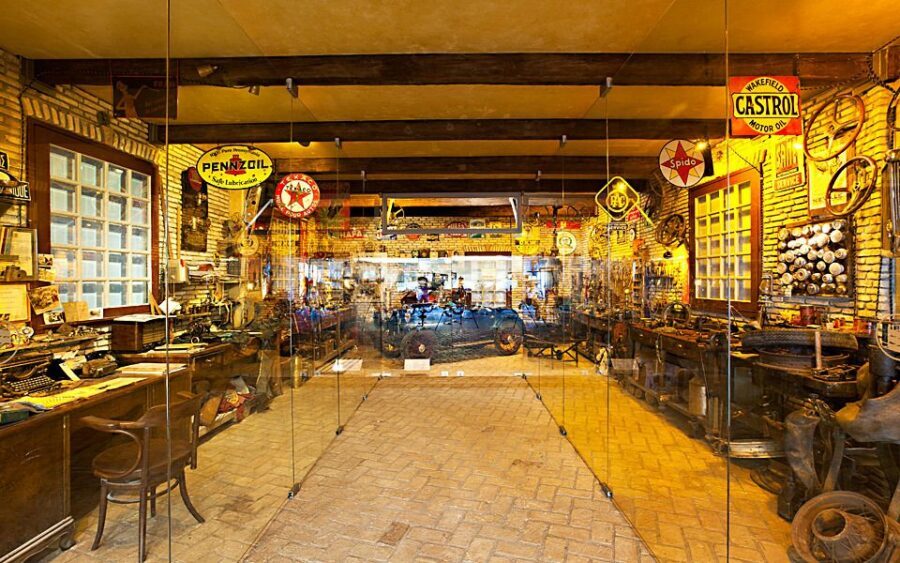
- The old car workshop: where the museum teaches with real setup
- Audio guide and pacing: how to time your visit well
- Price and value: is $14 a smart buy?
- Opening hours and calendar dates to plan around
- What’s included (and what you’ll need to plan yourself)
- Should you book the Hellenic Motor Museum entrance ticket?
- FAQ
- How long should I plan to spend at the Hellenic Motor Museum?
- Where exactly is the meeting point?
- How much does the entrance ticket cost?
- What are the opening hours and last admission?
- Is an audio guide included, and in what language?
- Is the museum wheelchair accessible?
- What is included in the ticket, and what is not included?
Quick hits before you go
- 110+ exhibits across multiple floors, including cars from companies that are gone
- Spiral ramp route with displays spanning from 300 B.C. onward
- Old car workshop area that adds hands-on context to the car evolution story
- English audio guide included, plus English/Greek staff on hand
- Good comfort for hot days, with reviewers calling out air conditioning and bright, easy-to-view galleries
Hellenic Motor Museum in Athens: why this is worth your time
The Hellenic Motor Museum is the kind of stop that surprises you, even if you think you’re not a “car person.” It’s not just about modern models or shiny restorations. Instead, the museum frames the automobile as a chain of inventions—parts, wheels, and design choices—that shaped how people move.
You’ll appreciate the way the museum is built around walking. The spiral ramp helps you keep momentum, and it naturally breaks the visit into bite-size chunks. If you like learning through objects (rather than reading long panels), this setup really works.
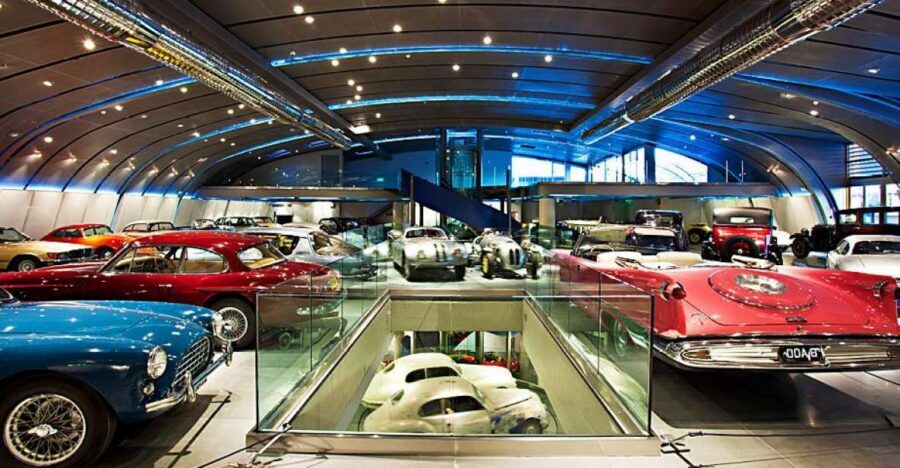
And yes, the cars are the main event. There are more than 110 unique examples, and the collection is rotating, so what you see may differ from another visit. That rotation also helps keep the museum from feeling static.
If you’re traveling with kids, don’t underestimate this one. You might spot fun pop-culture style vehicles mixed into the displays, which makes the history feel less like homework.
A few more Athens tours and experiences worth a look



Finding Capitol Mall and getting to the museum entrance
This museum sits inside Capitol Mall in central Athens. For your GPS, use the meeting point address: IOULIANOU 33 – 35 & C’SEPTEMVRIOU 74 – 78, ATHENS. Even with navigation, you may find the museum takes a bit of hunting since it’s on the top floor of a building with other spaces.
Here’s my practical advice: arrive with buffer time. If you’re doing this as a midday stop in summer, give yourself 20–30 minutes to locate the entrance, get your bearings, and beat any last-minute rush before you want to start walking.
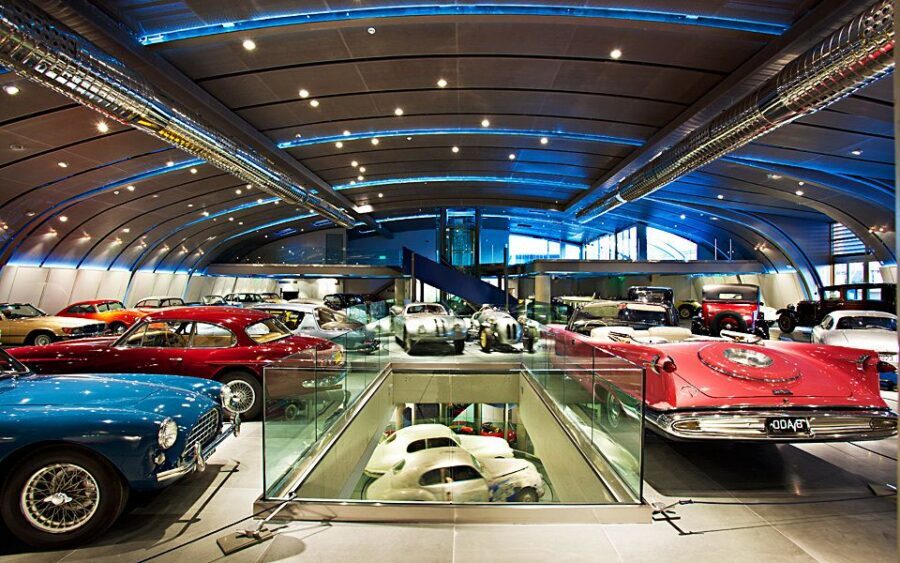
Once inside, the experience becomes much easier to follow. The galleries are well arranged across three floors, with lighting that keeps viewing straightforward. That matters because some cars are positioned so you can’t always see every angle.
Your self-guided route: spiral ramp and the 300 B.C. to 20th-century idea
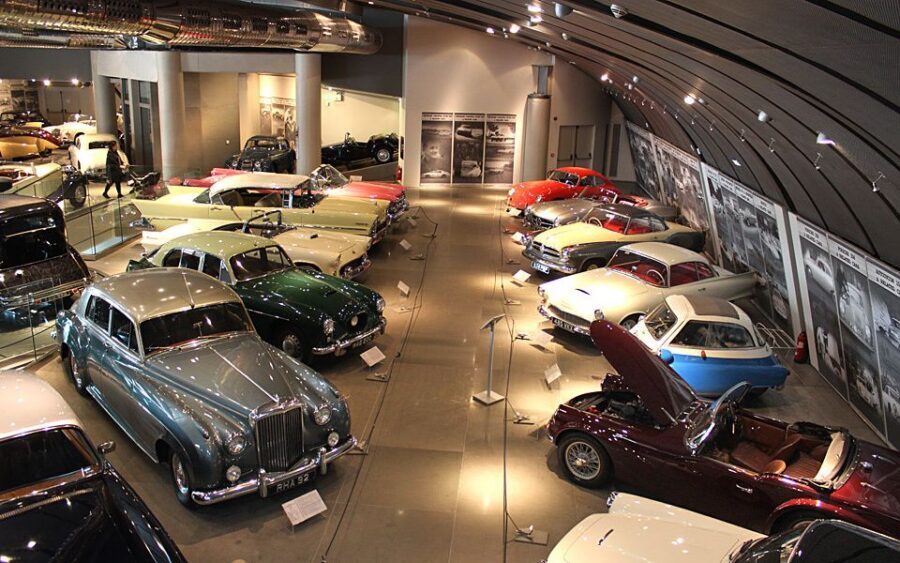
The museum’s signature “time travel” element is its spiral ramp path. As you ascend, you’ll see 72 unique exhibits that run from 300 B.C. all the way to the end of the 20th century. That’s a clever approach: it roots the automobile story in earlier technology and mechanical thinking.
Instead of jumping straight to engines and body styles, you start with the concept of wheels and evolution. The museum makes the wheel feel like the hero of the story, since so much of mobility depends on it.
For me, that wheel-focused framing is one of the best reasons to visit. It helps you understand why cars changed the way they did—because each generation had to solve basic movement problems first. You’ll walk away with a better sense of cause and effect, not just a list of models.
Three floors of 110+ exhibits: what makes the collection feel global
The headline is simple: you’ll find more than 110 unique examples from across the global automotive industry. The collection isn’t limited to one brand story or one country’s evolution. Instead, it reflects the worldwide race to build faster, safer, and more practical vehicles.
A big plus is that you’ll see cars from automobile makers that no longer exist. That’s fascinating for anyone who likes industrial history, because it gives you context for why the modern auto map looks the way it does today.
The collection is also rotating. That means you shouldn’t expect the exact same cars on every day. If you return later, it may feel like a different visit, rather than a repeat walk-through.
One more detail to keep in mind: some vehicles can be viewed mainly from the front, while others might have more angles available. So if you care about design lines, engines, and markings, slow down near the displays that allow multiple viewpoints.
The old car workshop: where the museum teaches with real setup
One of the most memorable parts is walking through the old car workshop area. This isn’t just a “look at the tools” moment. The workshop setting gives the story a working, practical context.
You’ll see the kind of features you’d expect in a period repair environment, which helps you connect the evolution of automobiles to the reality of maintenance and mechanics. Cars don’t change in isolation—they change because people build, fix, and improve them.
This section also works well if you’re visiting with mixed interests. Someone who cares about mechanics will enjoy the workshop angle, while car lovers can still appreciate how the museum links design to function.
You can also read our reviews of more museum experiences in Athens




Audio guide and pacing: how to time your visit well
An English audio guide is included, and there are English/Greek staff available. That combination is useful because you can match your pace to your interest level: pause for details when you want them, keep moving when you just want the big-picture experience.
For pacing, plan about an hour or so for a straightforward walk. If you linger over the workshop and read more of the interpretive material, plan closer to 1.5–2 hours. The three-floor layout makes it easy to stretch without feeling lost.
If the goal is photos, give yourself extra time. The cars are neatly arranged, but space between some exhibits may feel tighter than a large museum campus. You’ll get better photos by moving deliberately and choosing angles where you can see without blocking other visitors.
Also, this is a great stop when Athens heat ramps up. People have specifically mentioned air conditioning, and the galleries are bright enough that you don’t feel stuck in the dark corners of a warehouse-like space.
Price and value: is $14 a smart buy?
At about $14 per person, the entrance ticket is priced in a way that makes sense for most budgets—especially if you’re already in central Athens and want a weather-proof indoor activity.
The value comes from three things:
- Scale: 110+ exhibits spread across multiple floors
- Storytelling: the wheel and evolution angle gives meaning to what you’re seeing
- Convenience: it’s self-paced and runs on a clear schedule
You’re not paying for a guided tour with transport or a packaged day plan. This is simply museum access, so you can pair it with your own Athens timing.
If you’re a serious car enthusiast, you’ll likely want extra time to slow down and absorb. If you’re more casual, you’ll still leave with a better understanding of how modern cars got built.
Opening hours and calendar dates to plan around

The museum operates on a straightforward schedule:
- Monday–Friday: 10:00–17:00
- Saturday–Sunday: 11:00–18:00
Last admission is 30 minutes before closing.
It’s closed on January 1st, January 6th, Easter Sunday, Easter Monday, August 15th, and December 25th. If you’re visiting around major holidays, check your dates before you set your day.
What’s included (and what you’ll need to plan yourself)
Your ticket covers entrance to the museum, including access to the three floors and the audio guide. That’s the whole deal in a good way: no distractions, no add-ons you don’t want.
What’s not included is just as important:
- Hotel pickup and drop-off
- Food and beverages
So I suggest planning a snack or drink before you go, especially if you’re visiting during midday. If you’re doing this as a break from walking in the sun, plan your meals around the museum timing so you’re not stuck hunting for food nearby at the exact moment you’re ready to sit down.
Should you book the Hellenic Motor Museum entrance ticket?
Book it if you want a calm, indoor Athens activity with real substance. The combination of 110+ exhibits, the rotating collection element, and the workshop plus wheel-focused story makes it more than a “car storage room” experience.
Skip it only if you’re truly uninterested in cars or you only have a short window with no flexibility. Since this is self-guided, you’ll get the most value by giving it time to wander.
If you’re visiting with kids, this is also a solid choice. The mix of serious automotive history and lighter moments makes it easier to keep everyone engaged without forcing a long museum lecture.
In short: for central Athens, it’s a strong use of time—one that blends learning and classic-car viewing without fuss.
FAQ
How long should I plan to spend at the Hellenic Motor Museum?
The ticket is valid for 1 day, and you can use the entrance at any available starting time. Many people visit for about an hour or so, but you may want 1.5–2 hours if you read more and move slowly.
Where exactly is the meeting point?
The meeting point is listed as IOULIANOU 33 – 35 & C’SEPTEMVRIOU 74 – 78, ATHENS. The museum is located in Capitol Mall in central Athens.
How much does the entrance ticket cost?
The price is $14 per person.
What are the opening hours and last admission?
Monday–Friday are 10:00–17:00, and Saturday–Sunday are 11:00–18:00. Last admission is 30 minutes before closing time.
Is an audio guide included, and in what language?
Yes. An audio guide is included and it’s available in English.
Is the museum wheelchair accessible?
Yes, the museum is wheelchair accessible.
What is included in the ticket, and what is not included?
The ticket includes entrance to the museum (and the audio guide). It does not include hotel pickup/drop-off or food and beverages, and there is free cancellation up to 24 hours in advance for a full refund.