REVIEW · ATHENS
Athens: The Acropolis Museum Guided Tour
Book on GetYourGuide →Operated by ATHENS WALKING TOURS · Bookable on GetYourGuide
The Acropolis Museum turns ruins into real stories. You’ll see how the 5th-century BC world of Athens comes alive through standout pieces like votives to Athena, the Caryatid sculptures, and the museum’s glass-and-natural-light design with skip-the-line ease and a local licensed guide. One ticket sets you up for a smoother, smarter visit than wandering cold through thousands of objects.
The catch: 75 minutes is just enough to hit the best highlights, so if you like to linger, you may feel mildly rushed—especially when you arrive at a busy time or your group timing slips.
In This Review
- Key things you’ll notice on this tour
- Why the Acropolis Museum works (and why a guide helps)
- The 75-minute flow: what you’ll cover and what to watch for
- 1) Meeting point and quick orientation outside the museum
- 2) Step into natural light at the 1st-floor Archaic Gallery
- 3) Votives and Athena: seeing worship as culture
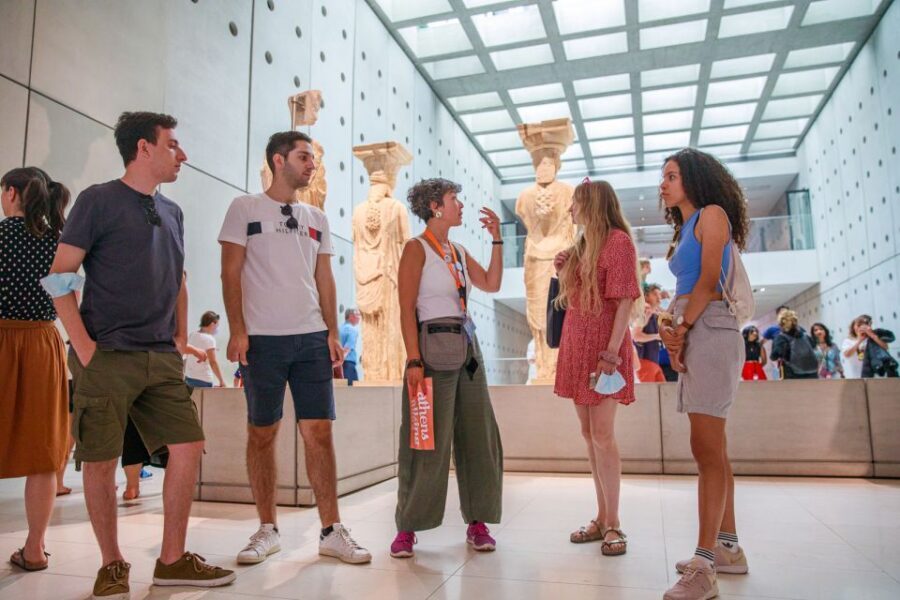
- 4) Caryatids and the Parthenon story in 3D space
- 5) Glass floors and visible excavations underfoot
- 6) 3D exhibits and a plexiglass floor revealing an ancient neighborhood
- 7) Panoramic views that close the loop
- Price and value: what you’re really paying for
- Logistics that can affect your experience (without ruining it)
- What kind of traveler should book this?
- Not just objects: what you’ll learn to notice on your own after
- Should you book the Acropolis Museum guided tour?
- FAQ
- How long is the Athens: The Acropolis Museum Guided Tour?
- Is the tour guided in English?
- Does the price include museum entrance fees?
- What does skip-the-ticket line mean here?
- Where do I meet the group?
- Is the tour wheelchair accessible?
- What should I bring?
- Are luggage or large bags allowed?
- What happens if it rains?
- FAQ
- Can I cancel for a refund?
- Is pay later an option?
- Does the tour run in all conditions?
- How early should I arrive for the meeting point?
Key things you’ll notice on this tour
- Skip-the-ticket line service that helps you start seeing artifacts fast
- The 1st-floor Archaic Gallery in natural light, designed to make key displays easier to understand
- Glass floors and visible excavations that connect the museum to ancient Athenian street life
- Votive offerings to Athena and Caryatid sculptures—high-impact “why this mattered” objects
- A glass atrium aligned with the Parthenon, showing the original relationship between art and architecture
- 3D exhibits and a plexiglass floor that recreate what the neighborhood looked like beneath your feet
Why the Acropolis Museum works (and why a guide helps)

I like this tour because it solves a common problem in Athens: the Acropolis is famous, but the museum is what explains it. The Acropolis Museum isn’t a random collection of statues. It’s designed to connect what you see in the building to what was happening around the sacred hill—especially in the peak 5th-century BC period.
The guiding part matters for two reasons. First, the museum holds more than 4,000 artifacts, so you’ll need a plan to avoid spending your time hunting. Second, the best objects are also the most confusing if you don’t know what you’re looking at—symbols, styles, and purpose all matter. A good guide helps you read the museum like a story: who made it, what it was used for, and why it survives (or doesn’t) today.
I also appreciate the modern architecture here. The building was designed by Bernard Tschumi and Michael Photiadis, and it’s not just there for style. The layout supports the way the museum explains the Acropolis—light, sightlines, and materials all reinforce the connections between old and new.
You can also read our reviews of more guided tours in Athens



The 75-minute flow: what you’ll cover and what to watch for

This is a 75-minute guided experience, so think “highlights with meaning,” not “every room and every object.” Your guide will focus on the museum’s top items and the design features that clarify them. Exact pacing can vary, but the highlights almost always move through the same big ideas.
1) Meeting point and quick orientation outside the museum
You meet at 3, Dionysiou Areopagitou St., at the Lukumades & Pilino stores. The tour staff will be easy to spot: they’re holding an orange Athens Walking Tours sign at the start of the pedestrian walkway from Hadrian’s Arch toward the Acropolis area.
This setup is useful because it gets you oriented early. Even before you’re inside, you’ll understand how the area around the Acropolis works—what’s walkable, what the route feels like, and where the museum fits into the bigger site.
Practical tip: wear shoes that can handle some uneven pavement and expect you might be standing still during check-in. If you’re traveling with a timed itinerary, give yourself a small buffer at this meeting spot.
2) Step into natural light at the 1st-floor Archaic Gallery
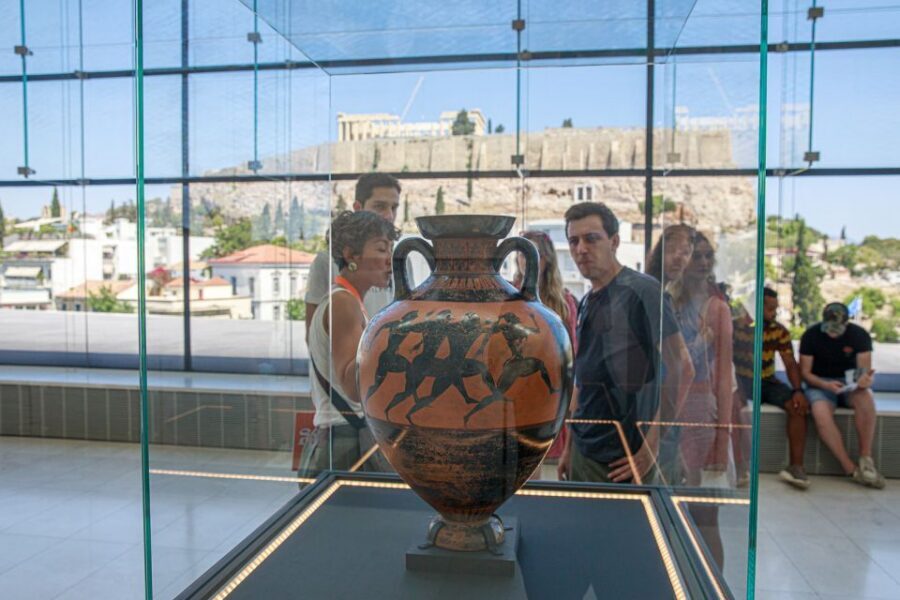
One of the museum’s strongest first impressions is the 1st-floor Archaic Gallery, lit by natural light. This gallery helps you see early styles and forms in a way that feels closer to how the artifacts were originally meant to be viewed—less like storage, more like display with purpose.
A guide’s job here is to help you connect the “look” to the “why.” You’ll typically get context for how objects and styles changed as Athens’ influence grew in the Classical period.
What I like: the natural light makes a big difference. If you’re sensitive to harsh indoor lighting, this is one of the more comfortable parts of the visit.
3) Votives and Athena: seeing worship as culture
Then the tour turns toward the religious heart of the Acropolis world: votive offerings to Athena. These objects weren’t casual souvenirs. They were ways people participated in a city’s identity and beliefs.
When a guide explains these pieces, you stop seeing them as random “stuff behind glass” and start seeing them as messages—public devotion, personal gratitude, and civic pride expressed through art.
If you’re into mythology or symbolic thinking, this is where the tour often lands best. The guides associated with this experience are commonly praised for turning stories into clear context.
You can also read our reviews of more museum experiences in Athens
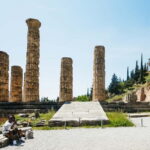
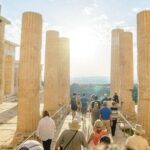
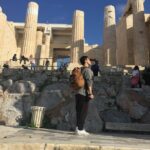
4) Caryatids and the Parthenon story in 3D space
Next up is the classic Acropolis visual—Caryatids—and the bigger architectural story the museum tells. You’ll also encounter the museum’s feature designed to link the museum directly to the Parthenon: a glass atrium built in alignment with the Parthenon.
This design choice is genius for first-timers. It gives you a physical “click” moment: you realize the museum isn’t just showing artifacts; it’s mapping them back to their original setting and viewing relationship.
You might also hear discussion of how some objects were held in other museums, in storage, or returned from foreign collections—part of how the museum became what it is today. That background helps you understand why what you see in the gallery matters beyond aesthetics.
5) Glass floors and visible excavations underfoot
One of the tour’s most memorable visual moments is when you look at the excavations made visible through glass floors. Instead of treating the museum as sealed-off indoors, the building lets you see layers of the real city beneath.
This is more than cool optics. It’s how the museum connects the Acropolis to normal Athenian life—streets, neighborhood space, and the lived environment around sacred structures.
If you’re the type who always asks “So what was around this?” you’ll love this portion.
6) 3D exhibits and a plexiglass floor revealing an ancient neighborhood
From there, the tour typically moves into the reconstruction tools: 3D exhibits and a plexiglass floor that reveals what an ancient Athenian neighborhood area looked like.
This section is where the museum becomes a time machine. You don’t just see artifacts; you understand scale and placement—how buildings and people could have related to the hill above.
One caution: reconstructions can feel a little interpretive. A good guide keeps you grounded by explaining what’s known and what’s inferred.
7) Panoramic views that close the loop
Finally, you’ll finish with panoramic views of the ruins of the Acropolis. This is the moment that makes all the inside explanations click. You look at the real site again, but now you’re seeing it with the museum’s context in your head.
That’s why doing this museum visit before the Acropolis itself is such a strong plan. It’s like getting the “director’s notes” before the movie.
Price and value: what you’re really paying for

The tour price is listed as $41 per person, and it’s a good deal when you factor in what’s included: a local licensed guide plus skip-the-ticket line service.
Important: entrance fees are not included, and they’re approximately €20 per adult. So your total cost is really the tour price plus the museum entry.
Is it still worth it? For me, yes—because the museum is where guided context saves time and improves understanding. If you go without a guide, you can easily spend 75 minutes zig-zagging between exhibits and still miss the “why” behind the most important objects. Here, the guide helps you focus on the pieces that explain Athena, the Parthenon world, and the museum’s design choices.
If you’re traveling on a strict schedule and hate lines, the skip-the-line service is also valuable. It turns your time into museum time, not queue time.
Logistics that can affect your experience (without ruining it)
This is a short tour, so small delays show up.
Here are the main practical things to keep in mind:
- Weather: tours run in rain or shine, so bring a light layer even if the day looks mild.
- No large bags or luggage: the experience lists restrictions on luggage/large bags, so travel light.
- Group timing: this museum tour can be part of a larger flow, meaning if the first part of a day runs late, your museum start can shift too.
- Meeting point distance: the meeting spot is at the start of a pedestrian walkway from Hadrian’s Arch. If you like to arrive exactly on time, plan for a little walking and positioning.
One more tip: the museum is a popular stop in Athens. If you’re sensitive to crowds, arriving early in the day usually helps your comfort and your photo opportunities.
What kind of traveler should book this?

This tour is best for you if:
- you want a guided overview that connects artifacts to the Acropolis rather than just a checklist of objects
- you like architectural links and design features (glass atrium alignment, glass floors, natural-light galleries)
- you’re visiting with kids or family and want a guide who can keep the conversation moving (some groups have done this with children successfully)
- you’re short on time but still want the museum to feel meaningful
If you’re a “show me everything” museum person, you might want a longer independent visit too. This experience is built for focus, not for endless wandering.
Not just objects: what you’ll learn to notice on your own after
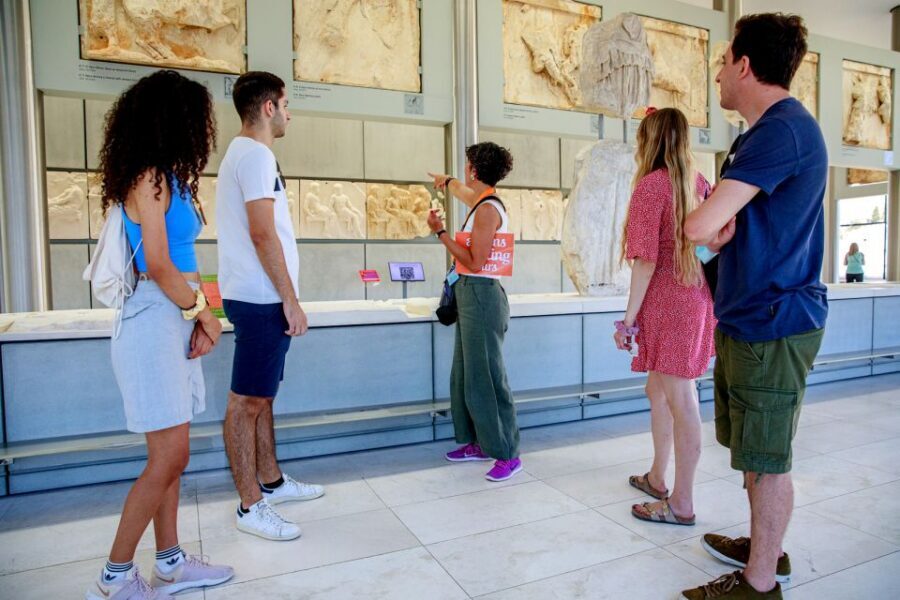
Even after the tour ends, I think the biggest benefit is pattern recognition.
You’ll know what to look for when you stand in front of a statue or votive:
- Is it tied to Athena worship and civic identity?
- Does it connect to the Parthenon-era design ideas?
- Is it part of how the museum explains the original setting through alignment and underfoot excavations?
- Does it help reconstruct how everyday life met sacred space?
That’s the real value of a guided highlight tour here. You don’t just get information during 75 minutes. You carry a mental map out of the museum.
Should you book the Acropolis Museum guided tour?
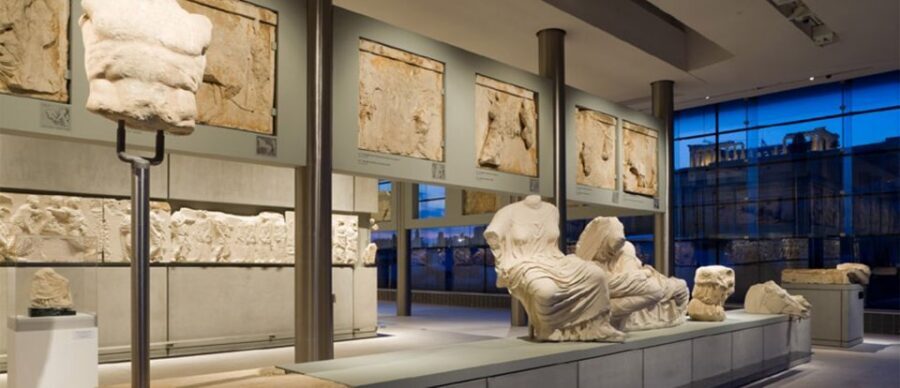
Book it if you want the most efficient way to get smart fast at Athens’ top museum. The combination of a licensed local guide, skip-the-ticket line, and the museum’s standout features (natural light galleries, glass floors, Parthenon alignment, and excavations/3D reconstructions) makes this a strong first pass.
Skip or reconsider if:
- you hate feeling rushed and want to linger in front of every artifact
- you’re arriving with big luggage (since it isn’t allowed)
- you’re already fully trained in Acropolis archaeology and only want a self-guided experience
If you’re trying to get the best “first understanding” of the Acropolis world, this is an easy yes.
FAQ

How long is the Athens: The Acropolis Museum Guided Tour?
The tour lasts 75 minutes.
Is the tour guided in English?
Yes, the live guide is English.
Does the price include museum entrance fees?
No. Entrance fees are approximately €20 per adult and are not included in the tour price.
What does skip-the-ticket line mean here?
It’s included as a service, so you avoid the ticket line as part of the tour experience.
Where do I meet the group?
Meet at 3, Dionysiou Areopagitou St., at the Lukumades & Pilino stores. Staff holding an orange Athens Walking Tours sign will meet you there.
Is the tour wheelchair accessible?
Yes, it is wheelchair accessible.
What should I bring?
Bring a passport or ID card and wear comfortable shoes.
Are luggage or large bags allowed?
No, luggage or large bags are not allowed.
What happens if it rains?
Tours take place in all weather conditions, rain or shine.
FAQ
Can I cancel for a refund?
Yes, free cancellation is available up to 24 hours in advance for a full refund.
Is pay later an option?
Yes, you can reserve now and pay later, keeping travel plans flexible.
Does the tour run in all conditions?
Yes, it runs in all weather conditions.
How early should I arrive for the meeting point?
The data doesn’t specify an exact arrival time, but you should plan to arrive before the tour start so you can check in and begin on schedule.