REVIEW · ATHENS
Philosophy and Democracy tour of Athens
Book on Viator →Operated by Athens Classic Tour · Bookable on Viator
Democracy has better footnotes than you think.
I love how this tour links ancient philosophy to real political life in Athens, then turns it into something you can still use today. I also like the pacing: short stops with big explanations, so you’re not just staring at stones. The tour is led in English by Panos, and the small group (max 15) means you can actually ask questions instead of yelling over a crowd.
Two things I really appreciate are the focus on the less-obvious Athens stops (like Kerameikos) and the way the guide compares ancient and modern democracies while walking you through the city’s key spots. A possible drawback: a few of the main archaeological sites have admission tickets not included, so you’ll want to be ready for extra entries you may pay on your own.
In This Review
- Key Highlights You’ll Care About
- How Athens Turns Philosophy into Something You Can Feel
- Panos and the Small-Group Advantage on Foot
- Kerameikos: Athens’ Cemetery-Workshop World and Pericles’ Democracy Link
- Flea Market Stroll: Break the Museum Mood
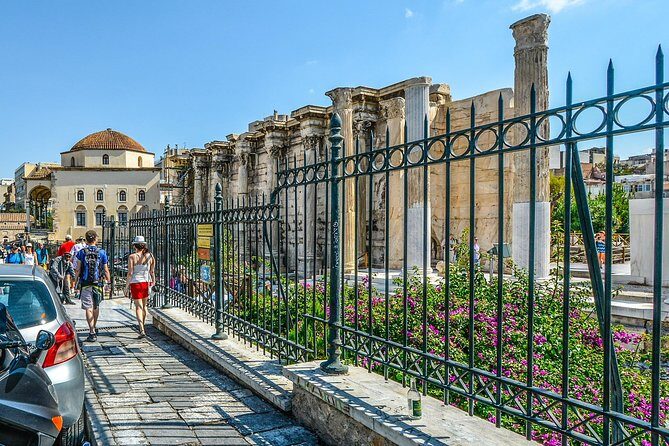
- Hadrian’s Library and the Roman Agora: When Athens Keeps Changing
- Hadrian’s Library
- Roman Agora
- Tower of the Winds: Athens’ First Weather-Time Station
- Ancient Agora, Prison of Socrates, and Pnyx: Where People Argued the Future
- Ancient Agora of Athens
- Prison of Socrates
- Pnyx
- Plaka and the Final Monument Stop: Keep the Day Human
- Price and Value: Why This Costs About $50.81 and Feels Worth It
- What This Tour Feels Like on the Ground
- Who Should Book This (and Who Might Skip It)
- Should You Book This Philosophy and Democracy Tour?
- FAQ
- How long is the Philosophy and Democracy tour?
- What is the price per person?
- What language is the tour offered in?
- How large is the group?
- Is a mobile ticket used?
- Are admission tickets included for the stops?
- Is the tour near public transportation?
- Does the tour require good weather?
Key Highlights You’ll Care About
- Kerameikos first: A major Athens cemetery and workshop district, tied directly to Pericles and his wartime speech praising democracy
- Tower of the Winds detail: A 1st-century BC timekeeping and weather system, with a hydraulic sound mechanism for hourly signals
- Ancient Agora thinking streets: The political and philosophical “meeting place” where debates and discussions shaped civic life
- Pnyx, the cradle of democracy: Decision-making space with views across Athens and toward the Acropolis
- Plaka included for atmosphere: Short time in a scenic neighborhood with narrow streets and small houses
- Panos runs Q and A well: Reviews consistently point to clear, entertaining explanations that make big ideas feel human
How Athens Turns Philosophy into Something You Can Feel
This tour is for people who want more than landmarks. You don’t just hear facts; you watch ideas take shape across Athens as you move from one setting to the next. The core theme is philosophy and democracy, with the guide comparing the logic of ancient Athenian civic life to modern questions you’re already living with.
What makes it work is that the story stays practical. Instead of treating Greece like a museum, the guide ties each place to how people actually argued, voted, planned, and criticized. That’s why you’ll leave with a better sense of why Athens still matters to Western political and social thought.
Also, the group size helps. With up to 15 people, Panos can slow down when someone asks for clarification. You’ll feel like you’re in a guided conversation, not a rushed bus tour.
You can also read our reviews of more tours and experiences in Athens.

Panos and the Small-Group Advantage on Foot
The tour is built around one guide and a tight group. In real terms, that means you’re not just receiving information on the go. You can ask questions, and you get answers that connect back to what you just saw.
From the reviews, the repeated pattern is clarity plus energy. People highlight that Panos explains concepts in a way that lands for adults, and even works well for teenagers. The delivery is also light enough to keep the tour from becoming a lecture. Expect some humor, plus real enthusiasm for the subject.
Timing matters too. The tour runs about 3 hours 30 minutes, with frequent short stops. That keeps your attention focused and also helps if you want photos without losing the thread of the explanation.
Kerameikos: Athens’ Cemetery-Workshop World and Pericles’ Democracy Link
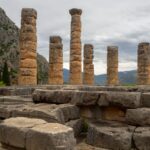
Stop one is Kerameikos Archaeological Site, and it’s a smart choice for anyone who has already done the classic “big highlights” loop. Kerameikos is relatively unknown to many visitors, even though it’s one of the city’s most important landmarks.
Here’s what makes this stop special:
- Kerameikos means ceramic, and the area was known for workshops
- It also served as Athens’ cemetery for centuries
- You’ll hear how prominent Athenians were buried here
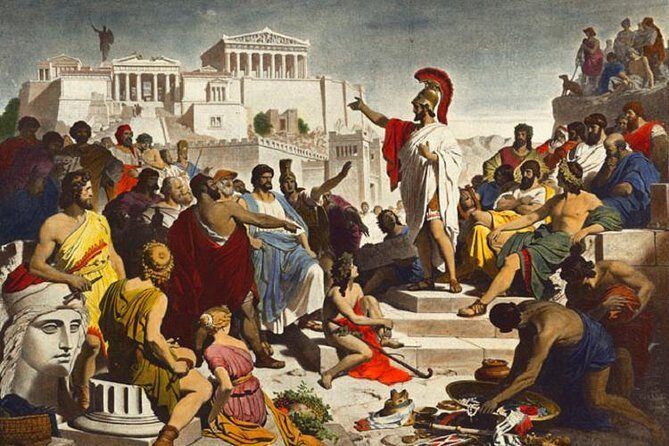
- The emotional centerpiece is the connection to Pericles’ Epitaph speech for early casualties in the Peloponnesian War, where he praises democracy and the way Athenians lived
The practical takeaway for you: this is a place where the tone shifts. Stones stop being abstract. If you’ve ever wondered how democratic ideals were defended during real wartime pressure, this is where the tour starts making that question concrete.
One consideration: the admission ticket is not included, so you’ll likely want to plan for entry costs at certain sites across the route.
Flea Market Stroll: Break the Museum Mood
After Kerameikos, the tour moves into a short flea market walk at an easy pace. This is only around 15 minutes, so it isn’t a long shopping mission. Think of it as a mood reset and a chance to watch daily Athens life just beside the ancient narrative you’ve been hearing.
Even if you don’t buy anything, it’s useful. You get a sense of how layered the city is: ancient streets nearby, but commerce and ordinary needs running alongside.
If you hate standing around in tourist-heavy areas, this quick stop can be a welcome change. Just wear shoes you’re comfortable walking in, since this whole tour is built for movement.
Hadrian’s Library and the Roman Agora: When Athens Keeps Changing
Next come two Roman-era stops north of the Acropolis:
- All Day Cruise -3 Islands to Agistri,Moni, Aegina with lunch and drinks included
★ 5.0 · 4,958 reviews




Hadrian’s Library
This library was created by Emperor Hadrian in AD 132. The tour uses the setting to show how Athens was not frozen in time. Even after the classical period, the city kept attracting power, investment, and new cultural priorities.
Admission is not included, so treat it as one more site where you may need a separate ticket.
Roman Agora
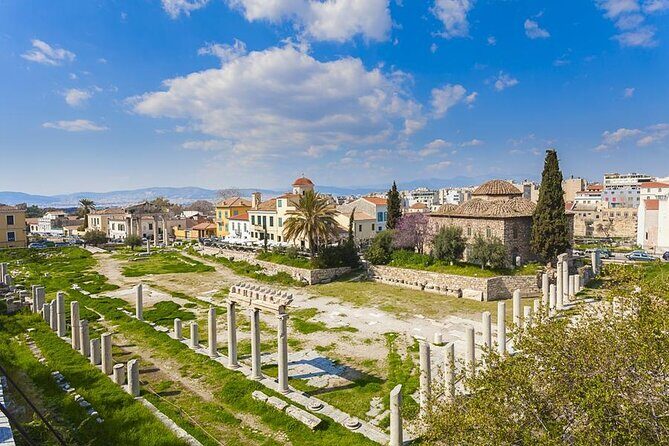
The Roman Agora sits north of the Acropolis and east of the Ancient Agora. This helps you understand that Athens had multiple civic centers, and that different empires and eras left different “layers” of public life behind.
Again, the admission ticket is not included, so budget for that reality as you plan your day.
Tower of the Winds: Athens’ First Weather-Time Station
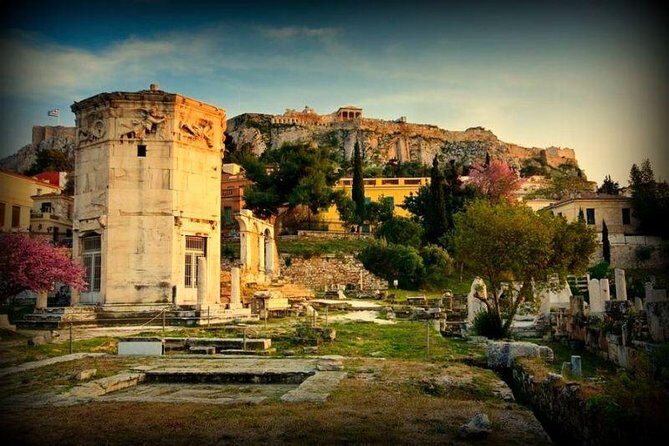
Then you hit one of the most fun stops on the route: the Tower of the Winds. It’s octagonal, and it was made in the 1st century BC by the astronomer Andronicus of Kyrristos.
The key details you’ll hear (and they’re the reason this place is worth the stop):
- It served as a wind indicator
- It also functioned like a clock
- The clock was solar, but on cloudy days there was a hydraulic mechanism that produced a sound every hour
- The tower is considered the first meteo station
In other words, Athens wasn’t just building temples. It was measuring the world and building systems that managed information in public.
It’s a short stop (about 5 minutes), so if you want extra photos, don’t lose the explanation moment. This is one of those places where the story is the souvenir.
Ancient Agora, Prison of Socrates, and Pnyx: Where People Argued the Future
This is the heart of the tour.
Ancient Agora of Athens
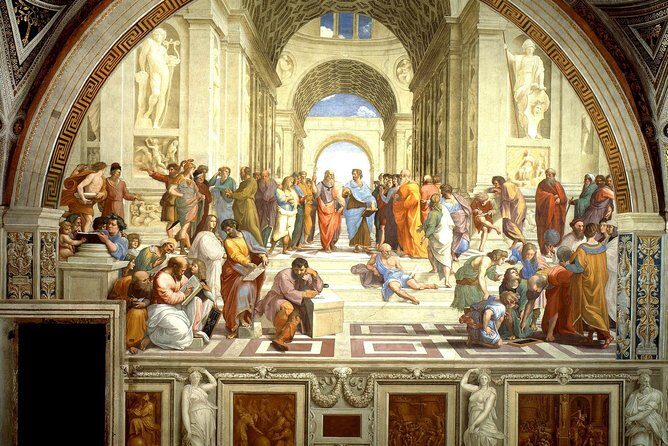
The Ancient Agora was the center of city life. You’ll hear how philosophers such as Socrates and Plato and key political thinkers like Solon, Themistocles, and Pericles walked, spoke, and debated here. Even names tied to dramatic art like Sophocles and Aristophanes show up in the narrative—because in Athens, ideas didn’t live in separate boxes.
You’ll also see why this matters for democracy: the Agora is where public thinking turned into civic decisions and social influence.
Admission is not included for this stop, so plan for one more possible entry.
Prison of Socrates
Next comes a quieter, more focused moment: a tribute area connected to the Prison of Socrates. This one is about 10 minutes and the admission is free.
What I like about this stop is that it doesn’t just celebrate greatness. It reminds you that ideas had consequences. If you’re trying to understand democracy as a system that can protect thought but also challenge it, this spot fits the theme.
Pnyx
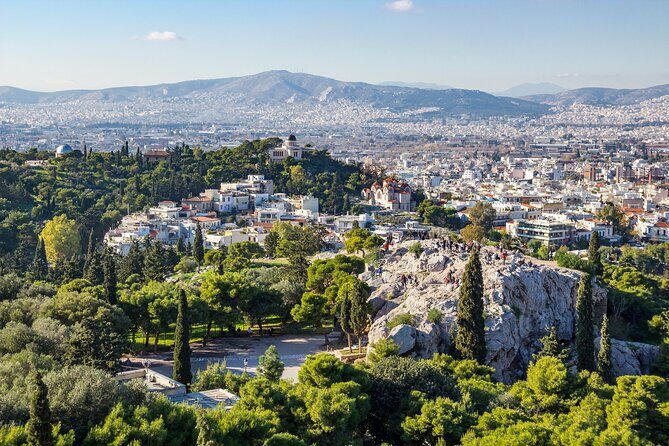
Then you climb to Pnyx Hill, about 30 minutes, and the tour ties it directly to democracy.
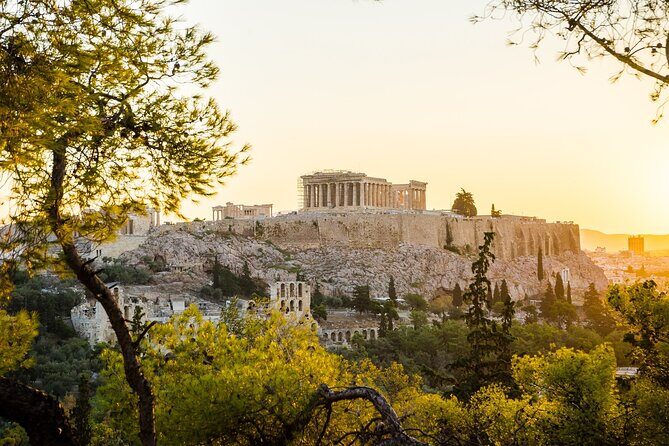
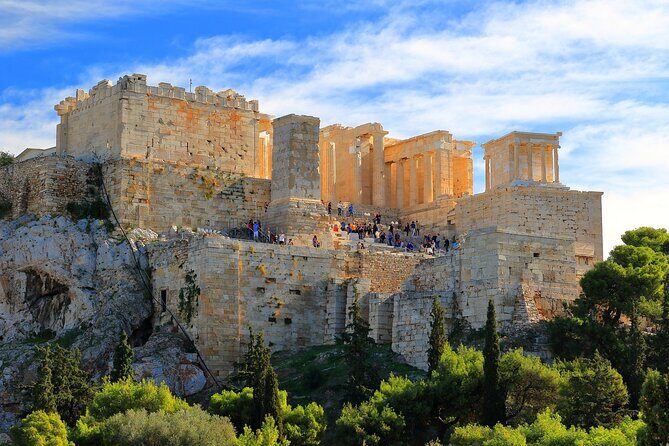
Pnyx is called the cradle of democracy because it was the first place in the world where people took decisions for their future. The tour also emphasizes the views—great sightlines across Athens and toward the Acropolis.
This stop is where your mental picture clicks. You can stand on the decision space and imagine the crowd and the stakes. It’s one thing to read about democracy; it’s another to stand where votes and arguments would shape action.
Admission is free here.
Plaka and the Final Monument Stop: Keep the Day Human

In the middle-to-late portion of the walk, you’ll get time in Plaka, described as a scenic neighborhood with small houses and narrow streets. This isn’t random time off. It helps you reset while still staying near the historical action.
The tour ends with a final “greatest monument” stop to visit and admire. The exact phrasing is about the monument being yours to see at the end, so think of it as your payoff moment—one last visual anchor after all the talk about ideas, voting, and civic life.
If you’ve been to Athens before and only did skyline-heavy sights, this ending can feel especially satisfying, because the earlier stops give you context that makes the final monument matter more.
Price and Value: Why This Costs About $50.81 and Feels Worth It
At $50.81 per person, the price is hard to argue with when you consider the ingredients:
- Multiple major Athens areas connected by one story
- A small group max of 15
- A guide who keeps the discussion on philosophy and democracy
- Insider suggestions on where to eat, drink, and explore
The “not included” part matters, though. Some stops (like Kerameikos, Hadrian’s Library, Roman Agora, Tower of the Winds, Ancient Agora) show admission tickets not included. So your real spend may be a little higher than the base tour price if you want to enter every site along the way.
That said, the tour still offers value because you’re paying for the connections and the guidance. Site-by-site visits can feel like separate postcards. This tour links them into one argument: how ideas shaped public life in Athens, and why that keeps echoing.
Practical tip: if you’re trying to keep costs down, ask the guide what to prioritize for ticketed entry versus exterior viewing. The route includes both paid and free elements, so you can make decisions.
What This Tour Feels Like on the Ground
You’re on foot between stops, and several locations are archaeological sites where surfaces can be uneven. You’ll want comfortable walking shoes. Bring water—hydration comes up repeatedly in real-world feedback for Athens walks.
Weather matters too. The tour requires good weather. If conditions aren’t right, you’ll be offered a different date or a full refund.
As for breaks: the tour has time built into the rhythm, and one review notes a mid-tour refreshment stop at a kiosk with restroom access. So even if it’s not a long restaurant meal, you should expect some opportunity to recharge and use facilities.
Who Should Book This (and Who Might Skip It)
This tour is ideal if you:
- Like history that explains how people thought and acted, not just when something was built
- Want a democracy-focused Athens experience that goes beyond one iconic monument
- Enjoy Q and A with a guide, especially one who talks clearly and keeps the tone engaging
- Have teens or older kids who do better with ideas than with only scenery
You might want to consider skipping or pairing with something else if you:
- Hate walking and want a mostly seated experience
- Prefer a strictly arts-and-architecture tour with less discussion of philosophy
- Don’t want to deal with multiple paid entries, since several major stops list admission tickets not included
Should You Book This Philosophy and Democracy Tour?
Yes—if you want Athens to make sense as a living argument about how society should run. The best reason to book is simple: you get a guided thread that connects Kerameikos, the Agora world, the symbolic democracy site at Pnyx, and the Roman layer of the city. The guide, Panos, is central to that payoff, and the format (small group, short stops, constant explanation) is exactly what helps the ideas land.
If you’re already confident about ancient sites and mainly want to stack photos, you might find it more talk-heavy than your style. But if you’re the type of traveler who likes to ask why something mattered, this tour gives you a strong path—plus insider tips for what to do next in Athens.
FAQ
How long is the Philosophy and Democracy tour?
It runs for about 3 hours 30 minutes (approx.).
What is the price per person?
The price is $50.81 per person.
What language is the tour offered in?
The tour is offered in English.
How large is the group?
It has a maximum of 15 travelers.
Is a mobile ticket used?
Yes, it’s a mobile ticket.
Are admission tickets included for the stops?
Some stops list admission tickets not included (for example Kerameikos, Hadrian’s Library, Roman Agora, Tower of the Winds, and the Ancient Agora). Other stops are free (like the flea market, Prison of Socrates, and Pnyx). You’ll want to plan for extra entries depending on where you want to go in.
Is the tour near public transportation?
Yes, it’s near public transportation.
Does the tour require good weather?
Yes. It requires good weather, and if it’s canceled due to poor weather you’ll be offered a different date or a full refund.