REVIEW · ATHENS
Private Tour of Apostle Paul’s Footsteps in Ancient Corinth
Book on Viator →Operated by Colours of Greece · Bookable on Viator
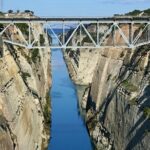
Paul’s footsteps start with a canal view. This private Athens-to-Corinth outing strings together the main Paul sites in one smooth day, with hotel/port pickup and an English-speaking driver/guide who keeps the story clear and practical.
I especially like the way the route balances big-picture stops with specific Paul details, so the ancient places don’t feel like random ruins. I also like that it stays private—your group sets the pace, and that matters when you’re walking in the heat.
One thing to keep in mind: the tour price does not include site and museum entry fees (budget about €15 per person), and there is no separate licensed guide for inside the archaeological sites.
In This Review
- Key things to know before you go
- From Athens to the Isthmus: Corinth Canal sets the tone
- Diolkos and the ship-hauling idea you’ll remember
- Kenchreai and Phoebe: the port stop that gives Paul a timeline
- Ancient Corinth: the Agora and Paul’s Bema moment
- Museum of Ancient Corinth: the best “why am I looking at this?” fix
- Acrocorinth fortress walk: views and layered power
- Apostolos Pavlos Church: Paul’s story in a modern mosaic
- Price and what you really get for $169-ish
- How private pacing helps (especially with older or slower days)
- Weather, heat, and shoes: the real make-or-break factors
- Should you book the Apostle Paul footsteps tour of Corinth?
- FAQ
- How long is the private Apostle Paul tour in Ancient Corinth?
- What sites are included during the tour?
- Is pickup included?
- Are entrance fees included in the tour price?
- What language is the tour conducted in?
- Is this really private or will I be mixed with strangers?
- What’s included in the vehicle and comfort?
- What should I bring for the walking and weather?
- What if the weather is bad or I need to cancel?
Key things to know before you go
- Corinth Canal + Diolkos first: you get context before you ever reach Ancient Corinth
- Kenchreai port stop: Paul’s voyage details connect to the early Christian church
- Agora and the Bema: you’ll focus on the platform-linked setting tied to Paul’s trial
- Acrocorinth fortress views: layered Greek to Ottoman history in one climb
- Museum time at the end of the ruins: helps you make sense of what you just saw
- Private format: only your group, with a driver who can pace the day for you
From Athens to the Isthmus: Corinth Canal sets the tone
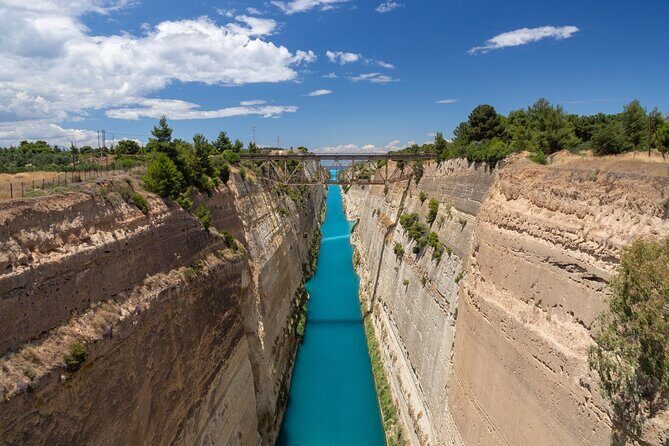
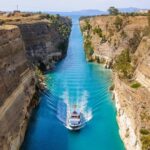
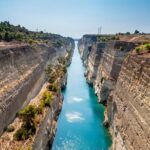
The day starts with a classic “get your bearings” move: the Isthmus of Corinth. This is the narrow land bridge that links mainland Greece to the Peloponnese, and in antiquity it acted like a natural boundary between regions. You’ll also get your first big landmark—the Corinth Canal, cut in 1893 through a 6.3-kilometer-wide isthmus. The walls are steep, the water looks bright, and it’s an easy way to understand why Corinth mattered.
Then you hop to the Diolkos, the ancient stone-paved trackway that let ships be hauled overland. You’re not just seeing ruins here. You’re learning the logic of the place: why trade moved, why ships didn’t need to take a long dangerous route around the Peloponnese, and why Corinth kept pulling people in from all directions.
This opening section is also practical. It gets you out of Athens, moving and stretching a bit, without immediately asking you to do long, steep walking. It’s the kind of warm-up that makes the rest of the day feel more connected and less rushed.
You can also read our reviews of more private tours in Athens


Diolkos and the ship-hauling idea you’ll remember
The Diolkos is one of those stops that can look like “just stones” until your guide puts it in context. You’ll walk along the remains of a system that predates the canal by more than two millennia. That age gap is the point. Greeks were solving logistics problems long before modern engineering.
Here’s why it’s worth the time: it helps you picture Corinth not as a purely religious landmark, but as a working hub. Paul’s story in the city makes more sense when you understand the movement of people and goods through Corinth. Even if you’re coming for the Bible scenes, this is the kind of backdrop that turns names into a real place where letters, travelers, and commerce intersected.
Also, it’s short (about 10 minutes on foot). So even if your energy is limited, this is a low-stress introduction.
Kenchreai and Phoebe: the port stop that gives Paul a timeline
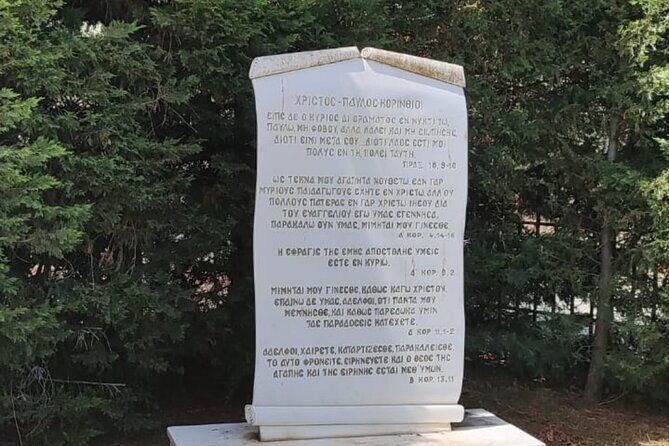
Next comes Kenchreai (Kechrees), Corinth’s eastern port. This is where the tour slows down spiritually and historically. You’ll hear that the Apostle Paul disembarked around 51 A.D. during his first visit, and later he set sail from here toward Ephesus.
This stop gets especially meaningful because the tour connects the port to a specific early Christian person: Phoebe, described as a deaconess of the local church. The idea is simple but powerful: Paul’s work wasn’t floating in the abstract. It moved through real communities, and letters traveled with people.
A reality check: only modest traces of the ancient harbor remain. That doesn’t make the stop weak—it just changes what you’re absorbing. You’re not hunting for massive ruins here. You’re building a timeline in your head, anchored to where ships arrived and departed.
It’s about 20 minutes, and it pairs well with the drive time between stops.
Ancient Corinth: the Agora and Paul’s Bema moment
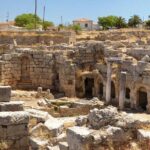
Now you reach Archaia Korinthos (Ancient Corinth), the heart of the day. This site is large, and it helps that the tour focuses your attention instead of letting you wander and wonder.
One big anchor is the Bema—a raised platform in the center of the city. For Christian visitors, this is tied to the belief that Paul spoke here and may have faced a trial before the Roman proconsul. You’ll also connect this setting to the Agora, the marketplace that would have felt like the daily life of Corinth.
That marketplace focus is key. Paul’s letters weren’t written in a vacuum. They were sent to communities living among traders, workers, and believers trying to make sense of their faith alongside the surrounding pagan world. You’ll also see the Temple of Apollo nearby, a reminder that Corinth’s religious landscape was not one-dimensional.
The time here is about 40 minutes, and the major practical difference is that entry fees are on you. The tour itself includes transportation and guidance by the driver, but entrance to archaeological sites isn’t included. If you’re paying attention to details, I’d treat the Ancient Corinth stop like the centerpiece and plan your budget for it.
Museum of Ancient Corinth: the best “why am I looking at this?” fix
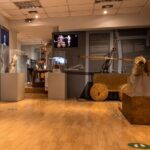
After walking ruins, your brain can feel like it’s still processing what you just saw. That’s why I like the final museum stop: the Archaeological Museum of Corinth. It was built in 1932 and is designed to preserve what excavations have uncovered.
You’ll typically need a museum stop to connect the dots. At this one, you’ll find artifacts that cover a wide sweep, including prehistoric finds and items linked to the Sanctuary of Asklepios. The galleries help you see everyday life, religious practice, and artwork across centuries—so Paul’s era sits inside a bigger Corinthian story rather than floating alone.
The museum time is about 45 minutes. Again, admission is not included, so budget for it. But if you’ve ever left a site thinking, I get the basics, but I want more, this is the kind of add-on that solves that feeling without turning the day into an all-day slog.
- All Day Cruise -3 Islands to Agistri,Moni, Aegina with lunch and drinks included
★ 5.0 · 4,958 reviews



Acrocorinth fortress walk: views and layered power
If Ancient Corinth is the city on the ground, Acrocorinth is the city above it. This fortified acropolis protected ancient and medieval Corinth, and it’s a different kind of experience—more climbing, more time outside, and more sweeping views.
The walls, towers, and bastions reflect layered rule: Greek, Byzantine, Frankish, Venetian, and Ottoman periods. That mix matters because it shows how long Corinth stayed strategically important. The fortress wasn’t just a pretty ruin; it was a long-term stronghold.
You’ll also connect the site to the Temple of Aphrodite and a legend tied to priestesses—up to 1,000 is the number given for the community tied to that sanctuary. You’ll walk through ruins where political control and religious identity were tightly connected.
This stop is about 40 minutes, and it’s marked “Free” for the tour. That’s a good deal, because it’s one of the most visually memorable parts of the itinerary. The only caution is practical: Acrocorinth is outdoors, and even a moderate walk can feel tough in hot weather.
Apostolos Pavlos Church: Paul’s story in a modern mosaic
The day ends at the modern Church of Saint Paul (Apostolos Pavlos Church) in the heart of ancient Corinth. This part is different from the archaeological stops: instead of stone foundations and platforms, you get a contemporary tribute.
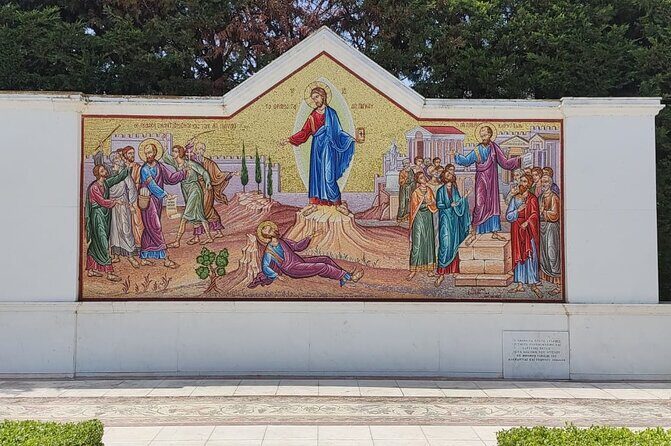
Inside, there’s a striking mosaic created by artists Pastorutti and Tsotsonis, showing Paul’s journey and mission in Corinth. The value here is connection. After hours of ancient context, this gives you a visual “wrap” that ties the history you’ve been learning to something present-day.
It’s about 20 minutes, and it works whether you’re coming in as a devoted Bible reader or as a history-minded traveler who wants to understand why Christians keep returning to this landscape.
Price and what you really get for $169-ish
At about $169.03 per person, this tour is priced for a private format with transportation and on-the-ground guiding by an English-speaking driver. In plain terms, you’re paying for:
- pickup and drop-off by an air-conditioned vehicle
- a tailored, stop-by-stop explanation tied to Paul
- time efficiency (you’re not planning transfers on your own)
What you should budget separately:
- Archaeological site and museum entrance fees at €15 per person
- any optional airport pickup at €50 per booking
That total math is important for value. If you were planning to visit Ancient Corinth on your own, you’d still pay for entries. So the price often makes sense when you want context with your walking time, plus the convenience of a private driver.
The tour also uses different vehicle types. For groups of 1 to 4 people, sedan vehicles are used; for larger groups, expect a larger vehicle. You’ll also have WiFi onboard and bottled water, which sounds small until you’re stuck in summer traffic with no plan.
How private pacing helps (especially with older or slower days)
A recurring theme in the experience is that your guide treats the day like it belongs to your group, not like a rigid checklist. People mention helpful support getting in and out of the car, and built-in ways to handle comfort along the route. If you’re traveling with someone who moves slower—maybe an older parent—that private format can make the difference between a stressful day and a smooth one.
It also helps that the pickup system is straightforward: if you’re staying in a hotel or apartment, the driver waits for you at the entrance. At the port, the driver waits at the gate holding a sign with your name.
And because it’s private, you can ask for a moment to take photos, to catch your breath, or to linger when a spot matters to you. This is one of the real advantages of a private Paul’s footsteps tour, especially at places like Acrocorinth where you might want that view time.
Weather, heat, and shoes: the real make-or-break factors
Even with a driver doing the driving, this day includes walking at multiple sites. Greece can be hot and sunny, and you’ll feel it at the ruins and at Acrocorinth.
So I’d plan like this:
- wear comfortable shoes you trust on uneven ground
- bring a hat and sunscreen
- carry water if you’re the type who likes to sip often
The tour includes bottled water, which helps. But heat management is still on you.
Also consider pace. The tour runs about 5 to 6 hours, and that “travel time included” detail is good. Just don’t expect a short stroll. You’re doing a full day of context, walking, and viewpoints.
Should you book the Apostle Paul footsteps tour of Corinth?
Book it if you want a private, Paul-focused day that connects spiritual themes to real geography: Canal, port arrival and departure, Agora scenes tied to Paul’s presence, museum context, and the Acrocorinth fortress viewpoint. It’s a strong fit for Bible readers, church history fans, and anyone who likes learning how a city’s physical layout shapes people’s lives.
Skip it—or at least adjust expectations—if you’re craving a purely scriptural, verse-by-verse experience. This tour is built around history and place, and Paul’s message is explained through what you can see, where he traveled, and the setting around early Christianity.
If you do book, do two things for a smoother day: budget for the €15 entrance fees, and come wearing shoes made for real outdoor walking.
FAQ
How long is the private Apostle Paul tour in Ancient Corinth?
It runs about 5 to 6 hours, and travel time is included in that total.
What sites are included during the tour?
You’ll visit the Isthmus of Corinth and Corinth Canal area, the Diolkos, the ancient port of Kenchreai, Ancient Corinth (including the Agora and the Bema area), the Archaeological Museum of Corinth, Acrocorinth, and the modern Church of Saint Paul.
Is pickup included?
Yes. Hotel and port pickup/drop-off are included. Airport pickup is optional and costs extra per booking.
Are entrance fees included in the tour price?
No. Entrance fees to archaeological sites and the museum cost €15.00 per person and are not included.
What language is the tour conducted in?
The tour is offered in English.
Is this really private or will I be mixed with strangers?
It’s a private tour/activity. Only your group participates.
What’s included in the vehicle and comfort?
You get an air-conditioned vehicle, WiFi on board, and bottled water. For groups of 1 to 4 people, sedans are used.
What should I bring for the walking and weather?
Wear comfortable shoes for walking. Bring a hat and sunscreen since Greece can be hot and sunny.
What if the weather is bad or I need to cancel?
You can cancel for free up to 24 hours in advance for a full refund. The experience requires good weather; if it’s canceled due to poor weather, you’ll be offered a different date or a full refund.