REVIEW · ATHENS
Athens: Acropolis Guided Walking Tour
Book on GetYourGuide →Operated by Secrets of Greece IKE · Bookable on GetYourGuide
The Acropolis makes sense in 2 guided hours. That’s because you connect mythology with the exact stones you’re walking past, from the Parthenon to the theater of Dionysus. I also love the chance to get questions answered in a small group. One potential drawback: the tour is in Spanish, so you’ll want to be comfortable with at least basic conversation.
If you’re the kind of person who likes your sightseeing to explain itself, this one fits. Many groups praise the guide for being sharp, professional, and good at adding humor while keeping the architecture clear. And after the walk, you get free time to keep exploring the site at your own pace.
In This Review
- Key things that make this Acropolis tour worth it
- Why a guided Acropolis walk beats going solo
- Starting at the Propylaea: gateway energy and Caryatides
- Parthenon viewpoints and the role of Athena in daily belief
- Theater of Dionysus: why drama lived at the center of Athens
- Erechtheion and Odeon of Herodes Atticus: architecture with a backstory
- Temple of Athena Nike: the smallest temple and big meaning
- Small-group pacing and the value of real questions
- Tickets and the 2-hour reality check (so you don’t lose time)
- Rules to know before you go (and how to plan around them)
- Who should book this Acropolis guided walking tour
- Value check: is $34 for a guided Acropolis walk a good deal?
- Should you book it or not?
- FAQ
- How long is the Athens: Acropolis Guided Walking Tour?
- What language is the guide?
- Is the Acropolis entry ticket included in the price?
- Where do I meet for the tour?
- Are baby strollers or wheelchairs allowed?
- If I don’t select the entry ticket option, what time slot ticket do I need?
- Is free cancellation available?
Key things that make this Acropolis tour worth it
- A licensed Spanish guide who can tie ruins to real stories
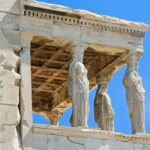
- Propylaea gateway walk + Caryatides moments you’ll remember
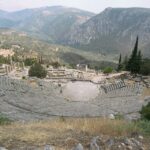
- The theater of Dionysus (17,000 seats) and why it mattered for festivals
- Erechtheion and Odeon of Herodes Atticus explained through design choices
- Athena Nike temple meaning, scale, and why it’s called out
- Small-group pacing with time for your questions
Why a guided Acropolis walk beats going solo
The Acropolis isn’t just a set of pretty buildings. It’s a whole religious stage, built for rituals, festivals, and power—then left behind as archaeology. With a guide, you stop treating the site like a photo checklist and start seeing patterns: where Athenians gathered, what they worshipped, and how drama and civic life were tied together.
I especially like how the tour uses myths as a map. When you hear about the Greek gods that connect to each structure, you understand why those ruins are placed where they are. Without context, you might recognize names. With context, the names start explaining the site.
Also, the small group matters more than you think. You move at a pace that’s meant for listening, not sprinting. And because the group isn’t huge, you actually get chances to ask the guide questions while you’re standing in front of the relevant stones.
You can also read our reviews of more walking tours in Athens



Starting at the Propylaea: gateway energy and Caryatides
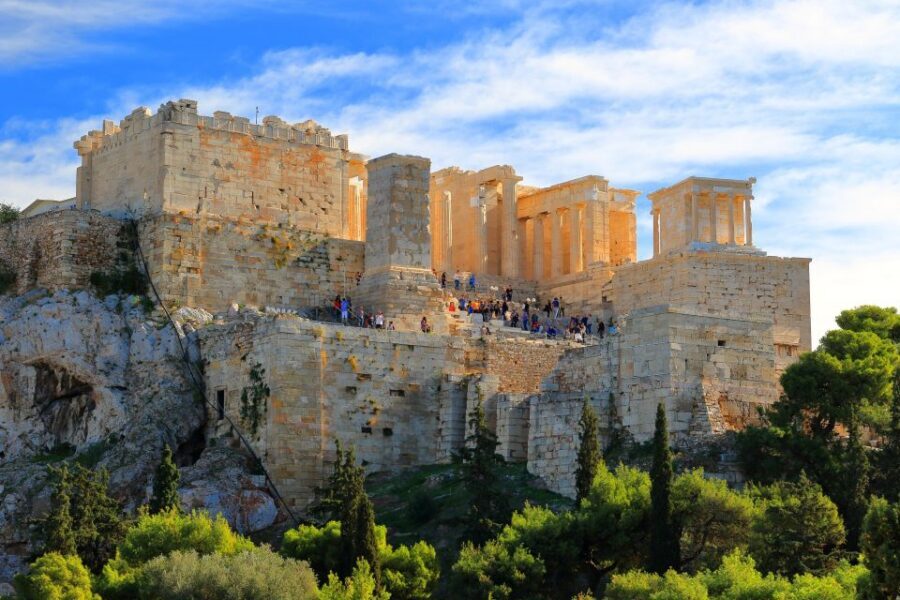
Most first-time Acropolis visits feel like “I’m here.” This tour helps you feel like “I’m entering.” You pass through the Propylaea, the monumental gateway into the rocky citadel, and that shift is key. It turns the experience from sightseeing into a walk through a boundary—like stepping into an ancient world on purpose.
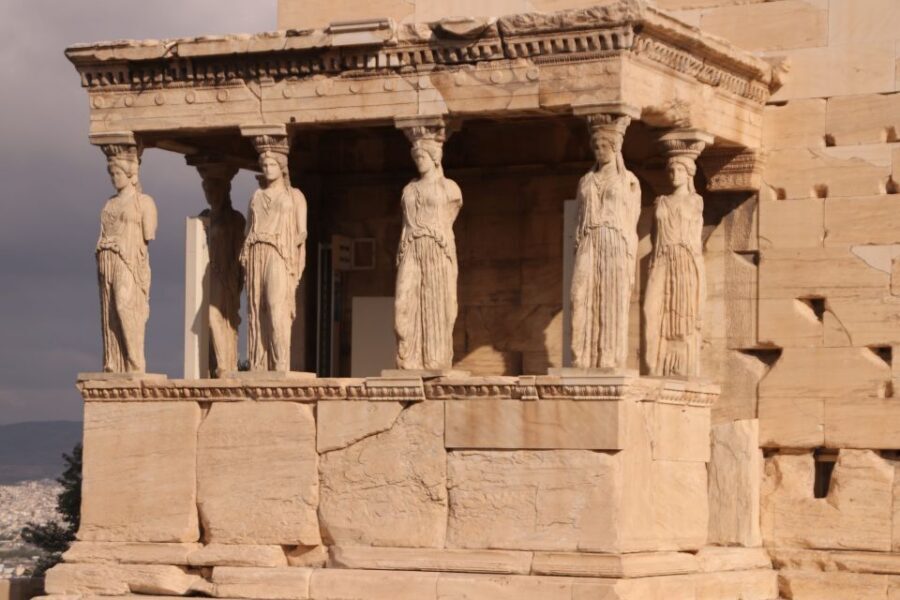
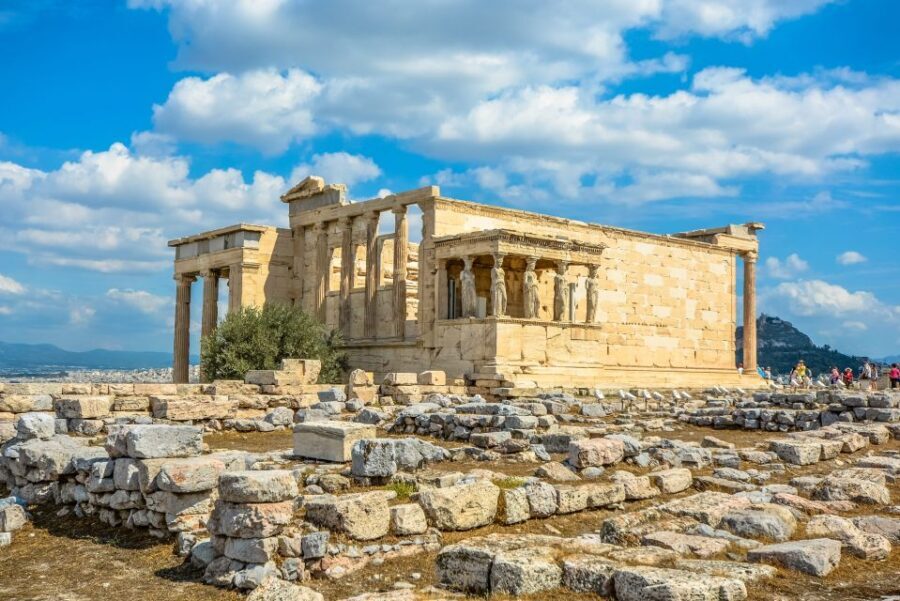
As part of this approach, you’ll also gaze at Caryatides. These carved figures are more than decorative. They’re an example of how the Acropolis blends engineering and symbolism: sculptural forms carry meaning while also solving architectural problems. Your guide’s commentary helps you see them as part of a system, not random statues.
One practical thing to keep in mind: you’re on a historic site with stone surfaces and uneven ground. Comfortable walking shoes are the boring answer that pays off fast, especially when you’re trying to read details while also keeping your footing.
Parthenon viewpoints and the role of Athena in daily belief
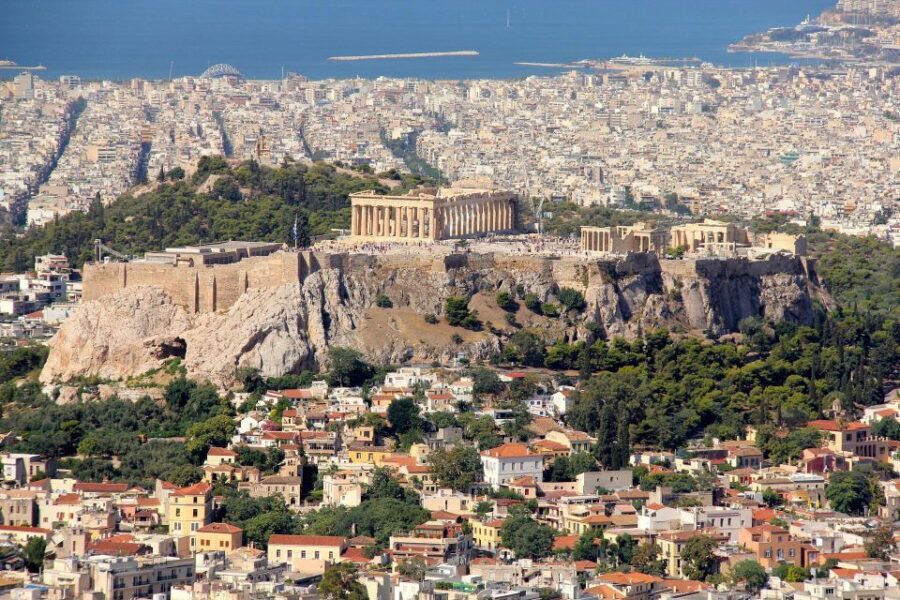
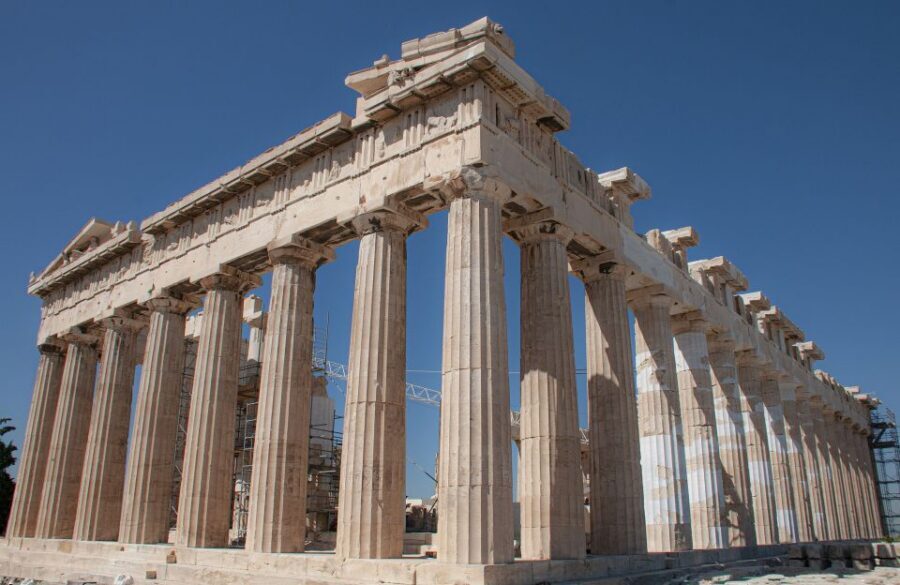
The tour includes time at the Temple of Parthenon area and walks through the parts of the Acropolis dedicated to Athena, the city’s protector goddess. That matters because Athena isn’t just a myth character here. In ancient Athens, she was tied to civic identity and religious festivals. So when you’re hearing the stories while you look at the architecture, the buildings feel like they had jobs—not just looks.
You’ll also hear about the long history of Athens as the capital of modern Greece. That’s a useful reminder for today’s visitors: the city didn’t stop evolving after antiquity. The Acropolis is ancient, yes, but it sits inside a living capital. The guide’s framing helps you hold both timelines in your head at once.
If you’re the type who likes to understand what you’re seeing, the Parthenon zone is where the guide’s approach really works. You’ll learn what to notice: proportions, placement, and what those monumental surfaces were meant to communicate to people who came to worship and celebrate.
Theater of Dionysus: why drama lived at the center of Athens
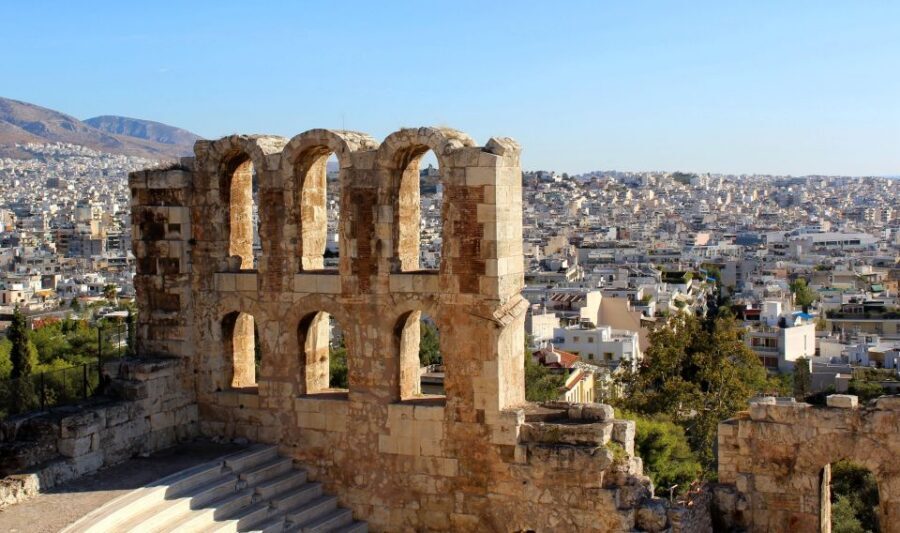
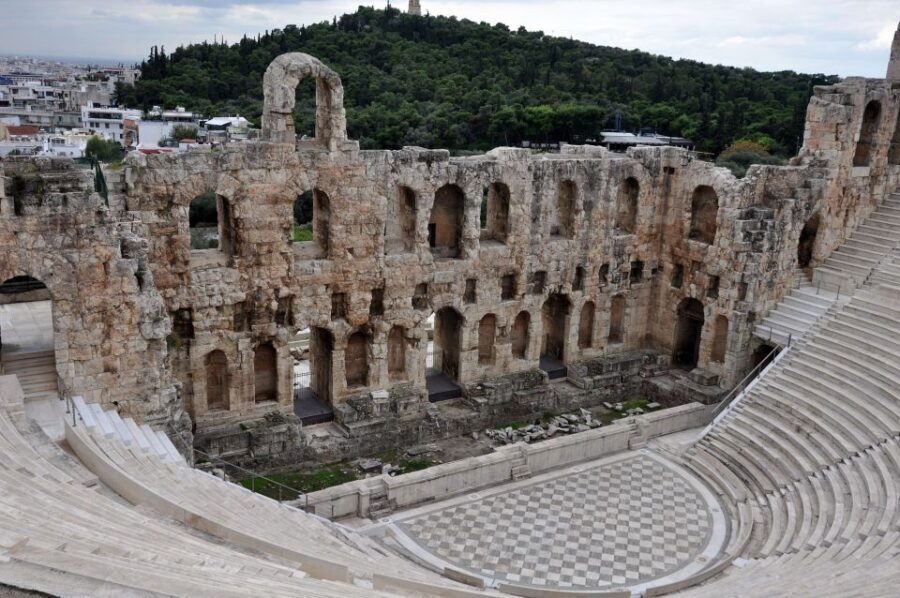
One of the most memorable stops is the theater of Dionysus, built to hold 17,000 spectators. That capacity number is impressive on its own, but what makes it powerful on a guided visit is the connection to festivals honoring the Greek god’s birth.
In other words, this wasn’t a theater for casual entertainment. It was a major public stage tied to religion. When you understand that, the stones stop looking like ruins and start looking like evidence of how Athenians organized belief, community, and storytelling.
Your guide’s commentary helps you connect the theatrical space to mythology. You don’t need to memorize a lecture, but you do start recognizing themes: how worship and performance mixed, and why the city built such a large venue up on the rock.
Drawback to consider: theaters and large monuments often attract crowds. If you’re hoping for total quiet, you might not get it. The value here is hearing the context, not escaping the atmosphere.
Erechtheion and Odeon of Herodes Atticus: architecture with a backstory
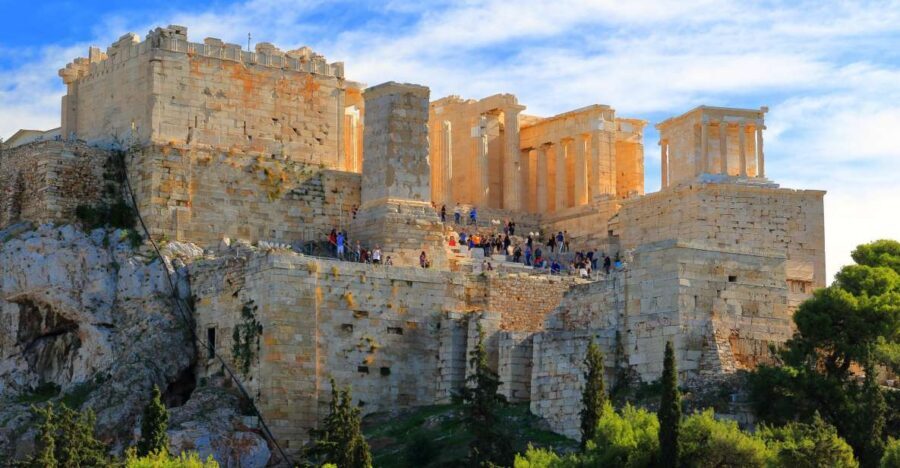
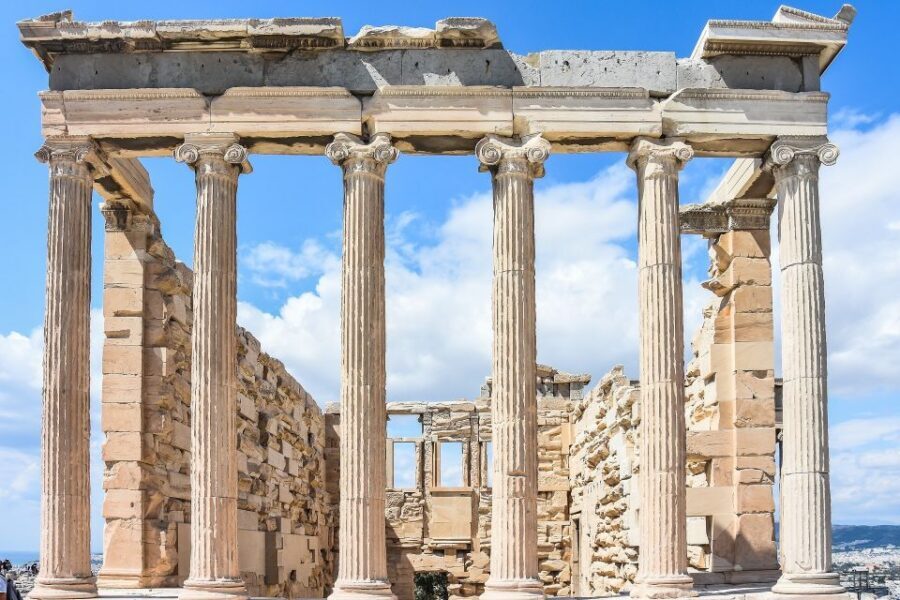
The Erechtheion is another standout. It’s described as being named after the demi-god Erechtheus, and the stop is designed to show you that mythology can be built into the identity of a place. That’s not a small detail. Names, functions, and stories were part of how the Acropolis worked as a sacred landscape.
You’ll also visit the Odeon of Herodes Atticus, often described as a giant stone theater. Even if you already know it’s a performance space today, the guided angle is what matters: the ruins help you understand the continuity between public gatherings then and now.
Here’s what I like about this part of the tour: it keeps shifting the focus between story and structure. The guide doesn’t treat mythology as separate from architecture. You learn how belief and design are connected—especially when you hear why buildings were dedicated, and how different spaces supported different kinds of civic life.
You can also read our reviews of more guided tours in Athens




Temple of Athena Nike: the smallest temple and big meaning
Toward the later part of the walk, you’ll see the Temple of Athena Nike, noted as the smallest temple on the Acropolis. That contrast is exactly why it’s worth pointing out. Big monuments can steal attention, but a smaller temple often carries intense symbolic weight.
Your guide helps you connect what you’re seeing to the idea of victory and protection associated with Athena. Even if you don’t remember every detail, you’ll likely remember the scale and the guide’s emphasis on why this particular structure was singled out.
This stop also gives you a nice emotional rhythm. After the larger theater spaces and major temples, the Athena Nike moment feels more precise—like you’re looking at a specific message rather than a whole civic complex.
Small-group pacing and the value of real questions
A big reason this tour earns strong ratings is the human factor: you’re not stuck listening forever. The tour is built around a small group setup, and your guide is there for back-and-forth questions.
If you’re traveling with someone who asks lots of “why” questions, this helps. And if you’re the one who’s usually too shy to ask, the group setup makes it easier to speak up because you’re near the guide and you’re all seeing the same viewpoints.
One more note from the tone of highly praised guides like the Spanish guide Sara (mentioned positively for clarity and humor): the explanations are meant to feel understandable, not like a test. That style can make a huge difference at the Acropolis, where confusion is easy when you’re surrounded by complex ruins.
Tickets and the 2-hour reality check (so you don’t lose time)
This tour lasts 2 hours, so timing matters. There’s an option where your Acropolis entry ticket is optional, meaning you may need to buy it yourself if you don’t select that option.
If you’re booking without the entry-ticket option, you’ll need to purchase the right timed ticket in advance. The time-slot mapping depends on season and the tour start time. Here’s the practical version you should follow:
- Low season
- Tour at 09:30 → ticket time slot 09:00–10:00
- Tour at 15:00 → ticket time slot 15:00–16:00
- High season
- Tour at 08:45 → ticket time slot 09:00–10:00
- Tour at 09:45 → ticket time slot 10:00–11:00
- Tour at 17:00 → ticket time slot 17:00–18:00
- Tour at 17:45 → ticket time slot 18:00–19:00
I strongly recommend buying online beforehand. If you end up buying at the ticket office, plan to go to the South entrance ticket office area about 30 minutes before your tour time, then walk to the meeting point (less than 2 minutes away).
Finally, the meeting point can vary depending on the option booked, so double-check your confirmation details before you head out.
Rules to know before you go (and how to plan around them)
This is one of those tours where a few basic rules can change your day. Baby strollers are not allowed, and non-folding wheelchairs and electric wheelchairs are not allowed.
If you’re coming with a stroller or mobility device, double-check your plan before booking so you don’t get surprised at the gate. Also, because this is a walking tour on a historic site, you’ll want to be ready for steady walking and stopping for viewpoints.
Who should book this Acropolis guided walking tour
Book this tour if you want:
- Myth + architecture explained in a way that helps the Acropolis click
- A small group where questions are welcome
- A guided route that covers major highlights without eating your whole day
- A Spanish guide and you feel comfortable listening in Spanish
You might skip it if:
- You need a language other than Spanish
- You’re looking for a completely self-paced experience with no structured storytelling
It’s also a strong choice if you plan to spend extra time afterward. After the tour ends, you’ll have free time to explore the outstanding site on your own, so you can linger where you liked the most.
Value check: is $34 for a guided Acropolis walk a good deal?
For $34 per person and a 2-hour visit, the value is mostly about one thing: a licensed guide who gives context you can’t easily get from random signage. You’re paying for interpretation, pacing, and the ability to ask questions while you stand in front of Parthenon-area viewpoints, the Propylaea, and the major theaters and temples.
If you’re the type who enjoys reading plaques, you could do it independently. But if you want the Acropolis to feel like a story you can understand, guided time is where the money tends to work best.
Should you book it or not?
Yes, I’d book this guided Acropolis walking tour if you want a focused, high-impact intro to Athens’ most famous sacred hill. It’s short enough to keep you moving, but structured enough that you’ll actually understand what you’re seeing—especially the connections between mythology, Athena’s significance, and why drama and festivals were such a big deal.
Skip it if Spanish is a barrier for you, or if you prefer totally free-form wandering with no guide-driven route. If you’re somewhere in between, consider this your best starting point, then use the extra site time afterward to explore the parts that stuck.
FAQ
How long is the Athens: Acropolis Guided Walking Tour?
The tour lasts 2 hours.
What language is the guide?
The guided tour is in Spanish.
Is the Acropolis entry ticket included in the price?
The Acropolis entry ticket is optional. If you don’t choose the option with the entry ticket, you must buy the ticket previously on your own.
Where do I meet for the tour?
The meeting point may vary depending on the option booked, so check your specific booking details.
Are baby strollers or wheelchairs allowed?
Baby strollers are not allowed. Non-folding wheelchairs and electric wheelchairs are also not allowed.
If I don’t select the entry ticket option, what time slot ticket do I need?
You must buy the correct timed ticket based on season and your tour start time. Low season: 09:30 tour needs 09:00–10:00 ticket slot, and 15:00 tour needs 15:00–16:00 slot. High season: 08:45 tour needs 09:00–10:00 slot, 09:45 tour needs 10:00–11:00 slot, 17:00 tour needs 17:00–18:00 slot, and 17:45 tour needs 18:00–19:00 slot.
Is free cancellation available?
Yes. You can cancel up to 24 hours in advance for a full refund.