REVIEW · ATHENS
Private Luxury Biblical Tour: Apostle Paul’s Footsteps – Corinth
Book on Viator →Operated by Pericles Century · Bookable on Viator
Corinth turns Paul’s letters into real streets. This is a private luxury way to see Apostle Paul’s Corinth connections without the stress of crowd chaos, with an English-speaking driver-guide explaining what you’re looking at as you go. You start with port or hotel pickup in Athens, then settle into a comfortable ride that keeps the day relaxed and easy to follow.
I especially like the door-to-door pickup and drop-off flexibility, including options that can work across Athens and the port area. I also like the onboard Wi‑Fi and bottled water, because it keeps the day smooth while you’re hopping between sites and waiting for the next photo moment.
One thing to consider: archaeology and museum entrance tickets cost extra (plan on about €20 per person), and the tour does not include a licensed guide for inside the archaeological sites.
In This Review
- Key things I’d bet you’ll care about
- Why Corinth Works So Well on a Short, Private Day
- Pickup From Athens: The Real Start of the Day
- A Luxury Ride That Keeps the Story Moving
- Isthmus of Corinth and the Diolkos: Trade Routes You Can Feel
- Kenchreai: The Harbor Where Paul Arrived (Tradition in Stone)
- Glauke Fountain and Corinth’s Forum-Level Spaces
- Temple of Apollo and the Bema of Paul’s Trial Traditions
- Archaeological Museum of Corinth: When Artifacts Do the Explaining
- Akrokorinthos: Fortifications, Big Views, and the End-of-Day Payoff
- Apostolos Pavlos Church: A Spiritual Finish on a Historical Site
- Price and Value: What $179.06 Actually Buys You
- Who This Corinth Tour Fits Best
- Should You Book This Corinth Private Tour?
- FAQ
- Is this tour private or shared?
- Do you offer pickup in Athens and from the port?
- Is Wi‑Fi available during the tour?
- How long is the tour?
- Are entrance fees included in the price?
- What vehicle size do you use for different group sizes?
- What language is the driver-guide?
Key things I’d bet you’ll care about
- Private group comfort: 1–4 people ride in a sedan; 5–7 ride in a mini van.
- Skip-the-crowd pacing: you travel with your own group and your own pace at each stop.
- Wi‑Fi on board: handy for maps, Bible notes, and staying connected between ruins.
- Bible-connected stops: from Kenchreai to the Bema of Paul’s trial traditions (Acts 18:12–17).
- Acrocorinth views: Akrokorinthos finishes with layered fortifications and big panoramas.
Why Corinth Works So Well on a Short, Private Day
Corinth is one of those places where the Bible story makes instant sense once you see the geography. You’re not just reading names on a page. You’re moving through a real network of land routes, harbors, city centers, and hillside strongholds that shaped how people traveled, traded, and believed.
This tour is built for that “put the pieces together” feeling. You start with a drive that frames the setting, then you move through key Corinth areas tied to Paul’s time, ending at a church marking the tradition of where his influence was felt. Because it’s private, you don’t have to match a big group’s pace. You can linger when something grabs your attention—like the Forum-level platform areas or the museum rooms that reward slow looking.
I also like the plain practicality: an air-conditioned vehicle, bottled water, and an English driver-guide who connects the dots in everyday language. You’ll spend less energy on logistics and more energy on seeing the place.
You can also read our reviews of more private tours in Athens


Pickup From Athens: The Real Start of the Day
This is a “no fuss” format. You arrange pickup from designated Athens locations, and the driver waits outside for hotel or apartment pickups. If you’re coming from the port, the driver meets you at the arrival area with a sign showing your name, so you’re not wandering around trying to find the right car.
The big win here is stress reduction. Athens can be confusing if you’re hauling luggage or moving between port and city. This tour explicitly supports both hotel-style pickup and port-style pickup, and it even shows up in the way guides handle logistics for guests with extra belongings. If you’re planning a day that fits around your cruise schedule, this matters.
You’ll also end where you started. That’s helpful if you don’t want to figure out a second transport problem later. It’s not a detour day that sends you to a new neighborhood. It’s a loop built for visitors who want their day to feel controlled.
A Luxury Ride That Keeps the Story Moving
The vehicle is part of the comfort equation. For groups of 1–4, you’ll travel in a luxurious sedan. For groups of 5–7, it shifts to a comfortable mini van. Either way, you get air-conditioning, private transportation, and Wi‑Fi on board.
Why does that matter for Corinth? Because the day has multiple “mental jumps.” You’re going from canal engineering to maritime history to Roman-era civic space, then up toward Akrokorinthos. Even if each stop is only 10–45 minutes, the flow needs to feel easy. A comfortable ride gives your brain room to process what you’re seeing instead of feeling overheated, rushed, or stuck waiting.
Your English-speaking driver-guide is also a key part of how you experience the places. You’ll get context during the drive, not just at the curb. And because it’s your own group, you can ask questions without feeling like you’re slowing down a packed bus.
One practical note: bring your own water-free comfort habits, like sunscreen and a hat. The tour itself includes bottled water, but the sun in Greece can still be intense when you’re out and about.
Isthmus of Corinth and the Diolkos: Trade Routes You Can Feel
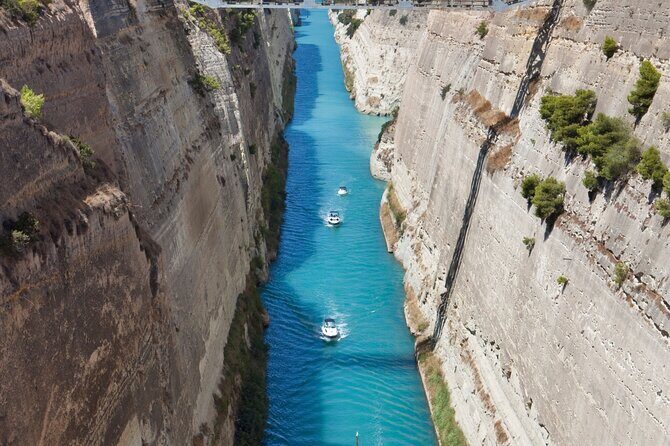
You begin at the Isthmus of Corinth, a narrow land bridge that has mattered for thousands of years. This is the “why Corinth mattered” starter scene. The Corinth Canal slices through the rock, and standing near it gives you an immediate sense of engineering scale plus economic logic. It’s hard not to imagine ships and merchants using shortcuts when you see the cut itself.
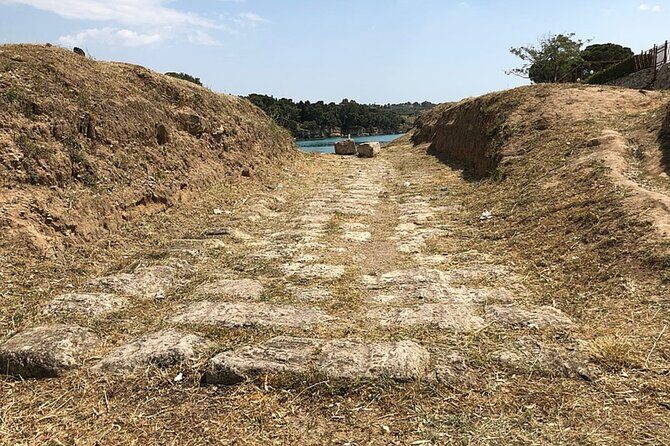
Then you move to the Diolkos, an ancient stone-paved road designed to haul ships overland across the Isthmus. That detail is gold for understanding the area’s strength. Corinth wasn’t just a city with a temple and a marketplace. It was a node in a transportation system.
Both of these stops are listed with free admission tickets, which helps your budget on a day where other site tickets add up. Time-wise, you’re looking at about 20 minutes for the Isthmus and around 10 minutes for the Diolkos. It’s enough to get oriented and take photos without turning the day into a long drive-and-stand session.
If you’re the kind of traveler who likes “big picture first, details second,” these two stops will set you up perfectly for everything that follows.
Kenchreai: The Harbor Where Paul Arrived (Tradition in Stone)
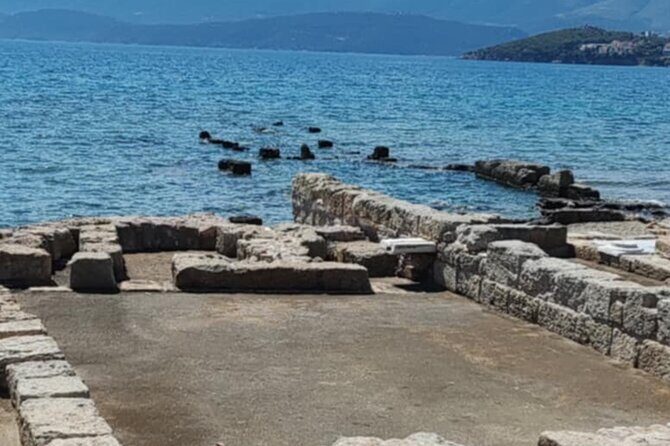
Next comes the ancient port of Kenchreai on the eastern side. This is where the maritime world meets the Bible story. The site is described as a commercial hub during the Roman era, and it’s tied to the tradition of Apostle Paul arriving there around 53 A.D.
In real terms, what you’ll get is a shift from land-and-canal thinking to shore-and-people thinking. A port always means movement. It also means letters, travelers, and news traveling fast. Even if you just keep one mental image—Paul arriving from sea and stepping into a mixed world of trade and religion—this stop clicks.
It’s also one of the free admission stops, with about 20 minutes here. Short, focused, and tied directly to Paul’s route, it works well as a “gear change” before you enter the older civic core of Corinth.
A few more Athens tours and experiences worth a look




Glauke Fountain and Corinth’s Forum-Level Spaces
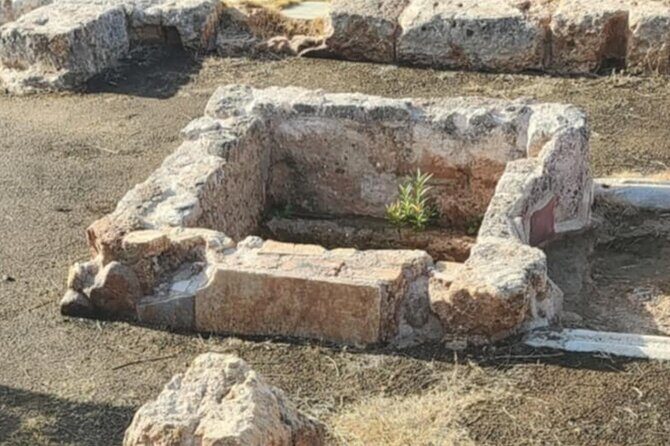
Ancient Corinth is where you start seeing the layers people built, rebuilt, and fought over. One early stop in the city area is the Glauke Fountain, carved into the hillside. The mythology attached to it gives you a human-scale story—one involving refuge and tragedy—while you’re surrounded by evidence of how old Corinth communicated power and culture through its public spaces.
Then you head to the Roman Forum area, including Paul’s Column and the Bema platform. This is where the tone shifts from scenery to scripture. Paul’s teachings are associated with this elevated setting in a city shaped by pagan traditions, and the space later became a Christian church site. Even without a long stop, it’s a powerful reminder that religious change often happens in specific civic settings, not in abstract places.
A key consideration: the Forum-related stops are not included for admission in the tour price. That’s one reason I’d treat this part of the day as “worth budgeting for.” If you’re going to pay extra, you want the stops to feel connected—and here they do.
Temple of Apollo and the Bema of Paul’s Trial Traditions
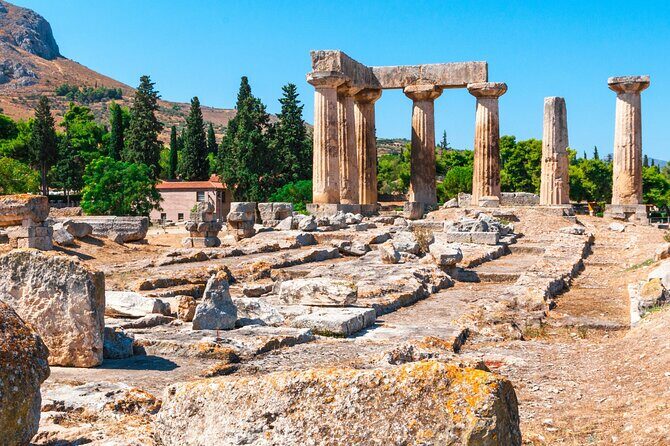
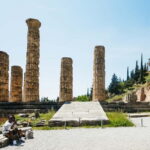
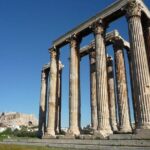
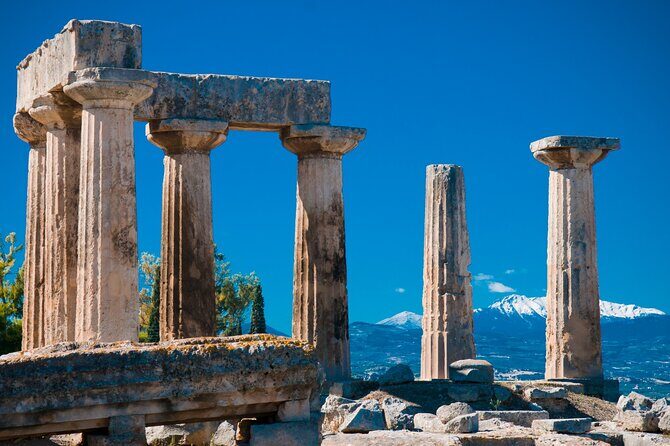
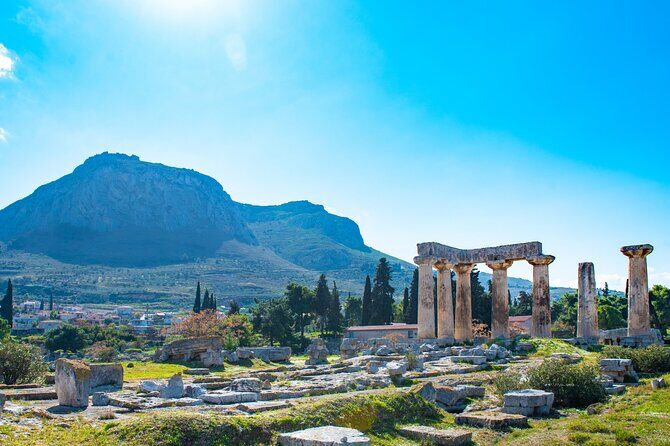
You then move to the Temple of Apollo, one of the oldest Doric temples in the Peloponnese. Tall columns help you understand how Corinth displayed wealth and religious identity in stone. It’s not just a photo stop. The structure gives you a sense of what locals would have seen daily when civic life and worship blended.
After that, you focus on the Bema of Apostle Paul in the Agora, which is tied to traditions about Paul being brought before Roman authority around 51 AD. The tradition is associated with Gallio, the proconsul, and the dismissal allowing Paul to continue his mission is recorded in Acts 18:12–17.
Here’s how to make this stop land. Don’t just look at the platform and think trial. Instead, imagine the role of public law and speech in the Roman system. A Bema isn’t a background prop. It’s a focal point where power gets performed. That’s why this place matters for Paul’s story: it shows how early Christian teaching had to navigate official structures.
Time is short (about 10 minutes for this Bema highlight), so I recommend treating it like a “get oriented, then absorb.” If you want more time here than the schedule allows, the private format makes it easier to ask for a brief pacing change, as long as the rest of the day stays workable.
Archaeological Museum of Corinth: When Artifacts Do the Explaining
About 45 minutes goes to the Archaeological Museum of Corinth, and this is often the difference between a good Bible sights day and a truly memorable one. Ruins give you shapes and spaces. A museum gives you objects, details, and the everyday material culture that makes Paul’s world feel less like a storyline and more like real life.
The museum is described as covering everything from prehistoric relics to Roman-era treasures. You’ll see statues and pottery, plus items connected to the Sanctuary of Asklepios. It’s a chance to step back from the outdoor heat for a while and let your eyes adjust to smaller-scale information.
Admission for the museum is not included, so this is one of the places where your extra budgeting turns into real value. If you’re only paying because you want the Bible connection, you can still get it. But you’ll also learn how Corinth functioned as a human city—its art, practices, and objects—around the same time period.
If you tend to move fast in museums, set a simple goal: pick two rooms or categories and go slow inside them. You’ll remember more.
Akrokorinthos: Fortifications, Big Views, and the End-of-Day Payoff
The final major viewpoint stop is Akrokorinthos, the ancient fortified acropolis. You’ll get layers of fortification history: classical-era ruins plus Byzantine, Frankish, and Ottoman additions. That “layer cake” effect is one of the reasons this place is so unforgettable. You can stand in one spot and see multiple centuries of priorities written into the landscape.
This stop is marked with free admission and about 40 minutes. That’s a strong time-to-view ratio. It’s also an excellent place to let the day sink in, because the views help you connect earlier stops. Can you see why a city like Corinth mattered? Can you understand why people would fight over control? The acropolis makes those questions feel obvious.
Just plan for walking comfort. Sturdy shoes matter here, and you’ll likely want sun protection. The tour suggests hat and sunscreen, and I agree: this is the kind of place where a small comfort item pays off fast.
Apostolos Pavlos Church: A Spiritual Finish on a Historical Site
You end at the Apostolos Pavlos Church, a three-aisled basilica built in 1936 on the tradition of an earlier church associated with Apostle Paul. The connection is the point here. It’s not trying to outdo the ruins. It’s meant to mark Paul’s influence with a physical place of reflection.
This final stop is about 20 minutes, and it comes with free admission. That makes it a good “cool down” after Akrokorinthos, especially if you’re spending part of your budget earlier on paid museum and Forum areas.
If you’re the kind of visitor who likes to close the loop on a story, this is that moment. You’ve seen civic platforms tied to Paul’s public teaching and trial traditions, plus the surrounding settings of trade and harbor life. Now you finish somewhere that anchors the memory in a church space rather than a field of stones.
Price and Value: What $179.06 Actually Buys You
At $179.06 per person, the value question is mostly about time, comfort, and how private it is. This is a 5 to 6 hour day, with transportation between multiple meaningful sites. You’re also not splitting time with strangers, and you’re getting onboard perks like Wi‑Fi and bottled water.
If you travel as a couple or small group, the private sedan option can feel like a smart way to buy back your attention span. Instead of juggling public transport timing, you get a driver-guide and an air-conditioned car. For families or small groups of friends, the mini van option keeps the day comfortable without turning it into a big bus situation.
One extra cost to plan for: entrance tickets and the museum are not included. The guidance given is about €20 per person. Because several key parts of the city area are in paid zones, don’t treat this as a tiny add-on. Treat it as part of the real budget for the day.
Also remember what’s not included: a licensed guide for inside the archaeological sites. You will still get an English-speaking driver-guide experience and explanations during the day, but if your ideal travel style includes a separate licensed professional inside every site, you’d need to budget for extra services.
Who This Corinth Tour Fits Best
This tour is a strong match if you want Bible-site context paired with comfort. You’ll like it if:
- you prefer a private format and don’t want to be herded through ancient places
- you care about connecting Acts and the setting around Paul’s work
- you want an English-speaking driver-guide who can explain what you’re seeing
- you want a day that stays manageable even if you’re visiting Athens for a short time
It’s especially useful for people coming from a cruise or needing pickup from the port side. The ability to do hotel or port pickup makes the logistics feel easier than many half-day day trips.
If you’re a hardcore ruins-only walker who loves long stays at archaeological sites and doesn’t care about comfort, you might find other budget options. But if your priority is making the story make sense in a limited time window, this private luxury setup is built for that.
Should You Book This Corinth Private Tour?
Book it if you want a structured, story-centered day with private transportation, Wi‑Fi, and an English driver-guide tying the sites to Paul’s path. It’s also a smart choice if you value flexible pacing and you’d rather ask questions than follow a rigid group schedule.
Hold off if you’re trying to minimize total spend after paying for entrance tickets. The price covers transport and guiding, but plan on extra site admissions (about €20 per person). And if you specifically want a separate licensed guide inside archaeological areas, you’ll need to arrange that extra.
One last practical tip: this experience gets booked far enough in advance that you should reserve early. If you have firm cruise or hotel dates, don’t wait until the last moment.
FAQ
Is this tour private or shared?
This is a private tour. Only your group will participate.
Do you offer pickup in Athens and from the port?
Yes. Pickup is available at designated locations. For hotel or apartment pickups, the driver waits outside your location. For port pickups, the driver greets you at the arrival area with a sign showing your name.
Is Wi‑Fi available during the tour?
Yes. Complimentary Wi‑Fi is provided on board.
How long is the tour?
It runs about 5 to 6 hours, including the time spent traveling between locations.
Are entrance fees included in the price?
No. Entrance fees for archaeological sites and the museum are not included, with guidance of about €20 per person. Some stops are marked as free, but several key areas are not included.
What vehicle size do you use for different group sizes?
Groups of 1–4 are transported in luxurious sedan vehicles, and groups of 5–7 are transported in comfortable mini vans.
What language is the driver-guide?
The tour is offered in English, with an English-speaking tour driver-guide.